Categories
Health

With the Coronavirus Keeping Millions at Home, Uber Is Giving Free Rides to Help Survivors of Domestic Violence Flee to Safety


During a worldwide pandemic, the safest place to be is home.

But for people enduring domestic violence, home is never safe. The coronavirus pandemic—and the stay-at-home orders, social distancing measures, and quarantining that have been instituted in an attempt to keep the disease at bay—have the unintended side effect of trapping domestic violence survivors with their abusers.

As if escaping an abusive situation isn’t painfully difficult under regular circumstances, attempting to leave during a pandemic means either braving public transportation or coordinating with friends or relatives who could themselves be at an elevated risk. Domestic abuse, which disproportionately affects women and children, turns the drudgery of waiting out a pandemic from home into a day-to-day hell.

But for some survivors, one part of the process is about to get a little easier. Uber is providing 50,000 free rides to domestic violence shelters and safe havens. Through shelters and other groups that have partnered with Uber to hand out the codes, free rides will be available in over 35 cities across 16 countries. When survivors contact shelters and help lines, those organizations will be able to share a code from Uber that will allow them to take a free, fast ride to safety.

“Many survivors of domestic violence have no access to a car, and the COVID-19 pandemic has reduced public transportation options,” Allison Randall, Vice President for Policy and Emerging Issues at the National Network to End Domestic Violence (NNEDV) said in a statement. “Local domestic violence programs are still open and available to help survivors, but without transportation, survivors have no way to get there, much less to a doctor’s appointment, grocery store, or courthouse. We are so grateful to Uber–our longstanding partner–for providing these lifesaving free rides to survivors.” In addition to the free rides, the company has announced it will donate 45,000 meals to survivors in need.

The initiative, part of a larger pledge by the ridesharing company to provide 10 million free rides and food deliveries to people in need during the pandemic, is led by Tracey Breeden. The head of Women’s Safety and Gender Based Violence Programs at Uber, Breeden previously worked as a police officer and a detective for nearly 15 years, focusing on violence against women. “It doesn’t matter what’s going on in the world—violence against women and children doesn’t stop,” Breeden tells Glamour. “It just shows up differently sometimes. Domestic violence is not a new crisis, and everybody can play a role in working to help create safe spaces and helping people get help safely. It’s critically important to take COVID seriously by sitting at home, but it’s also important to not forget that for some people being at home is not safe.”

Of course, the kind of help that Uber is offering isn’t entirely risk-free either, particularly for its drivers. The company will be paying workers a full fare for these rides, but it’s the workers who will be driving to the homes of potential abusers, and sharing small spaces with strangers in their cars, despite the CDC’s social distancing recommendations. And, of course, Uber drivers are independent contractors, which means that despite functioning as a kind of first-responder in this and other crises, they don’t get benefits like Social Security, health insurance, or paid sick days, and they’re responsible for damage to their own vehicles.

Still, for survivors with few options, the initiative could be a lifeline. Breeden says that Uber’s partners at domestic violence organizations have shared that given the constraints of shelter-at-home, many survivors are utilizing chatrooms to speak with advocates privately. “What will happen is that shelter, that advocate will work with that survivor to find the safest way to provide them help and get them to another location,” Breeden says, “They certainly aren’t going to send a driver into a situation that they know is potentially harmful.” She also notes Uber apps have an easy-access 911 button for drivers, and that the app allows survivors to enter cross streets instead of their exact address in case an abuser has access to their account as well.

Source link

Categories
Health

Coronavirus: How Celebrities Are Keeping Busy While Staying Inside


“We can’t go out to any restaurants or anything but the service and entertainment here is pretty good,” Lopez wrote.

Zoe Kravitz

Zoe Kravitz is as chill as ever. The actress shared a selfie that shows her hanging out with her dog. “Self(ie) quarantine. stay inside kids. one day at a time,” she advised her social media fans.

May we suggest binging her Hulu series, High Fidelity?

Kylie Jenner

Kylie Jenner is looking for movie recs as she bunkers down. She shared a regal selfie from her mansion and asked her followers to send her ideas for fun things to watch—suggestions included “Frozen 2,” “Great Expectations,” and “Outbreak.”

Katy Perry

Katy Perry is at home, battling the urge to eat all her isolation snacks. Stars, they truly are just like us.

The pop star, who announced she was expecting earlier this month, shared a shot that shows her standing in her kitchen, annihilating a jar of pickles.

Madonna

Madonna is making the most of her time in her house and staging karaoke parties. She shared a video of her having fun changing up the lyrics to “Vogue” and yelling them into a hairbrush.

Jenna Dewan

Jenna Dewan is spending time with her kids, who might be having a little more trouble social distancing than she is. She jokingly shared a shot that shows her daughter coping with cabin fever.

Selena Gomez

Selena Gomez is teaching everyone to follow hand-washing protocol by participating in the #SafeHands Challenge, which was designed to help people practice good habits to avoid the spread of COVID-19. After she was nominated by Arianna Huffington, she took some time to show her best practices at home and broadcasting the tips on Instagram.


Source link

Categories
Health

Keeping My Hair Through Chemo Saved My Life


I’ve had long hair for most of my life. Through high school and college and motherhood and laugh lines, it has been a constant. For as long as I can remember, my hair has been tied in a long ponytail or cascading far below my shoulders, a security blanket I can drape close to my face when I’m feeling shy or a wavy mass I can flaunt when I’m feeling sexy. My hair is the reason one of my daughter’s favorite games is salon. When she was a toddler, we would sit on the couch together and take turns doing each other’s hair. I pinned her wispy locks back with barrettes. She twisted my hair into messy buns.

When I was diagnosed with breast cancer at the age of 35, there was plenty to worry about. Would I survive long enough to take my daughter to kindergarten? Would my sense of femininity disappear along with my breasts? Would my family ever recover if I did not? But amidst these pressing questions was one far more superficial, but no less pressing in my mind: Would I have to say goodbye to my hair?

For as long as breast cancer patients have been prescribed chemotherapy, they have been left bald by the treatment. The reason is that some types of chemotherapy are indiscriminate. The drugs can kill cancer, but along the way, they can also damage other rapidly dividing cells in the body, including hair follicles. This is why after just one or two intravenous chemotherapy treatments, many breast cancer patients find their hair falling out in clumps, clogging their shower drains and reminding them that they are sick—apart from the rest of the humans around them, abnormal, special in the worst way.

I was profoundly sad about the idea of going bald. At three, my daughter was far too young to understand the complexities of cancer, but hiding my disease would be impossible if I looked vastly different, if our salon game was no more. I also dreaded the idea of strangers knowing that I was a cancer patient—the sad looks and awkward conversations in the grocery line. The looks of pity from other parents at daycare pick up. I would lose so much to cancer. Did I have to lose my privacy too?

My doctor gave me a prescription for a “hair prosthesis,” also known as a wig.

But miraculously, I never needed one. Nine days before my first chemotherapy session, an email arrived in my husband’s inbox. “I look forward to helping your wife save her hair!” said the note. A week earlier, my husband had written a company that makes specially designed “helmets” cancer patients can wear during chemotherapy infusions. Known as “cold caps,” these devices are filled with a gel cooled anywhere from 15 to 40 degrees below zero which restricts blood flow to the scalp—and therefore the amount of chemotherapy that reaches it. The process sends hair follicles into sort of a dormant state, protecting them from the rampage of the chemo drugs. So-called “scalp cooling” has been common in Europe for decades and is increasingly available to cancer patients in the U.S. I wanted in.

For $2,600 I rented a set of caps, freezing them before each of my six chemo infusions. During the sessions, my husband strapped them to my head as the poison that would ultimately save my life ran into my veins. A representative for the company taught him to stick a panty liner on my forehead during each infusion so I didn’t get frostbite on my bare skin. I bought a satin pillowcase to reduce friction on my head while I slept; I took biotin supplements; I washed my hair just once a week and only with cold water. I did everything I could to reduce stress on my hair.


Source link

Categories
Health

Chris Harrison Reveals the Real Reason Why Hannah Is Keeping Luke P. Around on The Bachelorette


When you mention his conservative ways, what does that mean exactly?

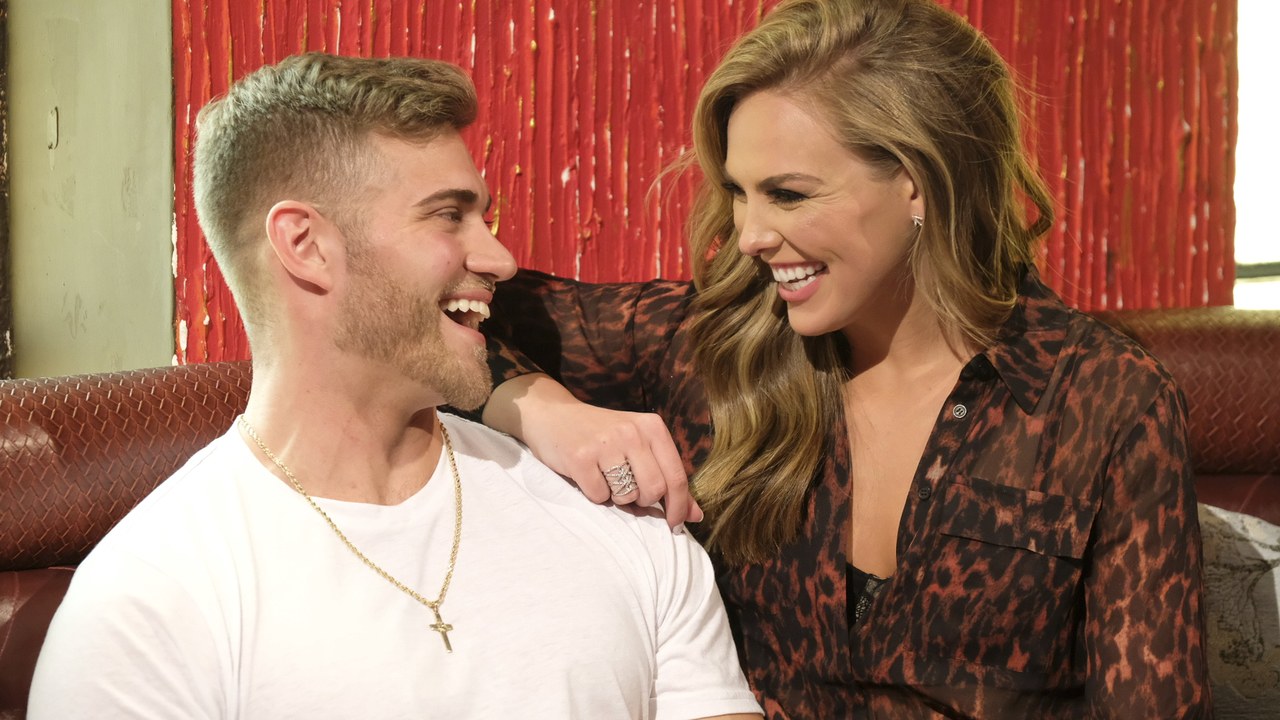
Chris: Well, Hannah’s a really religious woman, and I understand Hannah because I’m from the South. I grew up in the Bible Belt, and so I get that. I’m a faith-driven person as well. I understand where she’s coming from. She’s also very conservative, and her faith is very near and dear to her. And she has that connection with Luke P. She’s had it from the start. They talk about religion. They talk about their value. They talk about the Scripture. They talk about their favorite verses, and they connect on that level. She doesn’t really have that with any of the other guys. Ironically, it’s also what will drive her crazy about him because as much as it brings them together, it will also create a divide that they will battle over, and that’s the interesting thing about religion. I think that’s something we’re all going to debate: that religion is something that should bring us together, but at the same time history tells us it creates a lot of wars. And it will maybe create a big war between these two.

Would you like to see religion discussed more on the show?

Chris: It really depends season to season. I like that we’ve taken this dive into this season because it is a central part of it. We will show Luke P. going to church in Scotland and praying and getting some alone time. It’s a huge part of his life, and it really drives him. And it’s about to drive the storyline between him and Hannah. Would I like to see more? Only if it fits and only if it really plays a central figure in the show. I’m glad we’re not shying away from it in this instance because it is a part of it. And whether it’s sex or religion or both of those and how they mix, I’m glad we never shy away from those sometimes taboo social issues that will cause a lot debate around the country.

At the end of last week’s episode, Hannah tells Luke she can’t give him the rose, but as any diehard fan knows, it doesn’t mean that it’s the end of things. So does she really not give him a rose, or could it mean she’s not giving it to him right now but perhaps he could get it at the rose ceremony?

Chris: I can tell you that she does not give him the rose. But I can also tell you if you’ve ever seen an episode of The Bachelor or Bachelorette, there’s also a big “but.” While there is this Luke P. fatigue, all I can tell you is there is this amazing, bizarre, combative bond between these two people, and it’s like they’re magnets. I don’t know if I’ve ever seen a relationship on this show quite like this where there’s just something there, but they get on each other’s last nerve. It’s almost like a sibling rivalry—and I hate to say that ’cause it sounds so weird, but the only thing I can even put a finger on is that it’s just such an interesting relationship. I know it might drive people crazy, but I find it fascinating to watch.

In tonight’s preview, we see you giving Hannah a hug. Is this a heart-to-heart or more of an intervention on your part?

Chris: I hate to make myself sound old, but that was more of a dad moment. I wear a lot of hats on this show, and that was a moment with this young woman that I adore that was hitting rock bottom and had just had enough and was so frustrated she couldn’t see straight. That was an ‘I’m there for you’ moment.

How serious did this get for Hannah? Obviously it’s not like Colton jumping the fence and saying he was going to quit the show, but you do ask Hannah if she feels like she can continue.


Source link

Categories
Health

A Gender Gap at the Gym Is Keeping Women From Working Out


Growing up, Sayeeda Chowdhury, 24, never thought of herself as an athlete. She developed an aversion to the gym young, when classmates stared at the “Muslim girl modifications” to her PE uniform. “I hoped I could find the courage to go to the cardio room one day, but never imagined going into the weight room filled with testosterone and people staring,” says Chowdhury.

But that didn’t stop her from admiring strong female athletes. One day, watching a powerlifting video posted by a woman in her medical school class, she couldn’t help herself: “#goals,” she commented.

To her surprise, the woman invited her to come to the gym to learn to lift. With encouragement, Chowdhury kept coming back, gaining confidence on top of strength. “I stopped caring about who was watching me,” she says. She was hooked, and today she’s a powerlifter in her own right.

Chowdhury definitely isn’t the only woman to feel a sense of gym intimidation—if you’ve ever set foot in a bro-y weight room and suddenly felt like everyone was judging you, you know the feeling. But it’s not just a matter of making women self-conscious: Researchers argue experiences like this contribute to a gender gap in physical activity levels that harms women’s health.

Globally, women are less likely than men to get enough exercise: 57 percent of men ages 18 and over meet recommended aerobic activity levels, versus 49 percent of women, according to CDC data. When it comes to the number of people who meet guidelines for both aerobic and muscle strengthening activity, the gap widens. (Further marginalized groups have it even worse—in a recent study, young Black women were the least likely group to report any physical activity, and given the discriminatory policies trans and non-binary people face in sport and gym environments, experts suspect their exercise participation rates are even lower.)

In my six years as a personal trainer, I’ve seen this firsthand. It’s more than a personal frustration—it’s a serious health equity issue. Research tells us that regular exercise is one of the most powerful things a person can do to reduce their risk of developing chronic disease: It lowers the risk of hypertension, heart disease, stroke, diabetes, and numerous types of cancer. Exercise is also beneficial for mental health, and helps to build and maintain bone density, a concern especially relevant for women who are at greater risk for osteoporosis.

Just like the wage gap, the gender gap at the gym robs women of a better future.

So what’s responsible for the gym gap? The answer is complex, but a major factor is that active spaces are plagued by gender-specific deterrents that encourage women to stay on the sidelines.

For starters, women are more likely than men to experience weight stigma, which can discourage women from going to the gym (and even the doctor’s office.) Then there’s the issue of harassment—as in most public spaces, women’s experiences in gyms and on hiking trails and running routes are often marred by harassment. While running in a busy park in Salt Lake City, Shauna North, 26, was followed by a man in his car. He would park, watch her run past, drive up ahead, and park to watch her run by again. Later during that same run, she was whistled at by two more men, separately, as they drove by. Over 40 percent of women experience harassment while running, according to a 2017 Runner’s World poll. North was so shaken by her experience, she gave up on the idea of running a half marathon, afraid of what might happen on training runs after work. “If the same thing were to happen to me at night with no people around, I don’t know what the outcome would have been,” she says.


Source link

Categories
Health

Weight Stigma Is the Deadly Problem Keeping Patients from Getting the Care They Need


Ellen Maud Bennett, 64, a Canadian costume designer with a penchant for fresh lobster, peonies, and the “perfect shrimp-wonton soup,” spent years feeling unwell. But when she sought medical intervention, no one offered suggestions beyond weight loss treatments. When her cancer was finally discovered, she had only days to live. “Ellen’s dying wish was that women of size make her death matter by advocating strongly for their health and not accepting that fat is the only relevant health issue,” her obituary read.

Bennett’s case may be extreme, but when it comes to weight, doctors often have a big blind spot. When a heavier patient comes in with symptoms but a doctor sees only fat, it can mean treatment will fail to help her get healthier—or worse, add to her health issues. Weight stigma may even be part of what causes the laundry list of risks we typically hear linked to being heavier. Studies show weight shaming can cause spikes in levels of cortisol, the stress hormone which can contribute to high blood pressure, diabetes, and heart disease—“the very conditions that doctors blame on an individual’s weight,” says Louise Metz, M.D., a board-certified internal medicine physician. And the stress of constantly being judged for your size? Ironically, it’s been linked to weight gain—a 2018 academic opinion paper that examined nearly 70 studies on weight stigma found that it lead people to eat more.

Making matters more complicated, the stigmas and biases associated with being fat are almost impossible to escape: “Weight stigma affects so many life experiences—from the size of chairs, to the pace of exercise classes, to the availability of good medical care,” says Deb Burgard, Ph.D., a fellow of the Academy for Eating Disorders. Even the terminology used to describe larger bodies can be shaming. “Overweight” reinforces the idea that larger bodies are somehow wrong, and “obese” pathologizes the ratio of weight to height, even though it’s not always a great indicator of health. (That’s why fat advocates like me prefer terms like larger, heavier, and plus-size.)

Jessica, a 31-year-old who works in retail, had a history of eating disorders that started when she was 10 and was bullied about her weight at school. As an adult, she started to get a foothold on healthier habits, but fat shaming encounters with a doctor can still trigger destructive behaviors around food. “Recently, I went to a gastroenterologist who insisted I [must have] a fatty liver due to my size,” she says. Blood work and an ultrasound revealed her liver was perfectly healthy, but the episode triggered a relapse of her eating disorder. Even though her liver was healthy, her doctor didn’t look beyond her size.

“I was left with the feeling that I was fat, it was my fault due to a lack of character, and I only had one option: permanent life-altering surgery.”

Stories like Jessica’s aren’t uncommon—women dealing with weight stigma are actually at a greater risk for eating disorders, says Chevese Turner, chief policy and strategy officer at the National Eating Disorders Association (NEDA). “Often, the same behaviors that would be considered red flags in thin people”—obsessively counting calories, going overboard at the gym, developing a preoccupation with the scale or with food—“are seen as positive behaviors for ‘weight management’ in plus-size people,” Turner says. “In some cases, they’re even celebrated by doctors.”

But that’s not the only way weight stigma can affect patient care. After injuring herself in a fall, Gretchen, a woman in her 40s, made an appointment with an orthopedist. Instead of discussing her options for hip surgery, she was told it was “too dangerous” given her weight and her diabetes. When she pressed for further evaluation, it was suggested she wouldn’t be able to fit into an MRI machine. (She had an MRI a few weeks before and fit in the machine just fine.) Instead, another risky procedure was recommended: weight loss surgery. “I was left with the feeling that I was fat, it was my fault due to a lack of character, and I only had one option: permanent life-altering surgery that came with not only gigantic physical trauma but more than likely emotional distress,” she says.

Some weight shaming leads women to stop seeing a doctor at all. “I have many patients who come to our practice who have avoided medical care for years due to the weight stigma,” Dr. Metz says. Sophie, a 34-year-old teacher, knows exactly how that feels. She wanted help from a psychiatrist for her ADHD, but he weighed her at the beginning of every session before quizzing her on her eating habits. “At my last session, he asked me if I could eat less, and when I said I listen to the cues my body gives me, he put his head in his hands in a dramatic way and said ‘Oh, no no,’” she says. The appointments finally became too much. Sophie hasn’t gone back, even though missing her medication affects her sleep, focus, and concentration. She is trying to find another psychiatrist but she says it hasn’t been easy.

The good news is, some doctors are finding a way to treat patients—and even health issues related to weight—without the shaming. Health at Every Size (HAES), an approach developed by the Association for Size Diversity and Heath, shifts the focus from weight management to health promotion. Instead of directly targeting weight loss to help an overweight or obese patient feel better, HAES doctors prioritize positive health behaviors, like healthy sleep habits, movement that brings joy, and nourishing food. Whether a patient actually loses weight isn’t how her doctors measure success. “It is essential that we, as health care providers, begin to eliminate weight stigma from medical care,” Dr. Metz says. That means recognizing diversity of body size, eliminating the focus on weight as an indicator of health, and making treatment decisions informed by evidence-based medicine—not size, says Metz.

Health care providers who are using these practices are seeing all kinds of benefits. “You can connect and partner better and quicker with your client when you’ve eliminated this significant risk factor that creates shame and stress,” says Anna M. Lutz, R.D., a HAES dietician based in Raleigh, North Carolina.

“My current doctor is the first doctor to see me as a patient, instead of as a fat woman wasting her time.”

If you’re feeling judged by your doctor for your weight, push for weight-neutral care. Before you make an appointment, call the office ask if they have experience with weight-neutral care. (Try saying something like, “For my health, I need a practitioner who will work from a weight-neutral perspective, meaning focusing on my health and not my body size—is that something you can do?” To find a weight-neutral practitioner, check review sites like Ample, which helps people with marginalized bodies find non-judgmental care.) If you are given weight loss as a treatment plan, ask if thin people get the same health condition and what their treatment would be. If a thin patient would get a different intervention and you’re being prescribed a diet, ask why.

Regardless of your size (or your health) you have a right to care that respects your body and your choices for how you want to approach your overall wellness. When that happens, the results are powerful. It took Rachel King, a 30-year-old teacher, 12 years to find a doctor who would look beyond her size to diagnose and treat her Polycystic Ovary Syndrome (PCOS). When she finally found a doctor who would treat her from a HAES perspective, she got not only the treatment that she needed to manage her PCOS, but also finally felt she had the support to make a full-recovery from the eating disorder she’d battled for years. “My current doctor not only understood my diagnosis of atypical anorexia nervosa in a fat body, she asked me what I need in a doctor to help me be successful in recovery,” King says. “She’s the first doctor to see me as a patient, instead of as a fat woman wasting her time.”

Ragen Chastain is a speaker and writer in Los Angeles training for her first IRONMAN Triathlon. She’s also the current Guinness World Record Holder for heaviest woman to complete a marathon.


Source link