
Categories
TV & Movies

NYFF 2021: The Tragedy of Macbeth, Festival Highlights


Arriving at the end of its sixth decade, the New York Film Festival exhibits the wary tentativeness of a patient waking up after a lengthy operation. Are my legs still here? My arms? Can I raise my head? Sit up? Fortunately, the answers in all cases turns out to be yes. But the patient will be advised to take it easy. No jumping jacks just yet. Baby steps first.

Which is to say, metaphorically, that the NYFF is back, but still feeling the after-effects of the pandemic that reduced it and most film festivals around the world to a spectral “virtual” existence—if that—during 2020. Over the summer, during those happy couple of months when it seemed that the Covid-19 virus might be making a rapid exit, one could imagine that the Fall would bring a festival completely returned to its status quo. The upsurge of the delta variant in late summer, though, put the brakes on those rosy expectations, such that the 59th NYFF ends up in something of an in-between state—up and running, but cautiously so.

For both the press and the public, this means proof of vaccination and mask wearing, but with the public returning to the festival’s accustomed venues at Lincoln Center. At the press screenings I attended, no concessions were sold and even water and coffee from outside were disallowed, as announcements at every screening sternly advised. While these minor inconveniences were easily accepted, it seemed to me that the numbers of people attending the screenings were less than in pre-pandemic times, perhaps because any critics still wary of entering the Walter Reade Theater in many cases have the option of watching films at home, via screener links. Having watched every film I reported on last year that way, I was glad to be watching this year’s films up on the big screen, surrounded by other cinephiles, even without coffee.

Other major 2021 festivals that occurred before the NYFF—Venice, Telluride, Toronto—did so with all the familiar protocols in place and encountered few problems, either in terms of attendee pushback or resultant viral surges. In terms of programming, the resurrected festival that had the most impact on New York was, of course, Cannes. When the taste-making French festival was canceled in 2020, it left New York and other festivals without the pipeline of new arthouse favorites that usually fill their programs. Having long found the NYFF’s reliance on Cannes’ lead excessive, I regretted not seeing more independence and idiosyncrasy in last year’s programming, which I called undernourished.

This year, the nourishment was back, in the form of a return to a reliance on French precedent. Nearly two-thirds of the NYFF’s Main Slate are films that launched at Cannes. In part, this was as beneficial as it was expected: With many films backlogged from 2020 added to those finished in 2021, the Cannes programmers had a bountiful crop to choose from, and their highlights—the good, the fashionable and the dubious—were duly passed along to New York.

As usual, this means a preponderance of auteur films from countries that the NYFF has traditionally favored. Rather surprising was the relatively small number of French titles, as well as the proclamation of a “resurgent” Italian cinema that wasn’t backed up by any particularly impressive on-screen evidence. As in the past, the NYFF’s selection committee—led by festival director Eugene Hernandez and programming director Dennis Lim—made a few quirky departures from the French party line. Asghar Farhadi’s “A Hero” was one of the most acclaimed films at Cannes, but it’s nowhere in the lineup at the NYFF, which hasn’t shown a film by the double-Oscar-winning Iranian since 2011’s “A Separation.”

In recent years, very few films in the NYFF have been premieres, and the auteurs represented have almost always seen their films debut at other festivals. In 2021, for example, the Cannes veterans include Americans Wes Anderson (“The French Dispatch”) and Todd Haynes (“The Velvet Underground,” a doc) as well as the makers of the festival’s Centerpiece film, Jane Campion’s “The Power of the Dog,” and Closing Night film, Pedro Almodovar’s “Parallel Mothers.”

Opening Night, then, is currently the only major slot reserved for a premiere, but in that regard, the 2021 NYFF is off to a grand start, because Joel Coen’s “The Tragedy of Macbeth” turns out to be a terrific film that’s ideally suited to its place in the festival’s lineup. Not only is it a resounding success by a major New York filmmaker (or two if we include Coen’s wife and the film’s producer/star, Frances McDormand), but it’s also a film that evokes the art-film heritage long championed by the New York Film Festival.

I say that in part because of the film’s look. Working for once without his brother and longtime collaborator Ethan, Joel Coen has fashioned a gorgeously imagined vision of Shakespeare’s Scotland, filmed in austere black and white with an Academy aspect ratio and production design that’s dazzlingly distinctive while also calling to mind a whole host of cinematic precedents. Many of those harken back to the German Expressionists, and almost my first thought on witnessing them was that this was a film that F.W. Murnau might have imagined. But as soon as that impression settles in, you begin to sense comparisons to the work of other directors in the same lineage, from Dreyer to Bergman and Peter Brook.

This is anything but a showy display of cinephilic knowingness. It’s a rich and original conjuring that provides a sensual equivalent to the textures and angles of Shakespeare’s violent drama, and indeed unifies many of the play’s divergent moods and movements. Whether in the moors where the Weird Sisters declaim their cryptic prophecies, on the battlefield where Macbeth (Denzel Washington) and Banquo (Bertie Carvel) deliver their news of victory to ill-fated King Duncan (Brendan Gleeson), in the castle where the gruesome murders are committed and Lady Macbeth (McDormand) later walks in a guilty trance, or in any number of eerily remote and threatening landscapes, the film gives us a world with its own harsh and encompassing dream logic. The work of cinematographer Bruno Delbonnel, production designer Stefan Decant, composer Carter Burwell and others contribute mightily to this world’s enrapturing power.

The stylistic tour de force’s way of unifying the film’s various elements extends even to its cast, which is diverse in the usual sense and others too. Besides Washington, there are other Black actors, as well as Brits performing alongside Americans and theater actors working with those more used to film or television. In the film’s press conference, all the actors interviewed credited an unusually generous three-week rehearsal time for their ability to forge a group sensibility in approaching the play’s challenges and Coen’s overarching vision.

Doubtless, the younger actors were inspired and instructed by Washington and McDormand, who are simply superb in their roles. While both actors have plenty of Shakespeare in their resumes, their performances here surely represent a career peak. At their press conference, Dennis Lim pointed out that Kenneth Tynan wrote the characters for Polanski’s “Macbeth” as being in their 20s, an age when they might be gripped by overweening ambition. Washington and McDormand, both in their mid-60s, replied that they envisioned the couple as having missed too many opportunities in the past and now desperately lunging for their last chance.

That makes perfect sense, and adds an element of poignancy to the brutal velocity of Shakespeare’s plunge into royal murder and madness. Other fine films have, of course, have been made from this material, but I have a feeling that Coen’s film will end up being judged equal or superior to any of them. It’s truly one for the ages.

Other Early Winners

In the festival’s first week of press screenings, I saw a mix of films that created the same impression that I come away with every year. A couple seem so ordinary that you can’t imagine how they made into to such a select company. Others are good and very much deserving of their place in the festival, but not strikingly exceptional. Then there are the real stand-outs, films that easily qualify as among the year’s best. Here are four that add an element of greatness to this year’s festival.

“Drive My Car”

When theater director Yusuke (Hidetoshi Nishijima) arrives in Hiroshima to stage Uncle Vanya, he requests lodging an hour away from the theater so he can indulge his penchant for learning a play’s text by listening to a tape on long drives in his red Saab 900. But there’s a problem: past difficulties have made the theater decree that guest artists must have drivers. So Yusuke is entrusted to the care of Misaki (Toko Miura), a young, poker-faced chauffeur who knows nothing of Chekhov but senses in her charge a fellow damaged soul: while he is still stricken by the death of his beautiful, unfaithful wife, the driver mourns her abusive mother, whom she failed to rescue from an landslide. There are other characters and complications woven into this set-up; the three-hour film has an expansive scope and a pensive, generous way of unfolding its narrative. And the themes are hardly unfamiliar. Yet if the difficulties overcoming struggles with guilt and grief have been dramatized often in recent years, the filmmaking talent assembled here accomplishes the tricky task of avoiding the inherent melodramatic pitfalls and delivering a penetrating drama that has extraordinary cumulative power. Ryusuke Hamaguchi’s film is adapted from a story by Haruki Murakami.

“The Worst Person in the World”

Judged just by its premise and main concerns, this Norwegian film can sound like too many other movies—especially a whole raft of American indie works, not to mention TV shows—that deal with the vicissitudes of contemporary young people trying to negotiate the trials of love, work and indecision. Julie (Renate Reinsve) is 29, with a boyfriend, Aksel (Anders Danielsen Lie), who’s 15 years older. He’s settled in his profession as a successful satiric cartoonist. She starts out thinking she wants to work in medicine, then shifts to psychology, then photography. Yes, she’s a bit of a ditz—and not the worst person in the world; that’s someone else—but the film never treats her condescendingly. In fact, writer-director Joachim Trier has a gift for treating such people with nuance, sympathy and insight. The result here is a tale that’s almost too rich to be pigeonholed as a romantic comedy. It ranges over several years and a number of life changes for its characters, and at every turn in the journey it seems to grow richer and more penetrating, even to the point of discovering the tragic dimension beneath its comedic surface. Distinguished by the fine performances by its leads, it’s a brilliantly mounted film that seems destined to be one of the year’s big arthouse hits.

Bad Luck Banging or Loony Porn”

As crazily offbeat as its title, this winner of the Golden Bear at Berlin this year begins with an entirely X-rated scene in which a couple engages in an exuberant bout of copulation while videotaping their exertions. Their bit of homemade porn then accidentally makes its way to the Internet and has a drastic impact on the career of the woman, a middle-school teacher. Made by Romanian director Radu Jude, this high-energy satire not only manages to touch on an amazing number of contemporary discontents—about politics, religion, morality, media, hypocrisy, and much else—but also makes you realize how the same concerns that animate and polarize people whose kids go to a certain Bucharest middle school seem to be sparking social divisions the world over. This is also one of several films in the festival that show people wearing masks against the pandemic—which only adds to its air of contemporary authenticity and disquiet.

“Prayers for the Stolen”

Confirming the promise of her documentary feature “Tempestad” (see my review), this first dramatic film by Mexican director Tatiana Huezo demonstrates her formidable skills as both a gifted and original cinematic stylist and a chronicler of the hardships of impoverished Mexican and girls caught up in Mexico’s current civil turmoil. The main character here, Ana, is a girl whose family lives in a mountain village where they pick poppies for the drug trade. Much of what Huezo shows us initially is lyrical and observant, almost in documentary fashion: the rhythms of life in the verdant setting and the bonds that unite Ana with her friends and their moms (dads are mostly away in the U.S. working). The dangers that threaten them, especially cartels that steal girls to sell them into bondage, almost seem like abstractions—until they suddenly explode into view. A poignant, wise and beautifully crafted drama, Huezo’s latest promises great things to come.

“The Bloody Child”

Though her work may be classified as experimental, Los Angeles-based filmmaker Nina Menkes is perhaps best described as a visionary poet of cinema. In its Revivals section, this year’s festival includes a new restoration of her third feature, a hallucinatory, multi-leveled exploration of the physical and psychic resonances of a crime: a Gulf War veteran is arrested while digging a grave in the desert for his wife, whom he has apparently murdered. While touching on challenging emotional and political issue, Menkes’ way with cinematic language is unique and exhilaratingly original. Not to be missed.

Source link

Categories
TV & Movies

East of the Mountains


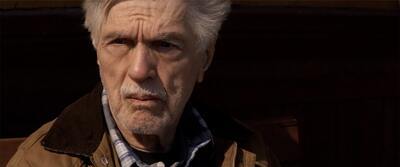
How the hell do you sell a slow, moody character study like “East of the Mountains”? Character actor Tom Skerritt takes the lead for once in this gentle, melancholic drama about an older man who, while overwhelmed by suicidal thoughts, figures some things out for himself. Fans of David Guterson’s source novel will probably get it, but everyone else might need a moment to get the picture.

There’s not much conflict in “East of the Mountains.” Ben, Skerritt’s character, almost loses his dog Rex after another vicious canine goes for Rex’s throat. And while Ben does eventually confront the belligerent dog’s owner, this isn’t a “John Wick”-style revenge narrative. Ben’s too old for that.

Ben’s also got cancer. You’d be forgiven for thinking that this is the sort of role that could be publicized as the role of Skerritt’s lifetime, or something equally patronizing. Thankfully, Skerritt doesn’t work like that. His low-key warmth gives director S.J. Chiro and screenwriter Thane Swigart a charming, nuanced performance that’s worthy of their considerate and moving adaptation.

That being said, it’s also very easy to assume the worst about “East of the Mountains” based on how Ben’s introduced to viewers. He heads for the mountains after a halting conversation with his adult daughter Renee (Mira Sorvino). Ben’s car breaks down along the way, though that doesn’t seem to bother him. We’ve already seen him stare down the length of his rifle, then turn away with disgust. So we already (sort of) know what’s on Ben’s mind.

You might imagine that Chiro and Swigart will over-stress Ben’s dark mood for cheap catharsis, especially given how, later on, they flash back to Ben’s earliest memories of his wife Rachel (Victoria Summer Felix). But Skerritt’s performance opens up Ben’s story in ways that make you want to look for his signature care and intelligence throughout “East of the Mountains.”

Ben’s like a great latter-day Clint Eastwood character in that he’s defined, but never really limited by his prickliness and intolerance. He sometimes slurs his speech when he’s done talking to people, as if his batteries needed recharging, like when he grumbles to Renee that, “I’m not sure my health is your business.” Ben also sometimes talks loudest with a murmur or a quiet stare, like when he offers money to Roberto (Robert Fuentes), a stranger who gives Ben a lift, but Roberto replies: “It’s not necessary.” It’s not just the words that Fuentes says, but the way that Fuentes lands on them, without ceremony or condescension.

You have to be open to, and even curious about Skerritt’s character if you’re to know what makes “East of the Mountains” so special. A lot of scenes match Ben’s energy in the sense that they highlight little, unflashy qualities in his and his co-stars’ performances, like when Ben pokes down a small bridge, or when his plastic shopping bags rustle on his short walk back from the general store to his hotel room. Skerritt’s voice also turns over like a purring motor engine when his characters admires the handiwork of Anita (Annie Gonzalez), the animal vet that saves Rex’s life. He compliments her stitching, and while she doesn’t need to, she responds in kind but refusing to hold his hand: “I know. But thanks.”

Ben’s reserved, but open in a way that a lot of real older people are, like when Anita’s son Derek (Diego Collie) asks what war Ben was in, World War II? “Korean War,” Skerritt says, after a short pause. Brief exchanges like that help viewers to appreciate Ben and his concerns in a way that go beyond the usual end of life clichés, let alone the well-meaning tropes that surround characters who are defined by their suicidal ideation. That goes a long way in a movie whose plot moves at its own pace, and doesn’t demand much from viewers, except to follow Ben wherever he wanders to next.

If you do click with Skerritt’s performance, you’ll see that a lot of what’s seemingly missing from “East of the Mountains,” as far as drama goes, is suggested or even addressed later on in the movie. Like the way that Ben picks up, but almost never uses his long rifle (it belonged to his father). Or how he doesn’t seem to care when Renee suggests that he meet and reconcile with his brother Aidan (Wally Dalton).

Once Skerritt’s character feels like talking about his issues, those conversations not only provide some retrospective context, but also feel narratively grounded and emotionally resonant. “East of the Mountains” feels like Ben’s story, either as told by him, or maybe just as an extension of him; Skerritt’s co-stars get that and match his clear-eyed simplicity in their respective performances. That sort of collaborative effort is exciting to watch, even if it’s also kind of hard to advertise.                                  

Now playing in theaters and on VOD.


Source link

Categories
TV & Movies

El Planeta


A mother-daughter bond shines through stark black-and-white cinematography and surreal humor in “El Planeta.”

The debut feature from writer/director/star Amalia Ulman recalls the scrappy, low-budget look and feel of the movies that marked the indie film explosion of the early ‘90s, but its dialogue and details are unmistakably personal. Ulman, an Argentine-born artist, appears alongside her mom, Ale Ulman, making her charismatic on-screen debut. And while the duo’s financial dilemma often plays out in arch ways for laughs, the way they snipe at each other and regard one other with tenderness gives the film a grounding authenticity.

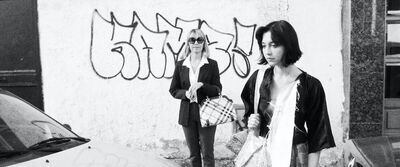
“El Planeta” takes place in the northern seaside city of Gijón, in the Asturias region of Spain, where Amalia Ulman grew up. Working with cinematographer Carlos Rigo, she paints a detached portrait of despair following Spain’s recent economic crisis. Characters casually walk past storefront after storefront that’s empty, boarded up or for lease. In the midst of this misery are would-be stylist Leo and her mother, Maria, who are on the verge of being evicted from their tiny apartment. They wear coats indoors to avoid turning on the heat, and when they can no longer afford to pay the electrical bill, Leo sits in the lighted stairwell to read a book.

But they’ve been feeling the pinch for a while, as evidenced by the minor-league hustling and thieving that mark their daily lives. The hilariously understated opening meeting between Leo and a man she discovered online (played by Spanish sci-fi/horror director Nacho Vigalondo) shows the extent to which she thinks she’s willing to go to make a buck, and the fact that Ulman shoots their conversation in a long, single take allows the absurdity of the humor to build steadily. In front of the camera, she has the striking, wide-eyed presence of a silent screen star, which she uses to express astonishment at the array of horrible men who get her hopes up and let her down over the course of the film. Everybody wants something from everyone else, including our impoverished heroines.

Trouble is, Leo and Maria had grown accustomed to a certain comfortable lifestyle, one they’re finding increasingly difficult to maintain following the death of the family’s patriarch. Maria tries to keep up appearances, wearing a full-length fur coat and carrying a Burberry bag to shoplift stuff she doesn’t need from the variety store. An elegant beauty, Ale Ulman calls to mind destitute and delusional princesses from Blanche DuBois to Michelle Pfeiffer in “French Exit.” And when she and Leo enjoy an expensive lunch at the restaurant that gives the film its title, she blithely tells the waitress to put it on the tab of a local politician Leo supposedly had dated. It’s a pathetic version of Fletch ordering a Bloody Mary and a steak sandwich (and a steak sandwich) at the club and charging it to the Underhills.

“If I keep eating carbs, I’m going to have a poor person’s body,” Leo whines. And while such superficiality might make these characters seem off-putting, they also reveal enough humanity and vulnerability to make us ultimately root for them to succeed. The fond way they bond over amusing memories of their mean, dead kitty as they cuddle for warmth in bed at night suggests this moment was pulled from their actual lives. And a final shoe-shopping trip at the mall is joyous in its normalcy, yet simultaneously heartbreaking because we know everything is about to collapse around them.

Because Ulman pulls off such a delicate tonal balance for the majority of “El Planeta,” it makes you wish she hadn’t relied so heavily on stylistic quirks. Intentionally cheesy wipes between scenes are a distraction, and the whimsically plinky score from Chicken feels at odds with the stripped-down simplicity of the visuals. Still, Ulman is taking risks, which is exciting, and it bodes well for the next depressing/amusing story she wants to tell. And hopefully she’ll let her mom tag along again, too.

Now playing in select theaters and expanding nationwide and on digital on October 8.


Source link

Categories
TV & Movies

Surge


An impressive Ben Whishaw is rigged to blow in “Surge,” the electrified debut feature by Aneil Karia, which follows along as the actor’s ticking-time-bomb character rampages through London, robbing banks and running amok. 

Joseph is a quietly erratic loner, played by Whishaw—who won the World Cinema Dramatic special jury prize for acting at Sundance—as someone coiled so tight he appears to be vibrating. He is either experiencing a psychotic break or making a conscious decision to “liberate” himself from the rules of society that keep the rest of us in place. The question of which it is keeps “Surge” interesting—not because co-writer/director Karia or his co-writers Rupert Jones and Rita Kalnejais are building to an answer, but because this ambiguity renders Joseph’s actions unpredictable and thus more unnerving. 

We first meet Joseph at his day job in airport security; scenes during a shift at Stansted are chillingly precise in capturing the nightmarish, drone-like experience of modern air travel. Herding passengers, cattle-like, through a procession of cold, industrial structures, Joseph at one point terrorizes an elderly man (Bogdan Kominowski) who doesn’t speak English and can’t interpret the partial strip-search he’s subjected to as anything other than a violation. 

Being on either end of such a dehumanizing interaction would be enough to make someone snap, and Joseph does this high-anxiety work daily. It’s no surprise when he loses it one day and walks off the job. Joseph’s fuse was surely lit long before the wretched birthday gathering put on by his parents, framed as a last straw of sorts. 

The naked hostility of his seething father (Ian Gelder) and meek badgering of his distraught mother (a shattering Ellie Haddington) make it clear that Joseph is more a cause for consternation than joy. You could cut the air of misery around their dinner table with a knife; it becomes downright unbreathable once Joseph mentions he took a carrot cake into work and his mother brings out an identical one, tearfully imploring her son to blow out its candles. Psychological pressure mounting, Joseph bites through a glass, slashing his mouth on the shards; from there, all bets are off.

Acting on impulse, Joseph is soon roaming the city streets, testing the limits of acceptable behavior. Initially, his transgressions are small: he runs out on his parents, jumps the turnstile at a train station, and swings by to see a pretty colleague (Jasmine Jobson) who’d called in sick. But as Joseph tears up every social contract he encounters, “Surge” gets grim. Determined to fix said colleague’s TV, he goes to the store to buy an HDMI cable, only for a machine to eat his card, at which point he decides to procure the necessary cash by bluffing his way through a bank robbery up the street. 

Karia films this escalation with a matter-of-factness that borders on the surreal. Smiling as he chicken-scratches out a demand note to slide to the bank clerk, Joseph stands there awkwardly as they read it over, apologizing as he stuffs stacks into his pockets and legs it outside. But from there, the character moves with the delirious abandon of a man on a vision quest, though he’s clearly heading nowhere near enlightenment. Yet, held close to Joseph as we are, his leaps in logic feel almost reasonable—in a quasi-intuitive, one-plus-one-equals-11 sort of way. 

Whishaw is best known these days as the gadget-savvy Q to Daniel Craig’s 007, and as the voice of cuddly Paddington Bear; the actor’s mesmeric, vein-bursting work in “Surge” rather more recalls his breakout turn in Tom Tykwer’s masterpiece “Perfume: The Story of a Murderer.” As there, Whishaw is eerily inscrutable in “Surge,” evincing little save the addictive raw energy of the impulses possessing and propelling him.  

That “Surge” never clarifies what’s compelled Joseph to careen around the city like a malignant pinball is also in line with its visceral, vertiginous style; Stuart Bentley’s guerilla-like handheld cinematography traps you uncomfortably close to, but never inside, the character’s headspace. Swirling and shuddering to convey a sense of manic escalation akin to whatever’s raging within, the look of “Surge” works in tandem with its chaotic soundscape to assault and overwhelm. 

In this, “Surge”—though packing a one-bad-day-is-all-it-takes premise that will earn it comparisons to “Falling Down” and “Joker”—is most comparable to the Safdie Brothers’ scuzzy “Good Time,” an underworld odyssey that saw Robert Pattinson’s bank robber compete in a frantic, street-level foot-race against the consequences of his crime. Cinematically, the parallels are extensive—and excessive, in the replicate instance of a robbery that goes sideways once a dye pack detonates, sending up a plume of brimstone-red dust into the air.

Thin and squirrelly, with eyes ablaze, Whishaw lacks Pattinson’s force of charisma, but that accentuates the ways in which “Surge,” like “Good Time,” is examining Joseph’s white privilege as a literal carte blanche, enabling then abetting his spree. Much like Pattinson’s Connie, Joseph uses and abuses the non-white characters of “Surge”—of whom there are many in a diverse metropolitan hub such as London—as a means to an end, whether threatening bank and shop personnel or abruptly making a sexual advance on his colleague in her kitchen. (She doesn’t turn him down, but it’s hardly appropriate and feels insidiously transactional.) 

The filmmakers seem conscious that maintaining such tight focus on Joseph, whose rallying cry of “I’m so f**king tired!” makes him less special than he realizes, might be seen as validating his destructive solipsism. Late in the picture, when a hip-hop track blares through a car’s speakers and Indian dancers occupy a street corner in Joseph’s line of sight, he finally experiences some relief from all this psychic pain—through the act of observing something other than himself.

At one point, Joseph makes his way through a wedding party, then to a hotel room, which he trashes before slitting open the mattress and getting inside, as if crawling back into the womb. Joseph’s “surge” signals his regression to a more primitive nature; sensing the Pyrrhic nature of this break with reality, and the heat around the corner, does he here wish to complete the process and be unborn? “Surge” periodically traffics in this kind of symbolism, but rarely to its benefit. The immediacy of its approach prevents the film from effectively exploring such ideas, and “Surge” is unconvincing the more it reaches for broader commentary on the inhumanity of modern society. Still see this film, but see it for what it is: a ferocious showcase for Whishaw, who’s never been nervier, and a promising first feature from a filmmaker with energy to spare.

Now playing in theaters and available on demand.


Source link

Categories
TV & Movies

Midnight Mass


Mike Flanagan’s “Midnight Mass” sees the talented writer/director move from adapting Stephen King to crafting a project that feels so distinctly like one of the horror master’s works that even fans will wonder how they missed its book release. With elements of The Stand, The Shining, and Salem’s Lot, Flanagan’s study of religion and immortality sometimes rekindles memories of actual midnight masses in that it can be a little exhausting in its preachiness with a few too many monologues. While there are some excellent performances and engaging themes, it also turns out that Flanagan, when untethered from the plot of source material like The Haunting or Doctor Sleep, can get a little too wordy and repetitive for his own good. If this were a King novel, it would be one of those 900-page behemoths that often goes unfinished by readers, and those who did barrel through it would admire the ambition of the authorial effort while also wondering if an editor might have helped.

Again like a lot of sermons of my youth, “Midnight Mass” is abundant with connected themes and overt symbolism. Flanagan is playing with the darker side of religious scripture, connecting things like resurrection and drinking blood to a different kind of mythology. After all, horror and religion have a lot in common, often serving up similar themes of morality and vanquishing of evil, only in different cloth. Some of Flanagan’s most ambitious elements here play with the idea that The Bible truly is a horror story, while also weaving very King-like themes into the fabric, primarily the conflict between human responsibility and the thinking that belief can wash away all sin.

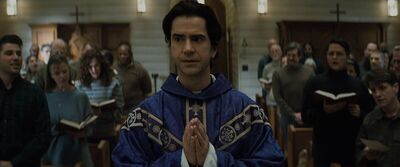
The vast majority of “Midnight Mass” takes place on a rundown island fishing community called Crockett Island. Actually, most of it takes place in the decrepit church, St. Patrick’s, which is newly led by a young charmer named Father Paul (a truly fantastic Hamish Linklater, whose work here almost justifies a look on its own), a charismatic leader who has been sent to replace a man named Monsignor Pruitt. Coinciding with Father Paul’s arrival is the return of the island’s prodigal son, Riley (Zach Gilford), who has been in prison for four years after a drunk driving accident that killed a woman. In a very “The Haunting of Hill House” manner, Riley is even directly haunted by his victim, amplifying his need for some kind of redemption. The sinner and the savior coming to Crockett Island at the same time feels like fate.

While Riley and Paul are the center of “Midnight Mass,” Flanagan fills out the community with memorable characters, most of whom have suffered the kind of loss that brings them to a church for guidance, including grief that pushes them to seek a higher purpose in the world. Riley’s parents Annie (Kristin Lehman) and Ed (Henry Thomas) are St. Patrick’s regulars, but his old friend Erin (Kate Siegel) has some more questions about the purpose of faith given her dark past. The strident Bev Keane (Samantha Sloyan) is the kind of committed soul who will follow religious figures down any dark path in the name of God, while a small cadre of non-believers cast a skeptical eye at what’s going down under the cross in the middle of the night, including a doctor (Annabeth Gish) with an ailing mother (Alex Essoe), the new sheriff (Rahul Kohli) in town, and a local drunk (Robert Longstreet) with, wait for it, a dark past.

If you’re wondering how the 29-year-old Essoe plays the mother of Annabeth Gish, you should be warned about some truly dicey old-person make-up that’s kinda necessary for the plot while also a bit misguided. Without spoiling anything, it will be clear pretty early why younger performers like Thomas and Essoe are playing roles beyond their years, but it’s never anything less than distracting. In fact, the effects of “Midnight Mass” are generally inferior to both “Haunting” projects. This show is not heavy on them, so it’s a minor complaint, but when it does explode into horror action, it turns into more of a B-movie production than either “Haunting.” Without spoiling, Flanagan has always worked better with shadows in the dark than when he has to reveal them.

It’s also, believe it or not, talkier than both “Haunting” projects. Riley may be relatively stoic, but people sure do love talking to him, particularly Father Paul and Erin, both of whom get long speeches about religion, God, alcoholism, addiction, the afterlife, and much more. This is a monologue-heavy show, which could throw off people looking for shivers. That’s not Flanagan’s game here—he’s more interested in philosophy and faith than he has been before, directly asking questions about morality and sin. Most of the lengthy conversations are well-scripted, engaging enough in their dialogue, but they also drain a lot of the momentum from the piece, especially after a major revelation mid-season then leads to a couple of episodes of intense discussion when viewers are going to be looking for the bloody stuff.

What is the opposite of a miracle? Why do some of the faithful get blessings in their life while others face only torment? These are deep, complex themes for a Netflix Original series, and it’s a credit to their deal with Flanagan that something this complex exists. And yet I come back to that King comparison. Even though I’m a huge fan, I can admit that his themes and concepts sometimes overwhelm his plotting. He’s prone to tangents that don’t serve the greater purpose and has a habit of underlining his ideas instead of trusting readers to unpack them. And yet he’s still such a consistently entertaining craftsman (strongly recommend his recent Later and Billy Summers, two of his better late-career offerings, by the way) that fans can easily forgive his tendency for abundance and overcooking. Perhaps the greatest compliment I can pay Flanagan and “Midnight Mass” is that all of those feelings I’ve had about King’s work over the last four decades consistently hold true for him too. While I can see the flaws in this overheated homily, there’s nothing that’s going to stop me from coming back to the Church of Flanagan the next time that the doors open.

Whole series screened for review


Source link

Categories
TV & Movies

Abe Lincoln No Malice Awards Celebrate Young Filmmakers At Shakespeare Theater


“The occasion is piled high with difficulty, and we must rise—with the occasion…Think anew, and act anew…”—Abraham Lincoln

“There is no darkness, but ignorance.”—William Shakespeare


L-R, top: Kenya Apongule, Michael Proctor, Anna Lee Ackermann; L-R, bottom: Niko Pecori-Robinson, Azalee Irving, Zaknafein Luken.

IT WAS SUCH A JOY for me to host the No Malice Film Celebration this past Sunday, September 19th, at Navy Pier’s The Yard at Chicago Shakespeare Theatre. 

The event honored the work of ten remarkable filmmakers, ages 11-21, who are the winners of The No Malice Film Contest, presented by the Abraham Lincoln Presidential Library Foundation (ALPLF), The Roger and Chaz Ebert Foundation, and the Abraham Lincoln Presidential Library and Museum. These young artists created outstanding short films as part of Healing Illinois, a racial healing initiative of the Illinois Department of Human Services in partnership with The Chicago Community Trust. 

(L-R:) Jeff Williams, Barbara Gaines, Kevin Dwyer and Hannah Kennedy. Photo credit: Chuck Osgood.

Abraham Lincoln, in his second inaugural address sought to heal the nation’s racial wounds after the Civil War “with malice toward none, with charity for all.” Illinois schools will use the films, and supplemental curriculum created by educators, to talk about race and the harmful impact of bias and injustice.

Barbara Gaines, the visionary founder and Artistic Director of the Chicago Shakespeare Theater welcomed us warmly with her enthusiasm for showcasing the work of our talented young filmmakers. We were so grateful to be able to present the awards to our filmmakers from that stage. It emphasized both the joy and the gravitas of the occasion since the films presented were all about how to unite and heal the various factions in our society.  

Above: Barbara Gaines; Below: Erin Carlson Mast. Photos by Chuck Osgood.

Ms. Gaines was followed by Lincoln scholar,  Erin Carlson Mast, the President and CEO of the Abraham Lincoln Presidential Library Foundation who noted President Lincoln’s appreciation of the arts and his particular fondness for the works of William Shakespeare. “Lincoln was known to critique the performances of actors he felt had missed the deeper meanings and historical contexts of Shakespeare’s plays,” she said. “Lincoln enjoyed Shakespeare, yes, but it wasn’t just enjoyment. He appreciated the truths that Shakespeare’s works revealed about the human condition.”

In my introductory remarks, I noted how seriously the filmmakers took the notion that because everything on earth is connected to everything else, it truly matters how we treat one another. Just as the COVID-19 virus caused the entire world to shut down long enough for people to realize that one thing can affect us all, my hope is that these films will cause viewers to pause and open their hearts to the messages of hope and unity artfully conveyed by these young people. As their films show, acts of empathy, compassion and kindness can change the narrative in our everyday lives. 

Photo credit: Chuck Osgood.

The premiere screenings of the films that followed were divided into three parts, beginning with the 3rd place winners in each category, who each received a $500 cash prize and joined me onstage for a Q&A afterward. Handing out the awards was the invaluable Angela Staron, Senior Director of Advancement at ALPLF. Ms. Staron helped to conceive the contest and worked tirelessly to execute it and see it to this day of awards.  

Angela Staron.

In the ages 11-14 category, Jessica Wong (who was not present at the ceremony) won for her harrowing film, “Racial Justice,” which edited together news clips of police brutality and the subsequent protests against it. In her director’s statement, Miss Wong wrote, “As a person of color, I could not stand here and watch as the US nation fails to provide equity, so as a result, I spent months collecting clips and photos of the BLM (Black Lives Matter) and Protect Asian Lives movements. After constant reviewing and hours of editing, I finally put my video together and was ready to present it to everyone and help raise awareness of racism.”

Miss Wong tied for 3rd place with Abigail Eldridge, whose film “We the People” details the lives of various civil rights heroes. In voice-over, Eldridge reads Amanda Gorman’s poem, “The Hill We Climb.” “In my life, I’ve met people from many different cultures and of many different races,” said Miss Eldrige. “I’ve known some people who have been called names just because of who they are, how they’re born. They can’t help that, no one can. I just want them to feel like they’re wanted, because they are. It doesn’t matter what their skin color or their heritage is. It just matters that they’re here and they’re being who they want to be.”

Abigail Eldridge holding her award. Photo credit: Chuck Osgood.

The winner of 3rd place in the ages 15-18 category, Azalee Irving, used her film, “Interracial Relationships,” to chronicle her experience of living in a biracial family in Homewood, and how it differed from the experience of growing up on the South Side. “I want to let everybody know that we are all one,” said Miss Irving. “We have all come from something. I hope my film brings people together and inspires them to end their racist ways while continuing to move forward. I would love if everyone continues to raise the youth of our future to be diverse and include everyone, because you never know the impact another person could make on your life.” 

Zaknafein Luken, the 3rd place winner in the ages 19-21 category, said he opted for simplicity with his film, “Hate is Not Welcome Here.” “The film itself is based off of a billboard in my hometown of Lincoln, Illinois, that said, ‘Hate is not welcome here,’” said Luken. “It is black and white, just real simple, and I thought that would be a great way to just get the message across—something simple and to the point. I hope that this film, with its simple narrative, can drive home the fact that we shouldn’t be judging others by how they look or talk, but who they are as a person.”

L-R: Jessica Wong, London Shields, Sean Emmanuel Atienza.

Next, we screened the work of the 2nd place winners, who each earned a $1,000 cash prize. The winner in the ages 11-14 category, London Shields, powerfully used archival footage in her film, “Racial Healing in Oppressed Communities,” to illustrate the systemic inequality that has been prevalent throughout American history. “I wanted to make this film to show people that racism is still very relevant today,” said Miss Shields. “My goal for the film was mainly to raise awareness, inspire compassion and get us to a place of understanding where we can meet in the middle.” 

Sean Emmanuel Atienza, who won 2nd place in the ages 15-18, was not present at the ceremony, yet his film “Puzzle” nevertheless wowed the audience with its eye-popping effect that makes a Rubik’s Cube appear to solve itself. With calmness, Atienza explains in his film how seemingly insurmountable problems can be solved once we begin to appreciate, rather than fear, our diversity. “I wanted to convey my ideas about how each and every person, no matter their background, still can be better and contribute to stopping hate and violence through listening to and understanding other people’s stories,” wrote Atienza in his director’s statement.

L-R Zaknafein Luken, Michael Proctor, Anna Lee Ackerman. Photo credit: Chuck Osgood.

When asked what motivated him to make “A Call to Fight Lies: Practical Steps to Fight Injustice,” his 2nd place winning film in the ages 19-21 category, Michael Proctor was refreshingly honest, admitting that it was the cash prize that first caught his attention. Yet it was through the process of making the film that he found himself learning so much. 

“My goal with this film is in three parts, said Proctor. “I hope that people are moved to vulnerability, empathy and then love. It was really uncomfortable, at first, for me to have these conversations with people, but I forced myself to do it because I really wanted to bring this film to fruition, and after I did it enough, it became easier and easier to have these hard conversations. It gave me more of a language to speak with because I talked with people who are already in it, and I hope that this film produces a space that causes other people to start talking about these issues. Hopefully they can be vulnerable in that and become comfortable in that. By sharing their biases—which we all have—hopefully from that comes empathy and an understanding of one another. With empathy, we can feel and know what each other are thinking. Maybe a lot of us who don’t suffer from these problems nearly as much can empathize with those who do. This is where compassion and love are bred, and wherever there is compassion and love, I believe there is healing.”

Audience shot of filmmakers and guests assembling before show begins. Photo credit: Chuck Osgood.

Finally, we screened the 1st place winners, who each earned a cash prize of $2,000. In the ages 11-14 category, Niko Pecori-Robinson won for his extraordinary stop-motion animated film, “Be the GOOD,” which portrays the bullying endured by a student until he is defended by his peers. “I’ve always wanted my films to be seen by a very large audience, so I thought this would be the perfect chance to do that,” said Pecori-Robinson, who likely has a future at Pixar. “I hope this film will inspire people to treat others equally.” 

Anna Lee Ackermann originally made her winning film in the ages 19-21 category, “As We Are Planted,” for her Capstone project at Columbia College Chicago, where she recently graduated. Her documentary, which is guaranteed to impress the team at Kartemquin Films, focuses on the agricultural center, Just Roots Chicago, where the filmmaker had originally volunteered to work. “I thought it was incredible because I had no idea that urban farms were a thing, and so they graciously let me document their story and share their impact on the community,” said Miss Ackermann. “I really hope that the documentary will bring awareness to this issue of food deserts, or more correctly known as food apartheid, as it a very holistic issue. If you don’t have access to healthy and sustainable food options, that leads to unhealthy outcomes. I just want to bring awareness to this issue of the lack of nutritious food options that is happening around the corner from us and we might not even know it.” 

L-R Niko Pecori-Robinson, Kenya Apongule, Anna Lee Ackerman getting stage directions from Kevin Dwyer. Photo credit: Chuck Osgood.

Kenya Apongule, the 1st place winner in the ages 15-18 for her film, “Hush,” which powerfully blends visuals and dance with her arresting spoken word poetry, said that she felt she wasn’t getting the full knowledge that she needed about her own history at school. After high school, she enrolled at the country’s top Historically Black College/University (HBCU), Spelman College in Atlanta, and has found it to be a very empowering experience. 

“I took a course called African Diaspora, which is required for all the students, and it taught me so much more about my history, about the things I never knew before,” said Apongule. “I included some of it in my film, such as Sally Hemings, who Thomas Jefferson had a ‘relationship’ with when she was 14 years old—I wouldn’t call it a relationship—but through that, she had kids who are descendants of Thomas Jefferson. I was also inspired by the struggle and the exhaustion of being a Black woman in this country, even in my own experience at 19 years old. So this is a really personal subject for me, and I felt I could talk about it and put my own experiences with it into this film through words. I wanted to have my own family in it, and the last person in the film is actually my niece, so I could end it by focusing on the future. We can change things now. We need to have those conversations so that history doesn’t repeat itself—because 400 years is way too long to keep repeating these same habits, the same racism, the same bigotry.”

(Middle:) Angela Staron with No Malice team and Judges Niani Scott and Omer M. Mozaffar. Photo by Chuck Osgood.

After listening to the inspirational words of these young people, I invited the Seminar Instructors: Shawn Taylor and Liliane Calfee and the Jury Members: Sarah Knight Adamson, Sue-Ellen Chitunya, Veronique Hester, Omer M. Mozaffar and Niani Scott to join me onstage to take a bow. Although health and safety protocols prevented them from giving speeches, previously I was able to convey to the filmmakers the comments of the Judges about their films ranging from “a beautifully written heartfelt message;” “takes a common narrative structure and gives it a better, more profound purpose;” “extraordinary creativity;” to, “it moved me to tears;” “mixing dramatization, news footage, and interviews, this documentary, which incorporated a striking framing device (the victims of a familiar, racially-based act of violence looking for answers from the hereafter), is assembled with notable skill. The interview subjects are insightful, and there is a real sense of hope by the end.”  

It was the perfect end to a profoundly moving and joyous event.

Seminar Instructors L-R, top: Troy Osborne Pryor, Rita Coburn, Steve James; L-R, bottom: Pamela Sherrod Anderson, T. Shawn Taylor, Liliane Calfee.

To read the full bios and director’s statements of each winning filmmaker, click here. To see the names of the full Panel of Judges, click here. To see the article about the Seminar Instructors, click here

You can view the complete No Malice Film Celebration with clips edited by Scott Dummler in the livestream video embedded below (it begins at the seven-minute mark, preceded by introductory clips of the filmmakers and quotes from President Lincoln and William Shakespeare).


Source link