Categories
Tech

House of Commons to meet virtually on a platform described as a 'gold rush for cyber spies'


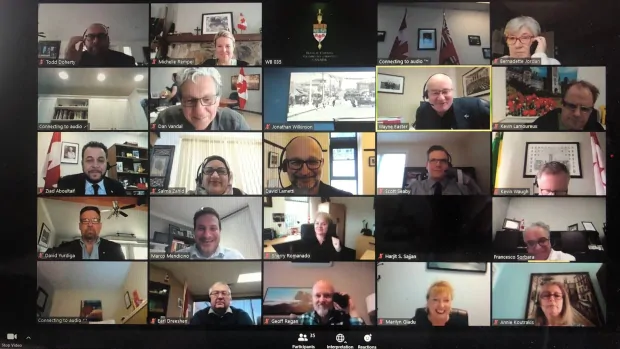
Canada’s House of Commons will reconvene today for virtual session on Zoom, a videoconferencing platform described by security researchers as a “privacy disaster.”

Zoom’s popularity has skyrocketed in recent weeks as Canadians took to online platforms to connect with friends and family while practising physical distancing to limit the spread of COVID-19. But the transition hasn’t been problem-free.

Jewish users have seen religious services highjacked by people screaming anti-Semitic abuse. A hacker posted a racial slur hundreds of times on a Zoom video chat hosted by a black National Hockey League player.

The term “Zoom-bombing” has entered the lexicon as virtual classroom sessions on the platform have been interrupted by random people brandishing Nazi imagery, such as swastika tattoos. The U.S. Federal Bureau of Investigation has told teachers to avoid using the platform entirely.

While some of the early concerns about the platform have been addressed in subsequent software updates, a recent report by researchers at the University of Toronto’s Citizen Lab found that while Zoom has “exceptional usability,” it also uses “non-industry-standard cryptographic techniques with identifiable weaknesses” to safeguard its conferences.

Citizen Lab found Zoom does not use “true end-to-end encryption” and the company has the “theoretical ability to decrypt and monitor Zoom calls.”

Moreover, the Zoom encryption keys — a string of random numbers and letters used to scramble and unscramble data — were sometimes routed through servers in China, even when all of the meeting’s participants were outside of China.

The report described the widespread use of Zoom as a “gold rush for cyber spies,” with business negotiations, diplomatic conferences and political strategy meetings moving from in-person encounters to “platforms whose security properties are unknown.”

“Now, some of the most sensitive conversations in the world are taking place on devices and platforms vulnerable to basic forms of eavesdropping and attack techniques,” the report concluded. It recommends that “governments worried about espionage … discourage the use of Zoom.”

Commons using different version of Zoom

To address these concerns, the House of Commons will use a reconfigured version of Zoom that has security features different from those in the free and paid consumer versions, a spokesperson for Speaker Anthony Rota said in a statement.

“This version enables the administration to manage and configure the technology and impose security controls,” Heather Bradley said.

“We are working closely with national and international security partners and leaders in the technology industry. This is to ensure that all appropriate measures are in place, in keeping with existing threat management protocols.”

Bradley said that because most parliamentary proceedings are open to the public, “confidentiality is not a requirement.”

After the Citizen Lab reported on Zoom’s use of some Chinese servers, the CEO of the company said its government cloud was not affected because there is a “separate environment available for our government customers and any others who request the specifications.”

The company said the “dramatic increase of use during the pandemic” forced some non-Chinese calls to go through data centres in China. It has promised to change its server policies.

“We know we have a long way to go to earn back your full trust, but we are committed to throwing ourselves into bolstering our platform’s security,” Eric Yuan said in a post on the company’s website.

Green Party parliamentary leader Elizabeth May has been calling for virtual meetings. She said she fears commercial travel poses a health risk to parliamentarians.

May participated in a dry run of the Commons virtual sitting Monday. She described the rehearsal as “extremely good” and said it produced “nothing untoward.”

“If it wasn’t for a pandemic, no one would think Zoom meetings were a good replacement for the real sittings in the House of Commons. But given we have the technology, this is a very good option and I think it’s working well,” she said.

As for the security concerns, May said the Commons’ procedure and house affairs committee will be studying the issue in the days ahead.

“I wouldn’t want the cabinet of Canada to meet using this platform. But these meetings are public meetings, so I’m not concerned about that aspect of it,” she said. “But ideally, I’d like us to be developing the most secure ways of communication.

“It is a subject for concern and for study to look at the security implications, bearing in mind we’re not transiting the work of Parliament to virtual meetings forever.”

PM, cabinet not using Zoom

While MPs and senators are pressing ahead with the new platform, security agencies in this country have warned against using Zoom for secret conversations among top government officials.

The Communications Security Establishment (CSE), the national foreign signals intelligence agency, said the platform has not been reviewed by the Canadian Centre for Cyber Security and so has not been approved for any government discussions that require any level of secrecy.

The Prime Minister’s Office confirmed Monday that the prime minister and cabinet ministers use other secure technology that “fully supports conversations at the appropriate classification level.” For privacy reasons, the PMO would not say which platform Prime Minister Justin Trudeau relies on for his calls.

The Senate also is using Zoom for committee meetings. The chamber isn’t scheduled to reconvene until June 2 but its internal economy, budget and administration committee (CIBA) has relied on Zoom to conduct its business during the pandemic.

One such meeting was beset by translation issues — a problem that could prompt privilege concerns, since parliamentarians have a right to hear proceedings in their preferred official language. It also experienced technical glitches as microphones malfunctioned and random participants flashed on-screen even when they weren’t speaking.

To avoid Zoom-bombing incidents, the Senate has adopted “additional controls and appropriate mitigation strategies” to ensure the “safety and reliability” of public committee meetings.

Beyond security, one former Commons Speaker said the Zoom calls could devolve into a shouting match given the penchant for some MPs to heckle. With all 338 MPs on hand for a virtual sitting, it could become unwieldy, he said.

“It would be very difficult, I think, for the presiding officer on a television screen show of this kind to manage the disorder,” Peter Milliken said at a recent committee meeting.

“It’s going to be a very complicated process and not one I think is going to be terribly helpful,” he said.

Source link

Categories
Tech

Northern MPs say virtual parliament is opportunity to tackle broadband challenges


Some of Canada’s northernmost MPs are hoping the virtual House of Commons sessions starting Tuesday can lead to more discussions about broadband connectivity in non-urban areas. 

Northwest Territories Liberal MP Michael McLeod is working from a laptop at his home in Fort Providence, N.W.T. He said he has some difficulties connecting to Zoom conference calls, and, due to limited bandwidth in the North, is resigned to audio-only participation. 

McLeod said the pandemic “reinforces” the need to connect Canadians with reliable internet. 

“If [the government] didn’t know it was a problem before, they certainly do now,” McLeod said. “Because we flag it as an issue.” 

McLeod and his colleagues in the Liberal government’s rural caucus have brought up internet connectivity problems many times in the last few weeks as the coronavirus pandemic stretches on. 

The House of Commons passed a motion last week to hold twice-weekly virtual meetings. Up to 32 MPs who are already in the national capital region will also be able to attend a third in-person session on Wednesdays. 

Nunavut MP not sure if virtual parliament would work in her riding

Mumilaaq Qaqqaq, the NDP MP for Nunavut, is staying in the nation’s capital during the pandemic. 

She said she is not sure whether she would be able to access virtual Parliament if she returned to her hometown of Baker Lake, Nunavut, to work.

“Maybe in Iqaluit, in the capital, that would be one thing — but if I wanted to be in my hometown or in a smaller community … that might not work for me,” she said.  

Recent numbers from the Canadian Radio-television and Telecommunications Commission (CRTC) show that only 40 percent of homes in rural communities have access to reasonable internet download and upload speeds of 50 mbps and 10 mbps, respectively, compared to nearly 86 per cent for the rest of the country.

Qaqqaq said she is not aware of any consultation that was done with northern MPs before the virtual sittings were adopted. Still, the NDP and the Bloc Quebecois supported the Liberal’s original plan.

Providing internet access ‘fair’ to families forced to stay home

Qaqqaq said there is an opportunity to notice the gaps in internet connectivity and really make them a broader conversation on how to get everyone connected. 

“Fairness would be that people across the country have access to services we need, access to the internet,” Qaqqaq said. 

“There’s lots of parents that are asked to work from home, so if we’re going to ask people to do this across the country, it’s only fair that we’re given all that equal opportunity.” 

Caroline Wawzonek, the N.W.T.’s finance and justice minister speaks during a COVID-19 press conference on March 20th, 2020. (Alex Brockman/CBC )

Caroline Wawzonek, the N.W.T.’s finance minister, asked the federal finance committee in a presentation last week to expand the CRTC’s Broadband Fund as a way to connect every home in the territory with reliable internet. Her presentation also mentioned that schools in the N.W.T. were struggling to provide web-based schooling because of connectivity problems. 

In their 2019 election platform, the Liberal government promised to provide fast, reliable internet service to every Canadian community by 2030.

McLeod said the Liberals still consider internet connectivity as an important issue.

Some private telecommunications companies, like Bell and Northwestel, have released their plans to lower data fees during the coronavirus pandemic. 

So far, there has been no promised federal funding during the pandemic to assist with internet connectivity in the North. Some provinces, like Nova Scotia and Prince Edward Island, have created broadband-specific funds to help those that cannot access high speed internet. 


Source link

Categories
Tech

First federal assessment of Arctic Ocean finds drastic change


The top of the world is turning upside down, says the first overall assessment of Canada’s Arctic Ocean.

The work of dozens of federal scientists and Inuit observers, it describes a vast ecosystem in unprecedented flux: from ocean currents to the habits and types of animals that swim in it.

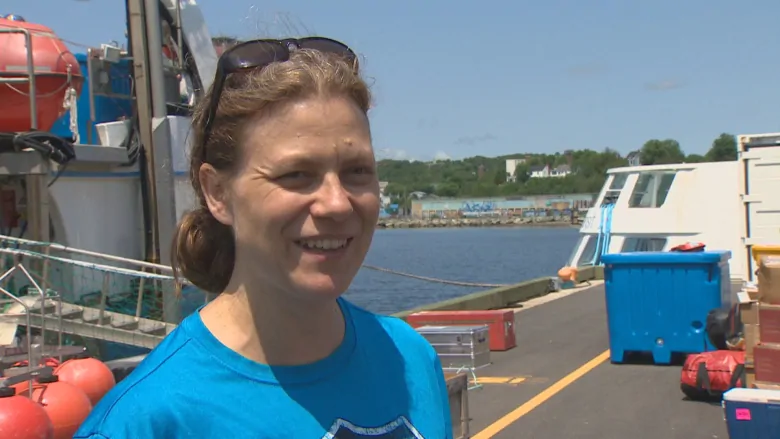
The Arctic Ocean, where climate change has bitten deepest, may be changing faster than any other water body on Earth, said lead scientist Andrea Niemi of the Department of Fisheries and Oceans.

“As the Arctic changes, the rest of the ecosystem is going to track with those changes,” she said. “There isn’t going to be a delay.”

Changes are coming so fast scientists haven’t even had a chance to understand what’s there.

Sixty per cent of the species in the Canada Basin — like the worms found living in undersea mud volcanoes and living off expelled methane — are yet to be discovered, the report suggests.

“Who knows what else is down there?” Niemi asked. “So much in the Arctic, we’re still at step one.”

The first assessment of fish species in the Beaufort Sea wasn’t done until 2014, she said.

Still, changes are hard to miss, right down to the makeup of the water.

It’s 33 per cent less salty than in 2003 and about 30 per cent more acidic — enough to dissolve the shells of some small molluscs.

The Beaufort Gyre, a vast circular current that has alternated direction every decade, hasn’t switched in 19 years.

Nutrient-rich water from the Pacific Ocean isn’t getting mixed in as it used to, which affects the plankton blooms that anchor the Arctic food web. Sea ice is shrinking and thinning to the point where Inuit communities can’t get to formerly dependable hunting grounds.

Shorelines are on the move. Erosion has more than doubled in the last few decades. The mix of species is changing.

Killer whales are becoming so frequent they’re altering the behaviour of other species such as narwhal and beluga that Inuit depend on. Pacific salmon, capelin and harp seals are moving up from the south.

“In some cases, the communities are putting out their nets and they’re just catching salmon,” Niemi said.

Andrea Niemi of the Department of Fisheries and Oceans says the Arctic Ocean may be changing faster than any other water body on Earth. (Mélanie Léger/CBC)

The effect of the salmon on other species is unknown.

Coastal fish species are being found much further offshore.

Ringed seals can’t finish moulting before the ice breaks up and accompanying high ocean temperatures seem to be making them sluggish and more prone to polar bear predation.

Humans are making their presence felt, too. Increased Arctic shipping is making the ocean noisier and masking the sounds animals from seals to whales use to communicate.

The report’s conclusions are hamstrung by a lack of long-term data all over the North.

Niemi said it’s hard to measure changes when you don’t know what was there in the first place. Even when the changes can be measured, it’s difficult to know what’s causing them.

Inuit communities want to know what’s going on in their home, she said. “They’re interested in a holistic view of what’s going on. But we’re just handcuffed sometimes to provide the mechanisms behind the changes.”

One thing is certain: The old idea of the frozen North, with its eternal snows and unchanging rhythms, is gone forever.

“People see it as a faraway frozen land,” Niemi said. “But there is much happening.”


Source link

Categories
Tech

'A race against the disease': Canadian researchers part of global effort to develop COVID-19 vaccine


In the quiet of the University of Saskatchewan’s shuttered campus, there is one constant beacon of light and hope. Dr. Volker Gerdts and his team of researchers are working in shifts around the clock to find a vaccine for the novel coronavirus — and feeling the pressure to move even faster.

“There is a real sense of urgency,” Dr. Gerdts says.

“We have a highly motivated team, and everybody is willing to step up and do as much as they can. And so this is really, you know, a race against the disease.”

Gerdts is the director and chief executive officer of the University of Saskatchewan’s Vaccine and Infectious Disease Organization – International Vaccine Centre (VIDO-InterVac). The lab in Saskatoon is one of the most advanced infectious disease research facilities in the world and has been evaluating COVID-19 vaccine models for several weeks.

A recent $28-million funding boost from the federal and provincial government to enhance its COVID-19 research capacity to test antivirals, drugs, and therapeutics has been helping fast-track that research even more.

And on April 23, Prime Minister Justin Trudeau announced a $1.1 billion national strategy for medical research to fight COVID-19, including:

  • $115 million for research into vaccines and treatments being developed in hospitals and universities.
  • $662 million for clinical trials in Canada.
  • $350 million to expand national testing and modelling for COVID-19.
  • An immunity task force focused on blood-based tests used to determine if someone has been exposed to the virus.
Prime Minister Justin Trudeau announced a $1.1 billion strategy to fund COVID-19 medical research and a task force to study immunity. 3:53

VIDO-InterVac is already at the forefront of an extraordinary global effort to halt the spread of the deadly novel coronavirus. It’s one of a handful of labs in the world with a potential vaccine at the animal testing phase.

The new federal funding includes $23 million to support pre-clinical testing and clinical trials of a potential COVID-19 vaccine, essential steps to ensuring that vaccines are effective and safe for human use.

“What was my reaction? Ecstatic,” Gerdts says. “Good to see the commitment from the Government to fund a Canadian vaccine for Canadians.”

Next month could be a turning point for VIDO-InterVac, when ferrets — chosen because their respiratory system is similar to that of humans — are exposed to the novel coronavirus to see if the lab’s vaccine candidate works. VIDO-InterVac is also testing other researchers’ vaccines on hamsters.

Gerdts says the research is moving at an accelerated rate, and everyone is looking for a breakthrough before the pandemic’s next potential wave of infections.

“The concern that we all have at the moment is whether there is another phase to this or not. And so having a vaccine for the next phase is absolutely critical. It will allow us to improve what we call herd immunity, to get more people vaccinated — more people with an immune response in the population, and the better we all are protected in the future.”

There are at least 70 research teams around the world, including in Canada, racing to develop a COVID-19 vaccine in a year, something that has never been done before. 1:58

International network

Gerdts’ team is part of the World Health Organization’s pandemic vaccine network, made up of expert groups of nearly 200 scientists and researchers from around the world.

They’re working in tandem and exchanging notes in real time on medical servers and through weekly phone calls. There’s even a vaccine tracker built by the Vaccine Centre at the London School of Hygiene & Tropical Medicine that monitors the 60-plus COVID vaccines in development and their progress.

It’s a remarkable coordinated effort that is breaking down scientific borders and academic bragging rights.

“The most important thing in all of this is not to be first,” says virologist Paul Duprex from the University of Pittsburgh, who is part of the WHO vaccine braintrust.

Duprex says scientists usually compete to publish their findings first, for the credit that comes with it. The new virus has changed that, and there will be plenty of time to publish later.

“Let’s just cut the crap and move forward and work together and be collegial. This is a worldwide problem, and this is a worldwide issue that we should solve together,” he says.

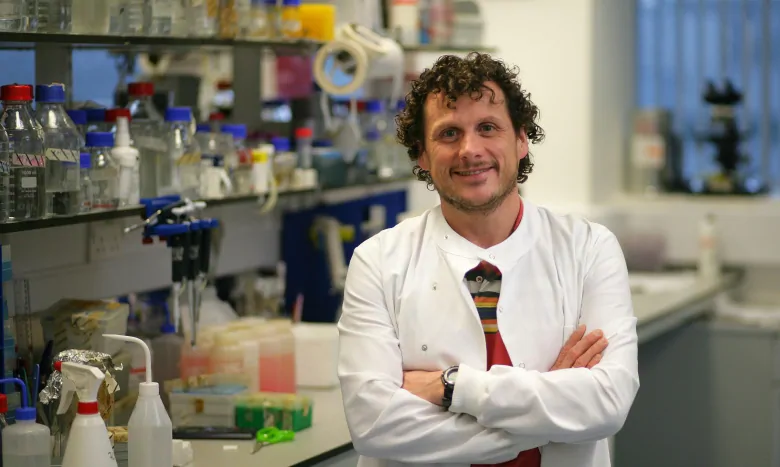
Virologist Paul Duprex from the University of Pittsburgh is part of the WHO team working on a COVID-19 vaccine. He says the collaborative approach to this project is allowing research to move forward much faster than usual. (Centre for Vaccine Research, University of Pittsburgh)

Duprex adds that the WHO collaboration is speeding up the process to find a successful vaccine among the dozens in development.

“I’m really glad that we’ve got lots and lots of different options, because you know what’s going to happen. Those vaccines are going to faIl at different stages in the testing process,” says Duprex. “So therefore, if we have backups upon backups and backups, that allows us to get something across the finish line.”

Infectious disease researcher Allison McGeer says this new, faster pace of global research means a vaccine could be developed more quickly and that could save lives.

“It’s critically important to do it faster,” says McGeer, who is with the Lunenfeld-Tanenbaum Research Institute, part of Sinai Health in Toronto.

McGeer says that doesn’t mean shortcutting safety trials, but rather streamlining research processes to get a safe and effective vaccine into people’s arms faster.

“That allows a certain amount of creativity about how to do that. Whereas normally people would say, ‘well, you know, I’m just not sure about that and I want to be absolutely sure about it.’ Now there’s a good reason for doing it differently and you can make processes for developing vaccines faster in general, which we all agree would be a good thing.”

The search for a COVID 19 vaccine is already well underway and the University of Toronto joined the race thanks to a $10 million dollar donation. Ali Chiasson spoke to the research lead for this new lab that will be running 24/7. 2:43

A Canadian team

At VIDO-InterVac, Gerdts says if his team’s potential vaccine passes the animal test next month, human trials will follow in the fall and pave the way for a possible vaccine in a year.

The new government funding is also building manufacturing capacity in Canada, including at VIDO-Intervac, which hopes to be in a position to produce up to 20 million doses of new vaccine during a pandemic.

And while all the work behind finding a vaccine is part of a global effort, Gerdts says it’s a uniquely Canadian one, too.

“We’re a Canadian team making a vaccine for Canadians, and so it’s our highest priority to make sure that this vaccine will be available for Canadians. And we have received funding from the federal government and the provincial government to do this kind of research, so it’s important that we make sure that Canadians will have access to our vaccine.”

The team from the Vaccine and Infectious Disease Organization – International Vaccine Centre (VIDO-InterVac) at the University of Saskatchewan that is working on a COVID-19 vaccine. (Debra Marshall Photography)

And while this pandemic is still in its early stages, Gerdts is already looking ahead to the next one.

He says good science can simulate the evolution of a pathogen in the lab, to help predict the next deadly virus and give the world time to prepare. The lessons of this pandemic, Dr. Gerdts says, are already too harsh.

“We’re still talking about a year before we have a vaccine ready. People are dying right now, and the cost to the global economy is already in the trillions. We need to have vaccines ready for whatever the next pathogen might be. And this is where we have to push the envelope.”


Source link

Categories
Tech

Science in a time of crisis


As we face the threat of a fast-moving, deadly virus that has spread around the globe, many questions are arising that scientists are having difficulty answering because science takes time and the pandemic is moving so rapidly.
 
Many questions have arisen that scientists and public health officials are struggling to answer: How contagious is the virus? Does it spread by direct contact, or is it to some degree airborne? Should everyone wear masks, or should masks only be worn by health-care workers and those who are infected? Why do some people get sicker than others? How soon will we have a vaccine?

One critical question, for example, is: To what degree are people who become infected with the virus and then recover from it immune to it, and if so, for how long?

To answer that, you need to track a large number of patients who have run through a full course of the disease. We can’t ethically re-expose them on purpose, so we have to wait to see, for months or even years, if their immunity is durable.  

Alternatively, we can test recovered people for antibodies to the virus — molecules produced by the immune system to fight the infection — which we’re now starting to do.

But in order to do that, we have to find out what those antibodies are — which ones signal robust immunity. Then we have to develop tests, validate them, and manufacture them.  

It all takes time. 

Studying the disease

And then there’s the question of finding treatment or vaccines. 

The disease needs to be studied in the laboratory to understand its genetics, its basic biology and mechanisms of infection.

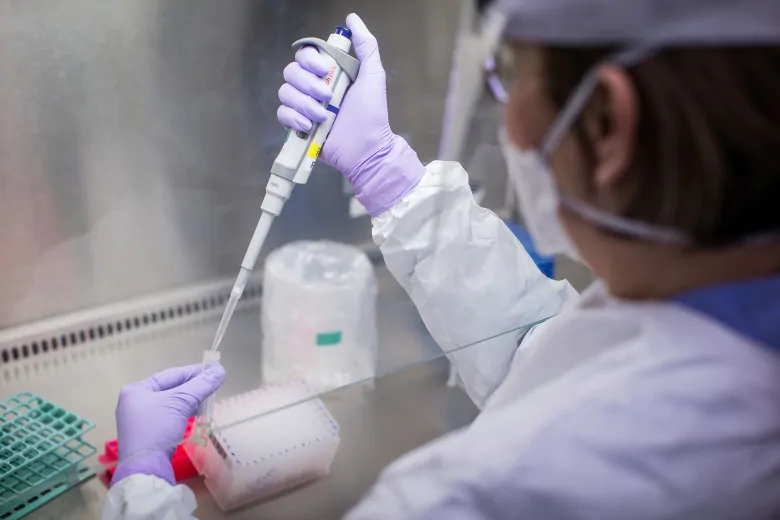
A laboratory technologist at LifeLabs demonstrates one of the steps taken when a specimen is tested for COVID-19 at the company’s lab, in Surrey, B.C. (Darryl Dyck/The Canadian Press)

Then strategies have to be developed to stop it from doing its nasty work, which usually involve drugs or vaccines.

Then those drugs or vaccines must first be tested in cell cultures, then in animals to cull the bad ideas, leaving the most promising candidates. Only then can we start multi-stage human clinical trials to investigate whether they are safe and effective. 

Again, all of this takes time, and there aren’t many ways to make it go faster.

Global effort

One of the few things we can do is have as many scientists investigate as many strategies as possible, which increases the chance that we’ll find a successful one quickly.

So while it may seem the science is slow or uncertain, we are witnessing an incredible global effort where scientists from around the world are sharing their data in an all-out effort to beat a common threat.

And as that happens, we’re seeing in real time the process of science — and it can seem chaotic.

Early publication of so-called “pre-print” papers is bringing out information faster than ever before.

But these are ideas that haven’t been thoroughly tested. They can be alarming, or promising, and they will need to be rigorously investigated, and many will turn out to be mistakes or dead ends.

We’re watching the evolution of ideas, and evolution is a messy process. 

There is a parallel between the current situation with COVID-19 and the Deepwater Horizon oil spill in the Gulf of Mexico that happened 10 years ago. 

The Deepwater Horizon oil rig burns in the Gulf of Mexico following an April 2010 explosion that killed 11 workers and caused the worst offshore oil spill in the nation’s history. (Gerald Herbert/The Associated Press)

As you will hear on this week’s episode of Quirks & Quarks, scientists studying the environmental impact of the spill had difficulty monitoring the situation at the time because all efforts were focused on putting out the fire and stopping the tremendous flow of oil out of the ocean floor.

Even though there was concern about the environmental impact of chemical dispersants that were used to break up the oil, there was little time to do the science because the situation was so desperate. So the dispersants were used in vast quantities. 

Now, a decade later, there are still unanswered questions about the full environmental impact of the oil spill.

Search for treatments and vaccines

Today, scientists investigating COVID-19 are doing their best to work during a much bigger crisis.

The first priorities are to stop the virus from spreading through physical distancing, and care as best we can for the sick.

This undated transmission electron microscope image shows SARS-CoV-2, the virus that causes COVID-19, isolated from a patient in the U.S. (NIAID-RML via Reuters)

Around that, we need to do the rigorous, systematic work that will lead to useful treatments or vaccines. 

We all want answers now, but we don’t want to rush through a treatment that may have hidden side-effects that are worse than the disease.

While it is difficult for everyone, we are witnessing one of the most incredible international efforts to fight a common enemy.

Researchers from Canada, the U.S., Asia, Europe, and all around the world are all working together to speed the process up.

The most difficult part of this crisis for the rest of us might be having the patience to let them do their work. 


Source link

Categories
Tech

Exoplanet orbiting nearby star 'disappears'


In 2008, NASA announced that a new exoplanet was found orbiting a star 25 light-years away. But now it seems to have vanished.

It turns out that it likely wasn’t a planet at all.

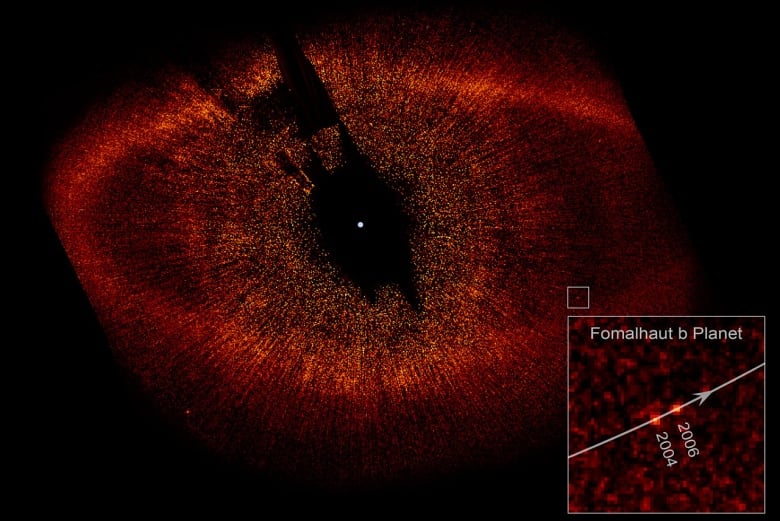
The initial observation of the potential exoplanet, named Fomalhaut b, was made in 2004 using the Hubble Space Telescope, with follow-up observations in 2006.

The host star, Fomalhaut, has long fascinated astronomers. The star is found in the southern constellation Piscis Austrinus and is surrounded by a cloud of dust. Images reveal it to look like the fictional Eye of Sauron in the movie The Lord of the Rings

While most exoplanets are discovered through the transit method — when a star’s light dips ever so slightly as the planet crosses in front of it — this was directly observed by Hubble. And the dot appeared to be moving, thus supporting evidence of an exoplanet.

But additional observations by Hubble in 2014 revealed … nothing. 

This image, taken with the Advanced Camera for Surveys aboard the NASA/ESA Hubble Space Telescope, shows what was initially identified as an exoplanet orbiting the star Fomalhaut. The inset at bottom right is a composite image showing the planet’s position during Hubble observations taken in 2004 and 2006. (NASA, ESA and P. Kalas [University of California, Berkeley, USA])

This exoplanet wasn’t making any sense at all.

“Fomalhaut b has always been a mystery,” Andras Gaspar, an astronomer at the University of Arizona and corresponding author of the new paper published in the journal Proceedings of the National Academy of Sciences, said in an email. “For starters, its colours were a bit off from what one would expect from a massive exoplanet.”

But stranger still, in Hubble’s initial images, the “planet” was bright in visible light but produced no heat signature in infrared light, as an object like this should. Some of the hypotheses for this was that there could be a ring of dust around Fomalhaut, or the planet was similar to Saturn and itself sported a massive ring. 

Then Gaspar and corresponding author George Rieke looked through data and realized that Fomalhaut b wasn’t where it was supposed to be, which further piqued their curiosity. 

What Hubble actually witnessed

Their paper concludes that instead of an exoplanet, what Hubble witnessed was a rare collision between two large, icy asteroids that produced fine dust particles. 

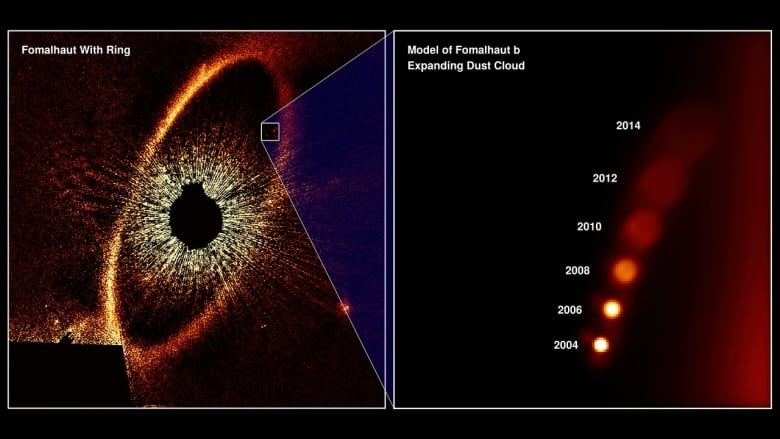
Following recommendations from one of the reviewers of their paper, they went back and analyzed the object and noticed that it was expanding, further strengthening their case of an expanding cloud of dust.

Capturing something like this is rare. It just happened to be a case of Hubble looking in the right place at the right time. But it’s not without precedent, Gaspar said.

“Sometimes we do get lucky and see an unlikely event,” he said. “Humans have observed and noted quite a few supernovae going off over the last millenia; we have seen the Shoemaker-Levy 9 comet impact Jupiter; the massive Tunguska impact [in Siberia] in 1908 went undiscovered for years.”

Illustration from the Hubble Space Telescope’s observations of Fomalhaut b’s expanding dust cloud from 2004 to 2013. (NASA, ESA, and A. Gaspar and G. Rieke [University of Arizona])

Catching something of this magnitude is important for understanding how planets and star systems form.

“The Fomalhaut system is the ultimate test lab for all of our ideas about how exoplanets and star systems evolve,” Rieke, also from the University of Arizona, said in a statement. “We do have evidence of such collisions in other systems, but none of this magnitude has ever been observed. This is a blueprint for how planets destroy each other.”

Rieke and Gaspar have booked time for follow-up observations on the upcoming James Webb Space Telescope, set to launch in 2021. 

“Witnessing such an event, as rare it is, is fascinating. The Earth-moon system formed in a massive collision (much more massive than this),” Gaspar said. “Collisions produce the asteroid fragments that impact Earth to this day and provide us with shooting stars to see at night, and large asteroids that movies have taught us to fear and that we are actively searching for.”


Source link