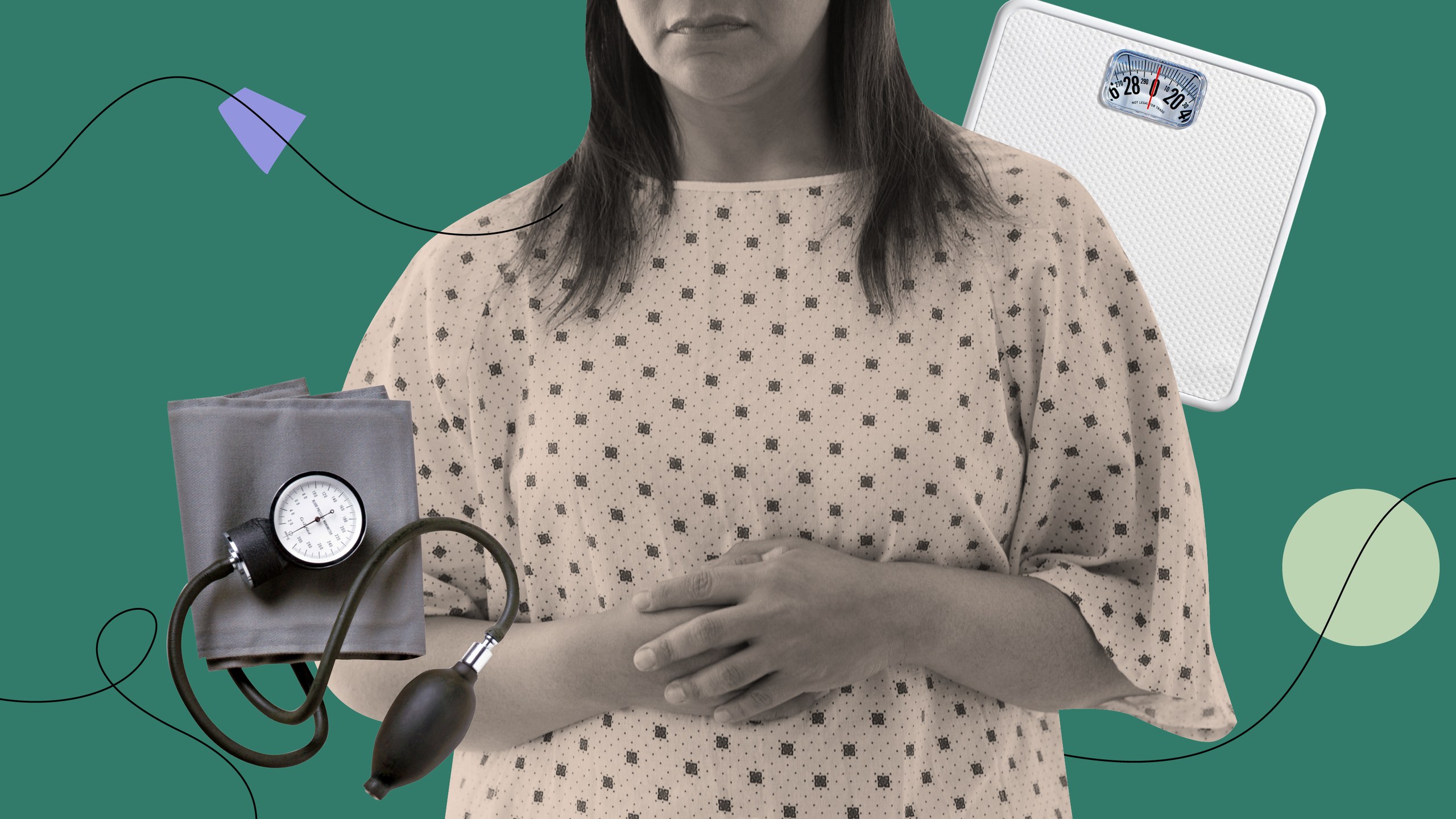
Ellen Maud Bennett, 64, a Canadian costume designer with a penchant for fresh lobster, peonies, and the “perfect shrimp-wonton soup,” spent years feeling unwell. But when she sought medical intervention, no one offered suggestions beyond weight loss treatments. When her cancer was finally discovered, she had only days to live. “Ellen’s dying wish was that women of size make her death matter by advocating strongly for their health and not accepting that fat is the only relevant health issue,” her obituary read.
Bennett’s case may be extreme, but when it comes to weight, doctors often have a big blind spot. When a heavier patient comes in with symptoms but a doctor sees only fat, it can mean treatment will fail to help her get healthier—or worse, add to her health issues. Weight stigma may even be part of what causes the laundry list of risks we typically hear linked to being heavier. Studies show weight shaming can cause spikes in levels of cortisol, the stress hormone which can contribute to high blood pressure, diabetes, and heart disease—“the very conditions that doctors blame on an individual’s weight,” says Louise Metz, M.D., a board-certified internal medicine physician. And the stress of constantly being judged for your size? Ironically, it’s been linked to weight gain—a 2018 academic opinion paper that examined nearly 70 studies on weight stigma found that it lead people to eat more.
Making matters more complicated, the stigmas and biases associated with being fat are almost impossible to escape: “Weight stigma affects so many life experiences—from the size of chairs, to the pace of exercise classes, to the availability of good medical care,” says Deb Burgard, Ph.D., a fellow of the Academy for Eating Disorders. Even the terminology used to describe larger bodies can be shaming. “Overweight” reinforces the idea that larger bodies are somehow wrong, and “obese” pathologizes the ratio of weight to height, even though it’s not always a great indicator of health. (That’s why fat advocates like me prefer terms like larger, heavier, and plus-size.)
Jessica, a 31-year-old who works in retail, had a history of eating disorders that started when she was 10 and was bullied about her weight at school. As an adult, she started to get a foothold on healthier habits, but fat shaming encounters with a doctor can still trigger destructive behaviors around food. “Recently, I went to a gastroenterologist who insisted I [must have] a fatty liver due to my size,” she says. Blood work and an ultrasound revealed her liver was perfectly healthy, but the episode triggered a relapse of her eating disorder. Even though her liver was healthy, her doctor didn’t look beyond her size.
“I was left with the feeling that I was fat, it was my fault due to a lack of character, and I only had one option: permanent life-altering surgery.”
Stories like Jessica’s aren’t uncommon—women dealing with weight stigma are actually at a greater risk for eating disorders, says Chevese Turner, chief policy and strategy officer at the National Eating Disorders Association (NEDA). “Often, the same behaviors that would be considered red flags in thin people”—obsessively counting calories, going overboard at the gym, developing a preoccupation with the scale or with food—“are seen as positive behaviors for ‘weight management’ in plus-size people,” Turner says. “In some cases, they’re even celebrated by doctors.”
But that’s not the only way weight stigma can affect patient care. After injuring herself in a fall, Gretchen, a woman in her 40s, made an appointment with an orthopedist. Instead of discussing her options for hip surgery, she was told it was “too dangerous” given her weight and her diabetes. When she pressed for further evaluation, it was suggested she wouldn’t be able to fit into an MRI machine. (She had an MRI a few weeks before and fit in the machine just fine.) Instead, another risky procedure was recommended: weight loss surgery. “I was left with the feeling that I was fat, it was my fault due to a lack of character, and I only had one option: permanent life-altering surgery that came with not only gigantic physical trauma but more than likely emotional distress,” she says.
Some weight shaming leads women to stop seeing a doctor at all. “I have many patients who come to our practice who have avoided medical care for years due to the weight stigma,” Dr. Metz says. Sophie, a 34-year-old teacher, knows exactly how that feels. She wanted help from a psychiatrist for her ADHD, but he weighed her at the beginning of every session before quizzing her on her eating habits. “At my last session, he asked me if I could eat less, and when I said I listen to the cues my body gives me, he put his head in his hands in a dramatic way and said ‘Oh, no no,’” she says. The appointments finally became too much. Sophie hasn’t gone back, even though missing her medication affects her sleep, focus, and concentration. She is trying to find another psychiatrist but she says it hasn’t been easy.
The good news is, some doctors are finding a way to treat patients—and even health issues related to weight—without the shaming. Health at Every Size (HAES), an approach developed by the Association for Size Diversity and Heath, shifts the focus from weight management to health promotion. Instead of directly targeting weight loss to help an overweight or obese patient feel better, HAES doctors prioritize positive health behaviors, like healthy sleep habits, movement that brings joy, and nourishing food. Whether a patient actually loses weight isn’t how her doctors measure success. “It is essential that we, as health care providers, begin to eliminate weight stigma from medical care,” Dr. Metz says. That means recognizing diversity of body size, eliminating the focus on weight as an indicator of health, and making treatment decisions informed by evidence-based medicine—not size, says Metz.
Health care providers who are using these practices are seeing all kinds of benefits. “You can connect and partner better and quicker with your client when you’ve eliminated this significant risk factor that creates shame and stress,” says Anna M. Lutz, R.D., a HAES dietician based in Raleigh, North Carolina.
“My current doctor is the first doctor to see me as a patient, instead of as a fat woman wasting her time.”
If you’re feeling judged by your doctor for your weight, push for weight-neutral care. Before you make an appointment, call the office ask if they have experience with weight-neutral care. (Try saying something like, “For my health, I need a practitioner who will work from a weight-neutral perspective, meaning focusing on my health and not my body size—is that something you can do?” To find a weight-neutral practitioner, check review sites like Ample, which helps people with marginalized bodies find non-judgmental care.) If you are given weight loss as a treatment plan, ask if thin people get the same health condition and what their treatment would be. If a thin patient would get a different intervention and you’re being prescribed a diet, ask why.
Regardless of your size (or your health) you have a right to care that respects your body and your choices for how you want to approach your overall wellness. When that happens, the results are powerful. It took Rachel King, a 30-year-old teacher, 12 years to find a doctor who would look beyond her size to diagnose and treat her Polycystic Ovary Syndrome (PCOS). When she finally found a doctor who would treat her from a HAES perspective, she got not only the treatment that she needed to manage her PCOS, but also finally felt she had the support to make a full-recovery from the eating disorder she’d battled for years. “My current doctor not only understood my diagnosis of atypical anorexia nervosa in a fat body, she asked me what I need in a doctor to help me be successful in recovery,” King says. “She’s the first doctor to see me as a patient, instead of as a fat woman wasting her time.”
Ragen Chastain is a speaker and writer in Los Angeles training for her first IRONMAN Triathlon. She’s also the current Guinness World Record Holder for heaviest woman to complete a marathon.
Source link