Categories
Health

With the Coronavirus Keeping Millions at Home, Uber Is Giving Free Rides to Help Survivors of Domestic Violence Flee to Safety


During a worldwide pandemic, the safest place to be is home.

But for people enduring domestic violence, home is never safe. The coronavirus pandemic—and the stay-at-home orders, social distancing measures, and quarantining that have been instituted in an attempt to keep the disease at bay—have the unintended side effect of trapping domestic violence survivors with their abusers.

As if escaping an abusive situation isn’t painfully difficult under regular circumstances, attempting to leave during a pandemic means either braving public transportation or coordinating with friends or relatives who could themselves be at an elevated risk. Domestic abuse, which disproportionately affects women and children, turns the drudgery of waiting out a pandemic from home into a day-to-day hell.

But for some survivors, one part of the process is about to get a little easier. Uber is providing 50,000 free rides to domestic violence shelters and safe havens. Through shelters and other groups that have partnered with Uber to hand out the codes, free rides will be available in over 35 cities across 16 countries. When survivors contact shelters and help lines, those organizations will be able to share a code from Uber that will allow them to take a free, fast ride to safety.

“Many survivors of domestic violence have no access to a car, and the COVID-19 pandemic has reduced public transportation options,” Allison Randall, Vice President for Policy and Emerging Issues at the National Network to End Domestic Violence (NNEDV) said in a statement. “Local domestic violence programs are still open and available to help survivors, but without transportation, survivors have no way to get there, much less to a doctor’s appointment, grocery store, or courthouse. We are so grateful to Uber–our longstanding partner–for providing these lifesaving free rides to survivors.” In addition to the free rides, the company has announced it will donate 45,000 meals to survivors in need.

The initiative, part of a larger pledge by the ridesharing company to provide 10 million free rides and food deliveries to people in need during the pandemic, is led by Tracey Breeden. The head of Women’s Safety and Gender Based Violence Programs at Uber, Breeden previously worked as a police officer and a detective for nearly 15 years, focusing on violence against women. “It doesn’t matter what’s going on in the world—violence against women and children doesn’t stop,” Breeden tells Glamour. “It just shows up differently sometimes. Domestic violence is not a new crisis, and everybody can play a role in working to help create safe spaces and helping people get help safely. It’s critically important to take COVID seriously by sitting at home, but it’s also important to not forget that for some people being at home is not safe.”

Of course, the kind of help that Uber is offering isn’t entirely risk-free either, particularly for its drivers. The company will be paying workers a full fare for these rides, but it’s the workers who will be driving to the homes of potential abusers, and sharing small spaces with strangers in their cars, despite the CDC’s social distancing recommendations. And, of course, Uber drivers are independent contractors, which means that despite functioning as a kind of first-responder in this and other crises, they don’t get benefits like Social Security, health insurance, or paid sick days, and they’re responsible for damage to their own vehicles.

Still, for survivors with few options, the initiative could be a lifeline. Breeden says that Uber’s partners at domestic violence organizations have shared that given the constraints of shelter-at-home, many survivors are utilizing chatrooms to speak with advocates privately. “What will happen is that shelter, that advocate will work with that survivor to find the safest way to provide them help and get them to another location,” Breeden says, “They certainly aren’t going to send a driver into a situation that they know is potentially harmful.” She also notes Uber apps have an easy-access 911 button for drivers, and that the app allows survivors to enter cross streets instead of their exact address in case an abuser has access to their account as well.

Source link

Categories
Health

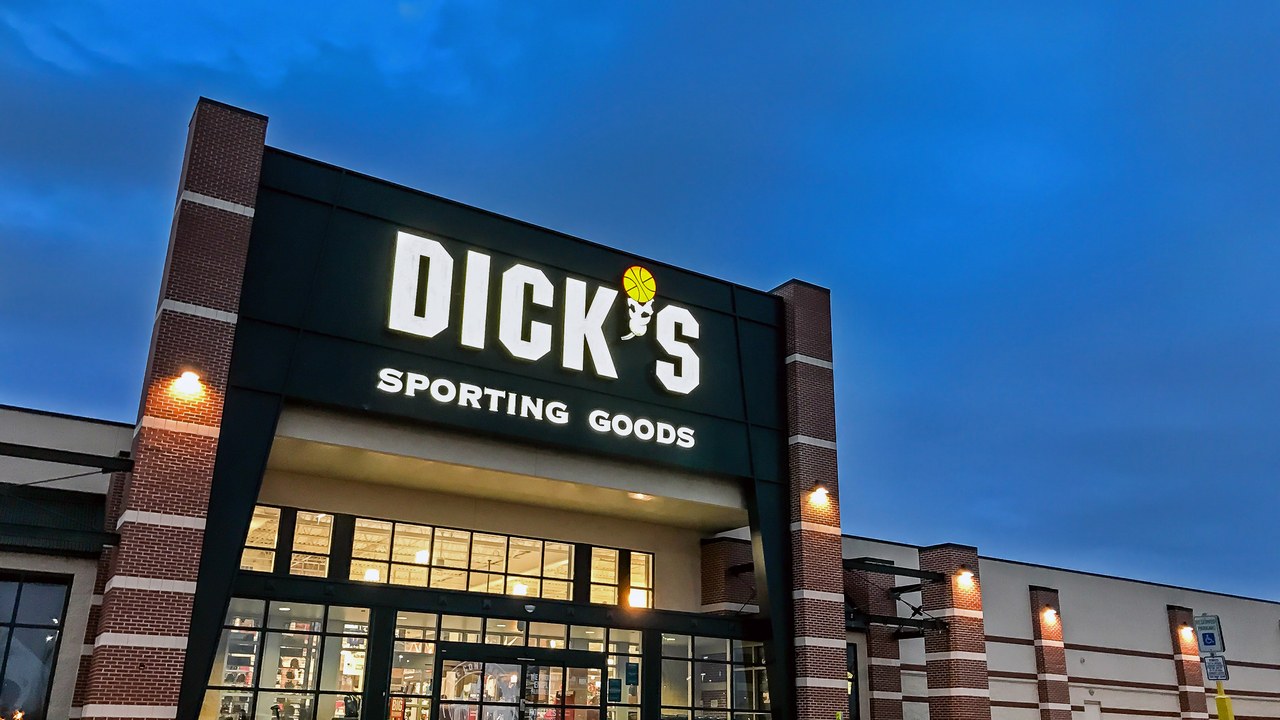
Dick’s Sporting Goods Is Investing Millions in Women’s Sports and Products


Before you ask, Dick’s Sporting Goods will not be changing its name to appeal to female customers, but it is investing millions of dollars into women’s sports and expanding its selection of products for girls and women.

On February 4, the largest U.S. sporting-goods chain revealed their multi-tiered plan to win over women—you know, over half the country. The plan starts with revamping their stores to actually include more room for women’s and girl’s products, according to Bloomberg, but also pledges a $5 million grant to the U.S. Soccer Foundation, a USA Softball sponsorship ahead of the sports return to the Olympics this summer, and a “national ad campaign supporting women’s sports.” All in all, the company is making a “low-eight-figure investment.”

“Today is a proud moment for our company,” Dick’s Sporting Goods President Lauren Hobart said in a statement.

The plan is promising. Social stigma and lack of role models are two leading factors behind why girls drop out of sports, according to research from the Women’s Sports Foundation. Making girls’ gear more visible and accessible is a step in the right direction.

So is supporting top female athletes. The grant to the U.S. Soccer Foundation should come as no surprise to those paid attention to the World Cup this past summer. Interest in women’s athletics skyrocketed as the U.S. Women’s National Soccer Team took home their fourth World Cup. Yet, somehow they’re still being forced to fight against gender-discrimination and pay discrepancies—a battle being fought by female athletes across sports.

“At the crux of everything is that when we play a game—win the game, lose the game, tie the game, whatever—what we’re asking is that we’ll have the same opportunity to make the same amount of money,” Rapinoe, a 2019 Glamour Women of the Year honoree, told Glamour. “We should be treated equally.”

Dick’s three-year soccer grant will reportedly go to a U.S. Soccer Foundation program that aims to engage 100,000 girls in underserved communities by 2023.

As for the official partnership with USA Softball, the team will be returning to the Tokyo Olympics this year for the first time since the sport was dropped after the 2008 games. Dick’s will also be the official merchandise vendor for the team’s pre-Tokyo tour across 35 cities beginning this February.

Still think revisiting the whole “Dick’s” thing could also help, though!


Source link

Categories
Health

Monica Lewinsky's Defy The Name Campaign to End Bullying Reaches Millions


Nearly one in three American students in grades 6–12 have experienced bullying. And that bullying, a study in the journal Pediatrics estimated, causes 1 in 5 teen suicides. It’s an experience that’s all too real for young people around the country, but it’s also one that can be carried long into adulthood. And perhaps nobody knows that reality better than Monica Lewinsky and her plethora of A-list friends.

Lewinsky, now a contributing editor at Vanity Fair, kicked off the anti-bullying campaign, #DefyTheName in October with a PSA featuring Andy Cohen, Lena Dunham, and Kelly Rippa. The goal? Take the power out of name-calling and the discuss the damage it can cause. And though the campaign officially ended, it’s made a massive impact, reaching more than 1 billion media impressions and growing, the campaign tells Glamour.

“It’s been extraordinary to see the snowball effect of people bravely stepping up to participate in this campaign—whether they changed their names on social media, mentioned the names they had been called in their posts or shared the PSA,” Lewinsky shared in a statement with Glamour.

[embedded content]

And it didn’t stop at the video. Throughout the month, celebrities came out in droves to support the cause by changing their handles on their social media to include the names they’ve been called.

Lewinsky herself kicked things off by changing her own handle to “Monica Big Mac Ditzy Bimbo That Woman Lewinsky.”

Stacey London, host of What Not To Wear, added in her own with “Stacy “Uglier than Elephant Man” London.”

Olivia Munn jumped in with “Olivia The New Girl In School No One Likes Munn.”

QuestLove shared his with “Quest Superdweeb Love.”

Rachel Bloom added in hers with, “Rachel Weird Loser Who Needs A Bra Bloom.”

And Alan Cumming added in his own, defying the name, “Alan Useless Cumming.”

Lewinsky is no stranger to name-calling—following the national scandal involving then-President Bill Clinton more than 20 years ago, Lewinsky became a target. Today, she still deals with the aftermath of what she calls a “traumatic” experience.

“For some people, [the campaign] was even the first time they had ever talked about the pain of having been bullied with name-calling. I’m incredibly grateful the campaign was healing for many—that’s exactly what I had hoped for,” Lewinsky says. “We don’t have to let the words other people choose to call us, define who we are or how we see ourselves.”

Related Content:

Monica Lewinsky’s New Anti-Bullying Campaign Tackles Name-Calling Head-On

Monica Lewinsky Walked Out of an Interview After Being Asked About Bill Clinton

Monica Lewinsky Reckons With #MeToo in a Powerful New Essay: ‘I’m Not Alone Anymore’


Source link