Categories
Health

Planning My Wedding—And a Marriage—Without Gender Roles


Last summer, my fiancé and I asked a couple celebrating their 40th anniversary what their secret to a long, happy marriage is. They thought for a moment and said, “Do your own laundry.” They were dead serious. Taking responsibility for their own laundry, a chore neither of them wanted to do, meant that the task always got done but never solely rested on one partner or the other.

It was a smart idea, my fiancé and I agreed. Then we continued to mix our laundry and get in squabbles about who was doing more loads of it.

I have shared a home with my fiancé, a cisgender heterosexual male, for several years. Finding a division of household tasks that feels fair and equal has definitely been a topic of (sometimes heated) discussion in our home. But overall, I feel lucky to have an equal and progressive partner and am happy with the balance we’ve found: We switch off on meal prep, team up for apartment deep-cleans, and now alternate laundry loads.

But as we began wedding planning last fall, I couldn’t help but notice how the gender-focused traditions around marriage made me more sensitive to the dynamics in our relationship. Almost immediately, I was struck by how much of our planning to-do list naturally fell to me, simply because I’m a woman and likely know more about wedding prep than my partner does.

In some ways, that made sense: The fact that I grew up on a steady diet of “fairytale wedding” movies and have several close friends who’ve gotten married meant that I at least have some sense of how wedding planning works. Plus, let’s be honest, the vast majority of the gorgeous wedding guides and websites out there—with their soft colors and pretty florals—are presumably geared toward women. It wasn’t that my fiancé didn’t want to help; he simply had no idea where to start.

So I stepped into the role of primary planner, with only the tiniest chip on my shoulder. As I scoured wedding websites, launched spreadsheets, and reached out to vendors, I started thinking of other areas in which women are often presumed to be the experts and therefore tasked with planning, assigning, and executing. At the top of that list: parenting.

I’m not a mother yet, but hope to have children in the near future. Over the years, I’ve watched mothers I know navigate the terrain of maintaining domestic parity with their male partners—something that can be even more difficult to achieve with the added demands of having kids.

A complaint I hear all the time: Male partners don’t always understand the amount of behind-the-scenes, unpaid work that women put into raising children. Seemingly small tasks like scheduling doctors’ appointments and play dates, meal prep, and cleaning really add up—and it’s sometimes hard to get male partners to share those tasks or make them a priority, even if they’re more than happy to take kids to school or spend time playing with them.

Moms often end up taking on the less fun (but unavoidable) tasks just so they get done, and I could feel myself doing the same—and fretting about it—with wedding planning. As my fiancé and I talk more about having kids, I couldn’t help but think about how that could supercharge tiffs over laundry or who’s in charge of calling the caterer (or, down the line, the babysitter).

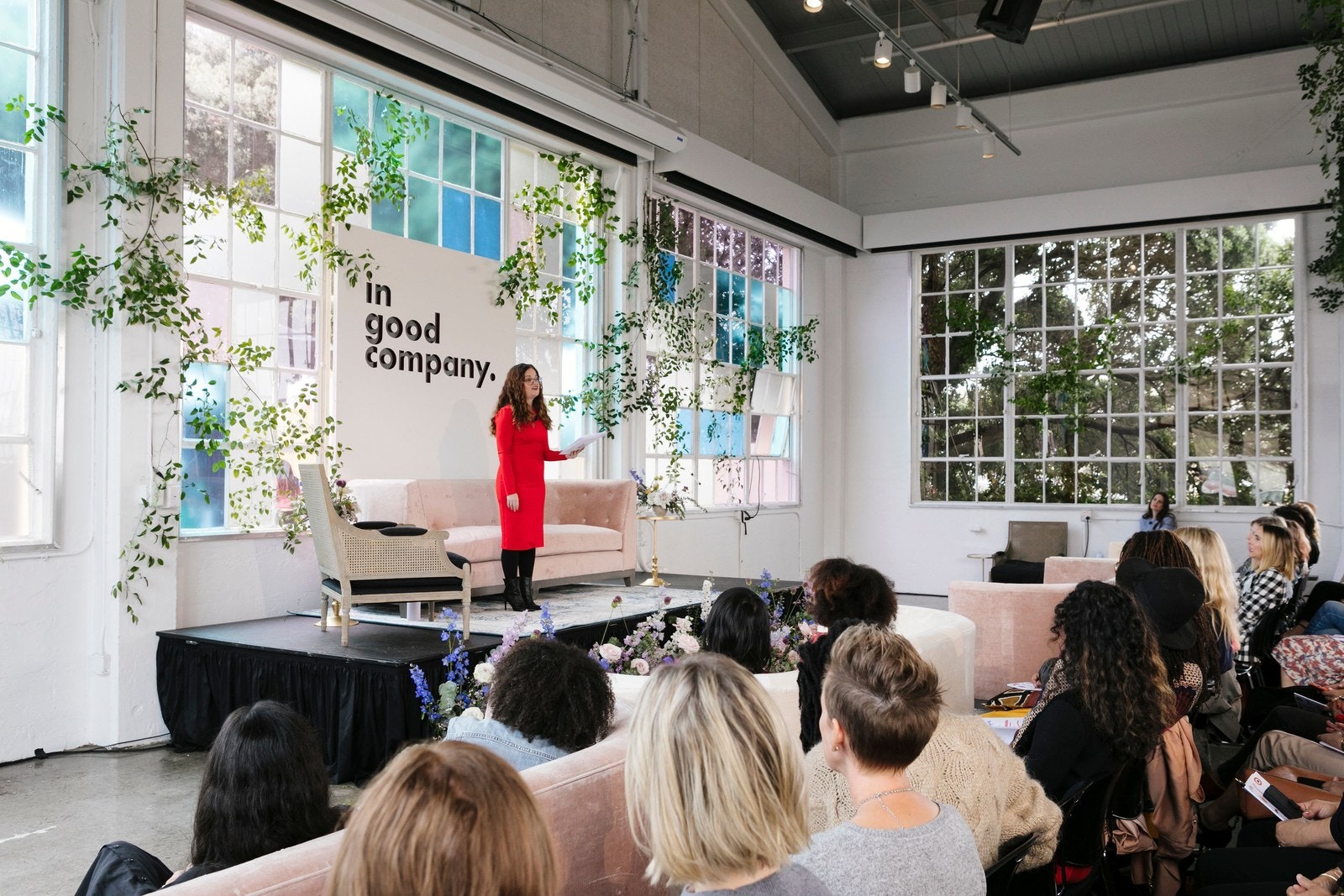
Recently, I found myself stewing over all of this as I listened to author and clinical psychologist Dr. Darcy Lockman give a keynote speech at the In Good Company conference in San Francisco. The title of her talk? “The Patriarchy at Home.” She had my attention.

Darcy Lockman delivers the keynote speech at In Good Company, a San Francisco conference geared toward entrepreneurial women and mothers. Kara Brodgesell


Source link

Categories
Health

Serena Williams And Secret Are Launching A Study on Gender Inequality in Sports


There’s scarcely a woman on earth who isn’t impacted by the fight for gender equality—but no where does that fight feel so visceral than in the world of sports. A world where Megan Rapinoe and the USWNT can dominate on the global stage and then come home to fraction of the pay their (less-qualified) male counterparts have up for grabs. And where top-of-their-game champions can lose their jobs just for getting pregnant. And where Serena Williams can work harder and longer than her male colleagues can still be asked to prove herself—over and over and over.

“Just because I am a woman doesn’t mean I deserve less—I work just as hard,” says Williams. “I’ve given up so much in my life and I’ve sacrificed so much. Why do I have to get paid less? I feel like women in sports are fighting with that right now.”

They definitely are. From the ongoing high-profile lawsuit filed by the U.S. Women’s National Soccer team to the historic equal pay deal just won by the women of the WNBA, female athletes have become the face of the gender gap.

But it isn’t just about the money. Equal pay is a nuanced issue that touches everything from amateur training conditions to the lack of maternity leave protections for female athletes. Entire systems have to change.

Williams, the athlete, advocate and force behind the multi-million dollar Serena Williams brand, wants to change them. So today, she and Secret Deodorant announced that they are teaming up to move the needle, pledging $1 million to supporting gender equality in sports.

The first step is calling out inequalities—relentlessly—to change things for this generation and the next. “I use my voice because I know if I keep talking, someone is going to eventually hear,” says Williams. “Maybe not today, but maybe for my daughter. Now that I have a daughter, it’s even more important. You just have to keep using your voice to change it for the next person.”

Next comes getting those who can to put their money where their mouth is. “I feel so much hope that these conversations are happening,” says Sara Saunders, associate brand director for Secret Deodorant. “But we’re trying to push to make sure those conversations result in action because talking about it doesn’t necessarily help us solve the issue.”

To that end, Secret and Williams are launching a study on gender inequality in sports. By surveying high school athletes, college players and professional athletes, the study will pinpoint three to four areas where Secret and Williams can deploy cash to make a real difference.

Secret has already shown what that can look like. “After we heard the chanting at the World Cup game, we realized that we needed to step up and do even more,” Saunders said. After that, the brand made a $529,000 donation to the United States Women’s National Team Players’ Association to close the gender pay gap in soccer and purchased over 9,000 tickets to National Women’s Soccer League games to help women’s teams get more visibility. In 2020, they hope to make that impact even bigger for the women and girls facing down the gender gap every day.

For Williams, that means bringing as many players into the conversation as possible—including men. “I feel like what people don’t realize is that we need men to use their voice as much as women. You are not going to get equal anything if men aren’t helping and vice versa,” she says. “A group singing is louder than a solo singer. It’s important to have a group get together and to sing.”

Macaela MacKenzie is a senior editor at Glamour.


Source link

Categories
Health

Gender Stereotypes Initiative Toy Cars Mercedes Benz USA and Mattel


When is the last time you saw young girls playing with toy cars on a TV commercial? If you thought, I honestly don’t know, you’re not the only one. According to the National Science Board, women represent only 29% of the current science and engineering workforce, a figure that influences what young girls are exposed to in their formative years. While social stereotypes are changing, the majority of the world still assigns pink and dolls to girls and blue and cars to boys. That’s why Mercedes-Benz USA and Mattel decided they needed to do their part to not only challenge outdated tropes but also empower girls to realize the opportunities available to them.

Earlier this year the car company released a video on gender stereotypes (see below) that racked up millions of views almost instantly. In the two-minute clip, first-grade girls are given various toys to play with and asked why they didn’t choose a toy car. From “that’s for boys, not for girls” to “that’s a boy toy,” the young girls explain why they didn’t give certain toys a second thought. Only when they are introduced to Ewy Rosqvist, a Swedish racing champion who made history for being the first woman to enter and win one of the toughest rallies in the world—the Argentinian Grand Prix—did they realize how they were limiting their choices—and future. Watch (and warning, expect emotions):

[embedded content]

Mercedes-Benz partnered with Matchbox to make Ewy’s car into a toy version and gift it to girls all over the country. Now, on National STEM/STEAM Day, both companies have announced that 50,000 young girls across the nation will not only get toy cars, but also engage in programs tied to science, technology, engineering, and math to challenge gender stereotypes.

Mercedes-Benz also released an updated version of the widely shared video and announced that its No Limits program will launch special workshops in Atlanta, Los Angeles, and New York City. With help from more than 100 organizations, from now until February 2020, girls across the U.S. will engineer toy racetracks, design cars, engage with female role models, and attend STEM workshops designed to expand how they see their future.

[embedded content]

“Whatever they aspire to be, we want all children to dream big, dream bold, and never give up on that dream,” says Mark Aikman, general manager of marketing services for Mercedes-Benz USA. “We’ve seen that stories like Ewy’s—championing women trailblazers and achievers—can have a big impact by calling into question the gender stereotypes that children may inadvertently adopt.”

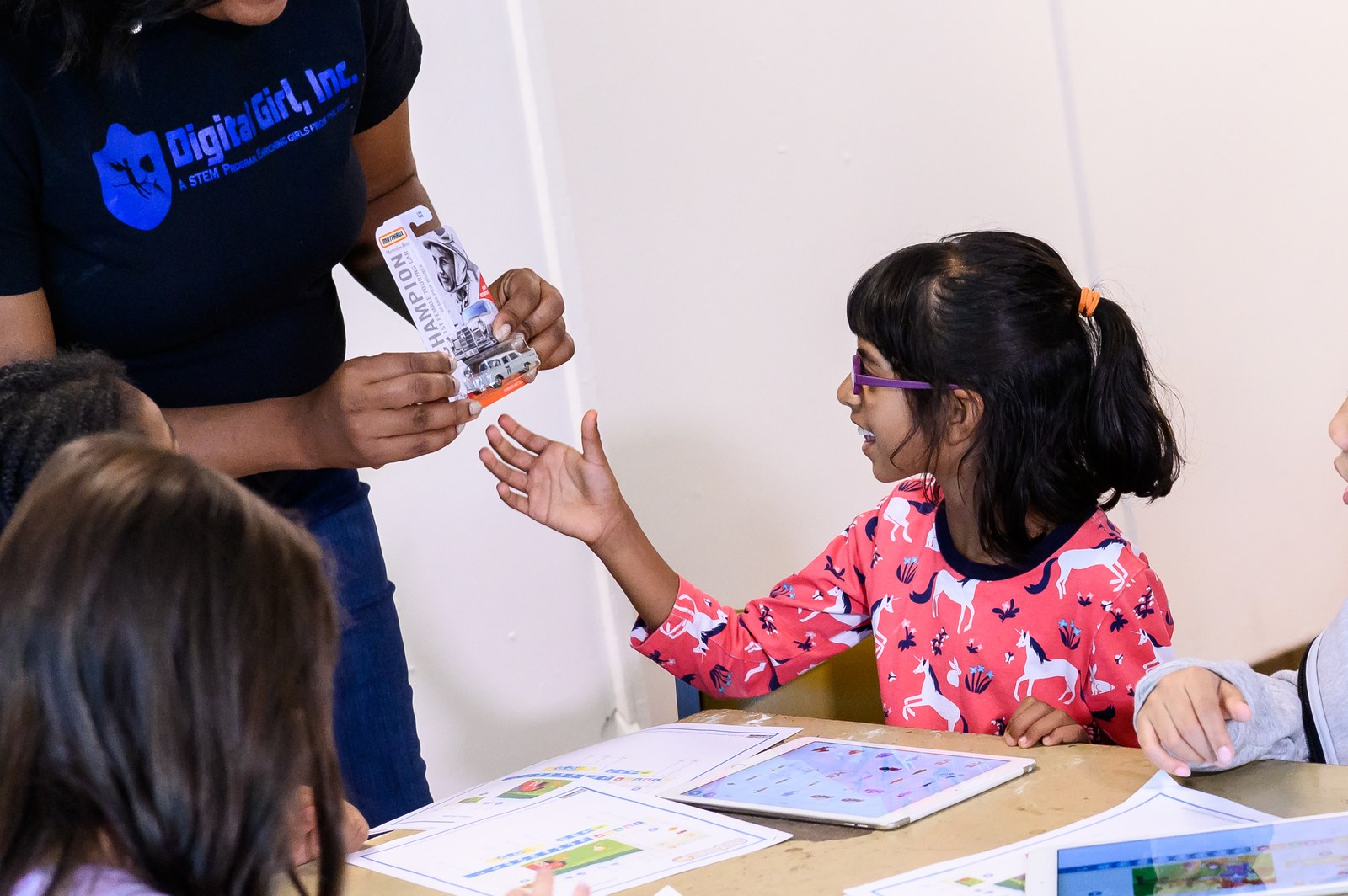
NEW YORK, NEW YORK – OCTOBER 26: Young girls from Brooklyn’s Digital Girl Inc. were the first of 50,000 children across the U.S. to receive new Matchbox cars by Mercedes-Benz and Mattel celebrating “No Limits” in honor of November’s STEM Day on October 26, 2019 in New York City. (Photo by Mike Pont/Getty Images for Mercedes-Benz)Mike Pont/Getty Images for Mercedes-Benz

The Ewy Rosqvist Matchbox replica will be sold in stores nationwide beginning in December. For more information and a list of organizations participating in the No Limits campaign, click here.


Source link

Categories
Health

Gender Equality Is 208 Years Away. Melinda Gates Wants to Change That.


It can be hard to find the words to describe just how frustrating it is that gender inequality is still so pervasive, even in the wealthiest nation on the planet. From compensation to representation, women lag so far behind men that the World Economic Forum estimates it will take more than two centuries to achieve gender equality in the United States.

Disparities between men and women have been discussed ad nauseam; it can feel like we’re out of points to make and tactics to use. But comedian Sarah Silverman is creative. Thanks to Melinda Gates and a new (hilarious) PSA, Silverman summed up her exasperation like so: “How is it that I can order a bag of dick-shaped gummy bears with same-day delivery, but I have to wait 208 years for gender equality?”

[embedded content]

It’s a good question, and one that Gates has tried to solve (in, uh, different words) for decades. Earlier this summer, she addressed the issue in an op-ed and wrote an entire book, titled The Moment of Lift, to discuss in detail some of the solutions she believes can help women get ahead. But ever the realist, Gates knows that even the most well-intentioned articles and books have a limited reach. So to inch the needle forward, she’s decided to take the fight to social media.

The Equality Can’t Wait campaign aims to accelerate progress when it comes to gender issues in America, building on the framework that Gates outlined in her recent book and inviting both men and women to share their stories about how crucial it is to close the gender gap. To kick it off, Gates didn’t want to release another mournful PSA. Instead, she tapped actor and director Natasha Lyonne to corral over a dozen comedians to, well, roast the problem.

In under five minutes, Silverman, with Ilana Glazer, Abbi Jacobson, Uzo Aduba, Maya Rudolph, Fred Armisen, John Mulaney, Margaret Cho, Natasha Rothwell, and more, crack jokes about how absurd it is that genuine gender balance is still several lifetimes into the future.

As Mulaney puts it, “That’s the most specific bad news I’ve ever heard!” Or as Aduba fumes, “That’s 1,456 dog years. I’m telling you, bitches never get a break.

Towards the end of the video, conversation does turn serious and it becomes clear that the reason it’s so hard to talk about sexism is because the issue is so, so vast. It’s not just unequal wages or discrimination or harassment or bias. It’s all of that. And then some. When the music turns somber, Aduba explains that two more centuries of the status quo means not a single woman alive now will ever experience a fairer, more equal world. Glazer recounts sexual harassment. Silverman reminds viewers that some elected leaders have in fact tried to turn the clock back, weaponizing their power to strip women of the rights we do have.


Source link

Categories
Health

The Woman Behind the First Viral Gender Reveal Is Having Second Thoughts


Back in 2008, a blogger named Jenna Karvunidis helped popularize gender reveal parties and videos when she baked a cake to celebrate the impending birth of her first child. After several miscarriages, she was ecstatic about being far along enough in her pregnancy to find out the sex of her baby and wanted to mark the occasion. But it wasn’t just any regular cake: Pink icing, revealed when the cake was cut into, let her friends and family know that a girl was on the way.

“For me, it was a milestone,” she told The Guardian on Saturday, July 27. “I had had several miscarriages. It was like, ‘Oh yay, I’m finally at a point in my pregnancy where I know if it’s a boy or a girl’ rather than ‘Let’s saddle this kid with a whole identity’. I don’t think anybody was thinking like that in 2008.”

The reveal made it onto her blog, the website The Bump interviewed her, and “then I started noticing people having the same party,” she wrote in a Facebook post on Thursday (July 25) via her blog’s account. (It’s important to note that what Karvunidis actually revealed was her baby’s sex, which indicates the biological differences between males and females, as opposed to gender, which is the social construct of norms and roles stemming from one’s sex.)

But now, Karvunidis is rethinking so-called gender reveals—thanks, in part, to the now-10-year-old daughter whose own reveal party helped catalyze the trend.

“I’ve felt a lot of mixed feelings about my random contribution to the culture. It just exploded into crazy after that. Literally—guns firing, forest fires, more emphasis on gender than has ever been necessary for a baby,” she wrote in her Facebook post. “Who cares what gender the baby is? I did at the time because we didn’t live in 2019 and didn’t know what we know now—that assigning focus on gender at birth leaves out so much of their potential and talents that have nothing to do with what’s between their legs.”

She accompanied her post with an updated family photo. “PLOT TWIST, the world’s first gender-reveal party baby is a girl who wears suits!” Karvunidis wrote.

Karvunidis told The Guardian that, as her 10-year-old has been exploring nonbinary expressions of gender, she’s also been teaching her mom a few things about all the nuances involved. “I’m letting her lead me,” Karvunidis said. “She has her opinions about there being many genders, and she is informing me about things. She was biologically born a female, and she is still ‘she’ and ‘her’ and says she’s a girl, but she is still doing things her way.”


Source link

Categories
Health

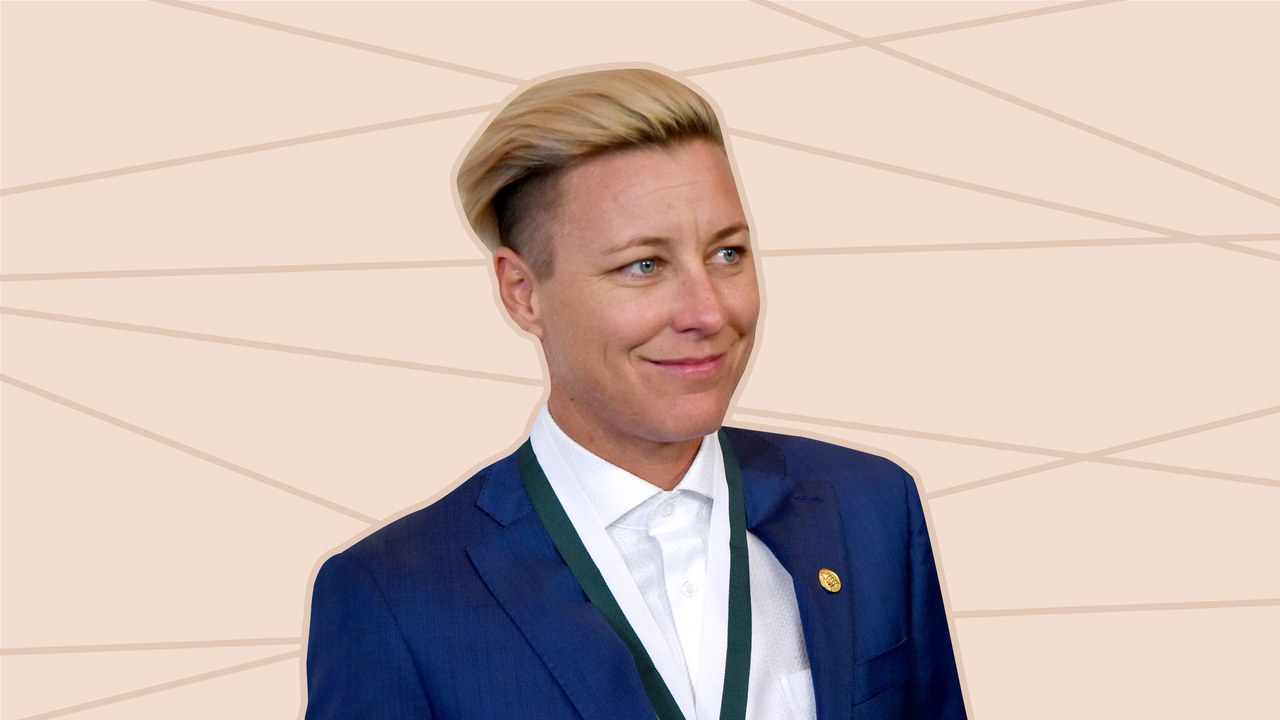
Abby Wambach on How She's Supporting the U.S. Women's Soccer Team in Their Fight Against Gender Discrimination


On March 8—International Women’s Day, no less—28 members of the world champion United States women’s soccer team filed a gender discrimination suit against U.S. Soccer. “Each of us is extremely proud to wear the United States jersey, and we also take seriously the responsibility that comes with that,” team member Alex Morgan told the Associated Press. “We believe that fighting for gender equality in sports is a part of that responsibility. As players, we deserved to be paid equally for our work, regardless of our gender.”

The U.S. women’s soccer team first began their fight for equal compensation in 2016, when five players filed a complaint with the Equal Employment Opportunity Commission (EEOC) asking to be paid as much as the players on the men’s team. But the EEOC has still not issued a decision in their case. Then in 2017, they negotiated a new collective bargaining agreement—which increased their salaries and practice conditions—with U.S. Soccer that will run through 2021. And so the new gender discrimination suit is a further step—one that former soccer player, coach, and two-time Olympic gold medalist Abby Wambach cheers.

Since she retired from the sport in 2015, Wambach has dedicated herself to ending sex discrimination. At Barnard College’s graduation in 2018, Wambach turned her commencement address into a call to action. She told the graduating class, “Like all little girls, I was taught to be grateful. I was taught to keep my head down, stay on the path, and get my job done. I was freaking Little Red Riding Hood. The message is clear: Don’t be curious, don’t make trouble, don’t say too much, or bad things will happen. I stayed on the path out of fear—not of being eaten by a wolf—but of being cut, being benched, losing my paycheck. If I could go back and tell my younger self one thing, it would be this: ‘Abby, you were never Little Red Riding Hood, you were always the wolf.’” The speech has been viewed over 180,000 times and inspired her upcoming book, WOLFPACK, a guide for women to unlock their own power.

[embedded content]

Watch Wambach deliver her viral address at Barnard College’s 2018 commencement

As the highest all-time goal scorer for the national team—and the world record holder for international goals for both female and male soccer players with a whopping 184 goals—Wambach is one of the most recognizable face in women’s soccer. But for much of her career, Wambach explains she felt so fortunate to be able to compete in the game she loved that she never fought to be appropriately compensated for shattering those records. It’s a choice she now deeply regrets. Wambach could see just how badly the women’s team had been treated—and decided her decades of silence and servitude to the sport were over.

Wambach now travels the country as a crusader for equal pay across all industries, telling women that feeling “grateful” for their work should never stop them from demanding what they’re entitled to. Here, she opens up to Glamour about the U.S. women’s soccer team’s revolutionary discrimination suit—and how she champions the team from the sidelines.

Glamour: In your viral Barnard speech, you describe this moment when you appeared at the ESPY Awards, side by side with Peyton Manning and Kobe Bryant—and it dawned on you that they had so much more financial security going into retirement than you. What was it like to have that realization, then go back to your hotel room?

Abby Wambach: I played professional sports, so I lived a very privileged life where I was traveling the world representing my country. At the time, I thought this was better than most women’s experience, because I was really successful. But then I got back to the hotel and I started to understand what had really gone on here, and it was this anger-provoking moment that made me realize that even though I felt that I was one of the women who got a seat at the table, next to Kobe and Peyton, I was walking into a very different retirement. For me, that was the minute I figured out what I was going to do for the rest of my life: I was going to focus that energy and that rage, which turned into my Barnard speech, and now this book. It’s a sobering moment for women when we’re made very aware of where we stand in the order of things. But I don’t like to just sit into despair, I’m about action—so this is my attempt to help change the realities of women everywhere.


Source link