Categories
Health

We Can't Believe We Have to Say This, But Please Do Not Drink Bleach to ‘Clean Out’ Coronavirus


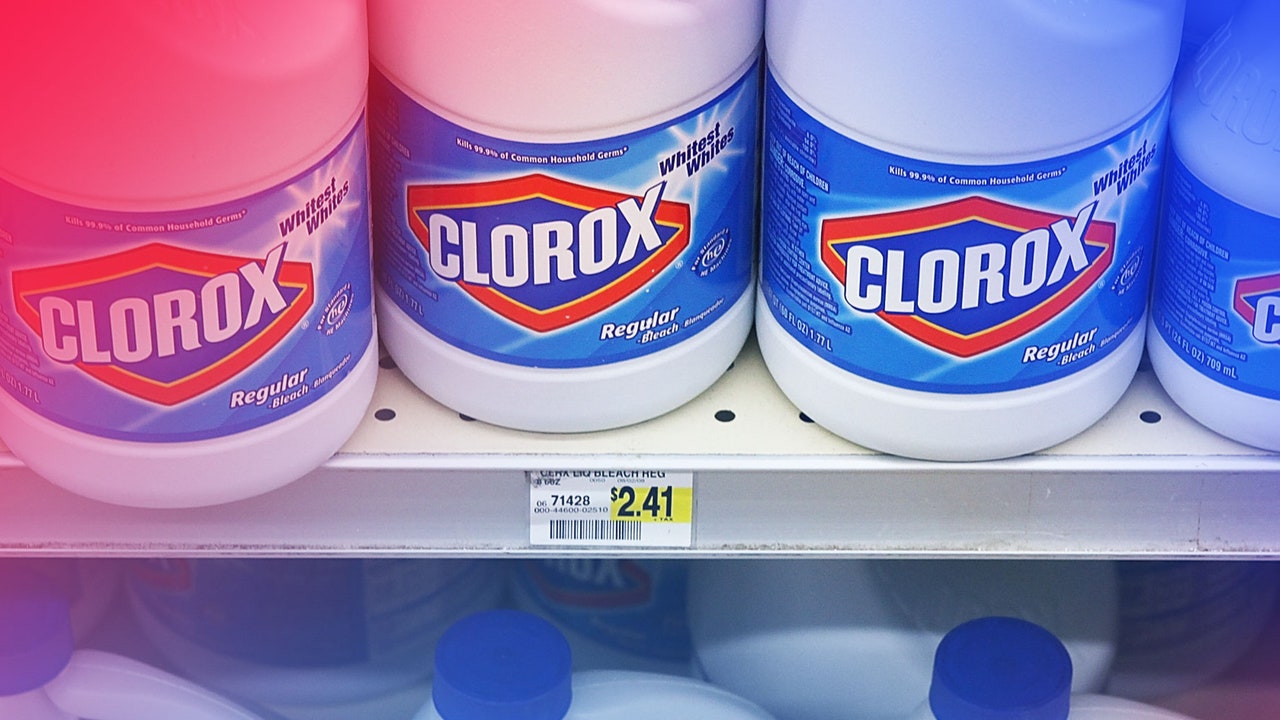
Injecting a disinfectant like bleach into your lungs—is it: A. a cool quarantine activity to test out? Or B. a poisonous idea that will lead to hospitalization and perhaps death?

Doctors, scientists, disinfectant companies, and every person with lungs (except the President of the United States) agrees. The answer is B.

During a briefing on Thursday, President Trump wondered out loud if sunlight, and disinfectants like bleach, could potentially “clean out” coronavirus if they could get “inside” the body.

After a science official at the Department of Homeland Security said at the briefing that the agency has studied how sunlight and household disinfectants can kill coronavirus on surfaces in under a minute, Trump took the podium and said, “I see the disinfectant where it knocks it out in a minute—one minute—and is there a way we can do something like that by injection inside, or almost a cleaning? Because you see it gets in the lungs and it does a tremendous number on the lungs, so it would be interesting to check that.”

When I was an impressionable teen and I tried to convince my parents to let me do things with my friends like wear a three-tiered ruffled mini skirt to an Akon concert or drink caffeine (I had very strict parents), they would say, “If all your friends jumped off a bridge, would you jump off a bridge?”

And now I must say to you, “If the President injected bleach into his lungs, would you inject bleach into your lungs?” If the answer is “Maybe!” I must urge you to reconsider. Try reading a chapter book, or watching the VHS of Miss Congeniality instead! (That is what my parents would have recommended to me.)

Of course, the President is free to speak about whatever he wants, but his words have serious weight for millions of Americans who might actually try out his dangerous idea.

Here are a few of the groups and people who have had to put out statements since the briefing, warning people not to swallow or inject disinfectants:

  • The CDC The center tweeted, “Household cleaners and disinfectants can cause health problems when not used properly. Follow the instructions on the product label to ensure safe and effective use.”

  • Toxicologists “As a toxicologist, I see people all the time who have had an adverse effect of consuming these kinds of products,” Dr. Ryan Marino told CNBC. “These should not be consumed in any way.” Marino said he has seen patients die after consuming disinfectants.

  • Pulmonologists “Any amount of bleach or isopropyl alcohol or any kind of common household cleaner is inappropriate for ingestion even in small amounts. Small amounts are deadly,” Dr. Vin Gupta told NBC.

  • People who worked for the FDA Former FDA Commissioner Scott Gottlieb told CNBC there is no “kernel of credibility or truth to doing something like ingesting bleach or injecting bleach as a treatment for anything.”

  • The literal makers of Lysol “We must be clear that under no circumstance should our disinfectant products be administered into the human body (through injection, ingestion or any other route,” the company said in a statement.

On Friday, Trump told White House reporters that his comment about disinfectant wasn’t serious. “I was asking the question sarcastically to reporters like you just to see what would happen,” he said, when probed, kind of like when you ask your crush “sarcastically” if they will go out with you, or when you work up the courage to invite a casual acquaintance to coffee and they say, “Uh, maybe when things get less busy with work,” but actually you were just being sarcastic.

Quarantine has offered us an array of delicious and easy-to-assemble drinks other than stemless wine glasses full of bleach: dalgona coffee, DIY-Starbucks drinks, White Claw slushies, and wine. You can inject yourself full of prestige television, reality drama, the euphoria of puzzle making, or—and this is by no means a recommendation—stick-and-poke tattoo.

The President missed the mark on this one, but we can always depend on a steady hand from our international leadership: the corporation that makes Lysol.

Jenny Singer is a staff writer for Glamour. You can follow her on Twitter.


Source link

Categories
Health

With the Coronavirus Keeping Millions at Home, Uber Is Giving Free Rides to Help Survivors of Domestic Violence Flee to Safety


During a worldwide pandemic, the safest place to be is home.

But for people enduring domestic violence, home is never safe. The coronavirus pandemic—and the stay-at-home orders, social distancing measures, and quarantining that have been instituted in an attempt to keep the disease at bay—have the unintended side effect of trapping domestic violence survivors with their abusers.

As if escaping an abusive situation isn’t painfully difficult under regular circumstances, attempting to leave during a pandemic means either braving public transportation or coordinating with friends or relatives who could themselves be at an elevated risk. Domestic abuse, which disproportionately affects women and children, turns the drudgery of waiting out a pandemic from home into a day-to-day hell.

But for some survivors, one part of the process is about to get a little easier. Uber is providing 50,000 free rides to domestic violence shelters and safe havens. Through shelters and other groups that have partnered with Uber to hand out the codes, free rides will be available in over 35 cities across 16 countries. When survivors contact shelters and help lines, those organizations will be able to share a code from Uber that will allow them to take a free, fast ride to safety.

“Many survivors of domestic violence have no access to a car, and the COVID-19 pandemic has reduced public transportation options,” Allison Randall, Vice President for Policy and Emerging Issues at the National Network to End Domestic Violence (NNEDV) said in a statement. “Local domestic violence programs are still open and available to help survivors, but without transportation, survivors have no way to get there, much less to a doctor’s appointment, grocery store, or courthouse. We are so grateful to Uber–our longstanding partner–for providing these lifesaving free rides to survivors.” In addition to the free rides, the company has announced it will donate 45,000 meals to survivors in need.

The initiative, part of a larger pledge by the ridesharing company to provide 10 million free rides and food deliveries to people in need during the pandemic, is led by Tracey Breeden. The head of Women’s Safety and Gender Based Violence Programs at Uber, Breeden previously worked as a police officer and a detective for nearly 15 years, focusing on violence against women. “It doesn’t matter what’s going on in the world—violence against women and children doesn’t stop,” Breeden tells Glamour. “It just shows up differently sometimes. Domestic violence is not a new crisis, and everybody can play a role in working to help create safe spaces and helping people get help safely. It’s critically important to take COVID seriously by sitting at home, but it’s also important to not forget that for some people being at home is not safe.”

Of course, the kind of help that Uber is offering isn’t entirely risk-free either, particularly for its drivers. The company will be paying workers a full fare for these rides, but it’s the workers who will be driving to the homes of potential abusers, and sharing small spaces with strangers in their cars, despite the CDC’s social distancing recommendations. And, of course, Uber drivers are independent contractors, which means that despite functioning as a kind of first-responder in this and other crises, they don’t get benefits like Social Security, health insurance, or paid sick days, and they’re responsible for damage to their own vehicles.

Still, for survivors with few options, the initiative could be a lifeline. Breeden says that Uber’s partners at domestic violence organizations have shared that given the constraints of shelter-at-home, many survivors are utilizing chatrooms to speak with advocates privately. “What will happen is that shelter, that advocate will work with that survivor to find the safest way to provide them help and get them to another location,” Breeden says, “They certainly aren’t going to send a driver into a situation that they know is potentially harmful.” She also notes Uber apps have an easy-access 911 button for drivers, and that the app allows survivors to enter cross streets instead of their exact address in case an abuser has access to their account as well.


Source link

Categories
Health

Watch a Woman Meet Her Newborn Son for the First Time After Being on a Ventilator for 11 Days Due to Coronavirus


Yes, there is still good news in the world in the time of coronavirus. We may be in the middle of a global health crisis the likes of which none of us has ever experienced, but every day inspiring stories of hope, help, and recovery are emerging and for that we’re so grateful.

Take Yanira Soriano, a woman who contracted COVID-19 while she was also 34 weeks pregnant in Long Island, New York. CNN’s Jake Tapper told her incredible story in a Twitter thread and the ending is a very happy one—but it didn’t begin that way.

Soriano became so ill doctors had to put her in a medically induced coma while also hooking her up to a ventilator to help her breathe. They were concerned she would not survive and delivered her baby via an emergency C-section. The infant was transferred to another hospital for monitoring. Miraculously, after 11 days, Soriano began to recover from the coronavirus. On April 15, she was released from the hospital to cheers from doctors and nurses.

But even more importantly, she was finally able to meet her son Walter for the very first time, with cameras recording her husband putting the newborn into her arms as she sat in her wheelchair surrounded by the hospital’s staff. Warning: It’s incredibly emotional—but the rare happy ending that we all need to see so much right now.

The online response to the story shows just how much the world is hungry for happy news during a really tough time. “I’ve sent this to my son who is an ER doctor,” one person tweeted. “These people do so much work to save lives and it’s easy to forget that they’re humans with emotions too. This is a lovely thread which portrays that very well.”

“That’s the sweetest thing, I’ve seen in awhile! I’m crying happy tears! Thank you for sharing. So many heros! [sic],” another wrote.

We hope Walter and his mom had a very wonderful first night together at home. Now, we’ll just be watching this video on a loop to keep our mood lifted.


Source link

Categories
Health

Should We Be Wearing Gloves for Coronavirus Protection? Experts Explain


The protective equipment you should really be focusing on, the experts say, is masks. “These are actually quite critical, and more so than gloves,” He says. “A widespread mask policy will become increasingly important as we try to transition from social distancing to a more normal semblance of society. It will be critical to wear masks when we go out to ensure we are not infecting others if we’re not even aware we’re infected. Wearing masks ensures that we keep essential workers to minimal exposure to ourselves when we go out. Gloves do not really have that same effect.”

If you do buy reusable gloves, are you taking them away from health care workers?

“Demand is unprecedented at this time, as every country is having issues with COVID and thus need PPE all at the same time,” says He. “It’s the classic ‘toilet paper problem,”meaning that when everyone scrambles to buy something at the same time, it runs out. The supply chain—i.e., the system of companies that use materials to make things like gloves and masks—breaks down.

This problem is putting essential workers in danger. “I have heard from nurses all over the country that they have been reduced to one surgical mask per shift, or even worse, per week,” Norton says. “New York City nurses are literally wearing garbage bags because they are out of protective gowns. Nurses in Michigan are out of Tylenol. This is not a joke—this is happening, and the United States needs to do better.” Grocery store workers, delivery people, and others who are on the front lines are also at greater physical risk if they don’t have access to appropriate PPE.

So is there a moral obligation to avoid buying gloves, or to donate any extra gloves that you own? “It depends,” says He. “Nitrile gloves are very useful for health care workers, but also grocery store workers, nursing home members, people who work closely with high-risk populations like homeless shelters or jails and prisons. We can’t forget these places, or COVID will spread. So I do usually advocate for these places to get the disposable gloves.”

If you do buy reusable gloves, the key, He says, is for people to “buy and use what they need.” The worst thing you could do is to hoard PPE.

Okay, but what if I will just feel better if I wear gloves?

If you do choose to wear gloves, there are best practices, according to the CDC guidelines for health care workers (you can also apply these tips to the reusable gloves that He recommends):

  • Gloves should be the very last thing you put on.

  • Gloves should fit snug around the wrist.

  • Take them off if they are torn.

  • Never wash or reuse disposable gloves.

CDC

The CDC’s guidelines for healthcare workers, for properly removing gloves

Generally, you need to treat your gloved hands as you would your ungloved hands—know that every time you touch something with gloved hands, like your cell phone or your car door, you may be using contaminated hands. And of course, you need to wash your hands after using gloves.

I’ve been seeing gloves everywhere…on the ground.

If you do decide to wear gloves, and you take them off before touching another thing to avoid spreading germs, that’s great! If you take them off and throw them directly on the ground in a public space, that’s litter!

Highly populated areas are reporting a huge uptick in street trash in the form of disposable gloves that are being thrown on the ground. If you do that, you’re not helping keep yourself safe—you’re just littering, and potentially endangering sanitation workers.

If essential workers can risk their lives to keep us safe and healthy, we can do the brave, selfless, heroic thing…and throw our trash in the trash can.

Jenny Singer is a staff writer for Glamour. You can follow her on Twitter.


Source link

Categories
Health

Coronavirus: All the Celebrities That Had to Postpone Their Weddings Due to the Pandemic


Left and right, it seems every highly anticipated movie, TV show, and live event (miss you, Coachella) has been put on hold amid the coronavirus pandemic. Still, bride and grooms scheduled to tie the knot within the next few months have been wrestling with a big decision since March: do they continue as planned without guests and a safe distance away from their officiant like one viral New York couple, or do they cancel the whole thing until the global health crisis subsides?

Ah, celebrities…most of the time they’re not just like us, but this is one scenario even A-list couples like Jennifer Lopez and Alex Rodriguez or royal fiancés like Princess Beatrice and Edoardo Mapelli Mozzi can’t avoid. Here is an ongoing list of famous lovebirds who will be postponing their luxurious wedding festivities until a later date.


Source link

Categories
Health

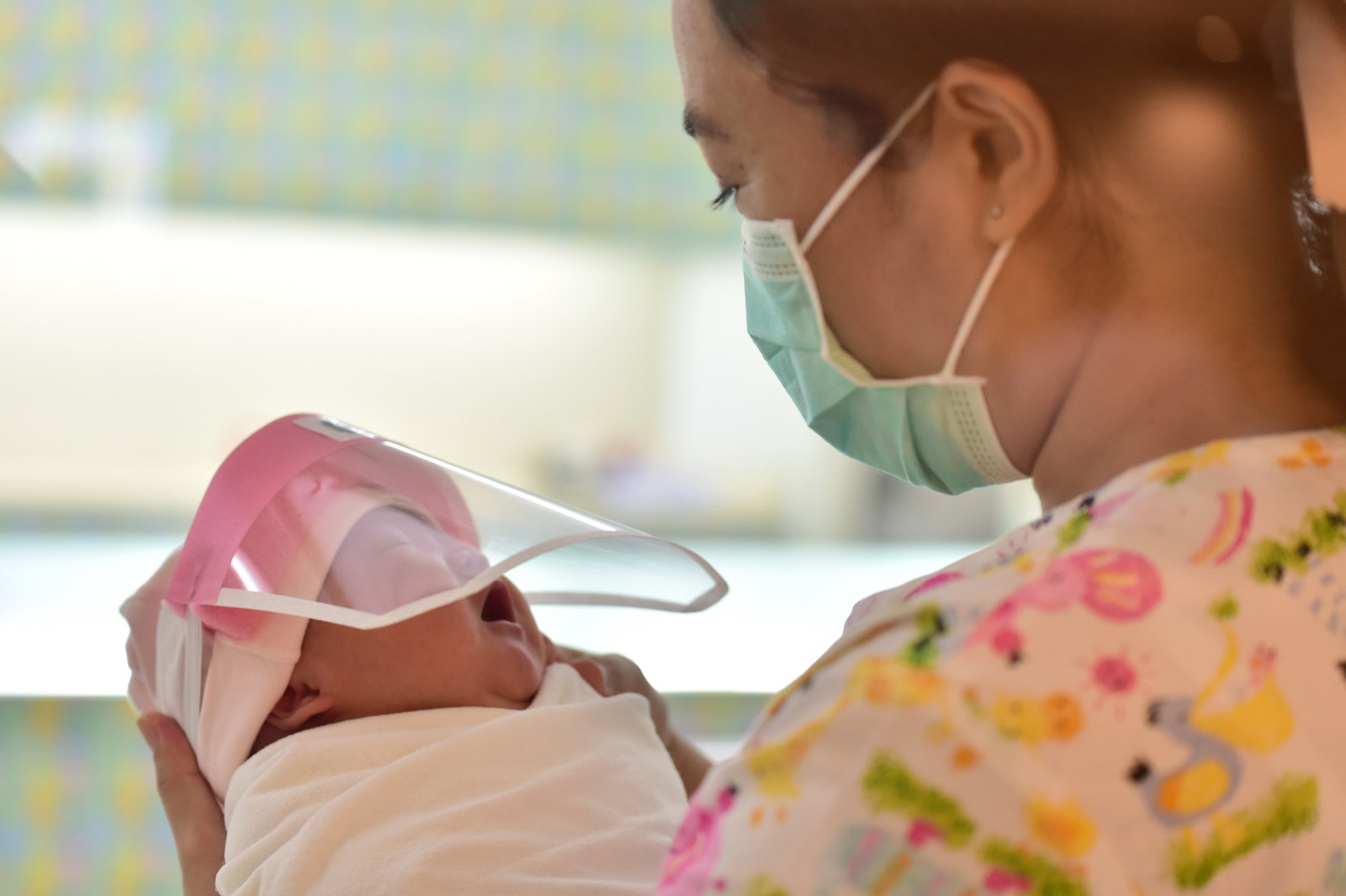
Coronavirus: Newborn Babies at a Thai Hospital Are Being Given Tiny Face Shields to Protect Them from COVID-19


LILLIAN SUWANRUMPHA/Getty Images

Naturally, as the images made their way across the internet, they stirred up a lot of emotions. “So cute and so unbelievably sad. What a world to be born into. Meanwhile, in the UK not even frontline NHS staff can get face shields,” one person tweeted.

“This is sad. And also? The cutest thing ever,” Busy Phillips wrote.

Per Yahoo News UK, Thailand had a total of 2,473 cases of COVID-19 and 33 people had died from the coronavirus as of April 10. According to the New York Times, the U.S. has almost 500,000 reported cases and over 18,000 deaths.

There is still a lot that is unknown about COVID-19’s effect on pregnant women and newborns. “We do not currently know if pregnant people have a greater chance of getting sick from COVID-19 than the general public nor whether they are more likely to have serious illness as a result,” the CDC (Centers for Disease Control) says on their website. “Based on available information, pregnant people seem to have the same risk as adults who are not pregnant.” The CDC also notes that pregnant women’s bodies are going through changes that may put them at a higher risk for some infections and illnesses caused by viruses.

Once again, we must ask you to stay home as much as possible, practice social-distancing and help to flatten the curve.


Source link