Categories
Health

8 Signs of Infertility: Symptoms to Watch for in Women & Men


“Chemotherapy or pelvic radiation can cause rapid loss of eggs and some women may have an earlier menopause,” says Westphal. She recommends speaking with a fertility specialist prior to cancer treatment in order to discuss your fertility preservation options. (Some of these options include IVM, ovarian transposition, and ovarian tissue cryopreservation.)

Signs of Infertility in Men

Infertility in men can be more difficult to pinpoint due to a lack of obvious symptoms. However, according to Westphal, infertility in men accounts for roughly a third of all cases (another third are related to the female partner, with the final third pointing to both), and is just as important to diagnose and potentially treat.

Swelling or Pain In the Testicular Area

One of the easiest symptoms of infertility to diagnose is swelling or pain in the testicular area. There are a number of reasons for this (including infections, fluid buildup, trauma, and cancer), but not all necessarily indicate infertility.

Another cause, however, is varicoceles—an enlargement of the veins in the scrotum. “This can cause overheating of the testicles and lead to lower sperm production,” says Westphal. “About 15% of men have varicoceles, but most will have not had fertility problems.” If it is associated with infertility, surgery can likely correct it, she adds.

Ejaculatory Dysfunction

Men who experience ejaculatory dysfunction of any kind (such as premature ejaculation, delayed ejaculation, retrograde ejaculation, and anejaculation) may struggle with infertility.

Take retrograde ejaculation, which is when the sperm can stream into the bladder instead of out the penis. “Health problems like diabetes or a spinal cord injury can cause this, or previous surgery on the bladder, prostate, or urethra,” Westphal says. Medications can sometimes help, she explains, as well as finding other ways to retrieve the sperm to use for IVF.

As far as premature ejaculation, a study in Reproductive Medicine and Biology found it usually doesn’t affect fertility, but often co-occurs with fertility struggles. (Retrograde ejaculation and anejaculation are more likely to actually cause infertility.)

Low Sperm Count

Issues with semen and sperm count are sometimes related to ejaculatory dysfunction issues. Other times, low sperm counts are due to infections (like epididymitis, orchitis, and certain STDs).“Some infections can affect sperm production or cause scarring that could block the passage of sperm,” says Westphal. She also mentions that certain medications, like ones to treat high blood pressure, depression, arthritis, and cancer can affect both sperm production and/or delivery. “Testosterone replacement or medication to treat prostate enlargement (BPH) can reduce sperm, too. When possible, stopping or switching to another medication may help improve sperm,” she adds. Always talk to your doctor before making any changes in medication.

Additional causes include anti-sperm antibodies, hormone imbalances, chromosome defects, tumors, celiac disease, certain medications, and previous surgeries.

Fortunately, many of these causes of low sperm count and infertility are treatable. Infections (like gonorrhea) can be treated with antibiotics. Hormone treatments can be offered, surgeries can be performed to correct certain issues, and medications can be prescribed for others. Additionally, assisted reproductive technology can be used to obtain or extract sperm for IVF.

Unhealthy Lifestyle

Just like in women, taking lifestyle choices that negatively affect personal health can often cause issues that affect fertility in men. “Tobacco smoking, marijuana use, and alcohol use can decrease sperm production,” says Westphal.

Tobacco is well-known to negatively impact fertility, sometimes causing abnormal sperm morphology among other things. Alcohol also has deleterious effects on male fertility, including reducing testosterone levels and affecting other hormones. And studies have also shown that cannabis use can reduce sperm count and concentration, among other things. Additionally, obesity has been linked to hormone issues that can cause infertility, though these seem to be reversible. Overall, it’s advised to reduce or eliminate use of substances such as the ones noted, and actively make health-conscious lifestyle choices (such as exercising and reducing stress) in order to improve fertility.


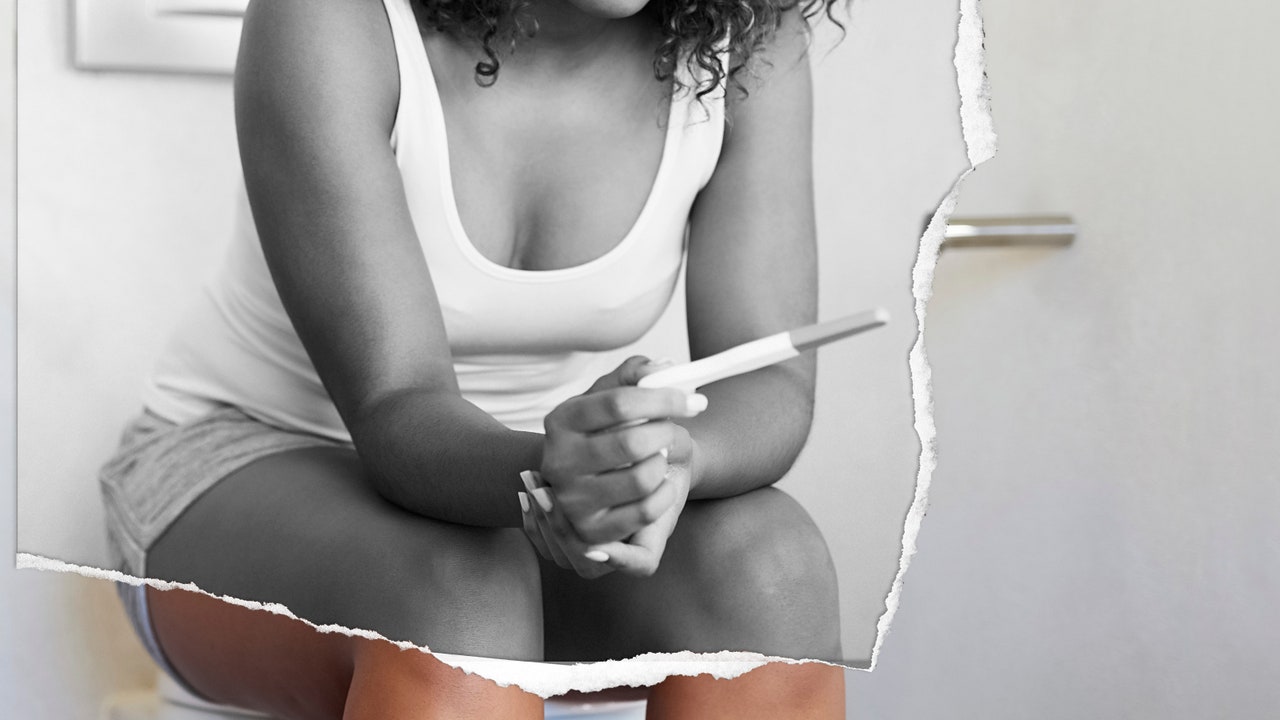
Experiences of infertility always have one thing in common: uncertainty. The countless visits to doctors, the months (or years) of planning, the tens of thousands of dollars, never add up to a guarantee. Even under the best of circumstances, there’s only so much about a pregnancy you can plan, and in the midst of a global pandemic, the idea of planning anything seems foolish. For National Infertility Awareness Week, we’re exploring the uncertainty—and the hope.


Source link

Categories
Health

11 Best Hoodies for Women 2020: Champion, Tory Sport, & More


We’re holding on a little tighter to the things that matter most to us these days—and for me, that means hand-me-down sweaters and hoodies “borrowed” from friends. I’ve taken comfort in the large, worn-in hoodies that I’ve owned for years—the ones that are a little frayed on the edges but carry a ton of memories. Whether I’m sitting at my desk all day; attempting (read: failing) my 14th TikTok dance, or dailing into a Zoom happy hour, the best hoodies for women (and sweatshirts, for that matter) make me feel comfortable and stylish despite the fact that most of my fashion has taken a hit in the last month.

But now that living in loungewear is basically a given, my wardrobe needed a refresh. I searched high and low (or at least through every page of my favorite shopping sites) for the best hoodies and sweatshirts available right now. From tie-dye to the fuzziest styles you’ve ever seen, shop 11 hoodies and sweatshirts that are equal parts new and nostalgic.

All products featured on Glamour are independently selected by our editors. However, when you buy something through our retail links, we may earn an affiliate commission.


Source link

Categories
Health

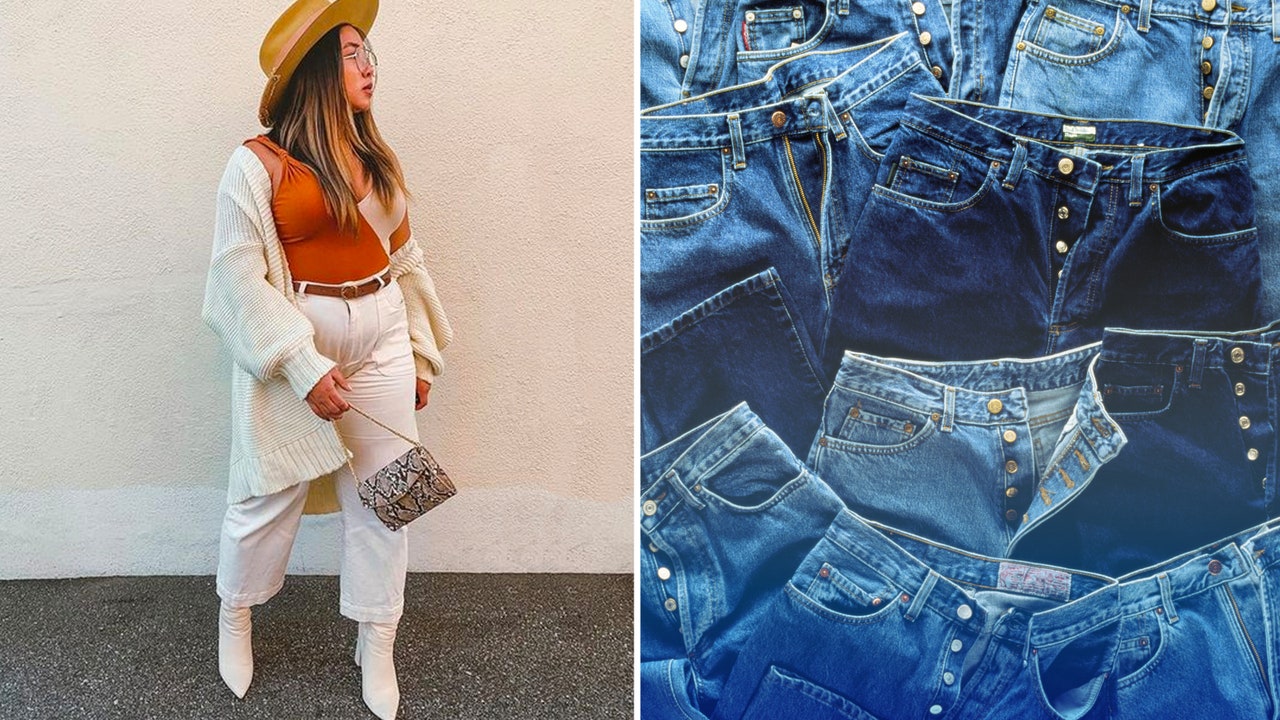
I Found the Most Comfortable Jeans for Women in Quarantine


Though social distancing has us farther apart than ever, people have banded together to categorically hate on jeans, and I’m here to say 1) I’m feeling very attacked right now, and 2) you’re all wrong. You’ve seen the memes and the best lougewear roundups, but the hate is happening IRL too. Coworkers have audibly gasped when it’s revealed that I haven’t joined the cult of the sweatpant, and I’ve fielded more than a few questions about whether or not I’m a secret sociopath.

A thoroughly unsettled Perrie Samotin.

But I’m not the crazy one. The crazy ones are the people who’ve worn sweatpants every day of quarantine. There’s nothing wrong with being cozy, but let’s be real, sweatpants are the official wardrobe of dorm room jocks and the type of people who let their dogs walk them on the sidewalk. There’s too much freedom, it’s all too cush. And wearing the same outfit morning, noon, and night can begin to feel very Twilight Zone.

Of course, there are more important things happening in the world right now, but allow me to take a few minutes of your time to talk about something overtly frivolous—and remind you of what life used to look like before you all jumped onto a conveyor belt of terry cloth robes and outfits that don’t extend below the waist. For three full weeks, I’ve woken up, thrown on a pair of jeans, tied up my shoes (spoiler: I also wear shoes in my house), and get to work. Everyone’s trying to keep their routines in place these days and, for me, that means wearing what I typically would at the office—comfortable jeans. Am I trying to prove something? Yes, that I can be my normal self during these very abnormal times.

Part of my routine used to be decompressing on my commute—and now, changing in and out of my jeans everyday has become something of a self-care ritual, helping draw the line between work and rest (when both of those things are happening on the couch). After all, if you’re already as comfortable as you can be, it’s hard to tell when work is done and the day is over.


Source link

Categories
Health

I Found the Best Jeans For Curvy Women After Years of Disappointment


I’ve always had problems finding jeans that fit right. Even from a young age—when I was stick-thin and in ballet class four times a week—my butt always made it difficult for me to fit comfortably into pants, especially because I grew up in the age of low-rise jeans. And as my body filled out more over time and I put on weight all over, it became clear to me that most of the popular denim brands simply didn’t make jeans for bodies like mine. Thus, I began my journey to hunt down the best jeans for curvy women.

Mind you, by standard sizing measures, I technically fit into the “straight size” category (as opposed to plus size) because I fluctuate between a 12 and 14, or 31 and 32. But because my butt is on the larger side, straight sizes don’t usually work on me. I would always have to size up to get them over my hips and so that my thighs wouldn’t feel like a tourniquet was being wrapped around them—but then I’d always end up with the top being too big. I was constantly battling the seemingly-unfixable waist gap and even if they fit well, they would split awkwardly in my thighs due to them rubbing together and wearing down the seaming. Over many years—and many weight fluctuations that prompted me to try out countless denim brands—I came close to giving up on ever finding the perfect pair of jeans. I was convinced that I was doomed to live a life in dresses and skirts forever.

Then I found DL1961. I’d never heard of it, even though the brand was right under my nose at Nordstrom, Shopbop, and Amazon. I first discovered the brand through its collaboration with beauty influencer Marianna Hewitt and had the chance to try out the Hepburn High Rise Wide Leg pair. To say that my world was forever changed would not be an understatement.

I never knew that jeans could be so comfortable, but still look unbelievably chic and flattering. The high-waisted fit actually comes up past my belly button—something that was missing in literally every other style I tried from different brands—and the fabric has enough give to allow me to sit comfortably without the waistband digging into my stomach. But the best parts? No waist gap and my big ole’ booty looks amazing in them, if I do say so myself. This single pair of jeans has become my gold standard for denim, and they convinced me to give denim another try.

In all honesty, after discovering what I believed to be the perfect pair of pants, I was scared that it was a fluke and that other fits from the brand wouldn’t flatter me as well as the Hepburn did. Thankfully, DL1961 proved me wrong, and I was pleasantly surprised to find that the brand offers inclusive sizing both on its site and through a few other retailers.


Source link

Categories
Health

Women Always Have to Work Harder to Win—Even at the Gym


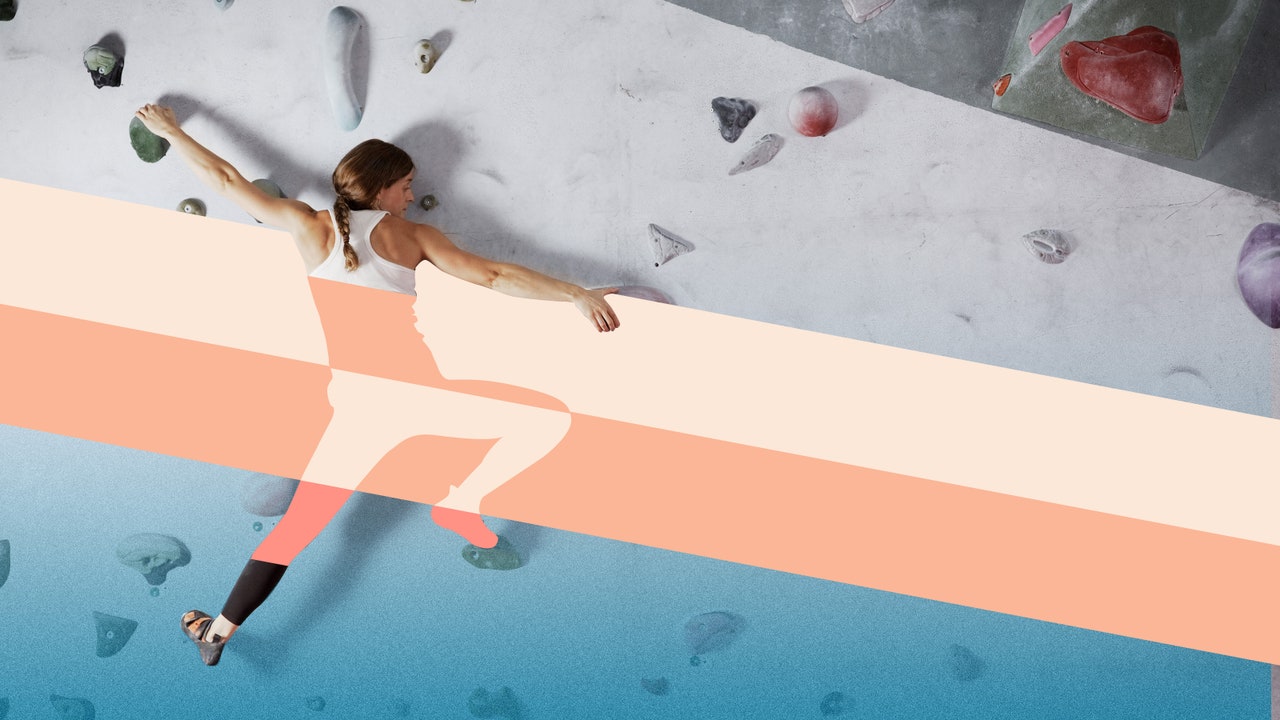
The first time I stepped foot into my local rock climbing gym with my husband, my immediate thought was, Screw this. I watched my six-foot-tall husband easily reach and grab moves that seemed downright impossible for me. With his arm span, he had a full two feet of reach that I (at 5’1″) would never have. His hands were strong and calloused and so much bigger than mine. His abs were tightly knit where mine would forever be separated by the hernia I was left with after giving birth three times. His natural advantages seemed insurmountable. The whole gym was full of men with long arms and legs and biceps that defied logic. My husband looked like he belonged there, simply by virtue of his build and manhood. I did not.

It was an infuriating and familiar sensation, because it so starkly and physically resembled the world as I had always known it. Men walked in this space with ease because they knew it was built for them (literally, by a team of male route setters). It was obvious that I would have to be twice as good to climb half as far. And damn did it make me want to prove myself. So instead of throwing up my hands and sitting in the loft to read (which was tempting, trust me), I threw myself into rock climbing with the singular goal of outclimbing my husband. No, not for my own personal growth, nor for the satisfaction of learning a new skill—I just wanted to beat the men.

I knew the road ahead of me was going to be long and frustrating, so I sought out all the support I could. I watched the female climbers at my gym and learned from their body movements. I stayed up late watching YouTube videos to teach me footwork. I attended every climbing workshop the gym offered. I joined all-female rock climbing groups and researched training regimens. I fell hard. A lot.

The falls themselves weren’t the worst part—it was the dudes watching. Men would swoop in with their advice for my hand placement and sequence. There were those who would wait for me to ask when I was truly stuck on a move, or who would at least ask if I wanted advice (those are the men I still climb with today), but many would rush in before I had even brushed off from the fall, assuming they knew the potential and limitations of my body better than me. Or perhaps they didn’t consider my body at all, assuming that their experience was universal, that if only I would try to climb like a man I would succeed.

I knew, of course, that success would never be that easy for me. In the gym, as in life, things were not built with women in mind. We were allowed of course, but our place had to be earned and at a much higher price. Technique was paramount. Lazy climbing wasn’t an option. You had to be more flexible, hit holds with greater precision, stretch yourself to more stringent limits, jump harder and higher in proportion to your build. And that was just to get on equal footing with men. To be better? That required learning to climb like a girl.

While the gym was saturated with men, there were women I began seeing time and again during my training. Their movements were mesmerizing, and much of the gym would stop to watch them as they ascended some of the highest grade routes on the wall. No one dared to spew advice at them when they fell. They were fearsome and inspirational, cocky and confident, because they had earned their place in a way no one else had. They showed me exactly the kind of climber I aspired to someday be.


Source link

Categories
Health

13 Times Women In Sports Fought for Equality


Even so, glaring equality gaps persist: At the 2014 and 2018 Winter Games, men had three separate ski jump events, while women only had one. “It’s like, ‘Here, we’ll give you a little piece,’ and then, ‘Go away, leave us alone,'” Lindsey Van, a now-retired American ski jumper who helped lead the discrimination lawsuit, told the Chicago Tribune in 2018. “I still think that it’s an old boys’ club.” According to 2022 Beijing Games website, there will be a new mixed team event in ski jumping; there is no mention of any new women’s-only competitions.

Olympic Runners Speak Out About Poor Industry Maternity Policies

Last spring, several Olympians-slash-mothers—including Alysia Montaño, Allyson Felix, and Kara Goucher—spoke out about the sporting industry’s lack of support for women athletes both during and after pregnancy. “The sports industry allows for men to have a full career,” Montaño said in an op-ed video for the Times last May. “When a woman decides to have a baby, it pushes women out at their prime.” The women specifically called out Nike, Asics, The United States Olympic Committee, and U.S.A. Track & Field. “I asked Nike to contractually guarantee that I wouldn’t be punished if I didn’t perform at my best in the months surrounding childbirth,” Felix wrote in an op-ed for the Times published in May. “I wanted to set a new standard.”

Three months after the allegations, Nike (who Felix said had previously denied her asks) announced a new maternity policy for all sponsored athletes that guarantees pay and bonuses for 18 months surrounding pregnancy. Three other athletic apparel companies adopted maternity protections for sponsored athletes as well, according to the New York Times.

Mary Cain Calls for More Women in Power

Last November, former teen phenom runner Mary Cain waged allegations of emotional and physical abuse against Nike’s Oregon Project. In a powerful op-ed video by the New York Times, titled “I Was the Fastest Girl in America—Until I Joined Nike,” Cain described how the all-male staff of the elite training team, helmed by coach Alberto Salazar, constantly pressured her to lose weight. While running with the team, Cain said she didn’t get her period for three years, broke five bones, started to cut herself, and had suicidal thoughts. And when the young athlete shared her self-harming habits with Salazar and the team’s sport psychologist? The men “pretty much told me they just wanted to go to bed,” Cain said.

Cain called on more women to assume leadership roles in the sporting world. “We need more women in power,” Cain said in the video. “Part of me wonders if I’d worked with more female psychologists, nutritionists, and even coaches, where I’d be today. I got caught in a system designed by and for men which destroys the bodies of young girls. Rather than force young girls to fend for themselves, we have to protect them.”

After the video went viral, eight other athletes with Nike’s Oregon Project quickly backed up Cain’s claims with some sharing their own stories of mistreatment. Salazar denied the claims, and Nike announced it would investigate the allegations. Meanwhile, the video’s ripple effect continued: In December, hundreds of Nike employees protested the company’s support of Salazar and treatment of its female employees and sponsored athletes. And in January, the U.S. Center for SafeSport placed Salazar on its “temporarily banned list,” which could result in a lifetime ban.

Serena Williams Takes Aim At Gender Inequality in Sports

Legend Serena Williams is not afraid to speak her mind and challenge the status quo. From calling the pay gap for female athletes “ludicrous” to candidly sharing the struggles of motherhood to accusing an umpire of sexism during the 2018 U.S. Open, Williams has shown that she’s willing to speak up loud and clear on issues that matter to her.

Earlier this year, Williams announced a partnership with Secret that addresses inequality in sports. “Just because I am a woman doesn’t mean I deserve less—I work just as hard,” Williams told Glamour. Through the partnership, Williams and the brand are launching a study on gender inequality in sports to pinpoint three to four areas of need. From there, they’ll distribute $1 million to hopefully create true change. “I’ve given up so much in my life and I’ve sacrificed so much. Why do I have to get paid less?” Williams said. “I feel like women in sports are fighting with that right now.” And with Williams’s influence and Secret’s backing, perhaps that fight can go one step further.

*Special thanks to [Paula D. Welch](https://vivo.ufl.edu/display/n14886) and [Bonnie J. Morris](http://www.bonniejmorris.com/) for providing invaluable insight on the history of women in sports.*


Source link