Categories
Health

With the Coronavirus Keeping Millions at Home, Uber Is Giving Free Rides to Help Survivors of Domestic Violence Flee to Safety


During a worldwide pandemic, the safest place to be is home.

But for people enduring domestic violence, home is never safe. The coronavirus pandemic—and the stay-at-home orders, social distancing measures, and quarantining that have been instituted in an attempt to keep the disease at bay—have the unintended side effect of trapping domestic violence survivors with their abusers.

As if escaping an abusive situation isn’t painfully difficult under regular circumstances, attempting to leave during a pandemic means either braving public transportation or coordinating with friends or relatives who could themselves be at an elevated risk. Domestic abuse, which disproportionately affects women and children, turns the drudgery of waiting out a pandemic from home into a day-to-day hell.

But for some survivors, one part of the process is about to get a little easier. Uber is providing 50,000 free rides to domestic violence shelters and safe havens. Through shelters and other groups that have partnered with Uber to hand out the codes, free rides will be available in over 35 cities across 16 countries. When survivors contact shelters and help lines, those organizations will be able to share a code from Uber that will allow them to take a free, fast ride to safety.

“Many survivors of domestic violence have no access to a car, and the COVID-19 pandemic has reduced public transportation options,” Allison Randall, Vice President for Policy and Emerging Issues at the National Network to End Domestic Violence (NNEDV) said in a statement. “Local domestic violence programs are still open and available to help survivors, but without transportation, survivors have no way to get there, much less to a doctor’s appointment, grocery store, or courthouse. We are so grateful to Uber–our longstanding partner–for providing these lifesaving free rides to survivors.” In addition to the free rides, the company has announced it will donate 45,000 meals to survivors in need.

The initiative, part of a larger pledge by the ridesharing company to provide 10 million free rides and food deliveries to people in need during the pandemic, is led by Tracey Breeden. The head of Women’s Safety and Gender Based Violence Programs at Uber, Breeden previously worked as a police officer and a detective for nearly 15 years, focusing on violence against women. “It doesn’t matter what’s going on in the world—violence against women and children doesn’t stop,” Breeden tells Glamour. “It just shows up differently sometimes. Domestic violence is not a new crisis, and everybody can play a role in working to help create safe spaces and helping people get help safely. It’s critically important to take COVID seriously by sitting at home, but it’s also important to not forget that for some people being at home is not safe.”

Of course, the kind of help that Uber is offering isn’t entirely risk-free either, particularly for its drivers. The company will be paying workers a full fare for these rides, but it’s the workers who will be driving to the homes of potential abusers, and sharing small spaces with strangers in their cars, despite the CDC’s social distancing recommendations. And, of course, Uber drivers are independent contractors, which means that despite functioning as a kind of first-responder in this and other crises, they don’t get benefits like Social Security, health insurance, or paid sick days, and they’re responsible for damage to their own vehicles.

Still, for survivors with few options, the initiative could be a lifeline. Breeden says that Uber’s partners at domestic violence organizations have shared that given the constraints of shelter-at-home, many survivors are utilizing chatrooms to speak with advocates privately. “What will happen is that shelter, that advocate will work with that survivor to find the safest way to provide them help and get them to another location,” Breeden says, “They certainly aren’t going to send a driver into a situation that they know is potentially harmful.” She also notes Uber apps have an easy-access 911 button for drivers, and that the app allows survivors to enter cross streets instead of their exact address in case an abuser has access to their account as well.


Source link

Categories
Health

Domestic Violence Victims Aren't Safe Under Quarantine


Last August, a woman called a domestic violence hotline in Utah four times. She needed shelter so that she and her children could leave an abusive situation. But more than six months later, according to the National Network to End Domestic Violence (NNEDV), she is still living with that abuser, waiting to find a safe place to go.

Hers is not the outlier experience. For countless survivors, escaping an abuser takes time—both to work up the conviction and resources to flee and to secure at least some basic housing. But as the coronavirus spreads nationwide, victims are faced with an unprecedented complication. Public health officials and statewide leaders have communicated this in no uncertain terms: Don’t leave home.

Their guidance—urging Americans to stay inside their homes as much as possible—is meant to stem the disease’s spread. And it’s important counsel, keeping exposure to a minimum and therefore ensuring that more people remain uninfected. But for those experiencing domestic violence, recommendations meant to protect them could put them at risk of more abuse.

“The reality is home is not a safe place if you’re with an abusive partner,” says Kelly Starr, public affairs director with the Washington State Coalition Against Domestic Violence. “Isolation that provides us safety from the virus is isolation that can make an abusive situation more dangerous.”

Domestic violence is about power and control. One way to exert both is to keep a partner away from the rest of the world. “Isolation is a huge factor in somebody being able to gain and maintain power and control over another person,” Starr says. Abusers often cut off partners from their family and friends while controlling where they can go and when. Many of these same conditions are now being imposed by the coronavirus crisis, which requires people to stay inside and away from others as much as possible. Now abusers have “complete access to what someone is doing 24/7—that’s really dangerous for survivors,” she says.

“An abuser can use any tool to exert control over their victim, including a national health concern such as Covid-19,” says Deborah Vagins, president and CEO of NNEDV. “We’re definitely worried that [abuse] incidents will increase and that situations will become more dangerous.”

Gaining some distance can also help cool an abusive situation. But now there are “[fewer] options for separation and a pause between partners,” Starr says. “That can really escalate a situation that’s abusive into a more dangerous situation.”

With adults and children stuck at home, victims will have fewer opportunities to seek help. Even something as small as making a call to a hotline could become impossible in close, shared quarters. And while some victims will be able to turn to online chats or text message services, finding the private time to even formulate a plan or look into local resources is going to prove difficult.

Advocates all agree that coronavirus won’t cause domestic violence. A pandemic doesn’t force someone to become violent or abusive. But for those in a fraught situation, the crisis could increase the number of incidents or make them even more dangerous. With more people at home either doing remote work or out of a job, abusers will have more time on their hands. That can also increase violence. “It can really escalate the situation,” Starr says.

“I worry about an uptick in abuse for those who are already subjected to it,” Vagins says. “I worry about lethality going up.”

Nationwide, the realities of social distancing are setting in. But for this group, isolation is pronounced, and home isn’t a haven from danger—it’s ground zero for it.

“Domestic violence is already a really isolating experience for people,” notes Beth Hassett, CEO of WEAVE, a domestic violence and sexual assault services provider in Sacramento, California. Now everyone across the country is more disconnected than they usually are. “When you don’t have as much outside contact with other people,” Starr says, “you can feel really alone, and it can be more dangerous for survivors.”

Moreover, strict quarantine robs victims of access to other people who can validate their experiences. Abusers will often tell their partners that the abuse is their fault or that they’re the only ones experiencing it. “That makes you feel more stuck,” Starr says. “When you’re not talking to other people as much it gives it so much more weight and so much more power, and you feel so alone.”


Source link

Categories
Health

Serena Williams Is Speaking Out About Financial Abuse During Domestic Violence Awareness Month


Perhaps you’ve heard that one in four women will experience domestic violence in her lifetime. It’s a staggering statistic. Here’s the part you probably don’t know: 99% of those cases will involve some form of financial abuse.

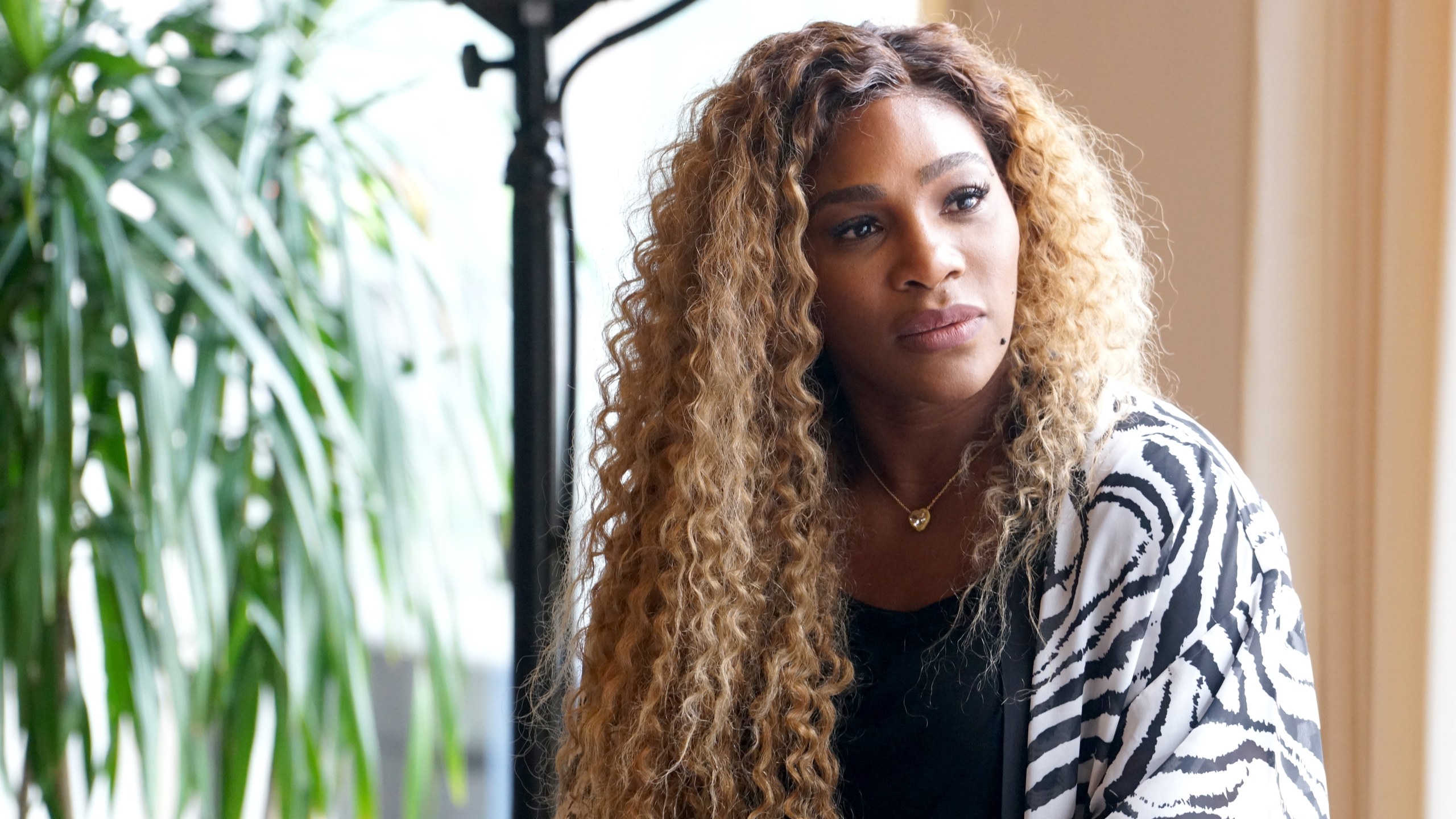
Serena Williams wants to do something about that. In honor of Domestic Violence Awareness Month, Williams has partnered for the third time with the Allstate Foundation’s Purple Purse initiative to raise awareness around the rampant problem of financial abuse in relationships. “She is the embodiment of women’s empowerment,” Allstate Foundation senior program officer Ellen Lisak says. “We’ve been so grateful she has brought her influential voice and platform to our program to help elevate a national conversation around these issues that are so unknown to so many people.”

“When I signed up three years, I was really shocked by the statistics,” Williams told Glamour. “It’s basically every single case [of domestic violence]. When you think about that way, it’s like how did I not know about it? What can I do to bring my voice to it and talk about it?”

“I hope that people can learn the common signs of financial abuse and that if people are victims they know that there are resources like PurplePurse.com out there to help,” she continues. “I want people to know about the horrors of financial abuse.” Through her partnership with Allstate and Purple Purse, she’s had the opportunity to talk with survivors, something that has been very meaningful to her. “I feel really lucky to be among such powerful women,” she says. “It’s important for me to use my voice to support them and help tell their stories. Together, we can help other women.”

[embedded content]

“Victims of domestic violence are often asked, ‘Why don’t you just leave?’ and what we found is that financial abuse is one of the reasons. We found that domestic violence happens to one in four women, regardless of race or socioeconomic status and 99% of those cases also involve financial abuse,” Lisak tells Glamour. “It’s is one of the main reasons that victims remain in or return to an abusive relationship.”

“It can take on many forms, depending on the situation, but some examples include when an abuser prevents a victim from working, or they really limit their access to money or credit cards, or they even intentionally ruin their credit,” she continues. “If you have bad credit you can’t get an apartment. If you’re not working, you’re not bringing in income and you’re kind of stuck in this vicious cycle.”


Source link

Categories
Health

The Cast of 'Younger' Wants You to Stand Up for the Violence Against Women Act


The protection of survivors of gender-based violence is under threat. The Violence Against Women Act (VAWA), which provides aid for those who have experienced sexual assault, domestic violence, stalking, and more, has yet to be reauthorized by Congress—which could be dangerous for survivors everywhere. A bit of background: The VAWA was enacted in 1994, with the provision that it be renewed by Congress every few years. This April the House of Representatives approved H.R.1585 (a bill that would reauthorize the act for five more years). But the bill still has to pass in the Republican-controlled Senate, and many are concerned about the bill’s fate there.

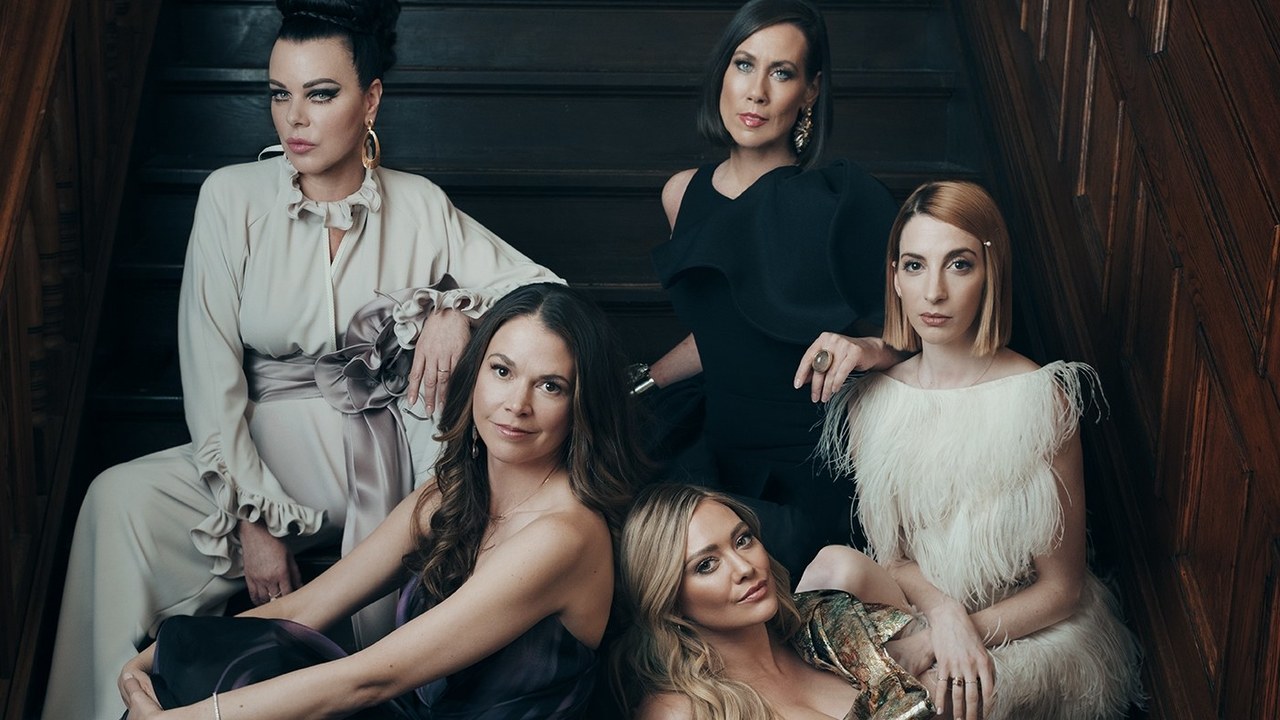
Among those worried about the future of the VAWA is the cast of TV Land’s hit series Younger. The show’s stars—Sutton Foster, Hilary Duff, Debi Mazar, Miriam Shor, Nico Tortorella, Peter Hermann, Molly Bernard, and Charles Michael Davis—have teamed up with the United State of Women to issue a public service announcement in support of the bill.

[embedded content]

The cast of Younger‘s public service announcement urging the Senate to renew the Violence Against Women Act

“Sutton, Hilary, Miriam, Debi, Molly, Nico, Charles, and I are honored to partner with the United State of Women and add our voices to the urgent call for the renewal of VAWA,” Peter Hermann tells Glamour. “The issues that VAWA addresses—domestic violence, sexual assault, dating violence, stalking—affect every community in America regardless of race, ethnicity, economic status, or gender identity. To withhold support, or to politicize what is really an issue of human rights, is reprehensible and primitive. We cannot urge you strongly enough to make your voices heard with ours.”

In the PSA the cast highlights that women, transgender, and nonbinary people are disproportionately affected by violence. The stars also urge fans to learn more and take action to keep the VAWA in place.

While Younger chronicles the lives and careers of those in the publishing industry and isn’t an expressly political show, it’s never shied from getting real about the issues facing women. The series has covered the Me Too movement, spotlighted the “glass cliff” for female CEOs, and pulled back the curtain on how intensely women are discriminated against for their age. As Erika Soto Lamb, vice president of social impact strategy for Comedy Central, Paramount Network, and TV Land, put it, “We are proud to partner with The United State of Women to help our audience take action to support the reauthorization of the Violence Against Women Act—and we have no doubt that Liza, Kelsey, Maggie, Diana, Josh, Charles, Lauren, and Zane would do the same.”


Source link

Categories
Health

As Government Shutdown Continues, Domestic Violence Shelters Struggle to Survive


Estes Valley Crisis Advocates hasn’t taken a direct hit from the government shutdown—yet. But it’s just a matter of time.

“We’re very aware of where we’re at and when that’ll run out,” says Diana David Brown. Brown is the executive director at the domestic violence shelter, which also provides emergency response services in Estes Park, Colorado. “There is a point where we would have to start looking at cutbacks in hours and layoffs. That’s probably the end of this month.”

The organization is the only crisis domestic violence shelter in the area, run by four full-time employees, two part-time employees, and volunteers. “It’s full all the time,” Brown says. Estes Park is a tourist town, at the base of Rocky Mountain National Park, so the center comes to the aid of the thousands of visitors who flock to the area every year, for everything from responding to tourist fights that involve domestic violence to counseling services for unexpected deaths. But its budget relies heavily on federal grants; just a small share of its funding comes from private donations, given the small year-round community in which it exists.

The shelter is already feeling some effects of the shutdown. It recently got approval to use grant money to get new equipment to Skype with legal experts in the closest cities (which are about 40 miles away). And its heating system is outdated and old, at risk of breaking down and forcing the organization to relocate shelter residents to hotels, but the application it put in for grant money to update it is from a fund that’s frozen while the government remains shuttered. They’ve put all these plans on hold until the shutdown comes to an end.

“I just don’t know how long programs can hold on at this point.”

Nationwide, programs like the ones that Estes Valley Crisis Advocates operates are desperately waiting for reimbursements to come through—money that was set aside for them last year but hasn’t arrived yet, explains Cindy Southworth, executive vice president of the National Network to End Domestic Violence. “This is money that shouldn’t be locked up,” she says. But because the employees who work at the Department of Justice who release the funds were furloughed, the checks couldn’t go out. The DOJ was able to bring some employees back to work to process the payments on January 7, but that is a bandaid at best. The department has told providers that it only has enough money carried over from prior years to flow funds through January 17. It’s also not clear whether enough DOJ employees are back on the job to process all of the frantic requests for reimbursements.

“We’re literally days away from them running out of federal funds,” Southworth says. Unlike federal employees who can be made to work without pay if they’re deemed to be essential, many states have laws that won’t allow shelter staff to work or even volunteer their services without pay. “It may mean shelters closing down, hotlines going dark,” she says. “Local organizations are terrified. They’re crunching the numbers, they’re watching. They’re seeing exactly how long can we hang in there and at what point do we have to start shutting down.”

Such an outcome is almost sure to have devastating consequences. When Southworth was new in her career and staffing a hotline, she picked up a call one day from a little boy whose mother had sent him to a neighbor’s house to supposedly get some flowers. He told Southworth that his stepfather was holding his mother hostage and had said that if police showed up at the house, “He’ll kill the police and kill himself and the whole family,” she recalls. Southworth was able to contact the mother and come up with a plan: because the mother had a medical condition, she was able to convince her partner to take her to the hospital. Southworth reached out to the police, who went to the hospital disguised as doctors. They were able to get her and her children away from the abuser, and that evening they booked the family into their shelter.

“It was an incredible, incredible day,” she says. But it was only possible because the organization was fully staffed with paid employees, all of whom pitched in to help get the family to safety. “There’s no way that could have been done with a volunteer on the hotline,” she notes. “Volunteers are fantastic, but they have to be backed up by paid staff…who know the ins and outs, know the legal system.”

Once programs can’t cover their expenses, victims will start to feel the effects immediately, sources say. “I just don’t know how long programs can hold on at this point with all of their staff,” says Joyce Grover, executive director of the Kansas Coalition Against Sexual and Domestic Violence. “There may be a reduction in staffing for outreach offices, people may have to get an appointment in order to see someone.” Victims may face delays in assistance for getting protection orders, talking to law enforcement, getting examined at a hospital, or even going into shelter. “Somebody who needs help with a protection order will either have to wait by the phone or be delayed in getting one,” she says, “and we know that’s just not safe.”

Without the staff available to pull such heroics off, “lives are on the line,” Southworth says. “If the life-saving domestic violence frontline advocates are laid off and our hotlines go dark, lives are on the line.”

In the event that the shutdown continues past the end of the month and federal money dries up, Brown and her program director Cato Kraft at Estes Valley Crisis Advocates have discussed deferring their own pay and cutting other people’s hours, knowing full well what the ramifications could be. “We just can’t have people work and not get paid,” Brown says. “Nobody’s in this work for the money, but they have to have the money to do this work.” Having fewer staff on hand couldn’t come at a worse time. As the shutdown creates stress in people’s lives, particularly for the federal employees who work for Rocky Mountain National Park and low-income residents who rely on government services, the need for help will rise.

“We’re all hoping that this freeze doesn’t last,” Brown says. “Everyday we’re hoping that something’s going to change. But it’s all a little scary.”

Larger, urban and suburban providers and shelters may be able to weather the lack of federal money longer since they are more likely to have a base of donors and local funding in their budgets that they can fall back on. But smaller, rural programs are less likely to have that kind of unrestricted money to plug the holes. “Programs that are already operating on a shoestring budget with a federal grant or a couple of federal grants—those programs are most at risk,” Southworth says. The same is likely true for more specific programs such as tribal ones that serve Native Americans or those that serve the elderly.

All providers that Glamour spoke to stress they will do whatever they can to keep their core services running. But options may be limited. Providers may choose not to pay rent or other utilities to at least make sure their staff gets paid. But there’s no doubt, as Southworth points out, that “the biggest part of their budget is payroll.” Even if an organization forgoes other bills, it won’t be long before it can’t issue paychecks.

“We’re getting people calling and saying, ‘How much longer are you going to be open?’ People think they’re not going to get services.”

The uncertainty and confusion has almost certainly trickled down to those who are dealing with and trying to escape violence. Many may see the news of the shutdown and assume that providers and shelters have had to close, even though none have taken that step.

“We’re getting people calling and saying, ‘How much longer are you going to be open?’” says Beth Hassett, executive director of WEAVE, a services provider for domestic violence and sexual assault in Sacramento, California. “People think they’re not going to get services.” The confusion may make people who are considering leaving an abusive relationship or getting counseling hesitate. “It certainly has a chilling effect on people who are debating what their future holds,” Hassett says. If the government is shutting down, she adds, people may wonder if services will be there to help them move forward. That could mean some stay in dangerous situations because they assume there will be no one to help them if they reach out.

Staff feel the impact, too. It’s already a difficult job. Employees are underpaid, overworked, Southworth says: “We know that the toll this work takes on these heroic advocates is challenging.” Now they are also grappling with not knowing if they’re going to get a paycheck to cover their rent and bills, or whether they will soon have no job at all. If people get furloughed or let go, once the government reopens, Grover says, you have to convince staff to come back. “If this talk of uncertainty continues on federally and you’ve been able to find another position, you’re probably not going to want to come back.”

The irony, of course, is that Trump has repeatedly stressed that he has to keep the government shutdown to extract funding for his border wall in the name of safety and security. But the shutdown, if it continues, will threaten women’s safety and security as services and shelters go dark.

“About 1,300 to 1,500 women are killed every single year by their intimate partner,” Southworth says. “That is domestic terrorism. If we have the audacity to shut down those life saving services in the alleged name of security and safety, that’s appalling. It’s unconscionable.”


Bryce Covert is an independent journalist writing about the economy. She is a contributing op-ed writer at the New York Times and a contributing writer at The Nation.


Source link

Categories
Health

As a Parkland Shooting Survivor, This Is What I Want Brett Kavanaugh to Know About Gun Violence


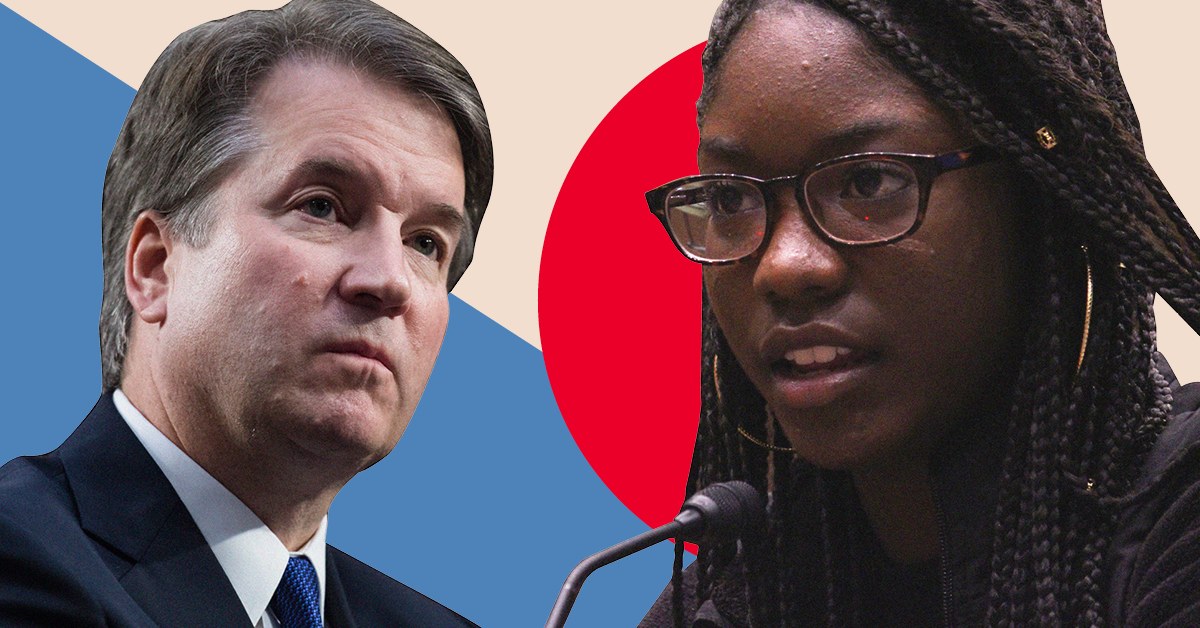
A stark image stood out in a tumultuous week of Supreme Court confirmation hearings for Trump nominee Brett Kavanaugh: The judge declining to shake hands with a man who lost a child in the tragic Parkland, Florida school shooting in February.

Kavanaugh walked away from the father of Jaime Guttenberg, who was among 17 people murdered in the Valentine’s Day rampage at Marjory Stoneman Douglas High School. The encounter sparked a range of responses from Twitter users, with many suggesting that it was a visual representation of where conservatives stand on gun control reform.

But on Friday, the issue of gun violence was upon Kavanaugh again when the Senate Judiciary Committee heard an emotional testimony from Stoneman Douglas survivor Aalayah Eastmond.

Kavanaugh has defended his dissent in a case related to a ban on semi-automatic rifles—the weapon of choice in the Parkland slayings. Still, the judge, whose two daughters joined him (for a time) at the hearings, says he knows the U.S. must address gun violence.

Not convinced: Eastmond, who spoke at the March For Our Lives rally and became a youth advocate with the Brady Campaign to Prevent Gun Violence and student-led Team ENOUGH.

Eastmond was appalled by the judge’s refusal to engage with Jaime’s dad at the hearing: “The amount of disrespect is unimaginable, and this is who, ‘so-called President’ nominated,” tweeted the Parkland senior. “See you Friday Kavanaugh.”

At the hearing, she used the horror she had seen at her own school (she hid under the body of a dead classmate to survive the shooting), and also the loss of an uncle to a shooting in Brooklyn, New York, to raise questions about Kavanaugh’s views on gun control: “As you make your final decision, think about it as if you had to justify and defend your choice to those who we lost to gun violence,” she urged the committee in her prepared remarks.

On the eve of her Senate testimony, Eastmond talked to Glamour about her decision to speak against Kavanaugh’s confirmation. Here are the highlights, in her own words.


I’m here to testify at Kavanaugh’s hearing [so] people can understand that gun violence is an everyday problem… Lives are being taken every day. And not only that, but lives in urban communities, every day.

I was there on February 14th. And I was in Room 1214, which was the third classroom the shooter shot into, and I had to hide underneath one of my deceased classmate’s bodies to survive. That is the story that I’m sharing [so] people can understand that it’s not, you know, normal. And it shouldn’t be normalized.

I saw things that nobody should have seen and that nobody should have to see in their lifetime. Being in school, [a] place where you should feel safe and you’re learning—in fact, I was in Holocaust History [class], learning about hate and terror. And just to experience that right after going over [a] hate groups project was just unimaginable, and a coincidence.

Hearing gunshots and not knowing what gunshots sound like. Not knowing what to do and then just thinking in a survival-mode type of way to do what I did, which was hide underneath a body. Smelling the gunpowder and seeing the smoke, and seeing the red on the floor and having flesh and body matter in my hair. At the age of 17 in school — [well] I was 16 at the time — that shouldn’t be.

I shouldn’t have to be talking about this, and I’m not the only one that has this story. There’s people all over the country that share similar stories.

It’s something that nobody wants to talk about — and it’s something that I am forced to talk about every day. [It’s] not only just what I experienced, but the fact that black and brown youth are disproportionately impacted by gun violence every day.

I don’t think [Kavanaugh] should be [a] Supreme Court judge. Period. [If] we’re gonna have a judge on the highest court of the land, they need to be a judge that recognizes the issue of gun violence and the epidemic that the youth is experiencing every day, and he doesn’t recognize that it’s a problem, so I don’t think he should be getting that seat.

[Based on] his comments towards the Second Amendment, he doesn’t believe it should be altered or changed at all because it’s “a well-regulated militia” and everybody deserves the right to own a gun. But I disagree, because your freedom to own a gun is not more important than my freedom to live.

If he doesn’t have the decency to shake a hand of a father of a victim, he definitely will not have the decency to make changes and decisions that will impact the lives of people every day… I honestly just think we need a different nominee. I think we’ve seen enough of Kavanaugh, and I don’t think we should wait any longer for him to say anything else, because we clearly know what his stance is on the Second Amendment and other things as well.

I’m sure Fred Guttenberg [father of Parkland student Jaime Guttenberg] would have loved to bring his daughter.

Fred had a daughter, too, that lost her life on February 14. And I don’t appreciate Kavanaugh not addressing that. I feel like he will [not] recognize that it’s an issue until he loses one of his kids, or until he loses a family member, so he understands the pain and the way that it impacts you and that it’s senseless.

So that’s how I look at it: [Kavanaugh] can bring his kids wherever, but don’t wait until your kids are gone for you to care.

I have faith that he will not [be confirmed]. I hope he doesn’t, but I can’t tell the future. All I know is that we’re [going] to share our stories and our views and opinions on him, and hopefully they hear us out and they take action.

At times, it’s frustrating, because I shouldn’t have this story and I shouldn’t have had to experienced that. But it is important that I share my story, so people can again get a different perspective and understand that it is an issue that impacts everybody — no matter the color of their skin or where they live. It is a problem in America, and it needs to be fixed.

Right now, I’m okay, because I have my fellow Team ENOUGH members supporting me here. So I’m not worried, and I know that we are stronger than Kavanaugh and any of his views, and I know that we can take him down, no matter what.

You can watch Eastmond’s full testimony, here.


Celeste Katz is senior politics reporter for Glamour. Send news tips, questions, and comments to celeste_katz@condenast.com.

MORE: Piper Perabo: ‘It Was a Privilege’ to Get Arrested for Protesting Brett Kavanaugh Hearings


Source link