Categories
Health

Nike Released an Incredible Commercial After the U.S. Women's Team's World Cup Win


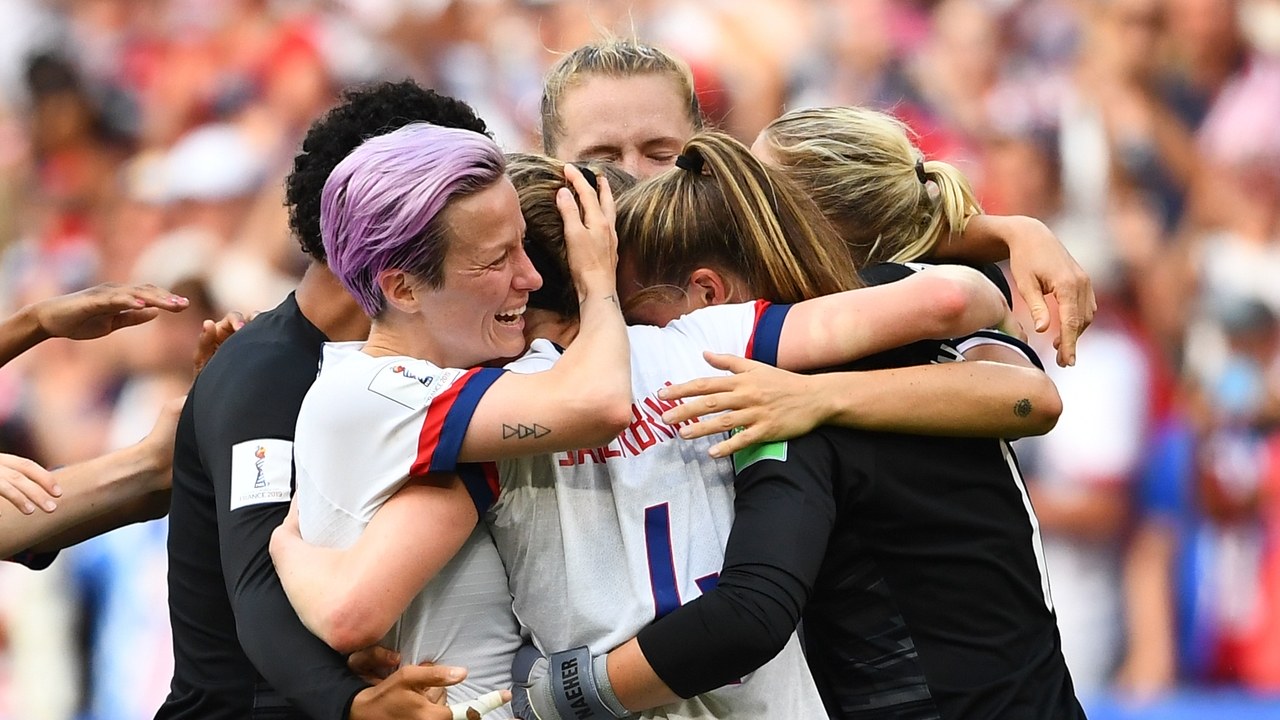
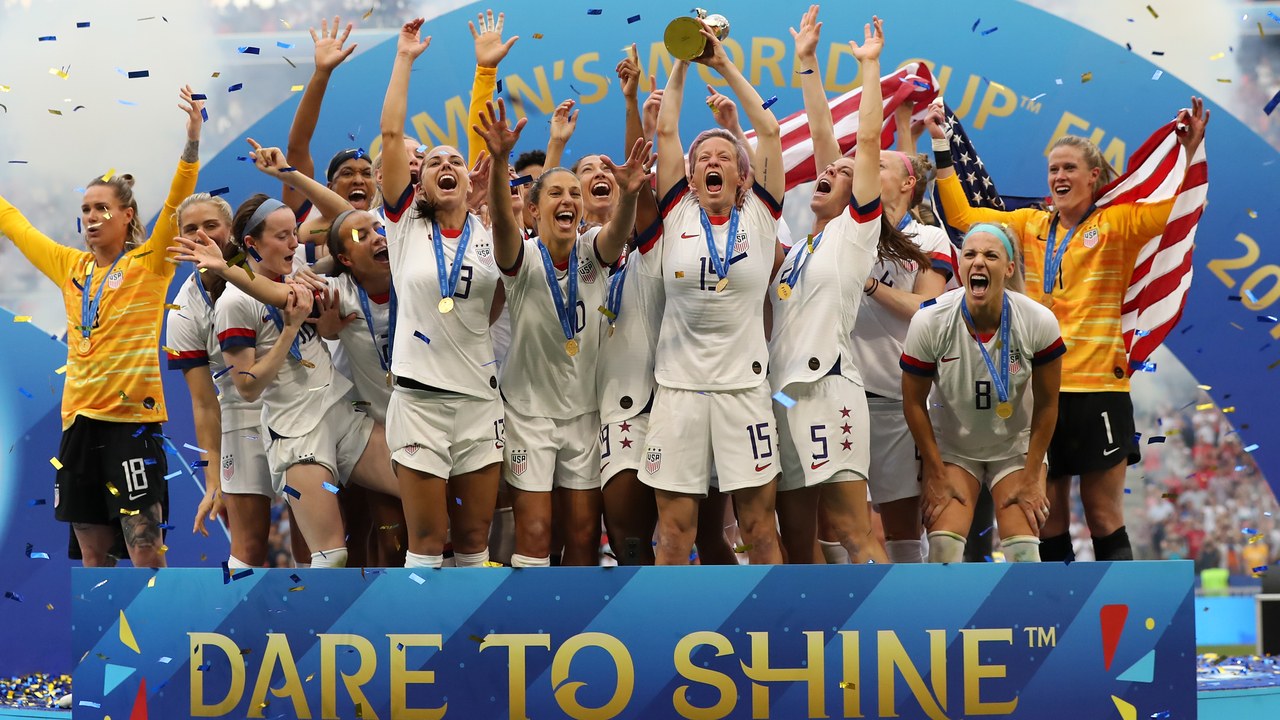
Following the U.S. Women’s National Team’s beautiful victory over the Netherlands in Sunday (July 7)’s World Cup final, Nike released a one-minute ad that pays tribute to the soccer champions while touting a message of empowerment for women and girls in sports.

The commercial is made up of images of athletes like Alex Morgan, Alyssa Naeher, and Tobin Heath, who just helped the U.S. cinch its fourth women’s World Cup win in a row. The ad features a single voice leading a crowd in the well-known “I Believe That We Will Win” sporting chant. However, the narration starts to trail into a different direction and settles into a powerful affirmation about just how historic the current team is—and how they’ve been working to change the course of history for other women.

“I believe that we will be four-time champions and keep winning until we not only become the best female soccer team, but the best soccer team in the world,” the voiceover declares. “I believe that we will be four-time champions and keep winning until we not only become the best female soccer team, but the best soccer team in the world, and that a whole generation of girls and boys will go out and play and say things like, ‘I want to be like Megan Rapinoe when I grow up,’ and that they’ll be inspired to talk and win and stand up for themselves.”

The ad coincides with not just the women’s impressive victory but also with the fight the team has led for equal pay. Several members of the team first filed a complaint with the Equal Opportunity Employment Commission in 2016, pointing out that they were paid less than their male counterparts on the U.S. Men’s National Team (who had consistently lost games at the time).

Although they signed a collective bargaining agreement that helped boost how much they made, the athletes have continued striving for a more equitable paycheck. In 2019, they officially sued the U.S. Soccer Federation and accused the institution of gender discrimination.

While any form of corporate feminism deserves critical inspection (especially as Nike deals with claims of pregnancy discrimination), the company’s ad does nod to the team’s equal pay lawsuit, and a quote at the end reflects the message that the women’s team has been pushing this entire time as they try to change massive institutional gender disparities.

“I believe that we will make our voices heard, and TV shows will be talking about us every single day and not just once every four years… And that we will keep fighting not just to make history, but to change it forever,” the ad continues. “This team wins. Everyone wins.”
Source link

Categories
Health

The U.S. Women's National Soccer Team Just Won the World Cup, and Twitter's Losing It


The dynasty is strong. On Sunday, July 7, the U.S. Women’s National Team took home the FIFA Women’s World Cup—its fourth ever—after a 2-0 victory against the Netherlands in Lyon, France. Not only did the women of the USWNT clench back to back championships, they set a new record for most goals scored in a single world cup. It’s official: the women of the USWNT are legends.

From the very first game, the team showed up, sweeping the rankings as they followed their 2015 World Cup win in Canada. The Netherlands started out the game strong—as the New York Times points out, they were the only team the U.S. went up against during the tournament that were able to keep the USWNT from scoring in the first half of the game.

Things changed in the second half, with Megan Rapinoe—the oldest player to score in a World Cup final at 34 years old—scoring the first goal in the match with a penalty kick. Rose Lavelle sealed the win with a second goal for the team.

The win is resonating with fans around the world—especially on Twitter.

Along with the GOAT shoutouts, fans on Twitter are also calling out the issue of equal pay: In the last World Cup cycle, the men’s tournament winners took home 17.5 times more than the US women in 2015.

A lawsuit surrounding the team’s pay discrepancy is ongoing, but it’s clear these women are champions—and should be paid like it.


Source link

Categories
Health

Women's Reproductive Rights Should Matter to Companies, Per New Research from NARAL and the Harris Poll


Earlier this month, we marked Equal Pay Day. In press releases and on social media, companies across America committed themselves to closing the gender pay gap and touted the importance of women’s empowerment and equity. In the era of the Women’s March, the unprecedented surge of women’s participation at the polls in 2018, and the record numbers of women that those women elected in the midterms, women’s advancement should be top of mind for companies right now.

Standing up for women’s rights is not only ethical. It’s also good business, with consumers eager to spend their dollars with companies that align with their values. Still, a critical aspect of this conversation continues to be overlooked: reproductive freedom. Reproductive freedom means that no woman can be fully empowered in the workplace if she cannot control her own body and decide her own destiny. This includes the ability to access birth control and abortion care, to go to work and not face discrimination while pregnant, and to have paid family leave to care for a new child.

To millions of working Americans, this isn’t some abstract fight about social issues. These are bread-and-butter issues that affect their ability to continue their education, rise up in their career, and plan for their future. And it couldn’t be any clearer that the American people expect businesses to take reproductive freedom seriously, too. A new report from the Harris Poll on behalf of NARAL Pro-Choice America suggests that staying silent on reproductive freedom may be a missed opportunity for companies. The poll, which surveyed 1,271 employed adults, indicates that companies should be just as vocal about and supportive of reproductive freedom as they are when it comes to the many other issues they stand up for, including equal pay, LGBTQ rights, and voting rights.

When women have the autonomy to choose if, when, and how to have children, they can build healthier families who are more resilient in times of economic downturn, which helps our communities grow stronger and companies prosper. The bottom line is supporting reproductive freedom is good for business. When women are provided essential benefits, productivity goes up and employee retention and loyalty increase. Over 70 percent of those polled acknowledge that reproductive freedom is tied to women’s overall empowerment and equality.

In the last two years, 29 states have passed over 100 laws denying women access to basic reproductive healthcare, including abortion care. Federal efforts to limit access to birth control, such as the Trump administration’s “domestic gag rule” that dismantles Title X, the nation’s birth control and reproductive health program, threaten the reproductive healthcare of millions of women. And if we can’t assume women’s rights are protected at the federal level, it’s up to all of us to ensure reproductive freedom is safe in our communities. In short, the leadership of the corporate community right now is absolutely critical.

We saw the power of the corporate community when more than 50 business leaders in Georgia spoke up as the state legislature considered, and then passed, a law that bans abortion at six weeks—before most women even know they are pregnant. The people who signed were leading with values. They were standing up for women and in line with the majority of Americans who want to keep access to abortion care. According to the survey, over 67 percent of respondents feel it is important for their employer to take a stand on reproductive freedom, including abortion. And 60 percent of employees reported that they would be more loyal to a company that offers coverage for prenatal care, family planning, and abortion care.


Source link

Categories
Health

Why University of Notre Dame Women's Basketball Coach Muffet McGraw Says She'll Only Hire Women


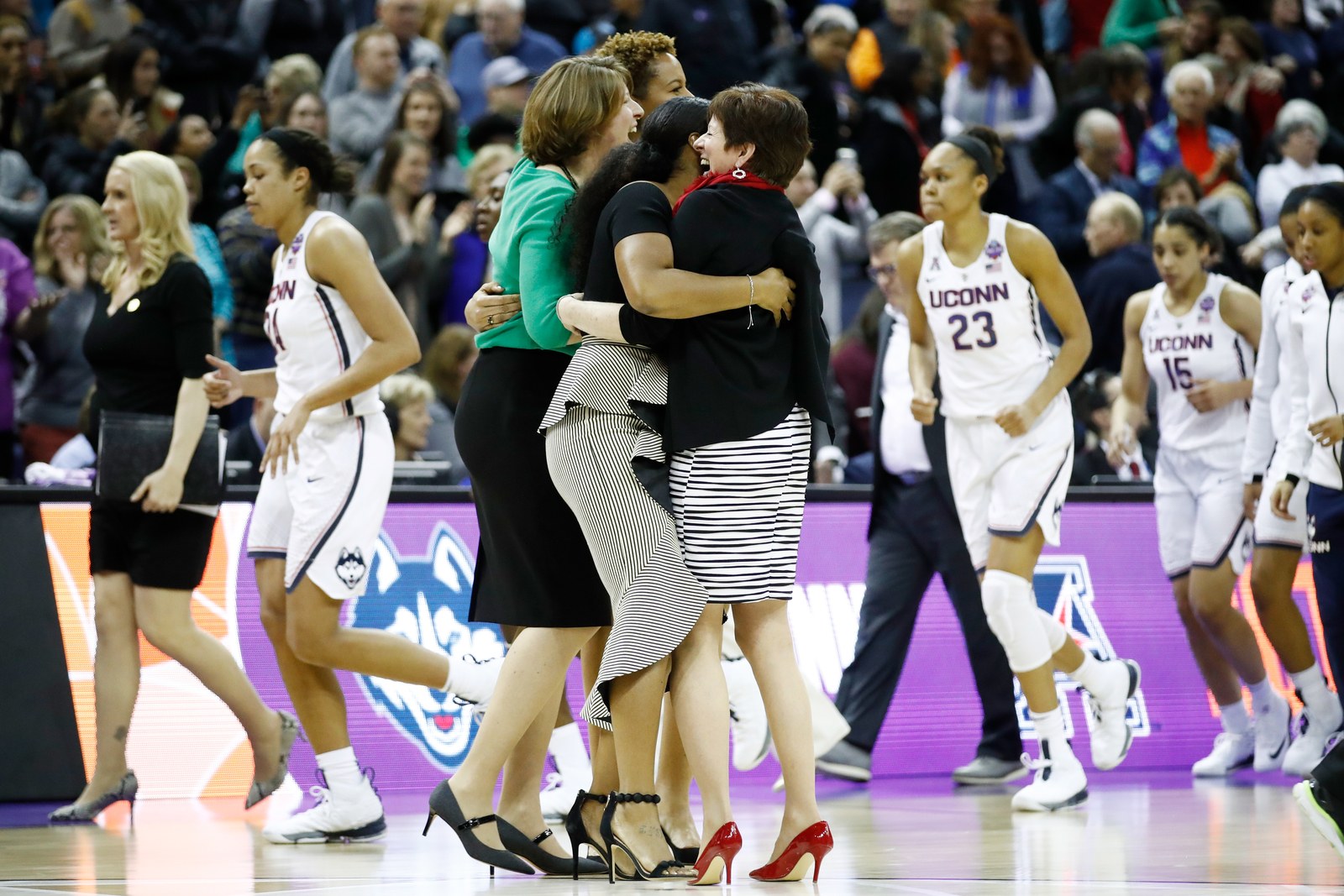
It’s a pretty big weekend in the world of college basketball: Both the women’s and men’s national champions will be decided over the course of the coming days. The University of Notre Dame‘s women’s team (who also happen to be the reigning champs) secured a spot to play against Baylor University for the title by defeating the University of Connecticut on Friday night (April 5).

Their head coach, Muffet McGraw, is no stranger to the big stage, and at a press conference ahead of Friday’s game, she used her platform to powerfully speak out about gender inequality, both in the world of sports and beyond. She was asked about recent comments she made to Think Progress about how she would never hire another man. Naturally, she was more than ready with a reply.

“Did you know that the Equal Rights Amendment was introduced in 1967, and it still hasn’t passed?” she said. “We need 38 states to agree that discrimination on the basis of sex is unconstitutional. We’ve had a record number of women running for office and winning. And still, we have 23 percent of the House and 25 percent of the Senate.”

“I’m getting tired of the novelty of … the first female governor of this state. The first female African-American mayor of this city,” she said. “When is it going to become the norm instead of the exception? How are these young women looking up and seeing someone that looks like them, preparing them for the future? We don’t have enough female role models. We don’t have enough visible women leaders. We don’t have enough women in power. Girls are socialized to know, when they come out, gender roles are already set. Men run the world. Men have the power. Men make the decisions. It’s always the man that is stronger one.”

Andy Lyons/Getty Images

It’s a problem she sees first-hand in her sport and profession, but as a head coach, she has the very real opportunity and power to do things differently. McGraw has employed an all-female coaching staff for the past seven years. “When you look at men’s basketball and 99% of the jobs go to men, why shouldn’t 100% or 99% of the jobs in women’s basketball go to women?” she said. “Maybe it’s because we only have 10% women athletic directors in Division I. People hire people who look like them. That’s the problem.”

Watch her full response below:

By the way, not only is McGraw a feminist who’s utilizing her position to empower other women, but she’s also a helluva a dancer. This clip was captured after the team’s semifinal victory, but honestly, women supporting women is always a win.


Source link

Categories
Health

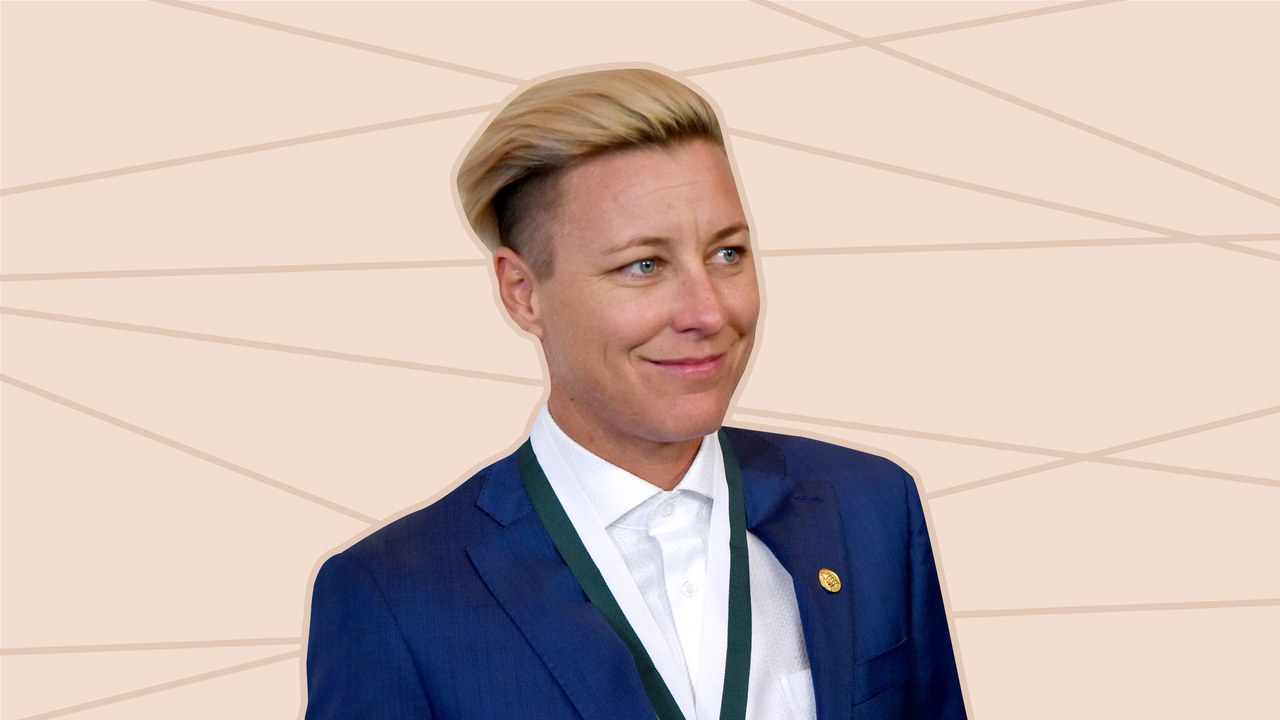
Abby Wambach on How She's Supporting the U.S. Women's Soccer Team in Their Fight Against Gender Discrimination


On March 8—International Women’s Day, no less—28 members of the world champion United States women’s soccer team filed a gender discrimination suit against U.S. Soccer. “Each of us is extremely proud to wear the United States jersey, and we also take seriously the responsibility that comes with that,” team member Alex Morgan told the Associated Press. “We believe that fighting for gender equality in sports is a part of that responsibility. As players, we deserved to be paid equally for our work, regardless of our gender.”

The U.S. women’s soccer team first began their fight for equal compensation in 2016, when five players filed a complaint with the Equal Employment Opportunity Commission (EEOC) asking to be paid as much as the players on the men’s team. But the EEOC has still not issued a decision in their case. Then in 2017, they negotiated a new collective bargaining agreement—which increased their salaries and practice conditions—with U.S. Soccer that will run through 2021. And so the new gender discrimination suit is a further step—one that former soccer player, coach, and two-time Olympic gold medalist Abby Wambach cheers.

Since she retired from the sport in 2015, Wambach has dedicated herself to ending sex discrimination. At Barnard College’s graduation in 2018, Wambach turned her commencement address into a call to action. She told the graduating class, “Like all little girls, I was taught to be grateful. I was taught to keep my head down, stay on the path, and get my job done. I was freaking Little Red Riding Hood. The message is clear: Don’t be curious, don’t make trouble, don’t say too much, or bad things will happen. I stayed on the path out of fear—not of being eaten by a wolf—but of being cut, being benched, losing my paycheck. If I could go back and tell my younger self one thing, it would be this: ‘Abby, you were never Little Red Riding Hood, you were always the wolf.’” The speech has been viewed over 180,000 times and inspired her upcoming book, WOLFPACK, a guide for women to unlock their own power.

[embedded content]

Watch Wambach deliver her viral address at Barnard College’s 2018 commencement

As the highest all-time goal scorer for the national team—and the world record holder for international goals for both female and male soccer players with a whopping 184 goals—Wambach is one of the most recognizable face in women’s soccer. But for much of her career, Wambach explains she felt so fortunate to be able to compete in the game she loved that she never fought to be appropriately compensated for shattering those records. It’s a choice she now deeply regrets. Wambach could see just how badly the women’s team had been treated—and decided her decades of silence and servitude to the sport were over.

Wambach now travels the country as a crusader for equal pay across all industries, telling women that feeling “grateful” for their work should never stop them from demanding what they’re entitled to. Here, she opens up to Glamour about the U.S. women’s soccer team’s revolutionary discrimination suit—and how she champions the team from the sidelines.

Glamour: In your viral Barnard speech, you describe this moment when you appeared at the ESPY Awards, side by side with Peyton Manning and Kobe Bryant—and it dawned on you that they had so much more financial security going into retirement than you. What was it like to have that realization, then go back to your hotel room?

Abby Wambach: I played professional sports, so I lived a very privileged life where I was traveling the world representing my country. At the time, I thought this was better than most women’s experience, because I was really successful. But then I got back to the hotel and I started to understand what had really gone on here, and it was this anger-provoking moment that made me realize that even though I felt that I was one of the women who got a seat at the table, next to Kobe and Peyton, I was walking into a very different retirement. For me, that was the minute I figured out what I was going to do for the rest of my life: I was going to focus that energy and that rage, which turned into my Barnard speech, and now this book. It’s a sobering moment for women when we’re made very aware of where we stand in the order of things. But I don’t like to just sit into despair, I’m about action—so this is my attempt to help change the realities of women everywhere.


Source link

Categories
Health

The Poet Warsan Shire Wrote the Short Film 'Brave Girl Rising' for International Women's Day


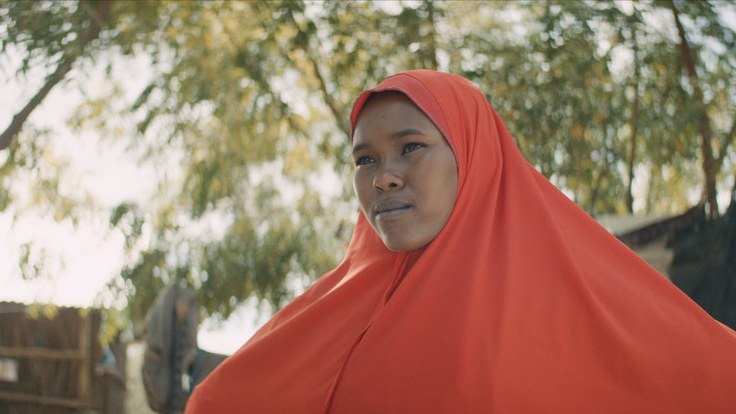
What the film does well is highlight both the experiences that girls all over the world have in common and the terrible, particular difficulties and threats that a girl like Nasro faces. How much of girlhood is a shared experience?

Being a girl is always difficult. It’s a strange rite of passage, and being a woman in this world is difficult. But there’s a massive difference between what it feels like to be a woman in [America or England] and where Nasaro is. And a girl’s [experience] will be different, too, based on her race, her socioeconomic background, how much education she has. Does she have people in her life to support her? What part of the world is she in? What resources does she have access to? That will decide what her life will be like.

In the New Yorker, Alexis Okeowo wrote that your work “evokes longing for home,” which I think is true. When you feel that ache for home, what do you do?

I feel that every day of my life. For me, home is Somalia. I’m living in L.A. now, but London was home for a really long time, and now I’m living in America under Trump. So it’s double. I miss London, but I miss home home, which is Africa. It’s really important for me to listen to old Somali music and to speak in my mother tongue. It gives me a lot of pride. I like looking at old photographs of Somalia. I love to eat Somali food. I love to put on Somali incense. It’s all the time reminding myself a little bit of where I’m from, and the richness of it. Because it’s very easy to not do that and then you forget—how to cook, how to speak the same language, the comedy, the music.

I don’t want to grow older in different parts of the world and forget all the things that bring me a lot of joy, so I spend a lot of time on YouTube looking for Somali videos. And whenever I want to connect with London, I hope for rain. It’s rainy today in L.A., and it always makes me feel comforted. I just have to stay connected so I don’t forget where I’m from.

It can feel like time travel a bit, to surround yourself with those memories of home.

Yes, definitely. That’s a big help for writing as well. If I want to write about my teenage years, I’ll go back and listen to all the music I listened to and look at photographs of myself back in the day, and I’ll even ask my mom to send me old clothes from London. It’s like a time machine.

International Women’s Day can feel a little two-dimensional, I think. Because so much of it takes “place” online. I’m sure people will see the film and read articles about it. But then what? Do you have advice for people who want to do something with the pain or emotion that they feel?

I’m interested in the ways in which human beings are able to practice empathy, so my recommendation would be to read books written by different women from different backgrounds you don’t know anything about, watch films made by women all over the world, not just by women who look like you.

And try to practice empathy. Think about how massive the world is and how small your life is in comparison to that. Think about what it means to be a woman. Think about how you want to bring awareness to the suffering of other people. Think about women from different parts of the world, trans women, poor women, black women, women in prisons, women in shelters, women all over the world, women and girls in refugee camps. The world is so massive, but we forget that all the time.


Source link