Categories
Health

New York Is the Latest State to Ban Discrimination Against Natural Hair


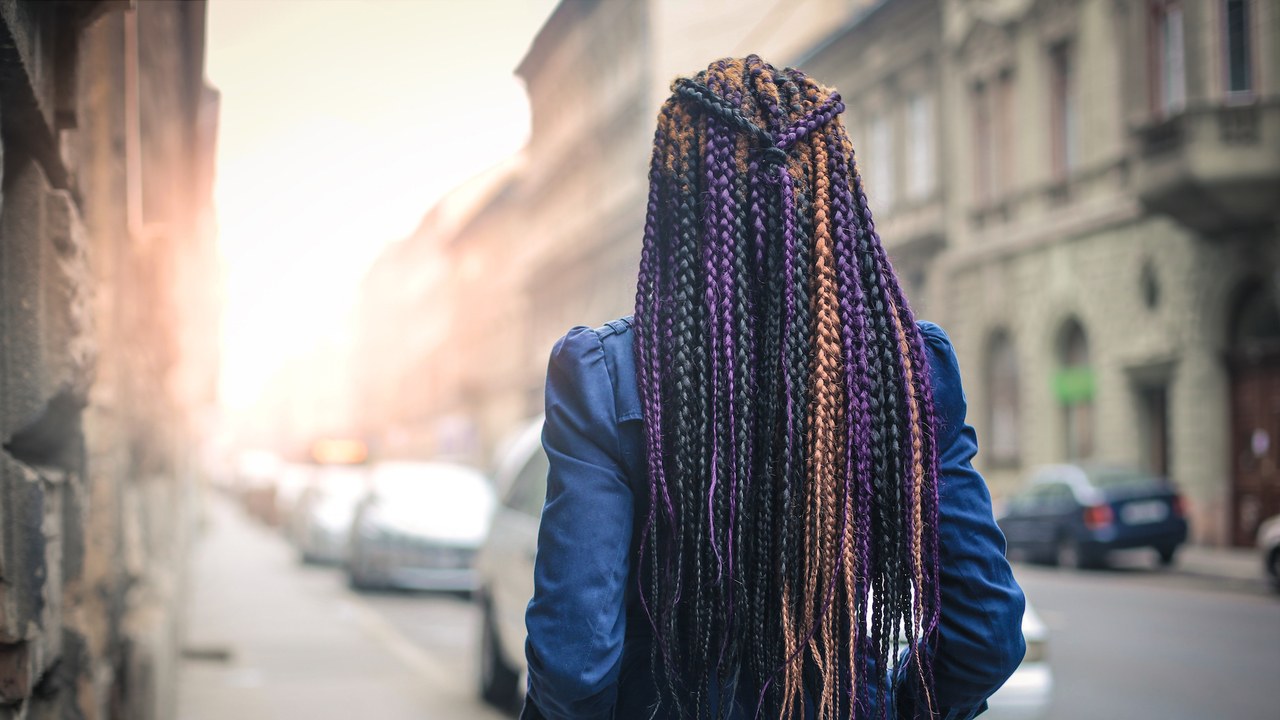
New York is officially the second state to make it illegal for employers to discriminate against employees because of the way they wear their hair.

Last week, Governor Andrew Cuomo passed Assembly Bill 07797, legislation that would “prohibit race discrimination based on natural hair or hairstyles.” This law will also impact previous efforts to curb discrimination in the state. For example, it will solidify recently introduced human rights guidelines, which called for the protection of citizens’ right to wear natural hair, treated or untreated, in hairstyles such as locs, cornrows, twists, braids, or Bantu knots. The bill is also an amendment to New York state’s Human Rights Law and Dignity for All Students Act, which outlines racial discrimination as “traits historically associated with race, including but not limited to hair texture and protective hairstyles.”

The signing of this law comes on the heels of California’s recently enacted CROWN Act, which made the state the first in the country to ban employers from discriminating against people with natural hair. “By introducing the bill, I wanted to use it as an opportunity to educate my colleagues about the unique experience and opportunities of having black hair. I didn’t want them to see it as a negative,” Los Angeles Democratic senator Holly Mitchell told Glamour. “Because of my natural hair texture, I have the unique opportunity to wear these amazing natural hairstyles.”

[embedded content]

Through the bill, Mitchell also aimed to highlight that locs are no less “professional” than straightened hair or a blowout. “Our knowledge and ideas of what’s ‘appropriate,’ what’s ‘professional,’ what’s ‘beautiful,’ are based on a very Eurocentric standard,” she said. “This bill and my mere presence in presenting the bill was going to challenge that.”

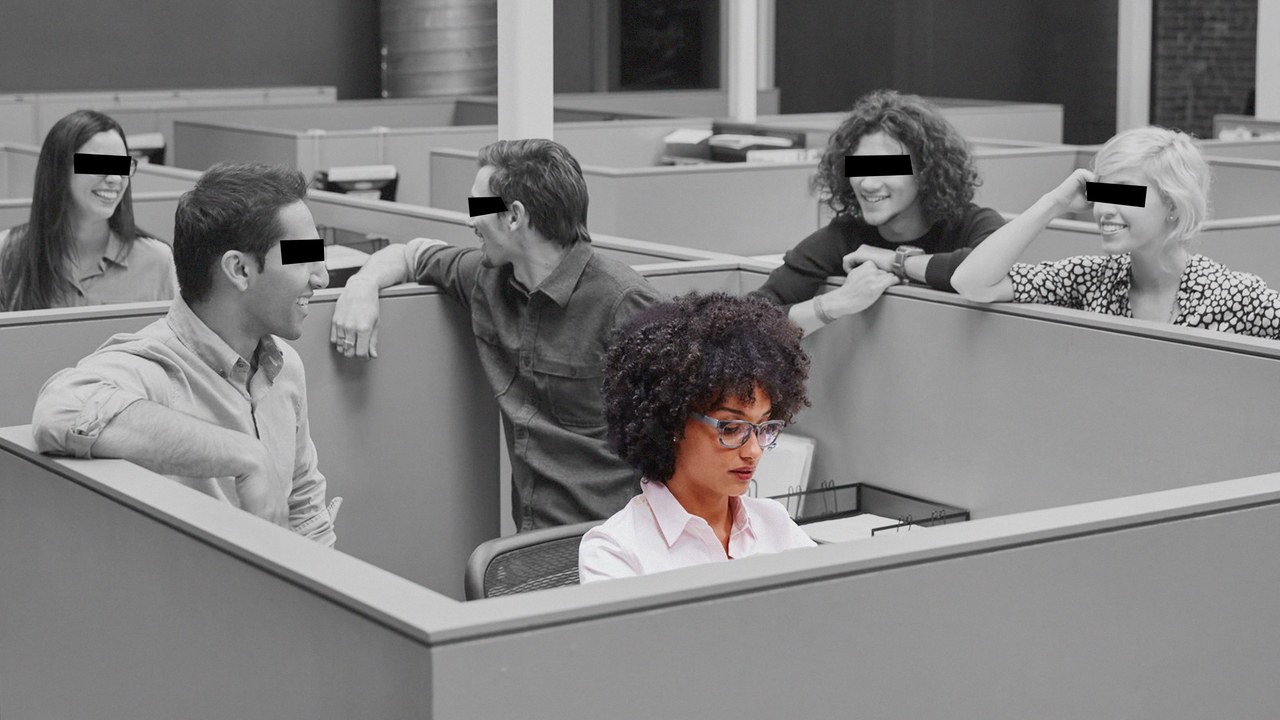
New York becoming the second state to pass this type of anti-discrimination law sends a powerful message to women who have faced issues in the workplace because of how they wear their hair. A recent study from Dove found that black women are 50% more likely to be sent home, or to know a black woman who has been sent home from work because of her hair. Which doesn’t even account for the countless microagressions women face when wearing their hair natural in school or at work.

While it’s too soon to tell how cases of discrimination will be handled under these new laws, it’s a vital step in the right direction for workplace inclusion.

Source link

Categories
Health

California Is Set to Become the First State to Pass a Hair Discrimination Ban


The first time I realized how much my hair had an impact on how others saw me, I was interviewing for my first real adult job. My friends and family helped me run through the checklist women—especially black women—have to be extra cognizant of about their appearance: What would I wear? How should I do my nails? My makeup? And the most crucial, how should I do my hair? I change my hair all the time, and it didn’t occur to me that the way I wore it could make or break my chances of getting hired. Or worse, if I decide to later change it, could potentially get me fired.

So when I told my mom I wanted to get box braids, I could see the concern in her eyes. She didn’t think braids would be a good first impression and warned me they could be viewed as “unprofessional.” I couldn’t blame her, though. That had forever been her reality. To her—to so many of us—looking “professional” meant looking more “mainstream,” which meant wearing your hair straight. This all, of course, was really just a coded way of saying look more white.

I showed up to that interview in a glue-in weave, despite the fact it was a black-owned company. After I got the job, I promised myself I’d never alter the way I look to get hired again. I later landed my dream job wearing box braids.

It’s a decision not unique to me, but solely unique to black women. We are routinely discriminated against for wearing our hair the way it grows out of our scalps or in styles endemic to our culture. There’s no reason box braids or twists should be viewed any differently from a ponytail or bouncy blowout, and yet, we’re reprimanded by managers for looking too “urban” or “unkempt”—like Destiny Tompkins, who was pulled aside by her (white, female) district manager at a New York Banana Republic in 2017 for wearing box braids. She was so “uncomfortable” and “overwhelmed” she chose not to finish her shift.

The list goes on: In 2010, Chastity Jones said she was let go from an Alabama insurance claims–processing company for wearing her hair in dreadlocks. The courts at the time ruled it wasn’t racial discrimination because hair wasn’t an “immutable” (i.e. unchangeable) characteristic. Or take Rachel Sakabo, an experienced employee at New York’s prestigious St. Regis hotel, who claimed she was let go in 2013 after being told she wasn’t a “good fit” with the brand’s “culture,” a decision she’d attributed to her locs.

These are just the viral stories. A recent study from Dove found that black women are 50 percent more likely to be sent home or to know a black woman who has been sent home from work because of her hair. And that’s if she even gets the job.

“During my first months at a major news network, one of the managers wanted to speak with the new hires to see where we saw ourselves growing within the company,” says Blake, 23. “At the time, my hair was in a perm rod set, so it was big and curly.” She told the manager she eventually wanted to be on-air, to which the manager responded: “That comes with a lot of responsibility. Your hair always has to be done and always in the same style. If you’ve ever taken a look at our anchors, they keep their hair clean and sleek.”

Offended, yet brand-new to the company, Blake felt helpless. “I wanted to speak up. How dare she imply my natural hair was somehow the opposite of ‘done’ and ‘clean?’ says Blake. But afraid she’d be painted as “the combative black woman,” she felt silenced.


Source link

Categories
Health

Abby Wambach on How She's Supporting the U.S. Women's Soccer Team in Their Fight Against Gender Discrimination


On March 8—International Women’s Day, no less—28 members of the world champion United States women’s soccer team filed a gender discrimination suit against U.S. Soccer. “Each of us is extremely proud to wear the United States jersey, and we also take seriously the responsibility that comes with that,” team member Alex Morgan told the Associated Press. “We believe that fighting for gender equality in sports is a part of that responsibility. As players, we deserved to be paid equally for our work, regardless of our gender.”

The U.S. women’s soccer team first began their fight for equal compensation in 2016, when five players filed a complaint with the Equal Employment Opportunity Commission (EEOC) asking to be paid as much as the players on the men’s team. But the EEOC has still not issued a decision in their case. Then in 2017, they negotiated a new collective bargaining agreement—which increased their salaries and practice conditions—with U.S. Soccer that will run through 2021. And so the new gender discrimination suit is a further step—one that former soccer player, coach, and two-time Olympic gold medalist Abby Wambach cheers.

Since she retired from the sport in 2015, Wambach has dedicated herself to ending sex discrimination. At Barnard College’s graduation in 2018, Wambach turned her commencement address into a call to action. She told the graduating class, “Like all little girls, I was taught to be grateful. I was taught to keep my head down, stay on the path, and get my job done. I was freaking Little Red Riding Hood. The message is clear: Don’t be curious, don’t make trouble, don’t say too much, or bad things will happen. I stayed on the path out of fear—not of being eaten by a wolf—but of being cut, being benched, losing my paycheck. If I could go back and tell my younger self one thing, it would be this: ‘Abby, you were never Little Red Riding Hood, you were always the wolf.’” The speech has been viewed over 180,000 times and inspired her upcoming book, WOLFPACK, a guide for women to unlock their own power.

[embedded content]

Watch Wambach deliver her viral address at Barnard College’s 2018 commencement

As the highest all-time goal scorer for the national team—and the world record holder for international goals for both female and male soccer players with a whopping 184 goals—Wambach is one of the most recognizable face in women’s soccer. But for much of her career, Wambach explains she felt so fortunate to be able to compete in the game she loved that she never fought to be appropriately compensated for shattering those records. It’s a choice she now deeply regrets. Wambach could see just how badly the women’s team had been treated—and decided her decades of silence and servitude to the sport were over.

Wambach now travels the country as a crusader for equal pay across all industries, telling women that feeling “grateful” for their work should never stop them from demanding what they’re entitled to. Here, she opens up to Glamour about the U.S. women’s soccer team’s revolutionary discrimination suit—and how she champions the team from the sidelines.

Glamour: In your viral Barnard speech, you describe this moment when you appeared at the ESPY Awards, side by side with Peyton Manning and Kobe Bryant—and it dawned on you that they had so much more financial security going into retirement than you. What was it like to have that realization, then go back to your hotel room?

Abby Wambach: I played professional sports, so I lived a very privileged life where I was traveling the world representing my country. At the time, I thought this was better than most women’s experience, because I was really successful. But then I got back to the hotel and I started to understand what had really gone on here, and it was this anger-provoking moment that made me realize that even though I felt that I was one of the women who got a seat at the table, next to Kobe and Peyton, I was walking into a very different retirement. For me, that was the minute I figured out what I was going to do for the rest of my life: I was going to focus that energy and that rage, which turned into my Barnard speech, and now this book. It’s a sobering moment for women when we’re made very aware of where we stand in the order of things. But I don’t like to just sit into despair, I’m about action—so this is my attempt to help change the realities of women everywhere.


Source link

Categories
Health

While the Internet Was Focused on the Shutdown, the HHS Paved the Way for Health Care Discrimination


Last week, news of a potential government shutdown kept the Internet’s metaphorical ear to the ground—a “Will they or won’t they?” question for 2018’s rather trying political times. But amid all the hubbub that overtook much of the news cycle during the latter part of the week, something flew under the radar when it might not have otherwise: a major change in the Department of Health and Human Services that could have a huge impact on women and those who identify as LGBTQ+.

On Thursday, the HHS Department announced that they were adding a unit called the “Division of Conscience and Religious Freedom,” which, yes, does sound like something out of a dystopian paperback. It’s essentially the Trump administration’s way of protecting health care workers who, because of their religious or moral beliefs, would prefer not to treat certain patients.

The division was created by Roger Severino, who is the director for the HHS’s Office for Civil Rights and a former expert in “religious liberty, marriage, and life issues” at the conservative Heritage Foundation. This has been his thing for a while: consider 2016, when he coauthored an article for the foundation that undermines the concept of gender identity and literally contains a sentence that implies identifying as transgender is a mental health issue (“They effectively require controversial procedures, such as ‘sex-reassignment’ surgery, that respected medical professionals argue have not been proven to be effective in treating serious mental health conditions.”)

His remarks on the Department of Conscience and Religious Freedom’s unveiling present something of a 1984 “War is peace” paradox: “Never forget that religious freedom is a primary freedom, that it is a civil right that deserves enforcement and respect,” he said during a ceremony to announce the new division. Unfortunately, the U.S. seems to be the only developed nation still yet to agree on whether access to health care is a civil right as well.

Much like many of the Trump administration’s policies, the division’s creation rolls back an Obama administration policy stipulating that health care workers were required to treat all patients, even those with whom they disagreed on moral or religious grounds. Prior to installing this division of the HHS, says acting HHS Secretary Eric Hargan: “[The government] hounded religious hospitals and the men and women who staff them, forcing them to provide and refer for services that violate their consciences.”

Two of the most likely examples of these possible patients would be women needing or wanting an abortion and transgender people.

“This administration has taken a very expansive view of religious liberty,” Louis Melling, the deputy legal director of the ACLU said. “It understands religious liberty to override anti-discrimination principles.”

She gave examples to NPR of cases of care refusal, including a fertilization specialist who didn’t want to help a lesbian couple, a nurse who wouldn’t provide care to a woman who’d just had an abortion, and a pediatrician who wouldn’t examine the child of two lesbians.

However, according to NPR, the Division of Conscience and Religious Freedom seems “primarily aimed” at abortion: It found that the division mentioned a seven-year-old federal regulation “guiding the enforcement conscience protections” more than 30 times.

On the department’s homepage under a heading titled “Civil Rights,” government text reads, “HHS ensures that people have equal access and opportunities to participate in certain health care and human services programs without unlawful discrimination.” Melling added that, of course, under federal law, gender discrimination is banned. However, it’s not clear whether Trump’s administration—not exactly the wokest—”includes gender identity and sexual orientation in the definition of gender,” according to NPR.

One thing’s for sure, though. Severino certainly doesn’t, according to that 2016 co-authored article: “Gender identity and sexual orientation, unlike race or sex, are changeable, self-reported, and entirely self-defined characteristics. Government should not grant special privileges on such bases when legal recognition of a group as a ‘protected class’ is, with few exceptions, reserved for groups with objectively identifiable immutable characteristics.”

And welcome to 2018. Or 1918.

Related Stories:
The Trump Administration Just Quietly Cut $214 Million From Teen Birth Control Programs
A Female Judge Just Blocked Trump’s Attempt to Rescind the Birth Control Mandate
Trump Reportedly Banned the Words ‘Transgender’ and ‘Diversity’ in CDC Documents


Source link