Categories
Health

Hillary Clinton: ‘The Press Has Never Taken Reproductive Health Seriously’


The reality that Hillary Clinton is planning, determined and unglamourous, for the future, that Hillary Clinton is ready to hold the media accountable for dismissing women’s rights, that Hillary Clinton is advocating for newborn babies at hurricane-ravaged clinics, that Hillary Clinton is strategizing on the issue of humanitarian-worker burnout—is so confusing. Didn’t Hillary Clinton lose? Doesn’t she have some fancy luncheon to be at? Isn’t she tired of being defeated?

“I believe that it’s never the wrong time to stand up and use your voice on behalf of yourself and other people,” she says. “You may not always be successful but you might move the process a little bit forward. And that will have an impact on people and their lives.” It’s odd to see Hillary Clinton’s life, with its giant moments of achievement and humiliation watched by the world like an Olympic event or a Super Bowl, the way she might see it—as tiny, incremental changes as the result of unending work.

“I think at the very least you have to vote,” she says. “Don’t ever, ever, ever give up on your vote.” Clinton says that since her election loss in 2016, young women have regularly come up to her to tell her they’re sorry they didn’t vote, because they thought she didn’t need their vote to win. Her fundamental refusal to go away after 2016—an insistence that has taken the form of a book, an upcoming Hulu docu-series, and regularly viral comments about the presidential election—inspire fury, even in some of her longtime fans. She seems not bothered by this.

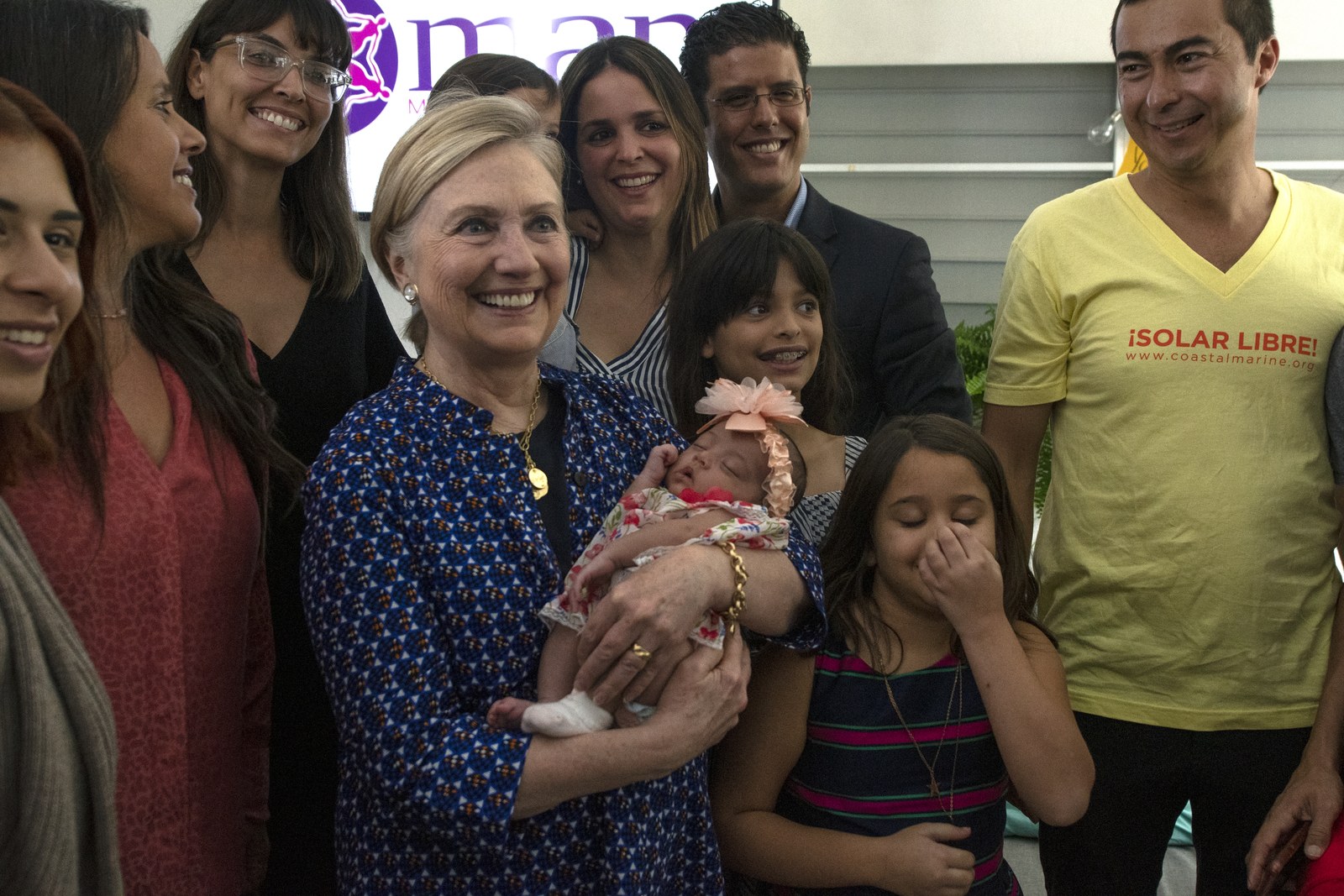
Clinton with client families and workers at Centro MAM

Megan Maher | Clinton Foundation

“I know from my long experience in trying to make change and help people that you can never give up, you can never give in,” she says. “Right now we have people in power in our country who want to discourage you, they want to depress you. They want to convince you that it’s not possible to stand up against the combined power of a president and the people who support him and the businesses who are profiting off of him and his policies. And I just don’t believe that.”

Making your way through a world in which some believe fetuses are human even as they ignore the death rates of real, live women is depressing. It is discouraging. Same with living—and bringing life into—a world where the climate is out of control, and the government won’t address it. It would be nice to just lie down. That’s exactly what powerful people want, Clinton says. They want you to feel powerless. That’s how they win.

She has to go—she has a session about preventing violence in the wake of climate catastrophe, she has more meetings with solar energy groups, she has plans to talk more about the intersection of climate change and gender equality.

“You never know what’s going to happen,” she says, which feels like an amazing understatement. “If you’ve got the energy and the time in busy lives like the ones we have, then get involved with groups and organizations that stand for what you believe in. (She recommends Planned Parenthood and the League of Conservation Voters.)

“At the very least,” she says again, sounding hopeful, and not the least bit tired. “Vote.”

Jenny Singer is a staff writer for Glamour. You can follow her on Twitter.


Source link

Categories
Health

Elizabeth Warren Adds Kirsten Gillibrand and Kamala Harris's Paid Leave and Reproductive Health Care Policies to Her Platform


Senator Elizabeth Warren (D-Mass.) is blunt—the women have been pushed out.

In late August, Senator Kirsten Gillibrand (D-N.Y.) exited the 2020 presidential race. Earlier this month, Senator Kamala Harris (D-Calif.) announced she would end her campaign too. Meanwhile, over a dozen candidates—most of whom are less well known than those two women—remain in the contest, with the field somewhat narrower and much, much more male than it was even 12 weeks ago. As some on social media have noted, there are now more billionaires up for the Democratic nomination than there are black women. And of the six candidates who qualified for this week’s Democratic debate, zero are people of color.

The problem is bigger than just who gets to stand behind a podium. With candidates like Gillibrand and Harris out of contention, their ideas risk elimination too. And Warren—who has put a feminist spin on retirement benefits and student debt—refuses to let that happen.

“We’ve seen a record number of women in this race,” Warren tells Glamour. “That means, together, we’ve been able to shape the national conversation, to highlight issues impacting people in America.” But, she adds, as men who can afford to pour tens of millions of dollars into their own runs declare their candidacies, that discussion suffers.

After Warren announced her bid, she unveiled her plan to make affordable childcare available to families nationwide. Gillibrand pioneered paid leave legislation. Harris prioritized reproductive healthcare. “These are powerful issues, not just for women, but for families,” Warren says. And of course, the fact that Gillibrand and Harris aren’t on the trail doesn’t mean we’ve solved them. So, Warren reached out to her former rivals and asked their permission—both to add their policies to her platform and to attribute those plans to the women responsible for them.


Source link

Categories
Health

I Started the #AskAboutAbortion Campaign in 2016. Ahead of the 2020 Election, This Is the Conversation I Want to Have About Reproductive Rights


Abortion access is being decimated nationwide, and still not all of the Democratic presidential candidates have a plan to fix it. As someone who’s had an abortion, I find that unacceptable. During the 2016 presidential debates, I started the #AskAboutAbortion campaign for this reason—to have a conversation about the different plans candidates proposed to protect and expand the legal right to an abortion. Between then and now, we’ve been met with a landmark case at the Supreme Court, extreme bills intended to curtail or even eliminate access, worrisome moves from lower circuits, and another near-identical case now with the court that could reverse the 2016 decision and further hollow out access. In that environment, one would think that the candidates would be clamoring to spell out their plans to secure essential, basic health care for 51% of the population. But even as All* Above All Action Fund revitalized the campaign I started, I am still left wondering how most of the candidates would answer if the moderators ask about abortion tonight or in future debates.

Tonight’s MSNBC–Washington Post debate, hosted by all women moderators, will take place at Tyler Perry’s brand-new state-of-the-art film complex in Atlanta. The state is, at present, hell-bent on passing an abortion law so outrageous it’s been blocked in other states. It aims to ban abortion as early as the six-week mark, before many women know they are pregnant (as was the case with me). A judge temporarily blocked the law last month, but its fate remains an open question. Once again, debate moderators have an opportunity to ask all of the candidates how they would contend with anti-abortion state legislatures that will continue to pass these restrictions, whether it’s a Democrat or a Republican in the White House. Would these candidates wait for Congress to act? What kinds of executive actions could they take? Do they believe minors should be able to access abortion care without the consent of a parent or guardian? The conversation is much deeper than whether or not presidential hopefuls believe abortion should be legal—it’s what steps they would be willing to take to ensure its accessible.

In the last debate, CNN and New York Times moderators asked several of the candidates (not all) what they would do to end six-week bans. While I was pleasantly surprised to hear their answers, I was deeply disappointed that Representative Tulsi Gabbard (D-Hawaii) chose to revitalize the stigmatizing “safe, legal, and rare” mantra popularized in the 1990s to advocate for a ban on later abortion.

Afterward, recently fired Planned Parenthood CEO Leana Wen, M.D., tweeted that she appreciated that Gabbard “brought up the third rail for Democrats” and that it was “courageous” for her to highlight the “nuances” in opinions on abortion. I was quite surprised that the former president of Planned Parenthood would support outdated rhetoric riddled with stigma and call it nuance.

Since then, people have abortionsplained me, insisting that “safe, legal, and rare” is still a good, solid stance. Making abortion rare should be the end goal, right? But it’s not that simple.

Rare is not a number. The reality is abortion is on a steady decline, but nonetheless, we should aim higher. We don’t need to stigmatize the very people we want to support. And it does impact us; internalized stigma causes people who have abortions to second-guess their decision, feel guilty for not feeling guilty, or feel like they cannot tell a loved one about their experience. As Democrats, can we build a world in which those who can get pregnant are in a position to choose whether or not to do so, no matter their circumstances, wealth, class, race, or life choices? Demanding that abortion be rare places stigma on the person who needs an abortion, chastises them for seeking care, assumes the abortion could and should have been prevented, and underscores a pervasive myth that it’s somehow illegitimate to not want a(nother) child.


Source link

Categories
Health

Kamala Harris Takes a Stand for Women's Reproductive Rights at the Democratic Debate


At the end of the last debate in September, Senator Kamala Harris (D-Calif.) tweeted: “The #DemDebate was three hours long and not one question about abortion or reproductive rights.”

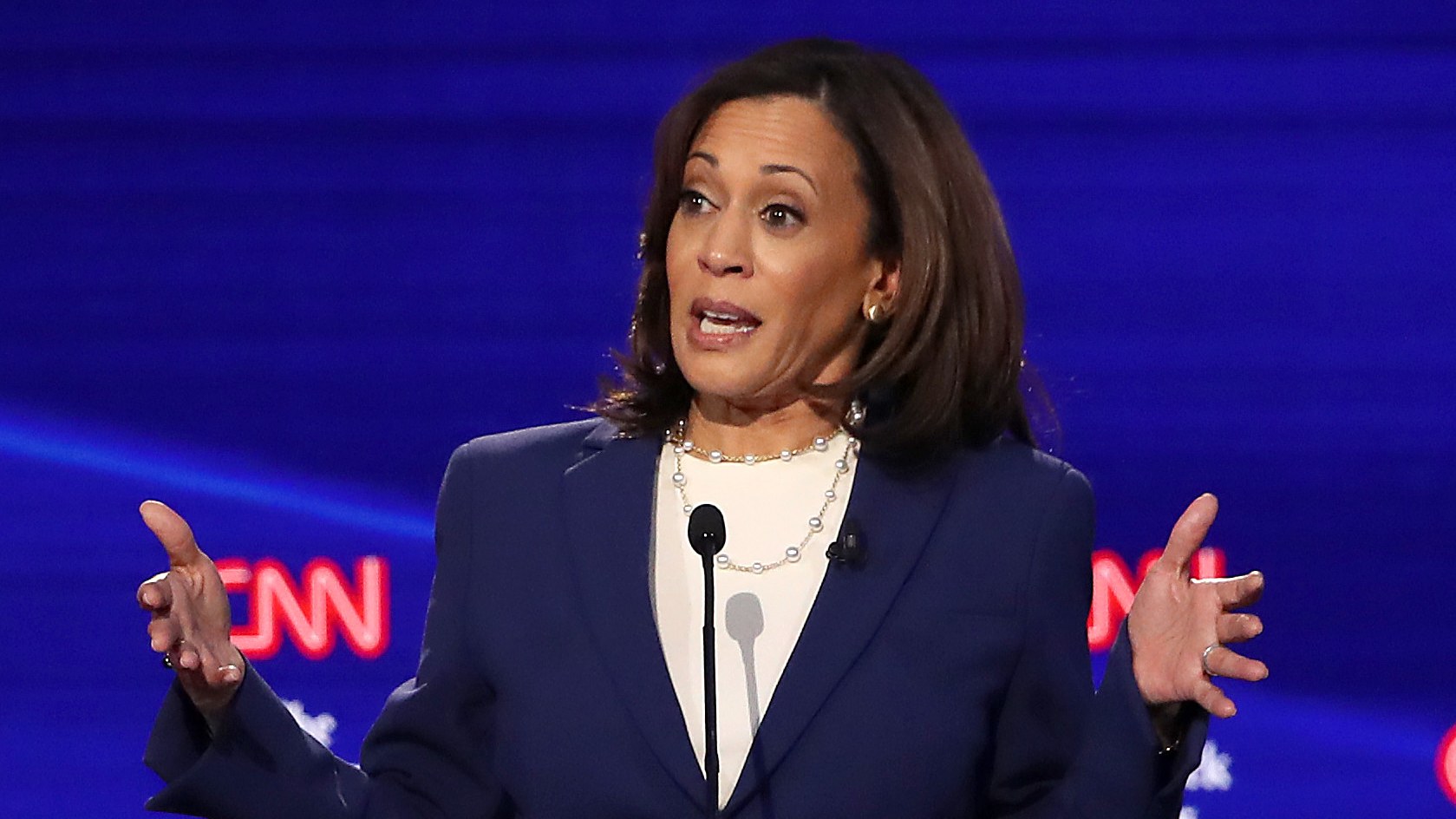
She wasn’t about to let that happen again. At the CNN/New York Times debate, Harris didn’t wait for moderators to raise the issue of attacks on women’s reproductive freedom. When asked to respond to points other candidates had just made about health care, she pivoted. Harris noted that “not one word” about abortion had been said in previous debates, even as state legislatures continue to pursue an agenda that will make women’s health care harder to access and abortion available to fewer and fewer people.

“There are states that have passed laws that will virtually prevent women from having access to reproductive healthcare,” Harris said, to cheers. “And it is not an exaggeration to say women will die. Poor women, women of color will die because these Republican legislatures in these various states who are out of touch with America are telling women what to do with their bodies.”

To raucous applause, she added: “People need to keep their hands off of women’s bodies and let women make the decisions about their own lives.”

But it wasn’t just the audience that celebrated Harris’s sense of urgency. Up on stage, Senator Cory Booker (D-N.J.) applauded her, too. “God bless Kamala,” he said. “But you know what? Women should not be the only ones taking up this cause and this fight. It is not just because women are our voters and our friends and our wives. It’s because women are people and people deserve to control their own body.”

It shouldn’t come as such a surprise to hear presidential candidates talk about a basic, safe health care procedure—that is, abortion. It shouldn’t be a shock to hear a man defend a woman’s right to choose. When it comes to Roe v. Wade and health care access, most Americans don’t want to go back. But in our current political climate and with conservatives determined to overturn that landmark Supreme Court decision, we can’t take stands like the ones Harris and Booker made for granted.

Viewers seemed to feel the same. Social media exploded in gratitude to the candidates for their support of this essential aspect of women’s health, which, to Booker’s point, doesn’t just affect women and shouldn’t be framed as a “women’s issue.” Women are 51 percent of the population. It shouldn’t take three and a quarter debates to remind people of that inexorable fact.

Mattie Kahn is Glamour’s* senior culture editor. Follow her @mattiekahn.*


Source link

Categories
Health

Men Can’t Sit Back While Women Fight Alone for Reproductive Rights


Chris Cuomo with his wife, Cristina Greeven Cuomo, and their three children

Courtesy of Chris Cuomo

One of the first cases that came up after Roe affirmed that women could make their own decision. Planned Parenthood v. Casey asked whether or not a woman had to tell her husband before she got an abortion. Why? Because the idea that she needed permission was an extension of our patriarchal society, the notion that a woman is chattel and does what a man says. I’ve raised my daughter to never, ever seek a man’s approval for anything.

I used to joke that I was a shotgun-and-shovel kind of guy: If you’re coming to my house to date my daughter, you better be hands-up and have packed a lunch because it’s going to be a long day for you. But I evolved because as she got older, I realized that I didn’t want to insulate her—I wanted to equip her to make the best choices. Now I tell her: You do whatever you want as long as it’s on your own terms. And if you’re not sure, you can talk to me or talk to your mom (she’s the smarter one anyway).

The cascade of abortion bans completely contradict what I’ve told her that her reality should be. I’ve always tried to make her feel assured that there are no limitations on who she wants to be. That nobody gets to define her except herself. This is not about being pro-choice or pro-life—that’s not an accurate reflection of what this fight is about. This is about pro women’s choice and anti women’s choice. There are people who believe women should not have this choice. That’s what motivated her to go down and march—her fear for herself, her future.

I let her go to the march. She stopped by my office afterward, safe, tired, and hopeful. My fears, however, haven’t dissipated. I worry, of course, that she’ll lose the right to control her body and reproductive health. But increasingly that’s the least of my concerns. If we allow our society to decide that people don’t have determination over their lives, their futures, their bodies, where does it end? Where will that lead us? If you can tell somebody, “I’m sorry, sweetheart, you can’t have this procedure,” what’s next? We don’t know. Maybe: We’ve decided we don’t like physical augmentation either; we don’t like you changing how you look because it’s not how God made you. We’ve decided you must always submit to men, to your husbands, because that’s what scripture says. And on and on.

I’m also afraid for her generation and how this might jaundice their views of our democracy. What is a more powerful and corrosive way to make people not want to participate than to rob them of their most personal, intimate, and profound choices? How can we move forward when a generation could feel so disempowered from making decisions?

The parenting struggle I have now is that I have to help my daughter understand that she lives in a society that doesn’t necessarily agree about what’s best for her. That’s not easy. I tell her she has a right to feel the way she does, and that sometimes you have to fight for things that you shouldn’t have to fight for at all.

But I’ve also told her I will fight with her. I will ask men to stand alongside her and her fellow protesters. Nobody’s saying we want abortions because we’re in the people killing business. Nobody’s happy to have an abortion. We’ve had difficult pregnancies, we’ve had things not go our way. We’ve had to agonize about what to do. We know the pain of it. My wife had to suffer, and I suffered by her side. There’s a pain in the powerlessness of how little we men can help.


Source link

Categories
Health

Women's Reproductive Rights Should Matter to Companies, Per New Research from NARAL and the Harris Poll


Earlier this month, we marked Equal Pay Day. In press releases and on social media, companies across America committed themselves to closing the gender pay gap and touted the importance of women’s empowerment and equity. In the era of the Women’s March, the unprecedented surge of women’s participation at the polls in 2018, and the record numbers of women that those women elected in the midterms, women’s advancement should be top of mind for companies right now.

Standing up for women’s rights is not only ethical. It’s also good business, with consumers eager to spend their dollars with companies that align with their values. Still, a critical aspect of this conversation continues to be overlooked: reproductive freedom. Reproductive freedom means that no woman can be fully empowered in the workplace if she cannot control her own body and decide her own destiny. This includes the ability to access birth control and abortion care, to go to work and not face discrimination while pregnant, and to have paid family leave to care for a new child.

To millions of working Americans, this isn’t some abstract fight about social issues. These are bread-and-butter issues that affect their ability to continue their education, rise up in their career, and plan for their future. And it couldn’t be any clearer that the American people expect businesses to take reproductive freedom seriously, too. A new report from the Harris Poll on behalf of NARAL Pro-Choice America suggests that staying silent on reproductive freedom may be a missed opportunity for companies. The poll, which surveyed 1,271 employed adults, indicates that companies should be just as vocal about and supportive of reproductive freedom as they are when it comes to the many other issues they stand up for, including equal pay, LGBTQ rights, and voting rights.

When women have the autonomy to choose if, when, and how to have children, they can build healthier families who are more resilient in times of economic downturn, which helps our communities grow stronger and companies prosper. The bottom line is supporting reproductive freedom is good for business. When women are provided essential benefits, productivity goes up and employee retention and loyalty increase. Over 70 percent of those polled acknowledge that reproductive freedom is tied to women’s overall empowerment and equality.

In the last two years, 29 states have passed over 100 laws denying women access to basic reproductive healthcare, including abortion care. Federal efforts to limit access to birth control, such as the Trump administration’s “domestic gag rule” that dismantles Title X, the nation’s birth control and reproductive health program, threaten the reproductive healthcare of millions of women. And if we can’t assume women’s rights are protected at the federal level, it’s up to all of us to ensure reproductive freedom is safe in our communities. In short, the leadership of the corporate community right now is absolutely critical.

We saw the power of the corporate community when more than 50 business leaders in Georgia spoke up as the state legislature considered, and then passed, a law that bans abortion at six weeks—before most women even know they are pregnant. The people who signed were leading with values. They were standing up for women and in line with the majority of Americans who want to keep access to abortion care. According to the survey, over 67 percent of respondents feel it is important for their employer to take a stand on reproductive freedom, including abortion. And 60 percent of employees reported that they would be more loyal to a company that offers coverage for prenatal care, family planning, and abortion care.


Source link