Categories
Health

These Are the Lawyers Fighting for Your Abortion Rights


Despite her gold statement necklace, cat-eye glasses, corner office, and date with the Supreme Court, Northrup says she is “fundamentally a shy person.” The fact that there is a direct line between her and millions of women’s abilities to control their own bodies is stressful, she acknowledges: “100%.” How does she handle it? “It’s actually a churchy concept, which is that we are stewards for an institution,” she says. “I take very seriously, and with great gratitude, the fact that I am able to be in this role as a steward for this institution at this time, and someday it will be someone else who will take the mantle from there.”

But for now, the mantle is heavy around her shoulders—and Tu’s and Rikelman’s. Two weeks before their Supreme Court date, the three of them sat in a conference room at the center for a press conference. An all-women camera crew collected footage for a documentary on the center. Northup introduces everyone, and then invites the Hope Medical Group administrator, Kathaleen Pittman, to speak from Shreveport via conference call. “With the increase in the anti-abortion rhetoric, we’ve seen an increase in protest activity,” she says in a buttery Louisiana accent. “Our concern for our patients, our staff, our physicians, it’s very real…. There is very little we can do to protect ourselves.”

For women in Louisiana, access is nearly impossible. And for physicians, providing abortion access is dangerous. “I get to go to work every day in the relative comfort of an office here in New York,” Tu says. “I know they have to go into a building where they’ve had to brick up all the windows because they’ve been the subject of Molotov cocktails, bomb threats, acid attacks. A man wielding a sledgehammer once came into the clinic.” Rikelman isn’t afraid for her own or her family’s lives, she says, but she’s afraid for the Louisiana workers. “People are protesting at their children’s school or outside their house,” she says. “They really have to feel for their children’s safety.” But providers continue on out of concern for their patients—Pittman told journalists gathered for the press briefing that once, the clinic suffered an acid attack and tried to close for the day because of acid fumes. Even though poison hung in the air, “not a single woman wanted to reschedule,” she says.

The Hope doctors, who serve as plaintiffs in the case, are labeled in the court filings as John Does for their protection. If the Supreme Court rules against the center, all but one of the providers will be out of work. The Hope clinic will likely close, and abortion will be out of reach for over one million women. “Roe becomes meaningless if there is no access to abortion,” Pittman said at the briefing. “These women that we work with now do not have the means to travel, to fly out of state…they have every right to receive their care here in Louisiana.”

Rikelman and Tu have Supreme Court precedent on their side. They have put years of work into this case. They have given their lives to it. They are ready. But the thing is, even an abortion-rights win in the Supreme Court this spring doesn’t assure a happy ending. Even though the Texas admitting-privileges law was struck down by the Supreme Court in Whole Woman’s Health, by that time half the clinics in the state had already closed. Years after that victory, the majority of the Texas clinics that closed haven’t reopened. Even when abortion rights win, anti-abortion lawmakers get consolation prizes. “We believe that we should win this case,” Northup says. “But we’re not folks that say, ‘Well if we lose the case, it’s game over.’”

Image may contain Gold

“We are not going back,” Northup frequently says when she discusses abortion law. She means that no matter what happens with Hope, or with the Women’s Health Protection Act, or even with Roe, “We’re not going to go back to women not being able to control their own reproductive health care.”

But it’s hard not to feel—with the waiting periods, the threat of the shifting Supreme Court, and the seeming infinity of new TRAP laws—that we haven’t lost ground already. Women around the country will have to put their hopes on Julie Rikelman, on T.J. Tu, on Nancy Northup, and on the anonymous, endangered physicians testifying in their case. “I care,” they will remind themselves, as arguments begin. “I have expertise,” they will think, as they set the course for the health and well-being of millions of women.

And as Northrup says, they will remind themselves, “Women are not going back.”

Jenny Singer is a staff writer for Glamour.


Source link

Categories
Health

2019 AMAs: Taylor Swift Shut Down Feud Over Music Rights With Career-Spanning Medley


Taylor Swift‘s American Music Awards performance had been making headlines long before she stepped onto the stage Sunday night due to a music rights battle she’s embroiled in with her former label Big Machine Label Group, Scott Borchetta and Scooter Braun. But during the 2019 AMAs, Swift managed to have the final word on the feud without actually speaking a word about it. In classic Swift fashion, the singer clapped back through subtle easter eggs in her clothing and song choices.

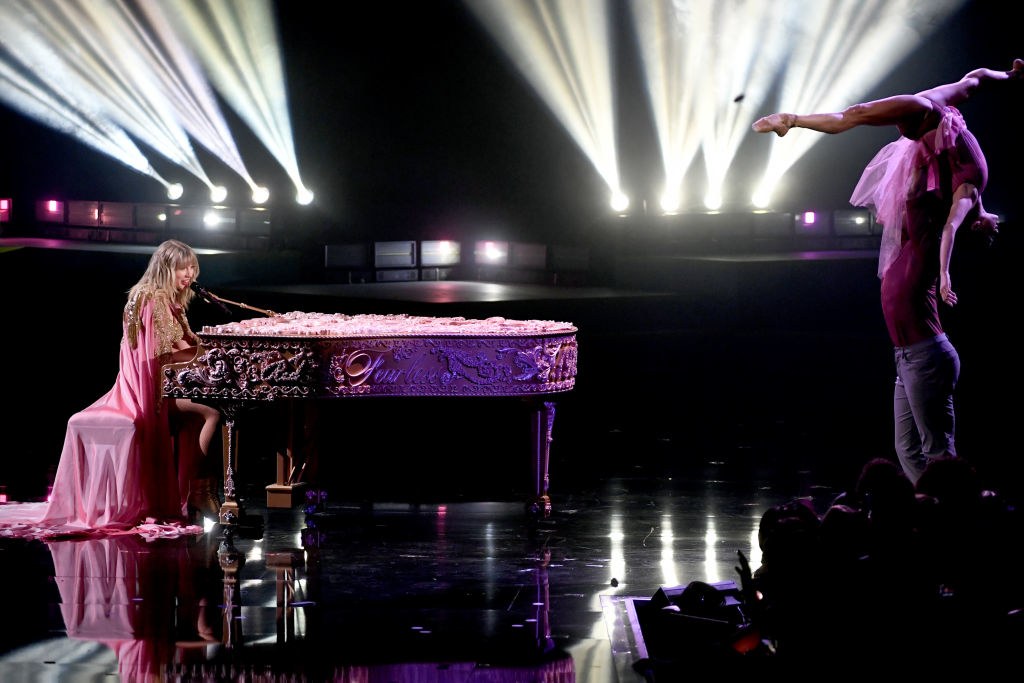
To kick off her career-spanning medley, Swift appeared in a prison-like jacket covered in the names of the albums she does not legally own and sang the first few lines of “The Man.” It was a seemingly curious choice to open her performance considering the song isn’t even one of her singles (yet), but the lyrics seem to say it all: “I’m so sick of running as fast as I can /Wondering if I’d get there quicker if I was a man/ And I’m so sick of them coming at me again/ ‘Cause if I was a man, then I’d be the man.”

The 29-year-old then shed the jacket, revealing a gold body suit underneath, and launched into more of her well-known classics, including “I Knew You Were Trouble,” “Blank Space,” and “Shake It Off” (featuring her tour buddies Camila Cabello and Halsey)—all of which could easily be taken as jabs toward Borchetta and Braun.

Kevin Winter/Getty Images


Source link

Categories
Health

I Started the #AskAboutAbortion Campaign in 2016. Ahead of the 2020 Election, This Is the Conversation I Want to Have About Reproductive Rights


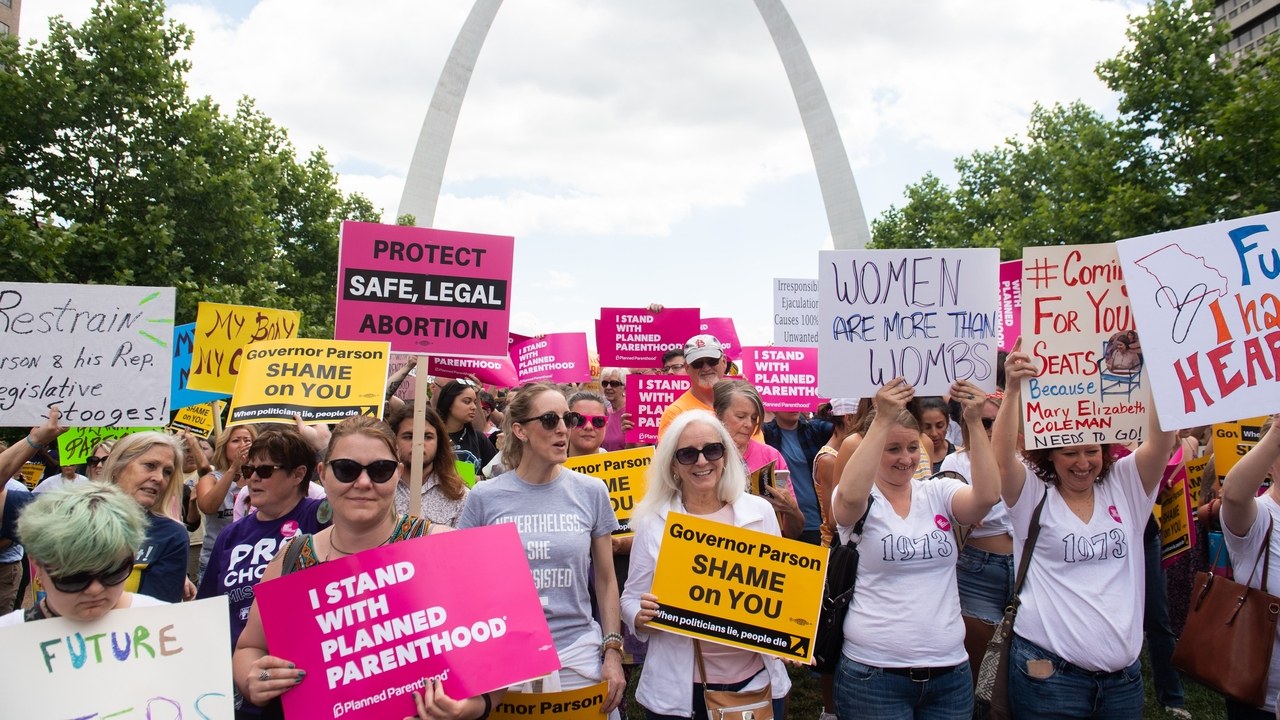
Abortion access is being decimated nationwide, and still not all of the Democratic presidential candidates have a plan to fix it. As someone who’s had an abortion, I find that unacceptable. During the 2016 presidential debates, I started the #AskAboutAbortion campaign for this reason—to have a conversation about the different plans candidates proposed to protect and expand the legal right to an abortion. Between then and now, we’ve been met with a landmark case at the Supreme Court, extreme bills intended to curtail or even eliminate access, worrisome moves from lower circuits, and another near-identical case now with the court that could reverse the 2016 decision and further hollow out access. In that environment, one would think that the candidates would be clamoring to spell out their plans to secure essential, basic health care for 51% of the population. But even as All* Above All Action Fund revitalized the campaign I started, I am still left wondering how most of the candidates would answer if the moderators ask about abortion tonight or in future debates.

Tonight’s MSNBC–Washington Post debate, hosted by all women moderators, will take place at Tyler Perry’s brand-new state-of-the-art film complex in Atlanta. The state is, at present, hell-bent on passing an abortion law so outrageous it’s been blocked in other states. It aims to ban abortion as early as the six-week mark, before many women know they are pregnant (as was the case with me). A judge temporarily blocked the law last month, but its fate remains an open question. Once again, debate moderators have an opportunity to ask all of the candidates how they would contend with anti-abortion state legislatures that will continue to pass these restrictions, whether it’s a Democrat or a Republican in the White House. Would these candidates wait for Congress to act? What kinds of executive actions could they take? Do they believe minors should be able to access abortion care without the consent of a parent or guardian? The conversation is much deeper than whether or not presidential hopefuls believe abortion should be legal—it’s what steps they would be willing to take to ensure its accessible.

In the last debate, CNN and New York Times moderators asked several of the candidates (not all) what they would do to end six-week bans. While I was pleasantly surprised to hear their answers, I was deeply disappointed that Representative Tulsi Gabbard (D-Hawaii) chose to revitalize the stigmatizing “safe, legal, and rare” mantra popularized in the 1990s to advocate for a ban on later abortion.

Afterward, recently fired Planned Parenthood CEO Leana Wen, M.D., tweeted that she appreciated that Gabbard “brought up the third rail for Democrats” and that it was “courageous” for her to highlight the “nuances” in opinions on abortion. I was quite surprised that the former president of Planned Parenthood would support outdated rhetoric riddled with stigma and call it nuance.

Since then, people have abortionsplained me, insisting that “safe, legal, and rare” is still a good, solid stance. Making abortion rare should be the end goal, right? But it’s not that simple.

Rare is not a number. The reality is abortion is on a steady decline, but nonetheless, we should aim higher. We don’t need to stigmatize the very people we want to support. And it does impact us; internalized stigma causes people who have abortions to second-guess their decision, feel guilty for not feeling guilty, or feel like they cannot tell a loved one about their experience. As Democrats, can we build a world in which those who can get pregnant are in a position to choose whether or not to do so, no matter their circumstances, wealth, class, race, or life choices? Demanding that abortion be rare places stigma on the person who needs an abortion, chastises them for seeking care, assumes the abortion could and should have been prevented, and underscores a pervasive myth that it’s somehow illegitimate to not want a(nother) child.


Source link

Categories
Health

Kamala Harris Takes a Stand for Women's Reproductive Rights at the Democratic Debate


At the end of the last debate in September, Senator Kamala Harris (D-Calif.) tweeted: “The #DemDebate was three hours long and not one question about abortion or reproductive rights.”

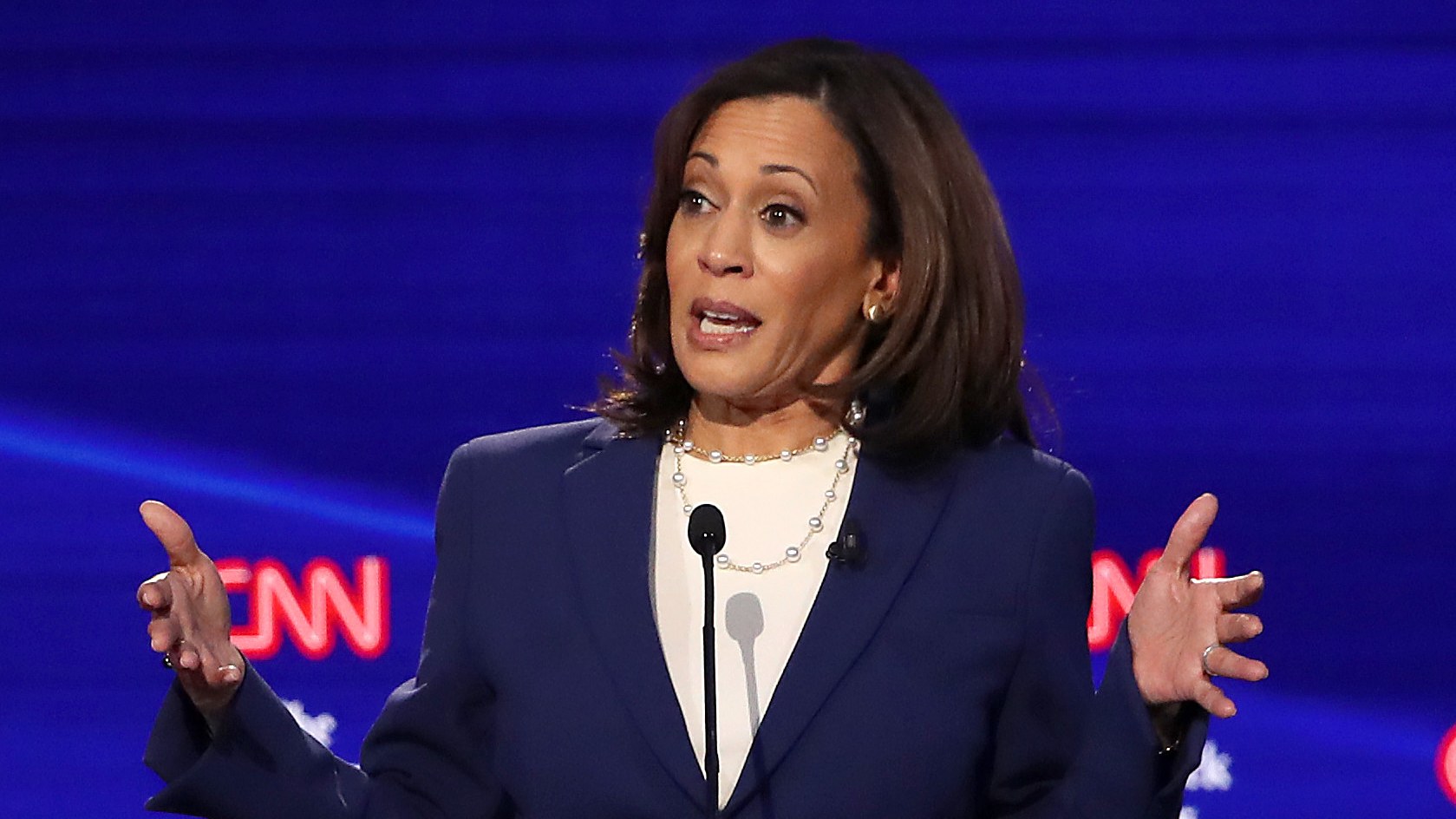
She wasn’t about to let that happen again. At the CNN/New York Times debate, Harris didn’t wait for moderators to raise the issue of attacks on women’s reproductive freedom. When asked to respond to points other candidates had just made about health care, she pivoted. Harris noted that “not one word” about abortion had been said in previous debates, even as state legislatures continue to pursue an agenda that will make women’s health care harder to access and abortion available to fewer and fewer people.

“There are states that have passed laws that will virtually prevent women from having access to reproductive healthcare,” Harris said, to cheers. “And it is not an exaggeration to say women will die. Poor women, women of color will die because these Republican legislatures in these various states who are out of touch with America are telling women what to do with their bodies.”

To raucous applause, she added: “People need to keep their hands off of women’s bodies and let women make the decisions about their own lives.”

But it wasn’t just the audience that celebrated Harris’s sense of urgency. Up on stage, Senator Cory Booker (D-N.J.) applauded her, too. “God bless Kamala,” he said. “But you know what? Women should not be the only ones taking up this cause and this fight. It is not just because women are our voters and our friends and our wives. It’s because women are people and people deserve to control their own body.”

It shouldn’t come as such a surprise to hear presidential candidates talk about a basic, safe health care procedure—that is, abortion. It shouldn’t be a shock to hear a man defend a woman’s right to choose. When it comes to Roe v. Wade and health care access, most Americans don’t want to go back. But in our current political climate and with conservatives determined to overturn that landmark Supreme Court decision, we can’t take stands like the ones Harris and Booker made for granted.

Viewers seemed to feel the same. Social media exploded in gratitude to the candidates for their support of this essential aspect of women’s health, which, to Booker’s point, doesn’t just affect women and shouldn’t be framed as a “women’s issue.” Women are 51 percent of the population. It shouldn’t take three and a quarter debates to remind people of that inexorable fact.

Mattie Kahn is Glamour’s* senior culture editor. Follow her @mattiekahn.*


Source link

Categories
Health

Men Can’t Sit Back While Women Fight Alone for Reproductive Rights


Chris Cuomo with his wife, Cristina Greeven Cuomo, and their three children

Courtesy of Chris Cuomo

One of the first cases that came up after Roe affirmed that women could make their own decision. Planned Parenthood v. Casey asked whether or not a woman had to tell her husband before she got an abortion. Why? Because the idea that she needed permission was an extension of our patriarchal society, the notion that a woman is chattel and does what a man says. I’ve raised my daughter to never, ever seek a man’s approval for anything.

I used to joke that I was a shotgun-and-shovel kind of guy: If you’re coming to my house to date my daughter, you better be hands-up and have packed a lunch because it’s going to be a long day for you. But I evolved because as she got older, I realized that I didn’t want to insulate her—I wanted to equip her to make the best choices. Now I tell her: You do whatever you want as long as it’s on your own terms. And if you’re not sure, you can talk to me or talk to your mom (she’s the smarter one anyway).

The cascade of abortion bans completely contradict what I’ve told her that her reality should be. I’ve always tried to make her feel assured that there are no limitations on who she wants to be. That nobody gets to define her except herself. This is not about being pro-choice or pro-life—that’s not an accurate reflection of what this fight is about. This is about pro women’s choice and anti women’s choice. There are people who believe women should not have this choice. That’s what motivated her to go down and march—her fear for herself, her future.

I let her go to the march. She stopped by my office afterward, safe, tired, and hopeful. My fears, however, haven’t dissipated. I worry, of course, that she’ll lose the right to control her body and reproductive health. But increasingly that’s the least of my concerns. If we allow our society to decide that people don’t have determination over their lives, their futures, their bodies, where does it end? Where will that lead us? If you can tell somebody, “I’m sorry, sweetheart, you can’t have this procedure,” what’s next? We don’t know. Maybe: We’ve decided we don’t like physical augmentation either; we don’t like you changing how you look because it’s not how God made you. We’ve decided you must always submit to men, to your husbands, because that’s what scripture says. And on and on.

I’m also afraid for her generation and how this might jaundice their views of our democracy. What is a more powerful and corrosive way to make people not want to participate than to rob them of their most personal, intimate, and profound choices? How can we move forward when a generation could feel so disempowered from making decisions?

The parenting struggle I have now is that I have to help my daughter understand that she lives in a society that doesn’t necessarily agree about what’s best for her. That’s not easy. I tell her she has a right to feel the way she does, and that sometimes you have to fight for things that you shouldn’t have to fight for at all.

But I’ve also told her I will fight with her. I will ask men to stand alongside her and her fellow protesters. Nobody’s saying we want abortions because we’re in the people killing business. Nobody’s happy to have an abortion. We’ve had difficult pregnancies, we’ve had things not go our way. We’ve had to agonize about what to do. We know the pain of it. My wife had to suffer, and I suffered by her side. There’s a pain in the powerlessness of how little we men can help.


Source link

Categories
Health

Taylor Swift Gets Political By Writing a Letter to Sen. Lamar Alexander About LGBTQ+ Rights


A new era of Taylor Swift is upon us—and we’re not just talking about her highly anticipated seventh album, which fans think will be titled Lover. The singer is also showing off a new publicly political side. Criticized by some for not speaking out enough during the 2016 election, Swift has more recently begun using her massive platform to let fans know where she stands on issues that are important to her.

The first signs of this new Swift emerged ahead of the 2018 midterm elections, when she endorsed the Democratic nominees from Tennessee for the U.S. Senate and House of Representatives. In her Instagram post containing the endorsement, she mentioned her strong belief in LGBTQ+ rights—and now she’s taking that message a step further by posting a letter to Sen. Lamar Alexander, a Republican representing her home state of Tennessee. The letter urges Alexander to support the Equality Act, which would “protect LGBTQ people from discrimination in their workplace, in their homes and in schools.”

“?HAPPY PRIDE MONTH!!!? While we have so much to celebrate, we also have a great distance to go before everyone in this country is truly treated equally. In excellent recent news, the House has passed the Equality Act, which would protect LGBTQ people from discrimination in their places of work, homes, schools, and other public accommodations,” Swift wrote in an Instagram caption for the image of the letter. “The next step is that the bill will go before the Senate. I’ve decided to kick off Pride Month by writing a letter to one of my senators to explain how strongly I feel that the Equality Act should be passed.”

In the letter, Swift first thanked Alexander for co-sponsoring a bill that celebrates the centennial of the ratification of the 19th Amendment, which gave women the right to vote before going on to criticize the “Slate of Hate” in Tennessee and warning that discriminatory practices could continue to scare off large companies like Amazon, who won’t want to do business in the state. She also called discrimination against people based on “who they love” or “how they identify” as “un-American and cruel.”

Swift also called out the Trump administration directly. “I personally reject the President’s stance that his administration ‘supports equal treatment of all’ but that the Equality Act ‘in its current form is filled with poison pills that threaten to undermine parental and conscience rights.’ No,” she wrote. “One cannot take the position that one supports a community while condemning it in the next breath as going against ‘conscience’ or ‘parental rights.’ That statement implies that there is something wrong with being anything other than heterosexual and cisgender, which is an incredibly harmful message to send to a nation full of healthy and loving families with same-sex, non binary or transgender parents, sons or daughters.”

Along with urging her followers to write letters to their own senators, Swift also created a petition with Change.org for people to express their support of the Equality Act. “While there’s no information yet as to when the Equality Act will go before the Senate for a vote, we do know this: Politicians need votes to stay in office,” she wrote. “Votes come from the people. Pressure from massive amounts of people is a major way to push politicians towards positive change.”

The petition (which you can sign here) is already nearing 50,000 signatures, and fans are expressing their gratitude to Swift for speaking out. “Thank you, Taylor, for speaking up for families like mine, and all other members of the LGBTQ family. Love from Mississippi,” one commenter wrote. Another said, “So proud that someone I’ve admired for so long is taking such a strong stance to protect the rights of LGBTQ individuals. Thank you Taylor and everyone else for fighting for the LGBTQ community!”


Source link