Categories
Health

The Best Way to Celebrate International Women’s Day? By Making Yourself Money


If you have a partner, have a quick chat about the gap. This is a dialogue, not a one-and-done conversation, but you can get the ball rolling. A recent survey showed that while men increasingly expect and encourage women to work outside the home (great)…they still don’t pick up the work inside of it (um, not great). I’m not opposed to resurrecting the chore wheel.

#3. Spend intentionally.

Quick question: When was the last time you heard about a guy “splurging” on something? Not unheard of, but it’s way more common to describe how women spend money. As women, we get messages all our lives about being bad with money—when the real problem is that we don’t have enough of it.

So I’m very over restrictive budgets and condescending advice. Instead, I’m a fan of what we call “intentional spending”— that is, simply being mindful of what you’re spending on now, and matching what you’re spending now to the things that are most important to you. No judgment, no guilt, just a practice.

Today, take 10 minutes to list your money goals. That could include travel, buying a house, paying off high-interest debt, supporting causes you care about, retiring in style, starting a business and/or a family. (I’d throw in building an emergency fund if you’ve got one.) Just having these goals written down can help you be more aware of—and mindful about—your spending decisions.

#4. Work on getting paid what you’re worth.

The clock on the gender pay gap seems to be permanently stuck at around 230 years from closing for all women, and here’s the deal: No matter how much leaning in we do, we can’t promote ourselves. We’re dependent on our boss, and on the culture of our workplace…and too often, they’re not doing the work to check their own bias.

Four things you can do today to stand in your worth:

Talk to your friends. Successful women actually network differently than successful men—and the key is an inner circle of trusted contacts we can talk to about things like handling bias. And yes, talk about salary, because how do you know what to ask for if you don’t know what other people are making?

Talk to your coworkers about salary, too. That one can feel really intrusive, I know. I’m a huge fan of Caitlin Boston, who bumped her pay by 41% with the “over/under” approach. Instead of asking for exact salaries, she asked coworkers if they made over or under a number she gave them. It worked. (And she was able to pay off a quarter-million dollars of student debt, btw.)

Review the goals your boss set for you. Is your day-to-day work getting you to those goals, or are you spending time on other things? If there’s a disconnect, it’s fine to check in with your boss to see if they think your goals have changed.

Set up a reminder and a document to track your wins each week. It’s so much easier to track it now than to have to remember it later on when you’re making the ask.

#5. Support other women.

When women support women, magic happens. This weekend, shop women-owned businesses. Hell, do it for a month.

We live in the only industrialized nation that doesn’t provide paid family leave. Sign this petition and (if you don’t already), start calling it “family leave” instead of “mat leave”—if people start taking leave regardless of gender, there won’t be as much backlash to caregivers.

Sign a petition to support the Paycheck Fairness Act, the FAMILY Act for paid parental leave, and the Equal Rights Amendment.

And keep on posting your support and your stories. I can’t wait to see what you share.

Sallie L. Krawcheck is the CEO and cofounder of Ellevest, a digital financial adviser for women launched in 2016. She is a former CEO of Merrill Lynch Wealth Management and Smith Barney.
Source link

Categories
Health

13 Brands Giving Back on International Women's Day 2020: Shop Outdoor Voices, L’occitane, & More


The weekend is best time to fall into a leisurely online shopping hole with little-to-no shame. But this Sunday isn’t just any old Sunday. It’s International Women’s Day 2020—a day dedicated to celebrating the social, economic, cultural, and political achievements of women worldwide. International Women’s Day was recognized for the first time in 1911—and now, over a century later, brands worldwide are using their platforms to give back to organizations that uplift the women who need it most.

From the Malala Fund to the ACLU Women’s Rights Project, the brands on this list are partnering with organizations making a major impact—and so can you, by simply supporting their efforts through a little retail therapy. Whether you’re looking to fill out your beauty bag or upgrade your workout wardrobe, you’re bound to find something worth shopping on this list. Discover all the best beauty, style, and home buys for International Women’s Day, ahead.

All products featured on Glamour are independently selected by our editors. However, when you buy something through our retail links, we may earn an affiliate commission.


Source link

Categories
Health

This International Women’s Day, Invest in Girls


Today, as we celebrate our third anniversary, and observe International Women’s Day 2020 on March 8, I’m reflecting on the most important lesson I’ve learned since starting this work: By the time we’re talking about women’s anything, we’re too late. Our top priority needs to be investing in girls.

And we can start by taking seriously how much girls have to offer as role models for adults.

This is why I’ve come to believe, over the past three years, that those of us who are passionate about women’s rights and equality must broaden our efforts, our thinking, and our strategies for reaching this rising generation.

When I became a parent I immediately saw how badly we need better, more representative children’s books that encourage girls to be bold and take risks. The solution to this problem is simple, though I admit it sounds a little nuts: if you can’t find the kinds of stories you’d like to read to your children, write them yourself.

I never planned to publish a children’s book. But I got so sick of reading to my daughters over and over again “about a white boy and his dog,” as the activist Marley Dias has put it, that I wrote a true story about my mom and aunt when they were little girls. To my surprise and delight, it will be in bookstores this June.

Another way we can invest in girls—and help build a more equal future—is to change the way we raise our boys.

Last fall I wrote about how restrictive ideas about masculinity are changing, but not quickly enough—and how we can’t afford to leave boys behind, or let their parents off the hook. After all, as the civil rights lawyer and activist Tahir Duckett has pointed out, more than 90 percent of all perpetrators of sexual violence are boys or men. Yet people talk about sexual violence as a “women’s problem.”

We can only make progress if we start to see this problem for what it is—evidence of the urgent need to change male behavior starting not in adolescence, but in early childhood. Because that’s when the foundation, in Duckett’s words, is laid.

I’ve written about how my daughter began internalizing subtle bias against her curly hair even before her third birthday. Now that she’s in preschool, I see her classmates kicking around the same unconscious notions, trying on ideas and attitudes they’ve absorbed at home—and from the patriarchal society around them.

Some of these destructive attitudes are subtle, and therefore are all the more insidious and difficult to combat. Others are much more obvious.

When the President of the United States bullies Greta Thunberg on Twitter, for example, it’s no wonder his signature brand of harassment spreads to countless American schools.

When women show leadership and power, it’s no longer surprising when people call them angry or shrill and tell them to “chill. “

And when bullying and sexism start early—when we suggest that girls dim their lights when they’re young, and then discourage them again when they nevertheless grow into bold young women—it’s only natural that “girls’ issues” become “women’s issues,” and the vicious cycle repeats itself. Another generation fights the same battles women have been fighting since time immemorial.

International Women’s Day seems like the perfect occasion to send a message: Not on my watch.

That’s why I’m encouraging everyone I know to think bigger—by which I mean earlier—when it comes to fighting for women’s equality. It’s past time to invest in our girls.

Meena Harris is the founder and CEO of the Phenomenal Woman Action Campaign, a female-powered lifestyle brand that brings awareness to social causes. Her children’s book, titled Kamala and Maya’s Big Idea will be published on June 2, 2020. Her new Phenomenal Girl campaign is live now.


Source link

Categories
Health

Kate Middleton Shares Personal Portraits of Holocaust Survivors In Honor of International Holocaust Remembrance Day


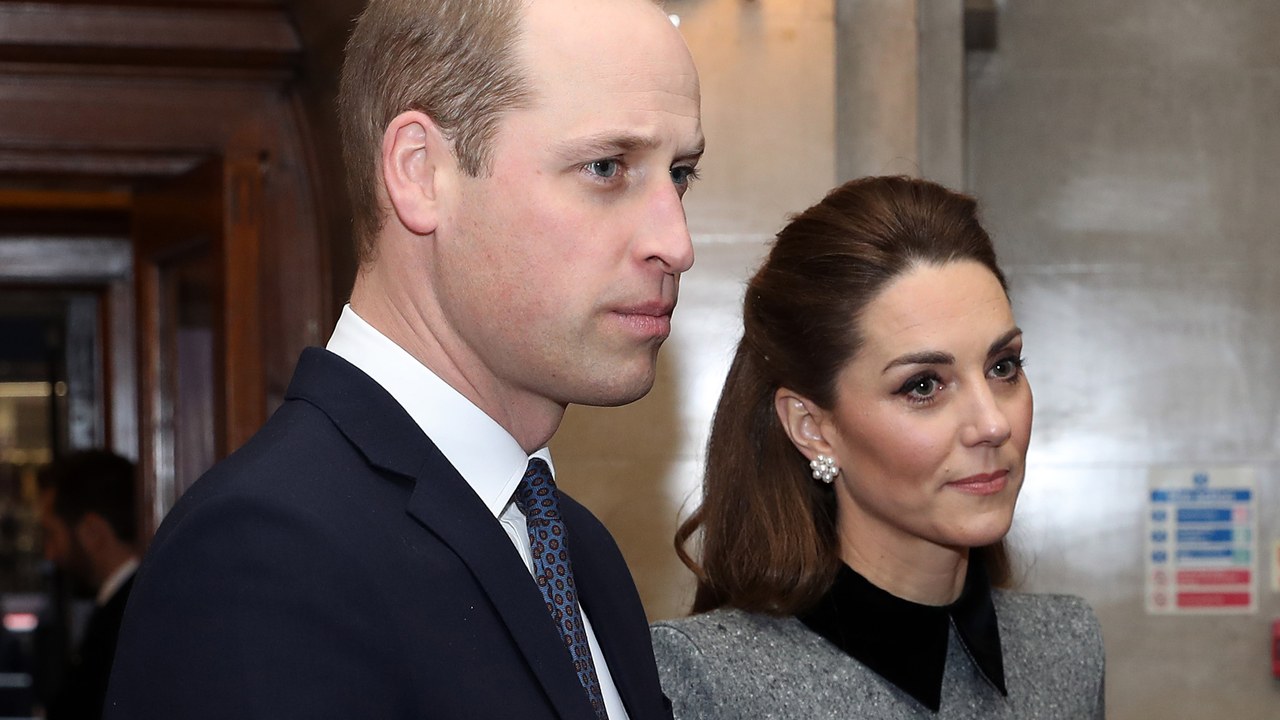
In honor of International Holocaust Remembrance Day, held on January 27 each year, Kate Middleton did more than show up to the annual U.K. Holocaust Memorial Day Commemorative Ceremony in Westminster. The Duchess of Cambridge also shared poignant photos of two Holocaust survivors and their grandchildren that she captured for an upcoming exhibition.

Middleton, who has taken some of the formal portraits of her children released to the public, photographed survivors Steven Frank and Yvonne Bernstein and their families at Kensington Palace to mark the somber occasion. And in honor of the 75th anniversary of the liberation of Auschwitz-Birkenau, Middleton’s photos will be part of a larger show of 75 total images that the Holocaust Memorial Day Trust, Jewish News, and the Royal Photographic Society have assembled.

“The harrowing atrocities of the Holocaust, which were caused by the most unthinkable evil, will forever lay heavy in our hearts. Yet it is so often through the most unimaginable adversity that the most remarkable people flourish,” read the caption of the official Kensington Royal Instagram page.

“Despite unbelievable trauma at the start of their lives, Yvonne Bernstein and Steven Frank are two of the most life-affirming people that I have had the privilege to meet,” Middleton continued. “They look back on their experiences with sadness but also with gratitude that they were some of the lucky few to make it through. Their stories will stay with me forever.”

The duchess photographed Frank with his granddaughters, Maggie and Trixie. According to the post, Frank was sent to the Theresienstadt camp where he and his brothers were three of just 93 surviving children. 15,000 children were sent there in total.

The second photo is of Bernstein with her granddaughter Chloe. Yvonne was one of France’s “hidden children,” escaping the Holocaust by “frequently changing homes and names” with her aunt and uncle.

“I wanted to make the portraits deeply personal to Yvonne and Steven—a celebration of family and the life that they have built since they both arrived in Britain in the 1940s,” the duchess added.

“The families brought items of personal significance with them which are included in the photographs. It was a true honour to have been asked to participate in this project and I hope in some way Yvonne and Steven’s memories will be kept alive as they pass the baton to the next generation.”

Frank said in a statement, “I would hope that the people who look at these pictures not only look at the beauty of the photography, but they will also think of the people behind the photos and their families that they lost in the Holocaust.”

The Kensington Royal Instagram account also released photos from today’s ceremony, where Kate and William spoke to survivors of the Holocaust and lit candles in memory of those who lost their lives.


Source link

Categories
Health

Apparently, Sex After 40 Is Worthy of International Tabloid News


“Melanie!” my friend messaged me, “the U.K. tabloids LOVE you!”

I first found out I’d become international tabloid news when this message along with a screen grab of an article from the Daily Mail popped up on my phone. The headline included a picture of me riding my bike and the word COUGAR. In all caps.

I immediately googled myself, my screen flooding with similar headlines next to grainy pictures of me taken from my Facebook page. The Sun, The Daily Star, The World News—over a dozen tabloids (so far) have picked up my most recent Glamour article pulling salacious quotes from the story I wrote about my sex life as a 41-year-old single woman. My personal favorite was the headline for The Mirror: “Cougar, 41, says sex life’s better than ever with ‘lonely cub’ tinder hook-ups.”

Earlier this month, I wrote about my dating life, which is apparently so shocking it’s newsworthy. As a woman in her 40s on Tinder, I quickly realized men my age, true to stereotype, weren’t interested. But after lowering my age minimum on the app, my inbox flooded with messages from twenty- and thirty-something men seemingly dying to date me. As I wrote about in my article, I have never had this much sex—let alone good sex—in my life. The international tabloid media apparently can’t handle this.

After discovering that my name would be associated with the word cougar (ALL CAPS) in any google search of me for all of eternity I felt a little violated (and slightly worried that all the press would ruin the hot streak currently tearing through my dating life…). One tabloid reached out to extend the courtesy of at least letting me choose the photos that would run with the article, rather than picking at random from my Facebook page, at the same time reassuring me they wouldn’t make me sound like a terrible person.

I know I’m not a terrible person! I know there’s nothing wrong with me or the relationships I share with other consenting adults, but apparently others think there is indeed something terrible about a woman in her 40’s having satisfying sex with men who think she’s amazing and treat her well. The fact this cougar story made headline news to begin with—in not just one but over a dozen tabloids in different countries—is what I find unbelievably disturbing. I knew the patriarchy is still alive and well, but I didn’t fully comprehend just how much our society hates aging women until my active and awesome sex life became a scandalous headline. Have none of these people ever seen The Graduate? Dating younger men isn’t new! Women have been doing it since the beginning of time.

The obsession with analyzing older women dating younger men is baffling—this isn’t National Geographic and women are not animals.

It sure seems as though society thinks we are, however. If we’re fat, we’re whales (or cows, depending on just how fat). If we’re assertive, we’re bitches. If we are any type of woman under age 35, we’re chicks. If we disagree with women, we’re catty. If we’re young and horny, we’re vixens. And if we’re horny, over 35 and prefer men who aren’t too damn tired to have sex now, we’re cougars. When society talks about women’s sex lives and our relationship statuses, they constantly rob us of our humanity and complexity and instead reduce us to a trait that has absolutely nothing to do with who we actually are, whether it’s our age, size, or sex drive.


Source link

Categories
Health

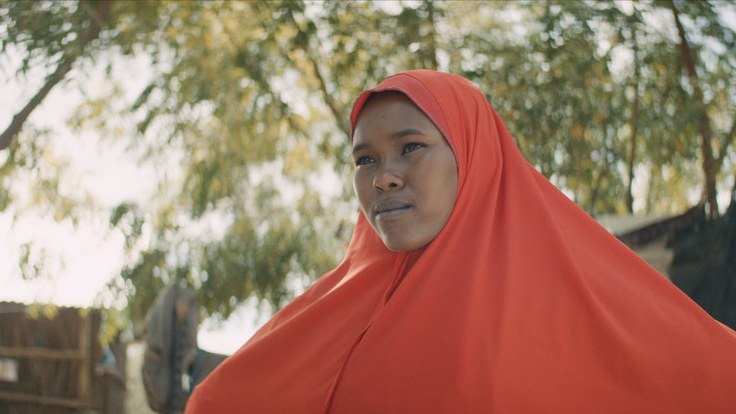
The Poet Warsan Shire Wrote the Short Film 'Brave Girl Rising' for International Women's Day


What the film does well is highlight both the experiences that girls all over the world have in common and the terrible, particular difficulties and threats that a girl like Nasro faces. How much of girlhood is a shared experience?

Being a girl is always difficult. It’s a strange rite of passage, and being a woman in this world is difficult. But there’s a massive difference between what it feels like to be a woman in [America or England] and where Nasaro is. And a girl’s [experience] will be different, too, based on her race, her socioeconomic background, how much education she has. Does she have people in her life to support her? What part of the world is she in? What resources does she have access to? That will decide what her life will be like.

In the New Yorker, Alexis Okeowo wrote that your work “evokes longing for home,” which I think is true. When you feel that ache for home, what do you do?

I feel that every day of my life. For me, home is Somalia. I’m living in L.A. now, but London was home for a really long time, and now I’m living in America under Trump. So it’s double. I miss London, but I miss home home, which is Africa. It’s really important for me to listen to old Somali music and to speak in my mother tongue. It gives me a lot of pride. I like looking at old photographs of Somalia. I love to eat Somali food. I love to put on Somali incense. It’s all the time reminding myself a little bit of where I’m from, and the richness of it. Because it’s very easy to not do that and then you forget—how to cook, how to speak the same language, the comedy, the music.

I don’t want to grow older in different parts of the world and forget all the things that bring me a lot of joy, so I spend a lot of time on YouTube looking for Somali videos. And whenever I want to connect with London, I hope for rain. It’s rainy today in L.A., and it always makes me feel comforted. I just have to stay connected so I don’t forget where I’m from.

It can feel like time travel a bit, to surround yourself with those memories of home.

Yes, definitely. That’s a big help for writing as well. If I want to write about my teenage years, I’ll go back and listen to all the music I listened to and look at photographs of myself back in the day, and I’ll even ask my mom to send me old clothes from London. It’s like a time machine.

International Women’s Day can feel a little two-dimensional, I think. Because so much of it takes “place” online. I’m sure people will see the film and read articles about it. But then what? Do you have advice for people who want to do something with the pain or emotion that they feel?

I’m interested in the ways in which human beings are able to practice empathy, so my recommendation would be to read books written by different women from different backgrounds you don’t know anything about, watch films made by women all over the world, not just by women who look like you.

And try to practice empathy. Think about how massive the world is and how small your life is in comparison to that. Think about what it means to be a woman. Think about how you want to bring awareness to the suffering of other people. Think about women from different parts of the world, trans women, poor women, black women, women in prisons, women in shelters, women all over the world, women and girls in refugee camps. The world is so massive, but we forget that all the time.


Source link