Categories
Health

Senator Elizabeth Warren: Attacks on Birth Control Access Are Attacks on Women's Freedom


If anyone told a young woman today that she was expected to quit school after eighth grade or leave her job once she got married, most Americans would be outraged. Not fair! Women should have the same range of economic choices as men.

Through the years, one door after another has opened, as women have become astronauts and neurosurgeons, run Fortune 500 companies and nonprofit organizations, and started their own businesses. Sure, there’s still a lot of ground to make up, but the country has headed in the direction of greater equality for decades now.

Despite this progress, near-constant attacks on safe and cost-effective women’s health care have become a regular part of our political debates. The latest front in this battle? Access to contraception. The Affordable Care Act required employer-sponsored health insurance policies to cover birth control without additional costs. On October 6, in one of his series of reckless attacks on health insurance in America, President Trump ended that protection.

These fights are often framed as ideological discussions. But for millions of women, access to health care isn’t about ideology at all—it’s about economics.

Americans, at least in private, agree that using birth control is a no-brainer. The vast majority have used it, including ninety-nine percent of women (and by extension, their partners) who have had sex between the ages of 15 and 44.

Some of the reasons for this are obvious. Contraception prevents unintended pregnancy and reduces the abortion rate. Certain forms of birth control prevent sexually transmitted infections, and others help control debilitating health conditions. But contraception is not only about health; it is about economic security as well.

Americans, at least in private, agree that using birth control is a no-brainer.

As every parent knows, the decision to have children is momentous—and carries massive economic consequences. Because the United States does not ensure that parents have access to paid family leave or affordable childcare, new costs add up quickly. The totals are striking: middle-income parents with two kids will spend an estimated $230,000 to raise a child born in 2015 from birth through age 17, amounting to roughly $13,000 per year. Starting a family is a big commitment, and millions of people use contraception until they decide to do so.

But the out-of-pocket costs for baby cribs and car seats are only the tip of the iceberg. A mother experiences a measurable decline in earnings immediately after having a child—a decline that continues throughout her lifetime. And women don’t have to be mothers to benefit economically from contraception—just ask college students, or women with crippling endometriosis, how contraception helps them land and hold down jobs.

The arrival of the birth control pill in 1960, later joined by other effective contraceptives, gave Americans more control over if, when, and how they chose to grow their families. That control, in turn, helped fuel economic opportunity for American women, American families, and the American economy. After the widespread introduction of birth control, the number of women in professions once closed to them increased dramatically. And without the movement of women into the workforce since 1970—a trend partly enabled by the availability of effective birth control – our country’s GDP would only be three-quarters the size it is today.

Contraception helps level the economic playing field for women.

Contraception helps level the economic playing field for women. With birth control available, women have more chances to go to school, get jobs, create businesses, and grow our economy. They can more reliably plan their economic futures. But birth control offers these benefits only when women can access it—and when their bosses can’t dictate what types of birth control it’s appropriate for them to use.

While 99% of women have used birth control at least once, cost is a big factor restricting consistent access. Prior to the ACA, one in three women struggled to afford the out-of-pocket costs of prescription birth control. These costs put additional strain on the finances of workers already struggling to make ends meet—and also reduced contraceptive use. According to a 2010 Centers for Disease Control report, hundreds of thousands of women who tried various forms of contraception gave up because the methods were “too expensive,” “insurance did not cover it,” or because contraception was “too difficult to obtain.” The ACA’s birth control protections helped level the playing field: women in America saved an average of $255 a year on birth control pills and saw cost reductions for other contraceptive methods.

For millions of women, President Trump’s edict isn’t some abstract, ideological debate. For a working couple with modest wages and piles of student loan debt, the ability to decide when to have children is an economic issue. For a student working towards her college degree and financial independence, access to birth control is an economic issue. For a woman working two jobs with two kids in daycare, affordable contraception is an economic issue.

This isn’t the Trump Administration’s first attack on women’s health. Efforts to defund Planned Parenthood, repeal the ACA and Medicaid, and block access to safe, legal abortions have put women on the economic defensive. But those efforts require Congress—and so far, despite the best efforts of Mitch McConnell and Paul Ryan, they have failed. Now, President Trump has turned to a decision he can make without Congress: make it harder to access birth control. With the stroke of a pen, the President shrunk the economic futures of millions of women. He should reverse this decision—and if he won’t, Congress should force him to.
Source link

Categories
Health

All Four U.S. Open Women's Semifinalists Are Americans


PHOTO: Don Emmert/AFP/Getty Images

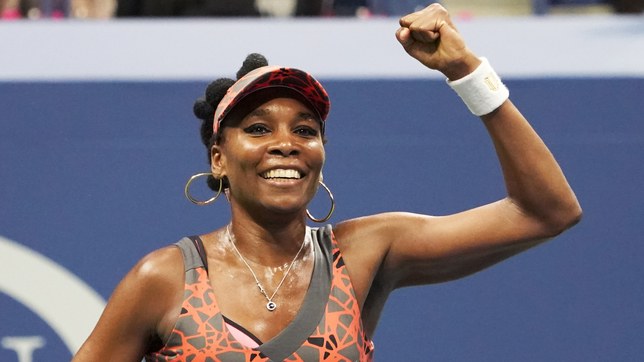
For the first time in more than three decades, all four women in the U.S. Open semifinals are Americans, guaranteeing that an American will be crowned the winner this Saturday—despite the fact that Serena Williams, the only American woman who’s even made it to the tournament’s finals in the last decade, is out on maternity leave.

Thursday night’s two semifinal matches will see Venus Williams and Sloane Stephens face off at the Billie Jean King National Tennis Center’s Arthur Ashe Stadium in New York City before CoCo Vandeweghe and Madison Keys take the court. Venus, 37, grew up in California; Sloane, 24, is from Florida; CoCo, 25, was born in New York; and 22-year-old Madison hails from Illinois. Of the four, only Venus, who won the whole tournament in both 2000 and 2001, has ever made it to the U.S. Open’s semifinal round.

After Madison beat Estonia’s Kaia Kanepi in her quarterfinal match on Wednesday night, she spoke to The New York Times about the upcoming all-American semifinal round. “I think we were all rooting for each other today, and I thought it would be a very special moment,” she said. “I’m glad I helped everyone out and got my name in there.” And on Tuesday, after her own success in the quarters, Venus told ESPN, “It’s been a great two weeks for American tennis, seeing all the American players in the draw and all of them advancing so deep and competing so well. It’s great to see this resurgence, and I hope it can continue.”

According to The Washington Post, the last all-American women’s semifinal at the U.S. Open was all the way back in 1981—before CoCo, Sloane, and Madison were even born. That year, Chris Evert lost to Martina Navratilova and Barbara Potter lost to Tracy Austin in the semis before Tracy went on to beat Martina in the finals. Since then, only six different American women have made an appearance in the U.S. Open finals, with the Williams sisters winning a combined eight championships. (Most recently, Serena scored an impressive hat trick by taking home the trophy at the 2012, 2013, and 2014 events.) American men have an even worse track record: The tournament’s last all-American men’s semifinal session was in 1979 and the last American man to win at Arthur Ashe Stadium was Andy Roddick in 2003.

Good luck, girls. America is rooting for you.


Source link

Categories
Health

This Women's Equality Day, Brooklyn Decker and Whitney Casey Want More Women in Fashion Tech


In a time when just about every day is a holiday for something (did you know it’s National Banana Split Day?), there are a few occasions worth taking the time to commemorate. A big one for us is August 26—otherwise known as Women’s Equality Day. It was first celebrated back in 1971, in honor of the ratification of the 19th Amendment (the one that gives women the right to vote). In the years since, it has become an opportunity to honor and recognize the accomplishments of women in a diverse range of fields and their contributions to society.

For Brooklyn Decker, a former model, actress, and tech entrepreneur, this year’s Women’s Equality Day holds special meaning. She and her longtime friend, former broadcast journalist Whitney Casey, founded the fashion start-up Finery back in March. It’s marketed as the first “closet operating system” that catalogues and styles every item you own for maximum usage, addressing the classic “so many clothes, but nothing to wear” dilemma for 10,000+ users since it launched.

Their service aims to solve everyday wardrobing issues for their customers, but Decker and Casey are just as invested in uplifting other female business owners with big ideas: Glamour caught up with the Finery founders at a recent Women’s Equality Day panel featuring female executives and entrepreneurs, hosted by Keds and LOLA. As we chatted about everything from the company’s next steps to the one clothing item that Decker should maybe cut back on, one thing was clear: If Women’s Equality Day were a holiday that came with a wishlist, Decker and Casey would ask for more leading women in fashion tech. Read on.

PHOTO: Astrid Stawiarz

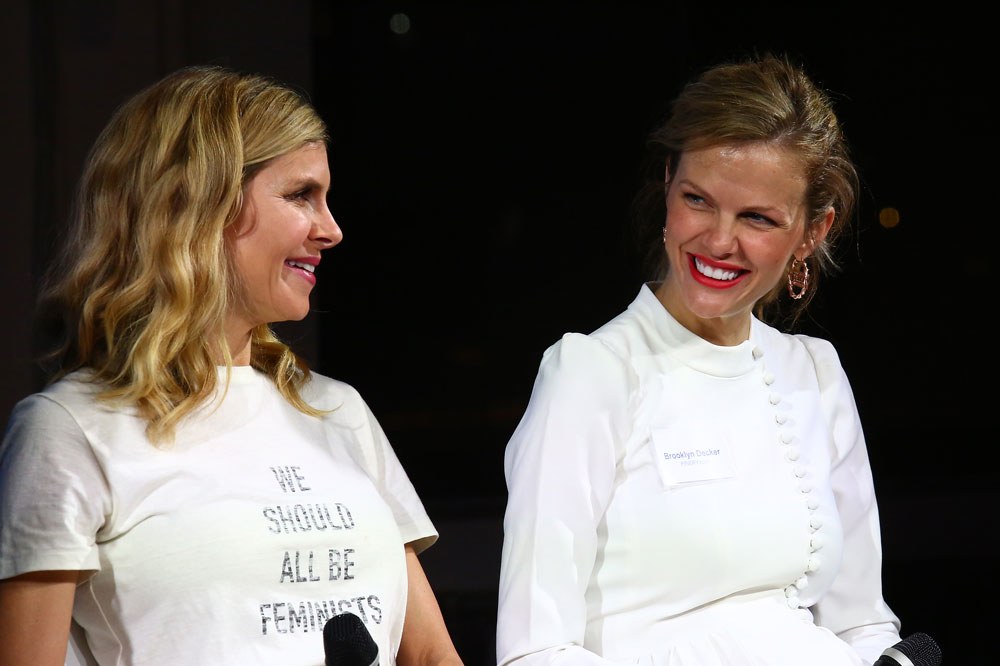
Whitney Casey, Finery CEO (left), and Brooklyn Decker, Finery CDO, at the Keds + Lola Women’s Equality Day panel.

Glamour: August 26 is Women’s Equality Day. As female entrepreneurs, why is this occasion important to you?

Brooklyn Decker: It’s important to us mostly because our company is geared towards making the lives of women run more efficiently. Every single day, day in and day out, we’re thinking: How do we make the world better for women? It’s something that’s on our minds all the time, so to have a day where it’s actually celebrated officially feels really special. And to do it with a friend just makes it really personal and special.

Whitney Casey: And we’re always saying, “it’s always hard when you want to start a company with your friend.” But I feel like women are so multidimensional that we can change that stigma [around working with friends]. This day is kind of to celebrate that, too. We’re well beyond that, we can do that—we can raise kids, we can have a business while we’re making a [gestures at Decker, who’s expecting her second child, a girl], making a female coder inside.

B.D.: Exactly! It’s very exciting.

Glamour: As we’ve seen in the news this year, it can be tough to be a woman in tech. As you were thinking about starting Finery, were there any women-led brands that inspired you?

B.D.: There are so few women in the tech space. We reached out to several for guidance when we did start, and a lot of our funders are actually females. Miroslava Duma is one of them, who is known for funding a lot of female-run technology and fashion companies. We really love The Real Real, that’s run by [Julie Wainwright]… Who else?

W.C.: Rent the Runway, [led by] Jen Hyman—she’s amazing. We’re finally getting products for us, for women, because women are making them.

B.D.: And that’s the only way it’s gonna happen.

W.C.: But we need more capital. We need more [venture capitalists] to fund female-led companies. Because right now, [most] technology is made by men. And [it’s technology] for women!

Glamour: And on that note, what has leading Finery taught the two of you about being leaders for other women?

B.D.: [Women’s Equality Day] was originated because it celebrated the right for women to vote. You look at what women have done before us and how hard they had to fight before we got here—we’re now reaping the benefits of all that they’ve done. Now, it’s our job to employ women, to provide opportunities, to use the gifts bestowed upon us, to help the generations that follow. A lot of people [at Finery] are in their early twenties, but that’s a good ten, fifteen years younger than we are. We employ a lot of women, and I think that’s one of the biggest things you can do as a female running a company.

W.C.: You have to lead by example. If you want capital to go to women, we have to put capital into women, in our own company, so that they can go make their own brands. [We have to] show them that it’s not insurmountable. You can have all of these things—and capital will be available to you—if you’re building the products of the future that prove it out. It’s exciting because there are very few frontiers that women haven’t been able to conquer, and with [the majority of tech] companies being made by men, this is exciting.

B.D.: It’s a new frontier for women.

Glamour: On that note, Finery is solving the problem of feeling like you have “nothing to wear,” even with a ton of clothes in your closet. Are there any other fashion and style problems facing women that you would like to see solved in the future?

B.D.: We have so many that we’re tackling. We want to do it all. We want [Finery] to be the first place you go to when you’re thinking about buying an item; we want [it] to be the last place you go to when you want to get rid of your item, whether it’s to resell or donate or trade. That’s what we’re building Finery to do. There are so many ways to interact with your clothing. I think the biggest obstacle is showing women what they have so that they don’t have to go and and spend extra on stuff that they already own. But we have a wishlist feature where you can collect all the things that you like online and put them into one place; we give you sales notifications; we have a calendar feature where you can pack on our site. There’s so many things we’re working to build.

W.C.: And we remind you when things need to be returned. That’s kind of a schtick with retailers—they don’t want you to know, but we say, “Hey, three days left to return, seven days left, don’t forget!”

B.D.: We’re trying to cover every sort of facet of your wardrobe and every way that you interact with it, so that it becomes second nature for you, and it’s one of those things that you don’t have to worry about.

W.C.: And in the future, you’ll be walking around thinking, “I have a connected closet, how did I not have it [before]?” Now, you don’t need to be in front of your closet—you should be able to carry it around with you. We want every woman to have [that] in the future. It’s like a playlist. You pick out your outfits, and we start making them for you.

Glamour: What did you learn about your own wardrobe while you were developing Finery? Is there one item that you have too much of?

B.D.: Overalls! I own way too many pairs of overalls. And midi skirts for Whitney—she has way too many.

W.C.: We could have answered that question for each other because we look at each other’s wardrobes all the time. And I’m like, “You should wear this, this, this, and this” in her Finery wardrobe. And she’s like, “You should not buy any more midi or over-the-knee boots.”

B.D.: Midi skirts, over-the-knee boots, and skinny jeans! It’s too much. And I wouldn’t have known that had I not seen it.

Related Stories:

This Stitch Fix Update Will Take Your Wardrobe to the Next Level

Hell Yes: This New Retailer Has Your Favorite Designers in Sizes 10-20

Uber’s New Exec Bozoma Saint John on Why Every Woman Should Embrace Fear


Source link

Categories
Health

The Women's March Is Hosting a Women's Convention in Detroit This Fall


PHOTO: Noam Galai/Getty Images

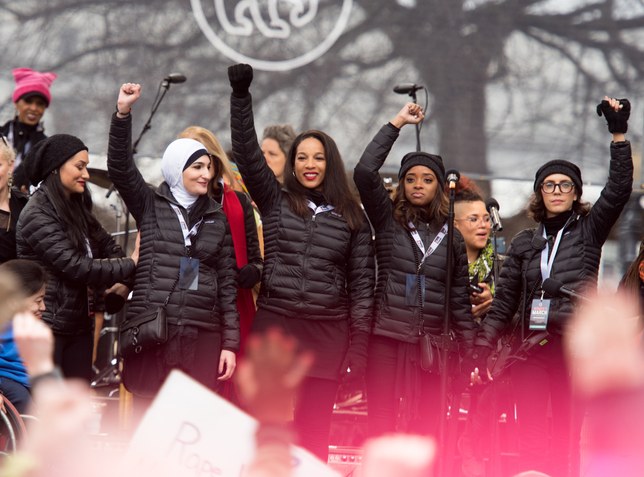
After millions of women gathered throughout the U.S. just one day after Donald Trump‘s inauguration—in what was the largest single-day protest in the country’s history—the organizers of the Women’s March tried to keep up the momentum in the following months. Now they’re doing so in a major way: This fall, this team of activists will be bringing fellow organizers and progressive leaders together for the Women’s Convention, an event designed to energize and mobilize the resistance ahead of the 2018 midterm elections.

Scheduled for the weekend of October 27-29 at the Cobo Center in Detroit, the convention doesn’t have a concrete agenda yet but will include a series of “workshops, strategy sessions, inspiring forums and intersectional movement building,” according to the official website. And as the leaders explained, “Tapping into the power of women in leadership as the fundamental, grassroots force for change, participants will leave inspired and motivated, with new connections, skills and strategies for working towards collective liberation for women of all races, ethnicities, ages, abilities, sexual identities, gender expressions, immigration statuses, religious faiths, and economic statuses.”

“A lot of us are just waking up to how horrible it is for the rest of the country, and that it really is unbearable for us to continue benefitting from a system that oppresses everybody else,” Bob Bland, one of the Women’s March co-organizers, told the Huffington Post. “We can’t let this happen and we can’t continue. We need to build an America that we can be proud of. And I know with women in leadership we can do that.”

For the organizers, the decision to host the convention in Detroit was a deliberate one. “Detroit is a beautiful city, full of historical and political significance, and a multitude of lived experiences—a perfect setting for women, femmes and our allies seeking to strengthen our growing, intersectional movement,” they wrote. “Many of the issues that led us to march in January 2017 are starkly visible in Detroit and its surrounding areas: economic inequality, environmental injustice, de facto segregation, ICE raids, violent policing, and overall unequal access and opportunity. At the same time, Detroit is home to a rich musical history, a vibrant art scene and a long and radical history of grassroots activism—something that continues today.”

The attendance fee for the Women’s Convention currently runs $295 a person, but the organizers are working to raise funds so they can offer discounted admission to people who can’t pay the full price. How many women will attend in October is still TBD, but assistant treasurer of the Women’s March board Linda Sarsour expects about 5,000 people.


Source link