Categories
Health

Planned Parenthood Action Fund, Swing Left, and Organizing For Action Partner on Women's Health Day of Action


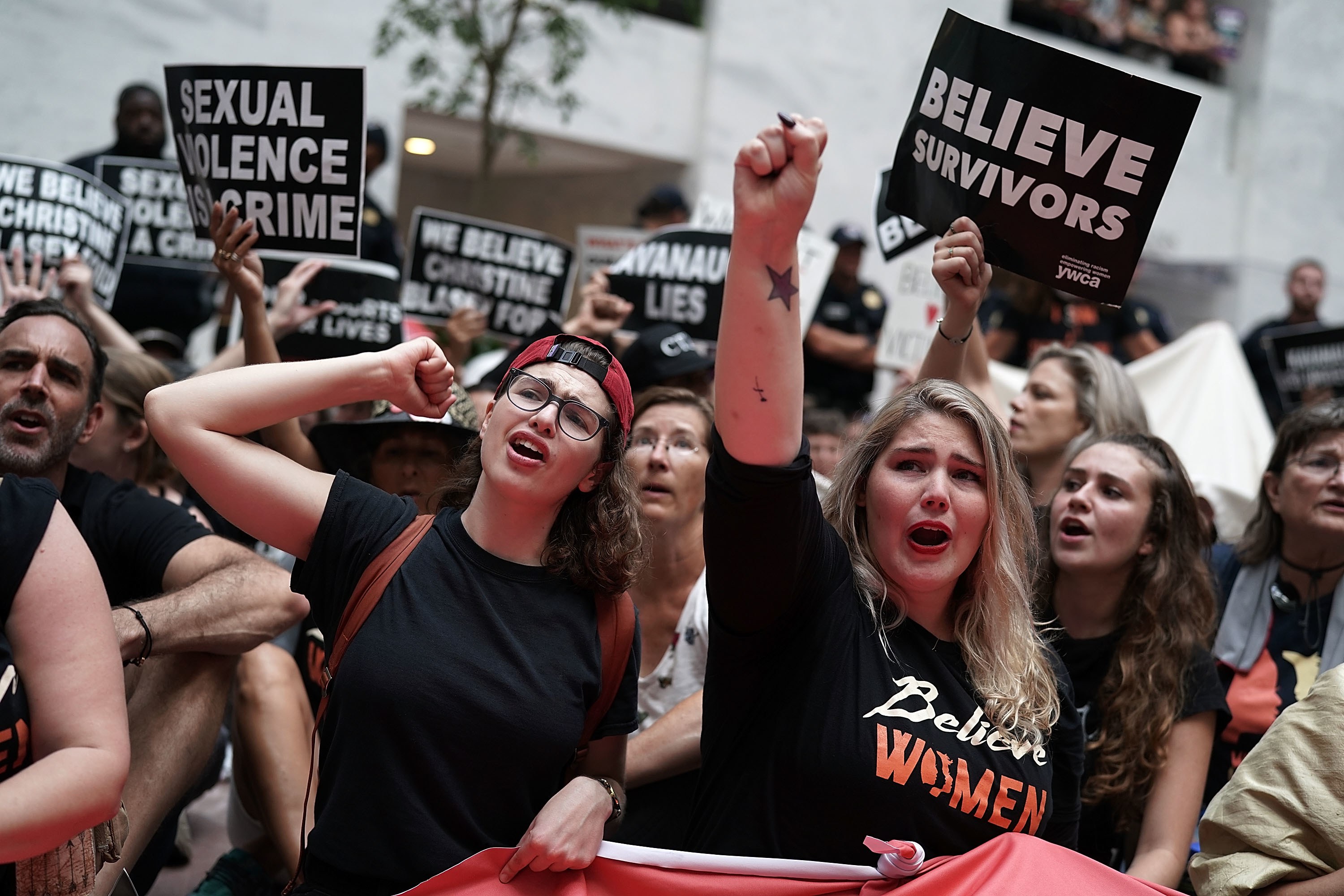
If you’re anything like me, the totality of the Brett Kavanaugh nomination and all that has come with it has wreaked havoc on your brain, your soul, and your spirit. I’m furious. I’m sad. I’m somehow both emotionally spent and energized at the same time. And I’ve given myself whiplash vacillating between hopeful and utterly distraught about America’s future—especially for women.

On Friday, the GOP-led Senate plowed ahead, as Sen. Mitch McConnell (R-Ky.) promised, with a final vote presumed to happen on Saturday. And at the conclusion of her speech on the Senate floor this afternoon, Sen. Susan Collins (R-Maine) announced that she would vote to confirm the nominee. She delivered what felt like an endless defense of Kavanaugh that seemed to prove she had never been quite on the fence about him after all.

Democrat Joe Manchin (D-W.V.) released a statement soon after Collins’ speech that he is also a “yes” on Kavanaugh. As it stands now, someone who’s been accused of sexual assault by a woman whom President Trump himself deemed a “credible” witness will be confirmed to sit on the United States Supreme Court for the rest of his life.

Far be it from me to tell you how you should process this entire mess. (I’ve wept, screamed aloud in my apartment, self-soothed with sugar, and tried to write my way through it.) But I’ve also learned that when I can channel my rage, passion, and, yes, pain into something more tangible, I feel a hell of a lot better. So, a proposal: join me?

This weekend, three of my favorite progressive organizations—Planned Parenthood Action Fund (PPFA), Swing Left, and Organizing for Action—have banded together to create a Women’s Health Day of Action. And it’s tomorrow, October 6—as in Saturday, the day that Kavanaugh might just win his nomination battle.

Their goal is simple: to help elect pro-women’s health candidates and regain a progressive majority in the House of Representatives. To that end, they have identified 16 House districts in seven states to support on October 6. Hundreds of volunteers will be working with the campaigns directly to knock on tens of thousands of doors to get out the vote in November. (In some districts, the candidates themselves will be participating.)

It’s time to activate our anger (again), ladies—and I’m all the way in.

“Everything is on the line in 2018. Women are fed up with politicians dismissing survivors of sexual assault, undermining access to Planned Parenthood health centers, and reshaping the Supreme Court to gut the constitutional right to safe, legal abortion,” says PPAF President Dawn Laguens. “Women are poised to serve a reckoning this November that is decades in the making, and this partnership is a signal that we’re all right there with them. We know that, together, our voices are too powerful to ignore.”

Literally—they are. One in five people have participated in protests since 2016, according to a Washington Post/Kaiser Family Foundation survey. And the number one issue that’s gotten them on their feet? The rights of women.

“The level of engagement and enthusiasm OFA has seen this cycle, among seasoned organizers and brand new volunteers alike, has been overwhelming – and women have been leading the charge,” says Katie Hogan, Executive Director of Organizing for Action. “It’s a phenomenon we’ve seen dating all the way back to the Women’s March, and that passion has only intensified as it’s become increasingly clear how much is at stake in November. We’re thrilled to be working in lock-step with both new leaders in the progressive space, like Swing Left, and long-time powerhouses of activism, like Planned Parenthood Action Fund, to elect representatives who will echo these voices in Washington.”

Here are the 16 districts that volunteers will target this weekend—and through the midterms on November 6. You can sign up to volunteer here.

  • AZ-02: Ann Kirkpatrick-CA-10: Josh Harder

  • CA-45: Katie Porter

  • CA-48: Harley Rouda

  • IA-01: Abby Finkenauer

  • IA-03: Cindy Axne

  • NJ-11: Mikie Sherrill

  • NJ-07: Tom Malinowski

  • NJ-03: Andy Kim

  • TX-32: Colin Allred

  • TX-07 : Lizzie Fletcher

  • TX-23: Gina Ortiz Jones

  • VA-10: Jennifer Wexton

  • VA-02: Elaine Luria-VA-05: Leslie Cockburn

  • VA-07: Abigail Spanberger

And if you don’t happen to live near one of those districts, don’t despair. Getting involved wherever you are couldn’t be easier. Contact the field office of a local candidate you support and volunteer to canvass or phone bank. Reach out to friends and relatives who aren’t routine voters to make sure they are registered (many state deadlines are fast approaching). Ask them to pledge to show up at the polls on November 6 at a site like Vote Save America.

“If we want to protect women’s health from the constant Republican attacks, it’s not enough to just vote this year. We need each and every person to knock on doors and make calls so that we can break out of our silos and bring about electoral change,” says Swing Left Political Director Katie Hogan.

LETS END WITH SENDING AUDIENCE TO SEXUAL ASSAULT RESOURCE POST IF THEY ARE FEELING TRIGGERED./story/national-sexual-assault-hotline-calls-jump-kavanaugh-news

MORE: During Christine Blasey Ford’s Testimony, Contempt for Women Was on Full Display


Source link

Categories
Health

Planned Parenthood Announces Dr. Leana Wen Will Be Its New President


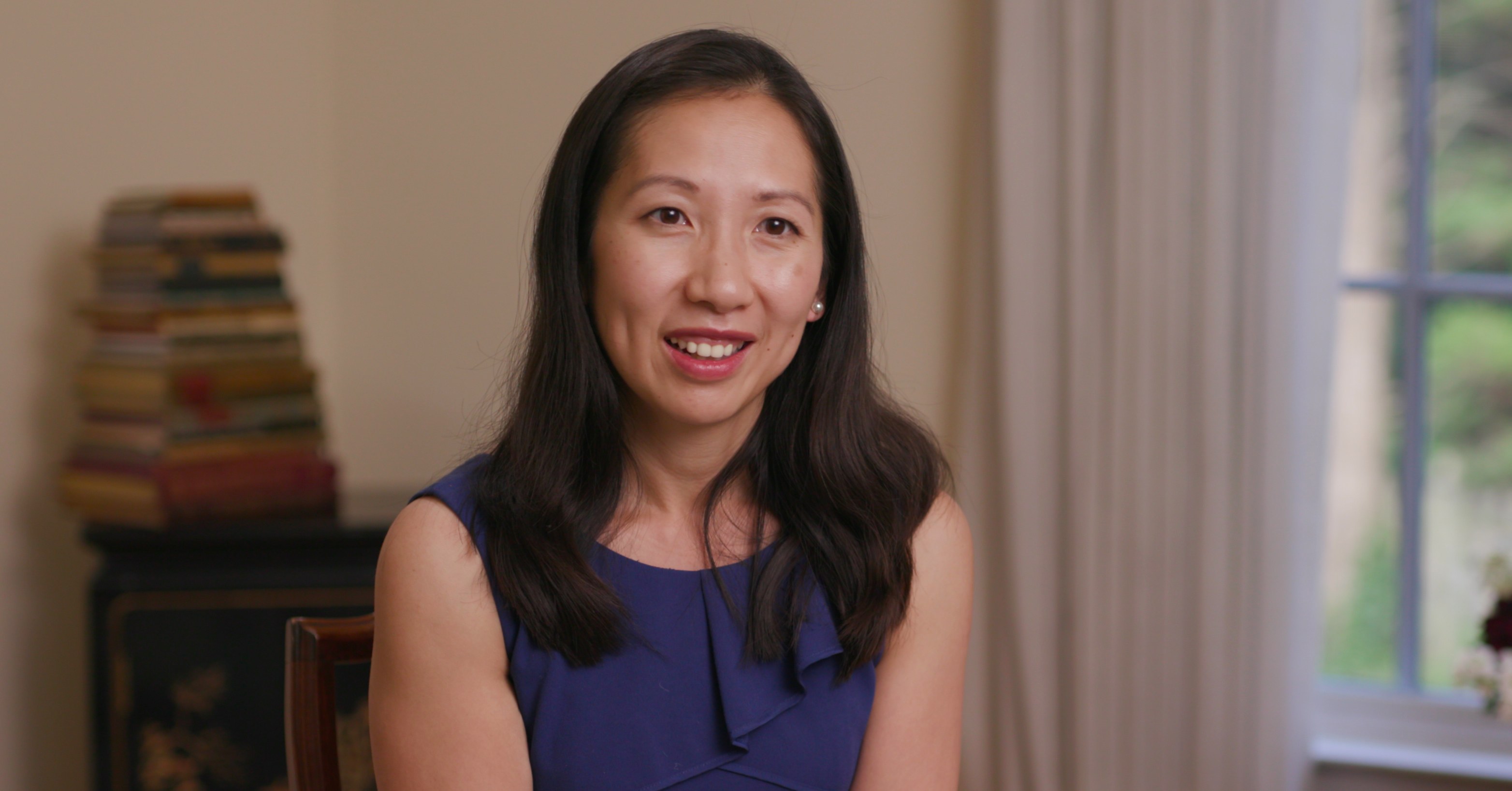
Dr. Leana Wen was a child when her parents fled China for the United States, but her memories of those first months in America are fresh. Her parents worked multiple jobs cleaning hotel rooms and washing dishes at local restaurants first in Utah and then in California, but struggled to cover basic expenses.

“There were several times that we were evicted because we couldn’t make rent,” Wen, 35, says. “We depended on Medicaid. We depended on food stamps. And we also depended on Planned Parenthood.”

Earlier this week, it was announced that Wen, the health commissioner for Baltimore and a former ER doctor, had been named the new president of Planned Parenthood Federation of America. She follows Cecile Richards, who stepped down from role in April. Wen joins the institution at a crucial moment—as access to health care (and in particular, access to women’s reproductive health care) is more imperiled than ever under the Trump administration.

In a phone conversation less than 24 hours after the news broke, Wen explains how her mother turned to Planned Parenthood in times of upheaval, knowing she could count on the organization to provide the services she needed. “Later on, I was a patient at Planned Parenthood,” Wen says. Her sister was too. “We got care there just like 1 in 5 women in America. So much of what drives me now is based in what I experienced.” And what happens when a person doesn’t have that access—it wasn’t some abstraction. Wen witnessed it.

“As a child, I watched a neighbor’s son die in front of me because he and his parents were undocumented immigrants, and they were too afraid to call for help,” she remembers. He’d had as an asthma attack. The condition is treatable, but because of his precarious status, he died. The experience was foundational not just Wen’s sense of purpose—it was a “childhood dream” to be a doctor—but also her convictions about health care and who “deserves” it.

“I wanted to provide care to everyone no matter who they are, what they look like, where they happen to be from, and whether they could pay.”

“I saw how so much of what determines people’s health isn’t just about the health care that they receive, it’s also about so much else that’s happening in their lives,” Wen says.

When it came time to specialize after medical school, she knew she wanted to work in the ER. The aim was simple: “I wanted to provide care to everyone no matter who they are, what they look like, where they happen to be from, and whether they could pay.”

That conviction drove her to take the position as health commissioner in Baltimore, a role that proved to her what she’d come to believe was true—that “health care shouldn’t be political, that needing medication for your children isn’t political, that preventing breast and cervical cancer isn’t political.” Once, in the ER, she treated a woman who’d waited months to have a lump in her breast examined. When Wen did examine her, she found the woman had metastatic breast cancer. The disease was fatal, and three children were left motherless. “That’s what happens when women don’t have access to health care,” Wen maintains. And it’s because of cases like that one that Wen has landed where she is now.

As Wen sees it, “The single biggest public health catastrophe of our time is the threat to women’s health. That’s what I want to spend my life fighting about because everything at this moment in history is at stake.” Of course, she’s come to the appropriate address. The New York Times noted in its write-up of the news that Planned Parenthood clinics have closed due to cuts in state and federal funds and that those who had a hand in the search explained that the selection of Wen (who is just the second doctor ever to serve as president) would emphasize the fact that Planned Parenthood serves almost 2.5 million patients, most of whom are low-income and come to clinics not for abortions, but for services like mammograms and STI tests.

But what should excite advocates for women’s healths is the ease with which Wen collapses the artificial divide between Planned Parenthood as a general health care provider and Planned Parenthood as a haven for women who don’t have somewhere else to go. In the same breath, she tells me both that Planned Parenthood “isn’t a political organization” and that it’s not lost on her how “women’s health care is singled out, it’s stigmatized, and it’s attacked.”

“It’s not up to government to tell us where we are in our lives. It’s not up to government to tell us what choices we should be making about our own bodies and our health.”

“Imagine if we said that we should poll people about whether vasectomies should be legal, and then we restricted access to vasectomies,” Wen insists. “Or if the government imposed a gag rule, saying that doctors should follow a specific script in telling people about diabetes and insulin. It would never happen. It’s ludicrous to even think about. That’s why it’s so important for us to emphasize that reproductive health care is health care, that women’s health care is health care and that health care has to be a fundamental human right.”

Once more, Wen frames the battle for the kind of health equities that she intends to stand for in in personal terms: “I’ve been the woman who’s taken a pregnancy test and wished more than anything that it’s not positive. I wasn’t ready to have a baby. I wanted to go to college. I wanted to go to medical school. I wanted to come out of the poverty and circumstances of my childhood and achieve my dreams.” But she adds: “I’ve also been that same woman who at a different point in my life took pregnancy test after pregnancy test hoping that it is positive because at that moment, my husband and I were desperate to start a family. It’s not up to government to tell us where we are in our lives. It’s not up to government to tell us what choices we should be making about our own bodies and our health.”

With a vote on a new Supreme Court nominee whom she feels certain “could overturn and will if confirmed [overturn] Roe v. Wade” plus momentous midterm elections imminent, she has her work cut out for her. But Wen is not one to waver. And what’s more, she knows what the battle is for. She’s 35. Her son Eli just turned one. The issues that Planned Parenthood counsels its patients on aren’t distant memories. She lives them.

“The future that I want for Eli is a future in which women and men have equal rights and where we don’t deny people access to health care,” she tells me. And then she reaches for a phrase she’s used once before in our conversation. The future that she wants for her son boils down to this: One in which “we as a society trust women.”


Source link

Categories
Health

Planned Parenthood to Open 14 New Health Centers Across the American South


Most news events aren’t met with a consensus reaction, but the announcement of Supreme Court Justice Anthony Kennedy’s retirement from the bench last month seemed to solicit one: his departure, the New York Times predicted, would not just jeopardize Roe v. Wade, the 1973 decision that legalized abortion nationwide, but promised to “reshuffle the landscape” of reproductive freedom in the United States. (If that fact was in doubt, President Trump’s nominee Brett Kavanaugh put an end to them. Sen. Kirsten Gillibrand (D-N.Y.) called him “more dangerous than any previous justice nominee…ever.”)

Of course, the battle didn’t start this summer. The anti-choice movement has laid this groundwork for decades. A few more recent examples: In 2015, House Republicans grilled now-former Planned Parenthood President Cecile Richards for almost five hours in an effort to discredit the organization, which is the country’s largest provider of reproductive health services. (It didn’t work. In 2017, a national poll found that 75 percent of Americans support federal funding for Planned Parenthood.) Between 2011 and 2016, 288 abortion restrictions—including bans on later-term procedures, mandated wait periods, and laws requiring clinics to meet burdensome, non-medical standards—were enacted, according to the Guttmacher Institute. The Trump administration has also announced a proposal that would strip federal support (which total $260 million) from women’s clinics that perform abortions or tell women where they can go to get them.

Such efforts prove it: The struggle isn’t ahead. It’s here.

And since there’s no evidence that this Trump pick will crash and burn, or that cooler heads will prevail the next time the GOP tries once more to defund Planned Parenthood, advocates believe it’s critical to do more than secure the reproductive rights we have now—the movement needs to gain ground.

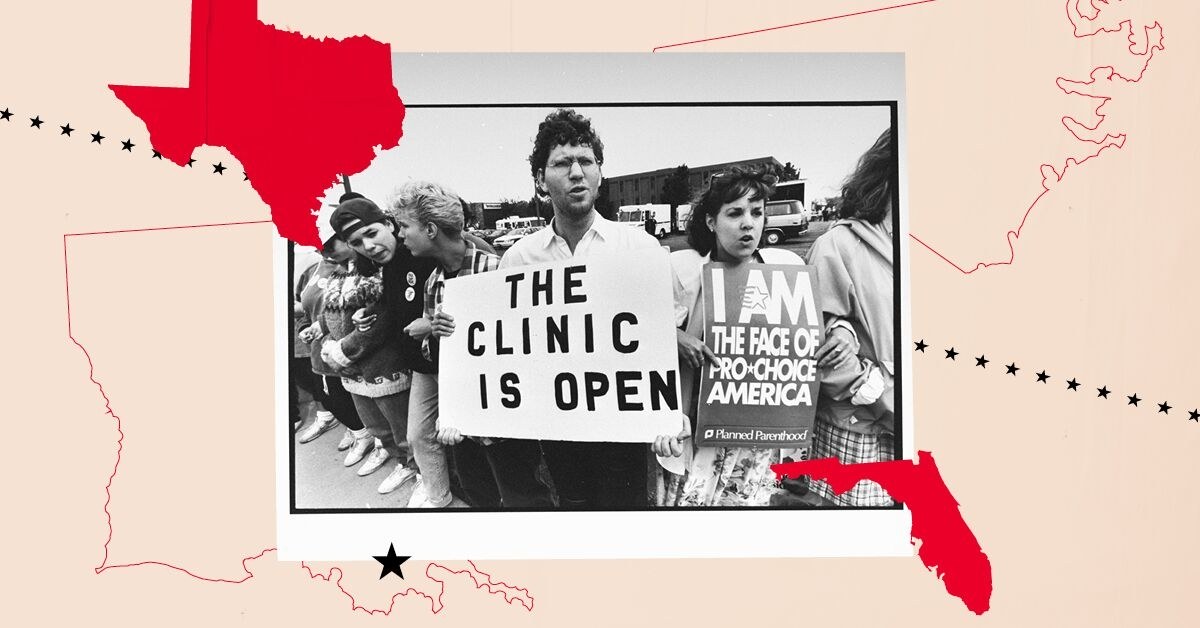
Quietly, Planned Parenthood has set in motion plans to do just that—with a particular focus on the southern (and for the most part, deep red) United States. By the end of 2017, even as Richards prepared to step down, Planned Parenthood opened nine new centers, with five more in the pipeline. The facilities are in some less-than-expected states, some of which have laws on the books now that would ban abortion if Roe v. Wade were overturned: Oklahoma, Texas, Louisiana, Alabama, Mississippi, Tennessee, Kentucky, North Carolina, and, just last month, Florida.

The expansion makes a statement—that no matter the partisan winds, Planned Parenthood intends to ride out the storm. It’s a commitment that was underscored in late June when, less than 48 hours before news of the Supreme Court retirement broke, Planned Parenthood cut the ribbon at one of its newest facilities: a state-of-the-art health center in Tallahassee, Florida. The outpost will provide the full spectrum of sexual and reproductive services; patients can receive birth control prescriptions, breast exams, treatment for STIs, information on safe sex practices, and, also, abortion services.

In our current climate, the centers have political reverberations. But their purpose isn’t to treat just Democrats or Republicans. Each exists to meet a need. In Florida, for example, the area around the new location has some of the worst health outcomes in the state, including the highest number of newly diagnosed chlamydia cases statewide. (Similar problems are endemic in the South; Mississippi, Louisiana, Georgia, North Carolina, South Carolina, and Oklahoma are six of the 10 states with the highest rates of gonorrhea and chlamydia in America, based on 2016 data from the Center for Disease Control.)

“Georgia, Mississippi, Alabama—women will cross state lines to come to us.”

And while the mere fact that a clinic has opened can’t drive STI rates down, the numbers mount a persuasive case: Between 2015 and 2018, just after Planned Parenthood at last replaced the small, two-exam-room clinic it used to operate in New Orleans with a new, much bigger location, reproductive health care visits swelled from 500 a month to 800, according to Planned Parenthood Gulf Coast President and CEO Melaney Linton. The new location in Tallahassee expects to be able to serve four times the number of patients, both from in the state and surrounding states, as it has in the past, according to Lillian Tamayo, President and CEO of Planned Parenthood in South, East, and North Florida. “Georgia, Mississippi, Alabama—women will cross state lines to come to us,” says Tamayo. All three states have ruled that women must have at least two appointments with their providers to get an abortion; Georgia and Mississippi enforce a 24-hour wait period. Alabama insists on 48 hours between visits. Thanks to a recent decision from Leon County Circuit Judge Terry Lewis, Florida has none, despite its current conservative leadership.

Given the national mood, Tamayo adds, her mission is more important than ever: “We want to be a beacon.”

That’s been Richards’ mission on a national level, but the native Texan is attune to the unique needs of the South. Under her leadership, Planned Parenthood committed to increase access there, despite fierce political opposition to its presence.

“Of course I’ve ‘officially’ left,” she explains of her tenure that ended in April 2018. “But these are the last two acts I will do for Planned Parenthood.” The recent dedications of new centers in Charleston, South Carolina, and, now, Tallahassee, are her encore appearances. Richards is too polite to revel in how broadened access to care trolls Planned Parenthood’s critics, but she will admit that the new centers deliver not just affordable health care in “state-of-the-art facilities,” but also “demonstrate that even in some of the most politically challenging states in the country, we’re here and we will expand.”

She isn’t alone. In state houses nationwide, likeminded lawmakers seem to have taken a similar tack. In 2017, 645 bills were introduced to protect access to reproductive health care services, a marked uptick in the wake of the presidential election. And earlier this month, Oregon passed the Reproductive Health Equity Act, which includes a mandate that all insurers cover abortions. Like the proposed laws, Planned Parenthood’s new centers “are part of an effort to remove the stigma and shame that has surrounded reproductive health care,” Richards says. The facilities are open to the street, filled with sun and framed photos. Each detail is meant to telegraph respect and warmth. Richards is insistent: “The people who walk in here should leave and feel like, ‘Oh, that’s what it’s like to be honored and cared for.’”

That said, Richards is all too aware of this administration’s commitment to undo decades of hard-won victories. She isn’t one to “rest on our laurels,” she says. With millions of people unable to access affordable health care and a federal government committed to anti-choice policies, all the work Planned Parenthood has done, all the bricks that have been laid—so much of it could disappear.

Roe v. Wade has been the law of the land for 40 years. There are millions of women in the United States who have never lived under a government that’s outlawed it,” she says. “I think it’s important that we show we’re not going back, and we do that when we expand access to health care in the toughest parts of America.”

To find a local Planned Parenthood, visit https://plannedparenthood.org/health-center.


Source link

Categories
Health

Melania Trump Reportedly Planned to Visit Migrant Children in Texas Before the President Ended Separations


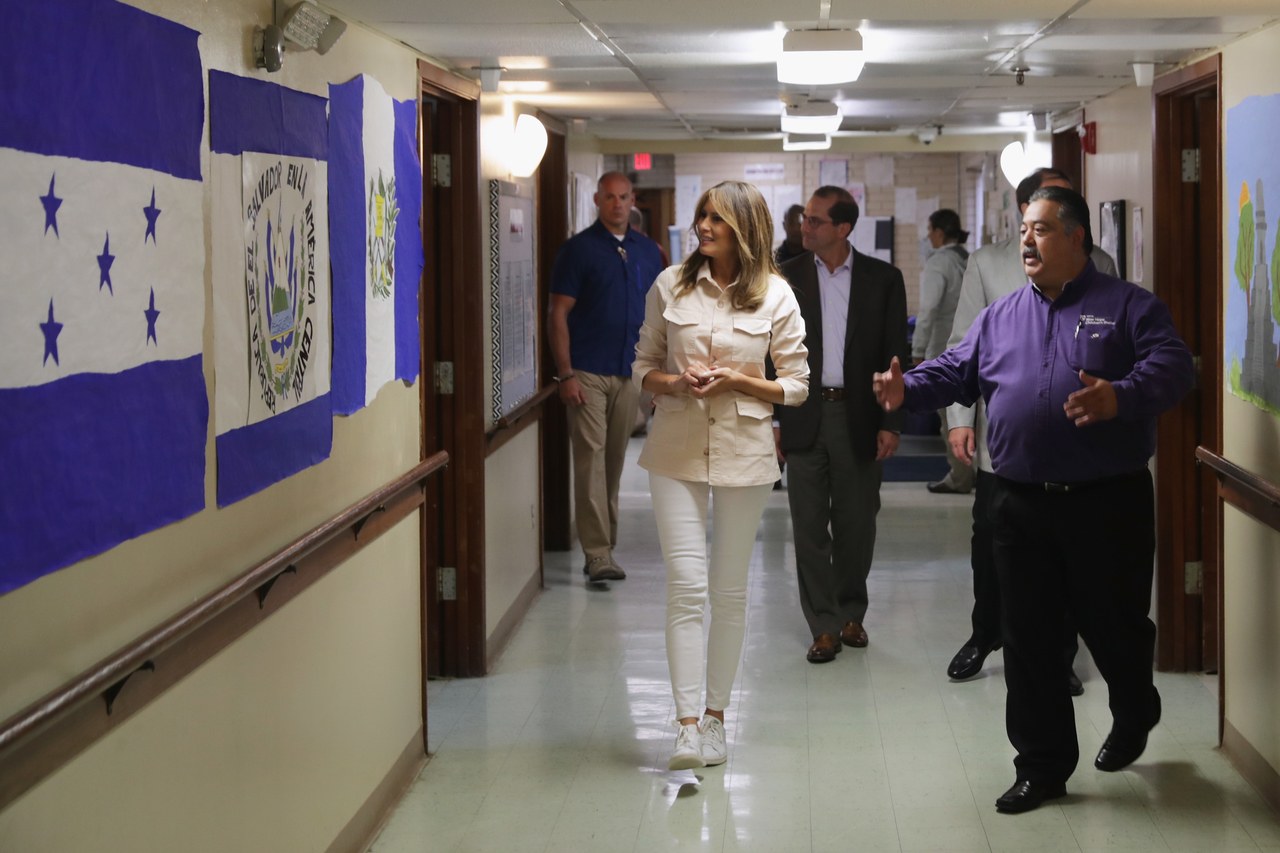
On Thursday, first lady Melania Trump traveled to Texas as part of an unannounced visit to Upbring New Hope Children’s Shelter. There, she reportedly planned to meet with several children who have been separated from their parents at the border.

“I’m glad I’m here and I’m looking forward to seeing the children,” Trump said while seated at a table surrounded by the center’s staff, ABC reported. “But first of all, let me begin to recognize each of you and thank you for all that you do, for your heroic work that you do every day and what you do for those children. We all know they’re here without their families, and I want to thank you for your hard work.”

The facility Trump visited is currently housing an estimated 60 children ranging in age from five to 17, according to a White House pool report. The children are all from Honduras and El Salvador.

Stephanie Grisham, the first lady’s communications director, told reporters that Trump asked her staff to plan the visit on Tuesday, just prior to her husband’s decision to sign an executive order ending the family separations.

“This was 100 percent her idea. She absolutely wanted to come,” Grisham said. Even after her husband signed the order, Grisham said the first lady still believed it was important to travel to Texas. “She wants to see what’s happening for herself and she wants to lend her support, executive order or not. The executive order certainly is helping pave the way a little bit, but there’s still a lot to be done.”

PHOTO: Chip Somodevilla

U.S. first lady Melania Trump toured the facility after a roundtable discussion with doctors and social workers at the Upbring New Hope Children’s Center.

The first lady, along with Trump’s daughter and advisor Ivanka Trump, were both said to be instrumental in the president’s decision to sign the executive order.

“Ivanka feels very strongly. My wife feels very strongly about it. I feel very strongly about it,” the president said while he signed the executive order Wednesday, according to ABC. “I think anybody with a heart would feel very strongly about it. We don’t like to see families separated. At the same time, we don’t want people coming into our country illegally. This takes care of the problem.”

Following the signing of the executive order, Ivanka shared her thoughts on social media writing, “Thank you @POTUS for taking critical action ending family separation at our border. Congress must now act and find a lasting solution that is consistent with our shared values; the same values that so many come here seeking as they endeavor to create a better life for their families.”

In a follow-up message sent on Thursday, Ivanka further tweeted, “Now that an EO has been signed ending family separation at the border, it is time to focus on swiftly and safely reuniting the families that have been separated.”

Mrs. Trump isn’t the only first lady to speak out about the separation of families. As ABC noted, all five living former first ladies have publicly condemned the separations. In an op-ed for The Washington Post, former first lady Laura Bush called the separations both “cruel” and “immoral.” Bush added, “Our government should not be in the business of warehousing children in converted box stores or making plans to place them in tent cities in the desert outside of El Paso.”

Related content:
Here Are the Facts About Trump’s ‘Zero Tolerance’ Immigration Policy

Ivanka Trump Said She’d Fight for Women. Where Is She on the Border Crisis?

Twitter Has Strong Feelings About TIME’s Powerful ‘Welcome to America’ Cover Amid Border Crisis


Source link

Categories
Health

How Planned Parenthood Moves Forward, Sans Cecile Richards


Abortion is on thin ice in America. Mississippi passed a 15-week abortion ban this March, the strictest in the nation (unless Louisiana succeeds in pushing through its copycat bill). In Indiana, a new law requires doctors to report any abortion complications to the state—including some patient information. And over in Tennessee, they want to build a monument to unborn children. Meanwhile, Planned Parenthood, which has been central to the fight for safe, legal abortion, is losing its leader. After more than a decade at the helm, Cecile Richards is stepping down this week. The organization has yet to name a replacement.

“It’s kind of a best of times and worst of times moment,” executive vice president and chief brand and experience officer Dawn Laguens, 53, tells me in a compact conference room at Planned Parenthood’s New York headquarters, a week before she would unofficially step up to be the face of the 101-year-old organization.

Best, she says, because teen and unintended pregnancies are at some of the lowest rates in history, a result of more widely available contraception under Obamacare; and the abortion rate is down, too. But the Trump administration, building upon decades of conservative politics, could roll back those gains.

“In many places, women are losing care,” says Laguens. “Not just abortion, which [conservatives] do everything they can to make as difficult, as stigmatizing, and as costly as they possibly can, but also losing access to what we know are preventive services that are really important. And so for many women in many states, it’s one of the most difficult times.”

Laguens experienced some of that difficulty first-hand when she had an abortion after an unplanned pregnancy in college. “There was stigma and fear of telling my family, and I remember struggling to figure out how to have the funds to pay for it,” she says. “But I didn’t have laws, like we do today, that make it almost impossible.”

Planned Parenthood is not going softly into this dark night. “We’re going to fight and do everything we can to reverse that course; to change who’s in power between now and 2020,” Laguens says. In the last two months the organization has announced two massive pushes ahead of the upcoming midterm elections: With Planned Parenthood Votes, Planned Parenthood Federation of America (the legal-activism arm of the organization) announced a $20 million offensive in March to support pro-choice candidates and connect with voters online in eight key states. In mid-April it kicked off Win Justice, a $30 million program—as big as anything it took on ahead of the 2016 presidential elections, Laguens says—to mobilize voters in Florida, Michigan, and Nevada specifically.

Together with Center for Community Change Action, Color Of Change, and the Service Employees International Union, they’ll be working to engage people of color and young people—who are more likely to change their views in support of abortion rights than older Americans are, according to new research—and be sure they get to the polls.

“We are paying the price for the elections in 2010; this is their long shadow,” Laguens says. Redistricting and major Republican victories back then ushered in candidates who support the policies that are stripping women of access to care right now. What care women are able to get, says Laguens, “is all dependent on their zip code. That’s not how America’s supposed to be designed. We are really clawing our way back to any kind of democracy that actually reflects the true viewpoints of people in this country.” A majority of Americans, for example, believe in the right to safe, legal abortion.

Laguens has had a good mentor to help her prepare for this big step: She’s an old friend of Cecile Richards’s. When Cecile’s mother Ann Richards ran for governor of Texas more than 25 years ago, Laguens’ wife, Jennifer Treat, was the finance director on the campaign, and the women have been vacation-together close ever since.

“I came into this role because I saw that whole set of forces building, I saw what Cecile was trying to do here,” Laguens says. Now she’s motivated by the recent wave of female candidates running for the first time, the seismic event that has been Me Too, and two million new supporters of Planned Parenthood in the last year, including 350,000 teens. “These are big, big forces that are being unleashed in the culture,” she says. “This is women’s moment.”

The New Orleans native, who’s lived and worked in D.C. for more than a decade, is unwaveringly buttoned up and on-message. But her roots aren’t gone; she still pronounces the word “fair” in a syncopated, Southern-sounding two syllables. (“They used to say abortion should be safe, legal and rare; it needs to be safe, legal, and fair,” she says.) And it’s when she’s talking about her pal Cecile that Laguens really relaxes into her folksy sensibility; she guffaws that her pie crust will never touch that of master-baker Cecile Richards (“She is not patient for change, but she is patient for pies.”).

Something the friends and erstwhile co-workers do share in common is being moms to multiples—Richards has 27-year-old twins, and a 30-year-old daughter, who Laguens says are like big cousins to her 19-year-old triplet daughters. When she first joined Planned Parenthood eight years ago, she says she joked, “I had three pre-teen girls—where else was I going to work?” (Yes, she was constantly bringing condoms home and leaving them around the house; yes, this was embarrassing for the girls.)

“The patriarchy is wobbling.”

It’s easy to see Laguens heading off budget attacks from Mike Pence, or salvaging a soured relationship with the Susan G. Komen foundation (both things she helped accomplish at Planned Parenthood). She honed these leadership and community building skills all the way back at Louisiana State University, as speaker of the student assembly, and then as campaign director for the Louisiana Coalition Against Racism and Nazism, working against David Duke, before running her own firm as a media consultant and strategist. (“All of these ‘isms’ are in the same root,” she says, and she’s always been “feisty” about fighting for justice.) As for those of us attempting to beat back all of the “isms” plaguing us in 2018? She says: Stay focused.

“We kind of get distracted by the Trump administration seeming like a circus or, ‘They can’t get anything done!’” she says. “When it comes to attacking women’s health and reproductive health access, they’re getting a lot done. And in one year, they have been pushing policies the likes of which we’ve never seen before.”

Indeed, the Trump administration came in guns blazing, and circus-like though it may be, it has not let up. For example, in April the administration announced plans to shift sex-ed funding toward abstinence-focused programs, and replaced Obama-era language protecting all FDA-approved methods of birth control with recommendations for “fertility awareness.” (Which only has a real-world efficacy of 76 to 88 percent, according to the American College of Obstetricians and Gynecologists.)

The administration also recently released its first annual report on human rights, which has been scrubbed of any mention of reproductive rights. “The patriarchy is wobbling,” Laguens says. “And a lot of what we’re seeing now is them trying to shove stuff under it to hold it up, whether that’s a literal wall on the border to a legal wall around a woman’s body and access.”

Planned Parenthood has a three-pronged focus for chipping away at these walls: The Action Fund, which handles all the political bad-assery for which Laguens puts on her “organizer hat” is only one part. At its core, Planned Parenthood is a healthcare provider, serving 8,000 people every single day from 56 affiliates in over 600 locations across the country, where it offers cancer screenings, HPV vaccines to girls and boys, and even some specialized gynecological care. This never falters, Laguens says, no matter the political climate. And then there’s education: Planned Parenthood is the largest sex-ed provider in the country, serving 7 million people online per month, and will be doubling down on its digital presence in the near future.

The latter is crucial to how Laguens defines the organization, and it’s always finding the latest tools to keep up with that mission. Right now they’ve got a free period-tracking app with the kind of health advice people in large swaths of the country can no longer access. They rolled out a chat/text service to answer sexual health questions privately, online, which fielded an astounding 22,000 questions in March—more than half from young people of color. And they released a virtual reality film that they believe can change viewers’ hearts and minds about engaging in clinic harassment—and they’ve got survey data to back that up.

Now, they just need a president.

So will that be Dawn Laguens? She’s whip-fast with a no: “Don’t tell anyone, but I already have the best job at Planned Parenthood.”


Source link

Categories
Health

Mila Kunis Makes Monthly Donations to Planned Parenthood in Mike Pence's Name


Mila Kunis, Bad Moms star and casual hero, is on a one-woman mission to plant a little ire in the mailbox of Vice President Mike Pence.

ICYM2016 (lucky you): Pence, who has a hard pro-life stance, has voted to limit women’s access to birth control, among other things pertaining to reproductive rights. (Don’t even get him started on abortion: As far back as the early 1990s, he was on the board of a far-right Indiana organization that wanted abortion to be criminalized, and his track record as a governor is grim reading for pro-choice women.) He also cast the tie-breaking vote for legislation that would make it easier to strip Planned Parenthood of funding—and let’s just say he didn’t choose the side that would give the health care organization more money. Fun times. But Kunis is doing her part to stand up to Pence and his voting record, while supporting women’s health care: She told Conan O’Brien that she makes a monthly donation to Planned Parenthood in Mike Pence’s name.

“As a reminder that there are women out there in the world who may or may not agree with his platform, I put him on a list of recurring donations that are made in his name to Planned Parenthood,” she told O’Brien on his eponymous show earlier this week. “Every month, his office—he gets a little letter that says ‘an anonymous donation has been made in your name.”

[embedded content]

Kunis explained that this is “not so much a prank as much as I disagreed with some of the stuff that Pence was doing.” We appreciate this level of both political and productive trolling. “It’s a peaceful protest,” she said.

As a reminder, you can make donations to Planned Parenthood on behalf of someone else; the organization will then send a note thanking said person for the contribution.

In a totally unrelated note, Pence’s official mailing address is: The White House, Office of the Vice President, 1600 Pennsylvania Avenue, N.W., Washington, D.C. 20500.

Related Stories:
Mila Kunis Can’t Think of a Single Thing About Ashton Kutcher That Annoys Her
Mila Kunis and Ashton Kutcher’s First Real Kiss Sounds Kind of Gross If You’re a Non-Smoker
Ashton Kutcher’s “Blood Is Boiling” Over Trump’s Ban: Mila Kunis “Came to This Country on a Refugee Visa”


Source link