Categories
Health

Planned Parenthood President Leana Wen: Abortion Bans Are a Call to Action—Not a Reason to Give Up


Just now, politicians in Georgia voted to ban abortion after six weeks. Georgia is now the third state to pass this harmful restriction this month. (Fifteen states have filed similar bans in this legislative session alone.) You don’t have to look far to understand just how these introduced abortion bans—up by 63 percent in states in 2019—affect real people.

Jennifer, a Planned Parenthood patient in Georgia in her early forties, told us that after she’d missed a period, she knew immediately she was pregnant. Jennifer didn’t wait. She called a nearby health center to schedule her abortion. But the medically unnecessary restrictions that limited the number of providers and available appointment times delayed her care by weeks. Despite knowing she was pregnant just after a missed period and deciding she wanted an abortion immediately, by the time Jennifer received care, she was eight weeks pregnant.

Imagine if this were any other aspect of medicine. Imagine if your ability to receive treatment was limited by when you were diagnosed with the condition. Chances are you wouldn’t even know you had the condition by the time it was too late to receive the treatment that you wanted. And if you did get diagnosed in time, you might still have to travel hundreds of miles, find child care, get time off from work, and face protesters—just to receive that medical care.

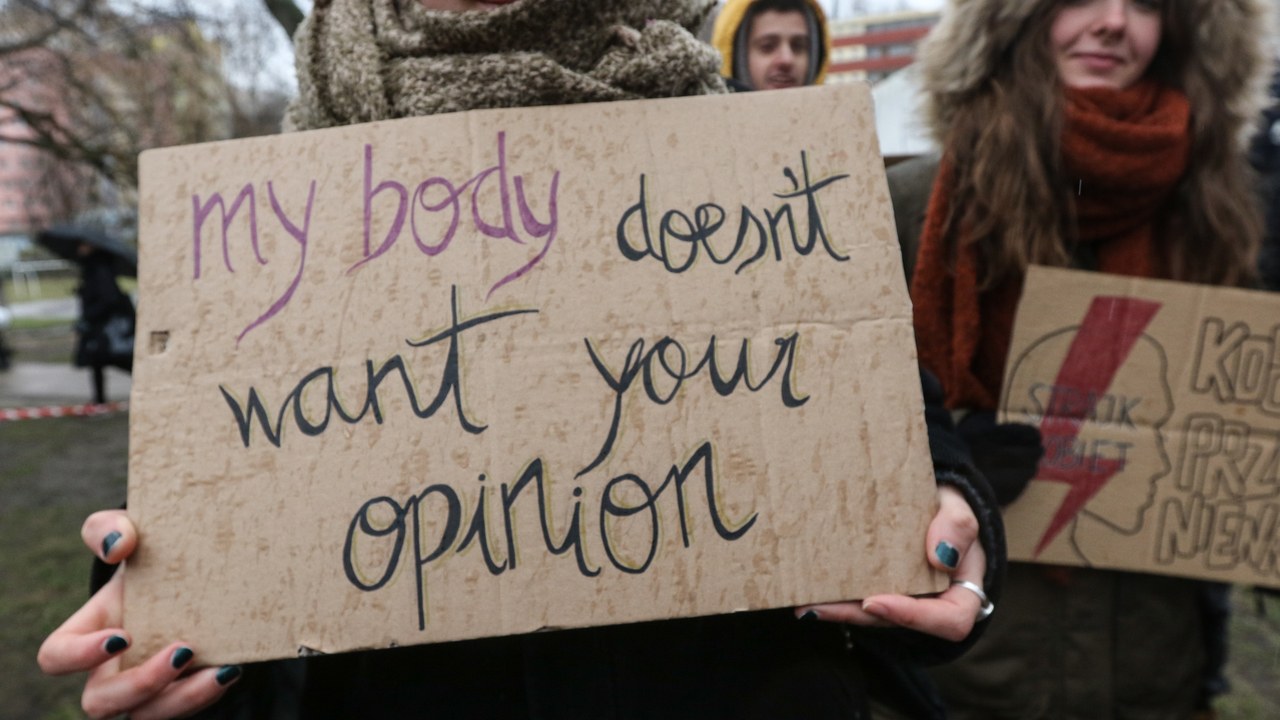
That’s what happens to women in need of abortion access in places like Georgia. These six-week abortion bans affect many women before they know they’re pregnant. Even if they are one of the rare few—like Jennifer—who know earlier than six weeks, these women still find it almost impossible to access an abortion within that time frame. These bans fundamentally infringe upon a person’s right to bodily autonomy.

We’re less than three months into the 2019 state legislative session, and at least one disturbing trend has emerged: Anti-women’s-health politicians have doubled down on their efforts to take away the right to safe, legal abortion. Already, more than 250 bills have been filed that directly restrict abortion access, and nearly half of those restrictions have been abortion bans—outright attempts to prohibit people from making their own health care decisions.

Politicians are directly interfering with medical practice and endangering women’s lives. We know this statistic, but it bears a repeat mention: Abortion is a safe, legal medical procedure that nearly one in four women will have in their lifetime, and it’s part of the full spectrum of reproductive health care. We are at an all-time low for unintended pregnancies because of birth control and evidence-based sex education. Politicians wishing to reduce unintended pregnancies and the need for abortion should invest in women’s health. Instead, their actions directly go against public health and public will. We know the cost: It’s women’s lives.

At Planned Parenthood we see the effects of these attacks firsthand. In the last eight years, there have been more than 420 laws passed that directly restrict abortion access. These harmful laws have shuttered health centers and turned entire regions of the country into abortion deserts. Women are forced to travel hundreds of miles for health care, and those who cannot—women who can’t afford the travel, who can’t find child care and time off from work, who live in rural communities without access, who are often people of color—will just go without. In fact, people in six states have only one abortion provider left, exacerbating an already challenging landscape for reproductive health care.

We know what happens when politicians cut access to vital health care services: Patients delay care or go without it. When Texas eliminated Planned Parenthood from its family planning program, 30,000 fewer women accessed health care. In Iowa, when four health centers closed, 12,000 people went without care and the rates of STIs skyrocketed. A recent study from Texas showed when the state enacted abortion restrictions, it didn’t end abortion care in the state. The restrictions just meant delayed care and increased the number of second-trimester abortions.


Source link

Categories
Health

Planned Parenthood Announces Dr. Leana Wen Will Be Its New President


Dr. Leana Wen was a child when her parents fled China for the United States, but her memories of those first months in America are fresh. Her parents worked multiple jobs cleaning hotel rooms and washing dishes at local restaurants first in Utah and then in California, but struggled to cover basic expenses.

“There were several times that we were evicted because we couldn’t make rent,” Wen, 35, says. “We depended on Medicaid. We depended on food stamps. And we also depended on Planned Parenthood.”

Earlier this week, it was announced that Wen, the health commissioner for Baltimore and a former ER doctor, had been named the new president of Planned Parenthood Federation of America. She follows Cecile Richards, who stepped down from role in April. Wen joins the institution at a crucial moment—as access to health care (and in particular, access to women’s reproductive health care) is more imperiled than ever under the Trump administration.

In a phone conversation less than 24 hours after the news broke, Wen explains how her mother turned to Planned Parenthood in times of upheaval, knowing she could count on the organization to provide the services she needed. “Later on, I was a patient at Planned Parenthood,” Wen says. Her sister was too. “We got care there just like 1 in 5 women in America. So much of what drives me now is based in what I experienced.” And what happens when a person doesn’t have that access—it wasn’t some abstraction. Wen witnessed it.

“As a child, I watched a neighbor’s son die in front of me because he and his parents were undocumented immigrants, and they were too afraid to call for help,” she remembers. He’d had as an asthma attack. The condition is treatable, but because of his precarious status, he died. The experience was foundational not just Wen’s sense of purpose—it was a “childhood dream” to be a doctor—but also her convictions about health care and who “deserves” it.

“I wanted to provide care to everyone no matter who they are, what they look like, where they happen to be from, and whether they could pay.”

“I saw how so much of what determines people’s health isn’t just about the health care that they receive, it’s also about so much else that’s happening in their lives,” Wen says.

When it came time to specialize after medical school, she knew she wanted to work in the ER. The aim was simple: “I wanted to provide care to everyone no matter who they are, what they look like, where they happen to be from, and whether they could pay.”

That conviction drove her to take the position as health commissioner in Baltimore, a role that proved to her what she’d come to believe was true—that “health care shouldn’t be political, that needing medication for your children isn’t political, that preventing breast and cervical cancer isn’t political.” Once, in the ER, she treated a woman who’d waited months to have a lump in her breast examined. When Wen did examine her, she found the woman had metastatic breast cancer. The disease was fatal, and three children were left motherless. “That’s what happens when women don’t have access to health care,” Wen maintains. And it’s because of cases like that one that Wen has landed where she is now.

As Wen sees it, “The single biggest public health catastrophe of our time is the threat to women’s health. That’s what I want to spend my life fighting about because everything at this moment in history is at stake.” Of course, she’s come to the appropriate address. The New York Times noted in its write-up of the news that Planned Parenthood clinics have closed due to cuts in state and federal funds and that those who had a hand in the search explained that the selection of Wen (who is just the second doctor ever to serve as president) would emphasize the fact that Planned Parenthood serves almost 2.5 million patients, most of whom are low-income and come to clinics not for abortions, but for services like mammograms and STI tests.

But what should excite advocates for women’s healths is the ease with which Wen collapses the artificial divide between Planned Parenthood as a general health care provider and Planned Parenthood as a haven for women who don’t have somewhere else to go. In the same breath, she tells me both that Planned Parenthood “isn’t a political organization” and that it’s not lost on her how “women’s health care is singled out, it’s stigmatized, and it’s attacked.”

“It’s not up to government to tell us where we are in our lives. It’s not up to government to tell us what choices we should be making about our own bodies and our health.”

“Imagine if we said that we should poll people about whether vasectomies should be legal, and then we restricted access to vasectomies,” Wen insists. “Or if the government imposed a gag rule, saying that doctors should follow a specific script in telling people about diabetes and insulin. It would never happen. It’s ludicrous to even think about. That’s why it’s so important for us to emphasize that reproductive health care is health care, that women’s health care is health care and that health care has to be a fundamental human right.”

Once more, Wen frames the battle for the kind of health equities that she intends to stand for in in personal terms: “I’ve been the woman who’s taken a pregnancy test and wished more than anything that it’s not positive. I wasn’t ready to have a baby. I wanted to go to college. I wanted to go to medical school. I wanted to come out of the poverty and circumstances of my childhood and achieve my dreams.” But she adds: “I’ve also been that same woman who at a different point in my life took pregnancy test after pregnancy test hoping that it is positive because at that moment, my husband and I were desperate to start a family. It’s not up to government to tell us where we are in our lives. It’s not up to government to tell us what choices we should be making about our own bodies and our health.”

With a vote on a new Supreme Court nominee whom she feels certain “could overturn and will if confirmed [overturn] Roe v. Wade” plus momentous midterm elections imminent, she has her work cut out for her. But Wen is not one to waver. And what’s more, she knows what the battle is for. She’s 35. Her son Eli just turned one. The issues that Planned Parenthood counsels its patients on aren’t distant memories. She lives them.

“The future that I want for Eli is a future in which women and men have equal rights and where we don’t deny people access to health care,” she tells me. And then she reaches for a phrase she’s used once before in our conversation. The future that she wants for her son boils down to this: One in which “we as a society trust women.”


Source link