Categories
Health

Planned Parenthood Action Fund, Swing Left, and Organizing For Action Partner on Women's Health Day of Action


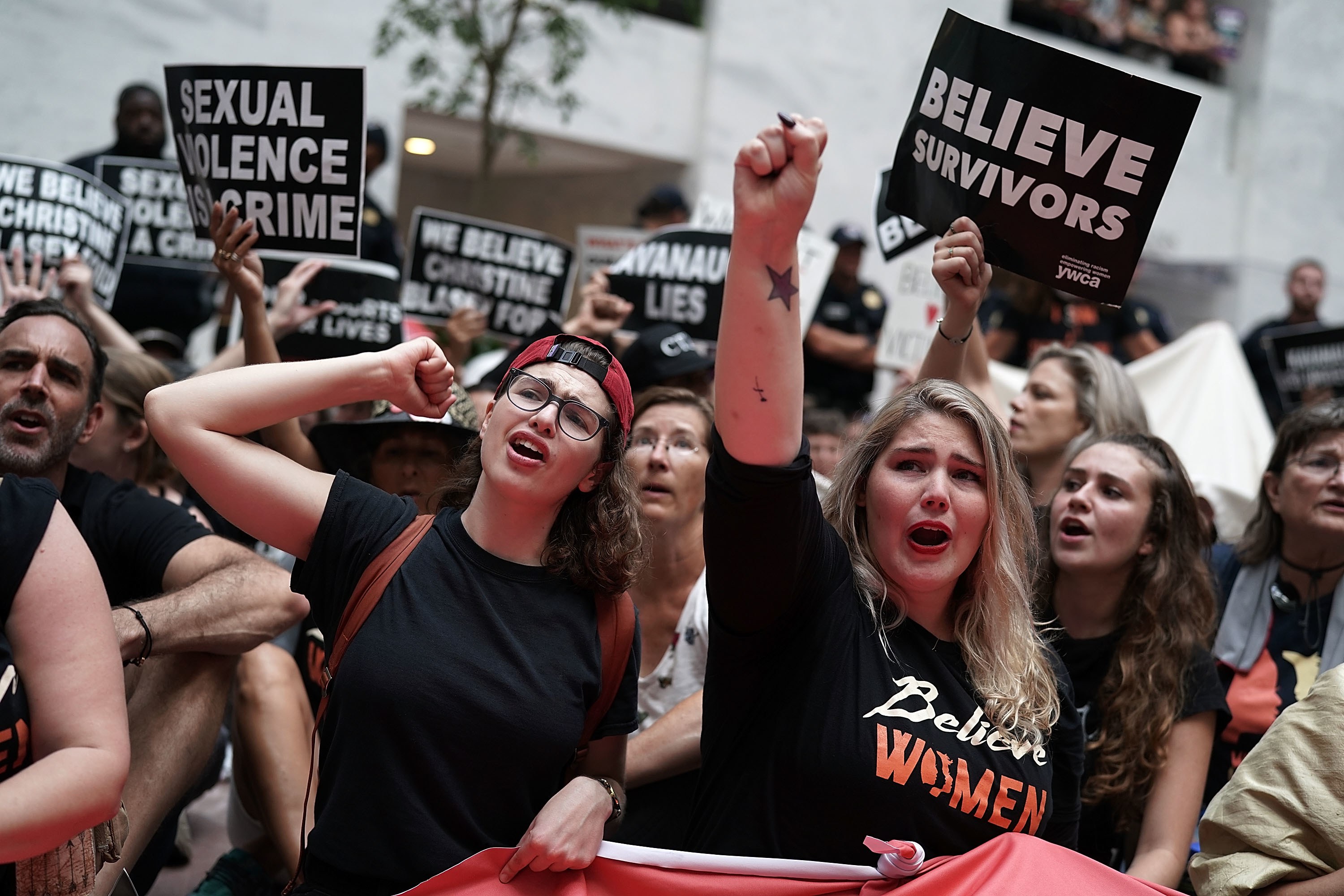
If you’re anything like me, the totality of the Brett Kavanaugh nomination and all that has come with it has wreaked havoc on your brain, your soul, and your spirit. I’m furious. I’m sad. I’m somehow both emotionally spent and energized at the same time. And I’ve given myself whiplash vacillating between hopeful and utterly distraught about America’s future—especially for women.

On Friday, the GOP-led Senate plowed ahead, as Sen. Mitch McConnell (R-Ky.) promised, with a final vote presumed to happen on Saturday. And at the conclusion of her speech on the Senate floor this afternoon, Sen. Susan Collins (R-Maine) announced that she would vote to confirm the nominee. She delivered what felt like an endless defense of Kavanaugh that seemed to prove she had never been quite on the fence about him after all.

Democrat Joe Manchin (D-W.V.) released a statement soon after Collins’ speech that he is also a “yes” on Kavanaugh. As it stands now, someone who’s been accused of sexual assault by a woman whom President Trump himself deemed a “credible” witness will be confirmed to sit on the United States Supreme Court for the rest of his life.

Far be it from me to tell you how you should process this entire mess. (I’ve wept, screamed aloud in my apartment, self-soothed with sugar, and tried to write my way through it.) But I’ve also learned that when I can channel my rage, passion, and, yes, pain into something more tangible, I feel a hell of a lot better. So, a proposal: join me?

This weekend, three of my favorite progressive organizations—Planned Parenthood Action Fund (PPFA), Swing Left, and Organizing for Action—have banded together to create a Women’s Health Day of Action. And it’s tomorrow, October 6—as in Saturday, the day that Kavanaugh might just win his nomination battle.

Their goal is simple: to help elect pro-women’s health candidates and regain a progressive majority in the House of Representatives. To that end, they have identified 16 House districts in seven states to support on October 6. Hundreds of volunteers will be working with the campaigns directly to knock on tens of thousands of doors to get out the vote in November. (In some districts, the candidates themselves will be participating.)

It’s time to activate our anger (again), ladies—and I’m all the way in.

“Everything is on the line in 2018. Women are fed up with politicians dismissing survivors of sexual assault, undermining access to Planned Parenthood health centers, and reshaping the Supreme Court to gut the constitutional right to safe, legal abortion,” says PPAF President Dawn Laguens. “Women are poised to serve a reckoning this November that is decades in the making, and this partnership is a signal that we’re all right there with them. We know that, together, our voices are too powerful to ignore.”

Literally—they are. One in five people have participated in protests since 2016, according to a Washington Post/Kaiser Family Foundation survey. And the number one issue that’s gotten them on their feet? The rights of women.

“The level of engagement and enthusiasm OFA has seen this cycle, among seasoned organizers and brand new volunteers alike, has been overwhelming – and women have been leading the charge,” says Katie Hogan, Executive Director of Organizing for Action. “It’s a phenomenon we’ve seen dating all the way back to the Women’s March, and that passion has only intensified as it’s become increasingly clear how much is at stake in November. We’re thrilled to be working in lock-step with both new leaders in the progressive space, like Swing Left, and long-time powerhouses of activism, like Planned Parenthood Action Fund, to elect representatives who will echo these voices in Washington.”

Here are the 16 districts that volunteers will target this weekend—and through the midterms on November 6. You can sign up to volunteer here.

  • AZ-02: Ann Kirkpatrick-CA-10: Josh Harder

  • CA-45: Katie Porter

  • CA-48: Harley Rouda

  • IA-01: Abby Finkenauer

  • IA-03: Cindy Axne

  • NJ-11: Mikie Sherrill

  • NJ-07: Tom Malinowski

  • NJ-03: Andy Kim

  • TX-32: Colin Allred

  • TX-07 : Lizzie Fletcher

  • TX-23: Gina Ortiz Jones

  • VA-10: Jennifer Wexton

  • VA-02: Elaine Luria-VA-05: Leslie Cockburn

  • VA-07: Abigail Spanberger

And if you don’t happen to live near one of those districts, don’t despair. Getting involved wherever you are couldn’t be easier. Contact the field office of a local candidate you support and volunteer to canvass or phone bank. Reach out to friends and relatives who aren’t routine voters to make sure they are registered (many state deadlines are fast approaching). Ask them to pledge to show up at the polls on November 6 at a site like Vote Save America.

“If we want to protect women’s health from the constant Republican attacks, it’s not enough to just vote this year. We need each and every person to knock on doors and make calls so that we can break out of our silos and bring about electoral change,” says Swing Left Political Director Katie Hogan.

LETS END WITH SENDING AUDIENCE TO SEXUAL ASSAULT RESOURCE POST IF THEY ARE FEELING TRIGGERED./story/national-sexual-assault-hotline-calls-jump-kavanaugh-news

MORE: During Christine Blasey Ford’s Testimony, Contempt for Women Was on Full Display


Source link

Categories
Health

Yet Another Study Confirms Abstinence-Only Sex Ed Doesn't Work—But the Trump Administration Still Wants to Fund It


With a man like Donald Trump serving as President of the United States, it should come as no surprise that major policy decisions are often turned into spectacles ripe with suspense or shock value (see: the build-up to his decision to leave the Paris climate accord and his surprise Twitter storm banning transgender men and women from military service).

But amidst his typical fanfare, the President is also no stranger to discretion—and it’s these quiet efforts, like those rolling back teen pregnancy prevention programs, that are just as likely to undermine the public’s well-being without commanding a major spotlight.

Yes, in mid-July, the President stealthily slashed nearly $214 million in funding from over 80 teen pregnancy prevention programs. As has been a trend in the Trump administration, these cuts target something put in place by former President Barack Obama—specifically, a 2015 measure that awarded five-year grants to programs that would, according to Reveal (a publication from The Center for Investigative Reporting), “find scientifically valid ways to help teenagers make healthy decisions that avoid unwanted pregnancies.”

These funds were granted not only to major research institutions, like Johns Hopkins University and the Children’s Hospital of Los Angeles, but also for pregnancy prevention programs that served at-risk communities. And now, thanks to the Trump administration, the grants will cease to exist come 2018—and aside from funds quickly drying up, the research programs that relied on this money will not have the financial means needed to complete their studies and reach conclusive findings.

Despite how harmful this development is, it should come as no surprise to those who have followed the President’s positions on health care. His Secretary of Health and Human Services, Tom Price, is a long-standing opponent of any federal programs that help pay for contraception. And within HHS, some of the department’s top officials are notorious for an abstinence-only approach—like Valerie Huber, the chief of staff to the assistant secretary of health. Huber is on record trying to rebrand abstinence education to something more palatable—she told PBS in 2016 that she prefers the term “sexual risk avoidance”—and has said she’s skeptical that contraception can actually reduce unintended pregnancies. Moreover, she previously served as the president of an organization that was once known as the National Abstinence Education Association (its current name: Ascend) and her ultimate goal is to “normalize sexual delay more than we normalize teen sex, even with contraception.”

Making this movement toward abstinence-only education all the more mind-boggling is the fact that the teen pregnancy rate in the U.S. is currently at an all-time low. There’s an obvious reason as to why: Contraception is much more readily available than it ever was pre-Obama (and pre-Affordable Care Act). If the Trump administration has its way, however, this trend could quickly be in jeopardy.

Beyond cutting funding to teen pregnancy prevention programs and research, the White House is also looking to build up abstinence-only education and in the proposed 2018 budget, nearly $300 million would be set aside and be distributed over a ten-year period to such programs. But as research has consistently shown, this approach to sex education does more harm than good. Recently, the Journal of Adolescent Health published a report examining the consequences of abstinence-only-until-marriage policies and programs—one that updates their last deep-dive into the subject, which came in 2006—and as expected, abstinence-only programs simply don’t work.

“Health and medical researchers have shown consistently that high-quality sex education can make a measurable difference in adolescents’ health and well-being, which makes the appointment of abstinence-only-until-marriage education advocates to key positions within the Department of Health and Human Services deeply concerning,” Leslie Kantor, Ph.D., MPH, one of the co-authors of the JAH report and the vice president of education at Planned Parenthood Federation of America, told Glamour.

In theory, abstaining from sex is a guaranteed way to prevent pregnancy or STIs. But programs that follow an abstinence-only approach, rather than offer comprehensive sex ed, don’t prevent young people from having sex—and they don’t prevent them from getting pregnant or contracting an STI. Instead, these programs have been found to withhold information from teens and young adults—and even spread false information—preventing them from making informed decisions about their own sexual choices. And with an average of roughly ten years between when men and women first have sex and first get married, perpetuating the idea of abstinence until marriage is a futile effort.

To put things into context, federal support for abstinence-only efforts can be traced back to the early 1980s and the Reagan years. In 1981, the Adolescent Family Life Act allocated funding for community organizations and faith-based groups that encouraged “chastity” and “self-discipline.” In the mid-90s, these programs saw a major boost after Congress expanded abstinence education under the 1996 welfare reform bill—and were only propelled further upon the creation of an abstinence-only education federal grant program in 2000. Federal funding became more readily available but was only given to programs that specifically targeted children between 12 and 18 years old and provided them with no information about contraception or safe sex.

By 2004, the House Committee on Government Reform determined that such programs “contained false, misleading, or distorted information about reproductive health, misrepresentations about the effectiveness of condoms in preventing sexually transmitted infections (STIs) and pregnancy, as well as gender and sexual minority stereotypes, moral judgments, religious concepts, and factual errors” (as JAH reported).

By no coincidence, state governments soon started saying “thanks, but no thanks” to federal funding designated for abstinence-only education (by 2009, almost half had declined such money). Though funding for abstinence-only plans was incorporated into the 2010 Affordable Care Act to get it through Congress, the crux of funding was put toward pregnancy prevention programs and research. But after a slew of new Republicans were ushered into Congress following the 2010 midterm elections, abstinence-only programs experienced renewed support.

These advocates, however, continue to neglect just how effective comprehensive sex ed actually is. Medical groups like the American Academy of Pediatrics and the Society of Adolescent Health and Medicine have come out in opposition to abstinence-only plans, and even the United Nations has declared that all young people have the right to access in-depth information about their sexual health. Further, the Centers for Disease Control determined that these high-quality programs not only reduce the risk of pregnancy and STIs, but lower the initiation and frequency of sexual activity, decrease the number of sexual partners, and diminish the likelihood of unprotected sex for those teens and young adults how are given this type of education.

In short: Giving young people all the info they need about sex means they’re more likely to actually abstain from sexual activity than those who are given abstinence-only education. But with Trump in the White House and people like Price and Huber at HHS, abstinence-only advocates are having a huge moment—and teens and young adults, especially those in the most vulnerable communities, will suffer because of it.


Source link