Categories
Health

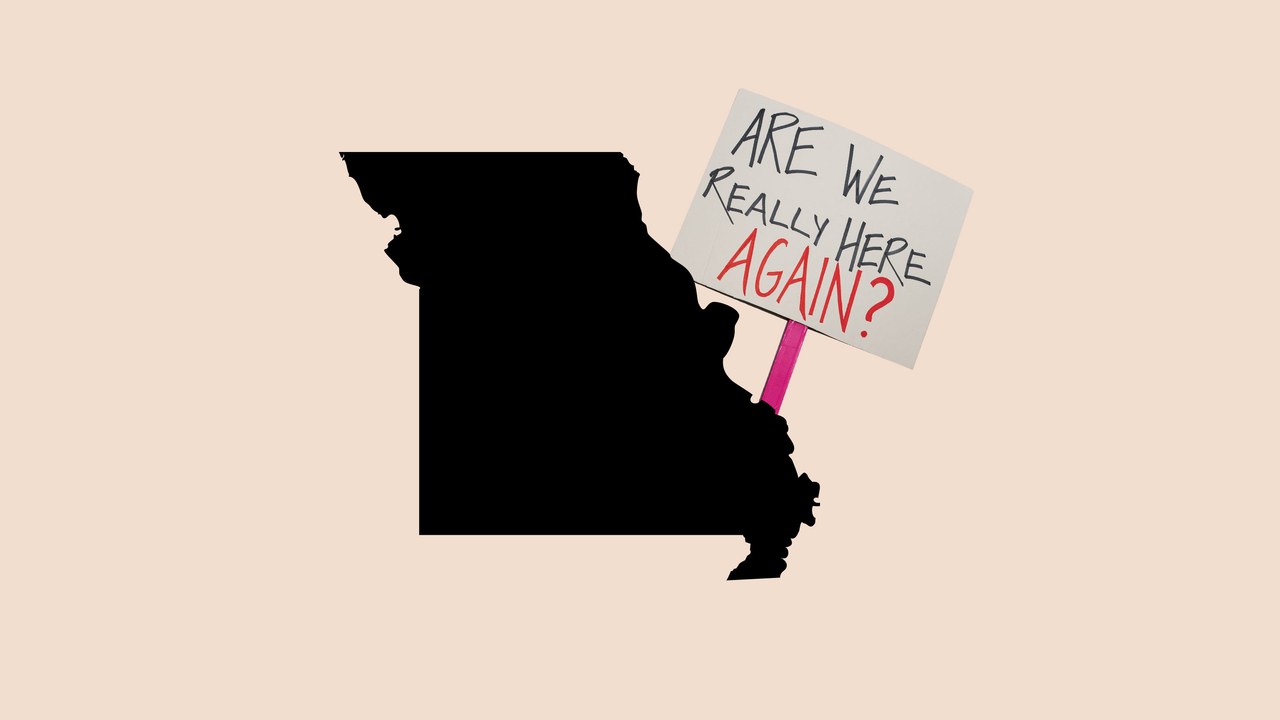
If Missouri’s Last Abortion Clinic Closes, There Might Not Be Room for Patients in Neighboring Centers


Missouri might become the first state without a single abortion services provider since 1974, the year after Roe v. Wade was enacted. The state’s last remaining abortion clinic—called the Reproductive Health Services of Planned Parenthood of the St. Louis Region—is currently at risk of losing its license and being forced to close by the end of the week. However, the health center would still be allowed to provide STI testing, cancer screenings, birth control, and more.

Planned Parenthood is currently in a standoff with Missouri state officials over an audit of the clinic, which began this spring. According to the New York Times, “Lawyers for the clinic say that the audit, which began this spring, has become wide-ranging and includes demands they consider to be unreasonable…. The clinic agreed to meet a number of the state’s demands, including a requirement that it provide an additional pelvic exam for abortion patients. But the clinic is now deadlocked with state officials over a request to interview seven of its doctors, including fellows and residents.”

Yesterday, Colleen McNicholas, a physician at the clinic, was interviewed by state officials along with one of her fellow doctors. About the interview McNicholas told Glamour, “They asked about our practices and reproductive health services, including how we work with residents and fellow trainees. And while I still believe the interviews are completely unnecessary—because we have provided exceptional care for a very long time—I am also glad that the department finally agreed to sit down with me, and hopefully, through that conversation, they now understand what is the standard medical education process. I hope that resolves any remaining issues for them.”

Though McNicholas is hopeful about how her meeting went, she’s saddened that across the country there’s a “larger framework and strategy to criminalize abortion.” She went on to say, “Most people are familiar with legislative attempts, with all of the [abortion] bans that are sweeping our country—but for states that have really hostile restrictions to abortion care, the licensing process has become a weapon of these politically appointed health directors. This is something we face on an annual basis, but this year it was ratcheted up and we really saw investigators asking and demanding for things like interrogating physicians, which is so outside the bounds of what this process is supposed to be.”

While Planned Parenthood has filed a lawsuit requesting a restraining order against the state in the hope of keeping the clinic’s license—which will be brought to a circuit court judge today—the physicians at the clinic are already working on ways to make sure Missourians are granted access to abortion. One of the ways they’ll do so is by having more patients go to nearby clinics in places like Illinois or Kansas to receive abortion care. However, with the restrictions on abortion in Missouri, these neighboring clinics are becoming overcrowded.

“Over the last five to seven years, we’ve seen a significant increase in our number of patients from Missouri,” said ob/gyn Erin King, executive director of Illinois’ Hope Clinic for Women, which is located about 20 minutes from downtown St. Louis, in an interview with Glamour. “We’ve actually doubled the number of doctors that are seeing patients at our clinic in just the last year and a half. So we’ve really had to take on some of the burden of seeing those patients—and with the potential closing of this last clinic in Missouri, we anticipate a drastic increase [in patients] that we probably cannot accommodate right away. Obviously we’re doing everything we can to help our colleagues in St. Louis, and we’re working around the clock here to try to have the staff in place so that these patients can [come to us].”

And with the growing restrictions on abortion in Missouri—just last Friday, Governor Mike Parson signed into law an antiabortion bill that prohibits the procedure after eight weeks of pregnancy—McNicholas believes that self-managed abortion will become more and more of a reality for people seeking the procedure. “We know communities of color, people who are low-means or low-income, and rural Missourians [already] have tremendous difficulty accessing abortion care in the medical system,” says McNicholas. “So it should be expected, and we’ve already seen this, that people will turn to self-managed abortion. There are a variety of ways that self-managed abortion can come to fruition. If patients are able to access the medications that we use traditionally for an abortion, then they can safely manage their own abortion through that process with the right education and tools. However, there are going to be patients who can’t access that medicine, or think they’re accessing that medicine but get the wrong one. So we still have to be prepared for other methods of self-managed abortion and helping people to safely end their pregnancy.”

Missouri is currently one of six states with only one remaining clinic, according to data from the Guttmacher Institute, and would be the only state in the nation to not have a single clinic.
Source link

Categories
Health

Planned Parenthood to Open 14 New Health Centers Across the American South


Most news events aren’t met with a consensus reaction, but the announcement of Supreme Court Justice Anthony Kennedy’s retirement from the bench last month seemed to solicit one: his departure, the New York Times predicted, would not just jeopardize Roe v. Wade, the 1973 decision that legalized abortion nationwide, but promised to “reshuffle the landscape” of reproductive freedom in the United States. (If that fact was in doubt, President Trump’s nominee Brett Kavanaugh put an end to them. Sen. Kirsten Gillibrand (D-N.Y.) called him “more dangerous than any previous justice nominee…ever.”)

Of course, the battle didn’t start this summer. The anti-choice movement has laid this groundwork for decades. A few more recent examples: In 2015, House Republicans grilled now-former Planned Parenthood President Cecile Richards for almost five hours in an effort to discredit the organization, which is the country’s largest provider of reproductive health services. (It didn’t work. In 2017, a national poll found that 75 percent of Americans support federal funding for Planned Parenthood.) Between 2011 and 2016, 288 abortion restrictions—including bans on later-term procedures, mandated wait periods, and laws requiring clinics to meet burdensome, non-medical standards—were enacted, according to the Guttmacher Institute. The Trump administration has also announced a proposal that would strip federal support (which total $260 million) from women’s clinics that perform abortions or tell women where they can go to get them.

Such efforts prove it: The struggle isn’t ahead. It’s here.

And since there’s no evidence that this Trump pick will crash and burn, or that cooler heads will prevail the next time the GOP tries once more to defund Planned Parenthood, advocates believe it’s critical to do more than secure the reproductive rights we have now—the movement needs to gain ground.

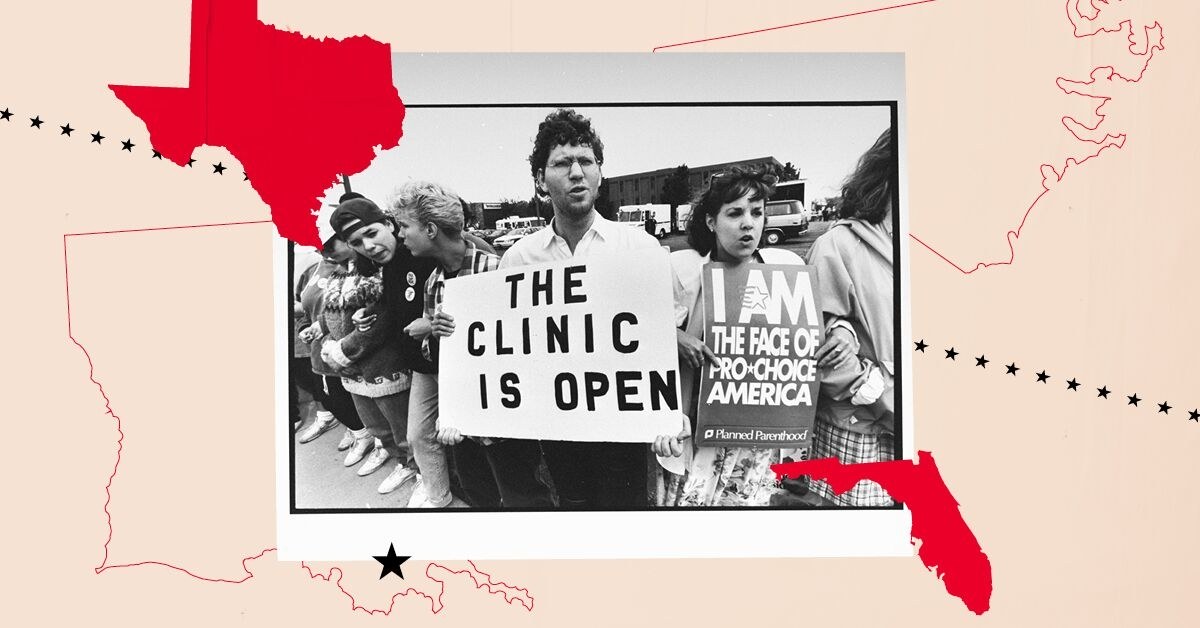
Quietly, Planned Parenthood has set in motion plans to do just that—with a particular focus on the southern (and for the most part, deep red) United States. By the end of 2017, even as Richards prepared to step down, Planned Parenthood opened nine new centers, with five more in the pipeline. The facilities are in some less-than-expected states, some of which have laws on the books now that would ban abortion if Roe v. Wade were overturned: Oklahoma, Texas, Louisiana, Alabama, Mississippi, Tennessee, Kentucky, North Carolina, and, just last month, Florida.

The expansion makes a statement—that no matter the partisan winds, Planned Parenthood intends to ride out the storm. It’s a commitment that was underscored in late June when, less than 48 hours before news of the Supreme Court retirement broke, Planned Parenthood cut the ribbon at one of its newest facilities: a state-of-the-art health center in Tallahassee, Florida. The outpost will provide the full spectrum of sexual and reproductive services; patients can receive birth control prescriptions, breast exams, treatment for STIs, information on safe sex practices, and, also, abortion services.

In our current climate, the centers have political reverberations. But their purpose isn’t to treat just Democrats or Republicans. Each exists to meet a need. In Florida, for example, the area around the new location has some of the worst health outcomes in the state, including the highest number of newly diagnosed chlamydia cases statewide. (Similar problems are endemic in the South; Mississippi, Louisiana, Georgia, North Carolina, South Carolina, and Oklahoma are six of the 10 states with the highest rates of gonorrhea and chlamydia in America, based on 2016 data from the Center for Disease Control.)

“Georgia, Mississippi, Alabama—women will cross state lines to come to us.”

And while the mere fact that a clinic has opened can’t drive STI rates down, the numbers mount a persuasive case: Between 2015 and 2018, just after Planned Parenthood at last replaced the small, two-exam-room clinic it used to operate in New Orleans with a new, much bigger location, reproductive health care visits swelled from 500 a month to 800, according to Planned Parenthood Gulf Coast President and CEO Melaney Linton. The new location in Tallahassee expects to be able to serve four times the number of patients, both from in the state and surrounding states, as it has in the past, according to Lillian Tamayo, President and CEO of Planned Parenthood in South, East, and North Florida. “Georgia, Mississippi, Alabama—women will cross state lines to come to us,” says Tamayo. All three states have ruled that women must have at least two appointments with their providers to get an abortion; Georgia and Mississippi enforce a 24-hour wait period. Alabama insists on 48 hours between visits. Thanks to a recent decision from Leon County Circuit Judge Terry Lewis, Florida has none, despite its current conservative leadership.

Given the national mood, Tamayo adds, her mission is more important than ever: “We want to be a beacon.”

That’s been Richards’ mission on a national level, but the native Texan is attune to the unique needs of the South. Under her leadership, Planned Parenthood committed to increase access there, despite fierce political opposition to its presence.

“Of course I’ve ‘officially’ left,” she explains of her tenure that ended in April 2018. “But these are the last two acts I will do for Planned Parenthood.” The recent dedications of new centers in Charleston, South Carolina, and, now, Tallahassee, are her encore appearances. Richards is too polite to revel in how broadened access to care trolls Planned Parenthood’s critics, but she will admit that the new centers deliver not just affordable health care in “state-of-the-art facilities,” but also “demonstrate that even in some of the most politically challenging states in the country, we’re here and we will expand.”

She isn’t alone. In state houses nationwide, likeminded lawmakers seem to have taken a similar tack. In 2017, 645 bills were introduced to protect access to reproductive health care services, a marked uptick in the wake of the presidential election. And earlier this month, Oregon passed the Reproductive Health Equity Act, which includes a mandate that all insurers cover abortions. Like the proposed laws, Planned Parenthood’s new centers “are part of an effort to remove the stigma and shame that has surrounded reproductive health care,” Richards says. The facilities are open to the street, filled with sun and framed photos. Each detail is meant to telegraph respect and warmth. Richards is insistent: “The people who walk in here should leave and feel like, ‘Oh, that’s what it’s like to be honored and cared for.’”

That said, Richards is all too aware of this administration’s commitment to undo decades of hard-won victories. She isn’t one to “rest on our laurels,” she says. With millions of people unable to access affordable health care and a federal government committed to anti-choice policies, all the work Planned Parenthood has done, all the bricks that have been laid—so much of it could disappear.

Roe v. Wade has been the law of the land for 40 years. There are millions of women in the United States who have never lived under a government that’s outlawed it,” she says. “I think it’s important that we show we’re not going back, and we do that when we expand access to health care in the toughest parts of America.”

To find a local Planned Parenthood, visit https://plannedparenthood.org/health-center.


Source link

Categories
Health

Pregnant Women Say They Miscarried and Were Denied Medical Attention In Immigration Detention Centers


The humanitarian crisis in America resulting from the Trump administration’s institution of a “zero-tolerance policy” in April continues to unfurl with details emerging every day about what reportedly happens inside the walls of some detention centers.

While much of the outrage has been focused on the separation of families and the conditions for young children, a new Buzzfeed News report states that circumstances for pregnant women can be just as disturbing.

Until recently, according to Buzzfeed, there was an Obama-era directive in place that stated pregnant women were not to be detained, except in extreme circumstances or rare cases of expedited deportation. But the new Trump administration policy makes no such exception and states that U.S. Immigration and Customs Enforcement (ICE) is responsible for “ensuring pregnant detainees receive appropriate medical care including effectuating transfers to facilities that are able to provide appropriate medical treatment.”

However, Buzzfeed’s reporting shows that this may not be happening—and women are suffering. The outlet talked to one woman (who wanted to keep her identity private for fear of repercussions) seeking asylum in the U.S. from El Salvador. During her time in an Arizona facility where she was pregnant, she says that she began to bleed and feared she was suffering a miscarriage.

“An official arrived and they said it was not a hospital and they weren’t doctors. They wouldn’t look after me,” she said. “I realized I was losing my son. It was his life that I was bleeding out. I was staining everything. I spent about eight days just lying down. I couldn’t eat, I couldn’t do anything. I started crying and crying and crying.”

“My soul aches that there are many pregnant women coming who could lose their babies like I did and that they will do nothing to help them,” she continued.

Buzzfeed has also spoken to or received written affidavits from four other women who say that they were denied proper medical care or attention while pregnant and being held either by ICE or Customs and Border Protection (CBP). Some alleged incidents of physical abuse by CBP officers. (Per Buzzfeed, legal aid and medical workers interviewed confirmed that they have seen—and sometimes documented—cases of pregnant women not receiving or being denied medical care in more than six different detention centers in the Southwest.

“All detainees, determined to be pregnant, are provided appropriate education, prenatal care, and postnatal care,” ICE officials said in a statement. “Such care includes referral to a physician specializing in high-risk pregnancies when high-risk pregnancy is indicated.” They also referred to the policy as written on its website. While ICE and CBP referred to their website, the Department of Homeland Security did not individually respond to Buzzfeed’s request for comment.

Outrage, of course, began anew once the story broke—from private citizens to U.S. Senators like Kirsten Gillibrand.

It remains to be seen if this public outcry will change the situation for these women.

Related Stories:

Pro-Choice Organizations Launch the #OneInFour Campaign Ahead of President Trump’s Supreme Court Nomination

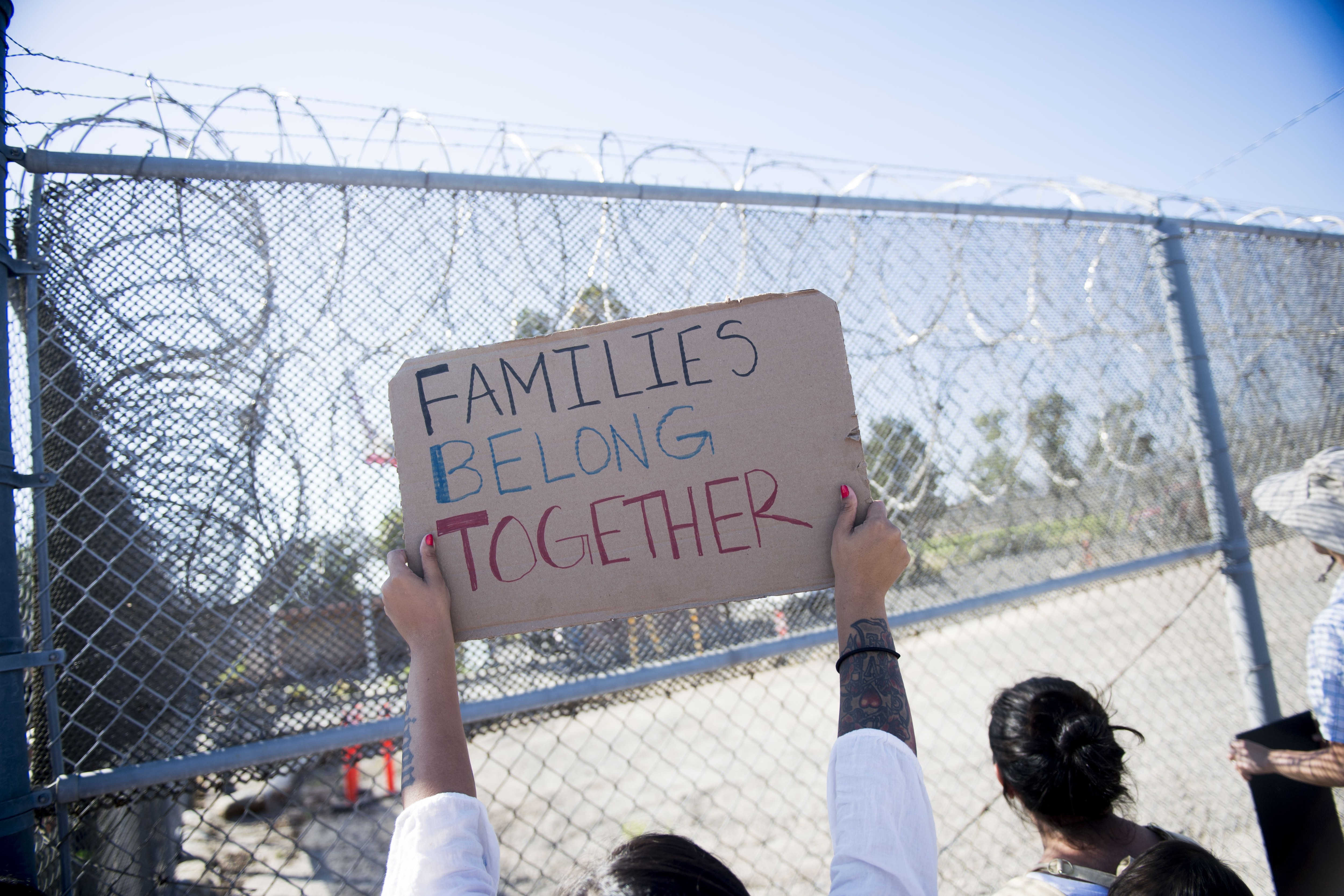
Here’s How the Women Behind the ‘Families Belong Together’ March Pulled off More Than 700 Protests


Source link

Categories
Health

The Hypocrisy in the Supreme Court's Backing of California's Anti-Abortion Pregnancy Centers


If you’re a woman considering an abortion—a legal procedure in the United States—your doctor may be required by law to present you with alternatives to abortion (like adoption) depending on the informed consent laws in the state you live in.

In fact, according to the Guttmacher Institute, 29 states require that written material on the topic of adoption and abortion be developed by the state. Eighteen states require that those materials be offered to the patient to present options and 11 states say those materials must be given to women. But now, based on the 5-4 ruling by the Supreme Court on Tuesday, crisis pregnancy centers—faith-based non-profit organizations that counsel women against having abortions—in California will no longer be required to provide the same level of information.

In short, while the law requires hospital or health center staffers to tell women seeking abortions about adoptions, it does not require counselors at crisis pregnancy centers to give information about free or low-cost abortions, prenatal care or contraceptives to women. And that hypocrisy has prompted strong responses online, where Twitter users were quick to call out the different standards being applied.

The debate began when anti-abortion centers argued that a California law—the Reproductive Freedom, Accountability, Comprehensive Care, and Transparency (FACT) Act—which required them to disclose information about abortions, went against their beliefs and violated their First Amendment rights.

The law had mandated that these crisis pregnancy centers disclose whether they have a medical license or have medically licensed professionals available. They also had to post a notice in a conspicuous space with the following statement: “California has public programs that provide immediate free or low-cost access to comprehensive family planning services (including all FDA-approved methods of contraception) prenatal care, and abortion.”

The court ruled that the law probably does violate the First Amendment and kicked the case back to lower courts for further proceedings, which is seen as a victory for anti-abortion groups.

Justice Clarence Thomas delivered the Court’s majority opinion writing that the law “targets speakers, not speech, and imposes an unduly burdensome disclosure requirement that will chill their protected speech.”

However, Justice Stephen Breyer called out what appears to be hypocrisy in his dissent: “If a State can lawfully require a doctor to tell a woman seeking an abortion about adoption services, why should it not be able, as here, to require a medical counselor to tell a woman seeking prenatal care or other reproductive healthcare about childbirth and abortion services?”

If informed consent, while not encroaching on constitutional rights, is the goal, it’s hard to see how this ruling accomplishes that. The reason the law came about in the first place was based on the belief that crisis pregnancy centers were willfully misleading patients.

According to the Los Angeles Times, state lawmakers concluded that “as many as 200 pregnancy centers in the state sometimes used ‘intentionally deceptive advertising and counseling practices that often confuse, misinform, and even intimidate women’ about their options for medical care.”

Tuesday’s ruling will likely impact cases regarding similar laws currently making their way through the courts.

While the abortion debate may never come to an end, the Supreme Court’s ruling today has certainly changed the landscape for many women, and at the very least, highlighted a hypocritical standard and a slippery slope.


Source link