Categories
Health

Hilary Duff Had the Most Stunning Safari Honeymoon in South Africa


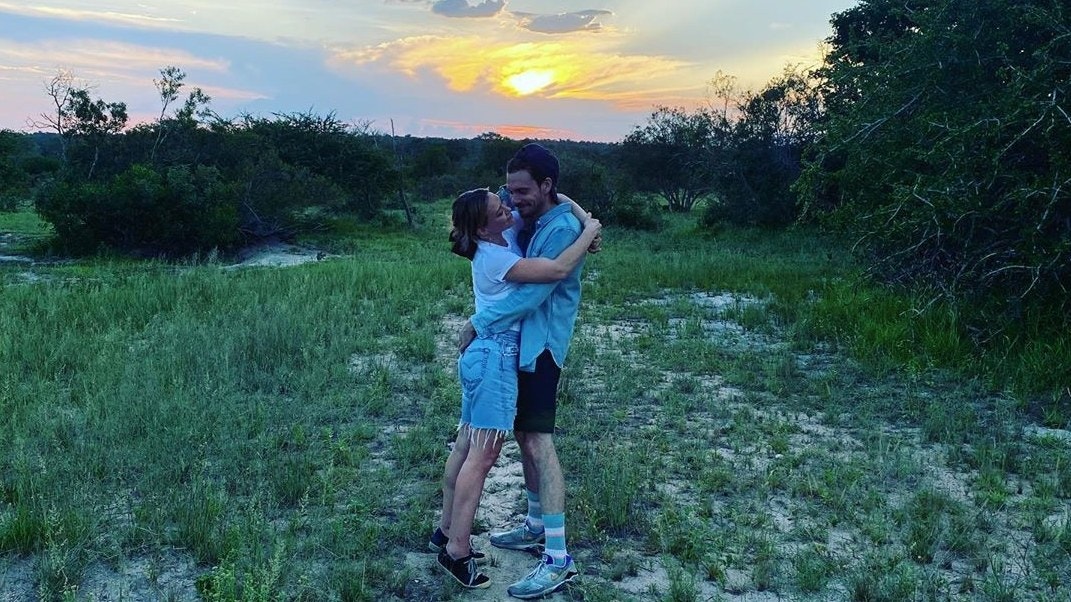
Hilary Duff married her longtime-boyfriend Matthew Koma last month, and the celebration was a low-key, intimate event in her backyard. Following the private nuptials, she posted a few images to Instagram that captured the picture-perfect event and the actor even shared the details of creating her romantic Jenny Packham gown. And now, Duff is giving fans a look at her enviable honeymoon, which includes some stunning views of South Africa.

Duff posted several shots that show she and Koma hanging out a the beach, hugging over mountain landscapes, and enjoying super colorful sunsets. In one of the photos, Duff and Koma can be seen peering out from their window while sipping drinks. “Honeymooning with my honey. Already seen the big 5 and had so many naps. Doesn’t get better than this….” she wrote. “Moonin’ n swoonin’,” she captioned another.

Koma also shared several images of their safari in Kruger National Park. “This place is unreal,” he wrote in a post that includes a selfie of the two of them, plus pictures of a lion, lioness, and an elephant. He capped the trip off with a longer collection of photos detailing their trip: “We climbed Table Mountain in Cape Town, played bananagrams in Mozambique, read a book with a disappointing ending together on our flights, experienced a dream safari in Sabi Sands, had the best meal of our lives at Test Kitchen, and I got to bask in the high of doing it all with my best friend turned wife. I truly am the luckiest.”

Both of them looked sad to see the whole thing end. “Long journey home after the most insane trip of my life! We can’t wait to squeeze the babbbbies and rub their skin offffffffff,” she wrote in the Instagram caption of a photo that shows her and Koma making sad faces at the airport.

The vacation seems to have come at a good time; Duff has been working on the highly-anticipated reboot of her old show Lizzie McGuire. However, some recent drama temporarily ended production on the show. Hopefully, she was too busy enjoying South Africa to stress.


Source link

Categories
Health

Planned Parenthood to Open 14 New Health Centers Across the American South


Most news events aren’t met with a consensus reaction, but the announcement of Supreme Court Justice Anthony Kennedy’s retirement from the bench last month seemed to solicit one: his departure, the New York Times predicted, would not just jeopardize Roe v. Wade, the 1973 decision that legalized abortion nationwide, but promised to “reshuffle the landscape” of reproductive freedom in the United States. (If that fact was in doubt, President Trump’s nominee Brett Kavanaugh put an end to them. Sen. Kirsten Gillibrand (D-N.Y.) called him “more dangerous than any previous justice nominee…ever.”)

Of course, the battle didn’t start this summer. The anti-choice movement has laid this groundwork for decades. A few more recent examples: In 2015, House Republicans grilled now-former Planned Parenthood President Cecile Richards for almost five hours in an effort to discredit the organization, which is the country’s largest provider of reproductive health services. (It didn’t work. In 2017, a national poll found that 75 percent of Americans support federal funding for Planned Parenthood.) Between 2011 and 2016, 288 abortion restrictions—including bans on later-term procedures, mandated wait periods, and laws requiring clinics to meet burdensome, non-medical standards—were enacted, according to the Guttmacher Institute. The Trump administration has also announced a proposal that would strip federal support (which total $260 million) from women’s clinics that perform abortions or tell women where they can go to get them.

Such efforts prove it: The struggle isn’t ahead. It’s here.

And since there’s no evidence that this Trump pick will crash and burn, or that cooler heads will prevail the next time the GOP tries once more to defund Planned Parenthood, advocates believe it’s critical to do more than secure the reproductive rights we have now—the movement needs to gain ground.

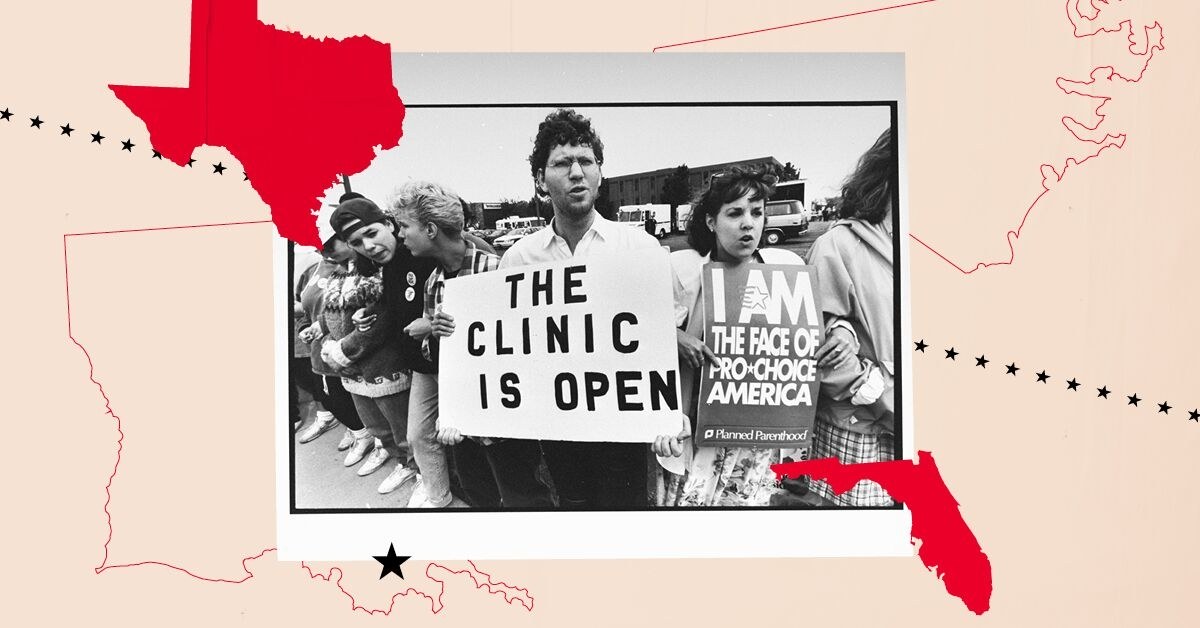
Quietly, Planned Parenthood has set in motion plans to do just that—with a particular focus on the southern (and for the most part, deep red) United States. By the end of 2017, even as Richards prepared to step down, Planned Parenthood opened nine new centers, with five more in the pipeline. The facilities are in some less-than-expected states, some of which have laws on the books now that would ban abortion if Roe v. Wade were overturned: Oklahoma, Texas, Louisiana, Alabama, Mississippi, Tennessee, Kentucky, North Carolina, and, just last month, Florida.

The expansion makes a statement—that no matter the partisan winds, Planned Parenthood intends to ride out the storm. It’s a commitment that was underscored in late June when, less than 48 hours before news of the Supreme Court retirement broke, Planned Parenthood cut the ribbon at one of its newest facilities: a state-of-the-art health center in Tallahassee, Florida. The outpost will provide the full spectrum of sexual and reproductive services; patients can receive birth control prescriptions, breast exams, treatment for STIs, information on safe sex practices, and, also, abortion services.

In our current climate, the centers have political reverberations. But their purpose isn’t to treat just Democrats or Republicans. Each exists to meet a need. In Florida, for example, the area around the new location has some of the worst health outcomes in the state, including the highest number of newly diagnosed chlamydia cases statewide. (Similar problems are endemic in the South; Mississippi, Louisiana, Georgia, North Carolina, South Carolina, and Oklahoma are six of the 10 states with the highest rates of gonorrhea and chlamydia in America, based on 2016 data from the Center for Disease Control.)

“Georgia, Mississippi, Alabama—women will cross state lines to come to us.”

And while the mere fact that a clinic has opened can’t drive STI rates down, the numbers mount a persuasive case: Between 2015 and 2018, just after Planned Parenthood at last replaced the small, two-exam-room clinic it used to operate in New Orleans with a new, much bigger location, reproductive health care visits swelled from 500 a month to 800, according to Planned Parenthood Gulf Coast President and CEO Melaney Linton. The new location in Tallahassee expects to be able to serve four times the number of patients, both from in the state and surrounding states, as it has in the past, according to Lillian Tamayo, President and CEO of Planned Parenthood in South, East, and North Florida. “Georgia, Mississippi, Alabama—women will cross state lines to come to us,” says Tamayo. All three states have ruled that women must have at least two appointments with their providers to get an abortion; Georgia and Mississippi enforce a 24-hour wait period. Alabama insists on 48 hours between visits. Thanks to a recent decision from Leon County Circuit Judge Terry Lewis, Florida has none, despite its current conservative leadership.

Given the national mood, Tamayo adds, her mission is more important than ever: “We want to be a beacon.”

That’s been Richards’ mission on a national level, but the native Texan is attune to the unique needs of the South. Under her leadership, Planned Parenthood committed to increase access there, despite fierce political opposition to its presence.

“Of course I’ve ‘officially’ left,” she explains of her tenure that ended in April 2018. “But these are the last two acts I will do for Planned Parenthood.” The recent dedications of new centers in Charleston, South Carolina, and, now, Tallahassee, are her encore appearances. Richards is too polite to revel in how broadened access to care trolls Planned Parenthood’s critics, but she will admit that the new centers deliver not just affordable health care in “state-of-the-art facilities,” but also “demonstrate that even in some of the most politically challenging states in the country, we’re here and we will expand.”

She isn’t alone. In state houses nationwide, likeminded lawmakers seem to have taken a similar tack. In 2017, 645 bills were introduced to protect access to reproductive health care services, a marked uptick in the wake of the presidential election. And earlier this month, Oregon passed the Reproductive Health Equity Act, which includes a mandate that all insurers cover abortions. Like the proposed laws, Planned Parenthood’s new centers “are part of an effort to remove the stigma and shame that has surrounded reproductive health care,” Richards says. The facilities are open to the street, filled with sun and framed photos. Each detail is meant to telegraph respect and warmth. Richards is insistent: “The people who walk in here should leave and feel like, ‘Oh, that’s what it’s like to be honored and cared for.’”

That said, Richards is all too aware of this administration’s commitment to undo decades of hard-won victories. She isn’t one to “rest on our laurels,” she says. With millions of people unable to access affordable health care and a federal government committed to anti-choice policies, all the work Planned Parenthood has done, all the bricks that have been laid—so much of it could disappear.

Roe v. Wade has been the law of the land for 40 years. There are millions of women in the United States who have never lived under a government that’s outlawed it,” she says. “I think it’s important that we show we’re not going back, and we do that when we expand access to health care in the toughest parts of America.”

To find a local Planned Parenthood, visit https://plannedparenthood.org/health-center.


Source link

Categories
Health

These Women From South Africa Are Major Mother-Daughter Relationship Goals


When Babalwa Mbono was pregnant with her second child, she went to a clinic in Cape Town, South Africa, for a check-up. She left with an HIV diagnosis.

Babalwa was shocked—she’d tested negative when she was pregnant with her first child just a few years earlier—and concerned for herself and her unborn baby. “I worried that my baby would be born with HIV, and that I wouldn’t live long enough to care for him or her,” she said. “I felt lost and afraid, with no idea what to do.”

Luckily, the clinic soon connected her with mothers2mothers, an Africa-based organization that matches pregnant women with who have recently been diagnosed with HIV with someone from their crew of so-called Mentor Mothers, women who have been through the same thing. They offer advice and counseling, plus information on live-saving antiretroviral treatments that can prevent moms from passing HIV on to their babies. “A Mentor Mother is someone who understands you, she’s been in your shoes, and she can give you guidance by drawing from her own experience,” Babalwa says.

More than 7 million people in South Africa are living with HIV. Since it was founded in 2001, M2M has reached nearly 2 million people across seven African countries, and virtually eliminated the rate of transmission between mothers and children in its program. Among M2M’s clients, the mother-to-child transmission rate is just 1.6 percent—well below the 5 percent benchmark set by the United Nations program on AIDS. Babalwa’s baby was born HIV free, and she herself is mainly healthy today. She now works with M2M as a Mentor Mother.

Babalwa’s experience taught her that conversation is crucial—a lesson she’s putting to good use now that the baby she was carrying in the clinic that day is a high school girl named Anathi. The way Babalwa sees it, Anathi has already dodged HIV once, she doesn’t want her to acquire it now. That means talking about HIV and contraception and, yes, sex, with her teenaged daughter. A lot.

That was awkward at first, but they say that as time went on something unexpected happened: It brought them closer together. They don’t just talk about HIV now, they talk about all kinds of things.

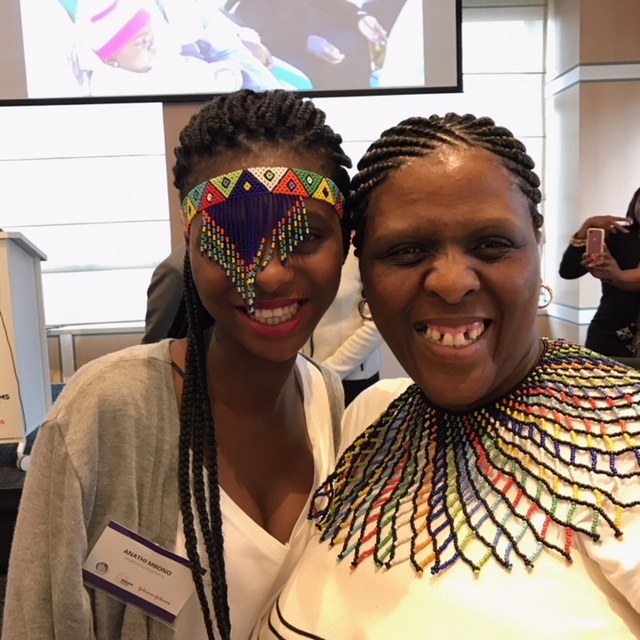
Babalwa and Anathi were in New York recently to speak at the United Nations General Assembly on behalf of mothers2mothers. We sat down with them for a three-way conversation.

PHOTO: Courtesy mothers2mothers

Glamour: Tell me about when you learned that you were HIV positive.

Babalwa: I went for prenatal care at one of our clinics when I was pregnant with my second born, which is this little girl, Anathi. When I tested positive for HIV I was shocked, honestly, and I was quite angry as well because at that time I was married and I was not expecting that. My sister was HIV positive and passed on three years earlier, so that’s what came into my mind when I was tested—death. I will follow her.

At the same time, I was also thinking of this baby that I’m carrying which could be infected, and what could happen after she was born. Fortunately, I was referred to mothers2mothers, where I learned to take my treatment and I learned about HIV stigma and discrimination and how to disclose my status to my parents, to my family, to my husband, which was a challenge.

Glamour: How do you think your own HIV status has affected the way you talk to your kids about HIV, sex, and contraception?

Babalwa: When Anathi’s older brother was a boy, it was not easy for me to talk to him about HIV because I did not have much information. Now, with the empowerment that I’ve got in terms of knowledge and the strength that I’ve gained being supported and living life positively and thinking positively, I am able to carry that baton and hand it to my children. I am able to educate them with the knowledge that I have on HIV. I cannot make decisions for them, they have to make their own—but with the knowledge that I have given them I hope they will be able to make their own good decisions about their lives.

Glamour: Is this something you guys talk about all the time, part of an ongoing conversation?

Anathi: It’s not all of the time, but I know it’s every weekend, because every weekend I go out with my friends, and it always happens then. For her I think it kind of gets difficult to accept that I have friends and I have my own time. I am a young girl that wants to explore.

Babalwa: This is where this conversation about HIV and condom use and taking care of themselves comes in, because you want to reinforce that in your daughter, wherever she goes, whatever she does, she must think of that.

In our culture, when girls get to a certain age the mother takes them to the clinic for contraceptives, but they don’t have this conversation, they don’t explain why they should be using the contraceptives. And then you see the girls stop using the contraceptives, and they end up pregnant or with HIV. So that’s why I’m always educating her, every weekend.

Glamour: Tell me about when you disclosed you HIV status to Anathi.

Babalwa: I was very open about HIV through my work with mothers2mothers, but I still was not ready to tell her. But last year she was about to start high school, and when I looked at the curriculum I saw that HIV and AIDS was part of the curriculum, so I thought that this was my opportunity to talk about my status.

Anathi: I was on the phone with my brother so my brother who was telling me about this new phone he got and I was so excited, so when my mother called and said she wanted to talk to me about something I was like, it can wait until later. But she was like, no, you need to hear this. So I got nervous then.

When she told me I wasn’t really shocked because my brother and I have gone through and watched YouTube videos of her talking about HIV, but we thought maybe it was just for her work. Hearing from her face that she was HIV positive got me really hurt and got me into a bad space.

When you find that your parent is HIV positive you get that feeling of just being scared to open up to another person and to tell that person what is going on. What if her status is going to be everywhere? What if everyone is going to know that she’s HIV positive?

Glamour: A lot of the reason mothers and daughters are afraid to have conversations around boys and sex is because it’s awkward, and I feel like you guys don’t have a lot of awkwardness, maybe because you were forced to have this big conversation about HIV. What do you think?

Anathi: We talk about [HIV and contraception] all the time. And every time she starts talking about it, I’m just like, OK it’s fine, it’s fine, I won’t do it, and then I leave as fast as I can, because I know that she’s going to talk about it over and over again.

Babalwa: She doesn’t understand that for me it’s not about making her feel tired of me it’s just sort of reinforcing that information that please look out, be careful. That is the message.

Anathi: Mothers don’t get that whenever we talk we might seem like we don’t care but then it gets us thinking more about it: What if this thing happens to me? What if I am going to be the one that experiences it and shares my experience with my children one day? She thinks that if I’m laughing I don’t take it seriously, but I do.

Babalwa: And I can say that after we talked things have changed.

Anathi: I started realizing that boys are a waste of time, boys will ruin your future, so I just got away from them. It kind of made me see things differently.

Glamour: Anathi, do you have advice for your mom or other moms about how they should talk to their kids, what would it be?

Anathi: Well you must grab your daughter or grab your son and sit with them and have a chat, because if you are not chatting with your daughters you will not be able to know what’s eating her inside and what is bothering her in the world.

Babalwa: I think as parents we need really to get involved in our children’s lives and what’s happening that helps us identify things before they hurt them. We need to talk to them about everything, everything, everything. Don’t wait until bad things happen, it will be too late then.

This interview was edited for length and clarity.


Source link