
Categories
Health

Dr. Dendy Engelman: What It Costs to Be Me


These days it’s nearly impossible to know what women are spending on the way they look. Someone with Instagram-flawless contouring might have honed her craft using the finest from the drugstore aisles, and the utterly makeup-free type might be spending thousands on laser treatments and serums. Enter our series “What It Costs to Be Me,” in which we’re asking interesting women for radical transparency.

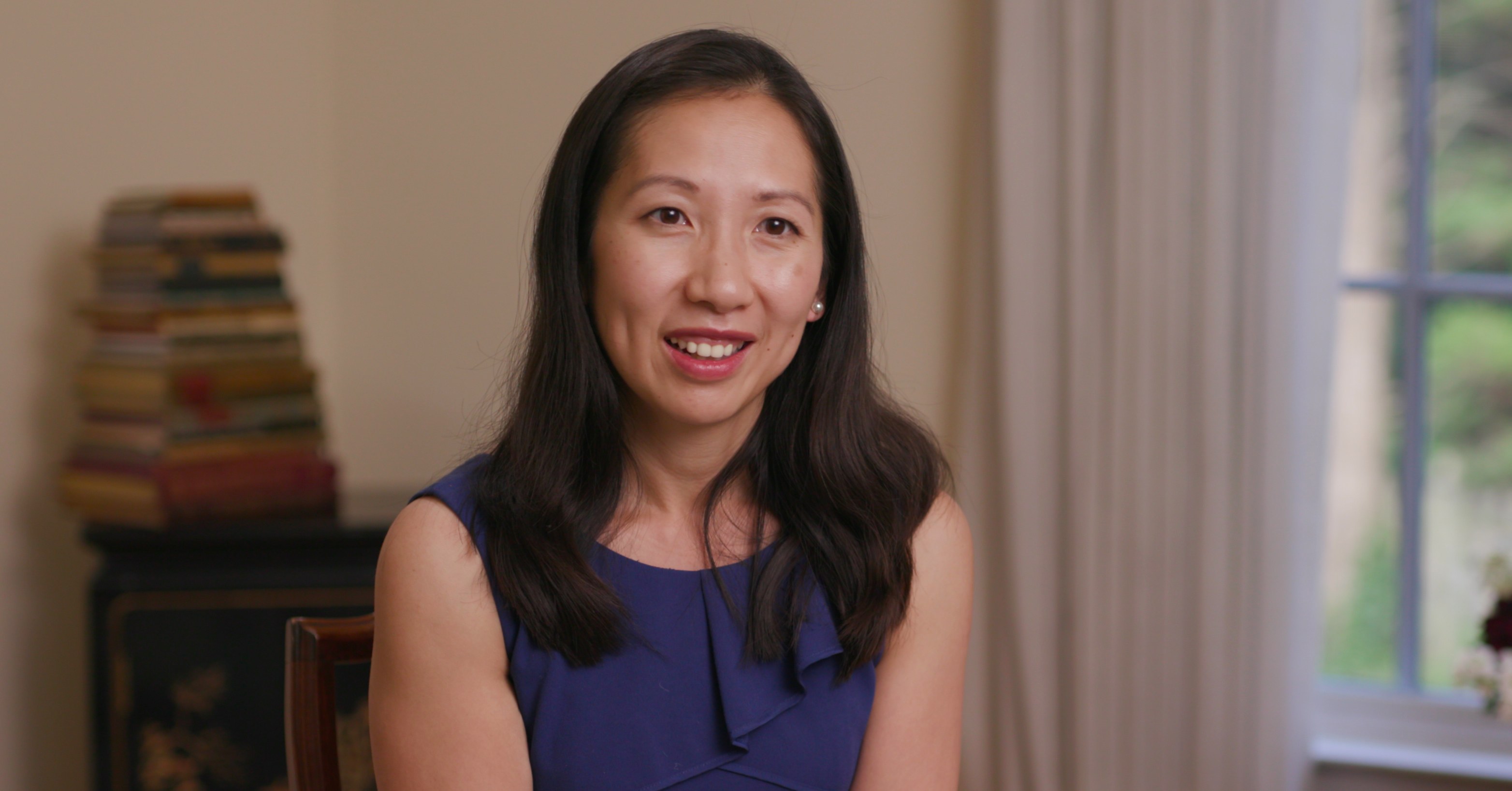
Next up? Dr. Dendy Engelman, celebrity dermatologist, 42, from New York City. Her grand total? $24,816

In today’s school of celebrity dermatology, Dr. Dendy Engelman is like the class valedictorian: a font of skin care knowledge, incredibly friendly, and with a cadre of extremely fabulous, extremely glowy patients ranging from Sofia Vergara to Beyoncé’s makeup artist Sir John. What we love most about Dr. Engelman—aside from the natural, your-face-but-glowier results of her treatments—is that she’s an unabashed, across-the-board beauty enthusiast. “What a shame it would be if you went into this profession and you didn’t love it,” she says. “I’ve been a beauty girl for as long as I can remember—when I was 10, my cousin and I would do ‘spa days’ where we’d sit in our bathing suits in my parents’ bathtub, applying masks and Seabreeze astringent for hours. It was the worst thing we could ever do for our skin, but we had the best time.”

So it’s not a shocker that her self-care routine is, shall we say, a touch extra: creams, masks, at-home gadgets, high-intensity workouts, infrared saunas, and of course dermatology treatments. (Some of that is gratis; when you go into the profession of dermatology, free treatments in your own office are a perk.) She sees all the experimentation as an important extension of the job. “I look at my own health and beauty routine as research,” she says. “Plus self-care is very important to my mental and physical health. I take care of my patients all day; prioritizing my health is key to being a present physician, wife, and mother, and having a skin care routine is one way I take care of myself. I not only see the positive effects on my skin, but the ritual is relaxing.”

My morning skin care routine: $379
I have a million products. If you were in my bathroom you’d be like, oh my gosh, this is absurd. It’s like a test kitchen. I have pretty normal skin—mild oiliness through the T-zone, but pretty normal overall, and I’m not particularly sensitive. I have some olive undertones and I can tan, though of course I don’t now. I grew up down South, which means I’m definitely a recovering sun-worshipper.

I’m a big fan of science-based skin care and treatments. I think eye cream is important, because the area around your eyes is 40 percent thinner than the rest of your face. It can be the first to show signs of aging. I use Valmont Prime Contour Eye Cream ($125); it’s really rich, and the hyaluronic acid in it diminishes dehydration lines and increases radiance and brightness. There’s also vitamins A, C and E, which give antioxidant protection and help to lighten undereye circles, which are the bane of my existence. I also always use an antioxidant serum—five drops of Skinceuticals CE Ferulic ($166) every morning to give my skin extra protection against the sun. ​Then I use Elizabeth Arden Prevage City Smart SPF50 ($68), which is a tinted mineral sunscreen with antioxidants like idebenone that protect your skin against both the sun and pollutants.


Source link

Categories
Health

Planned Parenthood Announces Dr. Leana Wen Will Be Its New President


Dr. Leana Wen was a child when her parents fled China for the United States, but her memories of those first months in America are fresh. Her parents worked multiple jobs cleaning hotel rooms and washing dishes at local restaurants first in Utah and then in California, but struggled to cover basic expenses.

“There were several times that we were evicted because we couldn’t make rent,” Wen, 35, says. “We depended on Medicaid. We depended on food stamps. And we also depended on Planned Parenthood.”

Earlier this week, it was announced that Wen, the health commissioner for Baltimore and a former ER doctor, had been named the new president of Planned Parenthood Federation of America. She follows Cecile Richards, who stepped down from role in April. Wen joins the institution at a crucial moment—as access to health care (and in particular, access to women’s reproductive health care) is more imperiled than ever under the Trump administration.

In a phone conversation less than 24 hours after the news broke, Wen explains how her mother turned to Planned Parenthood in times of upheaval, knowing she could count on the organization to provide the services she needed. “Later on, I was a patient at Planned Parenthood,” Wen says. Her sister was too. “We got care there just like 1 in 5 women in America. So much of what drives me now is based in what I experienced.” And what happens when a person doesn’t have that access—it wasn’t some abstraction. Wen witnessed it.

“As a child, I watched a neighbor’s son die in front of me because he and his parents were undocumented immigrants, and they were too afraid to call for help,” she remembers. He’d had as an asthma attack. The condition is treatable, but because of his precarious status, he died. The experience was foundational not just Wen’s sense of purpose—it was a “childhood dream” to be a doctor—but also her convictions about health care and who “deserves” it.

“I wanted to provide care to everyone no matter who they are, what they look like, where they happen to be from, and whether they could pay.”

“I saw how so much of what determines people’s health isn’t just about the health care that they receive, it’s also about so much else that’s happening in their lives,” Wen says.

When it came time to specialize after medical school, she knew she wanted to work in the ER. The aim was simple: “I wanted to provide care to everyone no matter who they are, what they look like, where they happen to be from, and whether they could pay.”

That conviction drove her to take the position as health commissioner in Baltimore, a role that proved to her what she’d come to believe was true—that “health care shouldn’t be political, that needing medication for your children isn’t political, that preventing breast and cervical cancer isn’t political.” Once, in the ER, she treated a woman who’d waited months to have a lump in her breast examined. When Wen did examine her, she found the woman had metastatic breast cancer. The disease was fatal, and three children were left motherless. “That’s what happens when women don’t have access to health care,” Wen maintains. And it’s because of cases like that one that Wen has landed where she is now.

As Wen sees it, “The single biggest public health catastrophe of our time is the threat to women’s health. That’s what I want to spend my life fighting about because everything at this moment in history is at stake.” Of course, she’s come to the appropriate address. The New York Times noted in its write-up of the news that Planned Parenthood clinics have closed due to cuts in state and federal funds and that those who had a hand in the search explained that the selection of Wen (who is just the second doctor ever to serve as president) would emphasize the fact that Planned Parenthood serves almost 2.5 million patients, most of whom are low-income and come to clinics not for abortions, but for services like mammograms and STI tests.

But what should excite advocates for women’s healths is the ease with which Wen collapses the artificial divide between Planned Parenthood as a general health care provider and Planned Parenthood as a haven for women who don’t have somewhere else to go. In the same breath, she tells me both that Planned Parenthood “isn’t a political organization” and that it’s not lost on her how “women’s health care is singled out, it’s stigmatized, and it’s attacked.”

“It’s not up to government to tell us where we are in our lives. It’s not up to government to tell us what choices we should be making about our own bodies and our health.”

“Imagine if we said that we should poll people about whether vasectomies should be legal, and then we restricted access to vasectomies,” Wen insists. “Or if the government imposed a gag rule, saying that doctors should follow a specific script in telling people about diabetes and insulin. It would never happen. It’s ludicrous to even think about. That’s why it’s so important for us to emphasize that reproductive health care is health care, that women’s health care is health care and that health care has to be a fundamental human right.”

Once more, Wen frames the battle for the kind of health equities that she intends to stand for in in personal terms: “I’ve been the woman who’s taken a pregnancy test and wished more than anything that it’s not positive. I wasn’t ready to have a baby. I wanted to go to college. I wanted to go to medical school. I wanted to come out of the poverty and circumstances of my childhood and achieve my dreams.” But she adds: “I’ve also been that same woman who at a different point in my life took pregnancy test after pregnancy test hoping that it is positive because at that moment, my husband and I were desperate to start a family. It’s not up to government to tell us where we are in our lives. It’s not up to government to tell us what choices we should be making about our own bodies and our health.”

With a vote on a new Supreme Court nominee whom she feels certain “could overturn and will if confirmed [overturn] Roe v. Wade” plus momentous midterm elections imminent, she has her work cut out for her. But Wen is not one to waver. And what’s more, she knows what the battle is for. She’s 35. Her son Eli just turned one. The issues that Planned Parenthood counsels its patients on aren’t distant memories. She lives them.

“The future that I want for Eli is a future in which women and men have equal rights and where we don’t deny people access to health care,” she tells me. And then she reaches for a phrase she’s used once before in our conversation. The future that she wants for her son boils down to this: One in which “we as a society trust women.”


Source link

Categories
Health

Dr. Pimple Popper Is Getting Her Own TV Show


Why people love watching videos of pimples being popped is one of the greatest mysteries of our time. What’s clear is that people do love it. Dr. Pimple Popper, the YouTube personality of dermatologist Sandra Lee, has earned over 3 million subscribers. Now, these fans will be able to catch blackhead, whitehead, and cyst removals in high def, because TLC is about to launch a Dr. Pimple Popper show.

This Is Zit premieres on January 3 at 10 P.M. ET, according to its Facebook page. It’ll feature Lee removing an epidermoid cyst, which pops up when skin has “turned under and formed a little sac” resembling oatmeal, a hard boiled egg, or wet newspaper. So weird. So…fascinating.

“Isn’t it absolutely fascinating what comes out of our skin?” she asks in another video for the series. Yes. Yes, it is. And we can’t stop watching.

Lee describes the series in an Instagram video as “behind-the-scenes footage of what I do in my office, how I go about doing it, more explanation of the types of things that I pop out, a lot of my favorite videos, a lot of my top pops… and three never before seen pops are there for you as well.” If the popularity of her videos is any indication, this show’s viewing rates will be off the charts.

Check out some sneak peeks below:

Related Stories:
Dr. Pimple Popper’s New Face Mask Collab Is Way Prettier Than Her Feed
Dr. Pimple Popper’s New Skin Care Line Will Take Down Your Acne
The Painfully Obvious Reason We’re All So Obsessed With Pimple-Popping Videos


Source link

Categories
Health

Ivanka Trump Told Dr. Oz She's in a 'No-Income Family'


In an interview that aired Thursday, Ivanka Trump sat down with Dr. Oz to promote her political agenda and show America that her family is just like us. There was just one glaring issue: Her family is nothing, at all, like us.

To Trump’s credit, she spoke with Dr. Oz about the national need for more paid family leave and her own personal struggles with postpartum depression—issues that countless American women can relate to. But her talking points might have thrown viewers for a loop when Dr. Oz, referencing the fact that both she and husband Jared Kushner work for the president, said, “So you’re basically a dual income family.”

Trump replied with a laugh, saying, “Actually, we don’t take an income.” She laughed again and said, “So we’ve waived our salaries, so we are a no-income family right now.”

The audience applauded the first daughter’s statement—but there’s just one problem. Trump and Kushner may have nobly waived their White House salaries, but they’re still making plenty of money.

As The New York Times explained, despite their roles in the White House, both Kushner and Trump remain beneficiaries of their businesses, which hardly makes them a “no-income family.”

Trump maintains a financial stake in the Trump International Hotel in Washington, D.C., The New Times noted. That hotel has drawn ire as the family and spokespeople—including one-time press secretary Sean Spicer—have reportedly “encouraged” diplomats and high-ranking international visitors to stay there or stop by for a visit to build better ties with the first family. Though it’s still unclear how much Trump will make from that particular hotel, Kushner’s financial disclosure forms, which include his wife’s ample assets, revealed that she earned somewhere in the market of $1 million and $5 million from the D.C. hotel between January 2016 and March 2017.

But wait, there’s more. Remember Trump’s recent book? As CNN noted, the first daughter was given a $787,500 advance from Penguin Random House for Women Who Work.

As for Trump’s husband, while Kushner has stepped down from an active role in his various companies (266 of them to be exact), he will still remain the beneficiary of the several trusts set up in his name.

As Larry Noble, a former general counsel and chief ethics officer for the Federal Election Commission told The New York Times, Kushner simply stepping down—but still benefiting—from his companies “is not sufficient.”

“While removing himself from the management of the businesses is an important step, he is still financially benefiting from how the businesses do,” Noble said. “This presents the potential for a conflict of interest. Given his level in the White House and broad portfolio, it’s hard to see how he will recuse himself from everything that may impact his financial interest.”

All told, the couple’s combined assets could total upward of $762 million, according to Business Insider. Actually not having an income is a harsh reality for many Americans—tens of millions of them, in fact—and isn’t something to giggle about on national television.


Source link