Categories
Health

How Home Improvement Helped Me Work Through Grief


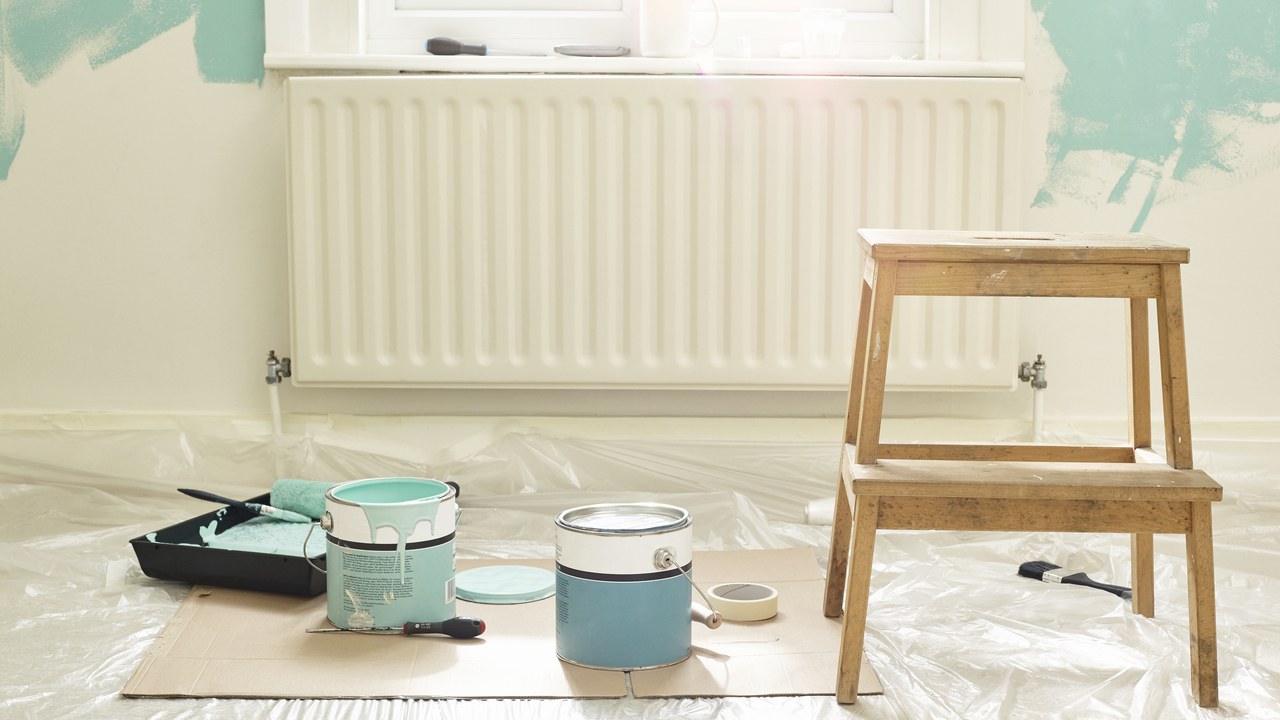
I am not one of those people who constantly updates her home’s décor. I keep it clean and child-friendly for our seven grandchildren, and cozy, I hope, for everyone who walks through our door. I have never dreamed about gut renovations or even rotated furniture. I have seldom fretted over paint colors. Our downstairs has an open floor plan, and for six years all of the walls were a shade that my friend Jackie once described as “meconium stain.” I didn’t like the color, but I couldn’t seem to find time to do something about it.

Someday, I told myself. Someday I’ll get around to seeing my favorite colors on these walls.

But after my brother’s death, something shifted. I felt so depleted, and I worried that I was losing the sense of optimism that had always kept me afloat, even in the toughest times. I stood in the middle of my dining room, suddenly aware of the warning in those dingy walls. They reflected how I felt, and that was not a good thing.

I glanced down at our dog, Franklin, who was sitting on the floor at my feet, and raised my arms in the air. “What am I waiting for?” On cue, he stood up and turned to face the living room windows, his tail thumping against my calves.

For the first time since my brother’s death, I felt a stirring of something other than sadness. Over the next few weeks, I recognized this flutter as a call to action. What, indeed, was I waiting for?

Two months later, our first floor is now a palette of cream, blue, yellow and, on one wall, a daring shade of burnt orange. “I wish I’d done this sooner,” I told Jackie’s wife, Kate.

“You’ve changed it now,” she said. “It was time.” The look on her face told me she was talking about more than a fresh coat of paint. People who love me had been worried about me. I have always been the strong one—by upbringing and by choice. But this time my stoicism was fake and useless. I needed to invite my friends back into my life.
Source link

Categories
Health

Sex After C-Section: Sex After My C-Section Helped Me Stop Feeling Like I’d Failed Giving Birth


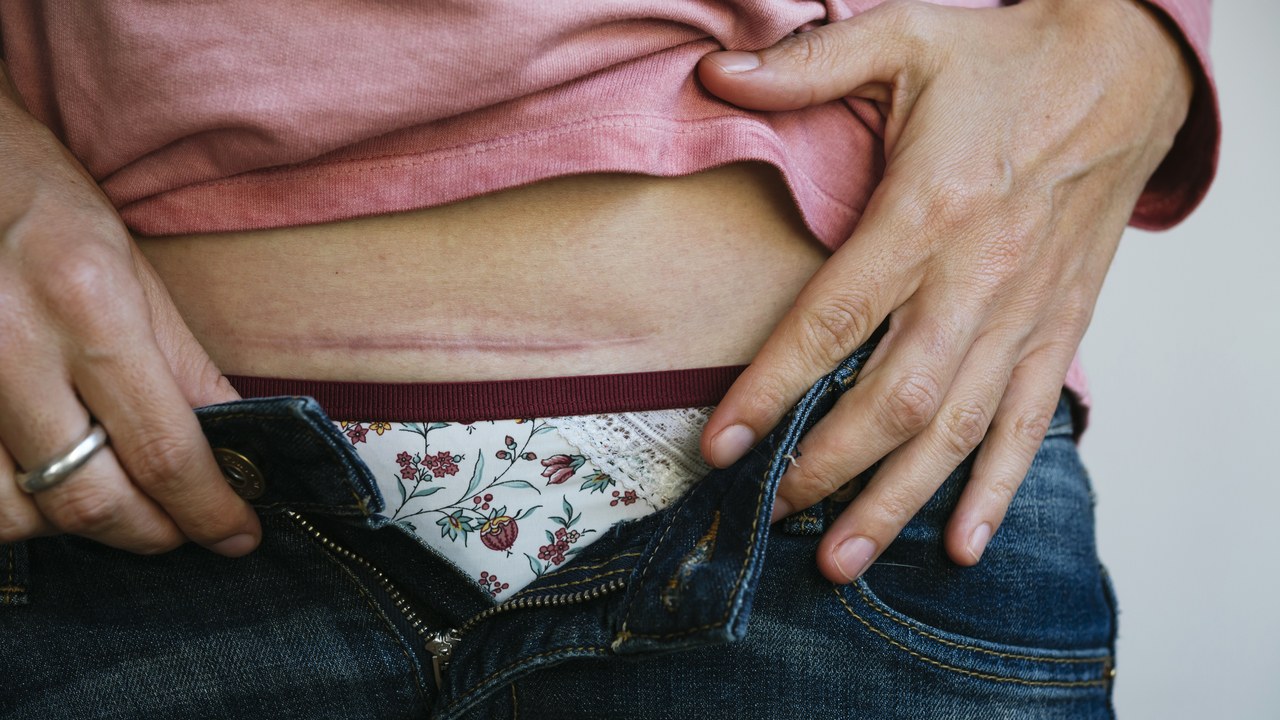
It turns out that tiny strips of silicone can help reduce the appearance of scars. You place them on top of the wound at night, and over time the scar fades. I wasn’t home a few hours from the ob-gyn before ordering a jumbo pack online. The sooner it came, the sooner I could start getting rid of This Thing.

Before the scar, stretch marks, and baby, my marital sex life was hot. We were the kind of couple who often wouldn’t make it to the bedroom, christening the couch or a beach blanket in our desire. I felt confident as I figured what my husband saw in me was what I saw in the mirror: a former collegiate swimmer with small perky breasts and firm thighs. After my C-section, with grayish purple lines dancing around my nipples and lower abdomen, and a scar cutting through my pubic region, I’m not so seamless, the physical changes a reminder of what my body has been through.

When we were cleared to have sex after five weeks, I was excited to be close to my husband again but apprehensive about how it’d go. I wasn’t feeling particularly seductive—with breast milk leaking out of my nipples and my hair in an unwashed bun, I wasn’t exactly turning myself on. My body and mind had been through a transformation, one that felt far from anything bedroom-related.

But something changed when we had sex, my angry scar on full display. Naked again with my husband, I not only felt worthy; I felt hot. I felt reminded that my body is powerful, feminine. After all, it brought our baby safely into this world, vaginal birth or not.

“Pin me down,” I commanded, hardly believing how confident I felt. My husband grinned, never more willing to oblige. I finally felt like the strong, beautiful woman my husband had been telling me I was. His excitement for me—scar and all—reminds me to embrace myself more fully.

Our scars are difficult to accept. They remind us of something in our lives that didn’t go quite as we expected. But they are also a part of our journey, our story, our beauty. My C-section brought me my giggling babe. It brought me closer to my partner. Perhaps most important, it brought me closer to loving myself even when things don’t go to plan.

When I think about it that way, I don’t hate my scar at all. In fact, I don’t need those silicone strips. I never even opened the box.

Jenna Jonaitis is a writer in Michigan covering lifestyle, wellness, and parenting. Follow her on Instagram and see her other work here.


Source link

Categories
Health

‘Reiki Helped Me Heal from the Trauma of Sexual Assault’


Trigger Warning: This article contains descriptions of sexual trauma.

I’ve recently become one of those people who is into reiki—aka “energy healing,” a form of alternative medicine. This is a complete shock to me—I generally raise my eyebrows at mentions of “chakras” and “attuning”—but I’m now that girl. Whenever it comes up in conversation that I’ve not only tried reiki but actually find it really powerful, I tend to get one of two responses (both of which involve raised eyebrows). Version one goes, “Oh, I’ve always been interested in trying that!” Version two goes, “Oh, wow,” accompanied by a studious sip of a drink.

I first encountered reiki two years ago—about nine and a half years after I was raped at a party. I didn’t tell anyone because I didn’t realize that’s what it was (I told myself it was my fault for drinking underage, for going to his room). I chalked it up to a Bad Night.

For seven years, I didn’t think about it much until it hit me while getting sunburned on a beach in Málaga: Of course it was rape; I had just been conditioned to see it otherwise.

This was right before the start of #MeToo in late 2017, and as the movement rose like a tidal wave, its presence was constant in my life: In my weekend work editing and writing, in group messages with friends, on the news screens in the subway as I rode to yoga. It felt like something real, something wild, was happening. But the rape, something I had thought about only occasionally for all that time, suddenly began to persistently haunt my thoughts—always pacing, waiting for a vulnerable, split-second lull to barge in. And when it did, it took up the room.

Yoga, which I once looked forward to as a way to slow down my thoughts, devolved during this time into a game of roulette: Either I would find peace during the vinyasa flows or deep yin sequences, my mind swaddled in calm—or frames from the Bad Night and the morning after would replay, visual and emotional impressions looping like a nightmare GIF. Once, I had a panic attack; a few times, I cried.

I did think about seeing a therapist several times throughout 2018, but I always found an excuse not to: I was tending to a fledgling start-up I co-founded, I was trying to build a travel writing career, I was navigating a long-distance open relationship. I just didn’t have the energy to figure out finding a therapist in a foreign country (I live in Germany)—and my insurance, very much basic-need coverage at the time, wouldn’t have covered it anyway.

A year and a half later, I and my mental defenses were worn down. Thoughts about my assault were breaking through more and more often, to the point where the traumatic memory GIF was an almost-constant presence in the back of my head. I felt drawn out. So I booked a week-long yoga retreat in Thailand. I told friends and family I was taking a social media-free vacation, doing yoga, reading a Kindle-pile of books, and drinking gin on the beach. Privately I was also intent on an exorcism of the trauma. I was hoping that by putting myself through six days of yoga, I’d somehow have a breakthrough, whatever that looked like. I signed up for yoga and pilates classes, and on a whim, a reiki session.

What Is Reiki?

Reiki is a Japanese “energy healing” practice. During a reiki session, a practitioner stands around you, hovering their hands over you and sometimes placing them gently on you. I was skeptical but I figured it was worth a try.


Source link

Categories
Health

How to Cope with Infertility: Humor Helped Me Get Through It


A fertility doctor, an ultrasound technician, and 17 interns walk into a vagina…

There I was at the fertility clinic. Signed in, sitting there in the waiting room. Waiting. I’ve been here before—just a couple of days ago, and a couple of days before that, actually. And yet here I am again. There are other women here, probably waiting for the same type of exam, but we won’t strike up a conversation. Or even make eye contact. Nope. This is the weird unspoken rule in the fertility clinic waiting room: Silence.

Finally, it’s my turn to go in. Some clinics make you strip down and change into one of those ultrathin robes, while others merely ask you to forgo your undies in exchange for a little paper sheet. Either way, there’s nudity involved. Not the sexy kind.

With each visit to the fertility clinic, I’m never sure what the protocol is when it comes to the stirrups. Should I swing my feet right on up there before the doc comes in? That seems efficient. But also like I’m greeting my doctor with a vagina. Then again, is it weird if you don’t greet your gynecologist with your vagina? Because let’s be honest, we both know that part is coming.

“Scoot down a little further,” he or she says (at least twice if not more). One time I planted myself precisely in the right spot—no scooting needed. I was very proud of myself, but nobody said, “Scoot no further! Your aim was perfect!” It is strange if I think about it (and trust me, I think about it). I’m sitting there, exposed, legs splayed out in stirrups like some equestrian gone kinky, and someone else is there! A stranger! Checking my insides. Live. Am I properly groomed? I wonder. Is there some sort of standard?

Next I say hello to my good friend “Wanda,” aka the vaginal ultrasound wand, or as I prefer to call it, the penis camera. For those who’ve never had the pleasure of meeting Wanda, it’s basically a rod connected to a machine with a screen, relaying moving images from your insides. The rod is usually covered with a condom topped with industrial amounts of lube, then inserted (hopefully gently) into your vagina. Then it’s moved around every which way in order to proceed with getting an image to check for a variety of female reproductive parts and processes. It can feel odd, but it’s bearable; for me it usually felt uncomfortably breathless, like some sort of uterus Spock grip. I always tried to just grin and bear it, smile and nod, because I wanted to seem cool and collected, as one does with her vulva on display. Mainly, I want to get it over with smoothly.

IÆve never liked gynecological examinations, but here I am, a veritable expert in the stirrups, years of experience under my belt. (If one were allowed to wear a belt during a gyno exam, that is.) I’ve experienced unexplained infertility and unexplained secondary infertility for a total of 11 years or more, including miscarriages, continuous two-week waits, emotional roller coasters, and probably a touch of PTSD from it all.

I honestly don’t remember how many rounds of intrauterine insemination (IUI) I’ve gone through. Somewhere around five. All of them unsuccessful. For each, I got an abnormally long tube shoved up my vagina while amped up on hormones in order to get inseminated with my husband’s top crop of sperm. During the more-complex in vitro fertilization, of which I did one round, I was under anesthesia so I didn’t feel anything during the egg retrieval procedure. I should add that after the IVF egg-retrieval procedure, my recovery from anesthesia began with me screaming like a deranged farm animal because I felt like just a floating head and was completely disoriented and scared. I apparently startled the whole recovery area, and several nurses had to crowd around me to handle the situation. (At the IVF embryo transfer a few days later, I assure you I was completely personable and lovely.) At some points, I really felt like some alien in a sci-fi movie, poked and prodded by white-coated strangers—although by choice—all in the name of having a baby.


Source link

Categories
Health

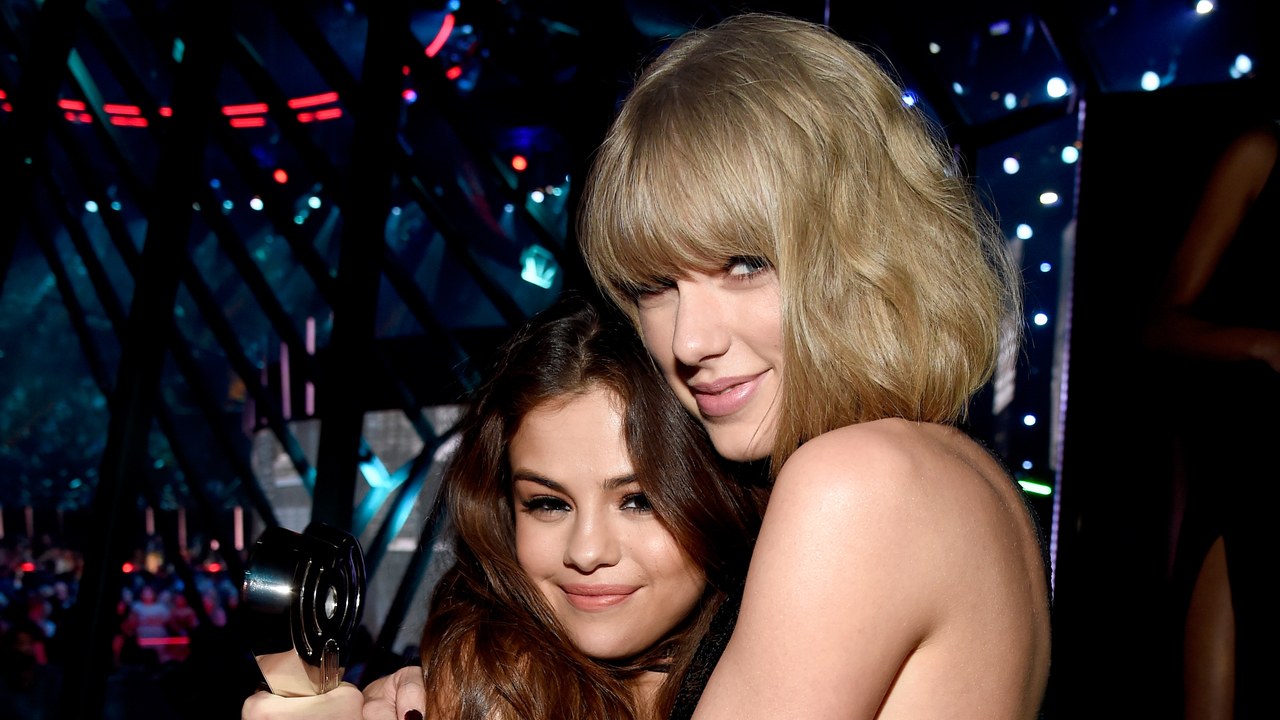
Selena Gomez Revealed How Taylor Swift Helped Her Get Over Justin Bieber


Selena Gomez is back on the charts with her first new songs in years, “Lose You to Love Me” and “Look at Her Now.” Fans wasted no time combing through the lyrics of the singles for references to Gomez’s breakup from Justin Bieber last year.

And while Gomez hasn’t directly addressed her songs’ ties to her old relationship, she has gotten candid about the period after her breakup—and how her close friend Taylor Swift helped her move on and get back in the studio.

The details about Swift’s role in helping her pal move on from a broken heart emerged when the singer stopped by BBC Radio’s Beats 1 show for an interview with Zane Lowe this week. Lowe asked Swift what she thought of Gomez’s new music, and she couldn’t stop gushing about it. “Lose You to Love Me,” Swift said, is “the best thing [Selena’s] ever done.”

“She’s been through so much,” Swift added. “I’ve watched so much happen in her life and had a front-row seat to so much, and I’m so proud of her. She is such a revelation because now she’s making her best stuff.”

Swift continued: “The things that she’s overcome, the situations she’s risen above, it’s been a long time since we were friends and she’s the best. She’s just the best. I’m really excited because when somebody has had great life experience, has had really tough things they’ve had to go through and they can process that and make art that’s going to help other people, that’s what kind of song this is. I’m stoked.”

Swift added that she can’t speak for Gomez’s experience entirely, but she’s thrilled at how far her friend has come. “Just from my perspective as her friend, I’ve just never been more proud,” she said.

Later that day, it was Gomez’s turn to chat with Lowe. He played her the recording of Swift’s interview on the air, asking her to respond. Needless to say, things got emotional.

Gomez choked up, revealing that Swift has been by her side through every high and low over the past several years. “She was frustrated when I was frustrated; she was sad when I was sad,” she said, per Elle. “I think [my friends] visibly saw me in so much pain. And they didn’t want it for me but they—sorry—they never stopped loving me.”

As it turns out, Swift was also by Gomez’s side in and out of the studio. The “Lover” singer was one of the first ones to hear “Lose You to Love Me,” Gomez explained. “I played her the song, and I played it with her mom and dad, and I showed her the video and her mom and Taylor started crying,” she said. “And it wasn’t because the song was emotional. It was just because the first thing they said to me was, ‘We’re so happy that you’re here. After seeing all of that, this is such a cool moment.’ And that’s a huge thing for me.”

Gomez added that her rollercoaster relationship with Bieber took its toll, but opening up about it to her closest friends made healing possible. “My heart was just so tired, and I think that allowing myself to just say that was important for me,” she said.

The singers met in 2008 while they were dating two of the Jonas Brothers (Joe and Nick), and have remained close friends ever since. In a 2017 interview, Gomez said that becoming friends with Swift was “the best thing we got out of those relationships.”

Over the past week, Gomez has continued to open up about her new music and the pain that inspired it. In an earlier interview with Ryan Seacrest, she admitted that healing after her breakup wasn’t easy, but she’s channeled it into her album that’s four years in the making. “It took me a long time to get through it,” she said. “Now it’s fine. I’m smiling. It’s so great.”


Source link

Categories
Health

Some Fans Think Serena Williams' 'Business Bun' Helped Her Win at Wimbledon


Serena Williams is continuing another epic run at Wimbledon. She’ll play in the semifinals on Thursday (July 11) against Barbora Strýcová in hopes of making her 32nd Grand Slam final. (She’s also still in the hunt for the mixed doubles titles with British star Andy Murray.)

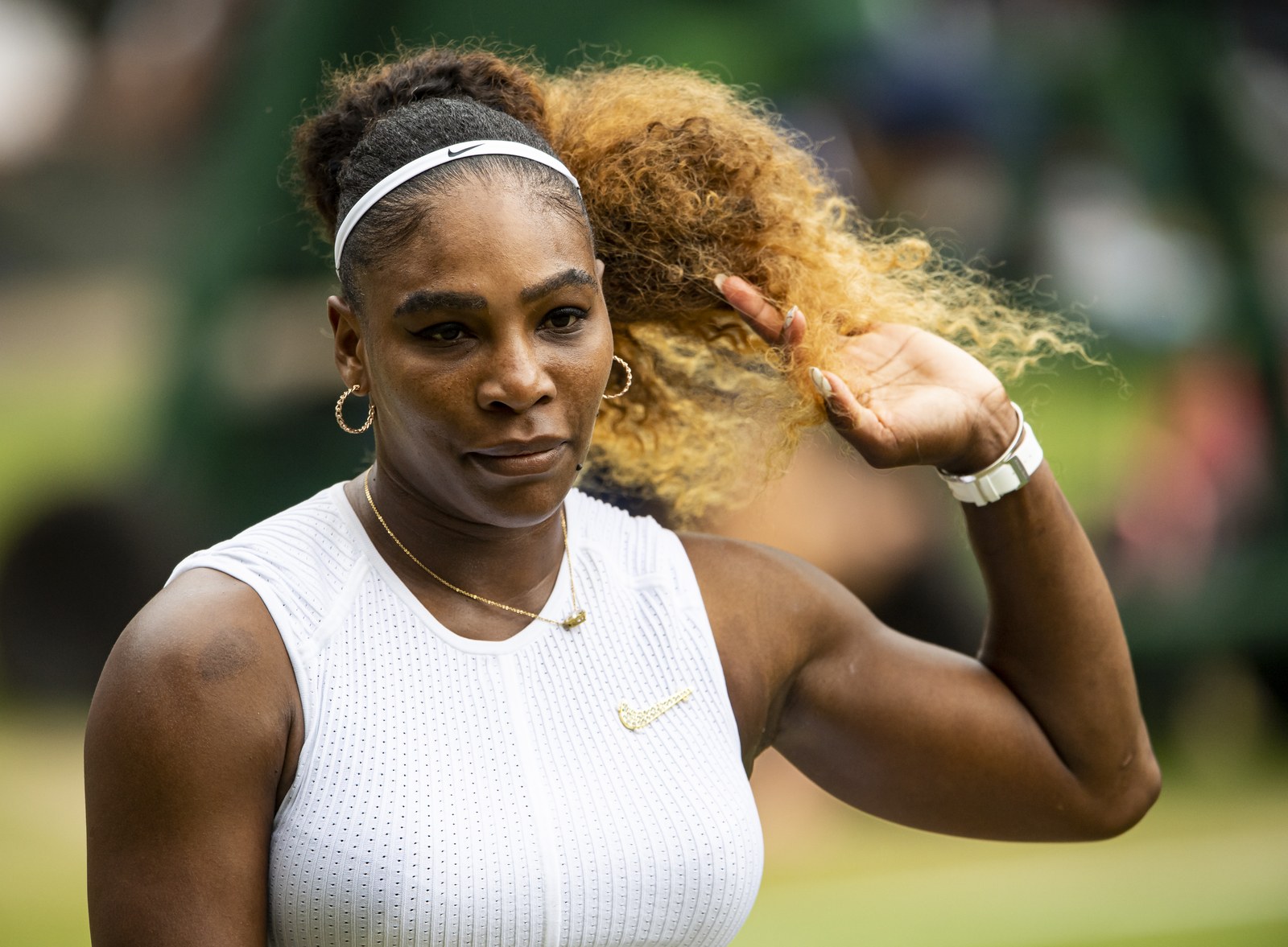
As always, she’s shown off her incredible skill, fitness, and endurance on the court. But some fans think there’s another key to her powers: her hair. During her Tuesday (July 9) match against fellow American, Alison Riske, Williams initially wore her curls in what has become something of a signature look for her—a modified ponytail with a headband. After losing the second set and with the third tied at 3-3, she pulled her hair up into a tight bun.

Soon enough, Williams was once again dominating the match and ended up winning that set 6-3 and the match.

Before:

TPN/Getty Images

After:

Serena Williams during Day 8 of The Championships  Wimbledon 2019
TPN/Getty Images

“Well, today [my hair] was just in my way, and the wind. I was missing a shot because it’s in my face,” Williams said of the hair switch. “I was like, ‘This is not happening.’ I just needed to get it out of the way, put the business bun up and just get to business.”

She also called it her “emergency exit.”

Listen, I’m just a fan, and I’ve fully convinced myself that whether my hair is up or down has an effect on the sporting event I’m watching—so I’m totally with the people online who credit the “business bun” with changing the tide of the match. Even Williams’ husband, Alexis Ohanian, weighed in. “#MamaStrength. What an amazing match between two women who went all out today. But the #BusinessBun means business,” he wrote.


Source link