Categories
Health

‘Giving Birth Left Me With PTSD’


Once I was released from my own hospital stay, I rushed to the NICU. Despite the nurses and doctors suggesting I go home and rest, my trauma refused to let me go. We spent the next two months watching my son grow stronger and healthier in the hospital.

But when we finally came home, I found PTSD hit me in new ways. The beeping noise from a machine at a restaurant drive-through window dragged me back through memories of being surrounded by beeping NICU monitors. The smell of hospital soap in a public restroom put me right back in the NICU’s hand washing stations. Every time, I felt paralyzed. Panicked.

My baby was now home and growing stronger but the fear that he would suddenly die wouldn’t go away. In fact, it was getting stronger too. Without the constant monitoring of his vitals, I spent every anxious moment making sure he was still breathing. The stream of intrusive thoughts telling me I was a bad mother, or that my son would die from a million and one different causes, was relentless. When he began eating solid foods, I held my breath with each bite, believing he would inevitably choke to death. When he began walking, I followed him as closely as possible to ensure he wouldn’t get hurt from a fall. Beautiful moments were tarnished with the residue of trauma.

It took me two years before I finally sought help in managing my PTSD. “It can take people a long time to come in for help. They often wait until the fog starts to lift for them, but this can mean many months have gone by,” says Heidi McBain, a Perinatal Mental Health Certified Counselor in Flower Mound, Texas.

For Nikki, a mother of three based in Clermont, Florida, it took even longer. She experienced two traumatic c-sections which she describes as feeling “violent.” “I could feel my insides being shoved back in me, and the nurses and doctors spoke to each other as if I wasn’t there…It made me feel like a slab of meat,” Nikki says. She also feels she lacked support after her traumatic experiences. “No one asked about my actual birth experience,” she says of her first two births. After her third, she received a mental health diagnostic test at her midwife’s office. But despite scoring low, no one followed up.

Nikki is pregnant again, and this time she’s being proactive about receiving help by way of therapy.“I feel like the quality of mothering my children were getting was slipping, and that was my real motivation for getting help,” she says.

When women do get support though these traumatic experiences, it’s powerful. “My OB is a godsend. She referred me to a therapist who specializes in loss—it was just the person I needed to listen to me,” says 34-year-old photographer Alexandria Mooney, whose stillborn son Clark had to be delivered via c-section just shy of 22 weeks.The mother of five sometimes visits the hospital where she birthed Clark in order to photograph clients, and says she still feels transported to the day she lost her son whenever she enters her former OR and recovery room. “Grief will stay with you forever, but I am determined to not let it consume me,” she says. “I try and turn it into something good.”

It’s now been seven years since I lost my daughter, and six since my son was born. PTSD continues to exist in some form or other inside me, but these days I have tools that help me deal. Jackson says many individuals with this type of trauma respond amazingly to EMDR (Eye Movement Desensitization and Reprocessing) therapy, and I am definitely one of them. General talk therapy and finding community with other loss moms are other things that have also helped me.

Infant loss and traumatic births happen more often than we realize, and the scars they leave are huge and can last a lifetime. But like Mooney, I refuse to let them beat me. PTSD is my diagnosis, but resilient is who I am despite it.

Priscilla Blossom is a freelance journalist specializing in arts & culture, parenting, travel, and health & wellness.


Source link

Categories
Health

Giving Birth During Coronavirus Is Every Woman's Nightmare


“The thought of my husband dropping me off at the hospital, me getting checked in alone, getting the epidural shot alone, and not having his hand to hold terrifies me,” says Morgan Pederson, a 32-year-old woman from Queens, New York, who is planning to deliver her second child in June.

Last week two New York hospitals, New York Presbyterian and Mount Sinai, announced that in the face of the coronavirus pandemic they would not allow partners or spouses in the labor and delivery ward or on the postpartum floors. It sparked a flood of concern from around the country. Was this the new norm?

Days later, on March 28, New York governor Andrew Cuomo stepped in, issuing an executive order overruling the decision of private hospital systems and mandating that one support person—without a fever—must be allowed to be present while women are in labor.

Giving birth is a beautiful experience—it’s also one of the most vulnerable times in a woman’s life. Exposed, incapacitated, and in excruciating pain, laboring moms rely on other people—doctors, nurses, midwives, doulas, and especially their partners—for help and support. It’s a marathon that can take hours (or days) and expecting moms aren’t monitored continuously by staff during the entire journey. Throughout the process, nurses only rotate through and check in every few hours unless they are requested. Doctors are typically not present until the patient is already pushing. Often, the delivery floor gets busy, and the time it takes to access medical staff becomes further delayed. And that’s during the best of times.

Giving birth during the coronavirus is an entirely different ballgame. With the realities of the pandemic intensifying every day, maternity wards have a serious challenge: keep pregnant women, their babies, their families, and healthcare workers safe in the face of COVID-19. “It is time to put all of our faith in our health care professionals,” says Xana Miguelez, M.D., an ob-gyn and attending physician at Mount Sinai Medical Center in Miami. “Have the certainty that we are all taking care of our patients, your loved ones, with all the care and dedication that you would.”

Still, that can mean hard-to-swallow changes to pregnant women’s birthing plans—and a new reality of social distancing during labor.

Rebecca Garay, 35, who will be giving birth in Miami, is hoping for a vaginal birth after two C-sections. She’s relying on the help of a doula for a challenging delivery so she can stay out of the operating room. Garay was initially hoping to have both her husband and her doula in the delivery room with her. But coronavirus concerns complicated childcare plans for her two older girls, ages 4 and 6. Her husband’s family in Miami are elderly and at high-risk for coronavirus, while her family in New England is unable to travel because of the pandemic. That means her husband will not be present at the birth—he will stay at home with her two girls, while she labors with her doula.

“It feels numbing. Not real. I do not have a choice so I am staying strong, chugging onwards,” says Garay. “I’m just going to do what I can do within my control so I can have the best success of having a vaginal birth and staying out of the OR and getting back to my family ASAP.”

Birthing partners are a crucial part of medical care during labor and delivery, says Jesse Pournaras, a doula serving New York. “Partners are imperative—not only for love, physical, and emotional support—but they bear witness. They can alert medical teams when something is amiss, when there is a medical emergency, or when the patient cannot reach staff themselves,” she says.

The uncertainty over how hospital policies may change in the coming days is prompting some women to consider alternatives. “For my husband and I, laboring alone is not an option,” says Sierra Lawe, a 36 year old who was planning to have her first child at a birthing center in Berkeley, California. Midwives have warned her and her husband that if a medical situation arises—if the providers or the couple are sick or if there is an emergency—Lawe and her husband need to prepare for a possible solo birth at a hospital. “It seems like any sense of autonomy that expectant parents may have had at one time has vanished,” Lawe says. “I can’t even begin to imagine how I would get through labor without my husband there.”


Source link

Categories
Health

Sex After C-Section: Sex After My C-Section Helped Me Stop Feeling Like I’d Failed Giving Birth


It turns out that tiny strips of silicone can help reduce the appearance of scars. You place them on top of the wound at night, and over time the scar fades. I wasn’t home a few hours from the ob-gyn before ordering a jumbo pack online. The sooner it came, the sooner I could start getting rid of This Thing.

Before the scar, stretch marks, and baby, my marital sex life was hot. We were the kind of couple who often wouldn’t make it to the bedroom, christening the couch or a beach blanket in our desire. I felt confident as I figured what my husband saw in me was what I saw in the mirror: a former collegiate swimmer with small perky breasts and firm thighs. After my C-section, with grayish purple lines dancing around my nipples and lower abdomen, and a scar cutting through my pubic region, I’m not so seamless, the physical changes a reminder of what my body has been through.

When we were cleared to have sex after five weeks, I was excited to be close to my husband again but apprehensive about how it’d go. I wasn’t feeling particularly seductive—with breast milk leaking out of my nipples and my hair in an unwashed bun, I wasn’t exactly turning myself on. My body and mind had been through a transformation, one that felt far from anything bedroom-related.

But something changed when we had sex, my angry scar on full display. Naked again with my husband, I not only felt worthy; I felt hot. I felt reminded that my body is powerful, feminine. After all, it brought our baby safely into this world, vaginal birth or not.

“Pin me down,” I commanded, hardly believing how confident I felt. My husband grinned, never more willing to oblige. I finally felt like the strong, beautiful woman my husband had been telling me I was. His excitement for me—scar and all—reminds me to embrace myself more fully.

Our scars are difficult to accept. They remind us of something in our lives that didn’t go quite as we expected. But they are also a part of our journey, our story, our beauty. My C-section brought me my giggling babe. It brought me closer to my partner. Perhaps most important, it brought me closer to loving myself even when things don’t go to plan.

When I think about it that way, I don’t hate my scar at all. In fact, I don’t need those silicone strips. I never even opened the box.

Jenna Jonaitis is a writer in Michigan covering lifestyle, wellness, and parenting. Follow her on Instagram and see her other work here.


Source link

Categories
Health

What’s the Most Effective Type of Birth Control?


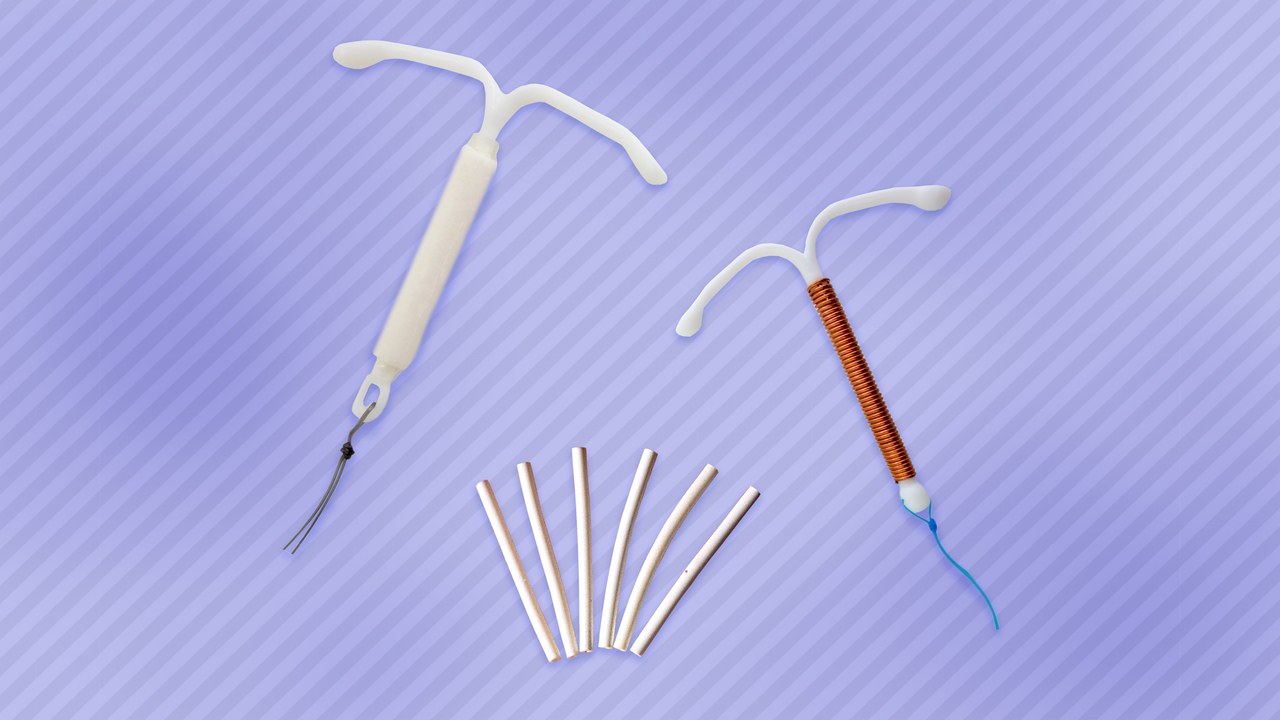
There are several factors that go into choosing the best birth control—your reproductive plans, your feelings about hormones, your experience with cramps. All methods have their pros but when it comes to the most effective type of birth control, there’s a clear winner: long-acting reversible contraceptives (or LARCs).

LARCs—which include IUDs and implants—are between 98 and 99.9 percent effective at preventing pregnancy. “Long-acting reversible contraceptives are the most effective form of birth control because there’s no what we call ‘user error,’” says Taraneh Shirazian, M.D., assistant professor in the department of obstetrics and gynecology at NYU Langone Health and founder of global women’s health nonprofit Saving Mothers, “meaning that you don’t have to do anything [in order for them to work].” Over time, that makes them 20 times more effective than birth control pills, the patch, or the vaginal ring, according to the American College of Obstetricians and Gynecologists.

It’s not just the effectiveness that makes LARCs a solid choice for birth control. “It’s a one-time cost. They’re long-acting. They have minimal side effects, for the most part,” says Kecia Gaither, M.D., ob-gyn, maternal fetal medicine specialist and director of perinatal services at NYC Health + Hospitals/Lincoln. “When you’re looking at the big picture, those are some really nice things to consider.”

But what, exactly, are the different types of LARCs? How do they work? And how effective are they preventing pregnancy—especially when compared to other forms of birth control? We asked the experts to break it down.

Types of LARCs

There are two different types of long-active reversible contraceptives: Intrauterine devices (better known as IUDs), which are inserted into the uterus, and the implant, a small rod-shaped device that is implanted under the skin of the upper arm.

IUDs

There are actually two different types of IUDs—copper IUDs and hormonal IUDs. While they’re both extremely effective at preventing pregnancy, they work in completely different ways.

The Copper IUD

The copper IUD is approved to work for the longest duration of time—10 years. (Though your gyno can remove it at any time if you want to start getting pregnant.) It’s also completely non-hormonal. “It basically creates an inhospitable environment for pregnancy. The copper presence prevents the fusion of the egg and the sperm,” explains Shirazian. It’s a great option if you don’t want to get pregnant any time in the near (or distant!) future or if you want a completely hormone-free method of birth control.

The Hormonal IUD

The Hormonal IUD prevents pregnancy through introducing the hormone progesterone—one of the two hormones typically used in the birth control pill—into your system. “What progesterone does from a contraceptive point of view is it thickens the cervical mucus, which makes it difficult for the sperm to even get through the cervix and into the uterus,” says Gaither. “The other thing that hormonal contraception devices do is inhibit ovulation,” she adds. “So you’ve got a two-hit wonder from using the hormonal IUD.”

Hormonal IUDs are over 99 percent effective at preventing pregnancy and last between three and six years. (The length of effectiveness for hormonal IUDs depends on the brand).

Implants

If an IUD doesn’t feel like the right fit for you, there’s another LARC option: The birth control implant.

The implant works much the same way as the hormonal IUD. Instead of being placed in the uterus, the implant is a small device about the size of a matchstick that’s placed in your upper arm just underneath the skin, explains Shirazian. Like the IUD, it also secretes a form of progestin. “Progesterone has the same effect whether it’s subdermal or in the uterus,” says Shirazian. “Progesterone is absorbed into the bloodstream and the presence of progesterone basically has the same effect as the hormonal IUD would.”


Source link

Categories
Health

Shay Mitchell Hit Back at People Mommy-Shaming Her for Going Out After Giving Birth


It hasn’t even been a month since Shay Mitchell gave birth to her daughter and already she’s facing the wrath of mommy-shamers. This week, people left her a series of critical comments about how she went to Drake’s birthday party with her boyfriend, Matte Babel, shortly after having her baby. But she defended herself on Tuesday, October 29, in an Instagram Story, standing by her decision to have at least one night out as new mom.

In the Instagram Story, Mitchell explained that she hadn’t initially seen a lot of the remarks people left her. “I haven’t been really checking my comments that often, but apparently people are really upset that I left three days after having a kid to go out and party,” she said, adding, “It wasn’t three days, and she was with [my dog] Angel, so…”

She then went on to read a few of the pointed things some of the mommy-shamers had said to her. “Wait. So you literally just had her and you’re more worried about clubbing with Drake? Wooow,” one person wrote. Another one read, “Mother of the year award right here!!!! As if you seriously could leave your baby to go party?!!! I hope the child’s aid look into this and your abilities to be a good parent cause damn!!! Lacking some serious skills there sweety! #selfish.”

Mitchell handled the unfair skepticism in stride, which makes sense given she’s been pretty open about the entire pregnancy and motherhood process. Once she announced she was expecting, she made most of her journey public by creating a YouTube series with Babel called Almost Ready. There, she candidly tackled everything from the possibility of a C-section to her 33-hour labor and delivery. We’ll have to see if Shay Mitchell continues the series. If she does, an episode about mommy-shaming seems appropriate.

[embedded content]


Source link

Categories
Health

Ryan Reynolds Took a Work Hiatus to Be With Blake Lively After She Gave Birth This Summer


News broke over the weekend that Blake Lively and Ryan Reynolds welcomed their third child about two months ago. The couple confirmed they were expecting back in May, when Lively attended the premiere of Reynolds’s movie, Pokémon Detective Pikachu, in a form-fitting yellow dress. Now, details about the newborn are slowly trickling out—including something Reynolds did shortly after Lively gave birth.

According to Us Weekly, Reynolds took a brief work hiatus to be with Lively post-delivery. “Ryan left the set he was working [on] for about eight days,” a source tells the outlet.

Us reports that Lively and Reynolds’ new baby is about two months old, and that their decision to keep the birth private was deliberate. “They do everything they can to make sure [the kids] have a normal upbringing,” an insider says.

Michael Stewart/FilmMagic/Getty Images

This aligns with quotes Blake Lively has said in the past about her and Ryan Reynolds wanting to give their children relatively quiet home lives. “Ryan had a nice, normal upbringing, and we want our kids to have the same normal life that we had. We don’t ever want to rob them of what we had, because we’d feel really selfish,” she told Marie Claire in 2016.

She echoed similar sentiments in her September 2017 cover story for Glamour. “I admire people who find that what fulfills them is their art or their work, but what fulfills both me and my husband is our family,” she said. “Knowing that, everything else comes second. We’ve each given up stuff we loved in order to not work at the same time. I’m fortunate to be in a place now where I get to find the material—a book or script—early and develop it. So I know ahead of time that I’m going to be working on this job at this time. And we can plan around it.”


Source link