My yoga teachers informed me that my right hip gets stuck, while the left is flexible; they’ve alerted me that my right shoulder sits higher than the left; they’ve drawn my attention to my left arm, which in straight arm poses lapses into a bend. How did I not know these things about my own body? I’d been living in a daze, letting my curve decide how the rest of me should accommodate it.
I worked closely (and slowly) with my body to become increasingly aware of my unique spine and what I could do to reduce the pain. I learned to pause and observe my mind and my body as I held poses for long periods of time. After a couple of years of attending yoga classes once a week, I revisited the doctor and to my surprise, the lower curve in my spine appeared to have diminished by three degrees. My condition was improving. People commented on my posture, but this time, positively.
Going to yoga classes once a week helped minimize my immediate scoliosis pain, but eventually I grew lazy. By the time I moved to Los Angeles in 2015 to live with my fiancé, my back pain had retrogressed. At times, the sensation was so overwhelming, I had difficulty focusing on my work. Eventually, I decided to sign up for a three-month study with Koren Paalman, certified Iyengar yoga teacher, who is a student of Elise Browning Miller, the foremost authority on yoga for scoliosis. Koren would hear my history, follow my progress, and select therapeutic poses for me to practice at home. These poses held the potential to reduce pain, strengthen muscles that weakened from my unevenness, improve balance and mobility, and propel me toward a more aligned state. She’d take before and after photos. We both hoped for change.
The author untwisting her spine in hanging sirsasana.
Photo courtesy of Lauren DePino
The first pose Koren chose for me was something she learned directly from Mr. Iyengar: hanging sirsasana—a version of headstand where one hangs upside down from ropes attached to hooks on the wall—but with a twist. Unlike classic headstand, this pose allows the neck to lengthen freely, which is especially helpful for those with a curve imbalance.
While suspended in air, I didn’t have to work with strained attention to straighten my back or decompress my neck—gravity did it for me. Koren then handed me a cold rolled steel bar to hold to one side of my body—a counter-rotation of my spine designed to bring evenness. Instead of the constant pain I carried like a lead chain draped over my right shoulder, I felt weightless relief, even enjoyment.
Koren gave me a total of seven poses to practice. At first, I had to force myself. But in time, my body craved them. I know that if I can get myself into the ropes for just five minutes, my pain will subside. My mind will quiet. The results will come with consistent conscientious practice.
My spine may never be straight and my scoliosis will never be cured. But learning about my physical alignment has made me so much more attentive to how I move through the world. Instead of ignoring the signals from my meandering vertebrae, I notice the shapes of things—of trees, of buildings, of my body.
Even when I’m not practicing yoga, I align myself. Instead of hunching, I create space between my neck and shoulders. I assert will to release my sticky right hip. I try to hold my spine as straight as a needle. These actions are becoming embedded in my muscle memory. Little by little, I have less pain. I stand taller. Change is gradual, but it’s happening.
I’m good at many things. I’m an excellent gift giver, strong listener, and my brain is a storage unit for obscure Lana Del Rey trivia. Among my many gifts, however, is not the ability to do a smoky eye. I could do a winged liner in my sleep, but I’ve never been able to get the hang of a perfectly smudged and smoldering shadow, that somehow manages to look like you just rolled out of bed after a night of partying, yet put a huge amount of effort into looking glamorous and mysterious—my ideal look. Many of my personal beauty icons have made a smoky liner part of their signature look (Kate Moss and both Olsen twins to name a few), but despite years of trying, I’ve never been able to get it down.
My smoky eye FOMO was only amplified while covering backstage at New York Fashion Week. At nearly every show, I was greeted with smoky eye after smoky eye. It’s like the makeup artists were mocking me and my lack of blending skills. Now, smoky eyeshadow is nothing new, especially at fall shows, but paired with incredibly dewy skin and model bone structure, it reignited my desire to look like a rebellious Jenny Humphrey.
The stars must have aligned, because I attended a master class with makeup artist Diane Kendal to break down the Tom Ford makeup look, and she dropped a tip that rocked my world. It was like the clouds parted, and I suddenly had all the answers.
To create a lush, textured smoky eye (mine always look too flat and heavy), Kendall suggests starting with a cream liner to create a base, and then going in with eyeshadow. This is pretty standard advice that hadn’t helped me so far, but what comes next changed everything for me. She then says to line your eyes with a black liquid liner, and then to go back over it with a brown pencil. This creates dimension, and also helps to smudge it all out. Plus, for a liquid liner addict like me, it still gives me the definition I love, plus the smoke I crave.
Ever since adopting this tip, my confidence in my smoking skills has all but skyrocketed. I’ve swapped my normal going out look of an exaggerated eyeliner for a sultry smoke. Let me break it all down for you, below.
Gigi Hadid at the Tom Ford fall 2019 show
Step 1: Lay down the base Create the base for the shadow with a pencil. Kendal used Tom Ford Eye Kohl Intense, but I’ve been alternating between the Charlotte Tilbury Color Chameleon Eye Pencil and MAC Teddy Eye Kohl. Trace it along your upper and lower lashes, as well as into the crease, to create the shape and help the shadow stick.
Step 2: Sweep on eyeshadow At the Tom Ford show models wore cool toned shadow, but I’ve been using bronze to make my eyes pop—plus, I like more of a softer look. Using a deep matte shade, go over where you laid down the liner, and then add a lighter shade with a little sheen in the middle of your eye. Try to keep the shape rounder instead of a cat eye shape, and blend the edges so they look a little hazy.
Step 3: Add liquid liner Add definition with a liquid liner on top and bottom, staying as close to your lashes as possible (I love the Tom Ford liquid liner pen for this). You don’t really want to see the liner, it’s just there to add depth. A wing is not the look, but it’s OK to extend the line a little past your eye.
My first brush with the “pro-ED” blog on LiveJournal was only the tip of the thinspiration iceberg—there were dozens more pages like it, many of which are still live today, despite other platforms taking a stand against content glorifying eating disorders. (Glamour reached out to LiveJournal for comment on the pro-ED content on the platform but did not receive a reply.)
In this social media era, pro-ED content has mutated to keep up with the rapid evolution of technology. After LiveJournal, there was Tumblr, another haven for communities promoting unhealthy behaviors. Facebook, Instagram, and Twitter have all similarly developed their own pockets of “thinspo.”
Yet alongside the growth of social media there was also a growth of knowledge: We know more about eating disorders today than we did in the early 2000s. We’re equipped with language to discuss them in more productive ways. Body positivity has reframed the way we talk about our bodies both online and off. Most of all, with so many people (Instagram influencers and “regular” folk alike) going viral every day for embracing—and celebrating—their body’s flaws, social media has rapidly turned into a place where every body can and should be considered beautiful.
Banning thinspo content is kind of like playing Whack-a-Mole—as soon as a site bans a certain hashtag, another pops up in its place.
That movement has helped fuel a crackdown on pro-ED material online. In 2012, after I had been in recovery for several years, Tumblr, a notorious hub for thinspo, banned all “pro-ED” content. Facebook, Twitter, and Pinterest all have similar policies.
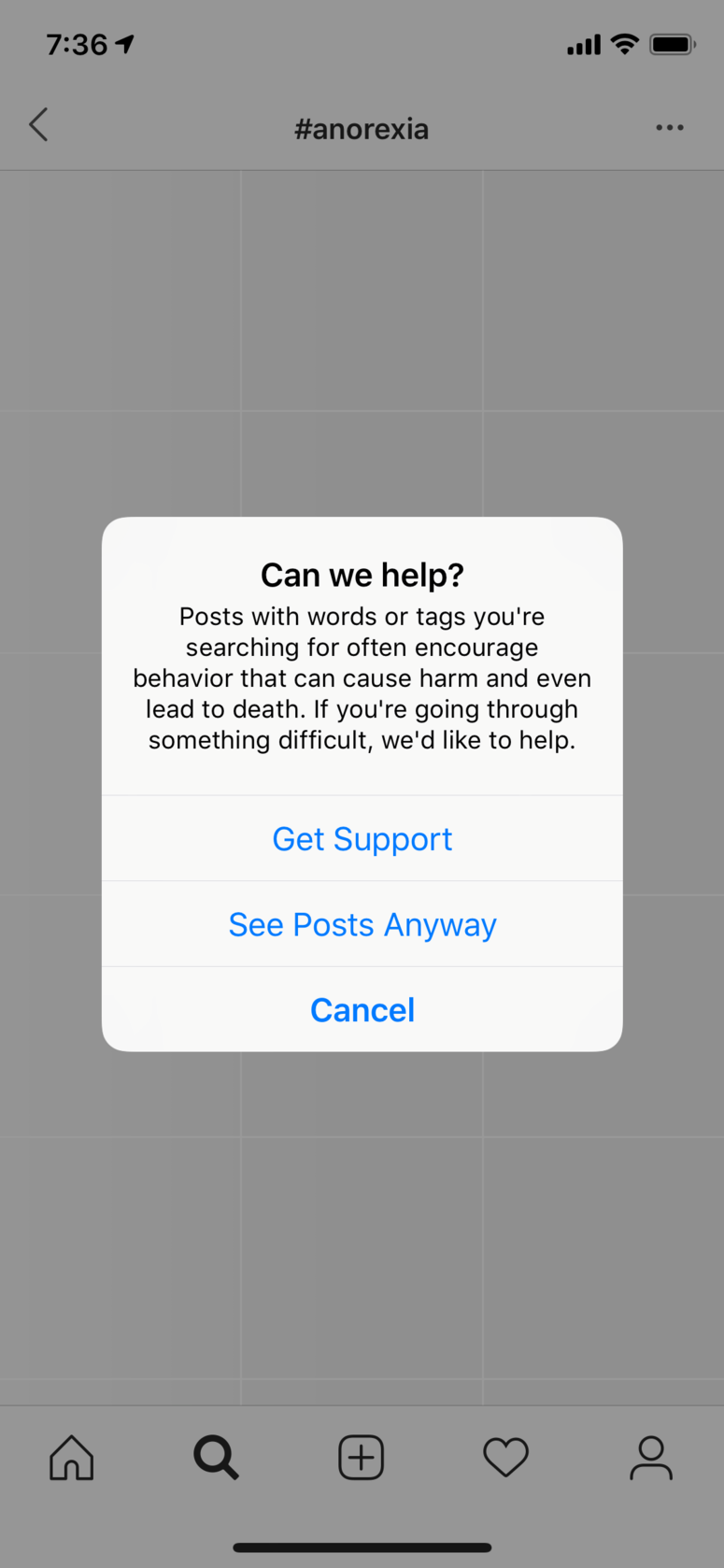
Instagram has also been censoring. In December 2018 the platform announced they were upping their game, making it even harder for users to search for hashtags promoting eating disorders. Now, if you search for pro-ED terms, Instagram flags you with a warning: “Can we help? Posts with words or tags you’re searching for often encourage behavior that can cause harm and even lead to death. If you’re going through something difficult, we’d like to help.” They offer you the option to “get support” or “see posts anyway.”
This is part of Instagram’s “holistic” approach, a spokesperson for Instagram said in a statement provided to Glamour. The platform has partnered with the National Eating Disorders Association (NEDA), to create an eating disorders help page and guide for parents. “Experts we work with tell us that communication is key in order to create awareness, and that coming together for support and facilitating recovery is important,” Instagram’s spokesperson said.
Instagram
This is great. But banning thinspo content is kind of like playing Whack-a-Mole—as soon as a site bans a certain hashtag, another pops up in its place. “Unfortunately, far too many accounts—celebrities, companies, and everyday people—share ‘thinspiration,’ and more recently ‘fitspiration,’ images,” says Claire Mysko, CEO of NEDA. I’m not seeking these images out anymore but when I come across seemingly “perfect” photos of models and celebrities, it’s like they are speaking directly to the ghost of my eating disorder. It’s hard not to be haunted.
The Internet to the Rescue
The internet was an unmistakable accomplice in my destructive behavior for more than three years. After stepping into the pro-ED corner of the internet, I couldn’t look away. All I could think about was how much I weighed, and how much more I wanted to lose. I became obsessed with numbers, assigning calorie limits to each day. And I continued to consume pro-ED content hungrily, staring at pictures of tiny wrists and pointy collarbones with desire and envy. I didn’t idolize the people in the pictures so much as I admired their parts; I saw everyone, including myself, in jagged fragments.
Anyone in their right mind would have told me to just step away. But paradoxically, the internet was where I found my hope of recovery. During my senior year of college, when I was admittedly at my sickest, I found an online community (ironically, also via LiveJournal) of women and girls going through the same thing. Suddenly, I wasn’t alone.
That’s one of the most important things you can hear when you’re struggling with recovery, Mysko says. From my own experience as a survivor, I know she’s right: finding a place where I could be myself, sharing the struggles and fears I was often too afraid to say out loud to friends, was powerful.
“I was often afraid other girls there would get sicker or die—while at the same time fearing that people would recover and leave me there.”
This is what makes the internet so complicated when you have an eating disorder—it’s an enabler and a life preserver. LiveJournal fed my dangerous appetite for thinness. But it’s also where I finally found my safe haven, when not even my closest friends knew what I was going through.
Jenny, the founder of the eating disorder recovery group I found on LiveJournal, had that goal in mind when she created it in 2005. “I started it at the age of 16 in the hopes of creating a closed online community where people could make honest connections without anonymity,” the now 30-year-old says. “I wanted to create something that was nuanced, something that accepted the realities of mental health issues—such as relapse and chronic behaviors or thought patterns—without judgement, while also genuinely caring about the well-being of the person behind the story.”
Like many other eating disorder survivors, Jenny, who has struggled with restricting and binging/purging behaviors on and off since she was 12, was also enticed by the pro-ED content quietly spreading across the internet. “I was a pre-teen and I wanted to lose weight and suddenly these online communities were…offering advice on how to be ‘successful,’” she says. “The experience was intoxicating for a young girl.” In part, this is what led her to create an antidote: a place on the internet where recovery was an option, where we could freely admit we were sick.
Olivia*, 32, was part of the same LiveJournal group. Unlike in-person therapy groups she attended for her eating disorder, she never felt judged by her online network. “I felt connected to what felt like a group of other whip-smart, sad, sick girls who were also still figuring out how to live, how to want to keep living,” Olivia says. “I also remember having really strong feelings about wanting everyone else in the group to be okay—I was often afraid other girls there would get sicker or die—while at the same time fearing that people would recover and leave me there.”
Eating disorders are visceral and detail-oriented; so much of the illness involves numbers and rituals—it can be difficult to speak candidly about them without triggering someone else. Even social media communities where people find recovery and support can be filled with pro-ED landmines. “Any sort of ED group talk is always going to be a mess,” Olivia says. That’s especially true without the presence of a trained therapist guiding the conversation like you’d typically find offline. (“When sharing your story with other survivors, the best and most helpful thing you can do is to avoid mentioning any specific behaviors you engaged in,” Mysko advises.) And online groups may not be curated based on where people are in their recovery. “Not everyone was interested in getting better,” Melissa, another member of the LiveJournal group, says. “We all fluctuated in our recoveries over the years.”
Living With an Eating Disorder In the Age of Social Media
Today, I tend to avoid prominent Instagram influencers who post “fitspiration” or pictures of transformational weight loss, knowing my own triggers. Jessica, 30, an anorexia survivor, employs the same strategy. “I try to follow women on Instagram who I admire for reasons other than their bodies: inspirational women like Jane Goodall, funny women like Jameela Jamil or Julia Louis-Dreyfus,” she says. “But the content about thigh gaps and hip bones showing will always get through, regardless of whether I seek it out or not.”
That’s the simple truth of living with an eating disorder and living with social media. There will always be triggering content that keeps the specter of an eating disorder close at all times. There will always be people with EDs who aren’t ready to get better, who are convincing themselves they’re choosing an illness, rather than the other way around. And yet there will also always be posts steeped in body positivity that provide inspiration of another kind. There will always be communities of women wrestling with their illness, ready to offer support, encouragement, and the knowledge that we are not alone.
Even in recovery, I feel the fingerprints of my eating disorder everywhere. The knee-jerk feeling of “I’ll do better tomorrow” still shows up after meals; I still see some foods by their calorie counts. And social media is always there, adding fuel to the fire with fitness-oriented posts that mention calories and weight loss. But at least I know now that my eating disorder wasn’t a choice; it’s an illness that women all over the world are struggling with too. When I remember that, I can find the strength to unfollow, block, and delete. And I can choose to tap “get support.”
*Some names have been changed for privacy.
De Elizabeth is a writer and editor specializing in pop culture, mental health, and anything related to Pretty Little Liars. You can follow her on Twitter @deelizabeth_.
Accutane is no joke. Before even going on the medication you have to take a blood test, pregnancy test, be using at least two methods of birth control, and discuss any past history of mental illness. Despite all this, I was desperate to get on the medication that has been referred to by many as a miracle. I’ve been battling constant hormonal cystic acne since middle school. It was painful, embarrassing, and both the breakouts and the red marks they left behind steadily chipped away at my already low self esteem. After years of trying every nearly every acne product on the market, prescription topicals, antibiotics, and spironolactone, last December my dermatologist and I were ready to take the plunge and turn to Accutane.
The medication changed my life, my skin is the clearest it’s ever been and my confidence reflects that, but it’s hell on your body. Accutane is essentially a huge dose of Vitamin A that is absorbed into your blood, and much like applying a topical retinol, taking Accutane can make your skin very dry and sensitive. It basically sucks all the moisture out of my whole body. This leads to flaky skin, split lips, dry itchy eyes, and in my case, nosebleeds at the worst possible times (including debuting a new white shirt and on the dance floor on a Saturday night).
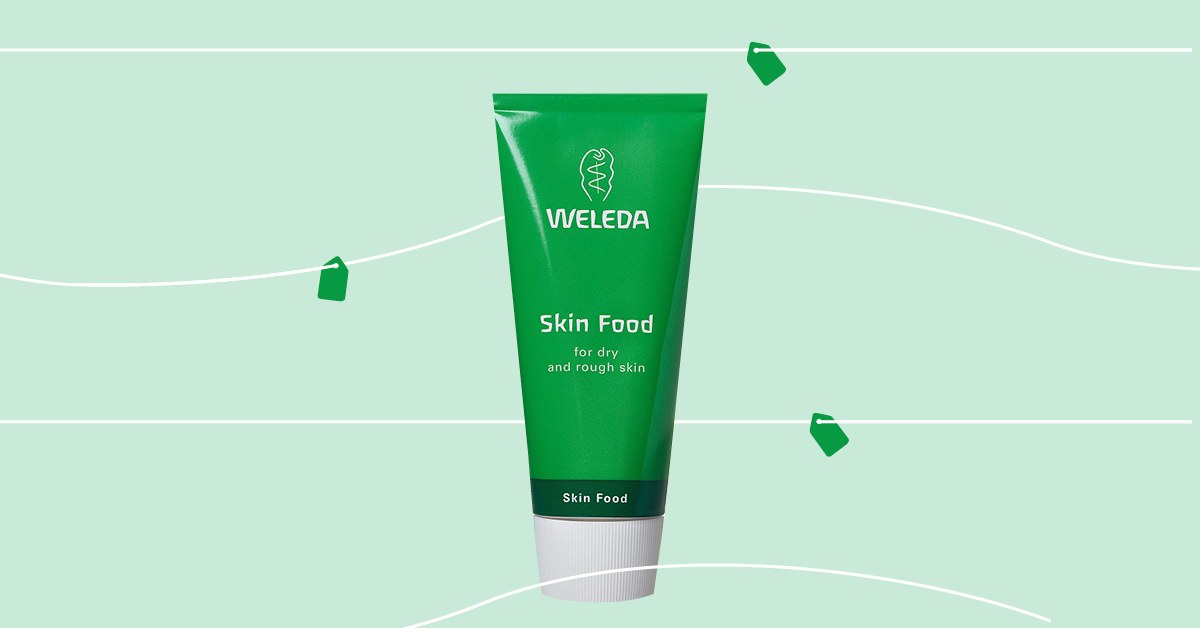
While the nosebleeds were unfortunately inevitable, I had a small army of products to aid me in the fight against dehydrated, flaky skin, the MVP being Weleda Skin Food, a thick, glorious cream that borders on a balm-like texture. It has almost a waxy feel, but sinks into your skin and doesn’t leave a greasy residue, just a cushion of luxurious moisture. It has a nice herbal smell that’s not cloying, but a little medicinal.
If it sounds familiar that’s probably because Skin Food is one of the OG all-natural products. It’s been around for nearly a century and is the stuff beauty editors, makeup artists, and influencers rave about. Our deputy editor even refers to it the “$20 La Mer” because of how luxurious it feels. The base is made of beeswax and healing oils, and it also contains chamomile and calendula, two of my favorite calming ingredients, which helped soothe my dry, irritated skin and any lingering acne I was dealing with.
Although this cream is super moisturizing on it’s own, I found the best way to use Skin Food was as part of my night routine as a sealant to lock in everything I layered underneath. I would start with a hyaluronic acid serum, add an oil (usually rosehip), and then add a generous layer of Skin Food on top to seal in moisture and create a barrier, almost like a sleeping mask.
I also rely on it on super flaky days in the morning, where I apply a thin layer over a moisturizing serum. It smooths over any scaly patches and creates a really glowy base for makeup. After putting on foundation, I go back in with another dab of the cream on my cheekbones, both for a pretty natural highlight and to add a little more moisture before heading out the door.
I finished Accutane in July, and luckily my skin has regained it’s moisture levels, but you can pry my Skin Food out of my cold dead hands. I still love using it as a night mask and on any patches that need a little TLC, and will consider myself part of the Skin Food fan club forever.
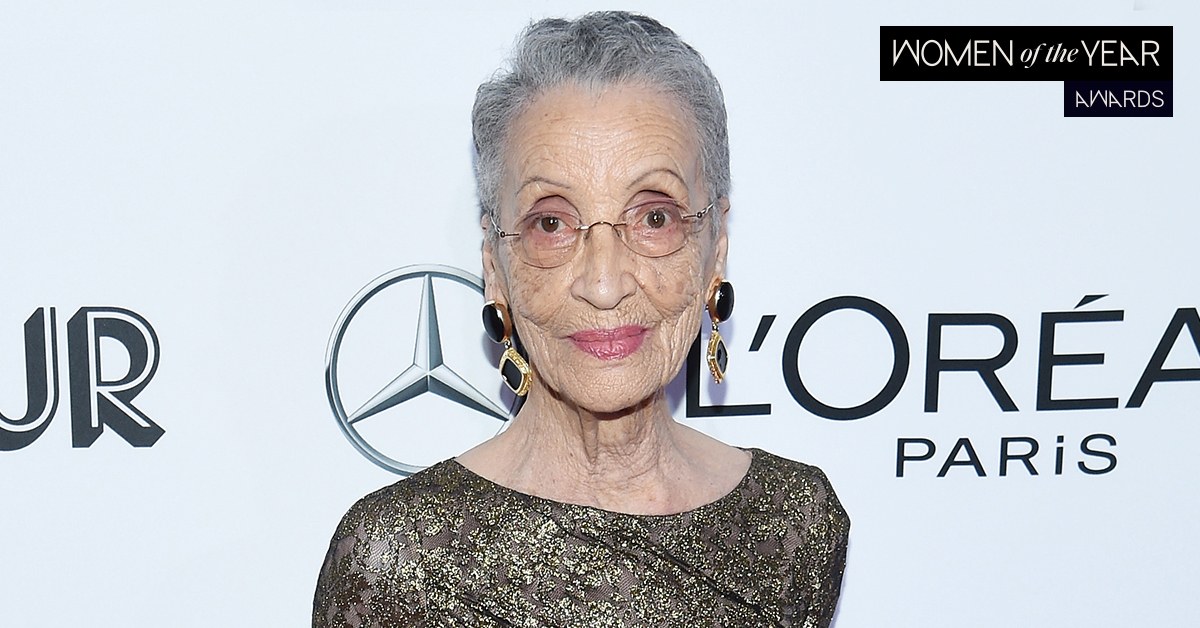
At 97 years old, Glamour 2018 Woman of the Year honoree Betty Reid Soskin is full of stories that feel more relevant than ever. The oldest serving National Park Service ranger has worked in union halls under Jim Crow segregation, established the first black household in a discriminating California suburb, fought for black history to be represented in the park system, and recorded it all in her memoir, Sign My Name to Freedom.
“Democracy has been experiencing these periods of chaos since 1776. They come and go,” she told Glamour in her Women of the Year profile. “And it’s in those periods that democracy is redefined.” When everything seems to be crumbling, we can remold and reset, she believes: “History has been written by people who got it wrong, but the people who are always trying to get it right have prevailed. If that were not true, I would still be a slave like my great-grandmother.”
And tonight, November 12, at Glamour‘s Women of the Year awards, Soskin shared even more wisdom. Actor Andie MacDowell introduced Soskin. “I have the great privilege of serving on the board of the National Forest Foundation, and I love our national parks,” MacDowell said. “In both you can find some of America’s greatest treasures. One of the standouts is not a tall tree or a grand river, but a woman who encompasses strength and grace we all aspire to: 97-year-old National Park Service ranger Betty Reid Saskin. Betty is posted at the Rosie the Riveter/World War Two Home Front National Historical Park in Richmond, California, where she reminds audiences that ‘what gets remembered depends on who in the room is doing the remembering.’ So Betty remembers and educates on behalf of generations of women of color and other marginalized communities, sharing forgotten stories that span from Dread Scott to Black Lives Matter.”
“Betty has served in many roles: military administrator, civil rights freedom fighter, California field rep, DNC delegate, record shop owner, songwriter, author, daughter, wife, mother, and ranger,” she continued. “But the greatest part she has played in history—so far—is serving as our American conscience.”
Read Soskin’s speech, below:
Thank you very much. You have no idea what it means to me to be here. Thank you very much Glamour, but thanks to all women who are finally stepping up and making their voices heard bc that voice has been missing throughout my life.
That voice is so needed. I was so elated at this election where women took their places in leadership.
I am so aware that I am living in my final decade, that every single, minute, hour has meaning to me. The truth that Kamala was talking about has been the life force for me. Because I don’t have time. If I don’t get it right, I don’t have time to do it over. That’s true for the nation and also true for us.
I know these periods of chaos have been with us since 1776. The period that I have been most marked by was that of the 60s where I was an activist in the black revolution. Along with millions of others in this country, I helped to create the future I’m privileged to now be living in. You can’t imagine what that’s like. You can’t imagine.
Thank you Glamour. And thank you all.
Get more inspiring moments from Glamour‘s Women of the Year awards here.
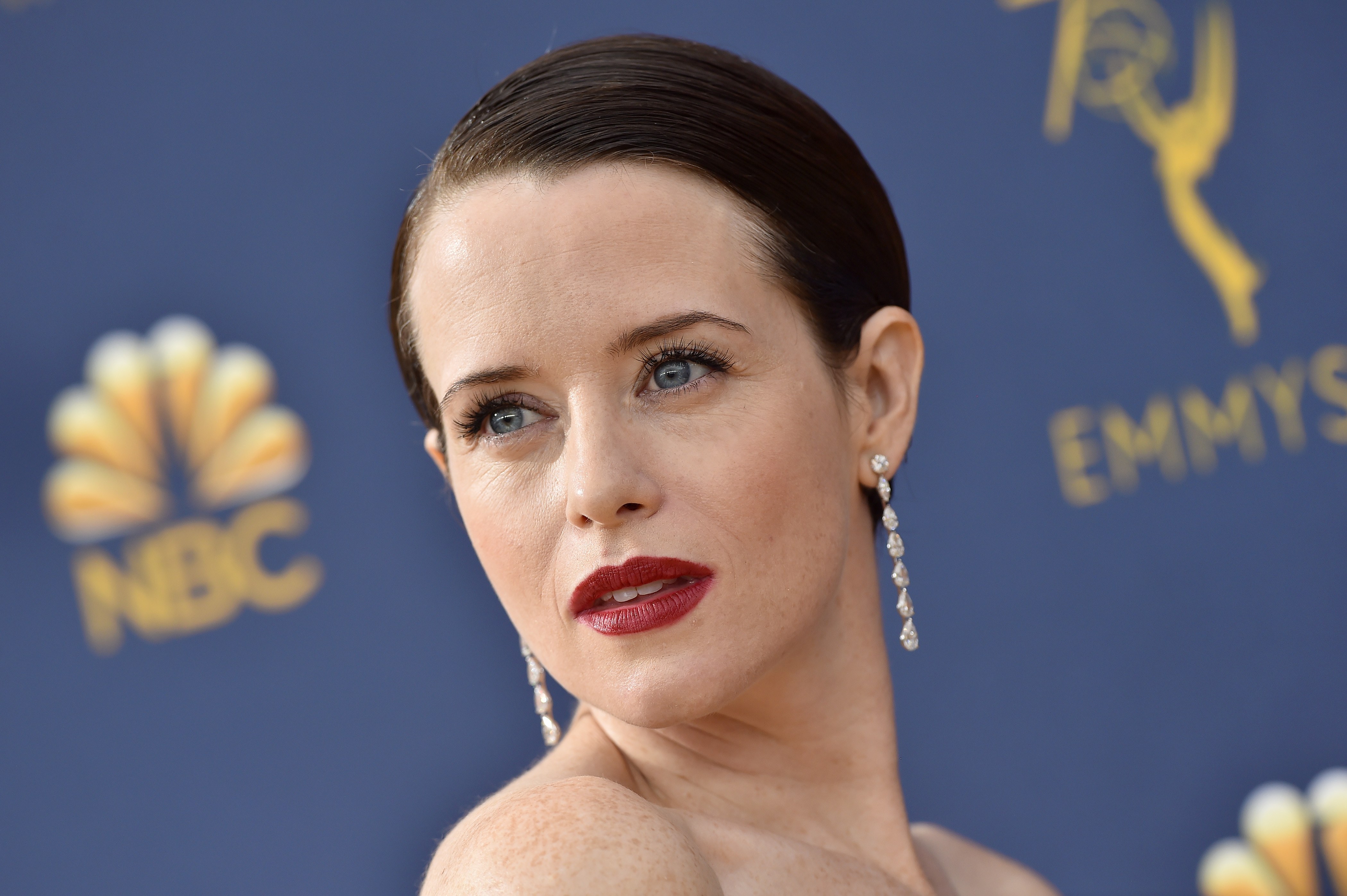
We’ve seen the Queer Eye guys help people dress better, clean up their living spaces, gain confidence, and even propose to their significant others, but did you know that they also have the power to get A-list celebs into high-profile parties? Claire Foy does now, since Jonathan Van Ness did just that on Monday night, when the actress was reportedly struggling to gain admission to the annual post–Emmy Awards Governor’s Ball. That’s right: Queen Elizabeth II herself (kinda), who had accepted the Emmy for Outstanding Lead Actress in a Drama Series mere hours before, was almost not allowed into an Emmys after-party.
The Good Samaritan move was shared on Twitter by The Hollywood Reporter‘s Chris Gardner, who watched it all go down. “Just witnessed crazy #EMMYS moment: Queen almost couldn’t get into Governors Ball. Claire Foy, best actress in drama winner, denied entry because of ripped ticket that prevented her team from entering back entrance until @jvn came to rescue after gushing over how much he loves her,” Gardner tweeted. As you can see in the photo Gardner attached to the post, Foy is literally carrying her Emmy in her hand, which should probably count for more than any ticket, ripped or not.
Regardless of these questionable ticketing policies, it appears that Foy was eventually able to enter the party, thanks in large part to Van Ness. The whole mix-up also gave Van Ness and Foy the chance to fawn over each other, and then share those incredible moments with the world. That night Van Ness shared a photo on Instagram of himself and the the Crown star—in coordinating white satin ensembles, no less—that appears to have been taken outside the party, either just before or after he salvaged Foy’s after-party plans.
The next day he uploaded a series of shots from the Emmys, including a video in which he appears to be recording a friendly message for one of Foy’s friends on her phone. Amid his proclaiming his love for all things British, Foy shouts, “This is the best thing that’s ever happened!” Couldn’t agree more.