Categories
Health

‘I Shopped to Cope With Depression—And Racked Up $25K in Credit Card Debt.’


Trigger warning: This post contains descriptions of suicidal ideation.

Six years ago, on a freezing cold morning in Seoul, I made two major decisions. The first was that I wasn’t going to kill myself. And, since I figured I wouldn’t be dying any time soon, I thought I might also try to get myself out of the $25,000 in credit card debt I had amassed.

For roughly two years prior, I was mired in a stagnant, unrelenting depression. My friends and family back home assumed I was fine; I was working abroad, having new and exciting experiences, living with my first boyfriend, enjoying my life by all outward appearances. In reality, I rarely left my apartment. I had some part-time work, but often made excuses and didn’t show up. On the rare occasions I tried to be social, I’d end up feeling lonelier than when I was holed up in my dark bedroom. My only tether to the world was my boyfriend, who I both relied on heavily and deeply resented for allowing me to exist.

I also had credit cards.

Day after day, I’d follow the same routine. I’d wake up, brew a strong pot of coffee, open my laptop, and shop online. I’d spend hours browsing for different things to buy; clothes I’d never wear, household items I didn’t need, gifts for absolutely no one in particular.

Once my purchases were made and those confirmation emails landed in my inbox, I compulsively tracked my orders. When boxes arrived at the house, I actually felt something—happiness? Satisfaction? Pride for a job well done? Whatever it was, it was a welcome change from the emotional rigor mortis I felt the other 99 percent of the time. I was addicted to that feeling. Eventually, I didn’t even pause long enough to open the boxes I’d received before rushing back to my computer to make another purchase, nothingness nipping at my heels.


Source link

Categories
Health

How to Cope with Infertility: Humor Helped Me Get Through It


A fertility doctor, an ultrasound technician, and 17 interns walk into a vagina…

There I was at the fertility clinic. Signed in, sitting there in the waiting room. Waiting. I’ve been here before—just a couple of days ago, and a couple of days before that, actually. And yet here I am again. There are other women here, probably waiting for the same type of exam, but we won’t strike up a conversation. Or even make eye contact. Nope. This is the weird unspoken rule in the fertility clinic waiting room: Silence.

Finally, it’s my turn to go in. Some clinics make you strip down and change into one of those ultrathin robes, while others merely ask you to forgo your undies in exchange for a little paper sheet. Either way, there’s nudity involved. Not the sexy kind.

With each visit to the fertility clinic, I’m never sure what the protocol is when it comes to the stirrups. Should I swing my feet right on up there before the doc comes in? That seems efficient. But also like I’m greeting my doctor with a vagina. Then again, is it weird if you don’t greet your gynecologist with your vagina? Because let’s be honest, we both know that part is coming.

“Scoot down a little further,” he or she says (at least twice if not more). One time I planted myself precisely in the right spot—no scooting needed. I was very proud of myself, but nobody said, “Scoot no further! Your aim was perfect!” It is strange if I think about it (and trust me, I think about it). I’m sitting there, exposed, legs splayed out in stirrups like some equestrian gone kinky, and someone else is there! A stranger! Checking my insides. Live. Am I properly groomed? I wonder. Is there some sort of standard?

Next I say hello to my good friend “Wanda,” aka the vaginal ultrasound wand, or as I prefer to call it, the penis camera. For those who’ve never had the pleasure of meeting Wanda, it’s basically a rod connected to a machine with a screen, relaying moving images from your insides. The rod is usually covered with a condom topped with industrial amounts of lube, then inserted (hopefully gently) into your vagina. Then it’s moved around every which way in order to proceed with getting an image to check for a variety of female reproductive parts and processes. It can feel odd, but it’s bearable; for me it usually felt uncomfortably breathless, like some sort of uterus Spock grip. I always tried to just grin and bear it, smile and nod, because I wanted to seem cool and collected, as one does with her vulva on display. Mainly, I want to get it over with smoothly.

IÆve never liked gynecological examinations, but here I am, a veritable expert in the stirrups, years of experience under my belt. (If one were allowed to wear a belt during a gyno exam, that is.) I’ve experienced unexplained infertility and unexplained secondary infertility for a total of 11 years or more, including miscarriages, continuous two-week waits, emotional roller coasters, and probably a touch of PTSD from it all.

I honestly don’t remember how many rounds of intrauterine insemination (IUI) I’ve gone through. Somewhere around five. All of them unsuccessful. For each, I got an abnormally long tube shoved up my vagina while amped up on hormones in order to get inseminated with my husband’s top crop of sperm. During the more-complex in vitro fertilization, of which I did one round, I was under anesthesia so I didn’t feel anything during the egg retrieval procedure. I should add that after the IVF egg-retrieval procedure, my recovery from anesthesia began with me screaming like a deranged farm animal because I felt like just a floating head and was completely disoriented and scared. I apparently startled the whole recovery area, and several nurses had to crowd around me to handle the situation. (At the IVF embryo transfer a few days later, I assure you I was completely personable and lovely.) At some points, I really felt like some alien in a sci-fi movie, poked and prodded by white-coated strangers—although by choice—all in the name of having a baby.


Source link

Categories
Health

8 Ways to Cope When You Get a Migraine Headache Away from Home


Have a drink.

While consuming anything at all might be the last thing on your mind, drinking some ice water to hydrate and cool down can help mitigate a migraine, as can sipping a cup of coffee. “Try a small dose of caffeine, if you can tolerate it during the attack—about eight ounces of black tea or coffee,” Ailani advises.

Use soothing distractions.

Cue up a calm, spalike playlist to help get your mind off your migraine, or listen to a meditation app like Calm or Unplug, which will help you focus on your breathing instead of your pain. And any time an ice pack isn’t convenient, an over-the-counter cooling rub with camphor or menthol makes a great substitute. “Rub it on your temples, forehead, and back of the neck,” Ailani says. Certain scents may also be soothing. “Some people find it helpful to dab lavender or peppermint oil behind their ears, but if the scent seems too strong or makes you feel worse, avoid this.”

Go easy on yourself.

Now’s the time to splurge on a cab or an Uber if you were planning on riding a train or bus home. “All that rocking and stopping back and forth can worsen nausea and motion sickness,” Ailani says. When riding in a car with a migraine, it’s best to ride in the passenger seat; sitting in the back can also exacerbate those queasy feelings. If you’re out shopping or schlepping when a headache hits, figure out the quickest way to end the errand and lighten your load. “Try to avoid holding or carrying heavy bags when a migraine is coming on—if you’re alone and walking around with a lot of things with you, consider getting into your car or a cab,” Ailani says.

Stick to your routine.

If travel has triggered a migraine, many factors could be to blame, from changes in airplane cabin pressure to a major shift in your sleep schedule. As you cope, focus on getting back to your usual schedule and habits. “Make sure you have adjusted to the time change, don’t cut back on sleeping hours or miss meals, and don’t overdo alcohol or caffeine,” Newman advises.

Pack a migraine kit.

Prepare a kit with the tools you’ll turn to in your next migraine emergency—things like doses of your medications, cooling balm, essential oils, sunglasses, earplugs, and noise-canceling headphones. Stash this in your handbag, travel carry-on, or your desk at work. Just knowing it’s there will arm you with your most important migraine-fighting tool: the calming knowledge that at least you’re prepared.


Source link

Categories
Health

To Cope with My Father's Suicide, I Had to Learn to Love My Grief


November 17 marks International Survivors of Suicide Loss Day, dedicated to those affected by suicide loss.

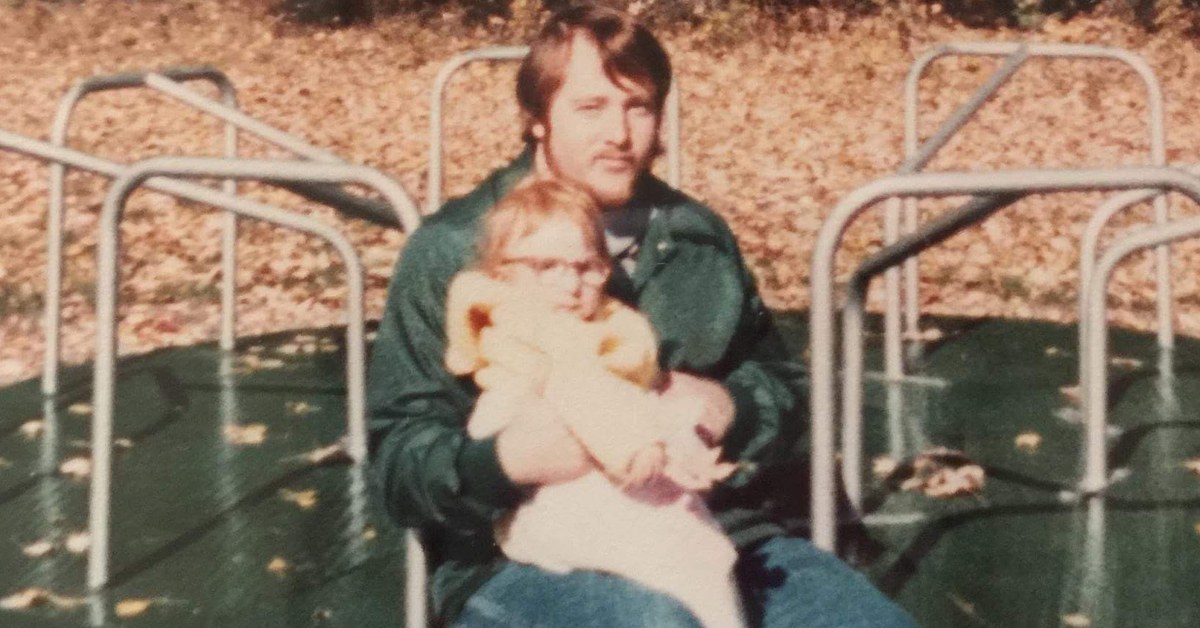
At 21, I thought I knew exactly who I was: Daughter, sister, friend, student, woman with a disability. I was halfway through college and felt like a butterfly excitedly fluttering it its cocoon, just itching to break free and fly. Then, on a regular Monday morning—15 years ago this year—my father died from suicide.

Just like that, my whole life changed. My father’s death was sudden, unexpected, devastating—but above all, it was confusing. For the first time in my life, I felt lost.

Didn’t the universe know this wasn’t supposed to be my life? The suicide of a loved one leaves you in limbo with no way out—full of unfinished business and unsaid words that you’ll never get the chance to say. It’s the ultimate in cruelty—suicide keeps taking things long after the person has died. You’re forever reminded that there should have been more. More birthdays. More family road trips. More memories. More time. More. More. More.

As my family grieved, I felt out of place. Twenty-one is a weird in-between age—I felt on the cusp of adulthood but still wanted the guidance and reassurance of my parents. There were grief books for widows and grief books for children and teenagers, but no one really talked about what it’s like to lose a parent when you’re in your early 20s. Unlike “widow” or “child,” there was really no label that quite described the sense of loss I carried.

No grief book could tell me what it would feel like to see reminders of my father: birthdays, holidays, little girls holding their dad’s hand. Even worse, there was no way to prepare myself for what it would feel like to graduate from college and not pick out my dad’s smiling face from the crowd as I accepted my diploma. When a loved one commits suicide, they’re both everywhere and nowhere.

The most distressing and concerning thing about being left in the aftermath of a loved one’s suicide, I came to realize, is that it decimates your sense of identity. I was no stranger to feeling different—growing up with a physical disability, I was used to feeling different from my peers—but my father’s death brought with it an entirely new sense of isolation. I suddenly felt like a stranger in my own life, isolated from the person I used to be.

A loved one’s suicide doesn’t just leave you mourning for their life, it also leaves you mourning for your own.

That’s the thing no one tells you about dealing with a loved one’s suicide: It doesn’t just leave you mourning for their life, it also leaves you mourning for your own. A part of me died that day too. It took me a long time to realize in the aftermath of suicide, you have to grieve not just for your loved one, but for yourself, too.

I found myself again in subtle ways, little by little. A decade in therapy helped me deal with the effects of my father’s death. Blogging about my journey also helped. But what has made the biggest difference in my well-being is letting myself lean into my grief instead of running from it.

We’ve been conditioned to believe that grief is a bad word and something to be avoided. We even like to tell people how to grieve, when to grieve and, perhaps most importantly, when to stop grieving and just move on. But the more I talked and wrote about my grief, the more I realized that grief isn’t the enemy. Everyone’s grief is different—it’s as unique and individual as the losses we experience—but owning my grief, finally helped me find some relief for all my anxiety and sadness. Grief is not out to get you—it can actually be there to help you.

I like to think my 21-year-old self is still with me, tucked inside my heart, maybe even right next to the spot where my grief resides. I think there’s a place for all three of us—my grief, the girl I used to be, and the woman I am today—to coexist. All three make up the fabric of who I’ve become and in a way, they’re all linked. You can’t really have one without the other two. There’s a certain beauty in that.

When I remember that, I can tell the 21-year-old girl trying to piece together her life in the fallout of suicide that everything is going to be okay. I can spread my wings and my grief and I can finally get the chance to fly.

Melissa Blake is a freelance writer and blogger covering disability rights and women’s issues. She has written for The New York Times, CNN and Glamour, among others.


Source link