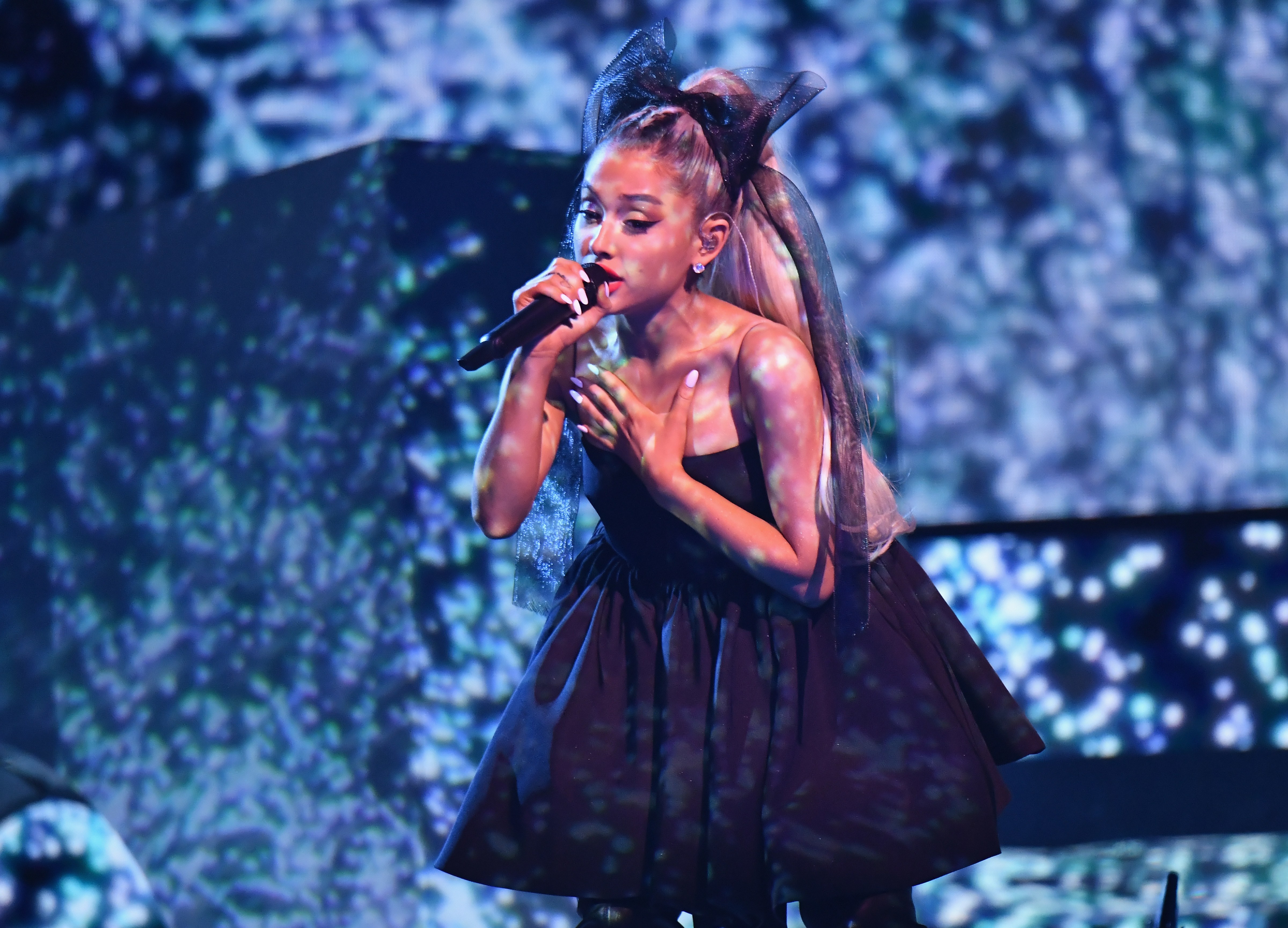
Ariana Grande is opening up about her mental health, this time in song form.
In a new interview for Paper magazine’s new issue, the singer revealed that the song “Get Well Soon,” a collaboration with Pharrell Williams on her new Sweetener album, is about her struggles with anxiety.
During the interview, Sivan comments that the song “shook [him] to [his] core,” and asked Grande how she was able to be so vulnerable on the track.
“[Pharrell] kind of forced it out of me, because I was in a really bad place mentally,” she revealed. “I’ve always had anxiety, I’ve had anxiety for years. But when I got home from tour it reached a very different, intense peak. It became physical and I was not going out at all, and I felt like I was outside my body.”
“I’d have these spells every now and then where I felt like I was having déjà vu, but like 24/7 for three months at a time. It was really weird, and all that was on my mind. [Pharrell] was like, ‘You have to write about it. You need to make this into music and get this shit out, and I promise it will heal you.'”
It turns out, he was right. “It definitely helped,” Grande told Sivan. “It still took me a few weeks to feel better, but looking back at it now from a healthier place, it’s probably one of the most important songs I’ll ever write.”
The lyrics to the song are incredibly powerful, and it’s no wonder that Sivan felt like he was “punched in the gut” the first time he heard it: “Want you to get better/My life is so controlled by the what-if’s…/ Is there anybody else whose mind does this, mmm?…/ Is there such a ladder to get above this?” they read.
In an emotional interview earlier this week, she explained why it was so important to her to put a song like “Get Well Soon” into the world. “It’s just about just being there for each and helping each other through scary times and anxiety,” she said on Beats 1 radio. “There’s some dark shit out there, man, and we just have to be there for each other as much as we can because you never fucking know. I just wanted to do something to make people feel good and less alone.”
For six decades Glamour has honored its College Women of the Year, or CWOTY, an award that focuses on young honorees who are already changemakers in their communities. But CWOTY is also our stake in the ground. These women are ones to watch, not just for the headlines they make but for the work they do behind the scenes to make an impact.
And in June, as the nation received word that President Donald Trump was commuting the life sentence of a great-grandmother who was in prison for a first-time, nonviolent drug charge, it was a CWOTY who was part of the machine that had worked to get the woman’s story on headlines across the Internet.
Kendall Ciesemier, a 2014 CWOTY who is now a producer on the Opinion team at Mic, was instrumental in telling Alice Johnson’s story, but the road to freedom started long before this summer. In October 2017 Kim Kardashian West commented on a viral video that Mic produced to illuminate the incredible inequities at work in the case of Johnson. In the months since, Kardashian West tapped her own legal team to work on Johnson’s case and went on to appeal to President Trump directly to intervene on Johnson’s behalf.
What’s unique about Johnson’s story is its staying power. Despite this political moment of endless news and constant distraction, Johnson remained in the public discourse for months, thanks to Mic’s determined coverage, Kardashian West’s involvement, and the work of many other unsung activists and organizers who have long taken on the criminal justice system to fight for her release.
Ciesemier talks to Glamour about what it was like being a part of one of the biggest stories of the year, and a moment that not only changed Johnson’s life but set precedent for the future of criminal justice reform.
Glamour: Tell us a little bit about how you went from a Glamour College Woman of the Year to working on one of the year’s most talked about stories.
Kendall Ciesemier: I actually won the [Glamour College Woman of the Year] grand prize, which was really exciting—and that was largely for my work in starting a nonprofit when I was 11 to help provide basic human needs to children living in Sub-Saharan Africa. Some of the money that Glamour contributed went to building a high school that we were working on at the time. And so it’s different than what I do now in my day job, but I think that the threads are the same. I have always been really passionate about storytelling. And whether that takes the form of telling people about something that they’ve never heard of going on an ocean away, as I did pretty much growing up, or telling stories today at Mic, it’s always been about elevating people’s experiences and people’s voices.
I hate when people say “being a voice for the voiceless,” because everyone has a voice—it’s just who we choose to amplify. And so that, really, I think has been very consistent in my life. What inspired me to start Kids Caring 4 Kids, the nonprofit that I started back when I was 11, was watching a story that Oprah told on her show. And it was that story that inspired me to do a lot for children who were in that circumstance, children who were living without parents because of the AIDS epidemic, who couldn’t go to school because they didn’t have a uniform. It was something so simple and so tangible for me to understand.
And I knew, basically from that moment forward, that I wanted to do that for other people. I wanted to inspire them and create a change in them to do something for someone else. And I still see that as my role today. And I think that’s really what you see in this Alice [Johnson] story, which is so exciting for me as a journalist. I think we always dream of our stories having impact and inspiring other people to rethink the world. And I think that that’s what we saw in Kim seeing Alice’s story—it inspired her to act, like Oprah had inspired me to act.
Glamour: So how did the Alice Johnson story come to you initially and how did you start working on it?
KC: Topeka Sam, who is a formally incarcerated woman, actually connected us to Alice’s story, after our cofounder Jake Horowitz (who I work really closely with) had attended an event at Google. He actually saw Alice Skype into this event and was just really struck by her story and thought that, at Mic, we needed to elevate it. And so, around six months later, we worked with Topeka to set up a time to Skype with Alice. And this was around my third week at Mic. I joined the [Opinion] team as a producer. And I had the opportunity, at that time, to interview Alice and to connect with her and to produce that piece. So that was how it originally entered into my world—and Mic’s world.
Glamour: When you first interviewed Alice, what made an impact on you about her story? What drew you in?
KC: For me, it was very clear that this was a woman who had endured a lot of hardship. Obviously, she did something wrong and she really owns up to that, but [she] had been hit with this draconian sentence in the nineties, when she was charged and sentenced in 1996, that were really reflective of old sentencing processes. And that she had this kind of spirit about her and hope and faith that was far above her circumstance. Alice told her own story, and I think that is really what ended up impacting people. And it was just about how do we pass the microphone to Alice? And how do we amplify what she had to say? But what really personally struck me was just her unwavering hope and her unwavering faith.
And all the good that she has done under the circumstance that she had. Once she was in prison, she became this model citizen and really worked to be a light for other people. And we heard that. After we told this story, we got just this outpouring of messages on Facebook from other people who had been in prison with Alice, over the years, over the 21 years that she served. And they were really impacted by her. And so it just really became clear to us that this person, she was on all of the criminal justice lists. She was widely known as someone who deserved clemency. And I think, in our interview, we were able to really allow Alice to share her story and just home in on what we felt in that interview, which was that she just had this captivating spirit about her. And that was really what we were hoping to convey.
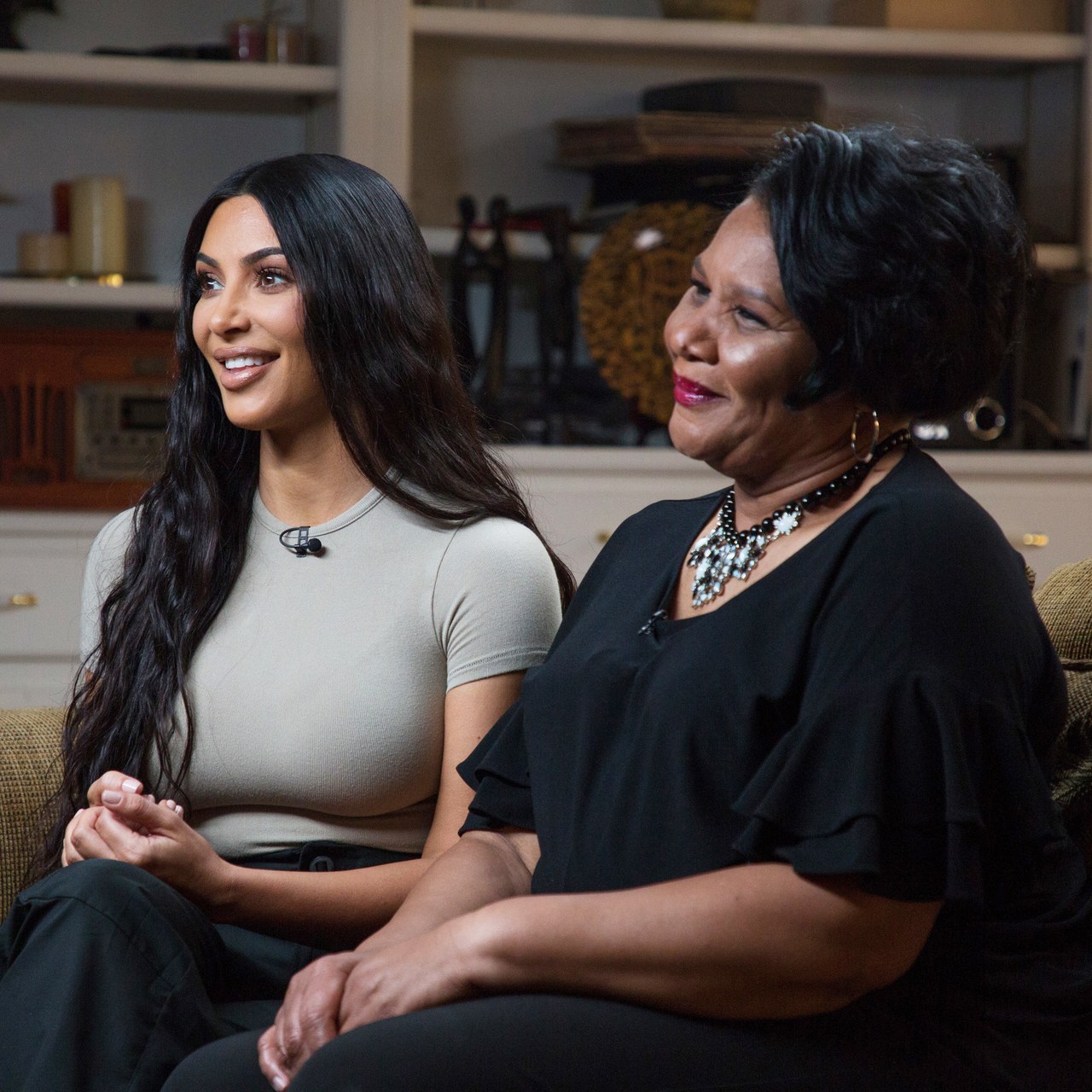
PHOTO: Getty Images
Kim Kardashian West and Alice Johnson sit down for an interview after Johnson’s release from prison.
Glamour: So you guys put the package together, the story, the video, and publish it. And then obviously at some point Kim [Kardashian West] sees it and tweets it out? So did it just blow up from there?
KC: Yes. So, from what Kim has told us, she saw it after someone that she followed had shared it. It was being shared by a lot of celebrities, within the first 24 hours, I’d say including Sara Silverman and some others. We have just a good group of support. And then I think when it came across her feed, she watched it, and even in one of interviews with Kim, said “I’m not on Twitter all the time. I’m not always scrolling through my feed, but I came across this story and I…” She just believed that she was meant to see it. And so she retweeted it, and that also drove a lot of views and engagement on the story itself. But, at that point, we did not know that she was going to actively get involved in the case.
I think the video was our most-watched Twitter video we’ve ever had.
And then it came out in November, through another article from another news outlet, that Kim was looking into the case of Cyntoia Brown and Alice Johnson. And we read that. We were like wait, what? So that was a big surprise to us. And then, obviously, we wanted to follow up with her and see what kind of stuff that she was planning to do around Alice’s case, and eventually got connected with her and we were able to tell that part of the story too.
Glamour: And then you followed it through the process of the work that Kim and the legal team she had working on the case, and the meeting with the President, and then finally meeting Alice as well. So how was that, to see that story all the way through? You don’t always get to do that as a journalist.
KC: Rarely, I assume. I’m relatively young and so grateful I was able to be a part of this. We were really committed to seeing the story out and following the story through. And so that included traveling really all across the country for about two months I would say, almost nonstop, doing interviews with Alice’s family, her children, her grandchildren. With Kim. Again, following her [Kardashian West] to the White House. And then we were actually with the family as we found out that she had been granted clemency. And so that was also very cool, to be there in the moment, and to be able to share that with this family that we’ve gotten to know, through traveling and documenting their experience.
I think it was such a meaningful thing to witness that, personally and professionally, and to really be able to see…. It wasn’t just a change for Alice; it was a change for her whole family. And she’s got a really big family, like 80 people strong. It was clear that she played a very important role in a lot of people’s lives. So it was certainly impactful in that regard, to be on the ground, and see that, witness that. I think they were in total and utter disbelief that it had happened. We actually drove down alongside the family, three hours from Memphis to Alabama. We were racing to get there in time to pick up Alice.
Watching her walk across the street and see her family across from the prison was pretty powerful. I think, as a journalist, you’re taught to just do your job—but you’re also a human being. I don’t think I processed all of that experience until a good four days after. But you’re just trying to do your job and document and amplify the story as much as possible. Mic was on the story for a really long time. And, obviously, it became a national story. So it’s one of those things that was really exciting to see. But Mic has been reporting on criminal justice issues far before Alice, and we’re going to continue far beyond Alice.
Glamour: What’s next for you on that topic of criminal justice reform? Because, of course, this is a case that became very famous, but it is one person.
KC: It is one person, exactly. I think, yes, Alice is a symbol, but we are certainly not under the misconception that she’s the only one with this story. There are around 3,500 other people in the federal system serving a life-without-parole sentence, for first-time, nonviolent drug offenses, which is just a crazy amount of people for something that could be so minor as the possession of marijuana.
And so I think we’re looking forward. There are so many stories and there are so many people with such deserving stories. As we continue to cover these issues, we’re really looking at how can we take the story that people nationally have been interested in, which is the Alice Johnson story, and how can we explain other things about the criminal justice system. Like bail or sentencing reform. Things that are systemic and affect a large swath of people in the system. And how can we break down these complex topics.
We’re really thinking about how do we elevate and understand, break these larger issues down for people now that they’re listening in this way. We’re always committed to using human stories, and that’s always the best way to communicate the impact of policies. So we’re just going to continue to find people who can really shine a light on what’s happening. We always say at Mic that we cover change, the movements, and the makers. And so I think we’re in the process of figuring out what our next criminal justice [project] is going to be. We’re in active research and having conversations around that now.
Glamour: What other issues are you working on and passionate about right now?
KC: On our team specifically, we’re going to continue doing criminal justice stories. We’re going talk about mental health. We’re looking into gender identity and sexuality. And then, also, we’re going to look at the midterms. We’re also looking at how we tell the stories that are bubbling up ahead of the midterms, because I do think that we could see some really interesting things.
For me personally, the focus is always about those who are suffering from some kind of injustice or oppression. I think my own personal background, and my own personal story, has always led me to be innately interested in people who are struggling with something.
That’s what I identify with and what I think can unite people and create understanding. And so, to me, it’s not tied to a specific issue because there’s struggle everywhere, and it’s more about finding that unique story that people can really relate to and understand.
This interview has been shortened and edited for clarity.
Unless you’ve been living in a social media blackout this week, you’re probably aware that Kim Kardashian is launching her first KKW fragrances, following the launch of her KKW Beauty highlighting and contouring kits. She even took a moment at her baby shower this weekend to promote themshow them off as party favors. (Iconic line from her Snapchat: “It sounds like you’re on QVC!”)
As it turns out, her robbery in Paris last year was part of the inspiration for both her KKW Crystal Gardenia fragrance collection’s scent and its unique packaging. In an interview with WWD, Kardashian says that creating each scent was about “being calm and healing.”
“Honestly, after my Paris situation, a lot of my friends would come over and bring me healing crystals, and I obviously knew what they were—it’s very L.A. and it’s very popular right now—but for me it meant something so different,” she said in the interview. “I was sitting there, and I’d get these collections of them, and I started to really dig deeper into what they meant and the meanings behind them and started to go to these crystal warehouses in Culver City and downtown [L.A.].”
The packaging is giving me early ’90s flashbacks in the best possible way. Confession: I absolutely wore a necklace with a crystal almost identical to this in my eighth- or ninth-grade school photo. It was my favorite accessory. Here’s a look at her take on it:
It appears she’s still totally into them.
You do you, KKW. But we would definitely like to hear more about these L.A. crystal warehouse adventures.
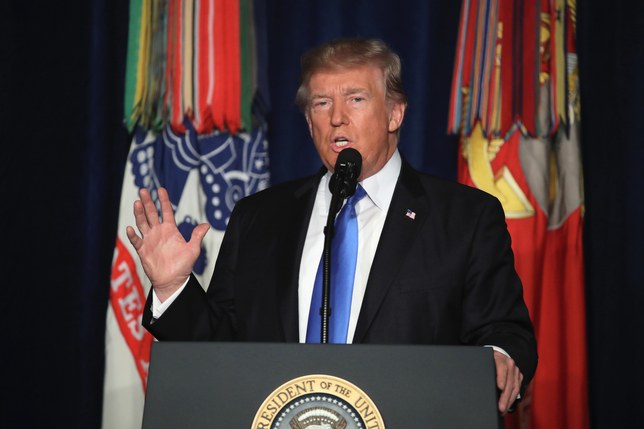
In an address to the nation on Monday night, Donald Trump announced plans to commit more troops to Afghanistan and continue the 16-year war. This decision seemed in stark contrast to Trump’s stance on the war in the years leading up to his ascent to the presidency. In 2012, he said the conflict was a “total disaster” and “wasting our money.” In 2013, he called for the U.S. military to leave Afghanistan “immediately.” And in 2015 and well into 2016—a.k.a. the duration of his presidential campaign—Trump continued to denounce the war.
But since actually taking office—and surrounding himself with plenty of retired military men—Trump has seemed to have changed his mind. And according to a report from The Washington Post, one of his closest White House officials knew exactly how to reach Trump—and get him to deploy more troops.
As the The Washington Post reported: “One of the ways [national security adviser H.R. McMaster] tried to persuade Trump to recommit to the effort was by convincing him that Afghanistan was not a hopeless place. He presented Trump with a black-and-white snapshot from 1972 of Afghan women in miniskirts walking through Kabul, to show him that Western norms had existed there before and could return.”
Considering Trump’s comments, actions, and attitudes toward women, it’s not surprising that a photograph of young women in short skirts was the best way for McMaster to convince the President that reinstating “Western norms” was worth continuing the military effort—and to completely reverse his original stance on the war in Afghanistan.
Though the exact number of troops that will be sent to join the 8,400 that are currently in Afghanistan is unclear, a report from The Hill indicates that the number will likely be between 3,000 and 5,000.