Categories
Health

‘My IVF Failed. Then the Bills Started Showing Up’


Experiences of infertility always have one thing in common: uncertainty. The countless visits to doctors, the months (or years) of planning, the tens of thousands of dollars, never add up to a guarantee. Even under the best of circumstances, there’s only so much about a pregnancy you can plan, and in the midst of a global pandemic, the idea of planning anything seems foolish. For National Infertility Awareness Week, we’re exploring the uncertainty—and the hope.


When I was presented with the option of financing two rounds of in vitro fertilization (IVF), I didn’t think twice. I asked where to sign and borrowed roughly $30,000 to make my dream of motherhood come true.

I was only 27 at the time and single. But while most of my peers still had years to figure out their future families, my time was running out. I’d recently been diagnosed with a very aggressive case of endometriosis. My doctors had explained that my fertility was quickly dwindling and that it was time to consider fertility treatments before my options disappeared completely. The only thing I knew for sure was that I had always wanted to be a mother. The thought of losing that chance wasn’t something I was willing to consider.

Of course, others had their opinions on my decision to finance this dream. Thirty thousand dollars is a lot of debt to take on, and most people I spoke with about my decision at the time seemed to think it was a bad idea. There were raised eyebrows over my age, concerns about my single status, and judgments about putting myself in so much debt over medical treatments some deemed elective.

The way I saw it, people borrowed far more every day for car loans and college educations, neither of which seemed as important to me as this. I had a decent paying job and the financial means to afford the monthly payments on the loan. And most importantly, this wasn’t something I had years to decide upon. This was my one chance—I was simply thankful financing options existed that would allow me to take it.

“What if you do all this and you come out with nothing to show for it in the end?” one friend asked. Failure wasn’t a possibility in my mind. All my life, I’d believed that I could have anything I wanted so long as I worked hard enough. I’d taken big risks in the past and worked hard to reap the rewards. I truly believed trying was all it would take to succeed.

I was wrong. Both rounds of IVF failed, and by the time I turned 28, I was broke, broken, and left with little hope that I would ever become a mom. It wasn’t supposed to happen like this. I never would have taken on that debt if I had truly believed the treatments wouldn’t work. But that’s the thing about pregnancy—it’s not a simple matter of working hard. It didn’t matter that I was young, that I had done everything “right” to realize my dream of getting pregnant. Some factors were simply beyond my control.

My loans didn’t stipulate an option to cease payment if the treatments didn’t work. I was on the hook either way. The bills that continued to come in even after I walked away from fertility treatments felt like a monthly punch to the gut. Yes, this was what I had signed up for. But I’d never considered I would one day be paying those bills with nothing to show for it. Every dollar withdrawn from my account sliced away at my psyche; a painful reminder of what I’d lost and the cost I’d paid to lose it.

Within a year of my IVF cycles, I required three major abdominal surgeries with an out-of-state specialist due to complications from my endometriosis. These surgeries were medically essential, having everything to do with my quality of life and nothing to do with my fertility. But the bills that rolled in because of them piled up on top of the debts I’d already taken on. Before I knew it, I was drowning in medical debt and questioning every decision I’d ever made. But I was also questioning the industry that had encouraged me to make those decisions, convincing me to gamble such a large amount of money with no guarantee of anything to show for it in the end. I met women who’d been through 8, 9, and 10 rounds of IVF without a single positive outcome to show for it. I was proud of myself for walking away after only two but also heartbroken about what that meant for my future.

Three years after my last failed IVF cycle, while still owing over $65,000 because of those treatments and the surgeries that followed, I had a chance meeting with a woman who, upon learning I couldn’t have children, asked if I would adopt the baby she was due to give birth to. The whole thing was a whirlwind. Adoptions don’t typically happen this easily, and I know how lucky I am. But a week later, I was in the delivery room holding my baby girl, thinking of her as the silver lining in it all.

Source link

Categories
Health

Sex After C-Section: Sex After My C-Section Helped Me Stop Feeling Like I’d Failed Giving Birth


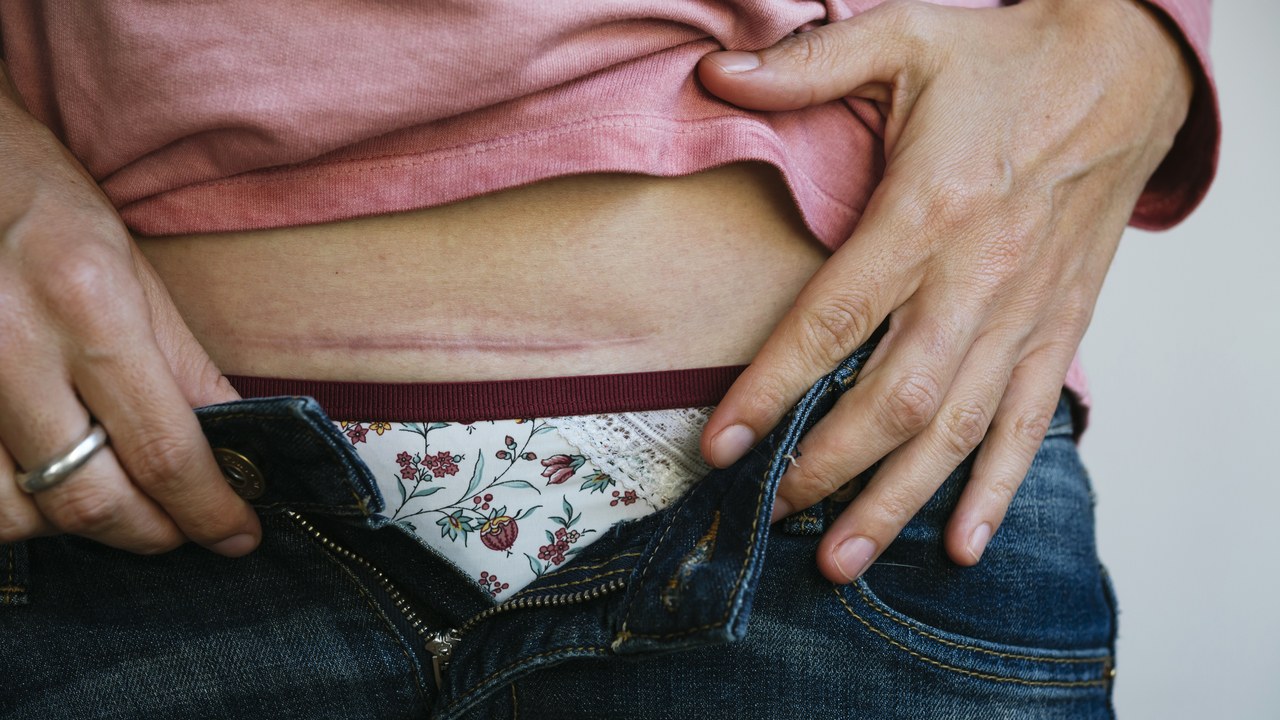
It turns out that tiny strips of silicone can help reduce the appearance of scars. You place them on top of the wound at night, and over time the scar fades. I wasn’t home a few hours from the ob-gyn before ordering a jumbo pack online. The sooner it came, the sooner I could start getting rid of This Thing.

Before the scar, stretch marks, and baby, my marital sex life was hot. We were the kind of couple who often wouldn’t make it to the bedroom, christening the couch or a beach blanket in our desire. I felt confident as I figured what my husband saw in me was what I saw in the mirror: a former collegiate swimmer with small perky breasts and firm thighs. After my C-section, with grayish purple lines dancing around my nipples and lower abdomen, and a scar cutting through my pubic region, I’m not so seamless, the physical changes a reminder of what my body has been through.

When we were cleared to have sex after five weeks, I was excited to be close to my husband again but apprehensive about how it’d go. I wasn’t feeling particularly seductive—with breast milk leaking out of my nipples and my hair in an unwashed bun, I wasn’t exactly turning myself on. My body and mind had been through a transformation, one that felt far from anything bedroom-related.

But something changed when we had sex, my angry scar on full display. Naked again with my husband, I not only felt worthy; I felt hot. I felt reminded that my body is powerful, feminine. After all, it brought our baby safely into this world, vaginal birth or not.

“Pin me down,” I commanded, hardly believing how confident I felt. My husband grinned, never more willing to oblige. I finally felt like the strong, beautiful woman my husband had been telling me I was. His excitement for me—scar and all—reminds me to embrace myself more fully.

Our scars are difficult to accept. They remind us of something in our lives that didn’t go quite as we expected. But they are also a part of our journey, our story, our beauty. My C-section brought me my giggling babe. It brought me closer to my partner. Perhaps most important, it brought me closer to loving myself even when things don’t go to plan.

When I think about it that way, I don’t hate my scar at all. In fact, I don’t need those silicone strips. I never even opened the box.

Jenna Jonaitis is a writer in Michigan covering lifestyle, wellness, and parenting. Follow her on Instagram and see her other work here.


Source link

Categories
Health

Simone Biles Gets Emotional Talking About How USA Gymnastics Failed Athletes


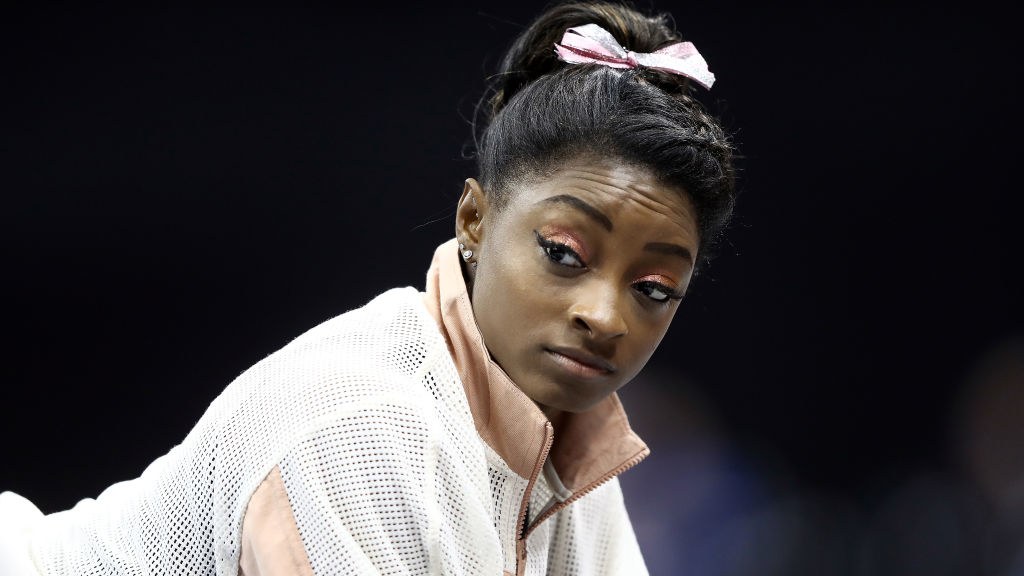
Simone Biles made history twice in a row this week during the U.S. Gymnastics Championships: First she nailed a triple-double during a floor routine and then she pulled off a perfect double-double dismount, making her the first female athlete to land both moves in competition. She ended up winning her sixth all-around title, a massive milestone for the 22-year-old athlete.

Biles has been busy celebrating her legendary performances. On Monday she posted an image on Instagram that shows her looking absolutely overjoyed and captioned it, “That feeling when you make history…twice.”

But her victories weren’t the only powerful thing she did last week. In an interview before she competed, Biles addressed reports that USA Gymnastics and the U.S. Olympic and Paralympic Committee failed to protect athletes like herself from former physician and team trainer Larry Nassar, who is serving multiple lifetime sentences after being convicted of criminal sexual conduct.

After an 18-month investigation, a bipartisan Senate committee announced that both organizations “knowingly concealed abuse by Larry Nassar, leading to the abuse of dozens of additional amateur athletes from summer 2015 to September 2016,” according to a report from the Washington Post.

Before competing, she told reporters, “They couldn’t do one damn job. You had one job. You literally had one job, and you couldn’t protect us,” she said. “And it’s just really sad because every time I go to the doctor or training, I get worked on and I don’t want to get worked on, but my body hurts. I’m 22. At the end of the day, that’s my fifth rotation, and I have to go do therapy, but it’s just hard, and we try to work through it, but it’ll take some time. I’m strong, I’ll get through it, but it’s hard.”

Biles has been committed to shining light on abuses in the gymnastics world, and she’s supported other victims of assault. Last year she wore a leotard specifically to honor survivors. As she explained, “I stand with all of them, and I think it’s kind of special to unite.”


Source link