Categories
Health

Now's the Time To Learn How to Sext: 23 Sexting Examples & Tips


Sexting example: “Tell me how the sound of my voice makes you feel.”

12. Make up a scenario.

Although creativity does score points when it comes to sexting, making up a scenario doesn’t have to be complicated, according to Stubbs. Even tossing out there the possibility of you just showing up at their house as a surprise can feel exciting.

Sexting example: “What would you do if I showed up at your house in nothing but a trench coat right now?”

13. Realize this could be practice for the real deal.

If you’re sexting with someone you’ve recently met on an app but haven’t been able to meet IRL, you could be practicing for the real deal—if you do want to meet after all this. This practice allows you to know each other intimately before that first, potentially awkward date.

Sexting example: “I guess if dinner and drinks feels awkward, we already know what we want in bed. Tell me again what you’ll do to me first?”

14. Take turns being the narrator.

“At its most basic, there are two central roles that you can take while talking dirty: the director and the narrator,” says Corrado. “The director is someone who is doing the telling, while the narrator is describing what is happening around them.” One role might feel more comfortable to you and to your partner, so you just might fall into them naturally. But this doesn’t mean you can’t switch it up.

Example of director: “I want you to use your vibrator on your clit, but you can’t come until I say so.”

Example of narrator: “I love it when you tease me that way.”

15. Get creative with language.

Honestly, there’s only so many times you can say “pussy” or “cock” before it wears thin. That’s why, according to O’Reilly, creative language is a must. “Consider crafting your messages with broad and vivid vocabulary,” she says.

Sexting example: “I wish you were here to feel how wet my treasure trove is.”

16. Keep the conversation going.

There’s nothing worse than getting all hot and bothered and then there’s a lull. Like, WTF. “Engage and try not to be unresponsive during moments when the sexting is consistent,” Saynt says. “There’s nothing worse than someone losing interest or getting distracted on either side, so try to be there for your partner and be sure to call them out when they seem to not be there for you.” 

Sexting example: “I’m not sure where you went, but if you haven’t come yet, let’s work on that together.”

17. Get all five senses involved.

“Your sexting partner isn’t there with you, so they only have your words (and their imagination) to figure out what’s going on,” Corrado says. “If you’re describing to them the ways that you’re touching yourself, make it a sensory experience.” According to Corrado, you want the person you’re sexting to feel like they’re right there, seeing, feeling, hearing, smelling, and tasting it all.

Sexting example: “The leather chair I’m sitting in feels so good on my skin right now.”

18. Role-play.

It’s exhausting always being the same person, isn’t it? Stubbs suggests setting up a role-play situation. This is another place where you can let your mind run wild. Did you just receive a text from a stranger that must orgasm ASAP to save the planet?! It’s totally okay to be silly while sexting!

Sexting example: “You don’t know me, but I’m from Venus and I’ve been given your number to make you wetter than you’ve ever been before.”

19. Communicate what you want.

Unless your sexting partner is a mind reader—or you’ve been together that long, you’re going to have to communicate and maybe even steer the direction of the sexting. “Want your partner to engage in a little fantasy play? Looking to have them say dirty things to you? Communicate what you want and ask for all the naughty things you know you deserve,” Saynt says. “Most likely your partner will be down to comply with giving you exactly what you’re looking for.”



Source link

Categories
Health

Hello Hope, My Old Friend: As Donald Trump Faces Impeachment and Elizabeth Warren Rises in the Polls, Can Democrats Learn to Hope Again


But last month, I registered a shift. In me. In the people I know. Even on Twitter. An odd thing has happened. For the first time since the presidential election, some of us have started to feel…hopeful?

The sensation is so novel, I didn’t recognize it at first. But it began with that old nemesis of mine—polls. After months of ambitious plans, hundreds of photo lines, and countless appearances, Elizabeth Warren surged ahead in them. At last a woman whose hard work seemed to be noted and appreciated. The first primaries are still months from now, but for a lot of women, Warren presents a chance to finish what Geraldine Ferraro, Margaret Chase Smith, and Shirley Chisholm started. For a lot of us, the fact that we’ve never had a female president still stings. Even prim-and-proper England had Margaret Thatcher. (Yes, I know.)

Sure, Clinton had her problems, but those issues paled compared to her opponent’s deficiencies; the harassment and assault allegations, his numerous bankruptcies, the grift. I’m not here to re-litigate 2016, but the stark fact was that one candidate was qualified and the other didn’t know who Fredrick Douglass was.

Then, the Ukraine news broke. As reports trickled out, we learned that Trump has been pushing Ukraine for dirt on Joe Biden. Even moderate Democrats backed impeachment proceedings. And in the time since, I have sometimes wondered: What would happen if we didn’t all get dark and doubtful again? What would happen if we decided to hold the Trump administration accountable for once? Stranger things have happened.

There’s an expression in politics that “Republicans fall in line and Democrats fall in love.” As much as I hate the idea, I think there’s some truth to it. But I’ve held off on following my heart. I’ve been burned, and it’s so much easier to just assume the worst than hope for the best. At least that’s how I felt until now.

For the next few weeks, the Trump administration will have to answer for their actions. And in the meantime, women continue to run rings around him. Harris is on the cover of TIME Magazine! Warren, with her focus on childcare and student debt, makes me feel warm inside! I can’t help it. I feel…almost optimistic.

This election will take place 13 or so months and several million news alerts from now. And I am not blind to the realities of our current moment. Abortion is on the chopping block. Immigrants rights’ have been trampled. Our president just asked China to interfere in our elections from the White House lawn. I’m not delusional, but I am hopeful. Because for the first time in a long time, some determined part of me feels like we’re at the beginning of something.

Molly Jong-Fast is the author of three novels. Follow her on Twitter @mollyjongfast.


Source link

Categories
Health

This Scene from ‘Booksmart’ is Helping Me Learn How to Talk About Sex


I have trouble talking about sex. It’s a very present issue in my life, and I’m currently in therapy learning how to unravel the network of shame I’ve built around sexuality. Phew, glad we got that out there.

My relationship with sex has always been rocky. In high school, I felt shameful for wanting it—with women—so I repressed any real desire I felt. Even when I started dating women in my early twenties, it wasn’t some glorious sexual liberation; I retreated even further into my sexual shell, battling my own internalized homophobia. I figured my heterosexual friends wouldn’t want to hear about my sexual encounters with other women. My sex life was a dirty little secret. I wasn’t being totally transparent with my sexual partners either when it came to what I wanted and what felt good in bed—whether it was my inability to vocalize what position I liked best, or feeling scared to say “I’m too tired tonight.” I still struggle with that.

I desperately wish I was one of those hyper-empowered, sex-positive feminists, but I’m not. I mean, that’s the end goal—but after growing up repressed and feeling utterly embarrassed about my sexual desires, I’m just not there yet. I am trying. Therapy has been helpful. So has watching women own their sexuality in pop culture.

Over the past few years, a wave of female-driven movies and TV shows have started to normalize the development of female pleasure—like Pen15’s cringeworthy flirtations with adolescent desire, Blockers showing teenage girls asking for oral sex, or Outlander’s pioneering scenes that shifted focus from the male orgasm to the female orgasm on screen. But never have I felt so personally seen than when watching Booksmart, the teenage sex comedy directed by Olivia Wilde. In case you missed it, the Superbad-esque storyline follows out teenage lesbian, Amy (Kaitlyn Dever), grappling with her virginity and sexual firsts.

One scene stood out to me as especially cringeworthy, probably because it hit me where it hurt—smack dab in my own sexual embarrassment center. It was the moment when Amy, budding young lesbian, reveals she’s been humping her stuffed panda. Yes, masturbating with a stuffed animal.

Allow me to explain. While in her bedroom, Amy opens up to her best friend Molly (Beanie Feldstein) about her fear surrounding sleeping with a girl for the first time—she doesn’t know how to do it. Molly suggests that Amy take her hand the way she would masturbate, and simply “flip it.” Amy says, “What if I don’t use my hands?” As she suspiciously eyes a corner of her room, Molly guesses what Amy uses to masturbate, and Amy cringes, begging her to stop: “Can we just stop talking about this, please? For the love of all things!” Relatable. Finally, Amy admits, “It’s the panda, ok?!” Molly doesn’t shame her, but she does poke fun at the ridiculousness of the scenario: “Does she talk dirty to you? Tell you about how she’s endangered?”

This scene had me reliving my sexual shame all over again—because I can relate. I’ve never admitted this out loud, or written it down, or told another soul, but when I was a pre-teen…I used to masturbate by humping a vibrating pillow. It was hot pink and squishy and was meant to be a massage pillow and I stained it from…well, you get it.

This is mortifying to admit, let alone publish. But honestly, the Booksmart scene between Amy and Molly made me feel so much better about my own past. Clearly I’m not as weird and alone as I thought I was for the past decade and a half. For 15 years I’ve been carrying this well of shame about early masturbation because I was completely alone in learning how to masturbate. I had no idea what was normal—I just assumed I was some sort of freak.


Source link

Categories
Health

My Scoliosis Caused Me Pain and Shame—Then It Helped Me Learn to Find Alignment


My yoga teachers informed me that my right hip gets stuck, while the left is flexible; they’ve alerted me that my right shoulder sits higher than the left; they’ve drawn my attention to my left arm, which in straight arm poses lapses into a bend. How did I not know these things about my own body? I’d been living in a daze, letting my curve decide how the rest of me should accommodate it.

I worked closely (and slowly) with my body to become increasingly aware of my unique spine and what I could do to reduce the pain. I learned to pause and observe my mind and my body as I held poses for long periods of time. After a couple of years of attending yoga classes once a week, I revisited the doctor and to my surprise, the lower curve in my spine appeared to have diminished by three degrees. My condition was improving. People commented on my posture, but this time, positively.

Going to yoga classes once a week helped minimize my immediate scoliosis pain, but eventually I grew lazy. By the time I moved to Los Angeles in 2015 to live with my fiancé, my back pain had retrogressed. At times, the sensation was so overwhelming, I had difficulty focusing on my work. Eventually, I decided to sign up for a three-month study with Koren Paalman, certified Iyengar yoga teacher, who is a student of Elise Browning Miller, the foremost authority on yoga for scoliosis. Koren would hear my history, follow my progress, and select therapeutic poses for me to practice at home. These poses held the potential to reduce pain, strengthen muscles that weakened from my unevenness, improve balance and mobility, and propel me toward a more aligned state. She’d take before and after photos. We both hoped for change.

The author untwisting her spine in hanging sirsasana.

Photo courtesy of Lauren DePino

The first pose Koren chose for me was something she learned directly from Mr. Iyengar: hanging sirsasana—a version of headstand where one hangs upside down from ropes attached to hooks on the wall—but with a twist. Unlike classic headstand, this pose allows the neck to lengthen freely, which is especially helpful for those with a curve imbalance.

While suspended in air, I didn’t have to work with strained attention to straighten my back or decompress my neck—gravity did it for me. Koren then handed me a cold rolled steel bar to hold to one side of my body—a counter-rotation of my spine designed to bring evenness. Instead of the constant pain I carried like a lead chain draped over my right shoulder, I felt weightless relief, even enjoyment.

Koren gave me a total of seven poses to practice. At first, I had to force myself. But in time, my body craved them. I know that if I can get myself into the ropes for just five minutes, my pain will subside. My mind will quiet. The results will come with consistent conscientious practice.

My spine may never be straight and my scoliosis will never be cured. But learning about my physical alignment has made me so much more attentive to how I move through the world. Instead of ignoring the signals from my meandering vertebrae, I notice the shapes of things—of trees, of buildings, of my body.

Even when I’m not practicing yoga, I align myself. Instead of hunching, I create space between my neck and shoulders. I assert will to release my sticky right hip. I try to hold my spine as straight as a needle. These actions are becoming embedded in my muscle memory. Little by little, I have less pain. I stand taller. Change is gradual, but it’s happening.


Source link

Categories
Health

Learn How to Ask for a Raise From Real Women Who Have Been There, and Have Killer Insight


For similar support, check out Ladies Get Paid or PepTalkHer, a popular new app that lets women come together and discuss issues around work.

Get another offer.

Generations of rom-coms and Joni Mitchell have taught us: Sometimes you don’t know what you’ve got till it’s gone. When Arielle, a product marketer, let her team know that a competitor was interested in hiring her, it made them realize just how much they stood to lose if she left.

“After a year at an early-stage start-up making $63,000, I start shopping around at other start-ups,” Arielle says. “I ended up getting an offer from another prominent startup for $80,000. I actually wanted to stay where I was, but I needed proof I was worth more. When I shared this with my bosses, they decided to bump me up to $76,000, and I took it.” If you’ve been a valuable to your current company, chances are they won’t want to lose you to a competitor.

“Always see who else is buying!” Arielle says. “Sometimes it takes a cold, hard offer from another business to make your current company realize what they ought to be paying you.”

It’s like coming into a conversation with the receipts—you have the backup to prove how valuable you are in the market.

Consider alternative benefits.

You’re not always going to get exactly what you want when it comes to a raise. So sometimes it pays to think about compensation beyond cold, hard cash. That worked for Marissa, who’d been with a Fortune 500 company for four and a half years and had received only a 5 percent merit raise. When it became clear that more money was out of the question, Marissa asked her boss if the company would cover her project management certification. “I put together a proposal for her outlining what was involved, what it cost, and the benefits to my development and the organization—and it worked,” she says. The knowledge she learned from the certificate program was invaluable, and it helped her to ultimately land a job that netted a $30,000 salary increased.

“It’s not always just about money,” Marissa says. “You can ask for other things like conference stipends, training, flexible working arrangements, work-from-home days.” If a traditional raise isn’t an option, consider other perks or adjustments that would have a positive impact on your day-to-day. Maybe it’s more paid time off, tweaked expenses, or different hours.

No matter which of these methods you choose to employ during your next negotiation, make sure you’re prepared for all potential outcomes. As Own Your Worth CEO and founder Ashley Paré cautions, “When you make your ask, you have to be willing to walk away. Go into the discussion prepared with your bottom line and let your employer know that you really would like to stay with them, but it’s important to you that you’re paid fairly and competitively.”


Source link

Categories
Health

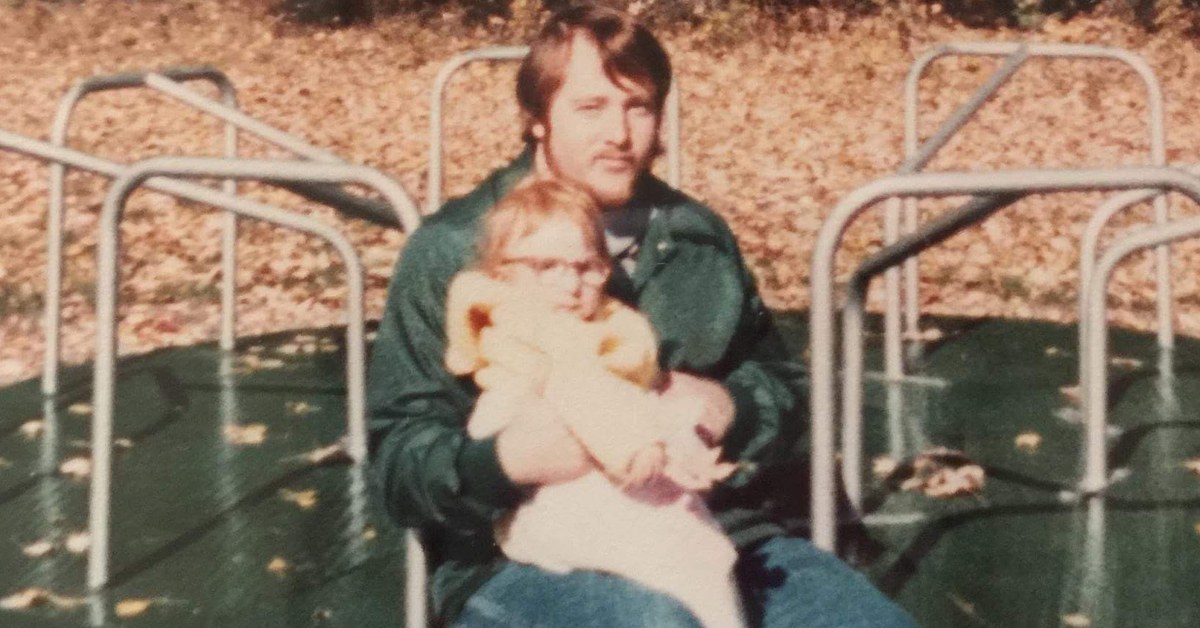
To Cope with My Father's Suicide, I Had to Learn to Love My Grief


November 17 marks International Survivors of Suicide Loss Day, dedicated to those affected by suicide loss.

At 21, I thought I knew exactly who I was: Daughter, sister, friend, student, woman with a disability. I was halfway through college and felt like a butterfly excitedly fluttering it its cocoon, just itching to break free and fly. Then, on a regular Monday morning—15 years ago this year—my father died from suicide.

Just like that, my whole life changed. My father’s death was sudden, unexpected, devastating—but above all, it was confusing. For the first time in my life, I felt lost.

Didn’t the universe know this wasn’t supposed to be my life? The suicide of a loved one leaves you in limbo with no way out—full of unfinished business and unsaid words that you’ll never get the chance to say. It’s the ultimate in cruelty—suicide keeps taking things long after the person has died. You’re forever reminded that there should have been more. More birthdays. More family road trips. More memories. More time. More. More. More.

As my family grieved, I felt out of place. Twenty-one is a weird in-between age—I felt on the cusp of adulthood but still wanted the guidance and reassurance of my parents. There were grief books for widows and grief books for children and teenagers, but no one really talked about what it’s like to lose a parent when you’re in your early 20s. Unlike “widow” or “child,” there was really no label that quite described the sense of loss I carried.

No grief book could tell me what it would feel like to see reminders of my father: birthdays, holidays, little girls holding their dad’s hand. Even worse, there was no way to prepare myself for what it would feel like to graduate from college and not pick out my dad’s smiling face from the crowd as I accepted my diploma. When a loved one commits suicide, they’re both everywhere and nowhere.

The most distressing and concerning thing about being left in the aftermath of a loved one’s suicide, I came to realize, is that it decimates your sense of identity. I was no stranger to feeling different—growing up with a physical disability, I was used to feeling different from my peers—but my father’s death brought with it an entirely new sense of isolation. I suddenly felt like a stranger in my own life, isolated from the person I used to be.

A loved one’s suicide doesn’t just leave you mourning for their life, it also leaves you mourning for your own.

That’s the thing no one tells you about dealing with a loved one’s suicide: It doesn’t just leave you mourning for their life, it also leaves you mourning for your own. A part of me died that day too. It took me a long time to realize in the aftermath of suicide, you have to grieve not just for your loved one, but for yourself, too.

I found myself again in subtle ways, little by little. A decade in therapy helped me deal with the effects of my father’s death. Blogging about my journey also helped. But what has made the biggest difference in my well-being is letting myself lean into my grief instead of running from it.

We’ve been conditioned to believe that grief is a bad word and something to be avoided. We even like to tell people how to grieve, when to grieve and, perhaps most importantly, when to stop grieving and just move on. But the more I talked and wrote about my grief, the more I realized that grief isn’t the enemy. Everyone’s grief is different—it’s as unique and individual as the losses we experience—but owning my grief, finally helped me find some relief for all my anxiety and sadness. Grief is not out to get you—it can actually be there to help you.

I like to think my 21-year-old self is still with me, tucked inside my heart, maybe even right next to the spot where my grief resides. I think there’s a place for all three of us—my grief, the girl I used to be, and the woman I am today—to coexist. All three make up the fabric of who I’ve become and in a way, they’re all linked. You can’t really have one without the other two. There’s a certain beauty in that.

When I remember that, I can tell the 21-year-old girl trying to piece together her life in the fallout of suicide that everything is going to be okay. I can spread my wings and my grief and I can finally get the chance to fly.

Melissa Blake is a freelance writer and blogger covering disability rights and women’s issues. She has written for The New York Times, CNN and Glamour, among others.


Source link