Categories
Health

15 Wellness Products Helping Our Editors Get to Sleep This Month


March has been quite the month—and there are a lot of feelings to feel right now. But before social distancing and supermarket scrambles became our new normal, Glamour editors spent the better half of the month discovering all of the products you need to get more sleep. Looking for the best bed sheets? We found them. Shopping for your first-ever mattress? Here’s a list of all the best mattress-in-a-box brands worth your money. Trying to make your space a haven for plants? Plantfluencers (yep, it’s a thing) flexed their green thumbs and told us which leafy babies will actually thrive in your bedroom.

From the softest pajamas ever to a life-changing weighted blanket, here’s all the stuff that’s reminding us what a real night’s sleep feels like.

Sleep is a $70 billion industry—we throw our money at a dreamier night’s rest, promise ourselves we’ll prioritize it, and then gripe when we’re still, inevitably, so tired. Despite our collective obsession with sleep, we seem totally unable to get more of it. In fact, we’re clocking fewer hours than ever. So, this month, we’re taking a look at what’s getting in the way—and what to do about it.

All products featured on Glamour are independently selected by our editors. However, when you buy something through our retail links, we may earn an affiliate commission.


Source link

Categories
Health

This Scene from ‘Booksmart’ is Helping Me Learn How to Talk About Sex


I have trouble talking about sex. It’s a very present issue in my life, and I’m currently in therapy learning how to unravel the network of shame I’ve built around sexuality. Phew, glad we got that out there.

My relationship with sex has always been rocky. In high school, I felt shameful for wanting it—with women—so I repressed any real desire I felt. Even when I started dating women in my early twenties, it wasn’t some glorious sexual liberation; I retreated even further into my sexual shell, battling my own internalized homophobia. I figured my heterosexual friends wouldn’t want to hear about my sexual encounters with other women. My sex life was a dirty little secret. I wasn’t being totally transparent with my sexual partners either when it came to what I wanted and what felt good in bed—whether it was my inability to vocalize what position I liked best, or feeling scared to say “I’m too tired tonight.” I still struggle with that.

I desperately wish I was one of those hyper-empowered, sex-positive feminists, but I’m not. I mean, that’s the end goal—but after growing up repressed and feeling utterly embarrassed about my sexual desires, I’m just not there yet. I am trying. Therapy has been helpful. So has watching women own their sexuality in pop culture.

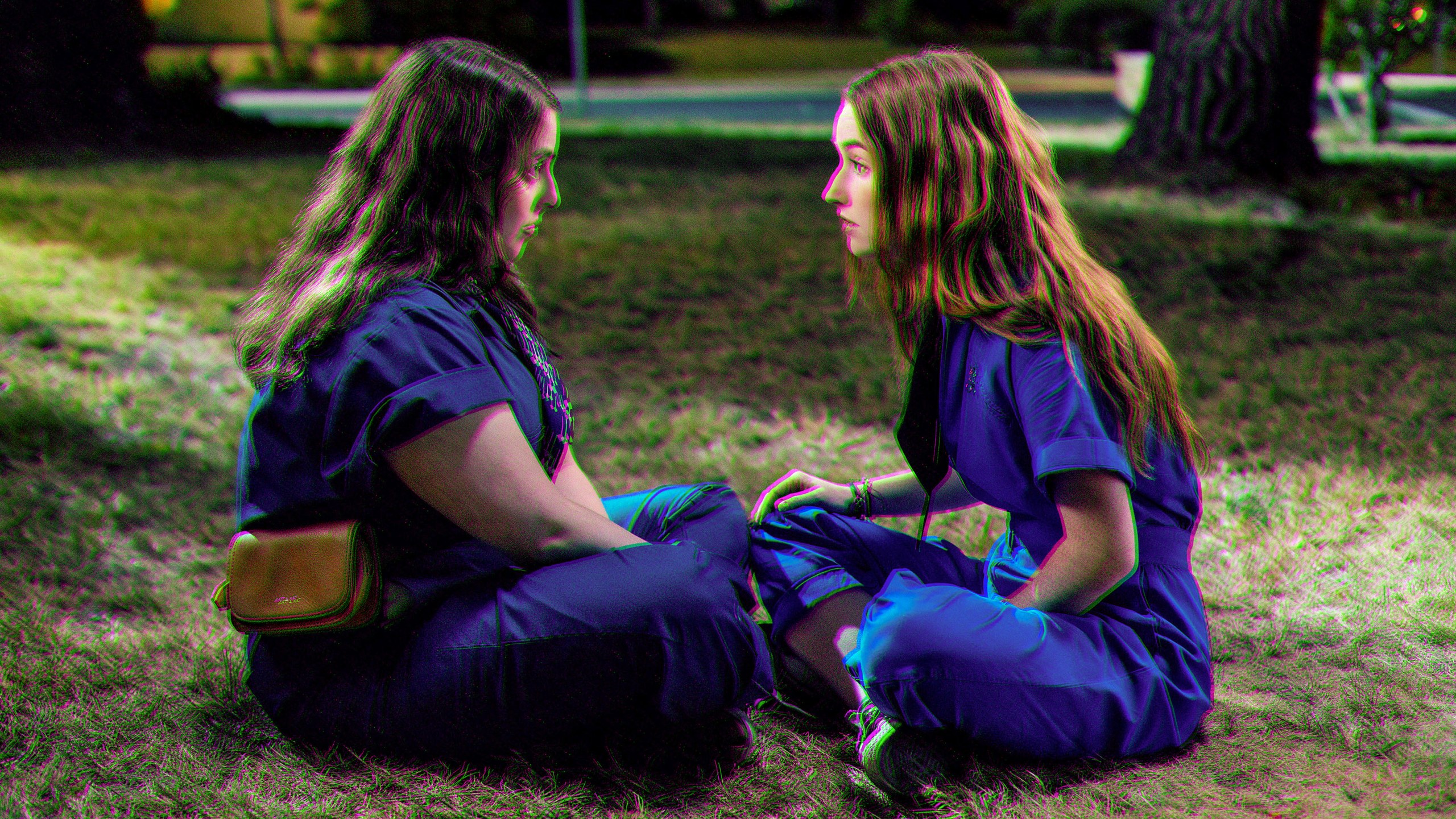
Over the past few years, a wave of female-driven movies and TV shows have started to normalize the development of female pleasure—like Pen15’s cringeworthy flirtations with adolescent desire, Blockers showing teenage girls asking for oral sex, or Outlander’s pioneering scenes that shifted focus from the male orgasm to the female orgasm on screen. But never have I felt so personally seen than when watching Booksmart, the teenage sex comedy directed by Olivia Wilde. In case you missed it, the Superbad-esque storyline follows out teenage lesbian, Amy (Kaitlyn Dever), grappling with her virginity and sexual firsts.

One scene stood out to me as especially cringeworthy, probably because it hit me where it hurt—smack dab in my own sexual embarrassment center. It was the moment when Amy, budding young lesbian, reveals she’s been humping her stuffed panda. Yes, masturbating with a stuffed animal.

Allow me to explain. While in her bedroom, Amy opens up to her best friend Molly (Beanie Feldstein) about her fear surrounding sleeping with a girl for the first time—she doesn’t know how to do it. Molly suggests that Amy take her hand the way she would masturbate, and simply “flip it.” Amy says, “What if I don’t use my hands?” As she suspiciously eyes a corner of her room, Molly guesses what Amy uses to masturbate, and Amy cringes, begging her to stop: “Can we just stop talking about this, please? For the love of all things!” Relatable. Finally, Amy admits, “It’s the panda, ok?!” Molly doesn’t shame her, but she does poke fun at the ridiculousness of the scenario: “Does she talk dirty to you? Tell you about how she’s endangered?”

This scene had me reliving my sexual shame all over again—because I can relate. I’ve never admitted this out loud, or written it down, or told another soul, but when I was a pre-teen…I used to masturbate by humping a vibrating pillow. It was hot pink and squishy and was meant to be a massage pillow and I stained it from…well, you get it.

This is mortifying to admit, let alone publish. But honestly, the Booksmart scene between Amy and Molly made me feel so much better about my own past. Clearly I’m not as weird and alone as I thought I was for the past decade and a half. For 15 years I’ve been carrying this well of shame about early masturbation because I was completely alone in learning how to masturbate. I had no idea what was normal—I just assumed I was some sort of freak.


Source link

Categories
Health

Are Hashtags Like #MeToo and #BelieveWomen Hurting or Helping Survivors?


When friends and former colleagues started sharing #MeToo stories, or, in those first furtive days of virality simply dropped the hashtag and left the details opaque, it was palpable: Something was shifting right before our eyes and the power of women speaking, typing, screaming what had for generations mostly been whispered or not said at all, was weighty in the air.

The way we grappled with, identified and discussed sexual assault would never be the same, it seemed.

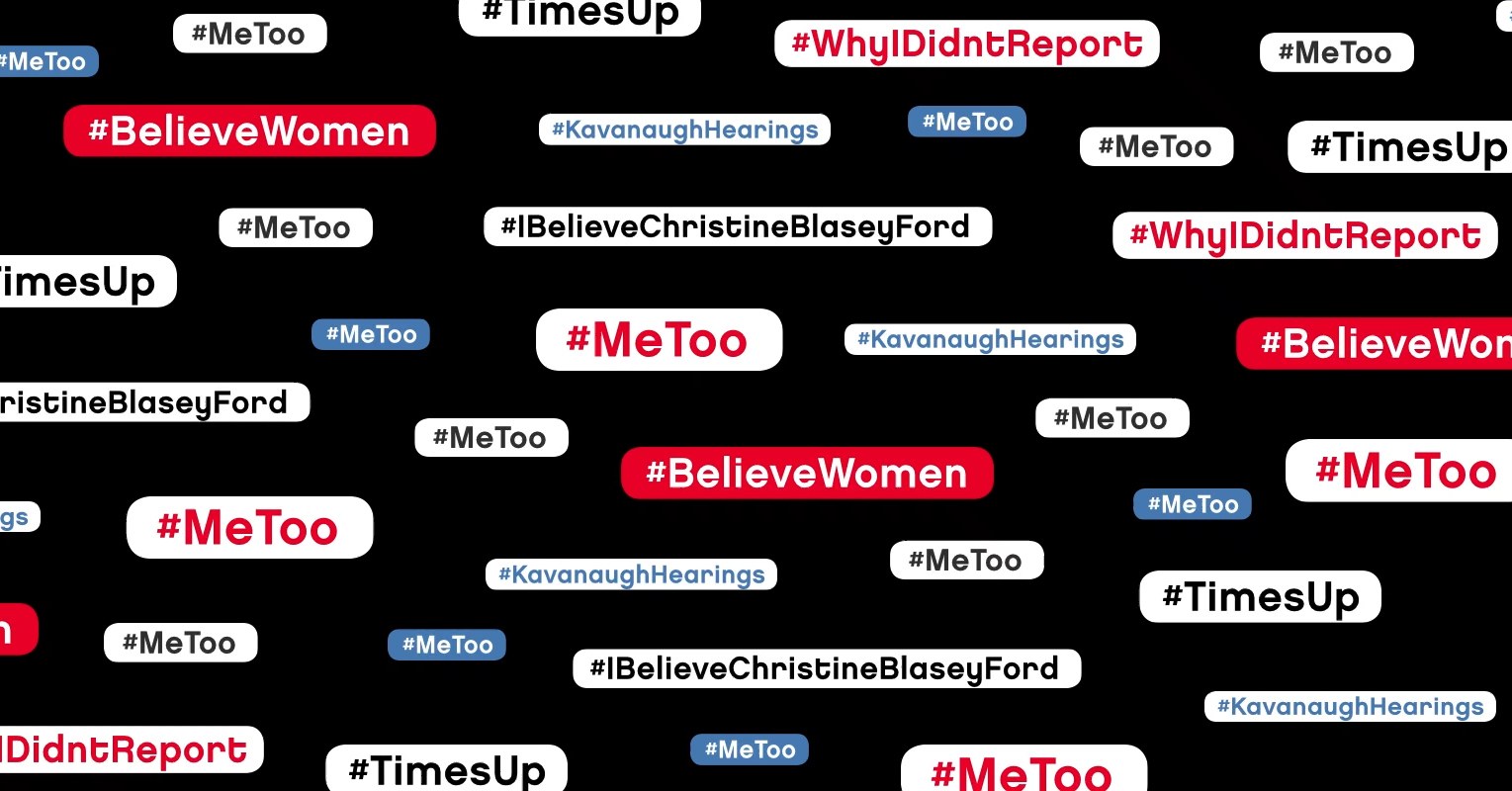
MeToo—the hashtag that took off after Alyssa Milano, using activist Tarana Burke’s decade-old campaign, put a pound sign in front of the rallying cry—prompted a tsunami of stories and a national intervention on sexual harassment and assault.

It was an eye-opener. Many women I know, myself included, began digging through moments that we’d waved off—the unwanted hands, the inappropriate boss, the ass-slap at work, the boys who’d been boys—and wondered how we’d become conditioned to accept it. Many men voiced surprise and shock at such pervasive harassment and assault. Women described groping , a constant flow of harassment, molestation and even rape. Powerful names started to emerge with accusations attached: Larry Nassar, Kevin Spacey, Roy Moore, Louis C.K., Charlie Rose, Matt Lauer, Russell Simmons, Al Franken, Woody Allen (again), Mario Batali. “The Silence Breakers” were Time Magazine’s People of the Year. The language had changed. Posting #MeToo stories was a part of a national movement to decondition our society. Doing so was both brave and necessary.

But this necessity, unsurprisingly, came with a cost. Survivors gave a piece of themselves, their stories, in exchange for a movement that was supposed to create a wave of change. The burden, it seemed, was on women to free our culture of abuse and assault. Unfortunately, the burden was also on them to endure the very specific and unique abuse that survivors face when they come forward—the insidious shaming that puts the onus on victims instead of their attackers and aggressors.

A year later, in the same month as #MeToo’s internet anniversary, we find ourselves in more of the same. Now-Supreme Court Justice Brett Kavanaugh was confirmed and sworn-in to serve on the highest court in the land despite the sexual assault allegations brought forth by three women, including Christine Blasey Ford, and a belligerent show of defense during his Senate Judiciary Committee hearings. Ford, who says the judge attacked her more than 30 years ago when they were in high school, has been mocked by the president for coming forward. She is unable to return home due to death threats. Women—and some men—reported mentally reliving their own attacks after Ford’s testimony, and took deeply personal umbrage at the suggestion that Ford’s delay in reporting somehow indicated she’d fabricated her story. And the vitriol against Ford is not unlike the kind those who shared their stories using the hashtag #WhyIDidntReport, experienced. It might be easy to wonder, is hashtag reporting to eradicate and illuminate our society’s ills all worth it?

Given the historical response to survivors of sexual assault, especially in the age of Twitter, I asked Karestan Chase Koenen, PhD, licensed psychologist and professor at Harvard’s T.H. Chan School of Public Health, what can prompt survivors to voice an incident they held inside, for years or decades. Often, there are spikes in reports “anytime there’s a really high-profile sexual assault case,” says Koenen. This was true during the Clarence Thomas hearings. It was true with Kavanaugh.

“Assault takes a person’s control and power away, and it should be in someone’s own power and control to tell their story.”

Moral obligation also has an incredible power to draw out the truth: Survivors tend to report after their attacker faces other allegations. Koenen herself went public with her own experience: “It was this public thing where I had a purpose for speaking out,” explains Koenen. “For some people, speaking out now has a purpose.”

Then there’s control: “Assault takes a person’s control and power away, and it should be in someone’s own power and control to tell their story, and I don’t think they’re under any obligation,” says Koenen. Your story, once on the internet, is always there, she warns. She’s known women whose new dates Googled them and knew about their assaults before their first dinner. Sharing the story, no matter how important, cedes some control over it and how it will later be revealed to others.

I certainly do not fault anyone for sharing their #MeToo or #WhyIDidntReport stories; it shows staggering courage. For some, it is empowering to finally say it. That shouldn’t get lost. But I worry about so many people who carried a gnawing hurt and fear around for years, who never wanted to speak the words. Early on, I didn’t pause to see how making a disclosure in such a public way also leaves one open to trolling and further harassment, or in Ford’s case, ongoing death treats. Such is the cost of the truth. I’m at once awed by the survivors’ courage, and mourn that this moment again required it of them—and repaid them with so much cruelty. There’s a burden in being a bearer of truth; there’s punishment meted out for telling it.

I wonder how Ford feels now. How ought outspoken survivors all feel, having aired indignities and pain publicly and across generations, to receive lip service from politicians, but ultimately see justice evaporate again?

There’s an unbearable lightness in telling a difficult truth, a freefall sense, a burden cast-off—perhaps traded eventually for new burdens—but in the moment of truth-telling, there’s power in choosing the words. We saw that astonishing power in Ford. She may not have been taken as seriously as she should have been by those seeking other forms of power for themselves, but she changed lives.

There are millions of stories still held in silence.

When truths are told for a higher good, one hopes the teller will be rewarded with seeing some justice. In a good, fair world, that’s how things would work. We don’t yet live in that good, fair world. But we do live in a country where now, the fight is more deeply shared. Losing a battle but ending up with more soldiers isn’t exactly a loss.

For a year, we’ve heard the tallies of the millions of dollars powerful men lose when their “scandals” surface. But I continue dwelling on what’s been sacrificed by so many women who exposed their hardest memories at the cost of waking up the rest of society, the cost of reliving and opening up stories—because the cost could be exponential a moment that never ends.

Unless, because of their courage, eventually, it does end.


Sarah Stankorb is a writer whose work has appeared in The New York Times, Washington Post, Vogue, Marie Claire, Longreads, Catapult, and Slate, among others. @sarahstankorb

MORE: A Year Later, Is the #MeToo Movement Stuck in Hollywood?


Source link

Categories
Health

Is Your Tribe Helping Or Hurting Your Mental Health?


I spent my twenties going to clubs that had mean bouncers and sports bars where I drank too much beer. I felt aimless and uninspired (and lonely and a little drunk). When I turned 30, I looked around at my drinking buddies and realized I just didn’t belong. As they stared zombielike into their phones, I could tell they weren’t exactly feeling their best either. Maybe we just weren’t meant to be together.

Research has shown that when we’re connected to other people, our health thrives. Brigham Young University researchers found social isolation is as much of a threat to longevity as obesity is, and loneliness is about as risky as alcoholism or smoking 15 cigarettes a day. To me, not having a core group of friends who cared about me and whom I cared about, respected, and felt inspired by was an emotional drain. I wasn’t getting much out of my social group. (I wasn’t giving, either, which turns out to be pretty necessary.) I had to make some changes.

“Feeling a sense of belonging is a fundamental human need,” says William Chopik, Ph.D., assistant professor of psychology at Michigan State University. “Throughout all of human history, social groups are what helped us survive. They give us psychological benefits, like the sense that there are others we can depend on and turn to when we need it. That security translates to all sorts of good outcomes, including higher self-esteem and better relationships. The benefits are seemingly endless.”

Yet we busy ourselves rounding up followers and likes and pretending we’re just fine going it alone, rather than focusing on the depths of our connections. We have more ways to connect with one another than ever (virtually, at least), but somehow we’re still leaving each other hanging. And it’s hurting us. Research at the University of California, Berkeley, found that twenty-somethings report feeling lonely twice as often as people in their fifties and sixties, despite having large social networks. Perhaps worse: We’ve forgotten about the importance of the collective we, as if belonging was just the icing on the cake.

Experts have recognized this. The Mayo Clinic lists friendship as part of an adult’s healthy lifestyle; it reports that friendships can boost happiness and reduce stress, improve self-confidence and self-worth, encourage people to change or avoid unhealthy habits, and help them cope with trauma—from job loss to illness. That sounds pretty crucial to mental well-being.

If you’re feeling lonely or unfulfilled, I challenge you to shake up your social circle and see what else changes.

After my epiphany at the bar, I felt more alone than ever, but also more determined to be intentional about my friendships and what I had to offer a community. I wanted friends who were adventurous, who shared ideas; I wanted to be a better listener and not such a workaholic. So I started being proactive: I went to Burning Man as well as entrepreneurship conferences; I’d meet people and then actually make plans. In time, I cultivated a group where I am truly able to be myself.

The strength and courage that gave me saved my life. So to share that feeling, I started Daybreaker, an early-morning dance party that reimagines the fun of a nightclub as something before work and with green juice, yoga, and hugs—all the wildness and joy, no judgment or hangovers. This tribe has fueled and healed me (and a lot of others; it’s now in 23 cities). Now I serve my community, and they serve me. I give them energy. They give me energy. When I’m feeling down, they pick me up. When they’re feeling down, I pick them up. Happiness, given and received.

I may have built my community around 6:00 A.M. dance parties, but yours could be less extra—maybe it’s two really solid friends. To find those connections, you need to know what you care about and what you have to offer; you have to make yourself vulnerable and communicate. Start with a few simple questions: What do I value in life? What are the qualities I’m looking for in a friend or ones I’d like to avoid? What can I contribute? We do this kind of audit for our careers and our love interests but rarely for our friendships. It takes effort, but the rewards are big.

I didn’t launch a global business by swearing, “I’m good! I’ve got this on my own!” I wasn’t able to envision my personal and professional goals—much less achieve them—until I started seeking out people who are as invested in my whole well-being as I am in theirs. And sure, making friends won’t cure anxiety or depression, but it can help you grow. If you’re feeling lonely or unfulfilled, I challenge you to shake up your social circle and see what else changes.

Today we can get wrapped up in self-care and the notion that to unwind we have to prioritize ourselves over others. There’s nothing wrong with a long run or a sheet mask after a tough day. But there are a lot of forces keeping us alone, especially those shiny little pocket computers we can’t put down. It’s up to us to take a break, look up, and make time for other living, breathing humans. Because the best way to feel happy and whole, I believe, is being in the presence of others.

Radha Agrawal is the cofounder of Daybreaker and Thinx, and author of Belong: Find Your People, Create Community & Live a More Connected Life, out September 2018.


Source link
Categories
Health

John Legend Helping Chrissy Teigen With Her Maternity Leggings Is the Definition of True Love


If this isn’t true love, we don’t know what is: When Chrissy Teigen, who is pregnant with her second child, needed helping pulling up her maternity leggings because she was having trouble getting them over her baby bump, her husband John Legend didn’t think twice about stepping in.

Chrissy posted a video of the team effort to Snapchat; in it, you can hear a sniffling Teigen laugh, “ow…gentle!” as Legend hoists the black leggings up and over her stomach. It’s no less than what we’d expect from the couple, but it’s still pretty darn cute.

It looks like the leggings are part of Chrissy’s snow day outfit, as she also shared a snapshot of the finished product, standing (fully-dressed) in some freshly fallen snow. She’s proved to be all about that monochromatic, all-black pregnancy style this time around.

The model has been vocal in the past about her and John’s desire to expand their family, and back in September, Teigen spoke openly about how her husband helped her through her postpartum depression after she gave birth to baby Luna. “I got very, very lucky,” she said, elaborating that “Kids, friends and work are hard, but John is the easiest part of everything.” On dealing with his wife’s postpartum depression, Legend admitted that “It’s a struggle to be a good partner and help.”

But it looks like Legend has already found a pretty solid way to be supportive with baby No. 2 on the way—leggings, you’re no match for the Legends.

Related: Chrissy Teigen Tweeted About Her Gray Hair, and Now Other Women Are Following Suit


Source link

Categories
Health

Thank You, Edith Windsor, for Helping Make It Possible for Me to Marry My Girlfriend


I’m getting married next month, and I can’t overstate just how happy I am about it. There won’t be a big ceremony, nor will there be a lavish reception or extravagant honeymoon. There will simply be me, there will be my fiancée, and there will be a legal document telling the world what we’ve known all along: that we are two women who are madly in love and plan to stay that way for the next half-century or so. It’s almost hard to believe that just a few short years ago, none of this would be possible.

Edith Windsor helped change all that, for me and for millions of others. Sadly, the 88-year-old plaintiff in the landmark 2013 Supreme Court ruling that struck down the Defense of Marriage Act and paved the way for full marriage equality died on Tuesday in New York, survived by her wife, Judith Kasen-Windsor.

In 2007, after a 40-year engagement, Windsor married Dr. Thea Spyer in Canada. When Spyer died two years later, Windsor inherited her estate. Rather than receiving tax benefits and exemptions ordinarily afforded to surviving spouses, she was hit with more than $363,000 in taxes simply because she married a woman (thanks to DOMA’s stipulation that same-sex couples were barred from receiving legal recognition as spouses on a federal level). It wasn’t fair, and Windsor wasn’t about to go down without a fight.

The case, which argued that same-sex couples were being singled out and deprived equal treatment under the law, was affirmed by the Supreme Court in a 5-4 ruling, helping to set up the 2015 Obergefell v. Hodges decision that would effectively make marriage equality the law of the land, nationwide. The victory was a stunning and somewhat unexpected win for the lesbian, gay, and bisexual rights movement. Though Windsor’s own personal advocacy went back decades, casual observers could be forgiven for thinking that the leap forward happened overnight.

“Married is a magic word,” Windsor said at a 2009 rally outside City Hall in Manhattan. “And it is magic throughout the world. It has to do with our dignity as human beings, to be who we are openly. People see us differently. We heard from hundreds of people, from every stage of our lives, pouring out congratulations. Thea looks at her ring every day and thinks of herself as a member of a special species that can love and couple, ‘until death do us part.’”

Thanks to Windsor, to Obergefell, to gay, lesbian, bisexual, transgender, and queer activists going back decades, we all now have access to that “magic,” and to that “dignity” she spoke of. This isn’t to say that Windsor’s or Obergefell’s cases were some great end point for L.G.B.T.Q rights—if there’s one thing the Trump administration has demonstrated in its first months in office, it’s that those of us who care about equality must remain vigilant in fighting to protect what gains have been made and working to expand them. These wins demonstrate that victories once seen as impossible are, in fact, within reach.

Just 20 years ago, only 27 percent of Americans thought same-sex marriages should have legal recognition. Now, that number stands at 64 percent and continues to climb. Windsor’s victory is a shining example of what it looks like to never give up on love, even in the face of some very long odds.

So when I get married next month, with a smile on my face and love in my heart, I’ll be thinking fondly of Edith Windsor, the woman who helped make it all possible.

Related Stories:

Supreme Court Declares Gay Marriage Is a Right


Source link