Categories
Health

Climate Change Parenting – How to Raise a Child at the End of the World


My two-year-old is funny and joyful and extremely cute, but she requires a lot of patience, and I am often desperate to disengage from her. I am not alone in this feeling; at any playground, as soon as parents are behind their kids, pushing them on the swings, we’re on our phones, distracting ourselves with a little Instagram-induced adrenaline rush. Anything will do the trick: friends’ selfies, Twitter jokes, even silly videos of other people’s kids. But the images of the burning Amazon and Australian wildfires that keep popping up on my newsfeed are not the sort of adrenaline rush I hope for.

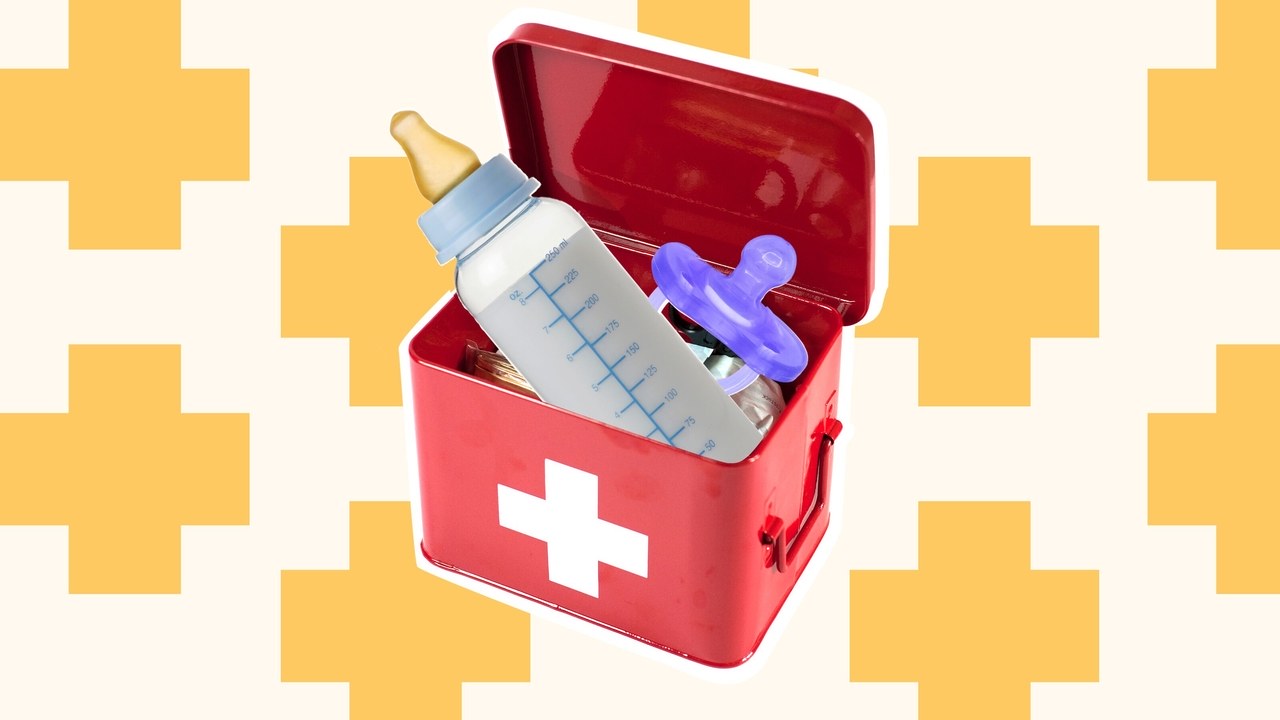
Raising a kid in this precarious moment requires both reckless denial and meticulous planning. Before our child was born, I put an emergency survival kit on the baby registry because I figured we might need to prep for the apocalypse as a family of three. My partner—not a doomsday prepper herself—was skeptical at first. But the kit I picked out was inexpensive. (At under $40, it’s a steal compared to the giant camo backpacks with their own pre-printed “HELP” signs that retail for hundreds of dollars.) It was also one of the first items to go; a younger friend picked it off the registry right away.

If it were just my partner and me, we’d head for the open road when the time came or swallow cyanide together romantically. But babies need car seats and five square meals, including two to throw on the ground, and as we prepared for our kid’s arrival, I figured we should think about what we’d need to ensure her basic survival at the end of the world in advance.

In a disaster-prep presentation at work right before the baby was born (because we have those now), we were told to keep four gallons of water on us at all times. I pictured myself holding my toddler in one arm, her folded-up crib in the other, the backpack we use as a diaper bag crammed with water jugs on my back, the cat obviously forgotten at home. It was not a comforting vision.

That’s how we ended up with our end-times kit. You register for gifts so that the kind people in your life can help you get ready for life with your child—the right car seat, the best crib, flares in case of disaster. The kit I chose is packed into a black-and-silver tin a little bigger than a deck of cards, with a Dia de los Muertos skull design for our Instagrammable escape. You can do a lot with a tampon in the wilderness, they say, like filter water or have your period for three hours, so we’ll be fine with the single one in the kit. There are iodine tablets and doll-sized fire starters that I don’t know how to use, plus bandaids, which will probably come in handy for wildfire burns. Okay, so our emergency kit is a box of bandaids. We’re all set!

It is a profound leap of faith to bring another person into the world, and it is extra profound now. Some argue that it’s irresponsible to produce another consumer as we battle climate change, a person who will probably eat beef and fly on airplanes and drive a car for 80 years.

“It’s easy to give up meat and ride my bike everywhere, but to sacrifice having a family is a big change,” my friend Carlie says. She’s a paleontologist who studies dinosaur extinction and wears an inflatable T-Rex costume at Halloween, and she’s not sure whether she and her new husband will have kids. “There’s no way I can look at what we’re doing now and say a mass extinction isn’t coming,” she says, and I groan.

Those of us who plunged ahead despite the warnings are raising end-of-the-world babies. Before she was born, I promised myself that once I had a child I’d keep the gas tank full instead of zipping around with the warning light on like I used to, daring it to hit zero before I pulled into the cheap gas station. If we needed to evacuate, I intended to be able to leave. (I know several people who have fled climate emergencies, so the scenario is not as hypothetical as I want it to be.)



Source link

Categories
Health

In Refugee Settlements in Uganda, Survivors of Sexual Assault Grapple with How to Raise Children Born of Rape


The war came to the Equatoria Region, where Diria lived, in 2016. That area sits at the bottom tip of South Sudan, and Diria resided in a village called Lasu Payam. When the fighting broke out, she, her four children, her sister-in-law, and some other women in the community hired two vehicles to drive them to the Ugandan border. Diria sat with about seven other people, including her sister-in-law. Her children were in the car ahead. She recalls to Glamour that the group had been driving for three days, inching past checkpoints, when soldiers blocked the path around Mugo Payam, about 50 miles from Uganda, directing their guns at the vehicle transporting her. It was early afternoon.

The soldiers’ faces were covered. They told everyone to get out of the car. Then the men were taken. Diria hasn’t seen them since. The soldiers separated the women into two groups. As she remembers it, the soldiers took the women to the bush and hit them with their guns. Diria still has back pain from the abuse. She heard shouting in Arabic, commands directed toward her to lie down. All the women were gang raped. Her sister-in-law, killed. After Diria had been sexually violated by five men, there was a cascade of shooting and the soldiers ran. Diria and three other women struggled back to the roadside and saw the driver of their car, shot. They managed to wave down a driver in another car headed for the border who let them hitch a ride. It took another two days to cross into Uganda.

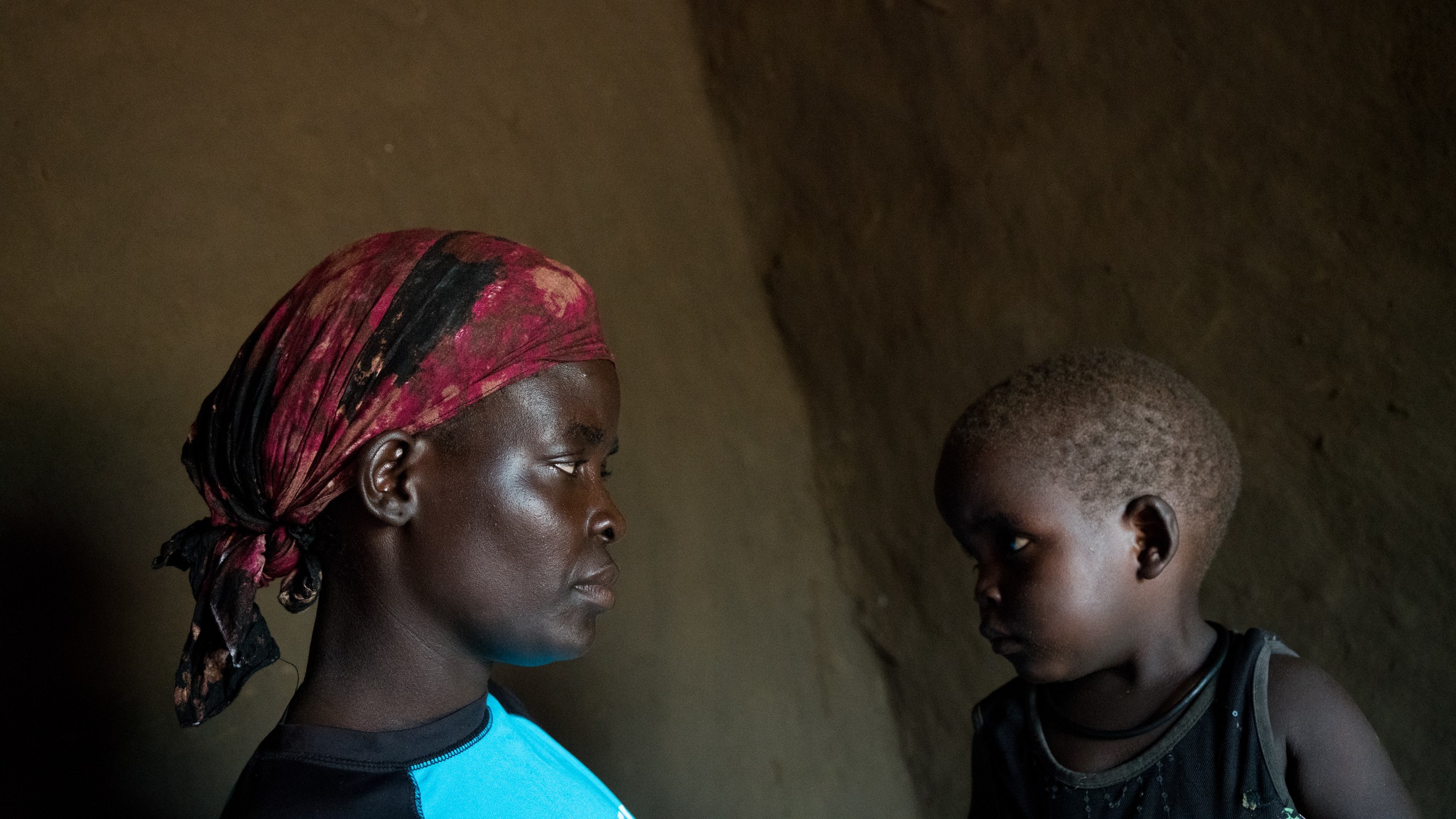
In Keri, the transit center where refugees stay for days or weeks for processing before getting settled in one of 11 areas allocated to South Sudanese refugees in Uganda, Diria started throwing up. She went to the health center and took a pregnancy test. It was positive. The doctor offered to sell her a pill that he said would make the baby “go away” for 200,000 Ugandan Shillings (about $54), but she couldn’t afford that price. She tried drinking two cups of herbs she mixed together, hoping the cocktail would make her bleed. Nothing happened. She told her husband. He beat her. He went back to South Sudan. Now, he’s blocked her from calling him. Twice she almost hung herself. Then, she figured that after giving birth, she’d kill the child.

But when Abraham was born, he went to her to nurse. After he drank from her breast, she says couldn’t bring herself to kill him. Three months later he started to smile. That’s when she says she started to love him. During the first of three interviews with Glamour, Abraham toddles over to his mother and throws himself in her lap, face down, little arms splayed across her thighs. She looks down and the corners of her mouth tick up; her face is thick with affection. At church she holds him close throughout the entire service.


Source link

Categories
Health

Learn How to Ask for a Raise From Real Women Who Have Been There, and Have Killer Insight


For similar support, check out Ladies Get Paid or PepTalkHer, a popular new app that lets women come together and discuss issues around work.

Get another offer.

Generations of rom-coms and Joni Mitchell have taught us: Sometimes you don’t know what you’ve got till it’s gone. When Arielle, a product marketer, let her team know that a competitor was interested in hiring her, it made them realize just how much they stood to lose if she left.

“After a year at an early-stage start-up making $63,000, I start shopping around at other start-ups,” Arielle says. “I ended up getting an offer from another prominent startup for $80,000. I actually wanted to stay where I was, but I needed proof I was worth more. When I shared this with my bosses, they decided to bump me up to $76,000, and I took it.” If you’ve been a valuable to your current company, chances are they won’t want to lose you to a competitor.

“Always see who else is buying!” Arielle says. “Sometimes it takes a cold, hard offer from another business to make your current company realize what they ought to be paying you.”

It’s like coming into a conversation with the receipts—you have the backup to prove how valuable you are in the market.

Consider alternative benefits.

You’re not always going to get exactly what you want when it comes to a raise. So sometimes it pays to think about compensation beyond cold, hard cash. That worked for Marissa, who’d been with a Fortune 500 company for four and a half years and had received only a 5 percent merit raise. When it became clear that more money was out of the question, Marissa asked her boss if the company would cover her project management certification. “I put together a proposal for her outlining what was involved, what it cost, and the benefits to my development and the organization—and it worked,” she says. The knowledge she learned from the certificate program was invaluable, and it helped her to ultimately land a job that netted a $30,000 salary increased.

“It’s not always just about money,” Marissa says. “You can ask for other things like conference stipends, training, flexible working arrangements, work-from-home days.” If a traditional raise isn’t an option, consider other perks or adjustments that would have a positive impact on your day-to-day. Maybe it’s more paid time off, tweaked expenses, or different hours.

No matter which of these methods you choose to employ during your next negotiation, make sure you’re prepared for all potential outcomes. As Own Your Worth CEO and founder Ashley Paré cautions, “When you make your ask, you have to be willing to walk away. Go into the discussion prepared with your bottom line and let your employer know that you really would like to stay with them, but it’s important to you that you’re paid fairly and competitively.”


Source link

Categories
Health

Here's Where Meghan Markle and Prince Harry Reportedly Want to Raise Their Kids


Though Meghan Markle and Prince Harry were both raised as city kids—she in Los Angeles and he halfway across the globe in London—that’s an experience they reportedly aren’t planning on giving to their own children. This week, shortly after the Duke and Duchess of Sussex announced that they’re expecting their first child some time in the spring, a “palace source” told Us Weekly that the two are hoping to raise that royal baby far away from the hustle and bustle of London.

The source said that Markle and Prince Harry will likely be laying down their growing family’s roots in the Cotswolds, about two hours outside of the city, where they’ve recently been renting a $5.4 million country home. “No one bothers them there,” the insider said. “They’re excited to raise children in the country.”

Markle and Prince Harry reportedly signed a two-year lease on that Cotswolds home back in May, not long after they tied the knot at St. George’s Chapel at Windsor Castle. The property, known as WestfieldLarge, is located on the Great Tew Estate—coincidentally, the same 4,000-acre grounds upon which Soho House’s rustic clubhouse, Soho Farmhouse, is found, as well as David and Victoria Beckham’s own countryside estate.

The two are also proud owners of the historic Adelaide Cottage inside Windsor Castle’s walls, which Queen Elizabeth II reportedly offered to them as a wedding gift over the summer. The “cottage” sits on a sprawling piece of land and dates back to 1831, though it underwent renovations as recently as 2015.

And if the newlyweds simply must stay in the city, they’re all set there, too. Back in November, Markle moved into the modest Nottingham Cottage on the Kensington Palace grounds, where Prince Harry has lived for several years. Whether they retain that house or move into the nearby Apartment 1, as has been previously reported, they’ll be close to Prince William and Kate Middleton.

Related Stories:

These Pics of Meghan Markle Holding an Umbrella for Prince Harry Are Just So Pure

Meghan Markle Finally Wore Her Hair in a Ponytail, and I Can’t Stop Staring at the Pics


Source link

Categories
Health

We're Teaming Up with a Bra Company (and Lyft!) to Raise Money for Girls' Education


Harper Wilde launched in June 2017 with the goal of creating less expensive, less overtly sexualized bras. The Girl Project is the brand’s founding social impact partner.

When Harper Wilde launched last summer, founders Jane Fisher and Jenna Kerner spent almost as much time vetting a social impact partner as they did building their company. They’re committed to building a better bra—but their real mission is to empower women and girls everywhere.

That’s how Harper Wilde’s partnership with Glamour‘s The Girl Project was born. It’s called Lift Up the Ladies, which is also Harper Wilde’s company mantra. Through regular donations and partnerships with The Girl Project, Harper Wilde is helping give girls in more than 120 countries access the tools they need to get an education.

And today, on the International Day of the Girl, Harper Wilde is teaming up with Lyft for a new campaign: #LyftUpTheLadies. (Because who could resist that wordplay?) Between Lyft LA and Lyft NYC, the company has committed to a donation for each ride taken using the code LYFTTHELADIES. To encourage women—and men!—to ride with Lyft, Harper Wilde is surprising 10 random people in each NYC and LA with free bras for a year. To participate, enter the code when you book a ride with Lyft on Wednesday, October 11th, International Day of the Girl.


Source link

Categories
Health

The 'Mean Girls' Cast Reunited to Raise Money for Las Vegas Shooting Victims


PHOTO: Paramount/Everett Collection

On October 3, a.k.a. Mean Girls Day, the movie’s cast have come together to raise money for the victims of Sunday’s deadly shooting in Las Vegas. In a video shared by the iconic 2004 film’s stars on social media on Tuesday, they set a goal of raising $300,000 for the National Compassion Fund.

In the video, which was posted to Twitter by Jonathan Bennett, he, Amanda Seyfried, Lacey Chabert, and Daniel Franzese take turns calling their fans to action. “We know today is a special day, and that’s because of fans like you. It’s October 3rd,” they say. “This year, though, we’re doing things a little differently. We want to turn the attention to those who need it. After Sunday night’s tragic events in Las Vegas, let’s give back. In honor of Mean Girls Day, we’re asking each of you, the groolest fans out there, to help. We’ve started a GoFundMe page, and 100 percent of the proceeds will go to the National Compassion Fund. If every fan gave just $3 in honor of October 3rd, just $3, we would hit our goal of $300,000 in no time.”

They add, “Guys, look. We know ‘fetch’ is never gonna happen, but we can make this happen. On October 3rd, I’ll ask you what day it is, but we’ll also ask you to help. So, you go, Glen Coco, to GoFundMe.com/October3. Thank you for being a fan and thank you for your help.” In the three hours since Jonathan posted the video online, the campaign has already raised more than $9,000.

According to the GoFundMe page, the National Compassion Fund is sponsored by the National Center for Victims of Crime, and previously helped raise money for victims of the 2016 Pulse nightclub shooting in Orlando, the Aurora movie theater shooting in 2012, and the September 11, 2001 terrorist attacks. The NCF website promises that “100% of the funds received through the National Compassion Fund Las Vegas will be distributed directly to victims,” and that donations will provide “critical support to the victims and their families” in both the short- and long-term. Fetch, indeed.

Related: Here’s 5 Ways You Can Help Victims of the Las Vegas Shooting


Source link