Categories
Health

How to Talk To Your Kids About Coronavirus


We’re all facing a new reality in the midst of the coronavirus COVID-19 outbreak: schools closed, businesses closed, and a whole lot of time spent at home. It’s hard for most adults to get their head around it let alone figure out how to talk to your kids about coronavirus.

“We are living in very difficult and strange times right now,” says Hillary Haarmann, a licensed clinical social worker and mom to a a daughter, 8, and son, 5. “Along with feeling so stressed, anxious, sad, confused and uncertain, we have to find a way to come together to support one another and be there for the people who need us.”

We asked for Haarmann’s advice as a therapist and mom for how to talk to your kids about coronavirus.

Take time for yourself

Like safety protocol on an airplane, it’s important to put on your own oxygen mask first. If you’re anxious and panicked about how you’ll handle working from home while juggling childcare and homeschooling for the foreseeable future (which is perfectly relatable), your kids will sense that unease. “We have to find a way to honor and respect our own feelings and give ourselves what we need so we can truly be there,” says Haarmann.

Have a drink with a friend over FaceTime, call your mom, meditate, prioritize your own sense of sanity and balance. “Once we can organize our own thoughts and feelings, we will be able to communicate in a calm and healthy way,” Haarmann says.

Keep a calm tone

“How you say something is just as important as what you say,” says Haarmann. Sticking to the facts with a reassuring voice will help you reduce any anxiety your kids might be feeling. “I recommend being short, sweet and to the point,” Haarmann says.

Be honest

The age of your kids will obviously affect how much you’ll want to share about what’s going on in the world. But regardless of age, Haarmann advises being honest and meeting them wherever they’re at. “When your kids ask you why we can’t go on a play date, be honest with them. Let them know we are trying to protect one another by not exposing one another to possible germs,” she says, adding to emphasize the things you can control.

Here’s an example of what you might say: “I know you are concerned for the people who are sick, but they are being treated by a doctor. You also are concerned about if you get it or if someone you loves gets the disease. We can focus on what we can control. Let’s wash our hands throughout the day and make safe, smart choices. By protecting ourselves, we are protecting other people. Let’s send them healing and positive vibes.”

Point out the positives

Try to end the conversation on a promising note. “It might seem like a long time, but we can focus on the moment and what we can control—this will not be forever,” says Haarmann. In the meantime, we can schedule time to see our friends virtually, plan fun things at home, and enjoy the rare moment where we don’t have to be anywhere.

Limit news

Depending on your kids’ age, you might also want to limit when you watch the news. “It’s a smart idea to be aware of what we are bringing into our homes,” says Haarmann. “I recommend limiting news, whether it’s through social media or TV—we want a safe, healthy environment for our kids.”

Keep talking

“It’s also important to let your child know that no matter what or when, they can always come to you for support or for answers,” says Haarmann. “You want them to be open and honest with you. Reassure them they are not alone in their thoughts and feelings—we are all together in this, supporting one another.”

Source link

Categories
Health

Demi Lovato Is Getting a Talk Show on Quibi


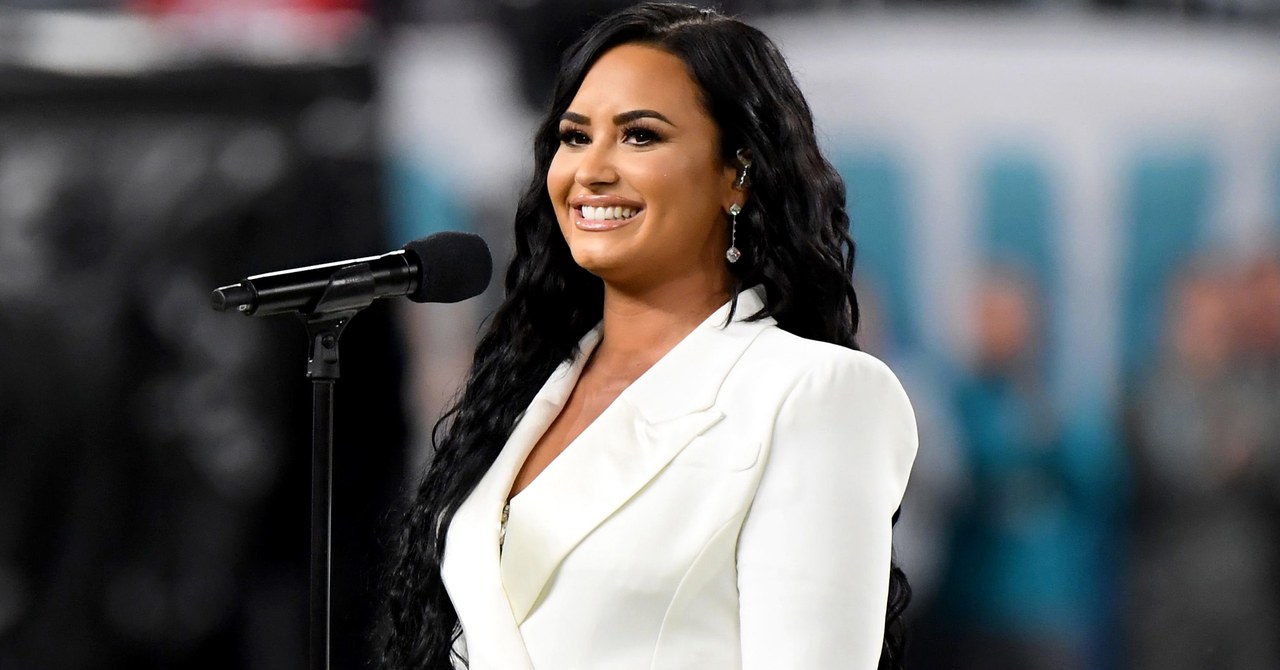
Everything is coming up Demi Lovato this year. The singer and actor, fresh off her triumphant moment at the Grammy Awards and her rousing rendition of the National Anthem at the Super Bowl, is about to hit your screen with her very own TV show.

No, Lovato is not returning to her Disney days for a second part of Sonny with a Chance, but rather starring in a talk show on mobile video platform Quibi, according to Variety. Quibi features short-form, “snackable” content and has been partnering with everyone from Joe Jonas to Lena Waithe to Keke Palmer. Variety reports that the show is called Pillow Talk with Demi, though it seems the title may be changing. Lovato, who has always been outspoken about the things she’s passionate about, will reportedly chat about everything from sexuality to wellness in the short episodes, and consult both celebrity and expert guests. The show is meant to be an empowering, honest place for conversation and openness. (Consider this our official wish for a guest spot from Selena Gomez.)

“I’ve always considered myself someone that speaks honestly about issues that face my generation,” Lovato said in a statement per Variety. “We’re excited to bring those frank conversations to a public forum, where people can have the opportunity to relate to the topics and guests, while finding room for laughter and learning.”

No debut date has been set for Lovato’s show, though Vulture reports that the streaming service itself doesn’t debut until April 6. However, you can catch Lovato on TV elsewhere while you wait; her episodes of Will & Grace will air this year.


Source link

Categories
Health

New Report Says USA Gymnastics Did Not Talk to Simone Biles About the Larry Nassar Investigation for Years


It’s been almost two years since Larry Nassar was sentenced to 40 to 125 years in prison by a Eaton County, Michigan court on criminal sexual conduct charges, but we are still learning more details about how he was able to continue as the team doctor for USA Gymnastics for so long. (Nassar also received a 40- to 175-year sentence in Ingham County, Michigan, as well as a 60-year sentence in federal court on child pornography charges.)

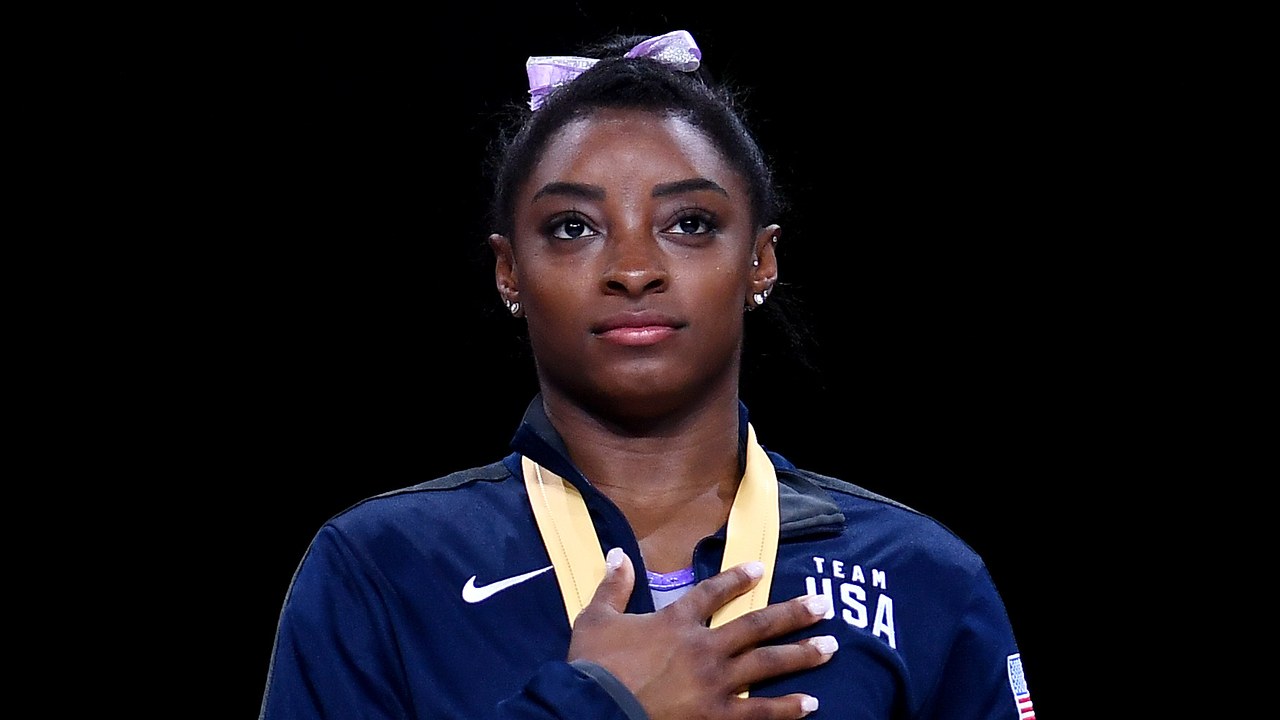
A new report from the Wall Street Journal says that even though USA Gymnastics was conducting an investigation into Nassar—they didn’t tell Simone Biles until after the Rio Olympics in 2016. Per the WSJ, Biles was one of three gymnasts (along with Aly Raisman and Maggie Nichols) who had expressed discomfort about Nassar in 2015, but they say she was not interviewed by the body’s own investigator before the Nassar story went public in 2016.

Rhonda Faehn, the former director of the women’s program for USA Gymnastics, said in testimony before Congress that she was notified in June 2015 that Biles, Maggie Nichols and Aly Raisman had “concerns” about the doctor’s treatment methods. She claims that she passed that information to Steve Penny, then-President of USA Gymnastics, which he disputes. Though, per USA Today, he does admit to knowing Biles was someone they “might want to talk to about Nassar.” But that never happened and Biles then met with the FBI on the matter in the fall of 2016.

In January 2018, Biles publicly announced that she had been abused by Nassar. “I, too, am one of the many survivors that was sexually abused by Larry Nassar,” she said at the time. “There are many reasons that I have been reluctant to share my story, but I know now that it is not my fault.”

The most decorated gymnast of all-time declined to be interviewed for the WSJ story, but her parents gave the paper this statement: “We continue to struggle with how and why this happened, and every time we hear something new like this, it feels like the harshest of betrayals and it is just too painful for our family to talk about openly.”

Biles is not staying silent, however, tweeting about the story herself. “Can’t tell you how hard this is to read and process. The pain is real and doesn’t just go away…especially when new facts are still coming out,” she wrote. “What’s it going to take for a complete and independent investigation of both USOPC and USAG???” She followed it up with, “Numb is becoming a normal feeling.”

Biles also recently spoke out against a distasteful banner hanging at a University of Michigan fraternity house ahead of a football game with rival Michigan State University, where Nassar worked. “You can’t touch us @LarryNassar,” it read. Biles responded, “unbelievable….. this is the type of stuff that makes me sick to my stomach. I hope the school is taking the proper measurements in investigating this…”

The school announced it “will be pursuing corrective action with those responsible for hanging the banners and those who failed to intervene.”


Source link

Categories
Health

Five Democratic Congresswomen Want to Talk About Anything But Donald Trump


It’s nice to look back on that because when you come to Congress, you’re really encouraged to do your own thing, think only about yourself and your district. But I think we found that we’re stronger when we’re together. And working together now these past few months, we’ve really defied a lot of people’s ideas about how congressmen and women are supposed to behave. Because in the beginning, we heard a lot of, “You just don’t do that.”

Sherrill: I remember I went to someone who I’d known from before I was elected and said, “Oh, should we all get together and talk about a plan for this? Think about where were want to go?” He looked and me and went, “It’s really generally every man for himself.”

Houlahan: It’s a dog-eat-dog world, absolutely.

Glamour: In that environment, have you ever checked in with each other after something happens, to be like, “Is this normal?”

Spanberger: Every day. Every single day we do that.

Houlahan: I keep a list of all that. Literally, I write them down, because I want to remember that this is not normal. I don’t want this to become normal. So I write down all of the things that I think are super offensive, or super broken, or super wrong, so that I can reflect back on them, and not become part of the problem.

Slotkin: We have a never-ending text chain between us, and that’s what we do. “Did anyone else get this set of talking points? Did anyone else see this bill that came forward that we’re supposed to be voting on? Does anyone else have concerns about how this?”

Sherrill: Or sometimes it’s, “Does anybody else know how we’re supposed to find a white suit in the middle of January?”

Spanberger: That one. That is a big one.

Luria: I ordered mine on Ebay. But Mikie has this Brooks Brothers suit that I like, and I saw it was on clearance. I was like, I want that suit, but what if Mikie and I show up in the same suit on the same day?

Sherrill: That would be amazing.

Luria: I could have just said, “It’s our Naval Academy uniform.” Who would have known?

Glamour: Despite your lack of experience in politics, all five of you won these difficult races and I presume learned a lot about how to win difficult races in 2018. How much do you feel that experience and expertise are respected now?

[Laughter]

Sherrill: That’s great.

Houlahan: [Clears throat]

Sherrill: We were just talking about this. Abigail and I were just talking about this, because we had this sense—and at the time, we didn’t know how naive it was—that we could draw on our life experiences and run. And when we told people that we wanted to do that, there was a lot of, “Uh, sure.”

Houlahan: “How cute.”

Spanberger: “Sweet.”

Sherrill: Like, “That’s awesome.” But I think part of the reason a lot of us who are new to politics were able to get in and flip these districts is because people who had been in politics for a while just didn’t see the path. We were so engaged in our neighborhoods and with people throughout our communities that we knew something different was happening. I could feel it in my town, talking to moms in the car line. Hundreds of people came to an event for civic education. We could sense a shift. And then… Well, Elissa has the best line on this.


Source link

Categories
Health

This Scene from ‘Booksmart’ is Helping Me Learn How to Talk About Sex


I have trouble talking about sex. It’s a very present issue in my life, and I’m currently in therapy learning how to unravel the network of shame I’ve built around sexuality. Phew, glad we got that out there.

My relationship with sex has always been rocky. In high school, I felt shameful for wanting it—with women—so I repressed any real desire I felt. Even when I started dating women in my early twenties, it wasn’t some glorious sexual liberation; I retreated even further into my sexual shell, battling my own internalized homophobia. I figured my heterosexual friends wouldn’t want to hear about my sexual encounters with other women. My sex life was a dirty little secret. I wasn’t being totally transparent with my sexual partners either when it came to what I wanted and what felt good in bed—whether it was my inability to vocalize what position I liked best, or feeling scared to say “I’m too tired tonight.” I still struggle with that.

I desperately wish I was one of those hyper-empowered, sex-positive feminists, but I’m not. I mean, that’s the end goal—but after growing up repressed and feeling utterly embarrassed about my sexual desires, I’m just not there yet. I am trying. Therapy has been helpful. So has watching women own their sexuality in pop culture.

Over the past few years, a wave of female-driven movies and TV shows have started to normalize the development of female pleasure—like Pen15’s cringeworthy flirtations with adolescent desire, Blockers showing teenage girls asking for oral sex, or Outlander’s pioneering scenes that shifted focus from the male orgasm to the female orgasm on screen. But never have I felt so personally seen than when watching Booksmart, the teenage sex comedy directed by Olivia Wilde. In case you missed it, the Superbad-esque storyline follows out teenage lesbian, Amy (Kaitlyn Dever), grappling with her virginity and sexual firsts.

One scene stood out to me as especially cringeworthy, probably because it hit me where it hurt—smack dab in my own sexual embarrassment center. It was the moment when Amy, budding young lesbian, reveals she’s been humping her stuffed panda. Yes, masturbating with a stuffed animal.

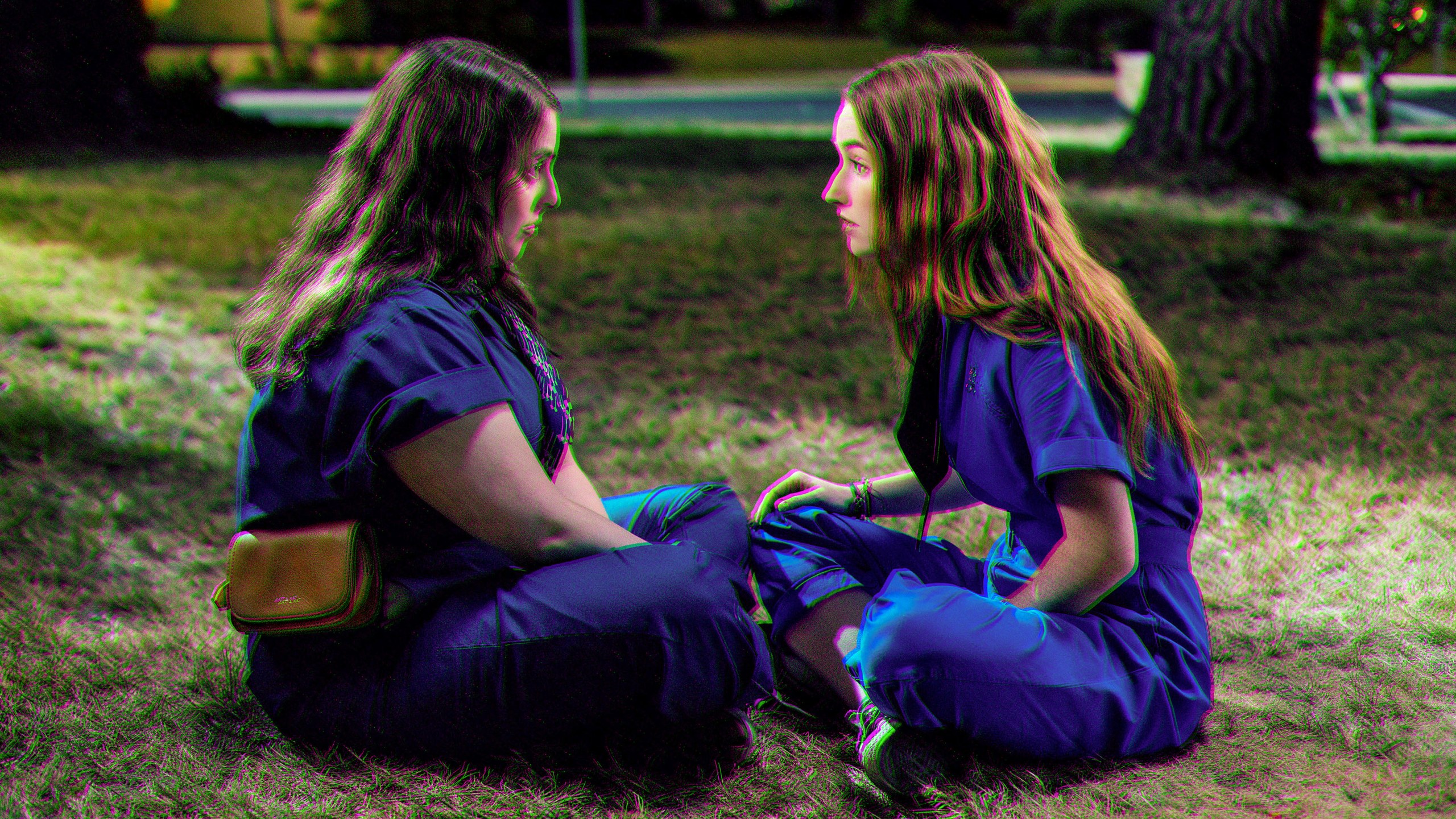
Allow me to explain. While in her bedroom, Amy opens up to her best friend Molly (Beanie Feldstein) about her fear surrounding sleeping with a girl for the first time—she doesn’t know how to do it. Molly suggests that Amy take her hand the way she would masturbate, and simply “flip it.” Amy says, “What if I don’t use my hands?” As she suspiciously eyes a corner of her room, Molly guesses what Amy uses to masturbate, and Amy cringes, begging her to stop: “Can we just stop talking about this, please? For the love of all things!” Relatable. Finally, Amy admits, “It’s the panda, ok?!” Molly doesn’t shame her, but she does poke fun at the ridiculousness of the scenario: “Does she talk dirty to you? Tell you about how she’s endangered?”

This scene had me reliving my sexual shame all over again—because I can relate. I’ve never admitted this out loud, or written it down, or told another soul, but when I was a pre-teen…I used to masturbate by humping a vibrating pillow. It was hot pink and squishy and was meant to be a massage pillow and I stained it from…well, you get it.

This is mortifying to admit, let alone publish. But honestly, the Booksmart scene between Amy and Molly made me feel so much better about my own past. Clearly I’m not as weird and alone as I thought I was for the past decade and a half. For 15 years I’ve been carrying this well of shame about early masturbation because I was completely alone in learning how to masturbate. I had no idea what was normal—I just assumed I was some sort of freak.


Source link

Categories
Health

We Need to Talk About the Music in Hustlers


There are so many fantastic moments in the new movie Hustlers, but one stands out above the rest to me. (Caution: Spoilers for the film ahead.) It’s when Ramona (Jennifer Lopez) and Destiny (Constance Wu), two strippers fresh off making some serious cash, go shopping for a new car. Once they’ve settled on one they like—it’s expensive, of course—they turn on the radio, and Britney Spears’ “Gimme More” starts blasting. “That’s my motherfuckin’ song,” Ramona says, her voice oozing with enthusiasm and excitement. This is directly followed by a money-making montage set to Spears’ 2007 hit, in which we see Destiny, Ramona, and their stripper friends literally get more: more money, more clients, more everything. We watch the Wall Street dudes who frequent the strip clubs line their pockets, as well. The scene is rich: decadent, delicious, and totally indicative of the pre-financial crisis era it’s set in.

This is just one example of how Hustlers uses sound to tell its story. The movie, based on The Cut’s 2015 article “The Hustlers at Scores,” centers on a group of strippers who used drugs, alcohol, and sheer sex appeal to scam their wealthy clients out of thousands. It’s the type of story that demands a loud, epic soundtrack—and Hustlers certainly delivers.

“Most of the music choices were also written into the script,” Lorene Scafaria, the movie’s director, tells Glamour. “I had obviously imagined scenes to these songs, and we shot to these songs, but you never know if you’re going to get the rights.”

She did get the rights, thankfully, and the movie is better for it. The aforementioned money-making scene just wouldn’t have popped the same way without Spears’ breathy, distorted vocals. “[‘Gimme More’] was a song that was really a perfect time capsule of that era, both of the Wall Street guys and the girls working,” Scafaria says. “Being able to intercut to that song was crucial.”

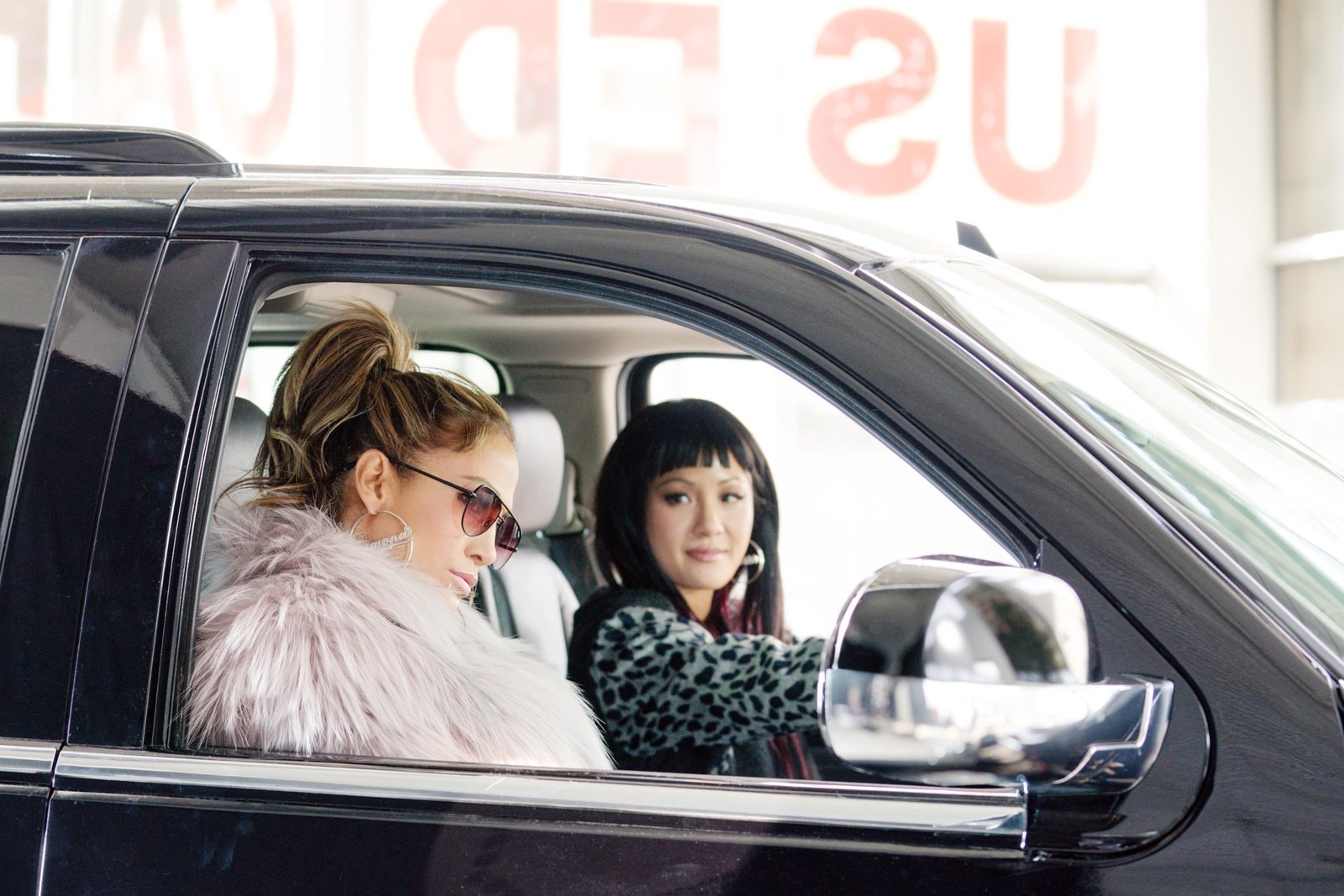
Jennifer Lopez and Constance Wu listening to “Gimme More” in Hustlers.

© STX Entertainment / courtesy Everett Collection

“Crucial” is a perfect word to describe the music in Hustlers. All the sonic choices in this film feel deliberate and necessary. Take the fact that Ramona, a seasoned stripper, shows newcomer Destiny some tricks of the trade in a scene set to classical music. The takeaway? Pole-dancing is an art that requires the same level of talent and discipline as playing the piano.

Or how about Ramona’s first dance in the film, set to “Criminal” by Fiona Apple. The song’s title alone makes it perfect for Ramona, who eventually becomes a criminal, but read some of the lyrics: “It’s a sad, sad world/When a girl will break a boy/Just because she can.” The entire plot of Hustlers centers on women metaphorically “breaking” morally-corrupt men. Of course, their reasons are a bit deeper than “because they can,” but the takeaway is the same. Scafaria could’ve picked any vacant electronic song to soundtrack this scene, but instead she chose something specific.


Source link