In a new interview on The Ellen DeGeneres Show, Demi Lovato got extremely candid about her 2018 relapse, after six years of sobriety, and how she battled her eating disorder while struggling with toxic people in her orbit. The interview aired on Thursday, March 5.
She started by opening up about her eating disorder, which she describes as her “primary problem.” In this first video, below, she tells a story about how her own team—whom she no longer works with—would control her food by removing fruit from her hotel rooms and keeping her from eating cake on her own birthday.
“My life, I just felt like it was so—and I hate to use this word—but I felt like it was controlled by so many people around me,” the pop star told host Ellen DeGeneres. “If I was in my hotel room at night, they’d take the phone out of my room so I couldn’t call room service.”
[embedded content]
Lovato then went even deeper on relapsing and getting sober. “I have to preface it with the fact that I got sober at 19. So I got sober at an age where I wasn’t even legally allowed to drink,” Lovato began. “I got the help that I needed at the time, and I took on the approach of a one-size-fits-all solution, which is sobriety, just sobriety. My whole team took that approach, and we did it, and we ran with it, and it worked for a long time.”
Again, Lovato stressed how much control her own team believed they were entitled to. “Over the years, it progressively got worse and worse, with people checking what my orders at Starbucks were on my bank statements,” she continued. “Just little things like that, it led me to being really, really unhappy. My bulimia got really bad, and I asked for help, and I didn’t receive the help that I needed. And so I was stuck in this unhappy position. And here I am sober, and I’m thinking to myself, ‘I’m six years sober, but I’m miserable. I’m even more miserable than I was when I was drinking. Why am I sober?’”
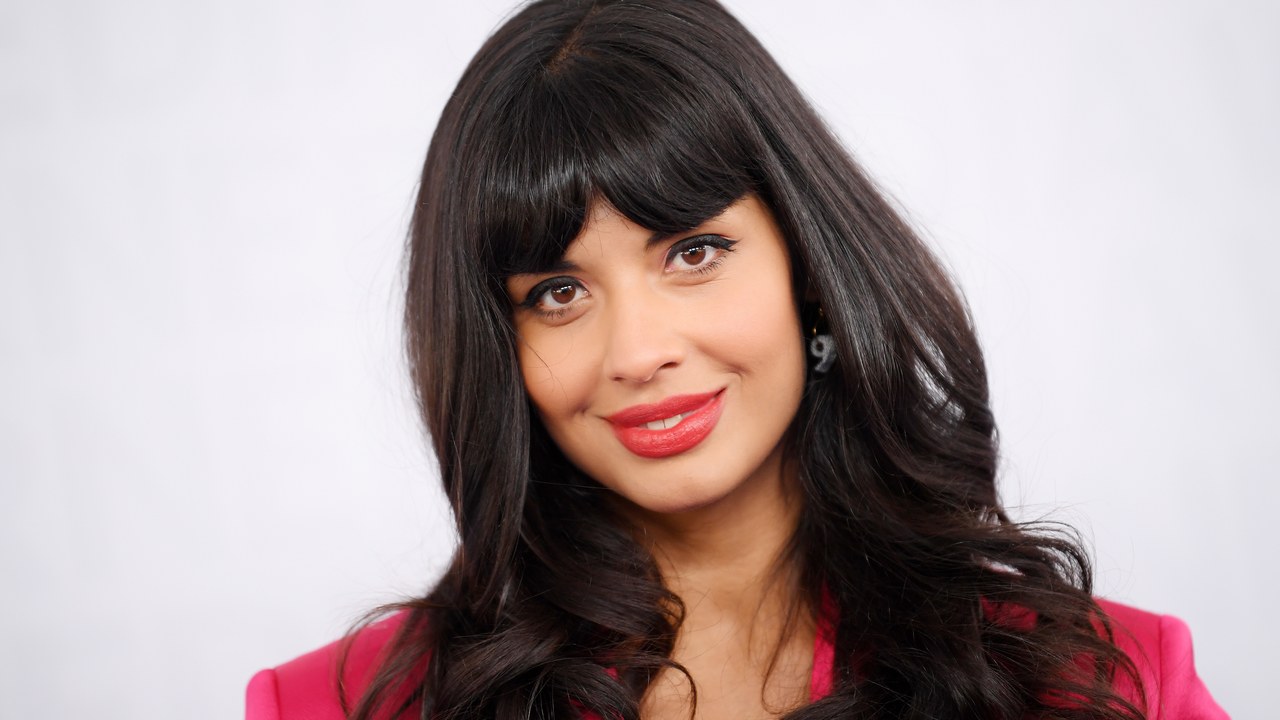
Jameela Jamil of The Good Place frequently uses her platform to speak out about important issues like abortion and body image, and in a candid interview with People on Thursday (August 1), she opened up about continuing to struggle with body dysmorphia, the strategies she’s developed to deal with it, and how being lonely as a teen contributed to disordered eating .
According to People, Jamil developed anorexia and body dysmorphia after having to step on a scale in front of her class at 14. “I was really unhappy and I think it contributed to my ability to have an eating disorder for so long, because there was no one kind of monitoring me and I had no one to turn to with my sadness and bad feelings, so I just had a really rough time as a teenager,” she told the magazine.
Jamil also spoke about how she deals with ongoing body dysmorphia, including by making I Weigh pages where she lists all the positive things about her life and herself that have nothing to do with how she looks or how much she weighs. She also has learned to avoid looking in the mirror, she said.
“The only time I look in the mirror is when I put on my eyeliner in the morning and when I take it off at night,” she told People. “I’m not interested in my appearance. I still suffer from body dysmorphia so it can be very distracting for me. Doing that has helped me concentrate on progressing and doing things that enrich my life, like watching my career grow and my relationships grow. That’s what gives me a wonderful sense of self.”
She’s also been investing in developing strong friendships—something that can be tricky not just as a teen, but as an adult.
“I’ve learned how to suck it up and make an effort and put myself on the line and ask people out for coffee,” she told People. “I’ve even officially asked people to be friends, just to make sure that everyone’s in agreement that there’s some sort of friendship forming. I started doing more things that I love and meeting more people via that, and I’ve found more people who had the same interests.”
“A friend is a witness to your life, which I think is something really beautiful and amazing and really shapes your bond with someone,” she continued. “We go through a lot as a woman or just generally as a human and having someone to share that with and having someone in your corner and tells you that you’re wrong when you doubt yourself is so unbelievable. I don’t think I would be the person that I am without my adult friendships and their love and support.”
Trigger warning: The following contains language describing eating-disorder behaviors.
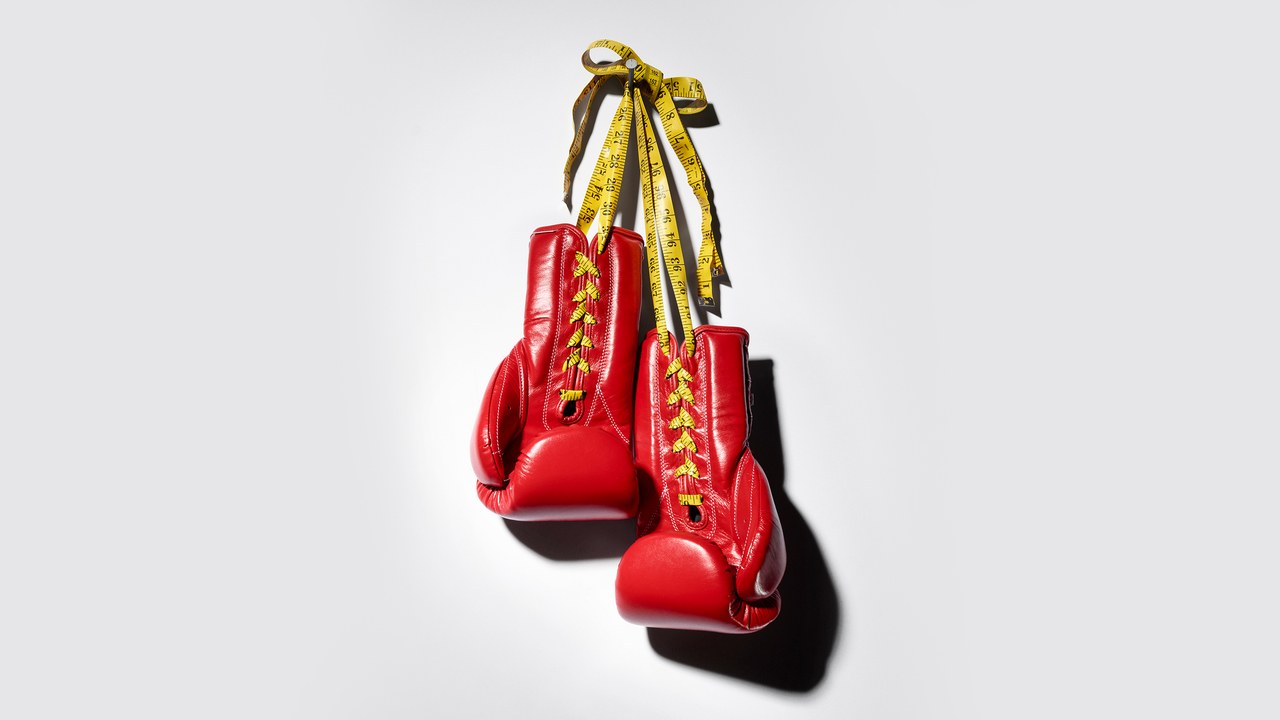
The first time I punched a bag, I felt the full weight of my body charge forward to deliver the blow. The flood of endorphins was intoxicating. I was powerful. For years, therapists tried to tell me this—that a healthy body is better than a thin body—to no avail. But after one boxing class, I considered putting on weight. If my arms were bigger, I realized, I could punch more powerfully.
For many years, I had an unhealthy relationship with exercise. It was like food restriction—both a source of paralyzing anxiety and a cure for all the things I thought were wrong with my body. In middle school, when other kids made plans to meet at the diner, I made plans with Jane Fonda, scissor kicking along with the one workout video my parents owned. I wore out that VHS tape, oblivious to Fonda’s own history with bulimia. I later learned that my workout habits from that time are so common among people with anorexia they’re cliché; between 40 and 80 percent of people in treatment for anorexia nervosa are prone to over-exercising, according to the National Eating Disorders Association.
Done the right way, exercise is of course healthy—but that doesn’t mean all forms of exercise are healthy in all cases. When I eventually became a gym person, I didn’t join to get healthy. I was there to lose. I remember reading about the term “skinny fat”—a label slapped on bodies that appear thin but soft. Through the lens of my anorexia, this new term was a reminder that the goalpost always moves. Skinny wasn’t good enough, there was another thing I would have to be in order to finally be happy with my body—not just thin, but strong, too.
I started with a barre class in the hopes of swapping the soft, doughy lines of my body for “long” and “lean” muscle—both adjectives that felt non-threatening to someone terrified of seeing her flesh expand. Lithe ballerina imagery aside, barre requires endurance and strength, and makes your body ache in areas you never knew could. Within 10 minutes, my arms died a million deaths, struggling under the weight of the two-pound dumbbells. I distracted myself from the pain by scanning the huge mirror: There were so many naked arms—40 of them—and they weren’t collapsing like mine. It dawned on me, I had nearly killed myself to be thin, but I didn’t have what these women had: strength. Here, the lissome physique I’d pursued for years was a liability. The muscle fatigue made me feel like a warrior, but comparing my shape to others alerted me to the fact that I still had work to do in therapy—and that barre may not be the class for me.
When you’re in recovery from an eating disorder, finding the right type of exercise can be a murky process. “Some aerobic activity, like long distance running, is more dangerous for those with eating disorders,” says Ovidio Bermudez, M.D., chief clinical officer at the Eating Recovery Center in Denver. “Anything repetitive or rhythmic that has a ‘metronome’ effect can be triggering.” What Dr. Bermudez calls “judge sports”—like gymnastics or ballet, which judge the body as much as the performance—can also be difficult.
I found boxing by accident. When my usual barre class was full, I strapped on the bulging, sweaty gloves and expected to feel ugly. But I didn’t; boxing isn’t about image or assessing your appearance, it’s just about landing punch after punch with more power than the one before. I love that there’s a bag between me and the mirror. I love the quickness: the way my body moves first, thinks later. I love that boxing is about what my body can do, not how it looks. I love the release that washes over me after I punch the bag like it’s my greatest fear. I love that boxing is a way for me to beat back the bad thoughts about my body.
My first brush with the “pro-ED” blog on LiveJournal was only the tip of the thinspiration iceberg—there were dozens more pages like it, many of which are still live today, despite other platforms taking a stand against content glorifying eating disorders. (Glamour reached out to LiveJournal for comment on the pro-ED content on the platform but did not receive a reply.)
In this social media era, pro-ED content has mutated to keep up with the rapid evolution of technology. After LiveJournal, there was Tumblr, another haven for communities promoting unhealthy behaviors. Facebook, Instagram, and Twitter have all similarly developed their own pockets of “thinspo.”
Yet alongside the growth of social media there was also a growth of knowledge: We know more about eating disorders today than we did in the early 2000s. We’re equipped with language to discuss them in more productive ways. Body positivity has reframed the way we talk about our bodies both online and off. Most of all, with so many people (Instagram influencers and “regular” folk alike) going viral every day for embracing—and celebrating—their body’s flaws, social media has rapidly turned into a place where every body can and should be considered beautiful.
Banning thinspo content is kind of like playing Whack-a-Mole—as soon as a site bans a certain hashtag, another pops up in its place.
That movement has helped fuel a crackdown on pro-ED material online. In 2012, after I had been in recovery for several years, Tumblr, a notorious hub for thinspo, banned all “pro-ED” content. Facebook, Twitter, and Pinterest all have similar policies.
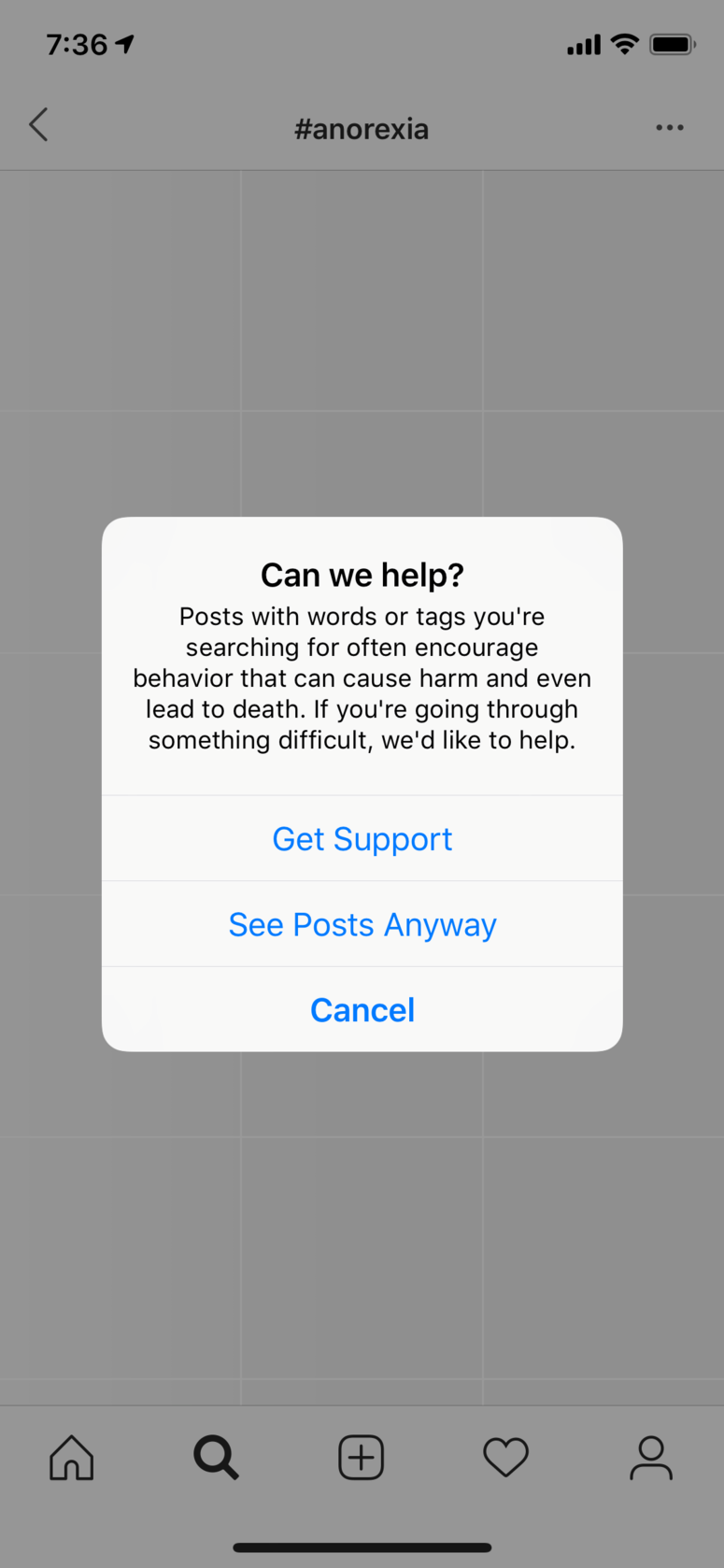
Instagram has also been censoring. In December 2018 the platform announced they were upping their game, making it even harder for users to search for hashtags promoting eating disorders. Now, if you search for pro-ED terms, Instagram flags you with a warning: “Can we help? Posts with words or tags you’re searching for often encourage behavior that can cause harm and even lead to death. If you’re going through something difficult, we’d like to help.” They offer you the option to “get support” or “see posts anyway.”
This is part of Instagram’s “holistic” approach, a spokesperson for Instagram said in a statement provided to Glamour. The platform has partnered with the National Eating Disorders Association (NEDA), to create an eating disorders help page and guide for parents. “Experts we work with tell us that communication is key in order to create awareness, and that coming together for support and facilitating recovery is important,” Instagram’s spokesperson said.
Instagram
This is great. But banning thinspo content is kind of like playing Whack-a-Mole—as soon as a site bans a certain hashtag, another pops up in its place. “Unfortunately, far too many accounts—celebrities, companies, and everyday people—share ‘thinspiration,’ and more recently ‘fitspiration,’ images,” says Claire Mysko, CEO of NEDA. I’m not seeking these images out anymore but when I come across seemingly “perfect” photos of models and celebrities, it’s like they are speaking directly to the ghost of my eating disorder. It’s hard not to be haunted.
The Internet to the Rescue
The internet was an unmistakable accomplice in my destructive behavior for more than three years. After stepping into the pro-ED corner of the internet, I couldn’t look away. All I could think about was how much I weighed, and how much more I wanted to lose. I became obsessed with numbers, assigning calorie limits to each day. And I continued to consume pro-ED content hungrily, staring at pictures of tiny wrists and pointy collarbones with desire and envy. I didn’t idolize the people in the pictures so much as I admired their parts; I saw everyone, including myself, in jagged fragments.
Anyone in their right mind would have told me to just step away. But paradoxically, the internet was where I found my hope of recovery. During my senior year of college, when I was admittedly at my sickest, I found an online community (ironically, also via LiveJournal) of women and girls going through the same thing. Suddenly, I wasn’t alone.
That’s one of the most important things you can hear when you’re struggling with recovery, Mysko says. From my own experience as a survivor, I know she’s right: finding a place where I could be myself, sharing the struggles and fears I was often too afraid to say out loud to friends, was powerful.
“I was often afraid other girls there would get sicker or die—while at the same time fearing that people would recover and leave me there.”
This is what makes the internet so complicated when you have an eating disorder—it’s an enabler and a life preserver. LiveJournal fed my dangerous appetite for thinness. But it’s also where I finally found my safe haven, when not even my closest friends knew what I was going through.
Jenny, the founder of the eating disorder recovery group I found on LiveJournal, had that goal in mind when she created it in 2005. “I started it at the age of 16 in the hopes of creating a closed online community where people could make honest connections without anonymity,” the now 30-year-old says. “I wanted to create something that was nuanced, something that accepted the realities of mental health issues—such as relapse and chronic behaviors or thought patterns—without judgement, while also genuinely caring about the well-being of the person behind the story.”
Like many other eating disorder survivors, Jenny, who has struggled with restricting and binging/purging behaviors on and off since she was 12, was also enticed by the pro-ED content quietly spreading across the internet. “I was a pre-teen and I wanted to lose weight and suddenly these online communities were…offering advice on how to be ‘successful,’” she says. “The experience was intoxicating for a young girl.” In part, this is what led her to create an antidote: a place on the internet where recovery was an option, where we could freely admit we were sick.
Olivia*, 32, was part of the same LiveJournal group. Unlike in-person therapy groups she attended for her eating disorder, she never felt judged by her online network. “I felt connected to what felt like a group of other whip-smart, sad, sick girls who were also still figuring out how to live, how to want to keep living,” Olivia says. “I also remember having really strong feelings about wanting everyone else in the group to be okay—I was often afraid other girls there would get sicker or die—while at the same time fearing that people would recover and leave me there.”
Eating disorders are visceral and detail-oriented; so much of the illness involves numbers and rituals—it can be difficult to speak candidly about them without triggering someone else. Even social media communities where people find recovery and support can be filled with pro-ED landmines. “Any sort of ED group talk is always going to be a mess,” Olivia says. That’s especially true without the presence of a trained therapist guiding the conversation like you’d typically find offline. (“When sharing your story with other survivors, the best and most helpful thing you can do is to avoid mentioning any specific behaviors you engaged in,” Mysko advises.) And online groups may not be curated based on where people are in their recovery. “Not everyone was interested in getting better,” Melissa, another member of the LiveJournal group, says. “We all fluctuated in our recoveries over the years.”
Living With an Eating Disorder In the Age of Social Media
Today, I tend to avoid prominent Instagram influencers who post “fitspiration” or pictures of transformational weight loss, knowing my own triggers. Jessica, 30, an anorexia survivor, employs the same strategy. “I try to follow women on Instagram who I admire for reasons other than their bodies: inspirational women like Jane Goodall, funny women like Jameela Jamil or Julia Louis-Dreyfus,” she says. “But the content about thigh gaps and hip bones showing will always get through, regardless of whether I seek it out or not.”
That’s the simple truth of living with an eating disorder and living with social media. There will always be triggering content that keeps the specter of an eating disorder close at all times. There will always be people with EDs who aren’t ready to get better, who are convincing themselves they’re choosing an illness, rather than the other way around. And yet there will also always be posts steeped in body positivity that provide inspiration of another kind. There will always be communities of women wrestling with their illness, ready to offer support, encouragement, and the knowledge that we are not alone.
Even in recovery, I feel the fingerprints of my eating disorder everywhere. The knee-jerk feeling of “I’ll do better tomorrow” still shows up after meals; I still see some foods by their calorie counts. And social media is always there, adding fuel to the fire with fitness-oriented posts that mention calories and weight loss. But at least I know now that my eating disorder wasn’t a choice; it’s an illness that women all over the world are struggling with too. When I remember that, I can find the strength to unfollow, block, and delete. And I can choose to tap “get support.”
*Some names have been changed for privacy.
De Elizabeth is a writer and editor specializing in pop culture, mental health, and anything related to Pretty Little Liars. You can follow her on Twitter @deelizabeth_.
Hi. I’m Amber. I’m a fitness trainer and one half of the Brave Body Project, an online community I started with my best friend Lindsey Claytonto inspire women to feel strong and powerful in their bodies and unite through health and fitness. This is the story of how I developed a positive body image and made peace with my body.
I grew up in a super athletic family. If it had a ball, we all played it. Because of that, I honestly didn’t really pay too much attention to my appearance as a kid. (You can get a good idea from my tragic childhood photos!) I got called “four eyes” a lot, but had a cool older brother so it was rare that anyone bullied me or else they had to deal with him. Plus I’m a twin, so I almost always had someone by my side who had my back. But overall, I kind of flew under the radar.
It wasn’t other people who made me feel insecure. The problems with my body image, to be honest, started with me. When I was in high school I found a passion for theater—specifically, musical theater, singing and dancing. It was the perfect outlet for me besides throwing a ball around on a court. As I got more into it, I was dancing so much that I was losing weight, but I was completely unaware of it. I suddenly had boys interested me. My first boyfriend made comments about my tiny frame. Then teachers and friends in school began to comment on my appearance. “Wow, you’re looking so thin.”“Amber, you are looking great!”“Look at your abs!” To be honest, I loved it. The attention was something I was not used to receiving. It made me much more aware of myself and how I looked. I began to think if I didn’t look a certain way, I would lose their approval. While all this was going on in my mind, my best friend at the time began battling anorexia. I tried to be as supportive as I could, but it was hard because I didn’t truly understand the issue. On the other hand, seeing someone who was so obviouslythinner than a normal person over-analyzing every inch of her body made me question what might be wrong with me. At that moment, my relationship with my body (and with food) began to fall apart.
After high school, I went on to college to major in musical theater. My first semester, I got cast in the main stage show, and was dancing my face off. Then in the spring semester of my freshman year, I was not cast in anything. I was devastated. I gained the “freshman 15” and I hated myself for it. I created an issue with food. I would attempt to make myself throw up after I ate things I felt that I shouldn’t have. I felt untalented, which I thought directly related to my body—it was why I wasn’t getting cast in anything. I felt fat, sad and unhappy. No one told me this, I just did it to myself. I became my own worst enemy. I began eating to cope with my frustration with myself, then forcing myself to throw up. It was a terrible cycle, and I was a mess.
I came back my sophomore year wanting things to be different. So I went to the gym. By myself. It was strange at first, to not be on a court playing basketball, or a field working on my track skills, or even training with a team. So I started slow: I’d hop on the elliptical for 20 minutes a day. That grew to 30 minutes, which then grew to adding in some weights. It didn’t take long before I realized I felt amazing and confident and had some muscle. I was getting strong. Not many girls I knew had had defined biceps and shoulders! The best feeling was: I didn’t hate myself for it.
Once I had my gym routine down, I found that I felt a new attitude and became successful in school. I don’t think it was because of the way I looked— I think it was the confidence I gained. I had focus and structure in my life. After that year, you couldn’t tear me away from the gym. I moved to New York after college to continue my acting career, and it was a huge source of comfort to me to have the my gym workouts— they always brought me back to that place of confidence, focus and success.
When I was tired of waiting tables to support my theater career, I realized there were a lot of opportunities to take my gym workouts and make something of them in the fitness industry, so I started working as a personal trainer and group fitness instructor. That was almost eight years ago. Back then, the industry was an environment of protein shakes, salad, no drinking, no pizza, 8 hours of sleep—it was intense. And the goal was to have your shirt off in every photo or you wouldn’t belong. I’m a committed person, but I’ve always loved pizza, brunch and happy hour, so honestly, the thought of sacrificing all that was a challenge for me. The whole “you must look and act a certain way” thing brought me back to my high school days. Clients would say “I drank and ate a whole pizza last night so I will never like the way I want to look” or “I can’t do what you do because you’re so committed.” I wanted to say to them: I understand! I struggle too! I love pizza too! I’m my best self at brunch! But all I could do was smile and say, “well you need to cut out the fats and amp up the cardio!” Ew. I hate even thinking about it.
Then something changed. I broke my ribs and collapsed a lung while teaching an indoor cycling class. I could not teach—or work out, or lift anything, or even breathe. I was so upset with myself. I started making myself throw up again. A voice in my head would say Hello! You’re a fitness instructor! What are you doing!? But I felt so bad about my body. I was worried and frustrated that if I could not work out, and I could not do what I loved or progress in my career. Deep down, I was afraid that if lost muscle or gained weight that I would lose my job.
It was coming out of that low moment that my best friend Lindsey and I created the Brave Body Project. We both felt like there was a gap in the fitness scene that need to be filled. A safe place for being relatable and understanding. A place where pizza is welcome after sweaty workouts. I was recovering and finding balance. I also wasn’t the skinniest, or the strongest, or in the best shape of my life. But I felt happy with who I was, and learned to love the parts of my body that I used to stress over. Sometimes I have abs, and sometimes I don’t. It’s taken me a long time to accept that.
To say I don’t struggle with body image is bullshit. Everyone does. But I will say my biggest struggle that I personally fight to come to terms with is my constant thought of “I don’t look like I’m supposed to.” When those thoughts come in, I start to think about the things I love. The things I am thankful to have. We always tend to focus on the things we cannot do, the things we aren’t, and the expectations we aren’t fulfilling. It’s almost more challenging to celebrate the good, but it’s so necessary. That’s what gives us the confidence we need to have a different perspective on ourselves and others. So, I find myself saying, I am thankful for my strong legs, my wide shoulders, for getting a workout in today, for my Brave Body Project squad for celebrating something they’ve accomplished. “I don’t look like I’m supposed to?” Um… no. I’m supposed to look like me.
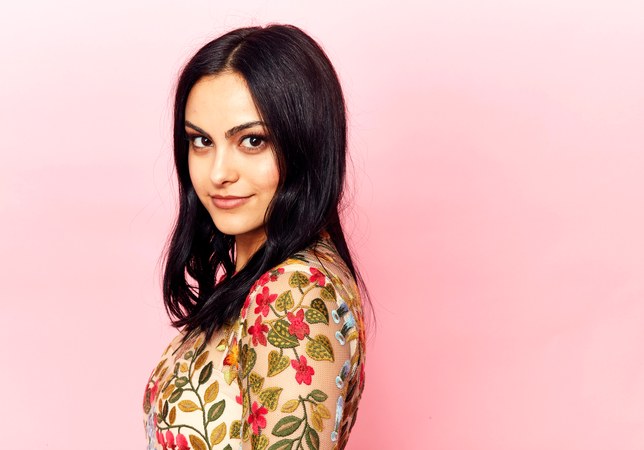
Riverdale star Camila Mendes plays the mysterious, confident Veronica Lodge onscreen, but she isn’t afraid to let her guard down in real life—even when it comes to talking about the tough, personal stuff. On Friday, Mendes revealed that she has struggled with symptoms of an eating disorder in the past, and that her sister suffered with an eating disorder for years as they grew up. In a powerful Instagram post, she explained that she’s partnering with Project HEAL to help raise money for others seeking to help with their own eating disorders.
Project HEAL was founded in 2008 by Liana Rosenman and Kristina Saffran, who met each other during treatment for anorexia. They came together to start the nonprofit to help others who were suffering but couldn’t afford treatment—sadly, many insurance plans don’t provide adequate coverage for eating disorders. (Rosenman and Saffran, by the way, were 2011 honorees in Glamour’s young women of the year list).
“I can say from experience that eating disorders are serious mental illnesses,” Mendes wrote in her post. “Growing up, I watched my big sister suffer from one for many years, and I’ve experienced periods in my life when I’ve suffered symptoms as well. I’m joining Project HEAL to help break the stigma associated with eating disorders.”
Mendes will attend the [Project HEAL San Francisco Gala] on Saturday night to auction off a day on the Riverdale set. The money will go to those in need of treatment.
There’s been a recent cultural shift when it comes to talking about eating disorders, especially in pop culture, with high-profile projects and celebrities helping to shape an honest and empowering cultural concersation. This year’s To the Bone starred Lily Collins as a young woman struggling with anorexia. The film also led Collins to open up about her real life struggles with the illness.
These hard-hitting, personal depictions of what it’s actually like to deal with an eating disorder are helping to shine light on a formerly taboo subject—and it’s wonderful that these celebrity women are using their platforms to lead the way in continuing to break down the stigma surrounding them.