Categories
Health

Elizabeth Warren Has a Powerful Message for Sexual Assault Survivors Watching the Kavanaugh Hearing


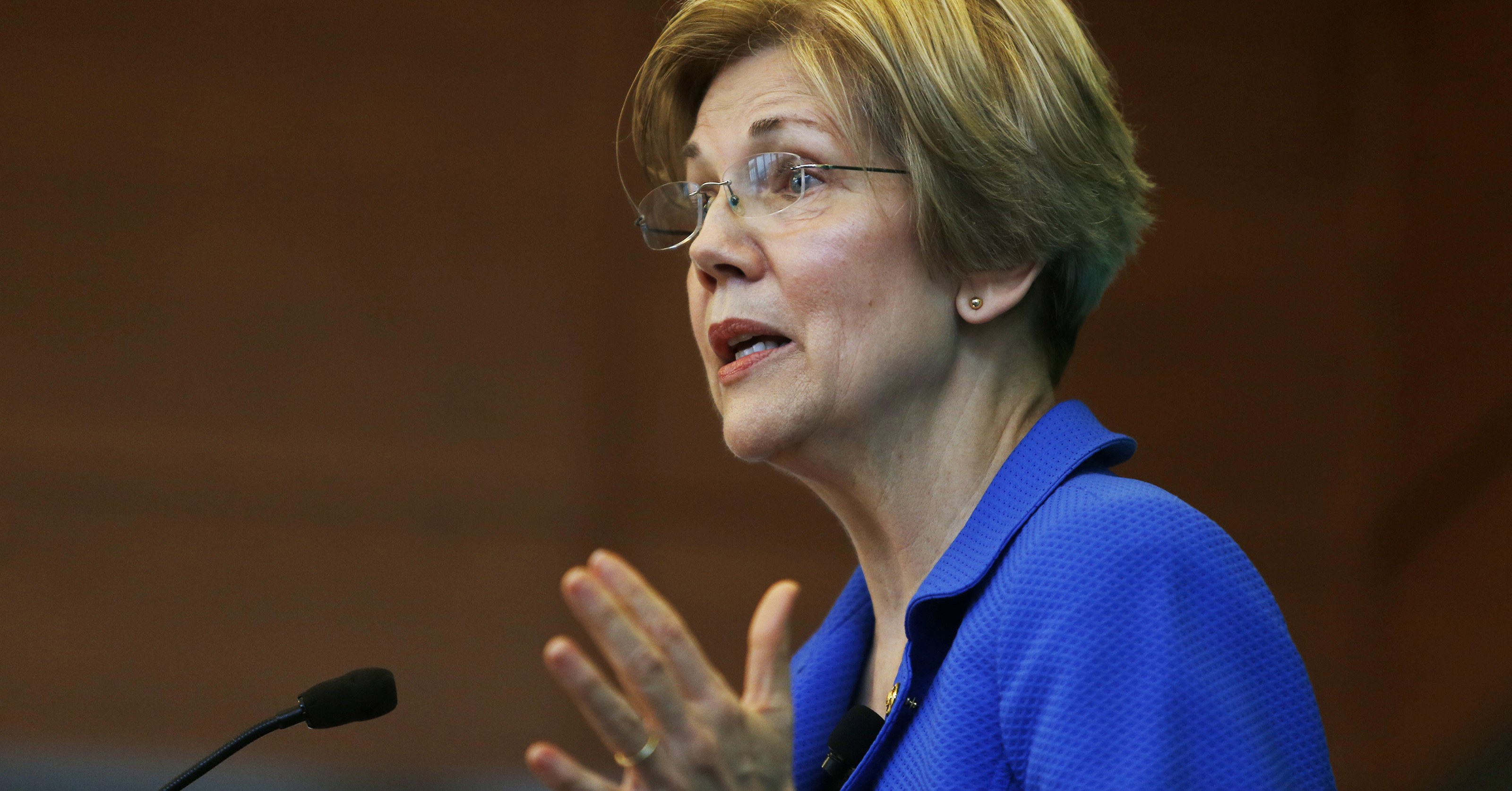
Senator Elizabeth Warren (D—Mass.) on Thursday spoke with Glamour exclusively about the historic Senate hearing involving Supreme Court nominee Brett Kavanaugh and the Republican push to move forward with his confirmation, calling it “fundamentally wrong.”

At the Hart Senate Office building, where Kavanaugh’s accuser Christine Blasey Ford was also testifying, Warren stood alongside Ford’s supporters, telling Glamour that she was, “here with people of conscience who believe that when a woman comes forward that she has a right to be listened to, and there needs to be a full investigation.”

“The fact that Republicans want to go forward treating this woman and other women who have come forward as if their claims don’t matter is an insult to every single woman in this country,” she said. “It is fundamentally wrong.”

Ford appeared in front of the Senate Judiciary Committee on Thursday morning to give her testimony of an event that she says occurred more than 30 years ago, when Kavanaugh allegedly pinned her to a bed, attempted to take her clothes off and covered her mouth with his hand as she screamed.

“I believed he was going to rape me. It was hard for me to breathe and I believed that Brett was going to accidentally kill me,” she told the committee.

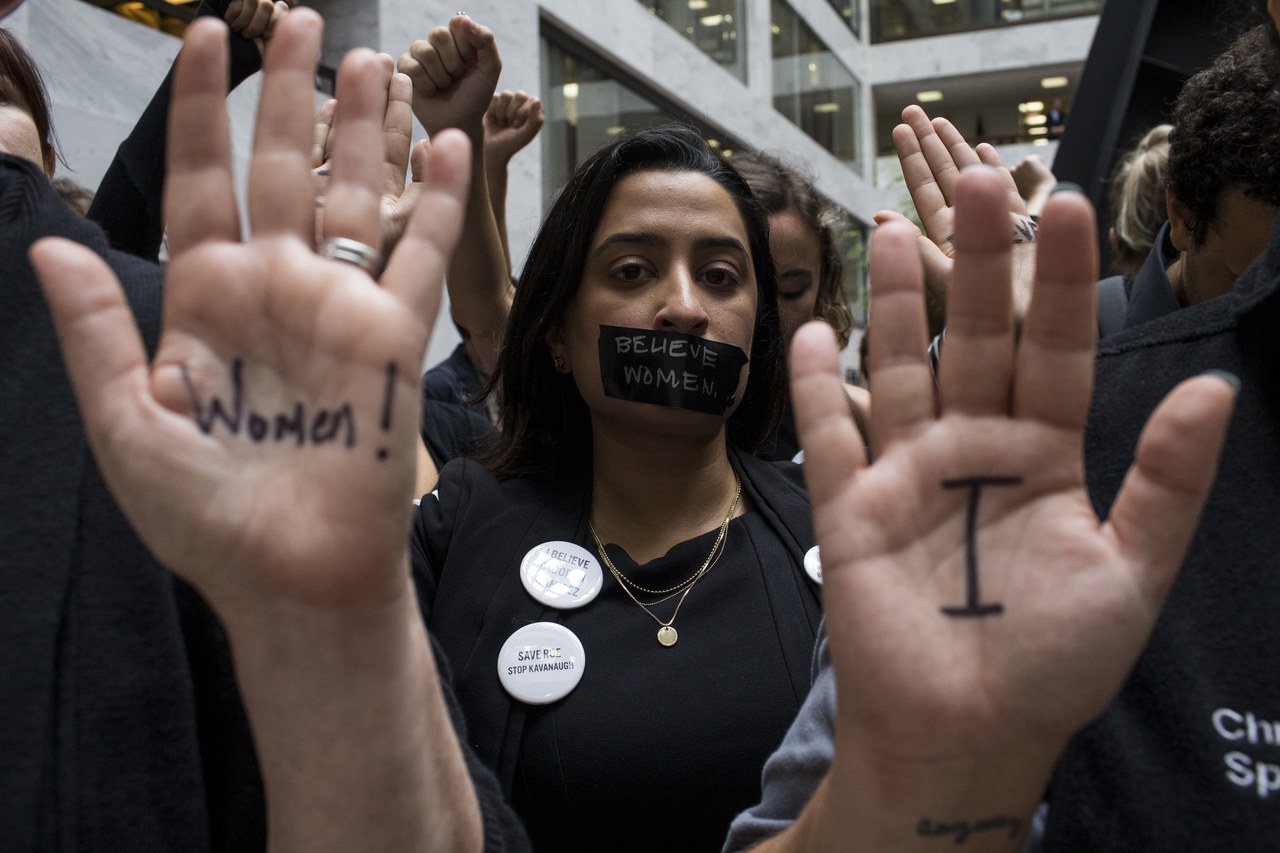
As she spoke, people supportive of Ford gathered outside in the atrium of the Hart Senate Office building. Many listened to the simulcast of the professor’s testimony on their cell phones, at times looking anguished or openly crying. Some silently held their fists in the air; others wore strips of tape over their mouths.

PHOTO: Zach Gibson

When asked if she believed that Kavanaugh would still be confirmed despite multiple women accusing him of sexual assault, Warren said, “I don’t know. I truly don’t know. But I do know that people across this country are paying attention, and that this is not alright.”

She also went on to criticize her Republican colleagues, saying, “this is a moral question.”

“The fact that [Republicans] want to ram this through and not have an investigation, that [Senator] Mitch McConnell goes in front of his big donors and says I’m going to ram this thing through, it’s not right. That treats every woman with disrespect. It treats everyone who has been a victim of sexual assault with disrespect. It treats human beings as if their claims are meaningless and that powerful men can do whatever they want to do. And it’s just not right.”

You can watch the Christine Blasey Ford’s testimony in front of the Senate Judiciary Committee, here.


Source link

Categories
Health

Elizabeth Warren: Trump's 'Domestic Gag Rule' Threatens More Than Just Abortion


The Trump Administration formally came out Friday in favor of cutting off federal family planning money to organizations that perform abortions or make referrals for them.

The rule change affects Title X, the $260 million federal program which underwrites the costs of contraception, reproductive health services and STD screening for low-income and uninsured patients.

The fundamental premise of this Title X change is as simple as it is controversial: The administration believes abortion is not “family planning” and the two do not belong in the same place or conversation.

NPR broke out the details further, saying it “would require facilities receiving federal family planning funds to be physically separate from those that perform abortion; would eliminate the requirement that women with unintended pregnancies be counseled on their full range of reproductive options; and would ban abortion referrals.”

The White House says this change fulfills Trump’s “promise to continue to improve women’s health and ensure that federal funds are not used to fund the abortion industry in violation of the law.” Critics call it a “gag rule” that prevents caregivers from giving patients full information and makes good on Trump’s vow to defund Planned Parenthood.

In a conversation with Glamour this week, Sen. Elizabeth Warren slammed the Title X proposal as bad policy that could endanger women.

“Forcing doctors to keep information from patients about their health options is dangerous and just plain wrong,” the Massachusetts Democrat said.

What Trump is pursuing isn’t new: He’s bringing home the essence of the so-called “Mexico City Policy,” which cuts off federal funding to worldwide health groups that perform abortions or even provide information about them.

The proposal now on the table could have an outsized effect on Planned Parenthood, which offers a variety of reproductive and wellness services in addition to abortion. According to Kaiser Health News, “Planned Parenthood affiliates account for about 13 percent of total Title X sites but serve an estimated 40 percent of its patients.”

Federal law has long prohibited the use of public money to subsidize abortion procedures. But Warren, who was among many lawmakers who signed a letter protesting the Title X changes, says “there’s a lot more on the line as well.”

The Title X rule change “demands that multi-service providers not put a woman’s best interest first — and that if they do, they will lose federal funding for the full array of healthcare services,” Warren said. “That’s shocking.”

“Accessible contraceptives, services to help women prevent unplanned pregnancies [and] care for children after they’re born are all under attack by the Republicans,” she added.

Warren also called the fight a matter of equity. “Threatening to cut back on basic health care services disproportionately hits communities of color, the uninsured and low-income women,” she said.

“This is about personal liberty, but it’s also about women having full economic participation in this country. Women who can’t get access to basic reproductive service health care services have fewer economic opportunities going forward. An unplanned pregnancy can derail an education or the early steps of a career.”

Planned Parenthood sized up the significance of the current Title X change in a blunt Friday email to reporters: “For nearly two decades, Title X law has been clear: Health care providers cannot withhold information from you about your pregnancy options. This rule means they can.”

The White House, however, sought to frame the new proposal as simply shoring up existing law.

“The new proposed rule would not cut funds from the Title X program. Instead, it would ensure that taxpayers do not indirectly fund abortions,” the press secretary’s statement said. “Contrary to recent media reports, HHS’s proposal does not include the so-called ‘gag rule’ on counseling about abortion that was part of the Reagan Administration’s Title X rule.”

The Reagan version of the rule was similar, but not identical, to the Trump iteration. It called for separate facilities for abortions and said Title X recipients could not disseminate information about, or advocate for, terminating a pregnancy.

Called a “gag rule” for prohibiting doctors from talking to patients about abortion, Reagan’s policy got bogged down in court battles and “never went into effect as written, although the Supreme Court ruled it was an appropriate use of executive power,” as the Associated Press reported. His Democratic successor, Bill Clinton, ultimately rescinded it in 1993.

While Vice President Mike Pence—along with his wife, Karen—is a stalwart conservative known for a desire to end abortion in the U.S., Trump himself has come a long way from the self-described “very” pro-choice views he once held.

Days after his 2017 inauguration, Trump reinstated the “Mexico City” order, known by detractors as the “global gag rule.” This past January, he became the first sitting president to address the annual anti-abortion March for Life in Washington via video link. And on May 22, Trump keynotes a “Campaign for Life” gala hosted by the anti-abortion group Susan B. Anthony List.

“The ‘Protect Life Rule’ would not cut a single penny of family planning funding,” said Mallory Quigley, a spokeswoman for Susan B. Anthony List, said in support of Trump’s Title X stance. “This is simply about responding [to] a desire on the part of American taxpayers, six in 10 of whom do not want to be complicit in abortion through their federal funds and taxpayer dollars.”

Dawn Laguens, executive vice president of Planned Parenthood Federation of America, said pro choice advocates would “not stand by while our basic health and rights are stripped away.”

“Everyone has the right to access information about their health care—including information about safe, legal abortion—and every woman deserves the best medical care and information, no matter how much money she makes or where she lives. No matter what,” she said in a statement. “They won’t get it under this rule.”


Source link
Categories
Health

Jessica Alba Welcomes Her Third Child, Hayes Alba Warren


Jessica Alba rang in 2018 in an incredibly special way: with another addition to her family.

On New Year’s Day, the actress and entrepreneur announced on Instagram that she and husband Cash Warren welcomed their third child—their first son—on December 31, 2017. The baby’s name, she revealed, is Hayes Alba Warren (his two sisters’ names also begin with Hs).

Alba posted a photo of Hayes on Instagram, along with a sweet message. “Best gift to ring in the New Year!! Cash and I feel so blessed. Haven and Honor are already obsessed with their new baby bro. ??? #familyof5,” she wrote.

Warren posted a sweet picture to his Instagram account, too, of him holding Hayes. He captioned it: “Hayes Alba Warren: You sure know how to ring in the new year! You showed up a few days early but we couldn’t be any happier. Your Mamma is the strongest woman I know … you’re so lucky to have her by your side. You have two amazing sisters who already adore you and I know you’ll be thankful to have them guide the way. On your first day of life, I promise to love you, to cherish you, and to provide you with a sandbox full of dreams to explore. Welcome to the family my sweet baby Hayes!”

Alba announced her pregnancy in July, with a Boomerang featuring daughters Honor and Haven, each holding a balloons in the shape of a”1″ and a “2,” respectively; their mom was holding one in the shape of a “3”. She explained in the caption: “@cash_warren and I are officially going to be outnumbered #babyonboard #herewegoagain ????#blessed?.”

Outnumbered Alba and Warren might be, but we bet the whole family is thrilled with this new addition to kick off the year. Congrats to the happy family!

Related Stories:
Jessica Alba Got Real About How Pregnancy Has Affected Her Body Image
Jessica Alba and Her Daughter Look Like Legit Twins in This New Photo
Jessica Alba Is Pregnant With Her Third Child


Source link

Categories
Health

Trump Calls Elizabeth Warren 'Pocahontas' Again While Speaking to Native Americans


On Monday, while speaking to Native American war veterans and the press, President Donald Trump took time out to once again openly mock Massachusetts Democratic Senator Elizabeth Warren and called her by a name he’s used before: Pocahontas.

“You were here long before any of us were here,” Trump said while speaking directly to the group of Native American code talkers. “Although we have a representative in Congress who they say was here a long time ago. They call her Pocahontas.” He added, “But you know what, I like you, because you are special.”

According to USA Today, the comment was met simply with awkward silence from the president’s guests. And that silence was especially deafening in a video showing the exact moment Trump made his insensitive remark.

Though the president didn’t specifically name Warren in his statement it was clear who he was speaking about as he’s long called the esteemed senator by this name in reference to her claim that she has Native American ancestors.

In response, Warren told MSNBC that the president’s comments were both out of place and “unfortunate.”

“This was supposed to be an event to honor heroes, people who put it all on the line for our country, and people, who because of their incredible work, saved the lives of countless Americans and our allies,” Warren said. “It is deeply unfortunate that the president of the united states cannot even make it through a ceremony honoring these heroes without having to throw out a racial slur.”

To add insult to injury Trump also made the remarks while standing in front of a painting of President Andrew Jackson, who was the president that signed the Indian Removal Act in 1830, which forced Native Americans from their lands. As Mic further explained, the act ultimately led to thousands of Native American deaths, an event which is now widely referred to as the Trail of Tears.

In a statement following the event Press Secretary Sarah Huckabee Sanders said she does not believe calling Warren Pocahontas is racially insensitive. Instead, she said, “I think what most people find offensive is Senator Warren lying about her heritage to advance her career.”

Related Content:
Elizabeth Warren Shares Her Own #MeToo Story: ‘What Had I Done to Bring This On?’
Senator Elizabeth Warren: Attacks on Birth Control Access Are Attacks on Women’s Economic Freedom
Elizabeth Warren Once Struggled to Find Child Care—and Every Working Mother Can Relate


Source link

Categories
Health

Elizabeth Warren Once Struggled to Find Child Care—and Every Working Mother Can Relate


For millions of American families, securing affordable, high-quality child care is a challenge if not an impossibility—one that Senator Elizabeth Warren is all too familiar with.

On Wednesday evening, the Massachusetts lawmaker delivered the keynote address at the National Women’s Law Center’s 45th anniversary gala and in a heartfelt speech, revealed that if it hadn’t been for the help of her 78-year-old Aunt Bee, she likely wouldn’t be a U.S. Senator today.

Warren started her career as a teacher, but when she ended the school year pregnant with her first child, she wasn’t asked to return. Throwing herself into life as a mother and wife, Warren knew she wanted to do something more. After law school, she got a job teaching law, but her life was quickly thrown into chaos when her babysitter quit. Cycling through different child care options, managing the requirements of her job, and raising two young kids was an endless struggle—one Warren felt she was failing at. During a phone conversation with her 78-year-old Aunt Bee, Warren broke down crying and decided the only option she had was to quit her job.

Without hesitating, Bee told Warren that, though she couldn’t arrive until Thursday, she would be there to help. Sure enough, she arrived with seven suitcases and her Pekingese in tow—and stayed with Warren and her family for 16 years.

“I’m a United States Senator today in part because my Aunt Bee rescued me on that Thursday in 1979,” Warren said. Without child care, I was a goner. And I know how lucky I was because so many working moms don’t have an Aunt Bee who can fly in and help out.”

Though plenty has changed in the decades since Warren began teaching law, affordable, high-quality child care remains one of the most significant challenges for working parents. According to a recent report from the Democratic staff of the Congress Joint Economic Committee, American families spend an average of 15 percent of their income on child care—and in states like California, New York, Arizona, Colorado, and Oregon, it’s not uncommon for that total to hit the 20 percent mark.

For many mothers in two-parent households, leaving the workforce entirely is a more viable financial option than staying at their jobs and paying for child care. But for millions of mothers who serve as the head of household, this is not an option—and they’re spending anywhere from 25 to 50 percent of their earnings on child care. And in order to make ends meet, they may have to sacrifice the best child care options for ones that they can afford.

It goes without saying that the benefits of high-quality, affordable child care are vast—for both women and their children. Women not only have more education and professional opportunities but stand to earn significantly more money during their careers if they’re able to find top-notch child care options for their kids. This is especially true for low-income moms who, according to the JEC report, could earn up to $90,000 more over the course of their professional lives.

And for kids, enrollment in first-rate early learning programs often benefits them beyond their adolescence and well into adulthood. They’re more likely to get higher grades in school, enroll in college, earn more once they’re in the working world, and have overall better health.

Warren, of course, knows just how valuable high-quality child care can be, and she’s taking steps in the Senate to make this a reality. She’s backing legislation that would help cut child care costs for low- and middle-income families. She’s introduced the Schedules That Work Act so that low- and minimum-wage workers so can have some basic fairness in their schedules—and not have to scramble with going back to school, scheduling doctor’s visits, and, of course, handling child care because they work jobs with unpredictable hours. And just like public schools provide a space for kindergarteners to learn how to read, write, do math, and interact with other kids five days a week, she wants to create programs so that two-year-olds, three-year-olds, four-year-olds—and their families—have opportunities to access this type of early childhood education.

“It’s a big goal, but no one builds a future without investment,” Warren said. “Whether you and I have small children or not, we have an interest in the future of this country—and that means we have an interest—and a responsibility—to invest in America’s children. And that means making sure that their teachers and caregivers are adequately paid and trained…and it means making sure that when parents are working, their children are safe and loved and learning and growing.”

As she concluded her remarks, Warren drove home that access to quality child care can’t be a solo endeavor—it’s one that everyone needs to get behind.

“Until we decide, until all of us decide—men and women, married and single, black and white, old and young—that we are willing to invest more in all our children, then we cannot build a country in which women have an equal opportunity to build a future,” Warren said. “The energy to make these changes will come from people like you, people who fight for equality every day. And most importantly, the energy will come from the many people all across the country who have joined this fight and made it a part of their lives.”


Source link

Categories
Health

Senator Elizabeth Warren: Attacks on Birth Control Access Are Attacks on Women's Freedom


If anyone told a young woman today that she was expected to quit school after eighth grade or leave her job once she got married, most Americans would be outraged. Not fair! Women should have the same range of economic choices as men.

Through the years, one door after another has opened, as women have become astronauts and neurosurgeons, run Fortune 500 companies and nonprofit organizations, and started their own businesses. Sure, there’s still a lot of ground to make up, but the country has headed in the direction of greater equality for decades now.

Despite this progress, near-constant attacks on safe and cost-effective women’s health care have become a regular part of our political debates. The latest front in this battle? Access to contraception. The Affordable Care Act required employer-sponsored health insurance policies to cover birth control without additional costs. On October 6, in one of his series of reckless attacks on health insurance in America, President Trump ended that protection.

These fights are often framed as ideological discussions. But for millions of women, access to health care isn’t about ideology at all—it’s about economics.

Americans, at least in private, agree that using birth control is a no-brainer. The vast majority have used it, including ninety-nine percent of women (and by extension, their partners) who have had sex between the ages of 15 and 44.

Some of the reasons for this are obvious. Contraception prevents unintended pregnancy and reduces the abortion rate. Certain forms of birth control prevent sexually transmitted infections, and others help control debilitating health conditions. But contraception is not only about health; it is about economic security as well.

Americans, at least in private, agree that using birth control is a no-brainer.

As every parent knows, the decision to have children is momentous—and carries massive economic consequences. Because the United States does not ensure that parents have access to paid family leave or affordable childcare, new costs add up quickly. The totals are striking: middle-income parents with two kids will spend an estimated $230,000 to raise a child born in 2015 from birth through age 17, amounting to roughly $13,000 per year. Starting a family is a big commitment, and millions of people use contraception until they decide to do so.

But the out-of-pocket costs for baby cribs and car seats are only the tip of the iceberg. A mother experiences a measurable decline in earnings immediately after having a child—a decline that continues throughout her lifetime. And women don’t have to be mothers to benefit economically from contraception—just ask college students, or women with crippling endometriosis, how contraception helps them land and hold down jobs.

The arrival of the birth control pill in 1960, later joined by other effective contraceptives, gave Americans more control over if, when, and how they chose to grow their families. That control, in turn, helped fuel economic opportunity for American women, American families, and the American economy. After the widespread introduction of birth control, the number of women in professions once closed to them increased dramatically. And without the movement of women into the workforce since 1970—a trend partly enabled by the availability of effective birth control – our country’s GDP would only be three-quarters the size it is today.

Contraception helps level the economic playing field for women.

Contraception helps level the economic playing field for women. With birth control available, women have more chances to go to school, get jobs, create businesses, and grow our economy. They can more reliably plan their economic futures. But birth control offers these benefits only when women can access it—and when their bosses can’t dictate what types of birth control it’s appropriate for them to use.

While 99% of women have used birth control at least once, cost is a big factor restricting consistent access. Prior to the ACA, one in three women struggled to afford the out-of-pocket costs of prescription birth control. These costs put additional strain on the finances of workers already struggling to make ends meet—and also reduced contraceptive use. According to a 2010 Centers for Disease Control report, hundreds of thousands of women who tried various forms of contraception gave up because the methods were “too expensive,” “insurance did not cover it,” or because contraception was “too difficult to obtain.” The ACA’s birth control protections helped level the playing field: women in America saved an average of $255 a year on birth control pills and saw cost reductions for other contraceptive methods.

For millions of women, President Trump’s edict isn’t some abstract, ideological debate. For a working couple with modest wages and piles of student loan debt, the ability to decide when to have children is an economic issue. For a student working towards her college degree and financial independence, access to birth control is an economic issue. For a woman working two jobs with two kids in daycare, affordable contraception is an economic issue.

This isn’t the Trump Administration’s first attack on women’s health. Efforts to defund Planned Parenthood, repeal the ACA and Medicaid, and block access to safe, legal abortions have put women on the economic defensive. But those efforts require Congress—and so far, despite the best efforts of Mitch McConnell and Paul Ryan, they have failed. Now, President Trump has turned to a decision he can make without Congress: make it harder to access birth control. With the stroke of a pen, the President shrunk the economic futures of millions of women. He should reverse this decision—and if he won’t, Congress should force him to.


Source link