Categories
Health

Donald Trump's Attacks on Congresswomen Are Racist and Sexist. Ignoring That Is a Mistake We Can’t Afford


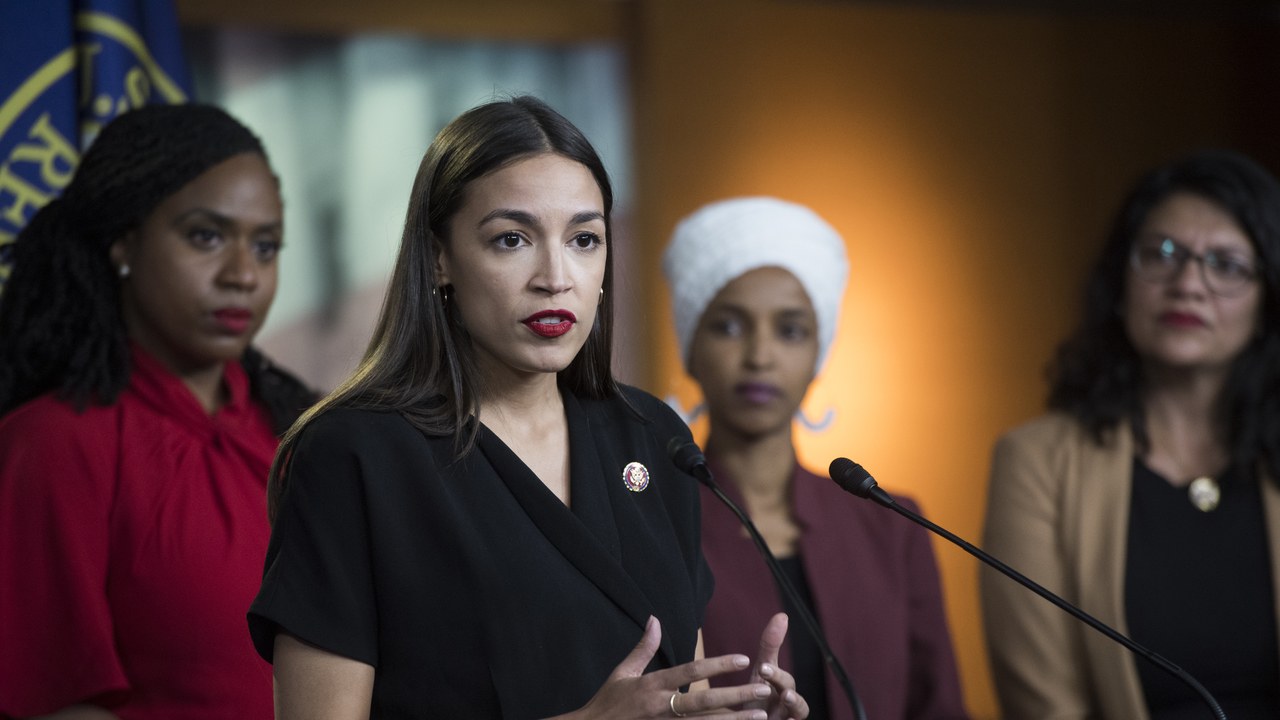
Donald Trump is spending his week doubling down on his racist suggestion that four Democratic lawmakers—Reps. Alexandria Ocasio-Cortez of New York, Ilhan Omar of Minnesota, Ayanna Pressley of Massachusetts and Rashida Tlaib of Michigan—should “go back” where “they came” from. Last night, he presided over a crowd in North Carolina that at one point chanted “Send her back!” in reference to Omar. At times, when Trump mentioned the women, people in his audience shouted “Treason!” and “Traitors!”

It’s utterly irrelevant to Trump and his supporters that three of four of the women were born in the United States and that the fourth, Omar, immigrated from Somalia as a child and has spent more than half her life as a citizen. In focusing attention on these particular women, Trump activates the well-documented passions and fears of his supporters, people demonstrably threatened by the browning of America. But, he also activates the disgust and repugnance that too many people feel about women claiming power and authority, particularly the power and authority to decide what America is and should be. It would be a foolish and dangerous mistake, particularly as we move towards a presidential election in which more women than ever are candidates, to ignore the confluence of these prejudices.

Trump’s “go back” dictate makes an assumption about who “real Americans” are, and research shows he’s not alone in his warped thinking. For most of our history, the notions of “citizenship” and “manhood” have been as inextricably linked in most people’s minds as “American” and “white” are. Only in our recent past have minorities and women been extended rights, like the freedom to vote, to run for office, to bear arms, to serve in juries, and to work, as elite white man have since independence. Studies show even now, in the words of one social science researcher, that “to be American is implicitly synonymous with being White.” In the same vein, many people’s explicit, and implicit, belief systems continue to support the notion that men are “natural” leaders, but that women are not; that men serve in public capacities, and women private ones. Trump appeals to the specific combination of these beliefs to undermine women as not only incapable of self-governance, but as unfit to govern others. That’s the hateful core of this latest diatribe; people like them aren’t suited to tell people like us what to do.

Trump’s casual “go back” is a dogwhistle to racists and xenophobes but it also reinforces age-old biases against the rise of a “feminized elite.” Women who are educated and progressive, the old chestnut goes, are dangerous to men and to the nation. This tired equation allows Trump’s most extreme supporters to rationalize threats against women as legitimate act of patriotism and renders violence against them a form of twisted self-defense. Trump’s campaign rallies were frenzied carnivals of this misogynistic idea, with thousands of mostly white Americans chanting “lock her up” and parading around effigies of a caged Hillary Clinton. It’s how a West Virginia Republican lawmaker tweeted, “she should be ’hung’,” and another proclaimed, “Hillary Clinton should be put in the firing line and shot for treason.” One of Trump’s supporters was particularly clear when he explained, during the 2016 race that “Hillary needs to be taken out“ and that he was prepared to do it himself. “[I[f I have to be a patriot, I will,“ he said. The same ideas were more subtly conveyed when, earlier this year, a video was aired during a Memorial Day Fresno-Grizzlies game in which Ocasio-Cortez was depicted as an “enemy of freedom“ alongside Kim Jong Un and Fidel Castro.

But Trump isn’t just content to question women’s patriotism. He also impugns their expertise and knowledge. The charge that people of color and women “don’t understand” the complicated affairs that animate our national discourse is a popular right-wing talking point drawn from racist and sexist science. It suggests that people of color and women lack the intellectual capabilities and emotional wherewithal to lead. Of course, that means that women of color who work in the public sphere are special targets of these attacks. A Media Matters supercut of Fox News’s coverage of AOC, for example, demonstrates the network’s near-obsession with portraying her—a woman with a degree in economics and the recipient of a fellowship awarded to high academic achievers—as “ignorant,” “idiotic,” and someone who “doesn’t know what she is talking about.” She is, the hosts emphasize, a “pompous little twit,” who “makes no sense.” In a similar vein, Trump has referred to black athletes, politicians, and media representatives as “low IQ individual[s]” and “dumb.”

Source link

Categories
Health

Heart Attacks Are On the Rise in Young Women—Know the Signs of a Heart Attack In Women


These are classic early signs of a heart attack, Dr. Steinbaum says: tightness in the chest, pain, dizziness, nausea, a cold sweat. All of these symptoms are the body’s “desperate attempt” to help itself as the heart is slowly deprived of oxygen, she says.

3:30 p.m.: Schroeder didn’t know any of this at the time—she thought she might be having a panic attack—but she knew something was really wrong. So, she called her dad, a former EMT, who told her to have her roommates bring her to the hospital right away.

If you’re having a heart attack, time is of the essence, says Dr. Steinbaum. “In this case, you’d need to get to the ER as soon as possible—that decision could be lifesaving.”

3:45 p.m.: Several minutes later, Schroeder’s roommates walked her into a nearby Urgent Care clinic—by this time, she was in too much pain to stand upright, let alone walk on her own. Bewildered and in pain, she laid on the floor of the waiting room waiting to see a doctor.

When she got into an exam room, a nurse ran an electrocardiography (EKG) to check the electrical activity of her heart, Schroeder says. “I remember the nurse saying, ‘This is strange—it says you’re having a heart attack.’”

4 p.m.: Schroeder was rushed to the hospital but couldn’t fully process what was happening. While EMTs gave her nitroglycerin—which helps to widen blood vessels making it easier for the heart to pump blood during a heart attack—Schroeder asked her roommates to text her captain. “I was so concerned about missing soccer practice because if I missed practice, I likely wouldn’t be able to play in the upcoming weekend’s game,” she says. “I felt like I was in a daze.”

4:30 p.m.: During a heart attack, a blockage—typically plaque buildup in the arteries—prevents blood and oxygen from flowing to the heart muscles. But Schroeder, a young, healthy, athlete, didn’t fit the profile of a patient with blockages. At the hospital, her care team started running tests: another EKG, an echocardiogram (echo) to take pictures of her heart, and an MRI.

There was definitely a blockage. “I explained my mom’s cardiomyopathy and how I used to have a hole in my heart but it closed,” Schroeder says. This tipped doctors off to take a second look—scans revealed that the hole in Schroder’s heart was in fact still there.

Saturday, September 15, 2012 8:00 a.m.: The next morning, doctors finally figured out what had happened. During a cardiac catheterization, a procedure that involves inserting a catheter into your artery, doctors discovered a blood clot that had traveled through the hole in Schroder’s heart into one of her arteries, almost completely blocking it.

It turned out, the hole in her heart was only part of the issue—further testing revealed Schroeder also had a genetic blood clotting disorder. The two conditions explained the heart attack—and meant she’d have to give up soccer.

A month after her heart attack, Schroeder was trying to run again. She needed to spend three months in cardiac rehab and keep her heart rate under 170 beats per minute to avoid overexerting herself, but she was determined to find a way to stay active in a way that’s healthy for her heart. “I’m not working out just because I want to work out. I’m working out because I need to to keep my heart strong and my body healthy so hopefully this doesn’t happen again,” she says. Schroeder’s also on medication for her condition, pays attention to her blood pressure and cholesterol, and avoids sodium-rich foods.


Source link

Categories
Health

Gisele Bündchen Says She Once Considered Suicide After Severe Panic Attacks


Trigger warning: This post contains information that may be triggering to people who’ve experienced suicidal thoughts.

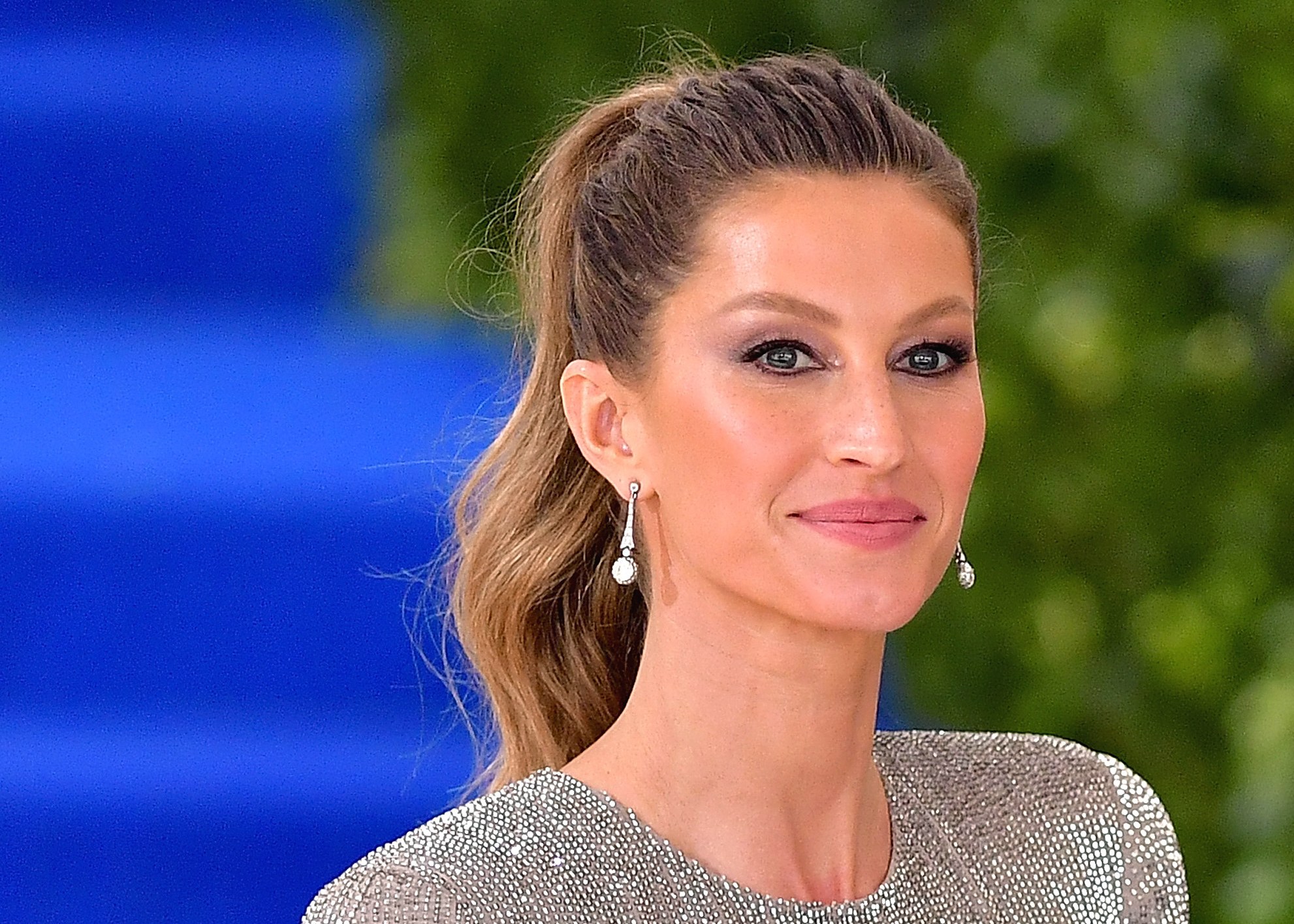
In a new interview with People, supermodel Gisele Bündchen opens up about the mental health scare that changed the course of her life.

“Things can be looking perfect on the outside, but you have no idea what’s really going on,” Bündchen said, explaining why she decided to share her mental health issues in her upcoming book, Lessons: My Path to a Meaningful Life. “I felt like maybe it was time to share some of my vulnerabilities, and it made me realize, everything I’ve lived through, I would never change, because I think I am who I am because of those experiences.”

Bündchen said she experienced her first panic attack in 2003, during a bumpy flight, and subsequently developed a fear of enclosed spaces, like tunnels and elevators. “I had a wonderful position in my career, I was very close to my family, and I always considered myself a positive person, so I was really beating myself up. Like, ‘Why should I be feeling this?’ I felt like I wasn’t allowed to feel bad,” she said. “But I felt powerless. Your world becomes smaller and smaller, and you can’t breathe, which is the worst feeling I’ve ever had.”

Bündchen told People she started looking for any way to make her panic attacks stop. “I actually had the feeling of, ‘If I just jump off my balcony, this is going to end, and I never have to worry about this feeling of my world closing in,'” she said. She sought the help of a specialist, and was prescribed Xanax, which didn’t sit well with her. “The thought of being dependent on something felt, in my mind, even worse, because I was like, ‘What if I lose that [pill]? Then what? Am I going to die?’ The only thing I knew was, I needed help,” Bündchen said.

She continued to meet with doctors, and eventually decided to completely overhaul her lifestyle. She changed her diet and added yoga and meditation to her routine. “I had been smoking cigarettes, drinking a bottle of wine and three mocha Frappuccinos every day, and I gave up everything in one day,” the mom of two said. “I thought, if this stuff is in any way the cause of this pain in my life, it’s gotta go.” She also broke up with then boyfriend Leonardo DiCaprio, explaining that she felt somewhat “alone” in her determination to change her life so dramatically—but there are no hard feelings between the former couple. “Everyone who crosses our path is a teacher, they come into our lives to show us something about ourselves,” she said. “And I think that’s what he was. What is good versus bad? I honor him for what he was.”

If you or someone you know is struggling with suicidal thoughts, please contact the National Suicide Prevention Lifeline at 800-273-8255.

Related Stories:

Here’s Why Gisele’s Trainer Says You Shouldn’t Be Aiming for Six-Pack Abs

Tom Brady Cut a Radio Interview Short After Host Called His Daughter a “Pissant”


Source link

Categories
Health

Senator Elizabeth Warren: Attacks on Birth Control Access Are Attacks on Women's Freedom


If anyone told a young woman today that she was expected to quit school after eighth grade or leave her job once she got married, most Americans would be outraged. Not fair! Women should have the same range of economic choices as men.

Through the years, one door after another has opened, as women have become astronauts and neurosurgeons, run Fortune 500 companies and nonprofit organizations, and started their own businesses. Sure, there’s still a lot of ground to make up, but the country has headed in the direction of greater equality for decades now.

Despite this progress, near-constant attacks on safe and cost-effective women’s health care have become a regular part of our political debates. The latest front in this battle? Access to contraception. The Affordable Care Act required employer-sponsored health insurance policies to cover birth control without additional costs. On October 6, in one of his series of reckless attacks on health insurance in America, President Trump ended that protection.

These fights are often framed as ideological discussions. But for millions of women, access to health care isn’t about ideology at all—it’s about economics.

Americans, at least in private, agree that using birth control is a no-brainer. The vast majority have used it, including ninety-nine percent of women (and by extension, their partners) who have had sex between the ages of 15 and 44.

Some of the reasons for this are obvious. Contraception prevents unintended pregnancy and reduces the abortion rate. Certain forms of birth control prevent sexually transmitted infections, and others help control debilitating health conditions. But contraception is not only about health; it is about economic security as well.

Americans, at least in private, agree that using birth control is a no-brainer.

As every parent knows, the decision to have children is momentous—and carries massive economic consequences. Because the United States does not ensure that parents have access to paid family leave or affordable childcare, new costs add up quickly. The totals are striking: middle-income parents with two kids will spend an estimated $230,000 to raise a child born in 2015 from birth through age 17, amounting to roughly $13,000 per year. Starting a family is a big commitment, and millions of people use contraception until they decide to do so.

But the out-of-pocket costs for baby cribs and car seats are only the tip of the iceberg. A mother experiences a measurable decline in earnings immediately after having a child—a decline that continues throughout her lifetime. And women don’t have to be mothers to benefit economically from contraception—just ask college students, or women with crippling endometriosis, how contraception helps them land and hold down jobs.

The arrival of the birth control pill in 1960, later joined by other effective contraceptives, gave Americans more control over if, when, and how they chose to grow their families. That control, in turn, helped fuel economic opportunity for American women, American families, and the American economy. After the widespread introduction of birth control, the number of women in professions once closed to them increased dramatically. And without the movement of women into the workforce since 1970—a trend partly enabled by the availability of effective birth control – our country’s GDP would only be three-quarters the size it is today.

Contraception helps level the economic playing field for women.

Contraception helps level the economic playing field for women. With birth control available, women have more chances to go to school, get jobs, create businesses, and grow our economy. They can more reliably plan their economic futures. But birth control offers these benefits only when women can access it—and when their bosses can’t dictate what types of birth control it’s appropriate for them to use.

While 99% of women have used birth control at least once, cost is a big factor restricting consistent access. Prior to the ACA, one in three women struggled to afford the out-of-pocket costs of prescription birth control. These costs put additional strain on the finances of workers already struggling to make ends meet—and also reduced contraceptive use. According to a 2010 Centers for Disease Control report, hundreds of thousands of women who tried various forms of contraception gave up because the methods were “too expensive,” “insurance did not cover it,” or because contraception was “too difficult to obtain.” The ACA’s birth control protections helped level the playing field: women in America saved an average of $255 a year on birth control pills and saw cost reductions for other contraceptive methods.

For millions of women, President Trump’s edict isn’t some abstract, ideological debate. For a working couple with modest wages and piles of student loan debt, the ability to decide when to have children is an economic issue. For a student working towards her college degree and financial independence, access to birth control is an economic issue. For a woman working two jobs with two kids in daycare, affordable contraception is an economic issue.

This isn’t the Trump Administration’s first attack on women’s health. Efforts to defund Planned Parenthood, repeal the ACA and Medicaid, and block access to safe, legal abortions have put women on the economic defensive. But those efforts require Congress—and so far, despite the best efforts of Mitch McConnell and Paul Ryan, they have failed. Now, President Trump has turned to a decision he can make without Congress: make it harder to access birth control. With the stroke of a pen, the President shrunk the economic futures of millions of women. He should reverse this decision—and if he won’t, Congress should force him to.


Source link