Categories
Health

What’s the Most Effective Type of Birth Control?


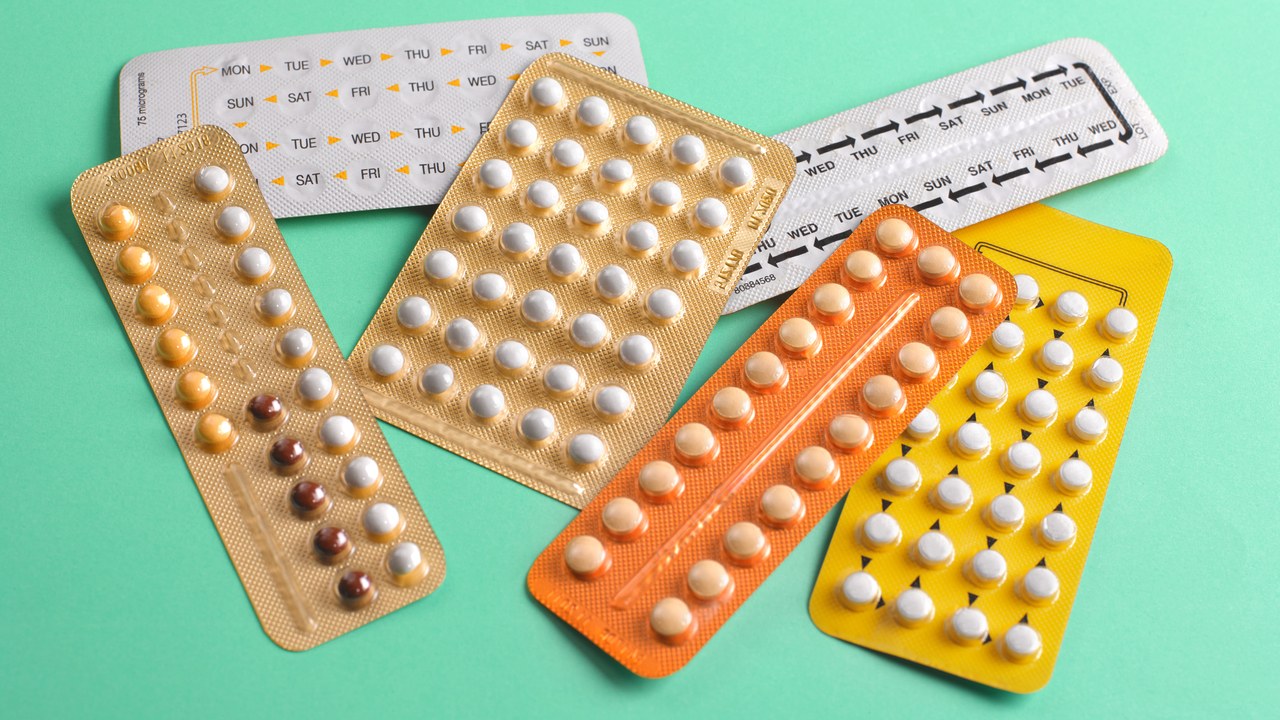
There are several factors that go into choosing the best birth control—your reproductive plans, your feelings about hormones, your experience with cramps. All methods have their pros but when it comes to the most effective type of birth control, there’s a clear winner: long-acting reversible contraceptives (or LARCs).

LARCs—which include IUDs and implants—are between 98 and 99.9 percent effective at preventing pregnancy. “Long-acting reversible contraceptives are the most effective form of birth control because there’s no what we call ‘user error,’” says Taraneh Shirazian, M.D., assistant professor in the department of obstetrics and gynecology at NYU Langone Health and founder of global women’s health nonprofit Saving Mothers, “meaning that you don’t have to do anything [in order for them to work].” Over time, that makes them 20 times more effective than birth control pills, the patch, or the vaginal ring, according to the American College of Obstetricians and Gynecologists.

It’s not just the effectiveness that makes LARCs a solid choice for birth control. “It’s a one-time cost. They’re long-acting. They have minimal side effects, for the most part,” says Kecia Gaither, M.D., ob-gyn, maternal fetal medicine specialist and director of perinatal services at NYC Health + Hospitals/Lincoln. “When you’re looking at the big picture, those are some really nice things to consider.”

But what, exactly, are the different types of LARCs? How do they work? And how effective are they preventing pregnancy—especially when compared to other forms of birth control? We asked the experts to break it down.

Types of LARCs

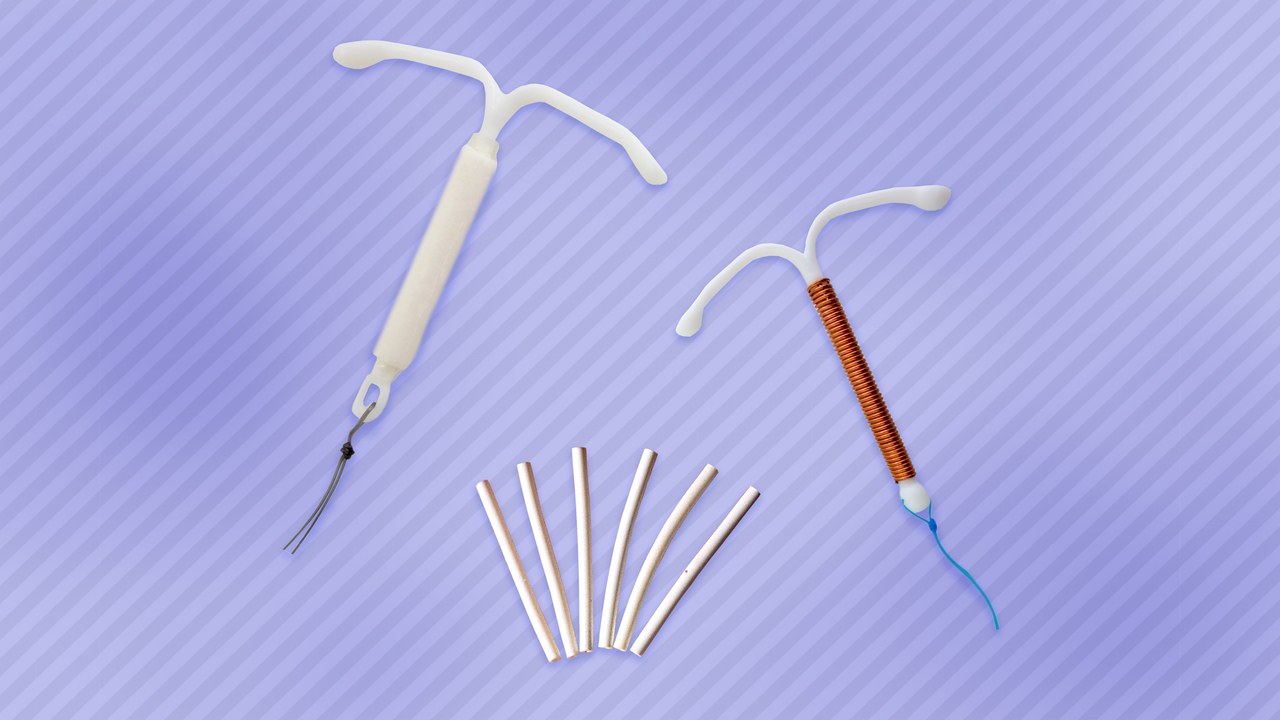
There are two different types of long-active reversible contraceptives: Intrauterine devices (better known as IUDs), which are inserted into the uterus, and the implant, a small rod-shaped device that is implanted under the skin of the upper arm.

IUDs

There are actually two different types of IUDs—copper IUDs and hormonal IUDs. While they’re both extremely effective at preventing pregnancy, they work in completely different ways.

The Copper IUD

The copper IUD is approved to work for the longest duration of time—10 years. (Though your gyno can remove it at any time if you want to start getting pregnant.) It’s also completely non-hormonal. “It basically creates an inhospitable environment for pregnancy. The copper presence prevents the fusion of the egg and the sperm,” explains Shirazian. It’s a great option if you don’t want to get pregnant any time in the near (or distant!) future or if you want a completely hormone-free method of birth control.

The Hormonal IUD

The Hormonal IUD prevents pregnancy through introducing the hormone progesterone—one of the two hormones typically used in the birth control pill—into your system. “What progesterone does from a contraceptive point of view is it thickens the cervical mucus, which makes it difficult for the sperm to even get through the cervix and into the uterus,” says Gaither. “The other thing that hormonal contraception devices do is inhibit ovulation,” she adds. “So you’ve got a two-hit wonder from using the hormonal IUD.”

Hormonal IUDs are over 99 percent effective at preventing pregnancy and last between three and six years. (The length of effectiveness for hormonal IUDs depends on the brand).

Implants

If an IUD doesn’t feel like the right fit for you, there’s another LARC option: The birth control implant.

The implant works much the same way as the hormonal IUD. Instead of being placed in the uterus, the implant is a small device about the size of a matchstick that’s placed in your upper arm just underneath the skin, explains Shirazian. Like the IUD, it also secretes a form of progestin. “Progesterone has the same effect whether it’s subdermal or in the uterus,” says Shirazian. “Progesterone is absorbed into the bloodstream and the presence of progesterone basically has the same effect as the hormonal IUD would.”



Source link

Categories
Health

Modern Fertility Launches Annual Fertility Tracking That Puts Women In Control


Cheryl was 23 when she got married and always assumed she and her husband would have kids down the line. “We talked about having two to four kids. There were all these different periods where we set an age or a stage but then we would get there and it would be like ‘oh not yet,’” she says. “We had originally said for sure when I turned 30 we’d start trying—and then the year I turned thirty he decided to get his MBA.”

By the time Cheryl hit 32, kids still weren’t on the horizon. “He asked to wait another three to five years, and I was like oh my gosh, that’s not a part of my plan and now I kind of feel like it’s never going to be a part of our plan together,” she says.

As every cliche about biological clocks will tell you, fertility declines with age, dropping sharply around 35. But the curve doesn’t look the same for every woman—your individual hormone levels and factors like when your mom went into menopause all help to create a more personalized view of your fertility future. But historically, getting this information about your body has been out of reach unless you’re actively trying (and failing) to get pregnant. That means women like Cheryl who are trying to be proactive about making major life decisions have been left without all the info. “I was like this information is there, and it’s mine, and it’s my body,” Cheryl says. “So why wouldn’t I have it?”

Cheryl heard about Modern Fertility, one of a handful of femtech companies (and Glamour’s partner in the Modern State of Fertility survey) who are putting fertility insight straight into the hands of women with an at-home test that gives you a real time look into key measures of egg quality and quantity. “Let’s be realistic—as much as I can climb a career ladder, I only have certain years that are my fertile years. So why aren’t I learning more about my body and what’s possible and what my options are?” Cheryl says.

Modern Fertility’s at home blood test measures key hormones that can tell you if you have more or fewer eggs than the average woman your age, when you’re likely to hit menopause, and give you insight into potential egg freezing or IVF outcomes. Cheryl’s test results were promising—she could likely have kids if she wanted to. So she had a choice to make: stay in a marriage where kids were uncertain or take control. Eventually, Cheryl and her husband got a divorce.

At 33, she was back on the dating scene, armed with new insight into her reproductive future. For the first time in over a decade, she was dealing with all the uncertainties that come with finding a partner but now there was one other uncertainty: how long could she wait before trying to have kids?

A fertility test like the one Cheryl took is a helpful tool—one data point that gives you a good idea of your chances of getting pregnant right now. But the real power comes from understanding how your body is changing over time. This is where Modern Fertility’s latest resources, launching today, come in. To give women like Cheryl the information they need to make major life plans, the company overhauled its fertility reports to support annual testing, allowing women to get specific insight into how their reproductive curve has changed from the previous year. “We periodically check up on our daily steps, nutrition, and financial savings, not to mention cholesterol and blood pressure—why shouldn’t we routinely check in on our reproductive health?” Afton Vechery, co-founder and CEO of Modern Fertility, said in a statement. “This isn’t just about planning for kids or having them, it’s about owning an important piece of our body that impacts our overall health and future.”


Source link

Categories
Health

We Have the Same Birth Control Options as Our Grandmothers. We Need a Better Plan A.


It’s 10:30am on a Sunday and I’m standing in line to buy Plan B. The guy in front of me is wearing a dirty blanket like a cape, carrying a supersized Heineken and shouting. This is not how I expected my weekend to wrap.

A few months ago I decided to go off the pill. I’m 34, married and, ironically, in my day job I support increasing women’s access to birth control around the world. It wasn’t because I wanted to have a baby (I don’t) or because I think the pill is evil (see employment status above), but rather because I’d been on it since around the time I hit puberty—and I’d suffered anxiety and depression just as long. The research is still inconclusive but studies have linked the two; I thought it was about time for me to test out some non-hormonal methods, joining the 20 percent of women who quit taking their birth control because of the side effects.

I didn’t plan to be without a goalkeeper for long. Indeed I booked an appointment for a copper IUD four months ago—it’s the one long lasting non-hormonal method on the market and I’d thought “that’s perfect for me.” I’d even naively moved forward with the insertion process despite the worried looks of the doctor and her forewarning that this method was most popular with women who had already had children, that it would be “snug” in my wee little baby motel, and that the process could be “uncomfortable.”

She didn’t say: getting this forced through your tiny pre-baby cervix and into your virginal uterus will feel like fire has engulfed your abdomen, your legs will shake and you may consider passing out as you slip into cold sweats. It was the most painful experience of my life. Which is saying something—my pain threshold is so high that I once had an undiagnosed lower back fracture for three months. I had to ask the doctor to stop halfway through. Thank you to insurance for covering both insertion and removal in one go.

I realized after that appointment that I literally had one modern non-hormonal option left if I wasn’t going to use condoms, diaphragms or sponges: fertility apps. So, two years into marriage with a mundane sex life, I figured “Hell. Let’s give it a try.”

It was nice to understand my body more. But it was also highly inconvenient. By conservative measure, all women are at “high risk of pregnancy” for about half their cycle. Meaning we only get a few “in the clear days” just before our period. The “worst” days are the five before we ovulate and the day after. But ovulation can vary (my left ovary likes to activate days earlier than my right, I learned) and the signs of ovulation can be inconsistent. In my case, for the first three months off the pill I had clear ovulation cramps; they would show up like clockwork right around when the app said I was fertile. It made it easier to trust the algorithms and wait for the danger zone to pass.

But this month, my cramps decided to go on hiatus. Suddenly I was left with nothing more to go by than an app that says I have a 5.4 percent chance of getting knocked up. The Husband and I agreed to use alternative methods on those high risk days. But last night he forgot and I failed to remind him in a timely fashion. Ergo my trip to buy Plan B.

My situation is not unique. For the past 50 years women have been marketed the freedom of birth control so passionately—and we’ve had protect our right to access so vehemently—that no one has stopped to say this whole “choice” thing is a myth—there’s not one on-demand, non-hormonal contraceptive on the market. And we should all be really pissed about that.


Source link

Categories
Health

SE Cupp Once Starred in an NRA Ad. Now the Conservative Commentator Wants Gun Control


Conservative commentator SE Cupp has been such a staunch supporter of the NRA that she was once featured as an “NRA mom” in an ad campaign. But over the weekend and in the wake of back-to-back mass shootings in two American cities that left 31 people dead, Cupp said on her CNN show that she’d decided to quit the organization.

“I am so sick and tired of participating in this predictable cycle of politics, where a mass shooting happens, the left calls for new guns laws—some meaningful, some unproductive—and the right yells ‘slippery slope’ and hides behind the Constitution,” she said. “Nothing happens, nothing changes. And with the next mass shooting, we do it all over again.”

Cupp announced that she’d cancelled her membership with the NRA and issued a call to action, proposing universal background checks, bans on 100-round ammunition drums, gun violence restraining orders, and mental health programs in schools. But above all, she demanded a new conversation about gun control in America and implored conservatives and progressives to engage in a more honest and even emotional discourse about how to solve the crisis. As she put it, “[I]n the wake of more mass shootings—senseless violence that sent innocent people running for their lives, leaving children orphaned, loved ones dead on the ground—we must do something about guns.”

Here, Cupp explains what has (and hasn’t) change when it comes to her perspective on guns and how she hopes lawmakers will react to renewed pressure to take action on the issue. Also, to the furious conservatives in her mentions: She’s still a proud supporter of the Second Amendment.


I didn’t discover hunting and shooting until later in life. But almost from the start, guns were political for me, because I was and am a political person. As a conservative, I aligned with Second Amendment arguments. That felt natural.

To be frank, a lot of the voices on the left weren’t honest in their arguments and were sometimes inaccurate about guns and gun owners. I was frustrated, and so I pointed that out. Calling out the mistakes that the media made in talking about guns, pointing out the mistakes that Democrats made talking about guns—that just became something I did. I’m still proud of the work and, to be clear, I’m still a supporter of the Second Amendment. That hasn’t changed. What has changed is I’m a mom now. I know it sounds cliche, but it’s true. When I was pregnant I wrote about what it felt like to hunt and shoot as a pregnant woman. I felt empowered and even like it taught me a lot about becoming a mother.

But of course now I am a mom and that’s made me, in some circumstances, even more pro-Second Amendment than I was and also made me take a step back from how I once handled a number of political arguments. Because now it’s personal. Whether it’s gun control or immigration, when there’s more at stake and it’s personalized and contextualized, I see it in a different light. I would hope that’s true for a lot of people.

What frustrates me about the gun argument among conservatives is that we have done the same thing for as long as I can remember, which is give no ground. And the reason we did that is because we have felt that there’s a slippery slope on gun control. There was this imperative not to give an inch. But it just started to feel like the usual conversations after these mass shootings were getting us nowhere. And if I can help move that discussion a millimeter, then I need to do that. Instead of being part of the problem I want to be a part of a solution. I don’t have a whole solution. I don’t even have a fragment of a solution. But the biggest point I want to make is that we all need to put down our weapons and just talk.


Source link

Categories
Health

How to Take Control in Bed: 7 Ways to Take Charge


Feeling in charge in the bedroom looks different for everyone—it’s not always the stereotypical fantasy of black leather and whips (though totally fine if that’s your thing). Figuring out how to take control in the bedroom in a way that makes you feel sexy as hell (and just like you’re reinacting some feminist porn scene) takes a little introspection.

We’re constantly bombarded with sex rules that frankly don’t exist—but imagine the mind-blowing time you could have without them. Taking control in bed means authentic expression in whatever form it may take. So, ask yourself: What empowers you? Here’s how to find it:

1. Drop the Labels

We’re all afraid of being “bad in bed”—which is often why one partner takes a back seat and lets the other drive. But the entire idea of “being a great lover, or ‘this good’ vs ‘this is bad’,” is harmful, says relationship and sexuality educator Logan Levkoff. What you want from sex is what you want from sex; stripping it of arbitrary judgements of what’s good is the first step to taking control over your sexual encounters.

2. Talk About Sex, Baby

It comes as no shock that many people—particularly women—struggle to ask for what they want in bed. Power dynamics are seemingly always present regardless of sex and gender. Sari Cooper, founder and director of the Center for Love and Sex, recommends navigating these ropes by holding a Q&A session with your partner on neutral ground. Maybe this sounds obvious: Tell my partner what I want and ask what they want—what a new idea! I know you’ve already thought of this, and I know it’s hard. That’s why Cooper recommends holding the Q&A in a non-sexual location—let’s say the canned foods aisle of the grocery store.

Begin by thinking of the questions you want to be asked. “The more detailed the questions the better, as to model a type of discussion that is flirty, but eager to learn,” says Cooper. Strictly enforce that the person answering the questions has the floor. After you’ve asked your partner about all the things they like, love, or want to try, you can answer the same questions. “This creates a neutral way to exchange information without any power struggle, intimidation and less fear while offering more vulnerability for both partners,” Cooper says.

One thing you don’t want to do is overwhelm your partner with an interrogation about your collective desires in the middle of the grocery store. So let it be casual and stick to one topic at a time: start with fantasies, next week try discussing orgasm, save kink for next month.

3. Embrace the Embarrassment

So you’re in the canned food aisle and you’ve just told your girlfriend that the thing she does with her tongue would be so much better if she just moved it a bit to the left—and you would please like the floor to open up and swallow you whole now, thanks. “No one is super cool and smooth when it comes to talking about these things,” says Levkoff.

Why are you expecting yourself to be so naturally good at talking about sex? Who is? Not to give you bad flashbacks to after-school piano lessons, but: Practice makes perfect. Do it once. Feel weird. Do it again. Feel even weirder. Still not getting what you want? Go ahead and blush to the point you’re sure you’re burning holes through your clothes. It’s okay. “Own the awkward right from the start,” says Levkoff. The embarrassment of talking about sex isn’t within your control—but how you handle it is.

4. Write it Down

That’s fine! Try making a list of what you do and don’t like in bed, says Jenni Skyler, Ph.D., a certified sex therapist at the Intimacy Institute in Colorado. “Categorize sexual acts into red, yellow, and green,” she says. “Red if you know you don’t want those parts of you touched, yellow if you’re tentative but willing to explore, and green for those areas that are strong yeses.” Maybe you read the list out loud to your partner—or maybe you don’t. Maybe you slip it under their pillow or maybe you text it to him or her when you’re feeling frisky after a night out. It’s up to you.

5. Make a Game Plan

Noah and Allie didn’t block off an afternoon on their iCals to scream at each other on a dock in a rainstorm before ripping each other’s soaking wet clothes off—but maybe they should’ve. Spontaneity is often overrated.


Source link

Categories
Health

Birth Control Side Effects You Should Never Put up With—And When to Switch


The birth control pill is an an imperfect—though still awesome—invention. Even though it’s been one of the most popular birth control methods for decades, many women have a love-hate relationship with their pill. On top of the fact that the basic idea hasn’t changed since it first became a contraceptive option in the 1960s (three weeks of daily pills followed by an unnecessary placebo week—really?), side effects of the birth control pill range from annoying to truly problematic.

But not all versions of the pill affect women the same way. There are two main categories of birth control pills—combined hormonal pills, which contain doses of estrogen and progestin, and “mini pills,” or progestin-only pills—and the type you’re using matters. “Everyone’s body is different and can react differently to the pill depending on many factors—a big one being their own health history,” says Janell Sanford, Pharm.D, pharmacist in charge at The Pill Club. in other words, you might simply tolerate one form of the pill better than another.

So, how do you know when you need to switch? We asked the experts what’s normal, which side effects of the pill you should never put up with, and when it’s time to switch.

Anytime you tinker with your body’s hormonal balance, there are bound to be side effects. But the good news is, most of these are temporary, and will go away after your body has a couple of months to adjust, says Sanford. “For example, although weight gain is not a confirmed side effect of birth control, some pills can cause temporary water retention which feels like weight gain, and usually resolves after one, two, or even three cycles,” she says. Some of the most common side effects women report: spotting, mood changes and breast tenderness.

Other side effects are more serious. “The major health consequence of estrogen containing birth control pills is a slight increased risk of blood clots,” says Mary Jane Minkin, M.D., clinical professor of obstetrics, gynecology and reproductive sciences at Yale University School of Medicine. If you notice chest or leg pains, swelling or redness in your legs, shortness of breath, eye problems or blurry vision, call your doctor ASAP. Severe headaches or abdominal pain can also be a sign something more serious is going on, says Sanford. If you have a severe headache that doesn’t go away with over the counter painkillers or abdominal pain that doesn’t feel like your average cramp (and especially occurs on the upper right side of your stomach) let your doctor know.

If you notice any of the serious side effects above, talk to your doctor ASAP. For the more common—but still annoying—ills, here’s how to talk to your doctor about finding a better fit.

If you’re still spotting after a couple of months…Breakthrough bleeding is more likely to happen on lower-dose birth control pills. “Some women will develop spotting when they shouldn’t be bleeding,” says Dr. Minkin. “Switching it up to a slightly stronger pill [with a higher dose of hormones] might just be helpful.”

If your libido is tanking…The pill also has the potential to affect your sex drive. If you’ve noticed your libido feels lower since starting a new brand of birth control, Dr. Minkin recommends talking to your doctor about switching to a progestin levonorgestrel pill, which might be a better fit for your body.

If you’re getting headaches…If you’re getting low-grade headaches since starting a new pill, talk to your doctor about switching to pill with a lower dose of estrogen, says Dr. Minkin.

“I always encourage women to keep notes about what side effects you experience on which pill,” says Dr. Minkin. If your doc prescribes a new brand and you suddenly notice a change in your mood that wasn’t present with your last pill, for example tell her. Even if you’ve tried a few different pills and still don’t feel like you’ve found the right fit, these notes can be especially helpful to help your doctor help you figure out the right type of birth control for you. “For someone who has never taken a pill before, and is in good health, I would suggest starting with a pill with 20 micrograms of estrogen,” says Dr. Minkin. “And always discuss any concerns about side effects with your provider-who can guide you.”


Source link