Categories
Health

Hello Hope, My Old Friend: As Donald Trump Faces Impeachment and Elizabeth Warren Rises in the Polls, Can Democrats Learn to Hope Again


But last month, I registered a shift. In me. In the people I know. Even on Twitter. An odd thing has happened. For the first time since the presidential election, some of us have started to feel…hopeful?

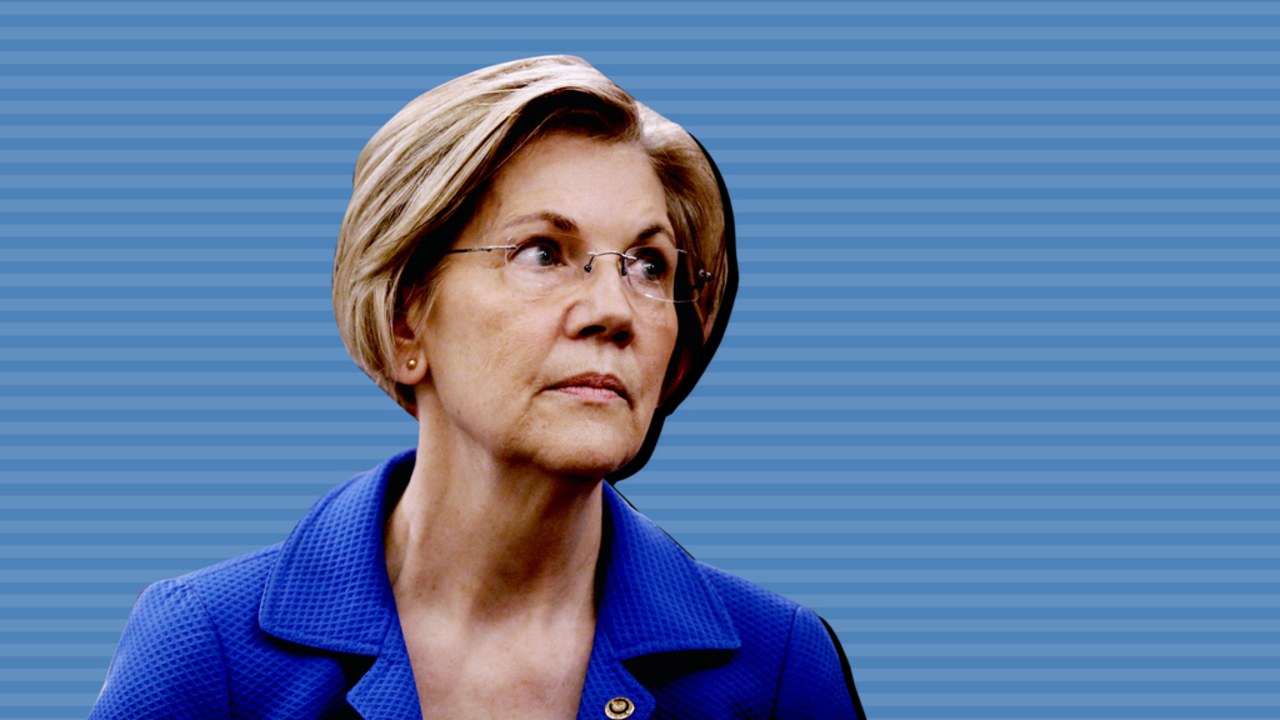
The sensation is so novel, I didn’t recognize it at first. But it began with that old nemesis of mine—polls. After months of ambitious plans, hundreds of photo lines, and countless appearances, Elizabeth Warren surged ahead in them. At last a woman whose hard work seemed to be noted and appreciated. The first primaries are still months from now, but for a lot of women, Warren presents a chance to finish what Geraldine Ferraro, Margaret Chase Smith, and Shirley Chisholm started. For a lot of us, the fact that we’ve never had a female president still stings. Even prim-and-proper England had Margaret Thatcher. (Yes, I know.)

Sure, Clinton had her problems, but those issues paled compared to her opponent’s deficiencies; the harassment and assault allegations, his numerous bankruptcies, the grift. I’m not here to re-litigate 2016, but the stark fact was that one candidate was qualified and the other didn’t know who Fredrick Douglass was.

Then, the Ukraine news broke. As reports trickled out, we learned that Trump has been pushing Ukraine for dirt on Joe Biden. Even moderate Democrats backed impeachment proceedings. And in the time since, I have sometimes wondered: What would happen if we didn’t all get dark and doubtful again? What would happen if we decided to hold the Trump administration accountable for once? Stranger things have happened.

There’s an expression in politics that “Republicans fall in line and Democrats fall in love.” As much as I hate the idea, I think there’s some truth to it. But I’ve held off on following my heart. I’ve been burned, and it’s so much easier to just assume the worst than hope for the best. At least that’s how I felt until now.

For the next few weeks, the Trump administration will have to answer for their actions. And in the meantime, women continue to run rings around him. Harris is on the cover of TIME Magazine! Warren, with her focus on childcare and student debt, makes me feel warm inside! I can’t help it. I feel…almost optimistic.

This election will take place 13 or so months and several million news alerts from now. And I am not blind to the realities of our current moment. Abortion is on the chopping block. Immigrants rights’ have been trampled. Our president just asked China to interfere in our elections from the White House lawn. I’m not delusional, but I am hopeful. Because for the first time in a long time, some determined part of me feels like we’re at the beginning of something.

Molly Jong-Fast is the author of three novels. Follow her on Twitter @mollyjongfast.


Source link

Categories
Health

Elizabeth Warren Responds to Abortion Restrictions With Comprehensive Plan to Protect Choice


In the past few weeks Republicans have passed some of the most extreme bans on abortion since Roe v. Wade became the law of the land in 1973. In Alabama, governor Kay Ivey signed a law that would ban abortion from the moment of conception and onward. In Georgia, a woman could be punished for a self-induced abortion with life in prison as soon as a fetal heartbeat is detectable, at around six weeks. For now, abortion is still legal (albeit sometimes hard to access) in all 50 states. But women’s lives are under threat, and presidential candidates need to have a plan to protect them.

On Friday, Senator Elizabeth Warren spoke out about these abortion restrictions—and demanded that Congress pass federal laws to protect women’s reproductive rights. In a post published on Medium, the presidential candidate explained the federal laws she would like to see enacted if challenges from states like Alabama, Georgia, or Ohio were to overturn Roe v. Wade in the Supreme Court, so a woman’s right to an abortion would still be protected.

“Court challenges will continue. And the next President can begin to undo some of the damage by appointing neutral and fair judges who actually respect the law and cases like Roe instead of right-wing ideologues bent on rolling back constitutional rights,” Warren wrote. “But separate from these judicial fights, Congress has a role to play as well.”

Warren went on to outline a plan to create federal laws that parallel the rights enshrined in Roe v. Wade. “These rights would have at least two key components. First, they must prohibit states from interfering in the ability of a health care provider to provide medical care, including abortion services. Second, they must prohibit states from interfering in the ability of a patient to access medical care, including abortion services, from a provider that offers them,” Warren wrote.

The senator then detailed proposed laws that would preemptively stop state’s efforts from blocking access to reproductive health care. “States have passed countless Targeted Regulations on Abortion Providers (TRAP) laws, which are designed to functionally limit and eliminate women’s access to abortion care while not technically contravening Roe. Geographical, physical, and procedural restrictions and requirements. Restrictions on medication abortion. These kinds of restrictions are medically-unnecessary and exist for only one purpose: to functionally eliminate the ability of women to access abortion services. A bill already proposed in Congress, The Women’s Health Protection Act, would provide the mechanism to block these kinds of schemes concocted to deny women access to care. Congress should pass it,” Warren added.

Warren also proposed repealing the Hyde Amendment, which blocks abortion coverage for women under programs like Medicaid and Veterans Affairs. “All women—no matter where they live, where they’re from, how much money they make, or the color of their skin—are entitled to access the high-quality, evidence-based reproductive health care that is envisioned by Roe. Making that a reality starts with repealing the Hyde Amendment, Warren wrote. “Congress should also expand culturally- and linguistically-appropriate services and information and include immigrant women in conversations about coverage and access. Congress must also pass the EACH Woman Act, which would also prohibit abortion restrictions in private insurance. And we should ensure that all future health coverage—including Medicare for All—includes contraception and abortion coverage.”

Warren made clear this is just the beginning of her plans to help protect women’s reproductive rights. “Securing a federal right to Roe and ensuring that reproductive health care is available to every woman in America is just the beginning. We must undo the current Administration’s efforts to undermine women’s access to reproductive health care – including ending Trump’s gag rule and fully support Title X family planning funding. We must crack down on violence at abortion clinics and ensure that women are not discriminated against at work or anywhere else for the choices they made about their bodies,” she wrote.

With this plan, Warren joins Senator Kirsten Gillibrand as one of the few presidential candidates to share a comprehensive strategy for protecting the right to an abortion. Voters, it seems, are on their side. A 2018 Wall Street Journal/NBC poll found that over 70 percent of American voters believe that Roe should not be overturned, and even a majority of Republicans think the law should stand.


Source link

Categories
Health

Elizabeth Warren on 7 Key Issues


On New Years’ Eve 2018, Senator Elizabeth Warren (D-Mass.) became the first major candidate to enter the race for the 2020 Democratic presidential nomination. With her announcement, Warren kicked off a landslide of women pursuing the top office in the country—with senators Kamala Harris (D-Calif.) and Kirsten Gillibrand (D-N.Y.) following close behind.

Before Warren, 69, entered politics, she was a law professor at Harvard. As one of the nation’s top experts in bankruptcy law, she was tapped to head up the congressional panel that oversaw the $700 billion Trouble Asset Relief Program (TARP), which bailed out the banks in the aftermath of the financial crisis. Around the same time she proposed the Consumer Financial Protection Bureau in a paper that attracted the attention of President Obama. The CFPB, which launched in 2010 with Warren at the helm, works to protect consumers in the financial sector.

When she was elected to the U.S. Senate in 2012, she became the first woman ever to serve from her state and in her time there she’s made economic reform one of her most important causes. It’s also at the heart of her presidential campaign. “My daddy had a heart attack and couldn’t work. My mom found a minimum wage job at Sears, and that job saved our house and our family,” Warren explained in her campaign announcement. “Working families today face a lot tougher path than my family did, and families of color face a path that’s steeper and rockier, a path made even harder by the impact of generations of discrimination. I spent my career getting to the bottom of why America’s promise works for some families but others who work just as hard slip through the cracks into disaster. What I found is terrifying. These aren’t cracks families are falling into—they’re traps. America’s middle class is under attack.”

Warren’s outspokenness has also made her a particular target for Donald Trump. Trump, who loves nothing more than to give his critics nicknames, bestowed the moniker “Pocahontas” on Warren. The taunt (itself a racial slur) refers to Warren’s self-proclaimed Native American heritage. Trump then challenged her to take a DNA test to prove it, which she did. In October 2018, she revealed the results, which did suggest some Native American roots, but the move attracted further attacks from Trump and also offended the Cherokee nation, who released a statement that said, “A DNA test is useless to determine tribal citizenship. Current DNA tests do not even distinguish whether a person’s ancestors were indigenous to North or South America. Sovereign tribal nations set their own legal requirements for citizenship, and while DNA tests can be used to determine lineage, such as paternity to an individual, it is not evidence for tribal affiliation. Using a DNA test to lay claim to any connection to the Cherokee Nation or any tribal nation, even vaguely, is inappropriate and wrong.”

She has since apologized to members of the Cherokee Nation. “Senator Warren has reached out to us and has apologized to the tribe,” Cherokee spokesperson Julie Hubbard said in a statement. “We are encouraged by this dialogue and understanding that being a Cherokee Nation tribal citizen is rooted in centuries of culture and laws not through DNA tests. We are encouraged by her action and hope that the slurs and mockery of tribal citizens and Indian history and heritage will now come to an end.”

Warren is perhaps best known to American women for the phrase, “Nevertheless, she persisted.” Senator Mitch McConnell first used it to describe Warren’s testimony against then-Senator Jeff Sessions’ (R-Ala.) nomination to Attorney General. Warren then reclaimed the words and turned them into a call for women’s rights and recognition.

Here, we break down seven of the issues Warren will fight for in her bid to become the Democratic nominee for president.


Source link

Categories
Health

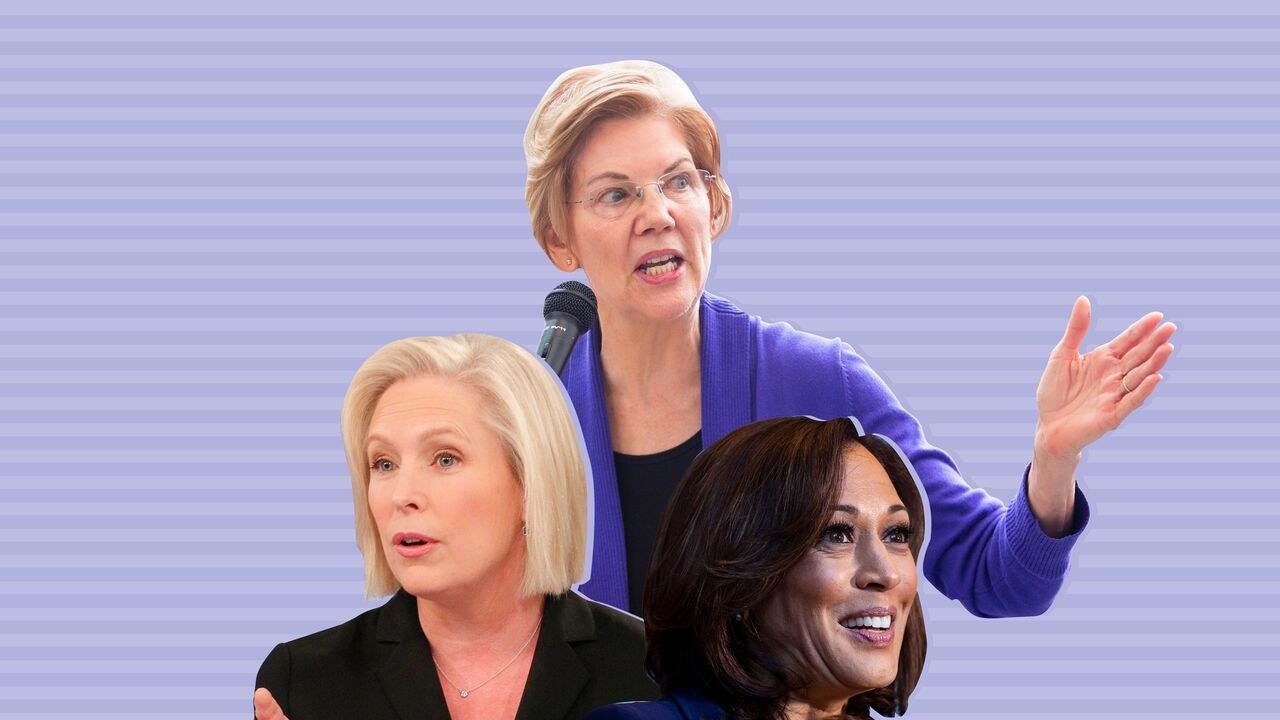
With Kamala Harris, Elizabeth Warren, and Kirsten Gillibrand in the Race, Watching Women Run for President Has Become Our New Normal


Earlier this week Kamala Harris entered the 2020 presidential race. Her announcement was the expected conclusion to the will-she-won’t-she conversation that has surrounded her since she was elected to the Senate in 2016, announced her well-timed memoir in 2018, and raised millions to support progressive candidates in the midterm elections in November. As was true for Elizabeth Warren and Kirsten Gillibrand, who also formalized their candidacies in recent weeks, the fact that Harris has decided to join this raucous, crowded campaign season had started to feel inevitable. Of course she would run.

Kamala Harris is qualified, popular, and charismatic. Sure she has her flaws, but she polls well. Her sharp critiques of the Trump administration have raised her national profile. Even her facial expressions have gone viral.

Warren had a similar reception. When she announced in late December, news outlets blared that she’d done what we all knew she would and made it “official.” The noted wonk was a committed populist before some Bernie Bros were born. She’s an ardent progressive, a vanquisher of corporate influence! Of course she would run.

Gillibrand, too: She launched her own initiative to inspire women to run for office in 2012 called “Off the Sidelines.” She’s been a vocal advocate for survivors of sexual assault and pushed lawmakers to pass bills on the issue months before the Me Too movement exploded. It was a no-brainer. If not her, then who? Of course, of course, of course she would run.

With Warren, Gillibrand, and now Harris in the contest, the top three frontrunner candidates in the Democratic race for president are women. Count Tulsi Gabbard, and just under 50 percent of all the candidates who’ve jumped in so far are female. (As for their male counterparts—who can even name them?) Read this sentence twice. Read it six times. Shout it from an open window. The women are in.

For more than two centuries, men have occupied the Oval Office. In that time we’ve seen one woman sit atop either of the two main parties’ tickets and just a handful of women run for president at all. Harris nodded at one example when she made her announcement 47 years to the week after Shirley Chisholm became the first black woman ever to seek the position.

After Hillary Clinton’s loss and the historic midterms, the presidential race, too, should feel like a revolution. Instead what’s remarkable is how the 2020 battle feels so obvious. Routine. Sublime, spectacular, triumphant—but also, normal. When I saw that Harris had announced, as predicted, on live television I didn’t drop a coffee mug or break a plate or scream. I smiled for a second and then went back to breakfast. It was just another 8:00 A.M. in America, with just one more ambitious woman in contention for the White House. As we were! This is our life now.

What’s remarkable is how the 2020 battle feels so obvious. Routine. Sublime, spectacular, triumphant—but also, normal.

“This field of wildly qualified, incredibly impressive women is making the most consequential political race of our lifetime look and feel more like the reality we all aspire to—basic equality—and that is such a positive thing for the American public to be witnessing,” writes Ilyse Hogue, president of NARAL Pro-Choice America, in an email to Glamour. Despite eons of entrenched sexism, four women have decided to throw their hats into what will be a wild, intense race. At least one other woman seems poised to join them. For those of us who refused to take part in the class POTUS unit in third grade because no woman had ever served, the future looks bright.

It was just a few months ago that pundits wanted to know whether the millions of women who’d marched in 2017 would vote, let alone win. It was two dozen or so months before that some worried Clinton’s defeat in 2016 would put a generation of women off elected office. It turns out women do vote and women can win. Who else but us delivered the most diverse class of lawmakers ever to take their seats in the House of Representatives, with 102 women elected to the chamber (and three dozen brand new members)? More than 20 were first-time women candidates, a record.


Source link

Categories
Health

Senator Elizabeth Warren Announces Her 2020 Presidential Run


Democrat Elizabeth Warren just made a big first step toward formally announcing her candidacy for President of the United States in 2020. The U.S. senator from Massachusetts filed papers on Monday (December 31) to form an exploratory presidential committee, the first of the rumored Democratic candidates to do so.

This move allows her to legally ramp up fundraising efforts and begin staffing up in key states (Iowa, New Hampshire)—it’s essentially one step short of her literally saying “I’m running,” but the groundwork is in place. Along with the legal filing, Warren also released a new video that is one part biography and one part a focus on one of Warren’s tentpole messages of leveling the economic playing field for Americans.

The video begins with a bit of information about Warren’s working class upbringing in Oklahoma and how she rose from that to become a teacher, a Harvard law professor, and now a senator. From there, she begins discussing the policy issues that will likely make it into her campaign platform—starting with the nation’s shrinking middle class.

“America’s middle class is under attack,” she says. “How did we get here? Billionaires and big corporations decided they wanted more of the pie. And they enlisted politicians to cut them a bigger slice.” Warren’s video highlights her work in Washington to fight for the middle class, including the formation of the Consumer Financial Protection Bureau.

Warren also changed the handle on her campaign Twitter account—different than her official account as Senator, which remains intact—to read simply @ewarren, rather than @elizabethforma, as it read during the 2018 midterms. The updated bio on the account labels it the “official account: 2020 Exploratory Committee.”

It’s no great surprise that Warren is one step closer to entering what could become a crowded field of Democrats vying to win the nomination and defeat Donald Trump. “After November 6 [the midterm elections], I will take a hard look at running for President,” she said back in September.

Warren has long been an outspoken critic of Donald Trump and his administration, who have never shied away from attacking her. She has also been a target of Senate Majority Leader Mitch McConnell, who famously said of the Senator after a heated debate on the floor: “She was warned. She was given an explanation. Nevertheless, she persisted.”

Related Stories:

The Official White House Twitter Account Just Went After Two Women Senators

Here Are the Senate Women at the Center of the Brett Kavanaugh Debate

Elizabeth Warren Shares Her Own #MeToo Story: ‘What Had I Done to Bring This On?’


Source link

Categories
Health

Elizabeth Warren Says She's Taking a 'Hard Look' at Running for President in 2020


Massachusetts Sen. Elizabeth Warren had a little surprise for the audience at a town hall meeting in her state on Saturday: She made her first public announcement that she was considering running.

“After November 6, I will take a hard look at running for president,” Warren, a Democrat, told the crowd, according to CBS.

Previously, Warren’s denied reports that she was thinking about making a bid for the executive office. According to CBS, in August, she said that she’d be looking to keep her Senate seat during this year’s upcoming midterm elections rather than run for president.

She, along with former Vice President Joe Biden and Vermont Sen. and 2016 candidate Bernie Sanders, are thought to be the Democratic frontrunners for the 2020 race. Trump has infamously referred to her repeatedly as “Pocahontas” during his term, in the same way he refers to his election rival, Hillary Clinton, as “Crooked Hillary.”

During the town hall, she also referenced the Kavanaugh hearings—particularly the way Dr. Christine Blasey Ford had been treated since she came forward with allegations of rape against the potential Supreme Court Justice.

“Today I am angry, and I own it,” she said.

She also expressed her anger in an interview with Glamour on Thursday as Blasey Ford gave her testimony against Kavanaugh.

“The fact that Republicans want to go forward treating this woman and other women who have come forward as if their claims don’t matter is an insult to every single woman in this country,” she said. “It is fundamentally wrong.”

Related Stories:

Elizabeth Warren Has a Powerful Message for Sexual Assault Survivors Watching the Kavanaugh Hearing

Senator Elizabeth Warren: Attacks on Birth Control Access Are Attacks on Women’s Economic Freedom

Senator Elizabeth Warren Shared Her Own ‘Me Too’ Story


Source link