Categories
Health

Serena Williams Is Speaking Out About Financial Abuse During Domestic Violence Awareness Month


Perhaps you’ve heard that one in four women will experience domestic violence in her lifetime. It’s a staggering statistic. Here’s the part you probably don’t know: 99% of those cases will involve some form of financial abuse.

Serena Williams wants to do something about that. In honor of Domestic Violence Awareness Month, Williams has partnered for the third time with the Allstate Foundation’s Purple Purse initiative to raise awareness around the rampant problem of financial abuse in relationships. “She is the embodiment of women’s empowerment,” Allstate Foundation senior program officer Ellen Lisak says. “We’ve been so grateful she has brought her influential voice and platform to our program to help elevate a national conversation around these issues that are so unknown to so many people.”

“When I signed up three years, I was really shocked by the statistics,” Williams told Glamour. “It’s basically every single case [of domestic violence]. When you think about that way, it’s like how did I not know about it? What can I do to bring my voice to it and talk about it?”

“I hope that people can learn the common signs of financial abuse and that if people are victims they know that there are resources like PurplePurse.com out there to help,” she continues. “I want people to know about the horrors of financial abuse.” Through her partnership with Allstate and Purple Purse, she’s had the opportunity to talk with survivors, something that has been very meaningful to her. “I feel really lucky to be among such powerful women,” she says. “It’s important for me to use my voice to support them and help tell their stories. Together, we can help other women.”

[embedded content]

“Victims of domestic violence are often asked, ‘Why don’t you just leave?’ and what we found is that financial abuse is one of the reasons. We found that domestic violence happens to one in four women, regardless of race or socioeconomic status and 99% of those cases also involve financial abuse,” Lisak tells Glamour. “It’s is one of the main reasons that victims remain in or return to an abusive relationship.”

“It can take on many forms, depending on the situation, but some examples include when an abuser prevents a victim from working, or they really limit their access to money or credit cards, or they even intentionally ruin their credit,” she continues. “If you have bad credit you can’t get an apartment. If you’re not working, you’re not bringing in income and you’re kind of stuck in this vicious cycle.”


Source link

Categories
Health

Lady Gaga Is Finally Speaking Out About That Oscars Performance With Bradley Cooper


You know an Oscars performance for Best Song is note-worthy when we’re all still talking about it many days later. But, just in case you missed it, Lady Gaga and Bradley Cooper gave an intimate performance of their hit song “Shallow” from A Star Is Born, and the Internet collectively lost its mind with rampant speculation about whether the two were more than just friends and co-stars. It was an incredible live moment filled with chemistry, yes, but the response was more than a little problematic.

Now, Lady Gaga is finally speaking out about the rumors of their supposed affair during an appearance on Jimmy Kimmel Live!.

“Social media, quite frankly, is the toilet of the Internet,” she told Jimmy Kimmel of the commentary, while offering up an eye roll to end all eye rolls. “And what it has done to pop culture is just, like, abysmal.” So far, we’re detecting no lies here.

Handout

“Yes, people saw love and guess what? That’s what we wanted you to see,” Gaga continued. She added that while she’s not usually one to relinquish control of her live performance vibe, she let Cooper direct the entire thing, down to the lighting. “[Shallow] is a love song, A Star Is Born is a love story,” she explained. “It was so important to both of us that we were connected the entire time…. When you’re singing love songs, that’s what you want people to feel.”

Gaga noted that she’s been doing lovey duets with her “arms wrapped around Tony Bennett” for years and hasn’t been confronted with the same rumors and innuendo. So, yeah, we can all just shut down those Gaga/Cooper ‘ship rumors right now. Mostly, she’s just really proud of her friend for getting up there and singing live in front of the world.

“My favorite thing about the whole experience was I was just so excited for people, not only at home, but our peers in the room to see him sing live and know that he sang every take live in this movie every single time,” she said. “I mean, all of it. There’s no lip synching.” And because Gaga is the best sport, she even reenacted that now-iconic head tilt with Kimmel.

Watch the full interview below.

[embedded content]

Now that Lady Gaga has finally set the record straight, it’s probably time for us all to let the old ways (of conjuring a relationship between two costars) die.


Source link

Categories
Health

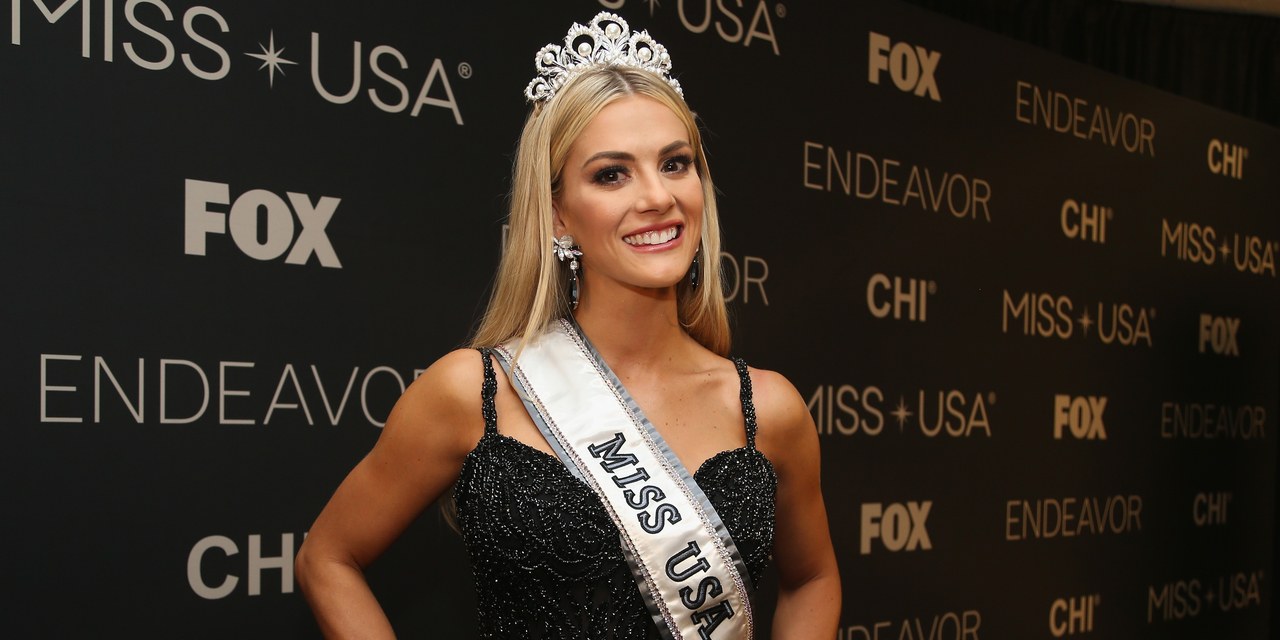
Miss USA Slammed for Mocking Asian Miss Universe Contestants For Not Speaking English


Miss USA, Sarah Rose Summers, is facing controversy after a video surfaced of her making what seems to be negative comments about two non-English speaking contestants taking part in the 2018 Miss Universe pageant being held in Thailand.

According to People, the video (which you can watch here) was part of an Instagram Live posted by Miss Colombia Valeria Morales, who appears alongside Summers and Miss Australia Francesca Hung.

“She’s so cute and she pretends to know so much English,” Summers said of Miss Vietnam H’Hen Nie. “And then you ask her a question after having a whole conversation with her and she goes — .” She then makes a blank, smiling expression that seems to mock H’Hen before laughing and adding, “She’s adorable.” Morales asks her to repeat the look and Summers obliges.

The trio then discusses Miss Cambodia Rern Sinat, who had earlier posted an Instagram photo of herself with Summers. “Miss Cambodia is here and doesn’t speak any English,” Summers said. “And not a single person here speaks her language. Can you imagine? Francesca said that it would be very isolating and I think yes, and just confusing all the time.”

Summers has since apologized in an Instagram post, although—as you’ll see below—social media reactions are coming fast and furious.

Obviously, social media users wasted no time in letting their criticisms of Summers’ comments be known.

“Do you speak any language except English?” one Instagram commenter asked. “Absolutely enraged that Miss USA, Miss Australia and Miss Colombia made fun of Miss Cambodia and Miss Vietnam for not being able to speak fluent English, TRASH,” wrote another user on Twitter. Another said, “@MissUniverse i wonder if you will still allow Miss USA, Columbia, and Australia to continue in the competition after their racist/ bigoted remarks toward fellow contestant Miss Cambodia. I can’t believe these ladies will be repersenting [sic] their countries!”

The Miss Universe pageant will air live Dec. 16 at 7 p.m. ET on FOX.


Source link

Categories
Health

Trump Calls Elizabeth Warren 'Pocahontas' Again While Speaking to Native Americans


On Monday, while speaking to Native American war veterans and the press, President Donald Trump took time out to once again openly mock Massachusetts Democratic Senator Elizabeth Warren and called her by a name he’s used before: Pocahontas.

“You were here long before any of us were here,” Trump said while speaking directly to the group of Native American code talkers. “Although we have a representative in Congress who they say was here a long time ago. They call her Pocahontas.” He added, “But you know what, I like you, because you are special.”

According to USA Today, the comment was met simply with awkward silence from the president’s guests. And that silence was especially deafening in a video showing the exact moment Trump made his insensitive remark.

Though the president didn’t specifically name Warren in his statement it was clear who he was speaking about as he’s long called the esteemed senator by this name in reference to her claim that she has Native American ancestors.

In response, Warren told MSNBC that the president’s comments were both out of place and “unfortunate.”

“This was supposed to be an event to honor heroes, people who put it all on the line for our country, and people, who because of their incredible work, saved the lives of countless Americans and our allies,” Warren said. “It is deeply unfortunate that the president of the united states cannot even make it through a ceremony honoring these heroes without having to throw out a racial slur.”

To add insult to injury Trump also made the remarks while standing in front of a painting of President Andrew Jackson, who was the president that signed the Indian Removal Act in 1830, which forced Native Americans from their lands. As Mic further explained, the act ultimately led to thousands of Native American deaths, an event which is now widely referred to as the Trail of Tears.

In a statement following the event Press Secretary Sarah Huckabee Sanders said she does not believe calling Warren Pocahontas is racially insensitive. Instead, she said, “I think what most people find offensive is Senator Warren lying about her heritage to advance her career.”

Related Content:
Elizabeth Warren Shares Her Own #MeToo Story: ‘What Had I Done to Bring This On?’
Senator Elizabeth Warren: Attacks on Birth Control Access Are Attacks on Women’s Economic Freedom
Elizabeth Warren Once Struggled to Find Child Care—and Every Working Mother Can Relate


Source link

Categories
Health

State Senator Gayle Goldin: Why Speaking Out Against Sexual Harassment Backfires for Women in Office


When #MeToo started filling up my Facebook feed, I wavered about whether to join in. As a Rhode Island state senator, I know I’m already judged by the clothes I wear, the tone of my voice, and if I’m likable enough. I’m expected to be a fierce champion and a team player—all while wearing lipstick and nice shoes.

I don’t have a salacious story of sexual harassment at the State House. What I have is the story of sexism that permeates our daily lives.

Politics is all about relationships. We aren’t just making friends at work; we’re building rapport to advance our legislative agenda. When you call out your colleagues for everyday sexism, you earn a reputation of being “difficult,” “sensitive,” or worse. Too many men who are not perpetrating this behavior often turn their colleagues’ comments into jokes or simply shrug. This creates an internal struggle for elected women: Is it more important to gain your colleague’s support on legislation than to remind him that he should stop calling you “one of the girls” when he’s talking to you?

Sadly, for many women in office, if you start speaking truth to power, power talks back—by killing your bills, changing your committee assignments, and smearing your reputation.

In politics, your reputation and your word are everything. When women legislators raise the issue of sexism among our male colleagues, the price we pay is often subtle. We aren’t included in impromptu social gatherings. We’re passed over as bill sponsors. No one asks our opinions on legislation. Suddenly, a colleague who pledged to support your bill changes his mind. We risk losing our colleagues’ trust for not keeping their secrets.

When women in office start speaking truth to power, power talks back—by killing your bills, changing your committee assignments, and smearing your reputation.

And when sexism crosses the line and becomes sexual harassment, an elected woman must face a harsh truth: questions about the credibility of her story often lead to questions about her credibility as a legislator. If our male colleagues decide it just isn’t worth the “hassle” of working with us, it can be fairly easy to work around us. After all, three-quarters of all state legislators are men.

While we may be effective fighters for our policy ideas, confronting everyday sexism is exhausting.

When I was first elected to the state Senate, a strong woman leader who had been in office for decades gave me a piece of advice that made my stomach turn: Smile more, it’ll make some of the men more comfortable. A male colleague once stopped me in the middle of a policy discussion with another senator to tell me I looked pregnant. Work-related events involve alcohol served by women in low-cut shirts and plenty of “locker room talk.” Colleagues interrupt me and tell me to stop asking questions, to calm down, to be helpful. I am often one of the only women in the room.

PHOTO: Courtesy of Gayle Goldin

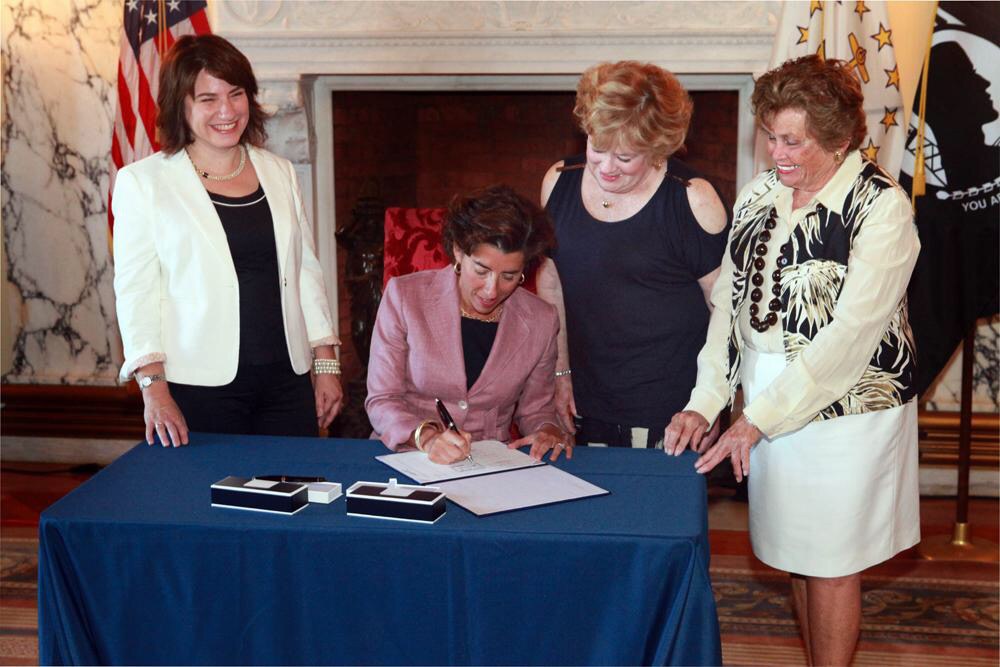
Senator Gayle Goldin (left) attends a bill signing with Rhode Island Governor Gina Raimondo (center).

Individually, these incidents can seem small. Collectively, they are a relentless reminder of how hard women must work to earn basic respect. Sexual harassment and sexism are used to make the victim feel powerless. We learn to quickly calculate the repercussions for speaking up and keep our opinions quiet. We serve as advocates, but we spend too much energy and time trying to placate our colleagues and please the public.

The trouble is, the impacts of this behavior reach beyond me and my female colleagues. When men are not challenged to address their biases, the laws they make reflect them. Equal pay becomes “too difficult for business.” Child care subsidies are “not a priority.” Paid family leave is a “nice perk, but not a necessity.” Threats to reproductive rights are “not worth worrying about.” Removing guns from domestic abusers takes a back seat to guarding a man’s Second Amendment rights.

As more stories of sexual harassment come pouring out, I have thought about why, as women, we pick our battles. I’m finally realizing we shouldn’t have to. We should be able to do our jobs without getting comments about our looks, without having to avoid going into certain rooms alone, and without having to fear for our safety. And we shouldn’t have to mollify our male colleagues and tolerate their bad behavior in order to get a shot at passing legislation that improves the well-being and health of half the population.

We shouldn’t have to tolerate our male colleagues’ bad behavior in order to get a shot at passing legislation that benefits women—like equal pay or paid family leave.

We are elected to be powerful voices, but the reality is we must work twice as hard to be heard. It’s time that women in politics—regardless of party—stand together. I was lucky enough to be elected at a time when the Rhode Island Senate had its first woman president, who hired smart, talented women for our staff and moved women senators into committee chair positions. But the toxic environment won’t change until women are equally represented in every level of government. We need to recruit more women, elect more women, and pledge to support women in office. We need to hold men accountable for their actions and stop electing sexist men, and sexual predators, to office. We need our male colleagues to feel uncomfortable and insulted when a woman is discriminated against or harassed—and to stand up with her.

Mostly, we need to change not only our laws but also how we make them. Yes, we need laws that help create gender equity. But we also need to pay attention to how those laws are made — and to who is in the room. Let’s see state houses where at least half of all committee chairs are women, where every committee has equal representation. Let’s have transparent bill hearing processes and open access to information. Let’s have a government that represents all of us, equally, so that the next generation of women leaders has no reason to join me in saying #MeToo.

Now in her third term in office, Senator Gayle Goldin represents District 3 in Rhode Island. She is one of only 254 Democrat women state senators in the country. She also serves as the family and medical leave insurance campaign advisor to Family Values@Work, a national network of 25 state coalitions leading the movement for better family-friendly workplace policies.


Source link
Categories
Health

4 Ways to Get Back in the Saddle, Sexually Speaking


Dear Emily,

Long story short, I’m soon to be divorced, and a big portion of why we’re getting divorced has to do with not having sex for close to three years. I’ve recently started seeing someone and am feeling like a virgin all over again! What advice do you have for someone who’s ready to get back in the saddle, but is so nervous about not being good in bed?

Please help,
Lindsey, 28, North Carolina

Dear Lindsey,

Welcome back to your sexuality! I’m sure you have stellar bedroom skills, and you have nothing to worry about, but after taking a three-year hiatus, it’s completely understandable why you’d be a little nervous. Now that you’re ready to hop back to it, it’s time to refocus that anxious energy onto your own pleasure, exploration, and play.

So, here are a few tips to get you started:

Seduce, masturbate, repeat. Figuring out what you like and where you like to be touched will make it easier to communicate that to your partner. And, the more you know what you like, the more confident you’ll be in the bedroom. So, have fun exploring yourself! Wear something that makes you feel sexy. Run a bath, explore new toys, feathers—anything to pamper yourself.

Get some inspiration. Whether it’s porn, erotic short stories, or Beauty and the Beast (no judgements), a good visual is always helpful. Look at it as research—trial and error if you will. Observe what gets you turned on and go with it!

Remember, sex is about both of you. Yes, you want to please your partner, but make sure that you’re thinking of yourself, too. Most men say that there’s nothing hotter than a woman who is authentically enjoying herself. They’ll also take it as a direct reflection of their own skill in bed, and a little stroke of the ego never hurt anyone. So although you want to “wow” your partner, let them “wow” you back.

Take a trip down memory lane. Think back to the times you had sex that you really enjoyed. What did you like about it? What would you have done differently? What have you always wanted to try? Drawing from past sexual experiences and using them for your second coming will help you remember what you love about sex.

You might be in your head right now, but sex is like riding a bike: a few practice rides on your own, and you’ll be back in the saddle in no time.

XX
Emily

More from Glamour:

Road-Testing Teledildonics, the Future of Long-Distance Sex

How Two Long Distance Relationships Made Me Broke

This Touch-Transmitting Bracelet May Make Your LDR More Intimate


Source link