Categories
Health

There's a Message in Brett Kavanaugh's 30 Mentions of Beer at the Senate Hearing


During a grueling eight-hour hearing in front of the Senate Judiciary Committee on Thursday, Dr. Christine Blasey Ford detailed the alleged assault she faced at the hands of Brett Kavanaugh while both were in high school, opened up about moving out of her home because of the death threats she’s received, and even managed to explain how the hippocampus works.

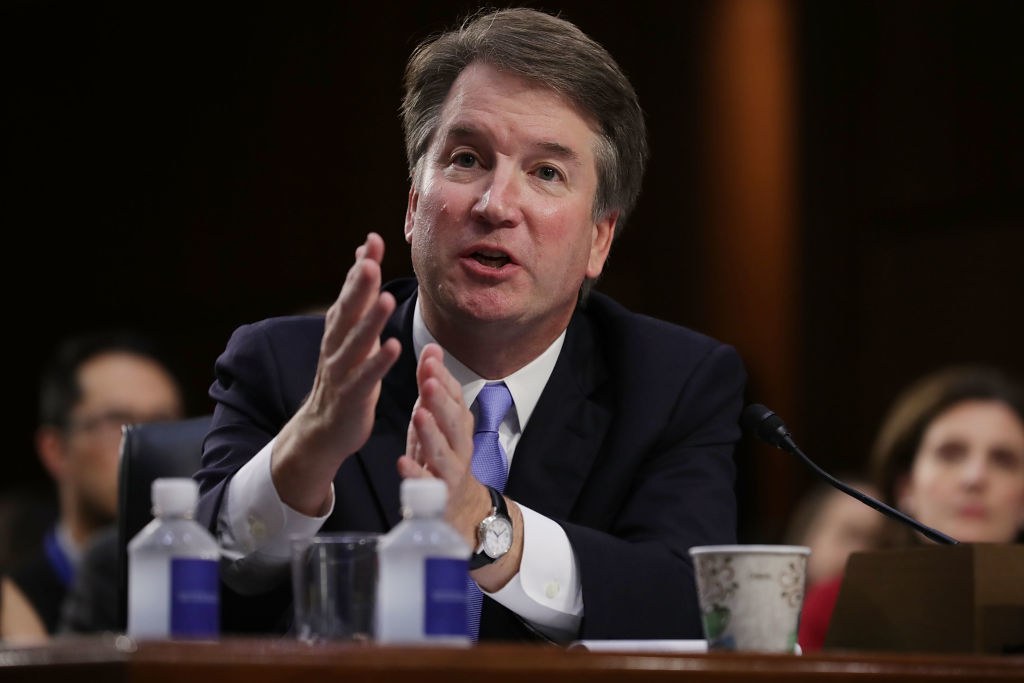
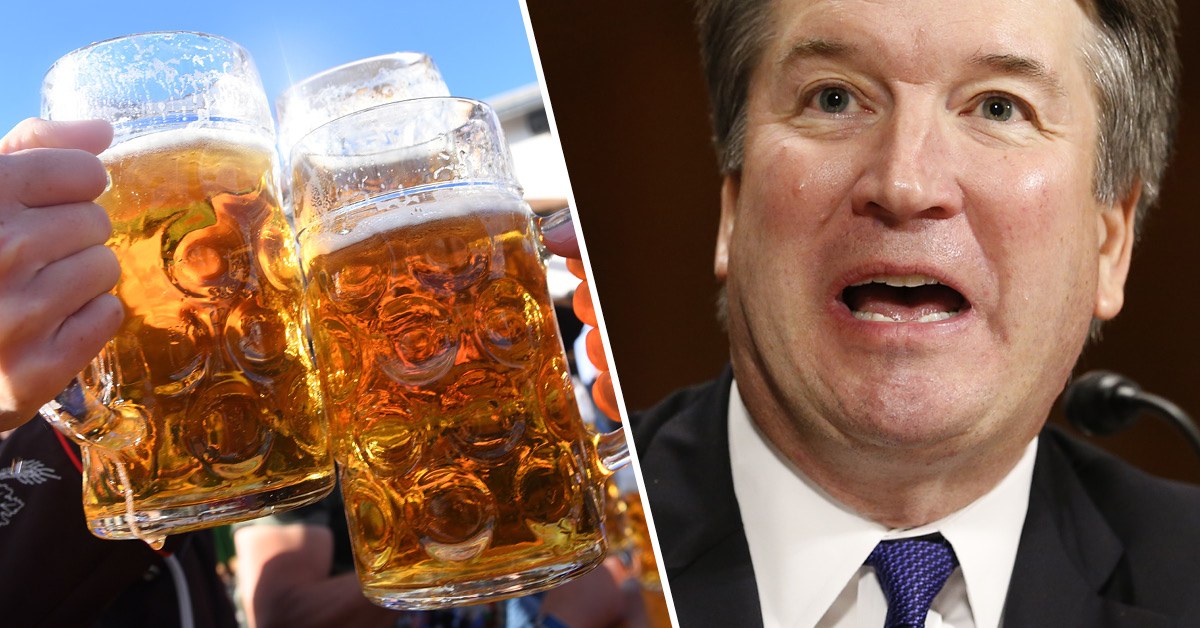
And what did Supreme Court judge nominee Brett Kavanaugh discuss when he finally took the stand? Beer, mostly. How he really, really, really likes it. So much so that he brought it up over 30 times during his testimony, according to a Buzzfeed count.

When we were first introduced to Kavanaugh, he was touted as a boy scout of sorts. A family man. A Christian. A virgin. But the version we met on Thursday was a beer-drinking, fun-loving guy, as Kavanaugh described his younger self (around the time of Ford‘s reported attack) as just a typical boy who loved basketball, getting good grades, and going to the occasional party.

As he put it, “I drank beer with my friends. Almost everyone did.”

“Sometimes I had too many beers. Sometimes others did. I liked beer. I still like beer. But I did not drink beer to the point of blacking out, and I never sexually assaulted anyone.” Meaning, he was just a boy being a boy, doing boyish things—nothing more.

Driving home his preference for ales over harder liquors could have been a device to downplay the allegations that Kavanaugh was known as a heavy drinker. A college friend of his, Liz Swisher, recently told The Washington Post that “Brett was a sloppy drunk, and I know because I drank with him. I watched him drink more than a lot of people. He’d end up slurring his words, stumbling. There’s no medical way I can say that he was blacked out.… But it’s not credible for him to say that he has had no memory lapses in the nights that he drank to excess.”

How could the allegations against him be viable, if he was only casually drinking brewskis with his bros? is what Kavanaugh could have been hoping we’d wonder. Well, if he spends anywhere close to the amount of time he talks about beer actually drinking the damn beverage, let’s just say gravity wouldn’t be his friend.

But regardless of Kavanaugh’s motives—there’s one thing we can actually all agree on: Kavanaugh f*cking loves beer!

So in this spirit of bipartisan agreement, we’ve compiled a list—without comment—of the top 10 times Kavanaugh spoke about his beloved drink of choice while testifying:

1. “Listen to the people I’ve grown up with, and worked with, and played with, and coached with, and dated, and taught, and gone to games with, and had beers with.”

2. “When I was in town, I spent much of my time working, working out, lifting weights, playing basketball, or hanging out and having some beers with friends as we talked about life, and football, and school and girls.”

3. “The calendars show a few weekday gatherings at friends’ houses after a workout or just to meet up and have some beers.”

4. “I drank beer with my friends.”

5. “Sometimes I had too many beers.”

6. “I liked beer.”

7. “I still like beer.”

8. “Anyone who’s known me like a lot of these people behind me, have known me my whole life, know, you know, I got a weak stomach, whether it’s with beer or with spicy food or anything.”

9. “I like beer. I don’t know if you do. Do you like beer, Senator, or not? What do you like to drink?”

10. “No…. We drank beer and…so did, I think, the vast majority of people our age at the time. In any event, we drank beer and still do, so, whatever, yeah,”

Ah. Boys will be boys. Enjoy your beers this weekend.

Related Stories:

A Tale of Two Cities: A Snapshot of Washington D.C. on the Historic Kavanaugh-Ford Hearing Day

During Christine Blasey Ford’s Testimony, Contempt for Women Was on Full Display


Source link

Categories
Health

A Tale of Two Cities: A Snapshot of Washington D.C. On the Historic Kavanaugh-Ford Hearing Day


One city, two worlds. Or maybe even three.

In the nation’s rain-slicked capital, fans and foes of Brett Kavanaugh spent much of Thursday fixated on the Senate confirmation hearings that could help tip his chances of becoming the next Supreme Court justice.

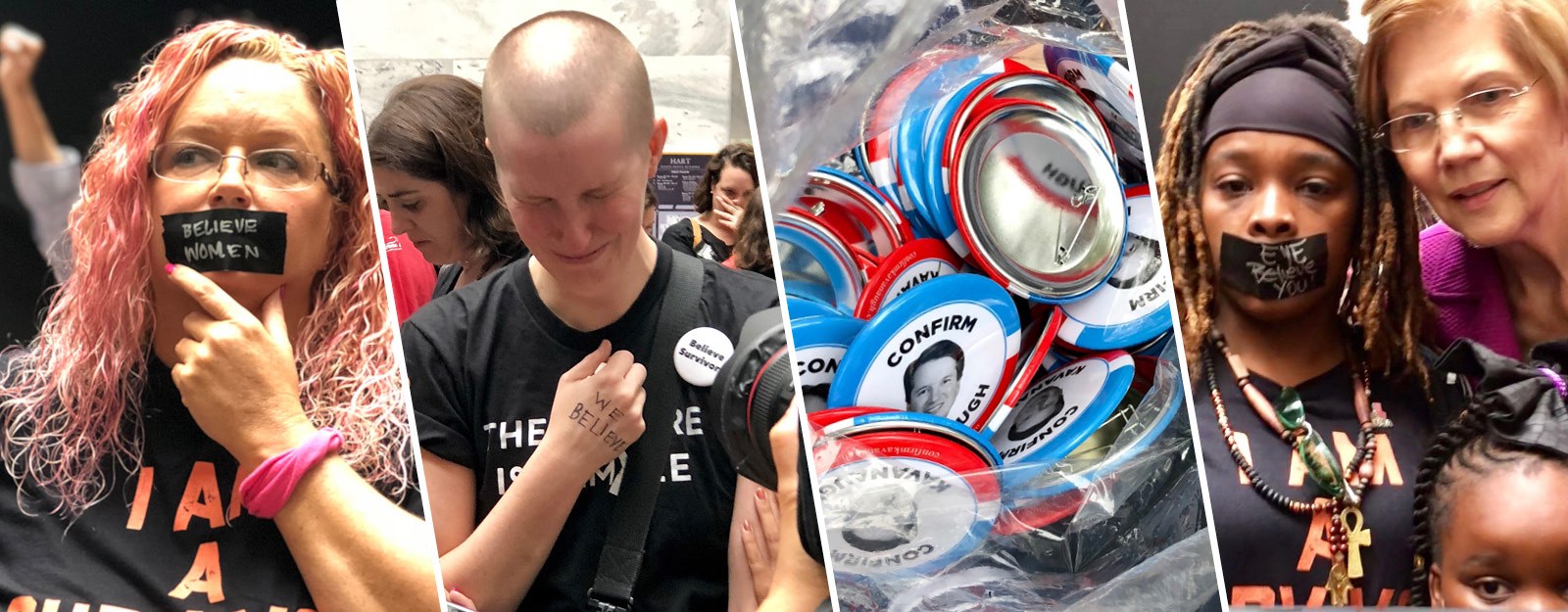
Women in parts of D.C. proudly wore red, white, and blue “Confirm Kavanaugh” pins with the judge’s smiling face at the center.

But blocks away, women in black—and sometimes in tears—empathized and identified with Christine Blasey Ford, the college professor who came to Washington to testify that a blind-drunk Kavanaugh sexually assaulted her at a high-school party in the 80’s.

And elsewhere, America’s center of power kept doing business, perhaps too busy, uninterested, or preoccupied to drop everything and glue themselves to the television screens beaming out a stunning moment in U.S. history. It’s a divide, not necessarily caused by apathy, but in many cases because the financial pressures and time demands on working people are too urgent.

Glamour traveled to Washington to get a panoramic view of those parallel worlds and match them up with the clock—which is rushing toward a decision on Kavanaugh’s fate:

8:54 A.M. – Washington artist Susan Prolman stands outside Union Station with a poster she designed that depicts a statue of Lady Justice holding her sword and scales, framed by the words, “Grab Her By the Pussy.” Prolman says she made the sign because she is “opposed to Donald Trump, our sexual ‘predator-in-chief’s’ nomination of Brett Kavanaugh to the Supreme Court.”

9:11 A.M. – A pro-Kavanaugh rally organized by groups including Independent Women’s Forum and Concerned Women for America is well underway at a grassy park near the Russell Senate Office Building.

A mixed-gender crowd listens to speakers, gathering in support of the judge while sporting “I Stand With Brett” t-shirts and waving printed “Confirm Kavanaugh” signs. One bright yellow handmade placard demands: “Stop the Con Game.”

Patrice Onwuka, 36, a senior policy analyst for IWF, tells Glamour her group takes “allegations of sexual assault very seriously. No woman should be raped or molested or touched against her will. She should be able to get justice. She should be able to get closure. She should even be able to get heard.” However, Onwuka continues, “we also take seriously the idea of due process, and the bedrock principle in our criminal justice system of the presumption of innocence.”

10:05 A.M. – C-SPAN begins broadcasting from the Senate Judiciary Committee proceedings.

10:32 A.M. – Ford is prepared to begin her testimony.

“I am here because I believe it is my civic duty to tell you what happened to me while Brett Kavanaugh and I were in high school” – Dr. Ford

10:41 A.M. – Sen. Elizabeth Warren (D-Mass.) visits Ford supporters—many publicly identifying themselves as sexual assault survivors—who are gathered in the atrium of the Hart Senate Office Building. She pauses to tell Glamour that she considers the Republican rushing of the confirmation process to be disrespectful to assault survivors.

11:15 A.M. – Joy Gerhard, 34, is comforted by women around her as she weeps while Ford’s testimony continues. Inked on her left arm is a series of dates: Those numbers, she says, represent each time she was subjected to sexual violence, starting in childhood. Gerhard tells Glamour she felt compelled to come to D.C. from her home in Seattle, as painful as the hearings are for her.

“Ever since Anita Hill testified, we know what it looks like when a woman goes in front of this committee,” Gerhard says, brushing away tears. “The fact that Dr. Ford knew what she was getting herself into, and chose to do it anyway, I… She must have a spine of steel or something, but it didn’t seem right for her to do this by herself.”

11:20 A.M. – Ford testifies during questioning that the most vivid memory she has of her alleged assault is the laughter from Brett Kavanaugh and his friend Mark Judge.

“What is the strongest memory you have, the strongest memory of the incident…something you cannot forget?” asked Senator Patrick Leahy (D–Vt.). “Indelible in the hippocampus is the laughter, the uproarious laughter between the two. And their having fun at my expense,” she replied.

12:43 P.M. – The city’s Metrobus system notifies commuters that “Due to downed wires at River Rd & Burdette Rd, buses may experience delays in both directions.”

2:00 P.M.A major conference at American University features a workshop that encourages attendees to “share experiences from leading civil society organizations using different procedures to challenge unmerited patents and/or applications as a key strategy for improving access to affordable medicines.”

2:15 P.M. – Before her testimony ends, Ford says that if she knew when Mark Judge worked at a Potomac, Md. Safeway grocery store, she could pin down the date of her alleged assault. (Ford says she ran into Judge some weeks after that 1982 assault).

“It would be helpful … to figure out when he worked there, if people are wanting more details from me about when the attack occurred. If we could find out when he worked there, then I could provide a more detailed timeline as to when the attack occurred.”

2:28 P.M. – At Cafe Bliss on 2nd Street NE, business is quiet. The orderboard announces the day’s special as a bagel, croissant, or multigrain bread with a choice of toppings for $3.99. There’s no television on; a small speaker is booming Franz Schubert’s Arpeggione Sonata, D. 821.

3:18 P.M. – Kavanaugh’s testimony has begun; he maintains his denial of the sexual assault allegations lodged against him.

“This whole two-week effort has been a calculated and orchestrated political hit, fueled with apparent pent-up anger about President Trump and the 2016 election,” he said. “Fear that has been unfairly stoked about my judicial record, revenge on behalf of the Clintons and millions of dollars in money from outside left-wing opposition groups.”

“I’ve never sexually assaulted anyone. Not in high school, not in college, not ever. Sexual assault is horrific.”

4:00 P.M. – Not far from the Hart building, The Veterans of Foreign Wars holds a ceremony to receive one of the U.S. flags that draped the cases of the remains of American servicemembers repatriated from North Korea.

4:50 P.M. – Kavanaugh questioning continues. In a display of anger, Sen. Lindsey Graham (R-S.C.), accuses committee Dems of trying to “destroy this guy’s life.”

“What you want to do is destroy this guy’s life, hold this seat open and hope you win in 2020.”

“This is not a job interview. This is hell.” – Sen. Graham

He continued: “Boy, you all want power, God, I hope you never get it,” he said. “I hope the American people can see through this sham. That you knew about it and you held it.”

The White house rushes to defend Graham.

5:38 P.M. – Rush hour traffic builds up and the District is growing darker and rainier. At a pub not far from where Kavanaugh continues to face the senators, patrons’ attention is split between reading the subtitles on coverage of the hearings, checking out the latest on Tiger Woods on ESPN, a live sports radio broadcast at the back of the room, and happy-hour chatter.

6:23 P.M. – Rachel Kinsey, 36, took a break from the accounting firm she runs and came to Washington from Woodstock, Georgia to support Ford: “She was calm, cool, and collected [and] answered questions directly,” Kinsey says of Ford, while not giving Kavanaugh that positive a review.

6:48 P.M. – The Senate Judiciary Committee hearing adjourns. Their vote on recommending Kavanaugh to the full Senate for confirmation is scheduled for Friday.


Celeste Katz is senior politics reporter for Glamour. Send news tips, questions, and comments to celeste_katz@condenast.com.


Source link

Categories
Health

Elizabeth Warren Has a Powerful Message for Sexual Assault Survivors Watching the Kavanaugh Hearing


Senator Elizabeth Warren (D—Mass.) on Thursday spoke with Glamour exclusively about the historic Senate hearing involving Supreme Court nominee Brett Kavanaugh and the Republican push to move forward with his confirmation, calling it “fundamentally wrong.”

At the Hart Senate Office building, where Kavanaugh’s accuser Christine Blasey Ford was also testifying, Warren stood alongside Ford’s supporters, telling Glamour that she was, “here with people of conscience who believe that when a woman comes forward that she has a right to be listened to, and there needs to be a full investigation.”

“The fact that Republicans want to go forward treating this woman and other women who have come forward as if their claims don’t matter is an insult to every single woman in this country,” she said. “It is fundamentally wrong.”

Ford appeared in front of the Senate Judiciary Committee on Thursday morning to give her testimony of an event that she says occurred more than 30 years ago, when Kavanaugh allegedly pinned her to a bed, attempted to take her clothes off and covered her mouth with his hand as she screamed.

“I believed he was going to rape me. It was hard for me to breathe and I believed that Brett was going to accidentally kill me,” she told the committee.

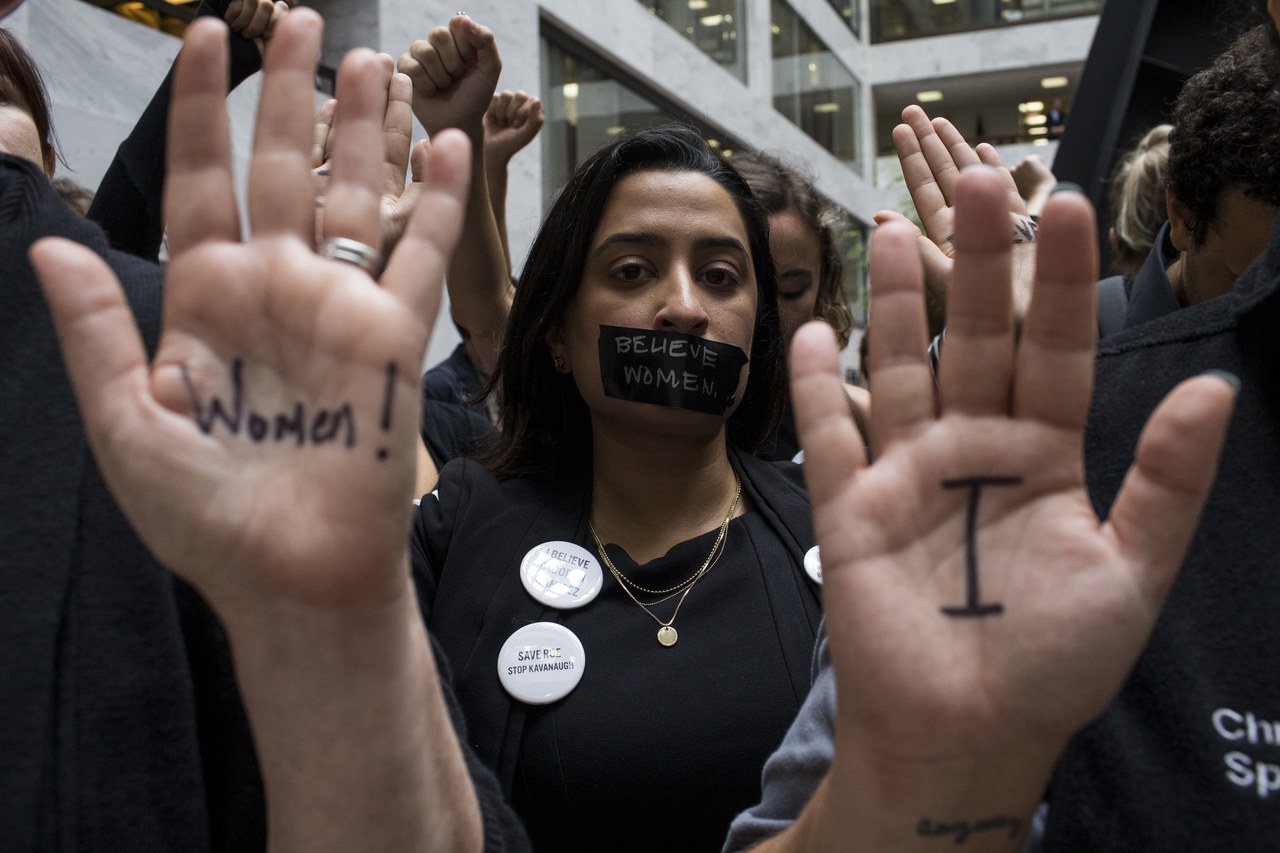
As she spoke, people supportive of Ford gathered outside in the atrium of the Hart Senate Office building. Many listened to the simulcast of the professor’s testimony on their cell phones, at times looking anguished or openly crying. Some silently held their fists in the air; others wore strips of tape over their mouths.

PHOTO: Zach Gibson

When asked if she believed that Kavanaugh would still be confirmed despite multiple women accusing him of sexual assault, Warren said, “I don’t know. I truly don’t know. But I do know that people across this country are paying attention, and that this is not alright.”

She also went on to criticize her Republican colleagues, saying, “this is a moral question.”

“The fact that [Republicans] want to ram this through and not have an investigation, that [Senator] Mitch McConnell goes in front of his big donors and says I’m going to ram this thing through, it’s not right. That treats every woman with disrespect. It treats everyone who has been a victim of sexual assault with disrespect. It treats human beings as if their claims are meaningless and that powerful men can do whatever they want to do. And it’s just not right.”

You can watch the Christine Blasey Ford’s testimony in front of the Senate Judiciary Committee, here.


Source link

Categories
Health

Brett Kavanaugh Called Birth Control "Abortion-Inducing Drugs" At Supreme Court Confirmation Hearing


On the third day of confirmation hearings for Supreme Court nominee Brett Kavanaugh, Democratic senators continued their probe to get the conservative judge’s stance on women’s reproductive rights—and a clue in one of his answers may say it all.

In an exchange with Senator Ted Cruz (D-Tex.), Kavanaugh referred to birth control as “abortion-inducing drugs,” a term many women’s rights advocates say is dog-whistle politics and a clear nod to pro-lifers who oppose abortion.

Kavanaugh’s calculated answer came when Cruz asked the judge about his dissent in the case Priests for Life v. the U.S. Department of Health and Human Services, which involved an Affordable Care Act mandate that required employers to cover contraception for workers. Kavanaugh explained why he ultimately sided with the plaintiffs, who are an anti-abortion Catholic group.

“The question was first, was this a substantial burden on their religious exercise? And it seemed to me, quite clearly, it was,” Kavanaugh said. “They said filling out the form would make them complicit in the abortion-inducing drugs that they were, as a religious matter, objected to.”

For pro-choice supporters, the phrase “abortion-inducing drugs” is an alarm bell. Organizations such as the Center for Reproductive Rights pointed out that the verbiage is what many anti-abortion groups use to talk about contraception. “Saying ‘abortion-inducing drugs’ to describe contraception is straight out of the anti-choice, anti-science phrase book used to restrict women’s access to essential health care,” the Center for Reproductive Rights wrote on Twitter.

The wording is also just plain wrong. Contraception, which includes birth control and Plan B, does not cause abortions, despite the assertion of some organizations. Using contraceptive methods like birth control and IUDs can prevent fertilization from occurring, but it does not end existing pregnancies. But despite the facts, the concepts are often conflated among anti-abortion groups. Senator Elizabeth Warren (D-Mass) reminded the public of the misconception by tweeting, “Newsflash, Brett Kavanaugh: Contraception is NOT abortion. Anyone who says so is peddling extremist ideology – not science –and has no business sitting on the Supreme Court.”

Kavanaugh’s stance on reproductive rights has been questioned by many pro-choice supporters since President Donald Trump announced his nomination. Although Kavanaugh has stated he will abide by precedent set in Roe v. Wade, his record suggests anti-choice leanings. In addition to his defense in Priests for Life v. the U.S. Department of Health and Human Services, Kavanaugh also dissented in Garza v. Hargan and argued that an undocumented minor in U.S. detention could not receive an abortion. More evidence mounted late Wednesday, when leaked emails showed that while serving as a lawyer in the Bush administration, Kavanaugh had offered advice about changing a description that said Roe v. Wade was “the settled law of the land.”

On Thursday, Kavanaugh was also grilled by Senator Kamala Harris (D–Calif.), who asked him about the reproductive freedom of men compared to women. Kavanaugh stumbled while answering some of the questions—marking just another example of why Kavanaugh may be a threat to Roe v. Wade and other important principles of women’s rights.

MORE: Watch Kamala Harris Expertly Question Supreme Court Nominee Brett Kavanaugh on Reproductive Rights


Source link

Categories
Health

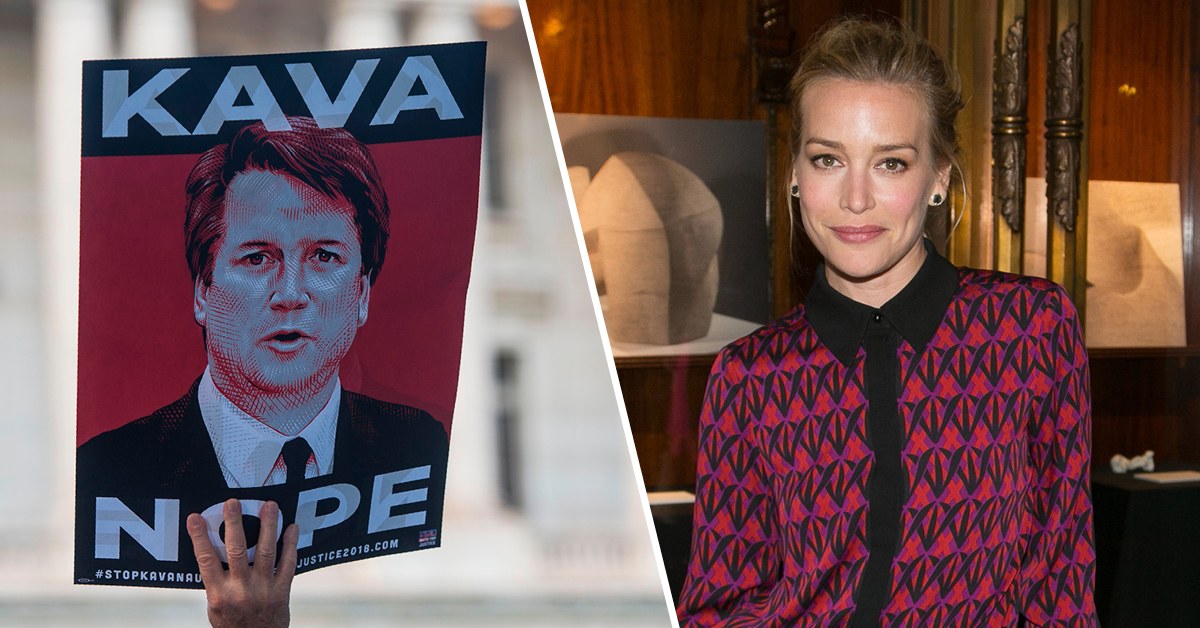
Piper Perabo: 'It Was a Privilege' to Get Arrested for Protesting Brett Kavanaugh's SCOTUS Hearing


Piper Perabo spent years portraying a CIA operative on Covert Affairs—but says this week was the first time she got busted in real life.

The actress, also known for her roles in Coyote Ugly and The Prestige, was among protesters who got hauled out of Supreme Court nominee Brett Kavanaugh’s volatile Senate confirmation hearing on Tuesday. And she’s damn proud of it, she tells Glamour.

“I felt like this was an opportunity for me to do something and stand up for all the women who have to be at work [or] take their kid to school [or] look after their elderly parents,” she says by phone, after she paid a fine to be released. “It was a privilege to get arrested [to] speak out against this and to stand up for women’s equal rights.”

President Donald Trump’s pick to replace retired swing Justice Anthony Kennedy has galvanized protesters who say Kavanaugh’s appointment would mean a titanic lurch to the right for the Supreme Court. The conservative jurist could not only roll back the abortion protections of Roe v. Wade, they say, but turn back the clock on health care, labor, and voting rights.

Kavanaugh, in his Tuesday opening statement, told lawmakers, “I don’t decide cases based on personal or policy preferences.” He has also called Roe a matter of “settled law.” That’s scant reassurance to his critics, especially because Trump has vowed to choose pro-life judges.

So, how’d it all go down for Perabo and the other women protesters who took a day off from their responsibilities to protest?

While many watched a livestream of the hearing on televisions and electronic devices, Perabo says she showed up early to get a seat in the Senate Judiciary Committee’s hearing room. At times, she says, the protest scene got a little surreal: “I could see women who were dressed as the handmaids [with] the red cloaks and the white caps,” she recalls, referencing the dystopian Hulu series The Handmaid’s Tale, whose first season was based on the Margaret Atwood novel about women living in subjugation under a patriarchal society.

At the hearing, “We took turns standing up and saying why we were protesting, and then we were arrested,” she says. Perabo’s line: “I said [the president is an] unindicted co-conspirator in a criminal investigation, and I don’t think a president should be able to appoint judges until that’s been resolved.”

Perabo hadn’t even finished her second line before the Capitol Police had her out the door. Officers took her belongings, cuffed her, and put her in a van with other demonstrators. “I wasn’t going to resist arrest. I’d never been arrested before. I was a little nervous,” she confesses.

“They kept bringing down elevators full of women into the basement where the white vans were [to take people] to the police station,” Perabo says. “One of the cops said, ‘Aren’t there any men coming down?’ And one woman said, ‘No! It’s all women, all day.'”

Perabo says she was charged with disorderly conduct and released after paying a $35 fine: “My mom texted me, and she was like, ‘I think people are getting arrested at the hearings. Could you call me and let me know you’re OK?’ and I was like, ‘This is a weird day,” she adds. “I called her right back and [told her], ‘I did get arrested, but everything’s fine.’”

Perabo says she had the chance to fly to D.C. for the protests because she’s between acting jobs and her husband is filming in Utah. For Jennifer Epps-Addison, demonstrating also meant time apart from her spouse—on their anniversary, no less—but much more than that.

“This is really personal for me. Three years ago, my husband was diagnosed with multiple sclerosis. Thank G-d for the Affordable Care Act [and] President Obama’s work,” says Epps-Addison, who’s president of the social justice group Center for Popular Democracy.

The couple had planned to take a trip together to mark their eighth anniversary. Instead, Epps-Addison ended up flying to D.C., disrupting the Kavanaugh hearing and getting “tackled pretty hard by four officers” as she was dragged out along with protesters, including Women’s March leader Linda Sarsour.

“It is life or death,” Epps-Addison, who is convinced if Kavanaugh makes it to the bench, her 40-year-old husband “will not have [the] same rights to the same quality of life that he deserves and that we have,” tells Glamour.

Heidi Sieck, founder of the civic platform #VoteProChoice, also agrees it was “absolutely” worth getting arrested to challenge Kavanaugh in defense of “reproductive freedom,” which she calls “a foundational issue” that affects “women and men and families and transgender folk” and is tied to racial and economic justice.

“There is so much to lose. And listen: I have no illusions that those men in power have every intention of winning,” Sieck told Glamour after the Senate demonstration. “They will not be deviated from their their path. [They] have the majority on their side. They have process on their side. And who are we if we don’t stand up?”

When it comes to Kavanaugh, she says, “it’s so clearly obvious that this man will roll back all of our reproductive rights” based on his past rulings.

“We did what we could to stand up and have our voices heard. I don’t know if they’re listening, but it’s one of those things that has to be done. We cannot just let this go by.”

Protesting and pressuring lawmakers can help, Perabo says, but here’s her advice: If you want real change, vote — and help others get to the polls.

“Even some simple reminder can cause more people to vote,” Perabo says. “Make sure you ask your co-worker if they’re voting, [and ask] your partner. Does an elderly neighbor need a ride? Can you watch your elderly neighbor while their kids go to vote? Let’s make it more of a conversation with our civic participation.”

The Kavanaugh hearings—and possibly the protests—continue Wednesday. Keep up with the latest on the confirmation hearings, here.


Celeste Katz is senior politics reporter for Glamour. Send news tips, questions, and comments to celeste_katz@condenast.com.

MORE: Must-See Protest Photos from Brett Kavanaugh’s Supreme Court Confirmation Hearings


Source link

Categories
Health

5 Things We Learned From Mark Zuckerberg's Facebook Hearing


Over two days Facebook CEO Mark Zuckerberg testified before Congress for hours, facing questions about how and why the data of an estimated 87 million users was shared with Cambridge Analytica, a British political consulting firm with reported ties to the Trump campaign.

Before a panel of 44 senators asked him about Facebook’s privacy policies, Russian interference, and other security issues, Zuckerberg used his opening remarks to issue an apology. “We didn’t take a broad enough view of our responsibility, and that was a big mistake. It was my mistake, and I’m sorry,” he said. “I started Facebook, I run it, and I’m responsible for what happens here.”

Throughout the hearing, Zuckerberg reiterated that Facebook understands its responsibility to consumers. Still, he didn’t give specific details around certain aspects of how the company has handled private user information. Here’s what we did learn. We’ll continue to update this post throughout Zuckerberg’s hearing with Congress today.

Zuckerberg admits Facebook didn’t do enough to protect users after finding out about the Cambridge Analytica breach.

Facebook reportedly discovered in 2015 that user data had been sold to Cambridge Analytica. At the hearing, Florida Senator Bill Nelson asked Zuckerberg why the company didn’t do more back then to inform users of a privacy breach.

“When we heard back from Cambridge Analytica that they had told us that they weren’t using the data and deleted it, we considered it a closed case,” Zuckerberg said. “In retrospect, that was clearly a mistake. We shouldn’t have taken their word for it.” Zuckerberg also said the company didn’t inform the Federal Trade Commission about the incident.

The company still isn’t sure exactly how much personal data has been affected by third-party apps.

Iowa senator Chuck Grassley prodded Zuckerberg about how many users have been affected on the platform. “Do you know of any instances where user data was improperly transferred to a third-party in breach of Facebook’s terms?” he asked. “If so, how many times has that happened, and was Facebook only made aware of that transfer by some third party?”

“We believe that we’re going to be investigating many apps, tens of thousands of apps,” Zuckerberg responded. “And if we find any suspicious activity, we’re going to conduct a full audit of those apps to understand how they’re using their data and if they’re doing anything improper. If we find that they’re doing anything improper, we’ll ban them from Facebook and we will tell everyone affected. As for past activity, I don’t have all the examples of apps that we’ve banned here, but if you would like, I can have my team follow up with you after this.”

A paid version of Facebook is something the company has considered but still isn’t a top priority.

Facebook COO Sheryl Sandberg said in a recent interview that Facebook has thought about turning to paid models so that users could opt out of sharing their information with advertisers. Zuckerberg confirmed that a paid option is on the table, but suggested that his priority is letting users access Facebook for free.

“I think what Sheryl was saying is in order to not run ads at all, we would need some sort of business model,” he said. “To be clear, we don’t offer an option today for people to pay to not show ads. We think offering people an ad-supported service is the most aligned with our mission of trying to connect everyone in the world, because we want to offer a free service that everyone can afford. That’s the only way we can reach billions of people.”

Facebook may or may not be able to track your Web-browsing activity.

Mississippi senator Roger Wicker asked Zuckerberg about rumors that “Facebook can track users’ Internet browsing activity even after that user has logged off the Facebook platform.” He asked Zuckerberg to confirm whether or not those reports are true, and Zuckerberg seemed to punt the question, saying, “Senator, I want to make sure I get this accurate, so it might be better to have my team follow up.”

When Wicker pushed him again, Zuckerberg’s answer was more revealing: “I know that people use cookies on the Internet and that you can probably correlate activity between sessions. We do that for a number of reasons, including security and including measuring ads to make sure that the ad experiences are the most effective, which of course people can opt out of. But I want to make sure that I’m precise….”

Zuckerberg acknowledges that the Facebook user agreement is problematic.

Many senators focused on Facebook’s lengthy user agreement, and Grassley wondered why Facebook doesn’t disclose all the ways it uses and shares data. Zuckerberg countered that putting together a concise agreement has been a challenge.

“One of the things that—that we’ve struggled with over time is to make something that is as simple as possible so people can understand it, as well as giving them controls in line in the product in the context of when they’re trying to actually use them, taking into account that we don’t expect that most people will want to go through and read a full legal document,” he said.

Senator John Neely Kennedy of Louisiana later told Zuckerberg directly, “Here’s what everybody’s been trying to tell you today, and—and I say this gently. Your user agreement sucks.”


Source link