Categories
Health

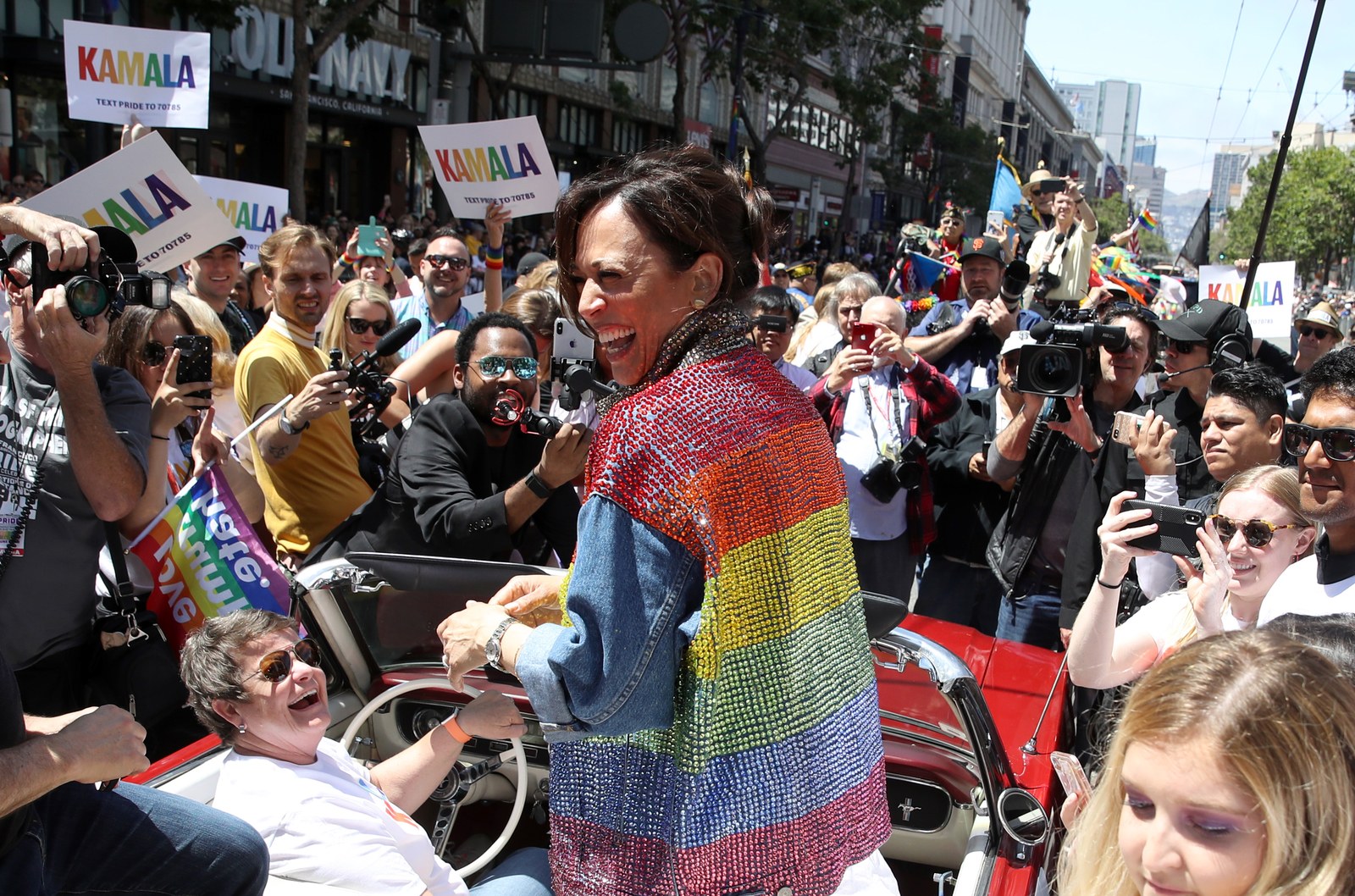
Senator Kamala Harris Wore a Bedazzled Rainbow Jacket to Pride and It Was a *Moment*


Over the weekend cities around the world celebrated World Pride. Plenty of celebrities and politicians showed their support, attending parades and parties across the country. Bay Area native Senator Kamala Harris was in San Francisco—along with California governor Gavin Newsom and Speaker of the House Nancy Pelosi—for the occasion. And her outfit, an oversize denim jacket bedazzled with rainbow rhinestones, has gotten people talking.

Justin Sullivan

The presidential hopeful spoke at SF Pride and rode along the parade route with husband Doug Emhoff, as well as Proposition 8 plaintiffs Kris Perry and Sandy Tier, according to SF Gate. (Harris married Perry and Tier in 2013, when she was attorney general.)

Senator Harris wore a sparkling denim jacket over a black T-shirt—with matching bedazzled text—and white jeans.

Kate Waters, traveling press secretary for the Senator’s presidential campaign, tweeted that it was from Levi’s—fitting, as the company is based in San Francisco.

Reporters on the scene shared their own snapshots of Senator Harris and her jacket from a breakfast held ahead of the parade.

Meena Harris, the Congresswoman’s sister, posted a video of the jacket, complete with a sparkling effect.

Naturally, the statement piece got people talking on social media.

On her campaign website, Senator Harris does have a special Pride collection—though the bedazzled jacket isn’t a part of it. Similarly, Levi’s released a special capsule for Pride Month, with all proceeds going to OutRight Action International, but the Congresswoman’s exact Pride outfit is nowhere to be found. You can, however, buy a special-edition version of the brand’s signature Trucker Jacket with a rainbow collar for $120.98, which will benefit charity. (Glamour has reached out to Levi’s for more information on Senator Harris’s jacket and will update this story when we hear back.)

Meanwhile in New York, another public figure was photographed wearing a glittery Pride-inspired look.


Source link

Categories
Health

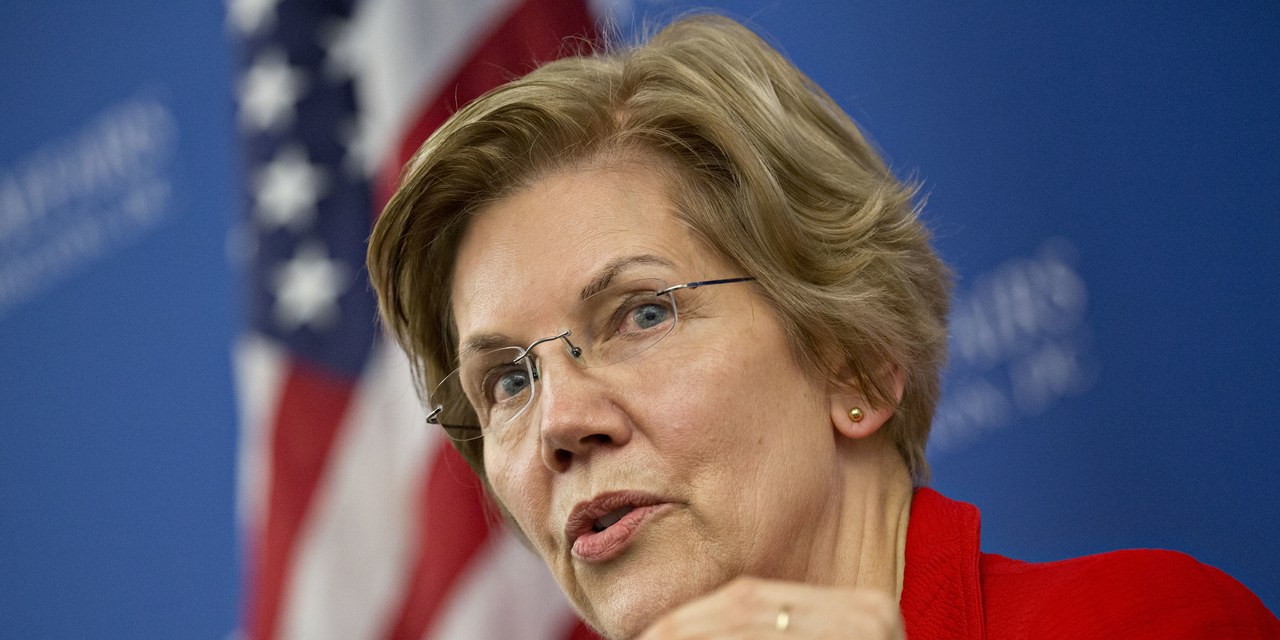
Senator Elizabeth Warren Announces Her 2020 Presidential Run


Democrat Elizabeth Warren just made a big first step toward formally announcing her candidacy for President of the United States in 2020. The U.S. senator from Massachusetts filed papers on Monday (December 31) to form an exploratory presidential committee, the first of the rumored Democratic candidates to do so.

This move allows her to legally ramp up fundraising efforts and begin staffing up in key states (Iowa, New Hampshire)—it’s essentially one step short of her literally saying “I’m running,” but the groundwork is in place. Along with the legal filing, Warren also released a new video that is one part biography and one part a focus on one of Warren’s tentpole messages of leveling the economic playing field for Americans.

The video begins with a bit of information about Warren’s working class upbringing in Oklahoma and how she rose from that to become a teacher, a Harvard law professor, and now a senator. From there, she begins discussing the policy issues that will likely make it into her campaign platform—starting with the nation’s shrinking middle class.

“America’s middle class is under attack,” she says. “How did we get here? Billionaires and big corporations decided they wanted more of the pie. And they enlisted politicians to cut them a bigger slice.” Warren’s video highlights her work in Washington to fight for the middle class, including the formation of the Consumer Financial Protection Bureau.

Warren also changed the handle on her campaign Twitter account—different than her official account as Senator, which remains intact—to read simply @ewarren, rather than @elizabethforma, as it read during the 2018 midterms. The updated bio on the account labels it the “official account: 2020 Exploratory Committee.”

It’s no great surprise that Warren is one step closer to entering what could become a crowded field of Democrats vying to win the nomination and defeat Donald Trump. “After November 6 [the midterm elections], I will take a hard look at running for President,” she said back in September.

Warren has long been an outspoken critic of Donald Trump and his administration, who have never shied away from attacking her. She has also been a target of Senate Majority Leader Mitch McConnell, who famously said of the Senator after a heated debate on the floor: “She was warned. She was given an explanation. Nevertheless, she persisted.”

Related Stories:

The Official White House Twitter Account Just Went After Two Women Senators

Here Are the Senate Women at the Center of the Brett Kavanaugh Debate

Elizabeth Warren Shares Her Own #MeToo Story: ‘What Had I Done to Bring This On?’


Source link

Categories
Health

Kyrsten Sinema Becomes First Female and Openly Bisexual Senator from Arizona


Results are still coming in from last week’s midterm elections and yes, women are continuing to break barriers. While there are still contested races in Georgia and Florida where candidates like Stacey Abrams and Andrew Gillum are awaiting their fates, Monday night brought the good news that the Arizona Senate race finally came to a close when Democrat Kyrsten Sinema was declared the winner over Republican Martha McSally.

Sinema, a former social worker, will be the first woman to represent Arizona and the first openly bisexual person ever elected to the Senate. The race had been too close to call over the past week and early votes and mail-in ballots had to be counted.

“As long as I’ve served Arizona, I’ve worked to help others see our common humanity & find common ground,” Sinema posted on Facebook after her victory. “That’s the same approach I’ll take to representing our great state in the Senate, where I’ll be an independent voice for all Arizonans.”

Her opponent McSally, a former fighter pilot, shared a video on Twitter congratulating Sinema on her win and wishing her success.

“Congrats to @kyrstensinema,” she wrote. “I wish her success. I’m grateful to all those who supported me in this journey. I’m inspired by Arizonans’ spirit and our state’s best days are ahead of us.”

Many feel Sinema’s victory in winning the Senate seat being vacated by Republican Jeff Flake is a sign of rebuke to President Donald Trump’s policies and platform. “Arizona voters rejected Donald Trump and Mike Pence’s politics of bigotry and fear and made history by electing bold pro-equality champion Kyrsten Sinema as the nation’s first openly bisexual U.S. Senator,” said Human Rights Campaign President Chad Griffin in a statement. “For more than a year, HRC has worked to organize 800,000 equality voters across the state and we are proud to have helped Senator-elect Sinema across the finish line in a tight race. We celebrate this incredible moment and look forward to rolling up our sleeves and getting to work with Sinema, and Arizona Congressmembers Tom O’Halleran, Ann Kirkpatrick, Raul Grijalva, Ruben Gallego, and Greg Stanton to move equality forward for all Arizonans.”

Democratic National Committee chair Tom Perez echoed that sentiment: “Congratulations to Kyrsten Sinema and Arizona Democrats for such a stunning victory. Arizonans went to the polls last Tuesday looking for bold new leadership, and that’s exactly what they’re going to get with their first-ever female senator and our nation’s second openly LGBTQ senator,” he said.

“Unlike her predecessor, Senator-elect Sinema is ready to fight on day one for quality health care, a VA system that works the way it should for our veterans, comprehensive immigration reform, good-paying jobs, and an economy that works for all Arizonans. The Democratic National Committee was proud to invest in and partner with the Democratic Party of Arizona to expand their voter outreach and help get voters to the polls.”

Sinema’s win guarantees Democrats 47 seats in the Senate (compared to Republicans’ 51.) Florida and Mississippi are undecided.

MORE: This Is How Women Voted in the Midterms—and What It Means for Election 2020


Source link

Categories
Health

Senator Kamala Harris Introduces Bill To Combat Racial Disparities in Maternal Health Care


The U.S. is one of 13 countries in the world where maternal mortality rates are worse than they were two decades ago. And that alarming statistic hits one group of women the hardest.

For women of color, pregnancy and childbirth are often a matter of life and death. The risk of death from pregnancy-related causes for black women is three to four times higher than for women of other races. It’s something California Senator Kamala Harris has been vocal about in the past. And she’s pushing to make sure this maternal mortality crisis is being recognized and rectified through new legislation, as well.

Harris (along with 13 Democratic colleagues) introduced a bill Wednesday that she hopes will help lessen the discrepancies in treatment. The Maternal Care Access and Reducing Emergencies (CARE) Act would create two grant programs. One will address implicit bias based on stereotypes by supporting special training programs in medical, nursing, and other training schools. The other will incentivize maternal health care providers to offer integrated health care services to pregnant women and new mothers and reduce adverse maternal health outcomes, maternal deaths, and racial health disparities.

“Health equity for Black women can only happen if we recognize and address persistent biases in our health system,” Harris said in a press release.

The maternal health of black women has long been suffered in the dark, but in recent months we’ve heard harrowing stories of pregnancy and childbirth complications from two of the most famous women in the world: Serena Williams and Beyoncé.

Williams has been incredibly open about her emergency C-section, followed by blood clots in her lungs that threatened her life and required further surgery. And the intensely private Beyoncé revealed in Vogue‘s September issue that she had been on bed rest prior to the birth of twins Rumi and Sir due to toxemia (or preeclampsia) which causes swelling and hypertension. She, too, required an emergency C-section as her life, and the lives of her twins, were at risk.

For Harris, the bill is a continuation of her fight to bring black women’s maternal health care front and center. Earlier this year, she introduced a resolution to designate April 11-17 Black Maternal Health Week.

According to the CDC, the cause of an increase of pregnancy-related mortalities in America is unclear. For women of color, who face a myriad of health care disparities from access to racial bias perpetuated by stereotypes, the combination has proved life-threatening. Racism, researchers say, is at the center of this crisis.

“For example, even when we take medical history into account, black women are two to three times more like to die from pregnancy-related complications than white women with the same condition. And while maternal mortality rates are certainly greater for poor women than wealthier women, poverty alone can’t explain these disparities either. An analysis of maternal deaths in New York City found that black women who had at least a college degree still had greater mortality rates than white women who had not graduated high school,” obstetrician and gynecologist Jamila Perritt wrote for Glamour after Williams came forward with her childbirth experience.

“The bottom line is, black women are dying wholly preventable deaths.”

The Los Angeles Times notes that Sen. Harris’ bill could face an “uphill battle” given that Republicans currently control Congress and few bills may pass in an election year. Other sponsors of the bill include U.S. Senators Kirsten Gillibrand (D-NY), Ben Cardin (D-MD), Ron Wyden (D-OR), Richard Blumenthal (D-CT), Bill Nelson (D-FL), Doug Jones (D-AL), Jeff Merkley (D-OR), Tammy Duckworth (D-IL), Tom Carper (D-DE), Sherrod Brown (D-OH). Tammy Baldwin (D-WI), Mazie Hirono (D-HI) and Debbie Stabenow (D-MI).

“This bill is a step towards ensuring that all women have access to culturally competent, holistic care, and to address the implicit biases in our system,” Harris said.

Related Stories:

Serena Williams’ Childbirth Experience Should Be a Wake-up Call About the Medical Treatment New Moms Are Getting—Especially Women of Color

Beyonce’s Historic September Vogue Cover Is Here


Source link

Categories
Health

Tammy Duckworth Is About To Become the First Sitting Senator to Ever Give Birth


On Tuesday, Senator Tammy Duckworth (D-Il) announced she’s expecting her second child, a baby girl, later this year. An important announcement in and of itself, it becomes even more so when you consider that Duckworth will now become the first sitting senator to give birth while in office.

Though really, this is just the sort of thing Duckworth is used to: she gave birth to her first daughter, Abigail, while serving in Congress, which made her just the 10th woman since the country’s founding to do so while in that office.

“[My husband] Bryan and I are thrilled that our family is getting a little bit bigger, and Abigail is ecstatic to welcome her baby sister home this spring,” Duckworth shared with reporters in a statement.

Having children, of course, isn’t the only barrier Duckworth has broken. As USA Today noted, she was also the first disabled female veteran to take a seat in the U.S. House when she won her race in 2016.

In a statement, Duckworth’s office noted how the pregnancy was important for not only Duckworth and her family, but also for the millions of working mothers around the nation, who are often paid less and offered fewer opportunities simply because they chose to also have a baby.

“Though millions of American women have become mothers while continuing their careers, Senator Duckworth is one of only 10 women since our nation’s founding who have given birth while serving in Congress,” the statement read. “Her experiences as a working mother give her an important — and underrepresented —perspective in the halls of Congress, where she has long advocated on behalf of working families.”

Duckworth’s announcement also came with heaping praise from her colleagues as well.

Sen. Dick Durbin from Illinois told the Chicago Sun-Times that he is “proud to have her as my Illinois colleague and prouder still that she will make history by being the first U.S. Senator to have a baby while in office. I couldn’t be happier for her.”

And behind her coworkers, men and women across the nation jumped on social media to congratulate Duckworth on this historic moment, with some even calling for her to run for the presidency in 2020.

And, to add to this extraordinary news, Duckworth wasn’t the only woman in a global leadership role to announce she is expecting a child this year. On Friday, New Zealand’s Prime Minister Jacinda Ardern announced she too is expecting. And when she shared the news she simultaneously shot down any haters who may come her way about being a mom and a politician at the same time.

“I am not the first woman to multitask. I am not the first woman to work and have a baby,” Ardern said. “We are going to make this work, and New Zealand is going to help us raise our first child.”

May we suggest Ruth Bader Ginsburg’s children’s book, I Dissent, as their first new-baby purchases?

Related Content:
Senator Tammy Duckworth, an Iraq War Vet, Slams Trump’s Transgender Ban


Source link

Categories
Health

Senator Jeanne Shaheen: #MeToo Is Not Enough. Survivors Deserve Justice in the Legal System


“Silence Breakers” are celebrated as Time magazine’s 2017 Person of the Year, #MeToo has gone viral, and countless women are courageously sharing their stories. Sexual harassment has come out of the shadows, and Americans have opened a larger conversation about sexual assault. But survivors who seek justice continue to encounter an often hostile legal system that compounds their suffering. Last year, I led the effort in Congress to pass the Sexual Assault Survivors’ Rights Act to empower survivors to be informed and fairly treated throughout the criminal justice process. The rights set forth in this new law apply only in federal cases, but I intended this to be a catalyst to jumpstart efforts by states to improve their own laws. It’s working. A growing number of states are following suit with their own codes of survivors’ rights, and I’m encouraging activists in every state to demand reform.

Two years ago, Amanda Nguyen came to my Senate office to recount her nightmarish experience pursuing justice after being sexually assaulted on her Ivy League campus. Her state gave survivors a 15-year window to pursue criminal charges but routinely discarded rape kits (the DNA evidence gathered from a forensic exam) after six months, with no requirement to inform the survivor. Amanda had to fight repeated battles to prevent her rape kit from being destroyed and persevered through a grueling criminal justice process. She went on to found the advocacy group Rise, which is working worldwide to secure justice for survivors of sexual violence.

Outraged by countless stories like Amanda’s, I introduced the Sexual Assault Survivors’ Rights Act, which President Obama signed into law on October 7, 2016. Since then, there has been a groundswell of nationwide support for the rights set forth in the new law. Using the federal-level code as a template, activists across the United States are working to enact similar survivors’ rights codes or to enhance existing protections.

For survivors of assault in the workplace, they often fear retaliation that could end their careers. But many also fear being traumatized anew by a criminal justice system that often seems to blame the victim.

In recent months, women and men have come forward to report past incidents of sexual harassment and assault, including transgressions by prominent political leaders and powerful Hollywood executives and actors. Dozens of women have accused Miramax co-founder Harvey Weinstein of offenses dating back as far as the 1980s. We now have a better understanding of why so many survivors choose to remain silent for so long. For survivors of assault in the workplace, they often fear retaliation that could hurt or end their careers. But many also fear being traumatized anew by a criminal justice system that often seems to blame the victim or puts unnecessary and arbitrary obstacles in their path.

These are big reasons why sexual assault is among the most under-reported and unpunished crimes nationwide. Using data from the Department of Justice’s National Crime Victimization Survey, RAINN (the Rape, Abuse & Incest National Network, the country’s largest anti-sexual assault organization) found that about two out of three sexual assaults are not reported to police. Nearly four out of five sexual assaults against college-age female students are not reported. Many survivors who initially file charges become frustrated by the legal obstacle course and give up before their cases are resolved. Too often, their cases simply slip through the cracks.

Nationally, survivors’ rights have evolved rapidly in recent years. The federal Crime Victims’ Rights Act of 2004 greatly improved the treatment of all crime victims. It spelled out a list of victims’ rights in the federal criminal code, and states used this as a model for reforming their own codes of victims’ rights. Likewise, the Sexual Assault Survivors’ Rights Act spelled out survivors’ rights in federal cases and jurisdictions and is now serving as a model for reform at the state level.
In December, New Hampshire State Senator Donna Soucy introduced legislation, modeled on the new national law, to codify a list of rights to address unique issues faced by survivors in the Granite State. Legislators in other states are advancing their own bills. But until this process is complete, survivors will continue to face a daunting patchwork of laws from state to state. Without a clear, consistent set of rights articulated in the law, it’s difficult for even the most dedicated law enforcement professionals to ensure that survivors receive justice.

Too often, cases simply slip through the cracks…We need a standardized, transparent process that reassures survivors that they will be supported and protected as they pursue justice.

What’s needed is a standardized, transparent process that reassures survivors that they will be supported and protected as they pursue justice. The Sexual Assault Survivors’ Rights Act establishes fair procedures with regard to rape kits, including the right not to be charged any fees related to the forensic medical examination, the right to have sexual assault evidence preserved for the entire statute of limitations period, the right to be informed of the results of these medical exams, and the right to written notice prior to destruction of a rape kit. These and other rights set forth in the new law are basic and essential protections that all survivors ought to have, regardless of where they live.

I respect the great courage of Amanda and other survivors who choose to come forward. But something is wrong if it takes great courage for a survivor of sexual assault to win simple justice. Bear in mind, too, that violent crimes are committed not only against the victims but also against society. These crimes can instill fear and distrust within an entire community. We all have a profound interest in bringing perpetrators of sexual assault to justice.

I hope that women and men in states across America will join the movement to advance these reforms. Currently, inadequate state laws are frustrating not only to survivors but also to law enforcement officers and prosecutors. These laws and procedures serve only the perpetrators who too often remain at large.
The #MeToo movement has sparked a social revolution. It’s time, now, for a reformed legal process that ends the silence surrounding sexual assault, brings it out of the shadows, and gives survivors a fair shot at justice.


Source link