Categories
Health

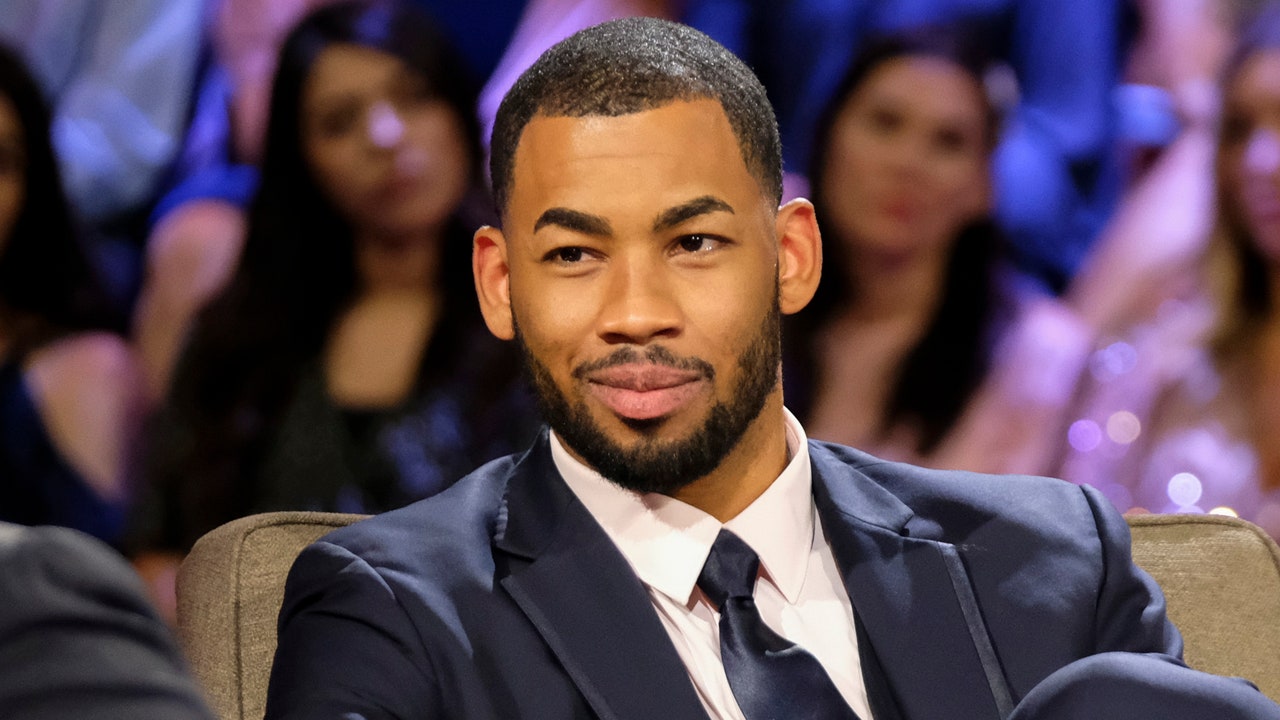
The Bachelorette's Mike Johnson Suggests Producer Julie LaPlaca Would Make A Great ‘Future’ Lead


In July 2019, before he left the show, Lovato had posted footage of Johnson on the Bachelorette to her Instagram Stories, writing in the caption, “Mike I accept your rose.” In the video she could reportedly be heard saying, “Swing me, kiss me! Boo boo.” Just a few days later, he was sent home.

Johnson took to Twitter writing, “Jus saying, my future wife though girl you ready for smiles, adventure, comfort, growth, honesty, laughter, me falling using my inhaler and kissing your stretch marks and imperfections. Where u hiding.”

The two then had some major back-and-forths with likes and comments on Instagram and Twitter before allegedly taking it offline for some IRL dates. In September 2019, Johnson spoke out about the budding relationship. “I’m just getting to know Demi,” he told E! “I think she’s absolutely fantastic, and I don’t want no pressure on her, no pressure on me—we’re just trying to get to know each other. That’s all.” Sadly, by October, the relationship was done.

Back to the present, though—maybe Johnson was flirting with LaPlaca with those comments or maybe this is just his personality. Or, a third option: what if this is all just a setup to have her become the next Bachelorette (after Clare Crawley’s season, of course) and for Johnson to re-join the cast? Either way, we’re in.


Source link

Categories
Health

Tuesday's Primaries Lead to Historic Number of Women Nominees for Governor and Congress


Bust out those record books again: As of this week, more women have now won nominations for the House of Representatives than any other time in U.S. history. There’s also a new record for female governor nominees in a single year, and a progressive lawyer from Michigan could become the first Palestinian-American woman in Congress. (The previous record for women nominated for Congress was 167, according to the Center for American Women and Politics.)

Going into Tuesday’s flurry of midterm primaries, 162 women had already been nominated this election year. By the time the polls closed in Kansas, Michigan, Missouri, Washington, and Ohio, the new record had jumped to 183, according to CAWP data.

On top of that, Democratic primary voters in both Kansas and Michigan chose a woman to go up against male Republicans for November’s governor battle. That brought the national total for the year to 11, CAWP said—beating the previous record of 10 female nominees back in 1994.

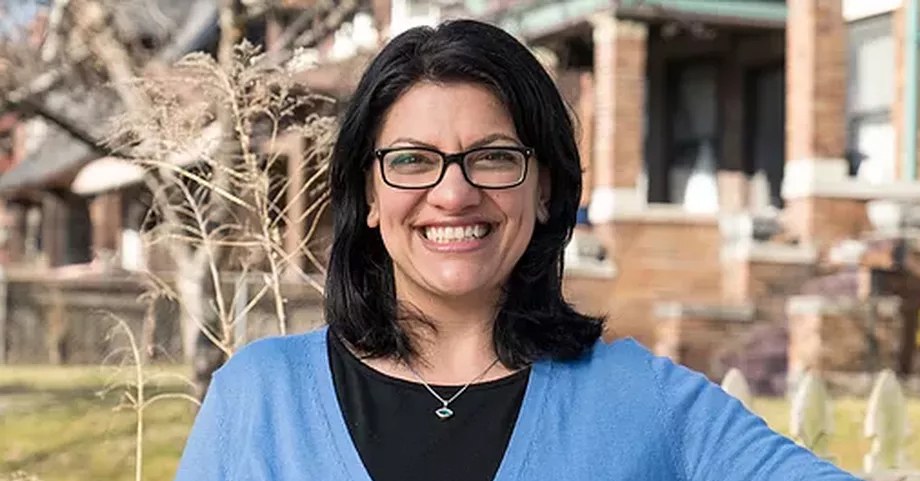
And then there’s the story of Rashida Tlaib, a Palestinian-American lawyer and former state legislator set to take a seat long occupied by Rep. John Conyers of Michigan, who was accused of sexual harassment by a former staffer last November.

Glamour is keeping tabs on women’s progress throughout this wild midterm cycle. Here’s your rundown of Tuesday’s most exciting races:

MICHIGAN

In one of the biggest victories of the night, Tlaib fought her way through a crowded Democratic primary for the nomination to succeed former Rep. Conyers.

Tlaib, who calls herself a “mama working for justice, social worker at heart, Detroiter, Palestinian American, proud Muslima,” will run unopposed in November for the House seat Conyers first won in 1964.

After a career during which he helped impeach Nixon and employed Rosa Parks, the 89-year-old Conyers “stepped down in December citing health reasons,” the Associated Press noted, “though several former female staffers had accused him of sexual harassment.”

It’s then maybe a bit karmic that he’ll likely be succeeded by someone who once got arrested at a 2016 event in Detroit which she’s said featured women bombarding then-candidate for President Donald Trump with questions about harassment. While some criticized her arrest as “unbecoming” of an ex-lawmaker, Tlaib later said in a newspaper op-ed, “I believe it is unbecoming of any American to not stand up to Trump’s hate-filled rhetoric and tactics.”

Tlaib, the eldest of 14 kids, defeated five other candidates in the Detroit-area primary—including a great-nephew of Conyers.

Tuesday’s primary also proved Democrats in the Wolverine State also want their next governor to be a woman lawyer, former prosecutor Gretchen Whitmer.

To win the Democratic nomination and the chance to go up against Republican state Attorney General Bill Schuette, Whitmer had to defeat Dr. Abdul El-Sayed. A onetime head of the Detroit Health Department, El-Sayed campaigned with newly minted Democratic socialist superstar Alexandria Ocasio-Cortez in his bid to become the nation’s first Muslim-American governor.

As a former state Senate minority leader, Whitmer notes on her website, she publicly told fellow lawmakers of “surviving sexual assault to speak out for all the women they silenced by refusing to hold a single public hearing” — a level of candor widely seen among female contenders in the 2018 election cycle.

Schuette has the backing of Trump in an election that’s testing his campaign-season influence—and could cost his Republican Party control of Congress. So does John James, a businessman and Iraq War veteran who’s now the GOP nominee to unseat incumbent Democratic Sen. Debbie Stabenow, the only Michigan woman ever to hold the office.

KANSAS:

Laura Kelly, a longtime state Senator, ran away with the Democratic nomination for governor in a primary against four male candidates. She had the support of Kathleen Sebelius, the only living former female governor of the Sunflower State and the onetime head of the U.S. Health and Human Services Department.

Kansas is still trying to decide on Kelly’s Republican opponent for November.

It wasn’t immediately clear whether Kelly’s Republican opponent would be current Gov. Jim Colyer or Kansas Secretary of State Kris Kobach, a Trump ally known as a hard-liner on immigration and voter fraud. The Colyer-Kobach primary remained too close to call Wednesday.

The morning after the vote, Sharice Davids, a lawyer and former MMA fighter, won in her bid for the Democratic nomination in House District 3, per a Wednesday AP race call. If she goes all the way, notes the Kansas City Star, she’d be “the first LGBT person to represent the state of Kansas” in Congress.

Davids tweeted that she looked forward to working with her fellow Democrats “to change the face” of Kansas politics.

MISSOURI:

Not every woman in potentially history-making contests got to throw a victory party.

Democrat Cori Bush fell Tuesday in her attempt to become the first woman of color to represent her state in Congress. Bush, a nurse and pastor, was another progressive who ran with the backing of Ocasio-Cortez. In the end, her liberal platform and track record, which included activism tied to police-related shootings in Ferguson, wasn’t enough to score a primary win over Democratic Rep. William Lacy Clay, whose family has controlled the Missouri District 1 seat since 1969.

Incumbent Democratic Sen. Claire McCaskill cruised to a primary win, but she could face a tough November challenge from Republican Josh Hawley, the state attorney general—who once reportedly said sex trafficking had become a problem in the U.S. because the “sexual revolution has led to exploitation of women on a scale that we would never have imagined.” McCaskill’s last GOP challenger was then-Rep. Todd Akin, who notoriously blew up that 2012 campaign after claiming women’s bodies somehow prevent pregnancy in cases of “legitimate rape.”

This time, the Republicans may have more fodder to use against McCaskill, who earned herself the nickname “Air Claire” after she copped to using her private plane to fly around Missouri during what was supposed to be a down-home state tour by RV.

WASHINGTON:

According to the Gender Watch 2018 project, the Pacific Northwest brings America its twenty-third woman vs. woman contest for the House: Incumbent Rep. Cathy McMorris Rodgers, head of the House Republican Conference, will go up against Democratic economist Lisa Brown, the former leader of the state Senate.

The state’s race for U.S. Senate will pit incumbent Democrat Maria Cantwell against Republican challenger Susan Hutchison, making it at least the third women-only showdown in the nation for the upper chamber.

Results were still coming in early Wednesday Eastern time, but from federal races on down, there was plenty of chatter about Washington being stirred by a blue wave.

OHIO:

In a historically critical state for presidential elections, the GOP’s Troy Balderson had a slight lead over Democrat Danny O’Connor as of early Wednesday.

Trump made a personal appearance for Balderson in what ended up a cliffhanger of a special election to replace retiring Republican Rep. Pat Tiberi. Plus, both parties dumped money into the race.

In a twist, Twitter dished out gallons of haterade to the Green Party after the vote, with Democrats questioning why liberal Greens couldn’t have joined them to stop Trump’s Ohio pick.

The takeaway: Tuesday’s votes mark a new series of milestones in an election year that’s seen Georgia’s first black woman nominee for governor; Tennessee’s first female nominee for U.S. Senate in 40 years; and New Mexico setting the stage to send a Native American woman to Congress for the first time, among other strides.

It’s not over until November, of course.

To actually become office-holding “firsts,” women candidates have to last. Many face tough races, and their numbers may be whittled down by both general-election losses to men and to other women.

The next big round of multi-state primaries is August 14, with voters hitting the polls in Connecticut, Minnesota, Vermont, and Wisconsin.

Stay tuned!

Celeste Katz is Glamour’s senior politics reporter. Send news tips, questions, and comments to celeste_katz@condenast.com.

Related Stories:

Women in These 8 States Made Huge Strides in Tuesday’s Primary Elections

Everything You Need to Know About Alexandria Ocasio-Cortez, the Millennial Who Beat Top Democrat Joe Crowley


Source link
Categories
Health

Hollywood Wanted a White Actress to Lead 'Crazy Rich Asians'—So Author Kevin Kwan Fought Back


Crazy Rich Asians, which hits theaters this month, features an unprecedented feat in Hollywood: a principal cast entirely of Asian descent. It’s also, simply put, a really delightful romantic comedy. The movie follows a professor (Constance Wu) who travels to her boyfriend’s old stomping grounds in Singapore to attend an opulent wedding. (She’s also there to meet his ridiculously wealthy family, NBD.)

The movie, an adaptation of the 2013 novel written by Kevin Kwan, is being heralded as a major win for representation—but a new Hollywood Reporter feature reveals some behind-the-scenes drama nearly kept it from being a faithful big-screen experience.

[embedded content]

Kevin told the publication he rejected numerous “lucrative” offers and instead optioned his film for a mere $1, passing on the large paycheck to ensure he maintained involvement with creative and development decisions. This was after, Kevin said, one disastrous pitch that strongly recommended he change the Asian heroine to a white woman. (“It’s a pity you don’t have a white character,” he was told by the producer.) “To say, ‘I’m going to do this for a dollar,’ the only other person I know who does that is Stephen King,” Brad Simpson, one of the film’s producers who fought for Kevin’s vision, explained of this significance. “You don’t want to just be another piece of development. With a movie like this, peopleare never going to have to make it, and it could get lost.”

Kevin and the film’s director, Jon M. Chu, also rejected an enticing offer for Crazy Rich Asians to be a Netflix-exclusive film—”dangling complete artistic freedom, a greenlighted trilogy and huge, seven-figure-minimum paydays for each stakeholder”—but the duo ultimately decided the need to bring Asian actors to the bonafide big screen was more of a priority. “Jon and I both felt this sense of purpose,” Kevin explained. “We needed this to be an old-fashioned cinematic experience, not for fans to sit in front of a TV and just press a button.”

The results will soon speak for themselves—Crazy Rich Asians will be released, not on a streaming service, on August 15.


Source link

Categories
Health

Sandra Oh Becomes First Asian Woman to Receive Lead Actress Emmy Nomination for Drama


Sandra Oh has made history as the first Asian woman to be nominated for an Emmy in the Outstanding Lead Actress in a Drama Series category for her role in the BBC America series Killing Eve, Los Angeles Times writer Glenn Whipp reports on Twitter.

She’s among good company, too. The other women nominated in her category include Elisabeth Moss for The Handmaid’s Tale, Keri Russell for The Americans, Evan Rachel Wood for Westworld, Claire Foy for The Crown, and Tatiana Maslany for Orphan Black.

If you haven’t seen the show yet—and if so, what are you waiting for?—Killing Eve revolves around a bored MI5 officer in London (Oh) who wishes she could do more with her career than shuffle around papers and collect data at her desk. Her in-the-field dreams are soon granted when she becomes embroiled in a cat-and-mouse game with a British female assassin, and their mutual obsession with each other propels the eight-episode drama. But if you don’t like murders and violence, also know it’s one of the most fashionable shows of the year, too.

PHOTO: BBC AMERICA/AMC Networks

As Vanity Fair notes, Oh has had success with Emmy nominations in the past, so this isn’t her first rodeo with the honor. You might remember her years-long tenure as Dr. Cristina Yang on Grey’s Anatomy, for which she received five consecutive supporting actress nominations. (She never won, sadly.)

Shockingly, if Oh were to win for Killing Eve at the September ceremony, she would become only the third Asian actor to take home an Emmy, according to Vanity Fair. The two previous winners of Asian descent are Archie Panjabi, who won a supporting actress Emmy in 2010 for The Good Wife, and Riz Ahmed, who won for lead actor in a drama in 2017, for The Night Of.

RELATED: Here’s Everyone Nominated for the 2018 Emmy Awards


Source link

Categories
Health

Chrissy Metz Just Landed a Lead Movie Role That Has Nothing to Do With Weight


Chrissy Metz is redefining the way we see plus-size women on screen. This started, of course, on NBC’s hit show This Is Us, where she plays a woman, Kate, dealing with painfully-relatable body image issues. Kate’s one of the first plus-size characters in pop-culture who’s actually treated like a real person—not some caricature designed for ridicule or embarrassing slapstick humor. She’s nuanced and flawed and framed so empathetically that anyone who’s struggled with weight sees themselves in her. I know I do.

But seeing Kate fully realized on screen doesn’t fix Hollywood’s plus-size representation problem. After all, her storyline is by and large still about weight—and that, in itself, is an issue. Plus-size people don’t spend every waking moment of their days agonizing over the scale or what they eat; they have jobs and friends and relationships. Some don’t even have an interest in losing weight at all. It’s great that Kate’s weight issues are addressed respectfully on This Is Us, but the next step is having them not exist at all—or, at least, talked about less. Granted, this is happening—slightly—on This Is Us season two. Kate does have narratives—albeit minor ones—unrelated to her weight, but the undercurrent of her body issues still exists.

Maybe Metz’s new film role will change that, though. Deadline reports that the actress has been tapped to star in The Impossible, which is based on the real-account, faith-based book The Impossible: The Miraculous Story of a Mother’s Faith and Her Child’s Resurrection. Metz will play Joyce, a mother whose 14-year-old son fell through a frozen lake in Missouri and was pronounced lifeless. However, she kept praying by her son’s bedside until his heart (miraculously) started beating again.

That’s all we know about Metz’s character for now, but from this description, it appears any weight or body-image storyline is minimal or nonexistent—and that’s huge. For the first time, it feels like Metz is being viewed as an actress who happens to be plus-size and not a “plus-size actress.” Her physical appearance is taking a back seat to her talent, which is what we all want at the end of the day: for the world to know that our bodies don’t define us—that we’re capable of doing anything (or, in Metz’s case, playing anything).

This role is a long time coming for Metz, who told Glamour a few months back that she was reading several “really great scripts” but not receiving “a ton of offers.” (We also reached out for comment on this latest news and will update if we hear back.)

“I have to say, there’s not a ton of [movie] offers,” Metz said. “But, for me, comedy is so important. Obviously, comedy stems from tragedy, so that’s something I always wanted to do. I thought that was really going to be my niche, and then American Horror Story happened and This Is Us happened. So I want to [cover] all the spectrum—from Kate to kooky, really outrageous characters, to heartfelt [roles]. But I have read a lot of really great scripts, so fingers crossed. There’s a lot of really amazing women and a lot of really talented people out there, so I believe what’s right for me is right for me. Hopefully it will come around, and maybe I’ll just start writing myself. Who knows!”

Hopefully, Metz’s casting in this film leads to more diverse body representation in Hollywood, too—specifically in rom-coms and action movies, where plus-size characters are virtually nonexistent. And I’m hoping this will give the This Is Us show-runners a push to steer Kate’s narrative in a different direction. She’s so much more than her dress size or a number on the scale.

I’m certainly feeling empowered just from hearing this news. Culture has ingrained this warped notion in my mind that, no matter where I go, my body will always be an issue—that I can’t exist at a bar or restaurant or party without my weight being noticed. It’s like my size is the elephant in the room that I must address—or, in most cases, apologize for—before I’m deemed worthy of social interaction. The idea that people who look like me can exist in pop-culture without their weight being acknowledged is comforting. On This Is Us, Chrissy Metz held a mirror up to my body-image issues, and that was extraordinary. But now she’s doing something even more important with this film role (and the film roles to come): She’s giving me permission to just exist—unapologetically.

Related Stories:

Chrissy Metz: “When I Booked This Is Us, I Had 81 Cents in My Bank Account”

Chrissy Metz’s Emmy Nomination Is a Win for More Than Just TV


Source link