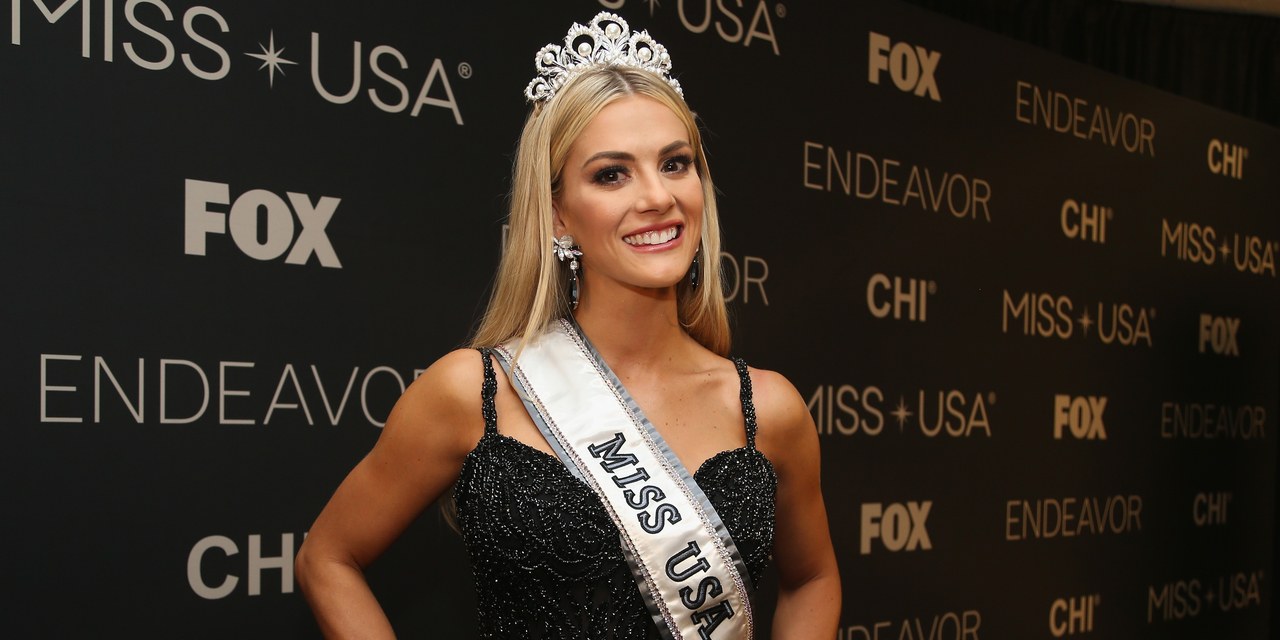
Miss USA, Sarah Rose Summers, is facing controversy after a video surfaced of her making what seems to be negative comments about two non-English speaking contestants taking part in the 2018 Miss Universe pageant being held in Thailand.
According to People, the video (which you can watch here) was part of an Instagram Live posted by Miss Colombia Valeria Morales, who appears alongside Summers and Miss Australia Francesca Hung.
“She’s so cute and she pretends to know so much English,” Summers said of Miss Vietnam H’Hen Nie. “And then you ask her a question after having a whole conversation with her and she goes — .” She then makes a blank, smiling expression that seems to mock H’Hen before laughing and adding, “She’s adorable.” Morales asks her to repeat the look and Summers obliges.
The trio then discusses Miss Cambodia Rern Sinat, who had earlier posted an Instagram photo of herself with Summers. “Miss Cambodia is here and doesn’t speak any English,” Summers said. “And not a single person here speaks her language. Can you imagine? Francesca said that it would be very isolating and I think yes, and just confusing all the time.”
Summers has since apologized in an Instagram post, although—as you’ll see below—social media reactions are coming fast and furious.
Obviously, social media users wasted no time in letting their criticisms of Summers’ comments be known.
“Do you speak any language except English?” one Instagram commenter asked. “Absolutely enraged that Miss USA, Miss Australia and Miss Colombia made fun of Miss Cambodia and Miss Vietnam for not being able to speak fluent English, TRASH,” wrote another user on Twitter. Another said, “@MissUniverse i wonder if you will still allow Miss USA, Columbia, and Australia to continue in the competition after their racist/ bigoted remarks toward fellow contestant Miss Cambodia. I can’t believe these ladies will be repersenting [sic] their countries!”
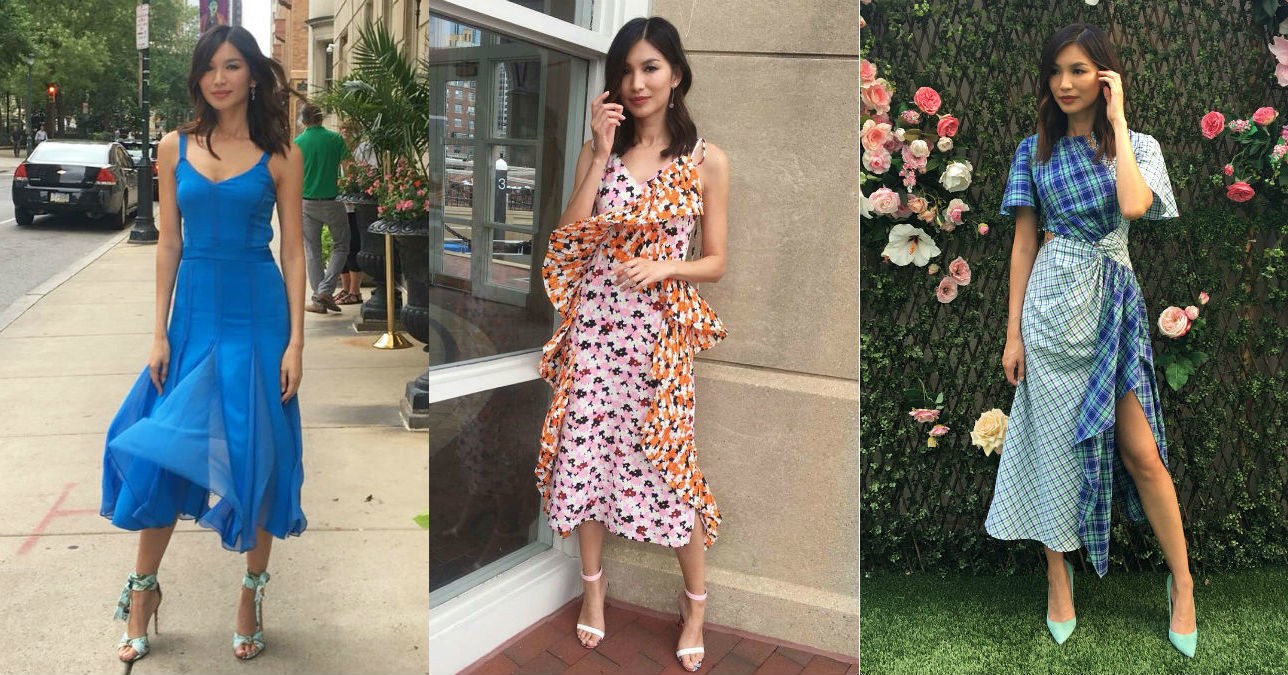
Gemma Chan, who plays Astrid in the hit Crazy Rich Asians movie, is having a red-carpet moment right now. It’s perhaps to be expected—Astrid is, after all, arguably Crazy Rich Asians‘ most stylish, couture-obsessed character—but Chan is using her platform in front of the cameras in a uplifting way. She’s focused many of her red-carpet outfits around creations by Asian designers and those of Asian descent. Like when Emma Watson used her Beauty and the Beast press tour to educate followers on sustainable fashion via Instagram, Chan’s tracking each outfit she wears for her own on her ‘gram, giving fans insight on the designer’s heritage while letting them peep the incredible outfits. Click through some of her best looks of the press tour so far.
Asians are having a moment, and they’re not all crazy rich. K-pop stars are now front-row fixtures at runway shows at the behest of American designers. Korean beauty is no longer just a “trend”—it’s a staple in American women’s routines. And, according to the last season’s runway diversity report, the fall 2018 shows featured more women of color—including models of Asian descent—than ever before. At the surface, this certainly looks like progress, but for many women who don’t fit the idealized mold of what it looks like to be Asian, this representation has begun to feel opportunistic.
That it’s taken this long for Asians even to be seen isn’t exactly surprising. Given that Korean and Japanese beauty innovations have so thoroughly saturated the beauty market, you’d think that the beauty advertising space would be just as inundated. That hasn’t exactly been the case.
The visibility of Asian women in the beauty world was nonexistent when I was a kid in the 1990s. I read a lot of magazines with white women on the covers and in the pages, and only when we traveled to the Queens neighborhood of Flushing—home to my grandparents and the second largest Chinese population in New York City—did I ever see Asian women on signs for salons and spas. (Upstate New York, where I grew up, is not exactly an Asian-American enclave.)
Back then, not even established Japanese brands had Asian spokesmodels representing them in the American market. That didn’t go unnoticed by Asian-American women. “The lack of Asian women in the media, including beauty advertising, did influence me as a little girl in what—and who—I defined as beautiful,” says Andrea, a recent law school grad in New York City. “I’m very proud to identify as an Asian-American woman, and I value seeing someone who looks like me in advertising.” For my other friend Pei, a grad student in San Francisco, the lack of Asian visibility no longer even registers. “Yes, I’ve noticed there are very few Asian women role models in any industry—beauty or otherwise,” she tells me. “But I’ve just gotten used to it.”
Revlon was one of the first to hire Asian spokespeople, beginning with actress Valerie Chow in 1998 and following with Lucy Liu in 2000. But 2010 was the real watershed year. Not only did Vogue dedicate an entire fashion spread to eight Asian supermodels in their December 2010 issue, but Estée Lauder also named model Liu Wen, from the Hunan province of China, their global spokesmodel, making her the first Asian woman to partner with the beauty giant. And not long afterwards, Maybelline named Shanghai-born model Shu Pei Qin their newest global ambassador, where she joined Crouching Tiger, Hidden Dragon actress Zhang Ziyi (who’d been part of the Maybelline roster since 2001).
Still, the timing seemed to be strategic. “China is our fastest-growing market,” explained Jane Hertzmark Hudis, Estée Lauder’s global brand president, in an interview with W. “What better way to honor that than to hire a native of the country?” In addition to seeking out Asian or Asian-American women for their talent, it was also a savvy business move. That’s become increasingly clear with the continuous additions of Asian spokesmodels in the beauty industry ever since: Chinese model Sui He was named the face of Shisiedo’s global makeup line in 2012, L’Oréal Paris tapped South Korean model Soo Joo Park in 2015, the same year K-beauty blogger Irene Kim collaborated on the limited-run Estée Edit, L’Oréal Paris added Chinese model Xiao Wen Ju, Maybelline brought Taiwanese model I-Hua Wu on board in 2016, and last year, Chinese model Fei Fei Sun joined Estée Lauder. Hair care, however, didn’t really follow suit. The most notable contracts are Pantene, who collaborated with actress Priyanka Chopra in 2016, and Redken, who worked with Park in 2015 and partnered with K-pop star Amber Liu this year.
One reason for this lag is due to what Wan-Hsiu Sunny Tsai, PhD, an advertising expert and associate professor at University of Miami’s School of Communications, calls localization; these newer K- and J-beauty brands want to better resonate to an American—and therefore largely white—audience. And until recently, Asian models were only there to provide a mysterious, non-American vibe. “Overall, the ‘Asian look’ in fashion and beauty advertising has been primarily used to signal something exotic and different, which really limited the roles of Asian models,” explains Tsai.
This fetishization of Asian women is getting slightly better, but it hasn’t disappeared. “Of course, there are still issues of stereotyping, such as the tendency to feature Asian models with stereotypical Asian features, e.g. slanted, monolid eyes and long, straight hair,” says Tsai. In fact, it’s especially obvious given that the majority of Asian models who do land these huge beauty deals have a common denominator: Straight black hair, fair skin, and a thin build. Limiting spokespeople to East Asian women with these features keeps that fetishization alive.
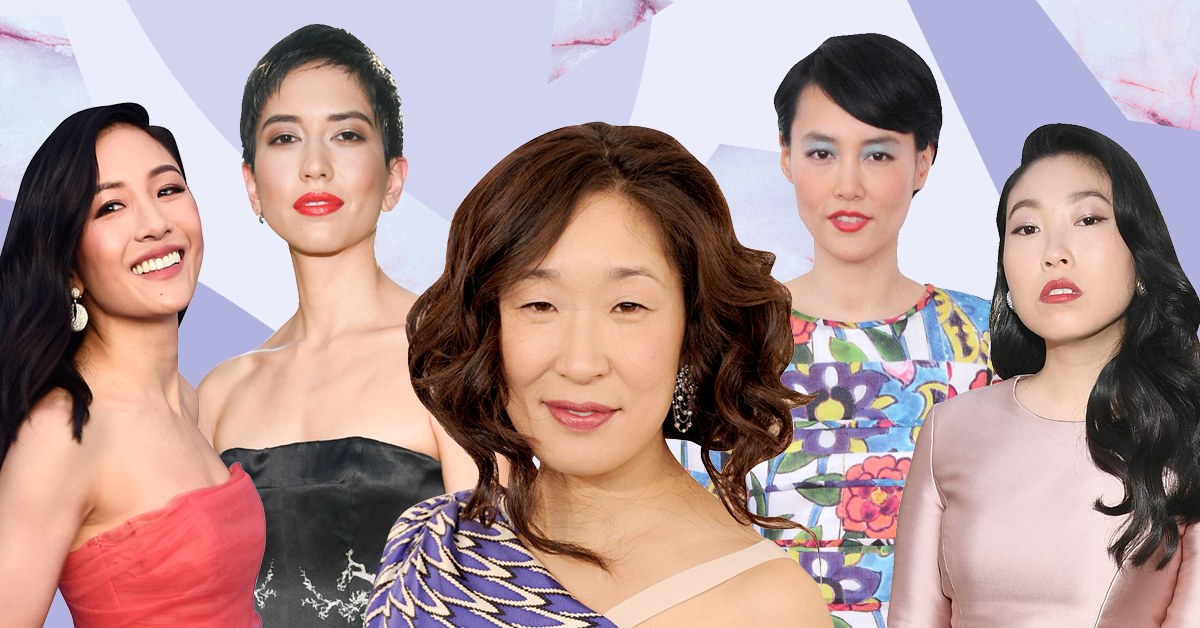
Brands are ignoring the fact that no, Asians don’t all look alike, and no, that joke isn’t even funny. For instance, none of the models tapped by big beauty companies have a darker skin tone, with the exception of Chopra, who’s South Asian. My dad’s side of the family is Cantonese and from a long line of farmers, so our skin tone shifts between tan and very tan depending on the time of year. The porcelain skin and silky hair so often associated with Asians, and driven by both Asian and American beauty standards, does not exist for many of us, whether we’re East Asian or not. Where’s the representation for Asian women with curly hair, like Sandra Oh? Where’s the biracial Asian woman signing a makeup deal? We do not all look like Soo Joo.
This sudden rise in the visibility of Asians isn’t solely the result of China being a lucrative market, though. It’s also to keep up with the demands of an increasingly diverse customer base. “Because of the growing multicultural population in the US and the associated trend of multicultural marketing, I think the cosmetic industry has been making visible progress in their advertising representation of Asian models,” says Tsai.
It’s about time brands recognize the purchasing power and needs of Asian-Americans. “If a company used Asian models, I’d be more inclined to check it out to see if their products suited my coloring,” says my friend Amy, a doctor in Ann Arbor, MI. “I am more frustrated by the lack of foundation that matches my color tone—everything is either pink or some sort of bronze.” But even that’s not always enough. While swatching a new foundation that offers over 30 shades the other week, I couldn’t find a single match for my sort-of-olive, sort-of-tan, definitely-not-peachy skin tone. I spent 15 minutes and a trashcan’s worth of makeup removal wipes to not find a good match.
The same goes for skin care. “For brands from whom I never see Asian and Asian-American models, I innately feel like they haven’t considered Asian skin when developing their products, and therefore tend to be more skeptical about them when I’m shopping,” says Andrea. “I’m more willing to spend money and take risks on those products that seem to cater to Asian and Asian-American women.”
It’s clearly a slow process. “After so many years, there are still very few Asian faces in Hollywood,” says Tsai, who notes that many beauty spokesmodels tend to come from the film industry. “But as Asian-Americans are now a more visible force in mainstream media—plus popular-culture influences from Asian countries—advertising as a mirror of societal trends must catch up.” And it has big consequences beyond simply appealing to a new customer base on the business end. Including a wide variety of Asian models also forces consumers to re-think and expand their definition of beauty.
While these efforts have been a good start, there’s still a long way to go. One suggestion? Someone needs to give the not-so-stereotypical, wavy-haired Awkwafina a beauty deal—stat.
Deanna Pai is a writer and editor based in New York City.
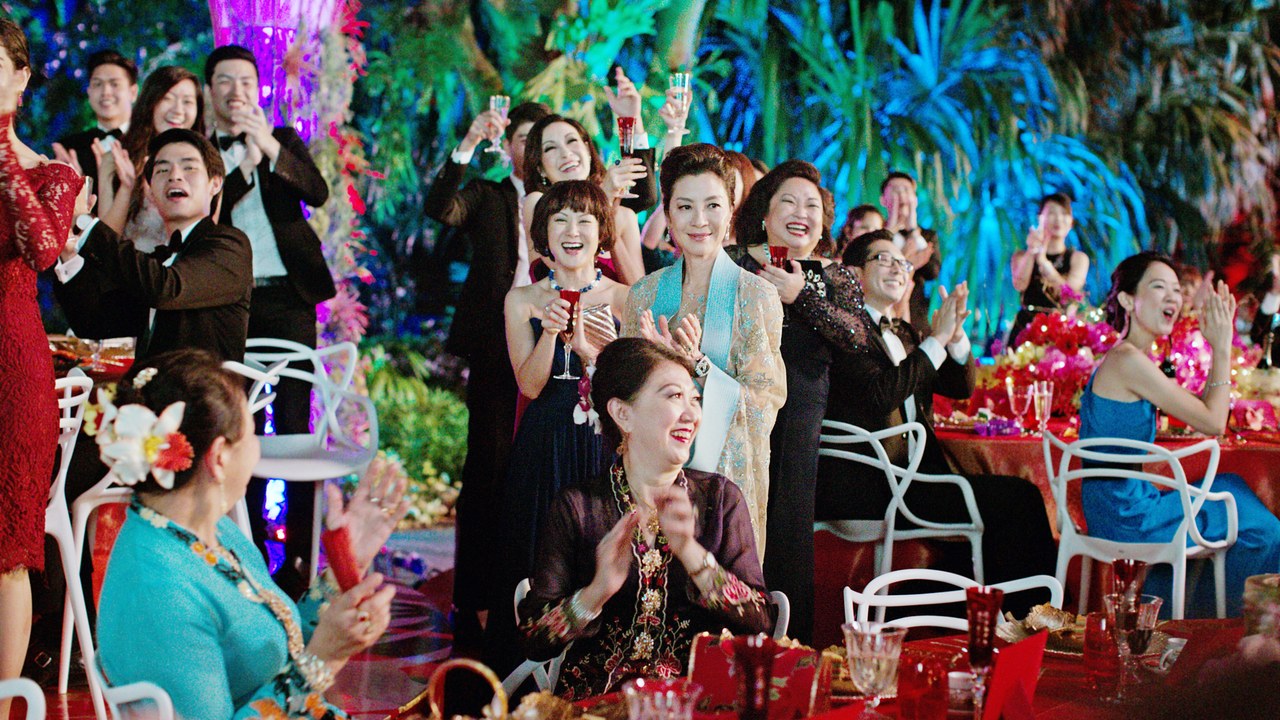
Before you have your first slice of pizza, you have no idea what you’ve been missing out on. Once you get a taste of that melty cheese, tomato sauce, and crispy crust, though, you can’t imagine life without it. Watching Crazy Rich Asians was like that for me: I never knew how good it felt to see only Asian faces on screen until it happened. And now? I’ve been living in a white-washed world for 27 years, and I don’t want to go back.
OK, maybe pizza, a quintessentially Italian-American food, was a weird example to share how overwhelmed I felt by Crazy Rich Asians. But it’s indicative of the way life has always been for me, relating to the world through the lens and interests of white people. I was adopted from Seoul, South Korea at seven months old by a loving (and very white) family in upstate New York. I was the only Asian person in my graduating class; at the time, I could count my Asian friends on one hand. I learned a bit about my heritage in bits and pieces—by going to a Baptist church briefly as a kid, attending a Korean mentor program at the local college, and exploring New York City’s Korean restaurants. But I always felt, as Goh Peik Lin (Awkwafina) describes Rachel Chu (Constance Wu) in the movie, like a banana: white on the inside, yellow on the outside.
As I watched the film last week—amongst a crowd of mostly Asian people—I realized I’d grown up without any meaningful pop-culture examples of women who look like me. Growing up, the biggest Asian figures in my life were, well, figure skaters. I idolized Michelle Kwan and Kristi Yamaguchi, both of whom were so talented and beautiful. I tried ice skating to be more like them—and failed miserably. The yellow Power Ranger was cool, but not as cool to me as the pink Ranger. And I liked Japanese-American Claudia from The Baby-Sitters Club fine enough, but it was the four-eyed, red-haired Mallory who I related to most at 13.
I rarely saw Asian characters who weren’t a stereotype. To be fair, I didn’t seek them out, either, because I didn’t feel Asian. In fact, I was so afraid of being seen as a stereotype—or worse, an outcast—that I distanced myself from things like Korean pop music, anime, and Pokémon to appear “normal.” Maybe if I had seen a movie like Crazy Rich Asians as a kid, I wouldn’t have felt so alone.
Crazy Rich Asians might be the first time I didn’t see a white person for two hours, period.
Instead, I had to wait until I was 27; Crazy Rich Asians was the first time I saw a full Asian cast in anything. It might be the first time I didn’t see a white person for two hours, period. But after that initial, “Wow! Everyone is Asian!” feeling, I realized the movie is no different than any other (predominately white) romantic comedy I’d watched before. This isn’t a story that’s only accessible to Asian people; the friendships and relationships are nuanced and interesting, but they’re not groundbreaking. A makeover to impress a boyfriend’s family? Seen it. A battle against mean girls? Done before. What really got me was that I could finally see myself in the leading role. And the best friend role. And even the weird brother role. All of these characters are Asian, and none are the punchline.
My friend Marianne, who is half Filipino, agrees. “Seeing people who looked like me portray characters in a rom-com storyline that would typically have a white cast—with an ambiguously brown sidekick because, you know, diversity—was a huge deal,” she says. “I related to Rachel’s overall experience of, yes, she is Asian, but not quite Asian enough.” Kristina, who is also Filipino, echoed this. “I felt emotional seeing a protagonist [Rachel Chu] that not only looked like me, but she was someone who was complex, confident, vulnerable, and passionate.”
But Rachel wasn’t the only relatable character. The theater roared when Peik Lin (Awkwafina) made her grand, pajama-clad entrance. Later, as we watch her family’s lavish lunch, I teared up when her mom said “simple food, lah,” a Malay term used frequently in the book that didn’t have to be subtitled or explained. It just existed. The audience cackled when Peik Lin’s dad scolded his youngest kids to finish their chicken because there are “lots of starving children in America.”
This difference stuck out to Emily, who is Korean and says she was moved by the way the movie navigated the cultural differences between Asian Americans and “Asian Asians.” This came through in the differences between Eleanor, an Asian tiger mom dedicated to family and loyalty, and Rachel’s mom Kerry, a first-generation immigrant who raised her daughter on her own. “What the film does beautifully is not pit these two women or cultural styles of parenting against each other, but embrace the validity in both,” Emily says. “I grew up with a mix of both, and it was touching to see both sides explored in the movie—and also gain a greater sense of appreciation for my family, too.”
I may not ever understand what it’s like to be a crazy rich Asian, passing down traditions of dumpling-folding and Mahjong (although my Jewish grammy is great at the game), but I do understand feeling like I’ll never be enough. Rachel’s monologue about knowing she’ll never measure up hit close to home, and I considered how I would be seen if I dated a man from a traditional Asian family. Would I be accepted? I’d like to think so.
By the time the credits started to roll, everyone in the theater was clapping, cheering, and wiping away tears. It felt like a celebration of being Asian, and that buzz has stayed with me ever since. I hope this shows Hollywood that an all-Asian cast won’t keep people from relating to a movie. Just like how I, a Korean-American woman, can relate to She’s All That and A Walk to Remember, people of all races can find similarities in stories about family ties, relationships, and that outsider-looking-in feeling. It’s time for more stories to be told with all kinds of people represented, and I hope Crazy Rich Asians is just the first of many Asian-led movies and TV shows I’ll see in my lifetime.
Maybe I’ll even see a story about an adopted woman trying to figure out her identity. Maybe I’ll even write it.
Alyse Whitney is a writer and editor at Bon Appétit.
A few weeks ago, a friend texted me about dim sum using only Chinese characters. “Oh no, you’re fake Asian. Hold on,” he continued before he translated his order into English for me. “Fried dough, scallion pancakes with egg, and soy milk.”
“You mean you tiao, but okay,” I replied. “My family only eats it with juk.” I speak very little Cantonese—I’m talking 20 words at most—but when it comes to dim sum, I know how to order.
We’ve been friends for years, and while I can usually put up with his antagonistic brand of teasing, it’s been getting to me lately. I’m “only” half-Asian, something the world feels the need to remind me of at every turn, like when the guy at dim sum hands me a fork and I hear my dad say my name as he’s speaking Cantonese to my Nainai. But I’m also Italian, which for some reason didn’t come up when the popular girl in seventh grade called me a chink, and when everyone—at the coffee shop, in the cab—plays the “but where are you really from?” game. I might be made up of two ethnicities, but I don’t really count as either.
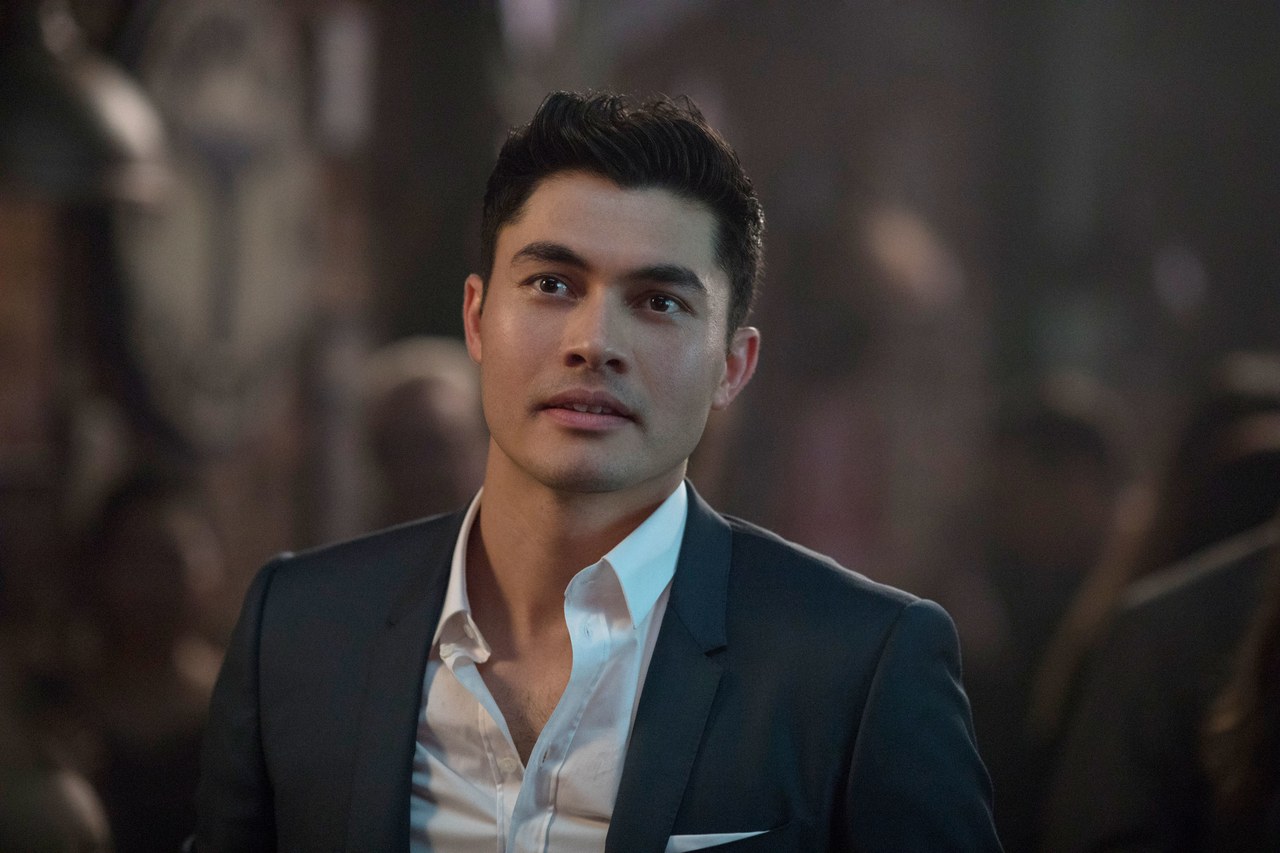
That’s why I’m probably more offended than most at the “controversy” surrounding some of the cast members of Crazy Rich Asians and why, conversely, their inclusion is so legitimizing to me. Henry Golding, the male lead, and supporting actress Sonoya Mizuno are both half-Asian—and thus, according to some critics, not Asian enough to star in the movie. Actress Jamie Chung referred to Golding’s casting as “bullshit” in an interview. (She later apologized.) One op-ed about Golding had the candid title, “We’d Love to See a Full Asian Lead for Once.”
PHOTO: Sanja Bucko
I understand the frustration at the constant whitewashing in Hollywood. (See: Scarlett Johanssen playing a Japanese character in Ghost in the Shell, Emma Stone starring as a woman of Hawaiian descent in Aloha, and Matt Damon somehow playing the hero in a movie literally entitled The Great Wall, as if we haven’t been defending that shit for centuries.) It’s so rampant that a producer even suggested casting a white woman for the lead to Crazy Rich Asians author Kevin Kwan—who, of course, gave it a hard no.
But to impose whitewashing narratives onto biracial people feels like erasure of half of who I am. And, for me, it’s not “whitewashing,” anyway. It’s more like “whatwashing”: What are you? What’s your background? It’s what so many mixed-race people who don’t pass as white have to contend with on a daily basis.
Since when does being more than one thing cancel the other out? According to Golding, who’s Malaysian and English, some people implied he won the role because he’s half-white, as if being biracial comes with special perks. Please. Science, for what it’s worth, backs me up here. (See how Asian I am?) A 2008 study from UC Davis found that Asian-Caucasian mixes are twice as likely to suffer from psychological disorders, like depression, anxiety, and substance abuse, than full Asians. Lauren Berger, one of the authors, surmises that a lower or conflicting ethnic identity—that is, the extent to which someone ascribes to one identity over another—may contribute to it.
It’s hard to establish any sort of ethnic identity when I keep receiving conflicting messages about what that identity is. I’m too white for my Chinese friends to consider me a “real” Asian, but still Asian enough to catch the occasional slur. And I don’t understand why other people are slicing and dicing my ethnicity in the first place, something both Golding and Mizuno have called out. “If I can’t play that [Asian] part, what can I play?” Mizuno asked in an interview earlier this month. “A part that’s half Japanese, a quarter English, and a quarter Argentinean? How many parts are there for that?”
Golding concisely summed it up in an interview with Glamour: “It was quite strange that people were saying I wasn’t Asian enough. It’s like, ‘Oh, you’re not Asian enough to play an Asian role.’ So what does that mean for people who come from mixed heritage? I grew up in Asia; I’m Malaysian. You can try to justify how Asian you are, but you’re never going to make everybody happy … When does the point come that these stereotypes are thrown to the wind? Making something the norm is the only way of not making it a talking point.”
However, I think one reason for it may be my own doing. I refer to myself as “half”: I’m half-Asian, or, if I’m feeling generous, half-Chinese and half-Italian. I’ve been saying it for as long as I can remember, mostly because it’s succinct and typically satisfies whoever’s rude enough to ask. And it’s accurate (although recent results from 23andMe suggest that there’s some Mongolian and North African mixed in there).
PHOTO: Courtesy of Deanna Pai
But maybe I should start to replace the word “half” with “both.” I am both Chinese and Italian. One doesn’t have to negate, or overpower, or defer to the other. It’s like how my comfort food is fried rice with lap ceung, but I’m also freakishly good at making dragged pastas like cavatelli. Both can be true.
In a new interview, Golding described this ownership over identity in a way that made me tear up. “There was always a struggle with being Asian and not being Asian enough. It’s going to be down to me to own my race,” he said. “Once you’re secure with yourself, it doesn’t matter who the fuck says whatever.”
It’s validating to see people like me confront similar feelings in real time. They get it! And better yet, they’re talking about it. Sure, the haters will hate. They’ll say we’re fake Asians, that we’re not Asian enough, that we’re watered down. But that won’t make it true.
Deanna Pai is a writer and editor currently based in New York.
Sandra Oh has made history as the first Asian woman to be nominated for an Emmy in the Outstanding Lead Actress in a Drama Series category for her role in the BBC America series Killing Eve, Los Angeles Times writer Glenn Whipp reports on Twitter.
She’s among good company, too. The other women nominated in her category include Elisabeth Moss for The Handmaid’s Tale, Keri Russell for The Americans, Evan Rachel Wood for Westworld, Claire Foy for The Crown, and Tatiana Maslany for Orphan Black.
If you haven’t seen the show yet—and if so, what are you waiting for?—Killing Eve revolves around a bored MI5 officer in London (Oh) who wishes she could do more with her career than shuffle around papers and collect data at her desk. Her in-the-field dreams are soon granted when she becomes embroiled in a cat-and-mouse game with a British female assassin, and their mutual obsession with each other propels the eight-episode drama. But if you don’t like murders and violence, also know it’s one of the most fashionable shows of the year, too.
PHOTO: BBC AMERICA/AMC Networks
As Vanity Fair notes, Oh has had success with Emmy nominations in the past, so this isn’t her first rodeo with the honor. You might remember her years-long tenure as Dr. Cristina Yang on Grey’s Anatomy, for which she received five consecutive supporting actress nominations. (She never won, sadly.)
Shockingly, if Oh were to win for Killing Eve at the September ceremony, she would become only the third Asian actor to take home an Emmy, according to Vanity Fair. The two previous winners of Asian descent are Archie Panjabi, who won a supporting actress Emmy in 2010 for The Good Wife, and Riz Ahmed, who won for lead actor in a drama in 2017, for The Night Of.