Categories
Health

‘Wild’ Author Cheryl Strayed Knows the Secret to Finding Love After Loss


I really, really, really, really grieved the loss of my first marriage, even though I was the one who said, “I don’t want to be married anymore. Let’s end this.” But it was a different kind of grief than the grief I had for my mom. I’ll always grieve my mom. It’ll be a loss that will always be a hard one for me. The loss of my first marriage was a temporary grief; it was a temporary loss.

There shouldn’t be this timeline for grief. I think pathologizing pain is something that our culture does quite well. You should be sad if somebody you love deeply dies. That’s a normal response to a really sad, hard thing that happened. The first [step to healing] is to accept that sorrow is real and it’s going to take some time for it to lift. And then once it does lift a bit, to accept that—to accept that that’s not a sign of your lack of love, or commitment, or dedication to that person, but that it’s really that your loss is shifting into something a little deeper, where you’re starting to say, “I realize that this thing is true. This is a fact. My dad isn’t going to reappear like a magic genie and be there in my life again, ever again,” or, “My mom isn’t.”

We have to carry it—to say that the person is gone forever, but at the same time will always be present, so that in the absence of the beloved, there is a profound presence that we can make manifest in our lives by the things we do, and live, and believe, and say.

I love my kids the same way my mother loved me, and perhaps that’s the most powerful way I’ve carried her; I’ve carried that full-throttle-wild-abandon-imperfect-but-without-any-question-it’s-there love that I got from my mom, and I give it to my kids and they carry it forward. They’ll carry it onward. She’s alive in them; she’s alive in their spirits even though they never met her.

The power of vulnerability is also truly magic. Vulnerability, I’ve become convinced, is the way to get love. And of course, many of us decide not to be vulnerable because we’re afraid. But vulnerability is the way to get love, romantic or otherwise. The minute you’re the one who says, “I’m afraid right now,” or, “I’m missing my mom,” or, “I am in the midst of a divorce,” the minute you simply say what’s true, people open themselves up to you, and they offer you consolation—an essential connection.

I think that so much of loving well is about courage. It’s about telling the truth as soon as possible, as often as you can. That’s the secret to a good life, and that’s about vulnerability. Vulnerability is simply telling the truth about who you are, as often as you can, in any given situation. And nobody said any of this was going to be easy. If you’re looking for love again, there’s just no way around the fact that you have to be vulnerable in order to connect with others. Nobody’s going to love a cardboard-box version of you. Nobody wants to feel like they’re knocking at a closed door when they’re in a relationship with you. We want the real, juicy, meaty you. We want the tender stuff on the inside.

Source link

Categories
Health

‘Beloved’ Author and Nobel Laureate Toni Morrison Is Dead at 88


The Nobel Prize–winning novelist Toni Morrison died last night (August 5) at the age of 88, according to CNN. The cause of death has not been announced.

Morrison, the author of such acclaimed books as Beloved (for which she won both the Pulitzer Prize and the American Book Award in 1988), The Bluest Eye, Sula, and Song of Solomon, has been a celebrated force in American literature for decades, helping to document the black experience in the United States from her unique perspective.

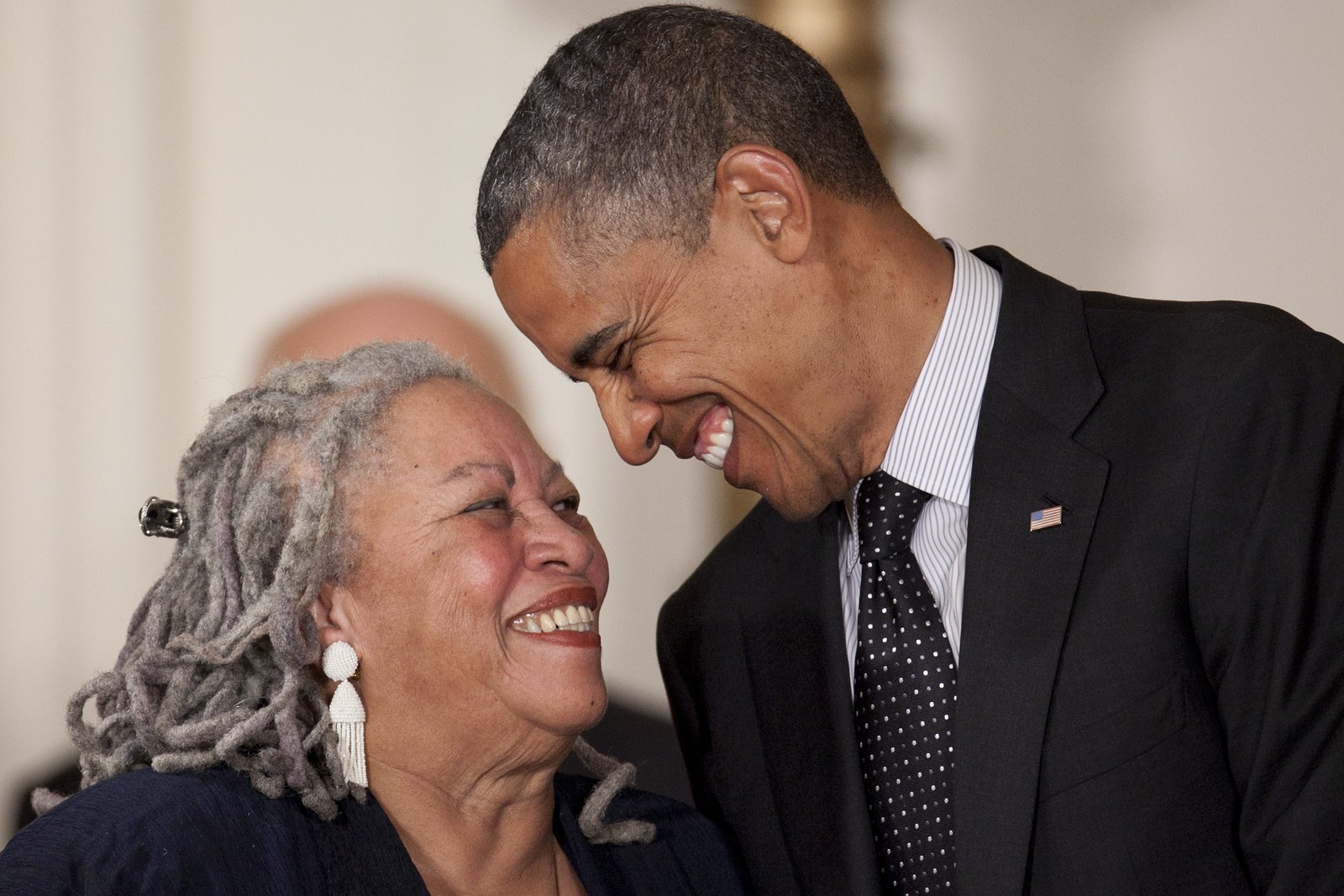
In 1993 she became the first black woman to be awarded a Nobel Prize in literature and, in 2012 then President Barack Obama honored her with the Presidential Medal of Freedom. Describing her impact ahead of her Nobel acceptance, the Swedish Academy, which bestows the prize, said her work “gives life to an essential aspect of American reality.”

The author was born in 1931 in Lorain, Ohio, where she was raised and lived until she enrolled at Howard University in 1949. Morrison went on to earn a master’s degree from Cornell University and became a professor before becoming a book editor at Random House, where she helped to elevate a number of black writers like Chinua Achebe and Angela Davis.

Toni Morrison with President Barack Obama before being awarded the Presidential Medal of Freedom in 2012.Andrew Harrer/Getty Images

She didn’t publish her first novel, The Bluest Eye, until the age of 39 in 1970. Oprah Winfrey selected both Song of Solomon and The Bluest Eye for her famous book club during her talk-show era, which helped bring Morrison’s work to a new generation of readers. Winfrey also coproduced a film adaptation of Beloved. “It’s impossible to actually imagine the American literary landscape without a Toni Morrison,” Winfrey said of Morrison in 2018. “She is our conscience, she is our seer, she is our truth-teller.”

In 2007, Glamour named Morrison one of its Women of the Year. In talking about her work, she said, “There were a lot of books by black writers that were very political and confrontational and all about guys. What about young black girls who had never been the center of anybody’s literary intention?

“No one had written them yet,” she said, “so I wrote them.”

Morrison also wrote a number of children’s books, and her last novel, God Help the Child, was published in 2015.

“We die. That may be the meaning of life. But we do language. That may be the measure of our lives,” Morrison said in her Nobel acceptance speech.


Source link

Categories
Health

How to Be Happy, According to Children's Book Author Judith Viorst


“What’s been your favorite time of life?” I was asked a couple of months ago. My answer astonished my questioner—and me. For instead of a choice that approximated when I fell in love, or gave birth to my first baby, or held my first published book in my hot little hands, I looked back on my 80-plus years, my nearing 90 years, and said, “Right now.”

It seems I have no wish to turn back the clock to 30 or 40 or 50 years ago. I prefer to press “hold” on the life that I currently live. That’s true in spite of the fact that I am indisputably old—not older, not elderly, just…old. And the fact that so many people I’ve loved are dead. And the fact that my upper arms are in no condition to ever again be seen in public. And the fact that, as some late-night comic once said, my back is going out more often than I am.

It’s not that the days themselves now are so fabulous. My hair is thinning. My body is not. I can’t find my glasses or keys. And I spend so much time seeing specialists that if they gave doctorates for going to doctors, I’d easily have earned a Ph.D. But still, I don’t hesitate. The best is not ahead or behind. It’s now.

Having surprised myself by finding out that my favorite time of life is right now, I decided that I would like to figure out why. And so I’ve been sorting out some of the qualities, attitudes—some of the somethings—that have helped to make me happier as I near 90.

But before I go any further, I need to observe that I’m an exceedingly lucky lady. Lucky because I’m still married to (and still love) the person I married 60 years ago, even though he still claims that he can listen to me and read the Times simultaneously. Lucky because all my children and my grandchildren are, at the moment, doing just fine. Lucky because I have friends with whom I continue to share a deep, enduring history. Lucky because I’ve somehow been spared (at least as of today) time’s harsher assaults on the body and the mind.

I’m also lucky enough to be conscious of, and grateful for, the bountiful blessings of this great good luck.

Do I have my griefs and losses, my regrets and disappointments? Of course I do. But I’ve found that being grateful, though this is something of a cliche, offers great comfort to me, and could for you, too. For cultivating gratitude for the good stuff in our life, being aware of and even counting our blessings, brightens our view of who we are and where we are in the world—and can make us happier.

I’ve found that a little surplus of gratitude often has downstream effects, helping us become more tolerant, less judgmental, more forgiving of family and friends when they annoy or neglect us, hurt our feelings, or let us down. It’s tempting to add up their failures and flaws and compare them to our far superior selves, but we make a big mistake if we do. For while most of the folks in our life can, on occasion, be pains in the ass, so—let’s face it—can I and so can you. Figuring out that we, like they, are in need of a lot of acceptance and forgiveness can make for a happier old (or any) age.

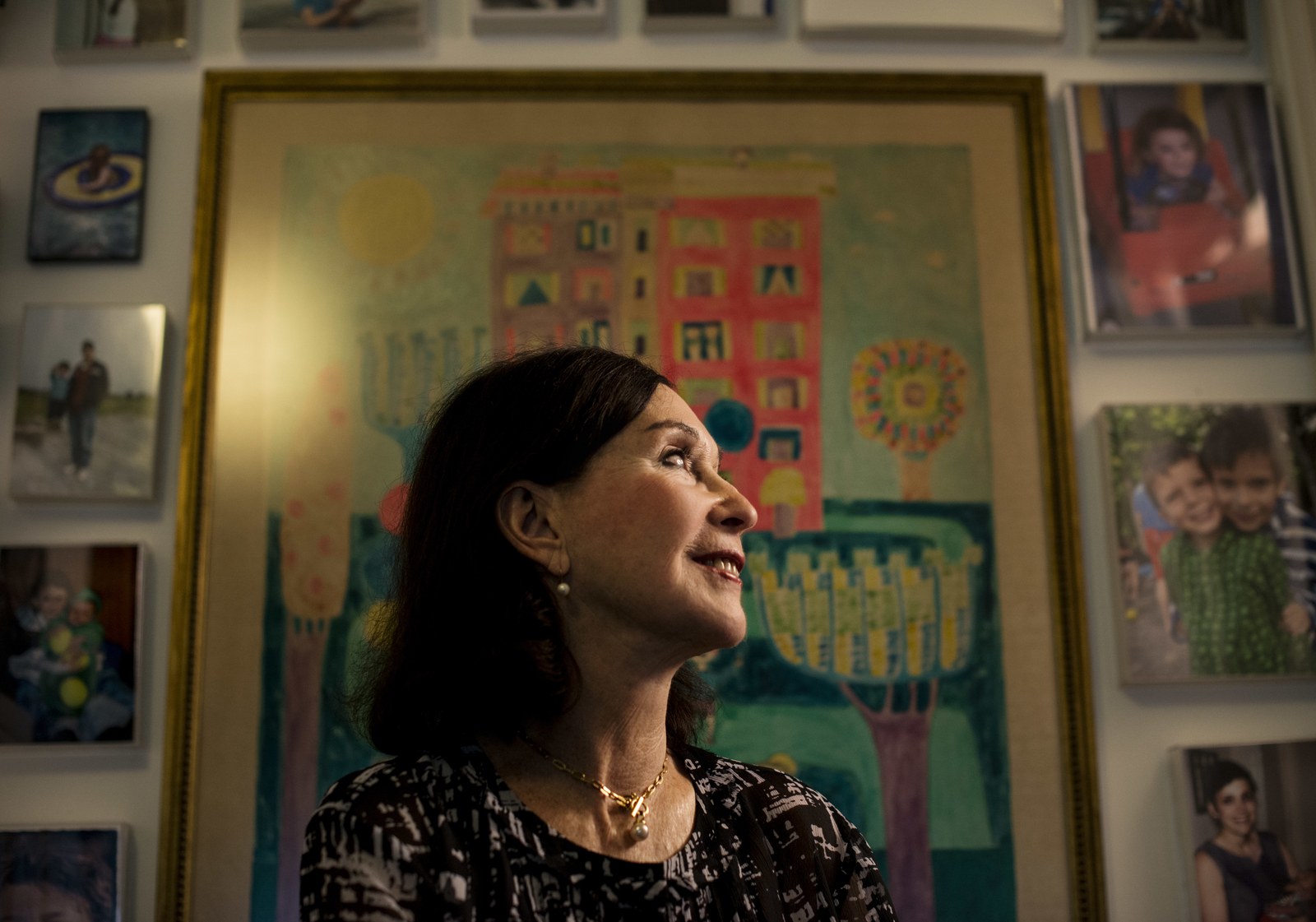
The author Judith Viorst in 2013.

Getty Images

When I was younger, I spent too much time obsessing over what would make me feel better or how I imagined a certain set of circumstances would magically transform my life and career. But I learned, though it took me a while, to look around and pay attention to what—if I’d let it—could make my life feel better right here and right now. My book Nearing Ninety opens with a wonderful quote from philosopher George Santayana, whose proposition all of us should heed: “To be interested in the changing seasons is a happier state of mind than to be hopelessly in love with spring.” I believe he’s telling us that instead of wistfully looking back at what we once had, or anxiously imagining what might come, we ought to be seeking what satisfactions, what pleasures, what meaning the season we’re in has to offer us.


Source link

Categories
Health

Hollywood Wanted a White Actress to Lead 'Crazy Rich Asians'—So Author Kevin Kwan Fought Back


Crazy Rich Asians, which hits theaters this month, features an unprecedented feat in Hollywood: a principal cast entirely of Asian descent. It’s also, simply put, a really delightful romantic comedy. The movie follows a professor (Constance Wu) who travels to her boyfriend’s old stomping grounds in Singapore to attend an opulent wedding. (She’s also there to meet his ridiculously wealthy family, NBD.)

The movie, an adaptation of the 2013 novel written by Kevin Kwan, is being heralded as a major win for representation—but a new Hollywood Reporter feature reveals some behind-the-scenes drama nearly kept it from being a faithful big-screen experience.

[embedded content]

Kevin told the publication he rejected numerous “lucrative” offers and instead optioned his film for a mere $1, passing on the large paycheck to ensure he maintained involvement with creative and development decisions. This was after, Kevin said, one disastrous pitch that strongly recommended he change the Asian heroine to a white woman. (“It’s a pity you don’t have a white character,” he was told by the producer.) “To say, ‘I’m going to do this for a dollar,’ the only other person I know who does that is Stephen King,” Brad Simpson, one of the film’s producers who fought for Kevin’s vision, explained of this significance. “You don’t want to just be another piece of development. With a movie like this, peopleare never going to have to make it, and it could get lost.”

Kevin and the film’s director, Jon M. Chu, also rejected an enticing offer for Crazy Rich Asians to be a Netflix-exclusive film—”dangling complete artistic freedom, a greenlighted trilogy and huge, seven-figure-minimum paydays for each stakeholder”—but the duo ultimately decided the need to bring Asian actors to the bonafide big screen was more of a priority. “Jon and I both felt this sense of purpose,” Kevin explained. “We needed this to be an old-fashioned cinematic experience, not for fans to sit in front of a TV and just press a button.”

The results will soon speak for themselves—Crazy Rich Asians will be released, not on a streaming service, on August 15.


Source link

Categories
Health

*Call Me By Your Name* Author André Aciman: 'Most of Us Don’t Know Who We Are Sexually'


In our age, hookups seem to happen so easily, so quickly, so uninhibitedly,” says André Aciman, author of the novel Call Me by Your Name. “The basic demands are minimal: pleasure, safety, respect, fun. The one thing no one talks about is, How quickly will this person leave?” His book is now a film by the same name, which tells the story of 17-year-old Elio (the sublime Timothée Chalamet, below right), who pursues 24-year-old scholar Oliver (Armie Hammer). The age gap is controversial—especially in this social and political climate—so why are critics calling the film an “affecting love story”? Aciman has the answer: “It’s about the real difficulty of opening up to someone we desire or even love without knowing how they will respond,” he says. “For all of his doubts about Oliver and about himself, Elio finds the boldness to speak.” It’s 2018, but the idea that love is a humbling act of bravery feels vividly, heartbreakingly new. We talked to Aciman to get weigh in on the ambiguities of coming-of-age stories, young love, and sexuality.

GLAMOUR: What is it about this love story that feels so important to tell right now, at the end of 2017?

ANDRÉ ACIMAN: My love stories are about people who are reluctant to actualize what they so desperately want. They are timid, cautious, but eventually they dare to speak. My characters are not only hesitant, they are ambivalent about which way their libido flows: toward men or women? They are fluid in their sexuality, and this ambivalence says more about how we think about sex today than, say, Tinder. And this is a truly modern idea: Most of us don’t know who we are sexually.

GLAMOUR: The film doesn’t revisit the characters 15 or 20 years after that first summer—a conscious decision by the filmmaker. How did you feel when you watched Elio mourn Oliver in that last, touching scene?

AA: I was extremely moved by that scene, and [based on the] emails I received from around the world, it seems that a heavy silence suddenly falls upon the audience during that extremely moving closing scene. People are crying. Film normally adapts a written novel as best it can. But film should not be a transposition but rather a translation. I could never have been able to write the powerful scene in the film when Elio stares at the fireplace for five long minutes. It says everything that was in the closing pages of my novel—and in this sense it is totally faithful to the story—and yet it says it totally differently and beautifully. Perhaps even more powerfully.

GLAMOUR: Very rarely do we get to see two men sharing in the agonizing uncertainty of new love. What could audiences learn about the vulnerability between Elio and Oliver?

AA: I wanted the uncertainty to be there in my novel, and it is there in the film. There is always going to be a risk in a new love, a difficulty to be overcome, and more so considering all the challenges facing gay love, particularly in an adolescent. The desired other person could turn out to be a wolf in sheeps’ clothing, could hurt us, could even ruin us. But the risk has to be taken. What the film also shows, as does the novel, is that besides the fear of ending up with the totally wrong person, the first time between two persons is underscored by two things: desire and awkwardness. The awkwardness of the first time when two individuals touch each other is never lost on the young…or the old.

GLAMOUR: Why do you think a love story set three decades ago—between two men; one young, one slightly less young—feels so achingly universal?

AA: Many critics speak about coming-of-age love, about initiation, about young libido, and so forth. I’ve never seen it only this way. What sets young love apart is that an adolescent is aware of every minute detail, he examines everything, his own desires, the behavior of others, realizes he may be frequently wrong in his readings, and is therefore forced to test the waters all over again. The progress is slow, cautious, tentative, even reluctant. There may be dangerous shoals up ahead. He does not know them yet. And yet, the case is no different when we are older: We continue to examine things ever so minutely, we interpret obsessively. We may be less bold at 40 than we were at 17 but we’re familiar with the roadmap; we know the bumps in the road; we recognize the sudden turns, the one-way streets, and the dead ends. And we are hurt just the same as when we were teenagers.

GLAMOUR: It’s been ten years since Call Me By Your Name was published. What did Timothée and Armie find in your words that you didn’t know anyone else had seen or felt?

As the author of the novel I must admit that I can no longer “see” Elio and Oliver without seeing Timothée and Armie. When I happen to reread scenes from the novel I see them, not the characters I’d imagined. When they stop in the piazza one hot noonday, and Elio manages to tell Oliver that he is attracted to him, but says it ever so obliquely, those are the exact same words I’d written down, but they’ve now acquired an inflection I could never have imagined. The same goes for the amazing speech by the father toward the very end of the film: those are the very words I’d written down, but they brought tears to my eyes—they were truer on screen than on paper, I had never imagined the power my words could have through someone else’s medium.


Source link

Categories
Health

5 Ways the Author of 'The Dinner Plan' Makes Sure She Actually Cooks Dinner Every Night


It’s a Tuesday night. I’m on my way home from work when a familiar anxiety starts to creep in: Called mom? Check. Went to the gym? Check. Renewed driver’s license? Check. So what is that gnawing feeling? Oh, right, it’s dinnertime, and I have absolutely no idea what I’m going to make. All I have in the fridge is a carton of hummus, half a bottle of rosé, and a bunch of wilted greens. (Is that kale or spinach?)

Everyone’s been there (both I and my co-cookbook-author, Kathy Brennan, are professional food writers, so, trust when I say we’ve all been there). But even though a night of Netflix, delivery pad Thai, and the rest of the rosé doesn’t sound half-bad, I’ve also learned that making a homemade dinner at least a few nights a week is one of the best treats you can give to yourself. Why? It’s healthier (you actually know what’s in your food when you make it yourself), less expensive then takeout, and it’s also the best way to hone your cooking skills.

So how to actually make sure it happens? Here are five tricks that Kathy and I have learned over the years while writing our two cookbooks (Keepers and the new The Dinner Plan).

1. Remove your ingredients from the fridge as soon as you get home.

Before reading the mail, feeding the cat, or even changing your clothes, get all of your ingredients out of the fridge and put them on the kitchen counter. Protein in particular (meat, chicken, tofu) will cook better if it’s not super-cold, and you never want to throw cold ingredients directly from the fridge into the pan. It affects the cooking times, the flavor and the texture of the ingredients. No bueno. If you can, take out every ingredient you’ll need from the fridge (even eggs, cheese, etc.) so it’s a bit closer to room temperature when you’re ready to start cooking.

2. Make a big batch of grains in the beginning of the week so you have a base ready to go.

Sunday is our day for making a big pot of brown rice, quinoa, couscous, wheatberries, farro, etc. Store in the fridge and you have a dinner base at the ready for anything from roasted vegetables, to a quick fried egg with chopped avocado, or sliced rotisserie chicken and dressed greens. A pot of soba noodles that are drained, rinsed in cold water, tossed with a little sesame oil, will also store well in the fridge.

3. One great sauce or dressing will improve even the most boring chicken breast or salad.

If you do nothing else, learn how to make a good, basic salad dressing and a couple of make-ahead sauces. When I have leftovers that are kind of “blah”, I reach into the fridge for my jar of citrusy vinaigrette or flavor-packed salsa verde and it’s a total lifesaver. And it’s amazing how simple it is to make something that’s better tasting and better for you (no preservatives, no added sugars or tons of sodium) than any store-bought brand.

4. Sharp knife = faster dinner prep

The mantra “a dull knife is more dangerous than a sharp one” is most definitely true (try slicing a ripe tomato with the former and it will slide right off the skin towards your fingers, do it with a sharp knife and it goes cleanly right through); but just as important is that it makes dinner prep quicker and, I’m just going to say it, more enjoyable. Getting things sliced and diced easily is a joy to behold, so try and get into the habit of sharpening your knives before each dinner prep, you’ll feel like a pro and get dinner ready twice as fast (with all of your fingers in tact).

5. Clear Eyes, Full Pantry, Can’t Lose

All of us have had those weeks where getting to the supermarket just didn’t happen. This is where a well-stocked pantry and freezer will save your dinner life, time and time again. Having long shelf-life ingredients in your cupboard, fridge, and freezer (what we consider the general category of “pantry”) will allow you to make a bunch of tasty dinners on the fly. For example: I always have a box of spaghetti, wedge of parmesan cheese, eggs, and bacon (which can be stored in the freezer) on hand because I know that’s all I need to whip up a super fast carbonara, which is arguably the most satisfying pantry dish on the planet. And once you get in the habit of stocking up on essential spices, oils, vinegars, grains, condiments, your dinner arsenal will only get better and better.


Source link