Categories
Health

Alabama Governor Has Signed the Nation's Most Restrictive Abortion Ban Into Law


Republican Alabama Governor Kay Ivey signed into law an abortion bill that would outlaw the procedure as soon as the moment of conception. The only exception to the ban would be for women whose health is at risk. Additionally, doctors who perform the procedure could be punished with life in prison. The bill was passed by 25, Republican male state senators. There are only four women in the chamber—all of whom are Democrats—and they all opposed the bill.

Prior to signing the bill Governor Ivey had not commented on the law, though her pro-life stance was known. After the signing, she released the following statement regarding her decision.

“Today, I signed into law the Alabama Human Life Protection Act, a bill that was approved by overwhelming majorities in both chambers of the Legislature,” Governor Ivey wrote. “To the bill’s many supporters, this legislation stands as a powerful testament to Alabamians’ deeply held belief that every life is precious and that every life is a sacred gift from God.”

Governor Ivey also went on to discuss that while the new bill is likely to be unenforceable due to to Roe v Wade, their overall aim is to challenge that very decision.

“No matter one’s personal view on abortion, we can all recognize that, at least for the short term, this bill may similarly be unenforceable,” Governor Ivey added. “As citizens of this great country, we must always respect the authority of the U.S. Supreme Court even when we disagree with their decisions. Many Americans, myself included, disagreed when Roe v. Wade was handed down in 1973. The sponsors of this bill believe that it is time, once again, for the U.S. Supreme Court to revisit this important matter, and they believe this act may bring about the best opportunity for this to occur.”

This bill could now potentially go into effect within the next six months.

Read more about how you can help women in states with extreme abortion bans, here.


Source link

Categories
Health

Democrat Stacey Abrams Ends Bid For Georgia Governor


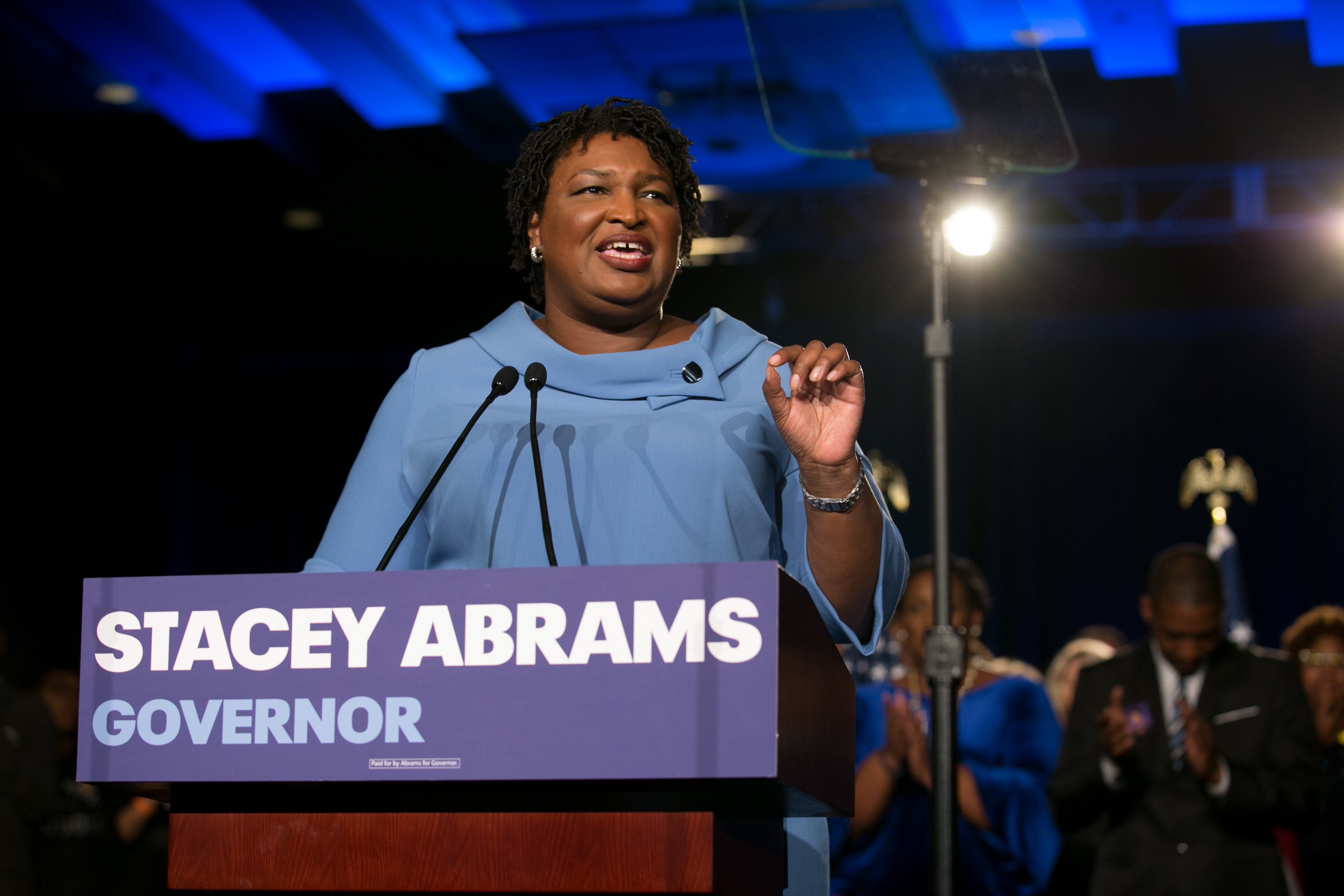
UPDATE 11/16/18: Democrat Stacey Abrams ended her campaign to become the next governor of Georgia Friday, which would have made her the first black woman in American history to lead a state. After a 10-day standoff, Abrams recognized in a fiery speech that Republican Brian Kemp will assume the position.

“I acknowledge that former Secretary of State Brian Kemp will be certified as the victor in the 2018 gubernatorial election,” Abrams said. “But to watch an elected official who claims to represent the people in this state baldly pin his hopes for election on suppression of the people’s democratic right to vote has been truly appalling.”

Abrams also made it clear her speech wasn’t one of concession, saying she plans to file a federal lawsuit to challenge the “gross mismanagement” of Georgia elections.

“In the coming days, we will be filing a major federal lawsuit against the state of Georgia for the gross mismanagement of this election and to protect future elections.”

Abrams made the announcement late Friday afternoon, which—according to reports—was the earliest state officials could certify the results after a court-ordered review of absentee, provisional and other uncounted ballots.


11/ 7/18: The fight isn’t over yet for Stacey Abrams, who is refusing to step down in her quest to become the first black woman governor of Georgia. On Election Night the Democratic nominee announced in a fiery speech that she would not concede the race until every single vote is counted, a rallying call that concluded a night of voting challenges for Georgia residents.

“There are voices remaining to be heard,” she told the crowd of supporters early Wednesday morning. “We believe our chance for a stronger Georgia is just within reach.”

Abrams, the former minority leader of the Georgia General Assembly and the first black woman to lead in the House of Representatives, is up against the Republican candidate, Brian Kemp. Kemp, who is currently Georgia’s sitting Secretary of State, was endorsed by President Donald Trump during the campaign. Over the summer Trump said Kemp was “tough on crime, strong on the border and illegal immigration.”

Here’s where things get a little tricky. Right now Abrams has about 48.7 percent of the vote, with 1,907,212 votes. Kemp currently has the lead with 50.4 percent and 1,971,831 votes, according to the Associated Press. This means less than 65,000 votes separate the two candidates. And those numbers really could mean something as Georgia has an odd law that states a gubernatorial candidate must win a majority of votes (more than 50 percent) to win the election. If neither candidate takes home a majority, it triggers a run-off election. Both parties would meet again for a December 4 vote. It would mark the first general election race for governor to require a runoff, according to the Atlanta Journal-Constitution.

Abrams’ campaign team believes there are at least 97,000 early votes and mail-in ballots that have not been tallied, AP reports. The team believes she needs just 25,000 of those votes to be in her favor to trigger a runoff. However, Kemp disagrees.

“There are votes left to count, but…make no mistake, the math is on our side to win this election,” he said Tuesday evening, according to the AP. Still, Abrams is willing to wait.

Kemp famously played into the President’s racist rhetoric with a primary campaign ad where he said he’d “round up illegals and bring them back myself.” He ran on a platform that included increasing teacher pay, capping state spending, lowering health care premiums, and ending sanctuary cities. Abrams focused her platform on strengthening environmental protections, supporting a pathway to citizenship for immigrants, opposing further abortion restrictions, the decriminalization of marijuana in Georgia, universal background checks, and supporting educational scholarship funding for all.

Abrams was well-aware that she wasn’t liked by everyone on the campaign trail, but chose to focus her attention on empowering sideline supporters instead.

“My approach is this,” Abrams shared with Rolling Stone about her campaign. “I’m not going to spend a disproportionate share of our resources trying to convert Republican-leaning voters when we can invest in lifting up the voices of those who share our values. Because here’s the thing: I think our values are the right ones. And I think these values that are shared actually are going to be victorious on their own.”

Abrams also had some serious star power supporting her campaign. Just prior to the election, Oprah Winfrey flew to Georgia to campaign for Abrams, even going door-to-door to garner more support for the candidate.

“Nobody paid for me to come here. Nobody even asked for me to come here. I paid for myself and I approve this message,” Oprah shared during a campaign rally for Abrams.

If Abrams gets her way, and every vote is tallied, it looks like Oprah may have to return to the Peach State soon.

Related Content:

Stacey Abrams Has to Beat Donald Trump’s Guy to Become America’s First Black Woman Governor

Oprah Winfrey Fires Back at Racist Robocall Targeting Stacey Abrams

Stacey Abrams Is the American Dream. She’s Also $200,000 in Debt.


Source link

Categories
Health

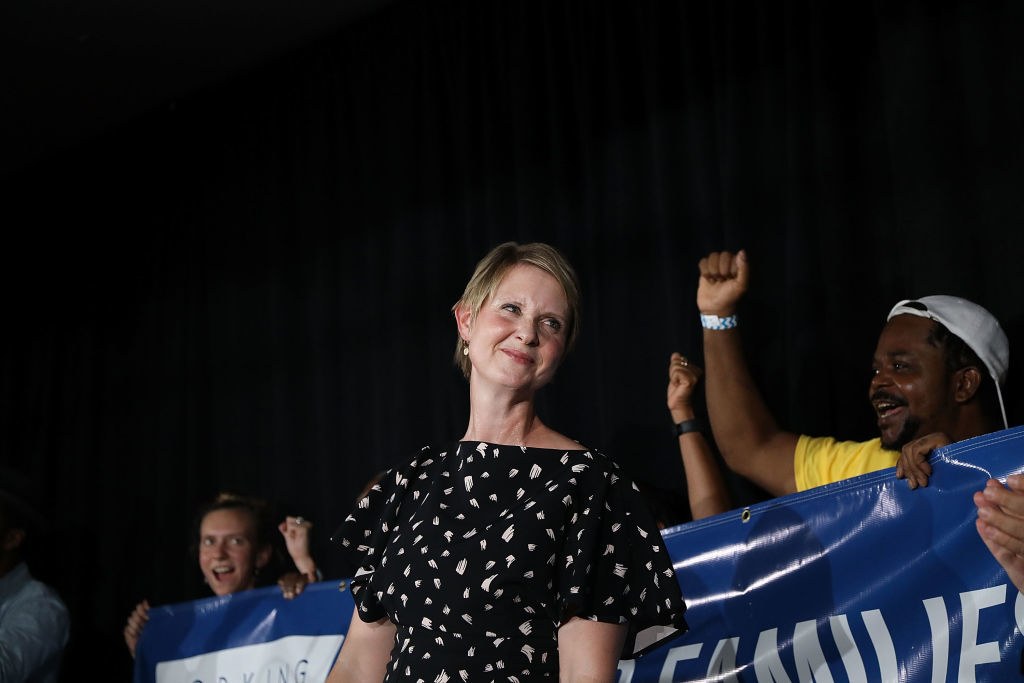
Cynthia Nixon Promises to Keep Fighting After Losing Her Bid for Governor


Activist and actress-turned-gubernatorial candidateCynthia Nixon lost her highly publicized bid for New York governor on Thursday night, with her opponent and incumbent governor Andrew Cuomo cinching about 65 percent of votes.

Despite the defeat, Nixon left her supporters with a rousing concession speech, in which she urged progressives to continue fighting for change and pushing for equality in New York and across the rest of the country.

“This is not a time to settle for the way things are, or sit back and hope for things to change,” she said. “This is a time to fight. As long as New York remains the single most unequal state in the country, we will keep fighting.”

Nixon had positioned herself as a progressive alternative to Cuomo and promised to change the status quo. Had she won, the former Sex and The City star would have been the state’s first female and openly gay governor, and her platform included championing LGBTQ causes, as well as solutions for racial and economic injustice.

In a statement to Glamour after announcing her candidacy, she explained how the election of Donald Trump was a “wake-up” call to women who have launched political campaigns this year in unprecedented numbers.

“I’ve been humbled and inspired by the thousands of women who are running for office for the first time. And today, I am honored to join their ranks,” she said.

Nixon, like recent progressive candidates such as Alexandria Ocasio-Cortez, had pledged not to take any corporate campaign money and eventually secured a record number of small donors that helped her pull 30 percent of votes. She ended up raising about $2.5 million—just a fraction of the $25 million Cuomo reportedly spent on television ads and mailers, according to the New York Times. Buzzfeed reported that Cuomo’s spending per day was almost the same amount of Nixon’s total.

In her speech on Thursday, Nixon praised the gains her campaign had made despite being up against Cuomo’s hefty budget, and said she was inspired rather than discouraged.

“Before a single vote was cast, we have already won. We have fundamentally changed the political landscape in this state,” she said. “This campaign changed expectations about what is possible in New York state.”

She also evoked the achievements of recent progressive candidates, such as Ocasio-Cortez and Ayanna Pressley, who have toppled long-standing incumbents and represent a new era of progressive politics. She urged Democrats to “stand for something” and take back the party while encouraging a new generation to keep pushing forward.

“This is an incredible moment for progressives, but it is not just a moment. it is a movement, and this movement is only growing stronger… To all the young people. To all the young women. To all the young queer people who reject the gender binary. Soon you’ll be standing here, and when it’s your turn, you’ll win,” she said.

MORE: With Letitia James’ Primary Win, New York Could See Its First Black Female Attorney General


Source link

Categories
Health

Tuesday's Primaries Lead to Historic Number of Women Nominees for Governor and Congress


Bust out those record books again: As of this week, more women have now won nominations for the House of Representatives than any other time in U.S. history. There’s also a new record for female governor nominees in a single year, and a progressive lawyer from Michigan could become the first Palestinian-American woman in Congress. (The previous record for women nominated for Congress was 167, according to the Center for American Women and Politics.)

Going into Tuesday’s flurry of midterm primaries, 162 women had already been nominated this election year. By the time the polls closed in Kansas, Michigan, Missouri, Washington, and Ohio, the new record had jumped to 183, according to CAWP data.

On top of that, Democratic primary voters in both Kansas and Michigan chose a woman to go up against male Republicans for November’s governor battle. That brought the national total for the year to 11, CAWP said—beating the previous record of 10 female nominees back in 1994.

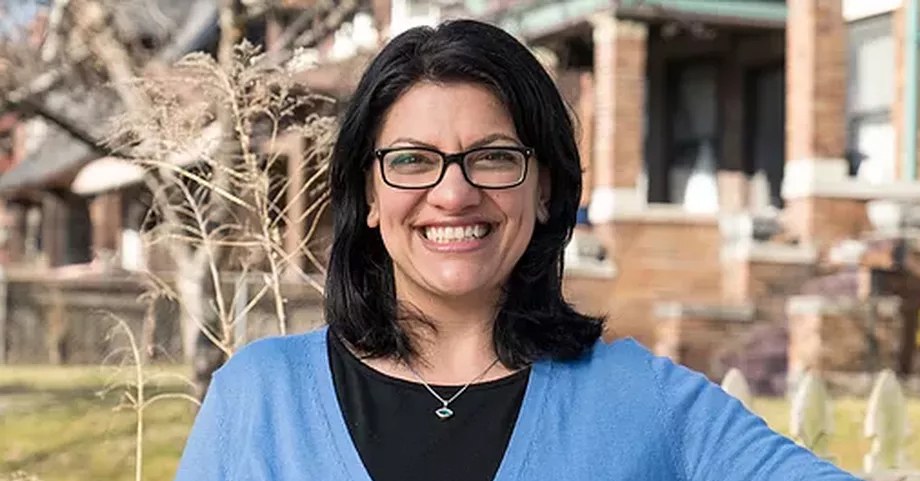
And then there’s the story of Rashida Tlaib, a Palestinian-American lawyer and former state legislator set to take a seat long occupied by Rep. John Conyers of Michigan, who was accused of sexual harassment by a former staffer last November.

Glamour is keeping tabs on women’s progress throughout this wild midterm cycle. Here’s your rundown of Tuesday’s most exciting races:

MICHIGAN

In one of the biggest victories of the night, Tlaib fought her way through a crowded Democratic primary for the nomination to succeed former Rep. Conyers.

Tlaib, who calls herself a “mama working for justice, social worker at heart, Detroiter, Palestinian American, proud Muslima,” will run unopposed in November for the House seat Conyers first won in 1964.

After a career during which he helped impeach Nixon and employed Rosa Parks, the 89-year-old Conyers “stepped down in December citing health reasons,” the Associated Press noted, “though several former female staffers had accused him of sexual harassment.”

It’s then maybe a bit karmic that he’ll likely be succeeded by someone who once got arrested at a 2016 event in Detroit which she’s said featured women bombarding then-candidate for President Donald Trump with questions about harassment. While some criticized her arrest as “unbecoming” of an ex-lawmaker, Tlaib later said in a newspaper op-ed, “I believe it is unbecoming of any American to not stand up to Trump’s hate-filled rhetoric and tactics.”

Tlaib, the eldest of 14 kids, defeated five other candidates in the Detroit-area primary—including a great-nephew of Conyers.

Tuesday’s primary also proved Democrats in the Wolverine State also want their next governor to be a woman lawyer, former prosecutor Gretchen Whitmer.

To win the Democratic nomination and the chance to go up against Republican state Attorney General Bill Schuette, Whitmer had to defeat Dr. Abdul El-Sayed. A onetime head of the Detroit Health Department, El-Sayed campaigned with newly minted Democratic socialist superstar Alexandria Ocasio-Cortez in his bid to become the nation’s first Muslim-American governor.

As a former state Senate minority leader, Whitmer notes on her website, she publicly told fellow lawmakers of “surviving sexual assault to speak out for all the women they silenced by refusing to hold a single public hearing” — a level of candor widely seen among female contenders in the 2018 election cycle.

Schuette has the backing of Trump in an election that’s testing his campaign-season influence—and could cost his Republican Party control of Congress. So does John James, a businessman and Iraq War veteran who’s now the GOP nominee to unseat incumbent Democratic Sen. Debbie Stabenow, the only Michigan woman ever to hold the office.

KANSAS:

Laura Kelly, a longtime state Senator, ran away with the Democratic nomination for governor in a primary against four male candidates. She had the support of Kathleen Sebelius, the only living former female governor of the Sunflower State and the onetime head of the U.S. Health and Human Services Department.

Kansas is still trying to decide on Kelly’s Republican opponent for November.

It wasn’t immediately clear whether Kelly’s Republican opponent would be current Gov. Jim Colyer or Kansas Secretary of State Kris Kobach, a Trump ally known as a hard-liner on immigration and voter fraud. The Colyer-Kobach primary remained too close to call Wednesday.

The morning after the vote, Sharice Davids, a lawyer and former MMA fighter, won in her bid for the Democratic nomination in House District 3, per a Wednesday AP race call. If she goes all the way, notes the Kansas City Star, she’d be “the first LGBT person to represent the state of Kansas” in Congress.

Davids tweeted that she looked forward to working with her fellow Democrats “to change the face” of Kansas politics.

MISSOURI:

Not every woman in potentially history-making contests got to throw a victory party.

Democrat Cori Bush fell Tuesday in her attempt to become the first woman of color to represent her state in Congress. Bush, a nurse and pastor, was another progressive who ran with the backing of Ocasio-Cortez. In the end, her liberal platform and track record, which included activism tied to police-related shootings in Ferguson, wasn’t enough to score a primary win over Democratic Rep. William Lacy Clay, whose family has controlled the Missouri District 1 seat since 1969.

Incumbent Democratic Sen. Claire McCaskill cruised to a primary win, but she could face a tough November challenge from Republican Josh Hawley, the state attorney general—who once reportedly said sex trafficking had become a problem in the U.S. because the “sexual revolution has led to exploitation of women on a scale that we would never have imagined.” McCaskill’s last GOP challenger was then-Rep. Todd Akin, who notoriously blew up that 2012 campaign after claiming women’s bodies somehow prevent pregnancy in cases of “legitimate rape.”

This time, the Republicans may have more fodder to use against McCaskill, who earned herself the nickname “Air Claire” after she copped to using her private plane to fly around Missouri during what was supposed to be a down-home state tour by RV.

WASHINGTON:

According to the Gender Watch 2018 project, the Pacific Northwest brings America its twenty-third woman vs. woman contest for the House: Incumbent Rep. Cathy McMorris Rodgers, head of the House Republican Conference, will go up against Democratic economist Lisa Brown, the former leader of the state Senate.

The state’s race for U.S. Senate will pit incumbent Democrat Maria Cantwell against Republican challenger Susan Hutchison, making it at least the third women-only showdown in the nation for the upper chamber.

Results were still coming in early Wednesday Eastern time, but from federal races on down, there was plenty of chatter about Washington being stirred by a blue wave.

OHIO:

In a historically critical state for presidential elections, the GOP’s Troy Balderson had a slight lead over Democrat Danny O’Connor as of early Wednesday.

Trump made a personal appearance for Balderson in what ended up a cliffhanger of a special election to replace retiring Republican Rep. Pat Tiberi. Plus, both parties dumped money into the race.

In a twist, Twitter dished out gallons of haterade to the Green Party after the vote, with Democrats questioning why liberal Greens couldn’t have joined them to stop Trump’s Ohio pick.

The takeaway: Tuesday’s votes mark a new series of milestones in an election year that’s seen Georgia’s first black woman nominee for governor; Tennessee’s first female nominee for U.S. Senate in 40 years; and New Mexico setting the stage to send a Native American woman to Congress for the first time, among other strides.

It’s not over until November, of course.

To actually become office-holding “firsts,” women candidates have to last. Many face tough races, and their numbers may be whittled down by both general-election losses to men and to other women.

The next big round of multi-state primaries is August 14, with voters hitting the polls in Connecticut, Minnesota, Vermont, and Wisconsin.

Stay tuned!

Celeste Katz is Glamour’s senior politics reporter. Send news tips, questions, and comments to celeste_katz@condenast.com.

Related Stories:

Women in These 8 States Made Huge Strides in Tuesday’s Primary Elections

Everything You Need to Know About Alexandria Ocasio-Cortez, the Millennial Who Beat Top Democrat Joe Crowley


Source link
Categories
Health

Stacey Abrams Has to Beat Donald Trump's Guy to Become America's First Black Woman Governor


It’s on.

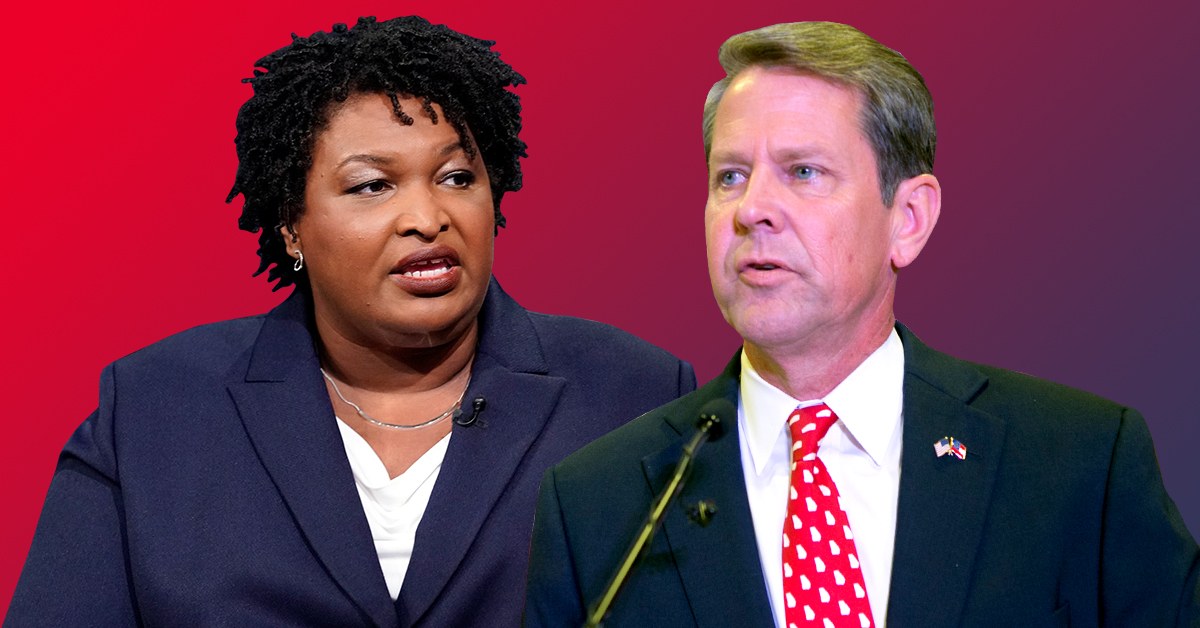
Democrat Stacey Abrams has an opponent in her quest to become Georgia’s next governor. The Yale-trained attorney will take on Republican Brian Kemp in the race, drawing the eyes of the nation to a pivotal November contest between a progressive black woman and a pro-Trump conservative man.

Abrams is campaigning to become the first black woman governor in U.S. history. A businesswoman and writer, she was the first female leader of her state’s General Assembly. On the other side is Kemp, who is currently Georgia’s sitting secretary of state and a former state senator. President Donald Trump endorsed him as “tough on crime, strong on the border and illegal immigration”—helping him defeat Lieutenant Governor Casey Cagle in Tuesday’s Republican primary for governor to become his party’s nominee.

Now Abrams and Kemp will duke it out to succeed Republican Governor Nathan Deal, who can’t run again because of term limits. Their showdown highlights a coast-to-coast midterm battle between Republicans who embrace Trump’s economic and social agenda and the Democrats who passionately reject it.

Abrams got her shot at Georgia’s highest office after the backing of A-list supporters and strong fund-raising helped her win a May Democratic primary showdown against a somewhat more moderate white candidate, Stacey Evans.

But with an opponent who is a Trump favorite in the other corner, how will Abrams fare? Audrey Haynes, University of Georgia associate professor of political science, says she has a tough fight ahead of her.

She expects the possibility of an Abrams win will energize Democrats, including black women voters, who have been key players in many of this cycle’s highest-profile elections, especially at a time when America has just six sitting female governors and not a single state with a black chief executive.

But Georgia went for Trump over Hillary Clinton in the 2016 presidential election, and has yet to join the ranks of swing states that neither Republicans nor Democrats can consider a lock. (In fact, Georgia has not elected a Democratic governor since 1998.)

That same excitement could also emerge among Republican voters who want to use the midterms as a show of support for Trump and his chosen candidates, including people like Kemp, whose campaign featured an ad in which he proudly proclaimed himself a “politically incorrect conservative” who’d even use his “big truck” to “round up criminal illegals” personally.

[embedded content]

A Brian Kemp for Governor ad

Bring it on, says Abrams, who’s running on a platform that emphasizes criminal justice reform and economic opportunity and who tweeted that she’d be proud to join the ranks of Democrats Trump has campaigned against.

Kemp, meanwhile, tweeted his thanks to Trump and said he looks forward to working with his former rival Cagle “to defeat Stacey Abrams and her radical, left-wing backers!” He promises to be a governor who will defend the rights of gun owners, fight crime, and cut government regulations.

Come November “I would predict that turnout will be high. People are passionate,” Haynes told Glamour via email. “I suspect that President Trump will make an appearance, and I am sure that the Abrams campaign would love to see him go off script and deliver a message that they can use to motivate their voters, particularly women, to turn out.”

Individually, “Kemp has shown that he can campaign, stay on message, build bridges to his intra-party opponents, and stump well. Abrams is a very good communicator, can raise money, stay on message, and can campaign as well. Both come into the general election with some baggage that will be the content of a multitude of negative ads from a host of super PACs and such,” Haynes told Glamour.

For Abrams, that baggage includes her admission of racking up significant personal debt. Kemp’s critics, meanwhile, say his political ambitions have been financed by some of the same people whose businesses he oversees as secretary of state.

“In the end, this will be a contest of ideas—whose do you like better—and one’s existing partisanship may have already decided that in a very polarized political environment,” Haynes said. “It will be a contest of organization, who can mobilize, and it will be a contest of endurance [as to] who can campaign to the very end. Those of us who study politics are watching to see what will happen.”

And with the nation’s eyes laser-focused on a race that could go down in the history books, they won’t be alone.


Source link

Categories
Health

Valerie Ervin's Bid to Be the First Black Woman Governor of Maryland


Democrat Valerie Ervin has traveled a long road to become a candidate for governor of Maryland. If she had complied with one man’s wishes years ago, she might not have set foot on the path at all.

“When I ran for the [Montgomery County] Council the first time, a very well-known African-American man, political leader, sat me down and he said, ‘There is already an African-American man running, and you can’t run because we need to make sure he wins,’ recalled Ervin, who would be the first black woman — or woman of any color — to occupy the governor’s chair.

“And I ran anyway. And I won.”

Ervin’s bid for governor is exceptional, even in an election year that’s brought new attention to women and minorities competing for office at all levels of government. In a sit down with Glamour, the longtime political activist acknowledged the conflicts generated by an opportunity born of tragedy.

Originally a candidate for lieutenant governor of Maryland, Ervin decided to move to the top of the ticket after the sudden death of her running mate, Kevin Kamenetz, just weeks before the vote. “One day we saw him; the next day, he was gone,” she said of Kamenetz, the 60-year-old Baltimore County executive who died May 10 after going into cardiac arrest.

Ervin had just days to decide whether to remain in the already-packed Democratic primary field and run in Kamenetz’s stead — and to choose a ticketmate of her own. She took the plunge, teaming up with Marisol Johnson, an El Salvador-born former member of the Baltimore County School Board.

When she filed her papers, “I could feel something in me that reminded me of all the people who went before me, who didn’t have the same kind of opportunities that I did,” said the University of Baltimore-educated Ervin, a 61-year-old former union organizer and advisor to the progressive Working Families Party.

She says she thinks not only of trailblazers — the Shirley Chisholms, the Fannie Lou Hamers — but those closer to home: “I’m inspired by the women who came before me in my family,” Ervin said. “They cleaned other people’s houses and took care of other people’s children and saved their money to make sure I went to college and had opportunity.”

Ervin, who has two adult sons and four grandkids, is not the only black woman seeking an American governorship at a time when there are no sitting black governors anywhere in the U.S. (and women run just six statehouses). But her situation is radically different from that of candidates like Georgia’s Stacey Abrams, whose Democratic primary win just secured her a place in the history books and secures her a shot at the top job.

To start, Abrams claimed victory in a one-on-one primary fight. She had a considerable war chest, enjoyed financial support from outside spending groups and drew marquee endorsements from major Democratic Party figures.

Ervin and Johnson, meanwhile, are not even the first two-woman team in an already packed and diverse field. Being Kamenetz’s ticketmate does not equate to Ervin having access to money he raised for the primary. What’s more, ballots already printed for Maryland’s June 26 primary list Kamenetz as the candidate for governor and Ervin as his chosen lieutenant—not the Ervin-Johnson ticket.

Donna Duncan, assistant deputy for election policy at the Maryland Board of Elections, told Glamour in a phone interview that votes for Kamenetz will be tabulated as counting for Ervin and that the state’s 2.14 million active registered Democrats will be informed about the change of circumstances in multiple ways, including via notices in polling booths and through social media.

Ervin, naturally, isn’t satisfied with those provisions, nor with official arguments that reprinting ballots in time for the election just isn’t feasible.

She isn’t alone in her assessment. Election expert Rick Hasen, a professor of law and political science at UC Irvine and a noted scholar of election law, wrote this week that it’s a “dicey” scenario in which the public is told a vote cast for one candidate will be logged as a vote for another.

“If absentee ballots are already out, how do we know if voters wanted to vote for the old or new candidate?” he asked Glamour. “Perhaps someone needs to seek a court order to delay the primary until new ballots can be printed and distributed. Usually candidate replacement rules are written so that replacement must occur before ballots are distributed.”

But Stella Rouse, director of the Center for American Politics and Citizenship at the University of Maryland, said the administration of the election seems to be in tune with legal precedent.

“The circumstance of her losing her running mate so near the filing deadline is definitely unfair, as she does not really have time to get her name out into the broad public domain, and thus is also limited in her ability to raise money,” Rouse said of Ervin via email.

“I can understand that she would like to at least be given the same starting position (so to speak) as her late running mate and to pick up where he left off, but she is not him and [Maryland] election law dictates how this is handled.”

Even as she objects to the conditions of the June vote, Ervin says her campaign’s ground game is in motion. Grounded in pledges of support for a $15 minimum wage, paid family leave, universal childcare and debt-free college, her bid will rely heavily on getting Maryland women of color to turn out, reprising the influential role the demographic has increasingly played in both primary and general elections.

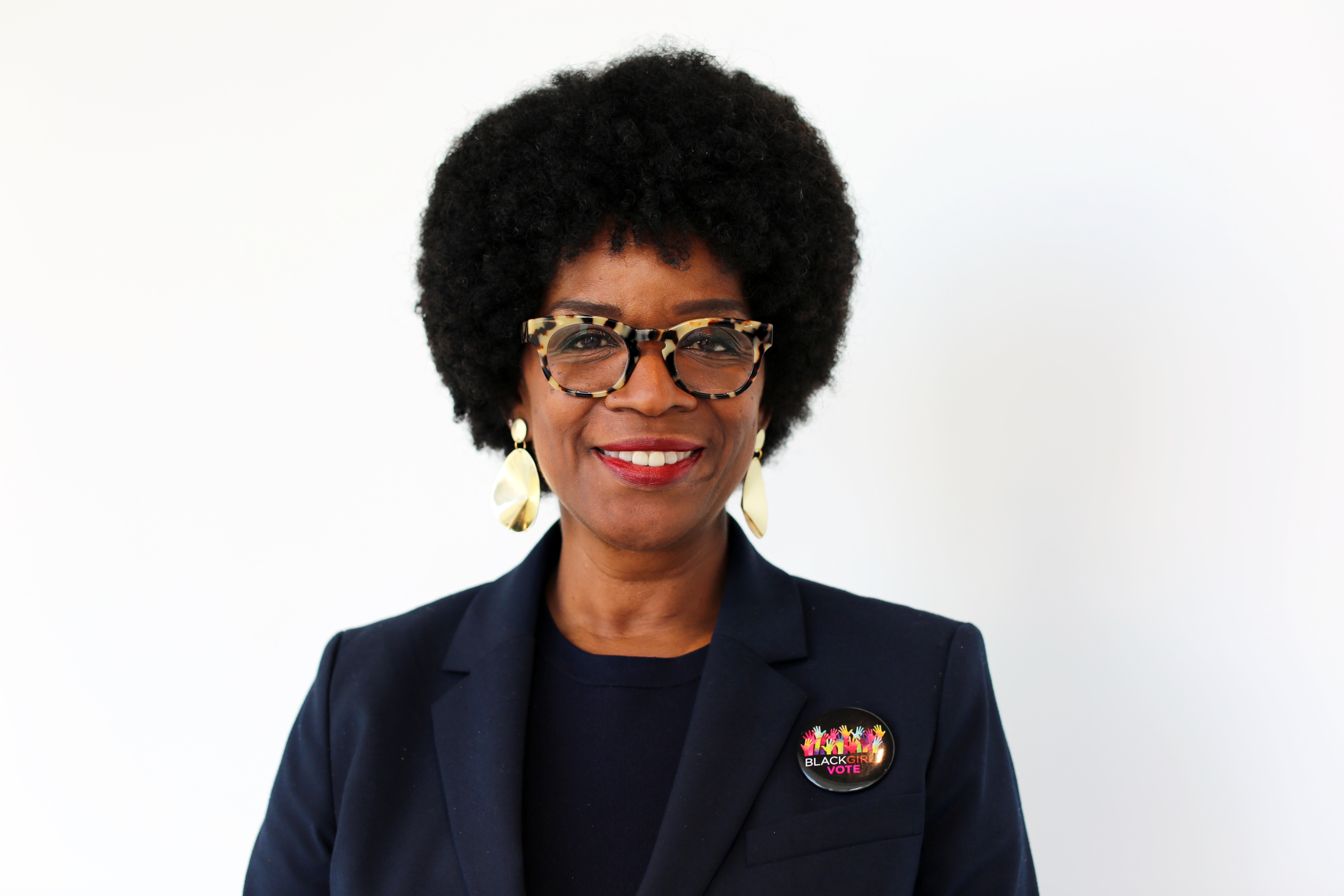
Running in a state poised to become majority minority, and as someone who self-describedly got politicized “by being just a pissed-off mother,” Ervin is not soft pedaling issues of race or gender, from her choice of running mate to the “Black Girls Vote” button on her lapel to a campaign website that calls out “the white supremacy, bigotry, and violence sweeping our nation.”

“Something is happening in the country. These primary elections are all about women, and a lot of them are about women of color, and the white male power structure is freaking out,” she said. “And so the fearlessness [with which we] approach the campaign is what’s really got people a little off kilter.”

Considering the myriad challenges she faces in her sudden ascent to the top of the ticket, Ervin is hardly a sure thing for the Democratic nomination, much less Maryland’s governorship. Still, she said, “I have this one moment to be a voice, whether I win or not. Of course I would love to win, but even if I don’t, I think my voice and Marisol’s voice has been elevated as part of [the] story of Maryland.”


Source link