Bust out those record books again: As of this week, more women have now won nominations for the House of Representatives than any other time in U.S. history. There’s also a new record for female governor nominees in a single year, and a progressive lawyer from Michigan could become the first Palestinian-American woman in Congress. (The previous record for women nominated for Congress was 167, according to the Center for American Women and Politics.)
Going into Tuesday’s flurry of midterm primaries, 162 women had already been nominated this election year. By the time the polls closed in Kansas, Michigan, Missouri, Washington, and Ohio, the new record had jumped to 183, according to CAWP data.
On top of that, Democratic primary voters in both Kansas and Michigan chose a woman to go up against male Republicans for November’s governor battle. That brought the national total for the year to 11, CAWP said—beating the previous record of 10 female nominees back in 1994.
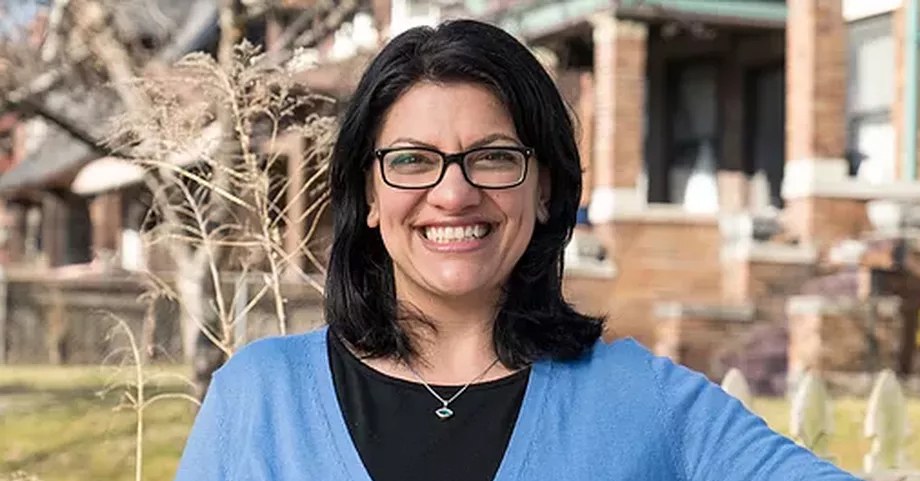
And then there’s the story of Rashida Tlaib, a Palestinian-American lawyer and former state legislator set to take a seat long occupied by Rep. John Conyers of Michigan, who was accused of sexual harassment by a former staffer last November.
Glamour is keeping tabs on women’s progress throughout this wild midterm cycle. Here’s your rundown of Tuesday’s most exciting races:
MICHIGAN
In one of the biggest victories of the night, Tlaib fought her way through a crowded Democratic primary for the nomination to succeed former Rep. Conyers.
Tlaib, who calls herself a “mama working for justice, social worker at heart, Detroiter, Palestinian American, proud Muslima,” will run unopposed in November for the House seat Conyers first won in 1964.
After a career during which he helped impeach Nixon and employed Rosa Parks, the 89-year-old Conyers “stepped down in December citing health reasons,” the Associated Press noted, “though several former female staffers had accused him of sexual harassment.”
It’s then maybe a bit karmic that he’ll likely be succeeded by someone who once got arrested at a 2016 event in Detroit which she’s said featured women bombarding then-candidate for President Donald Trump with questions about harassment. While some criticized her arrest as “unbecoming” of an ex-lawmaker, Tlaib later said in a newspaper op-ed, “I believe it is unbecoming of any American to not stand up to Trump’s hate-filled rhetoric and tactics.”
Tlaib, the eldest of 14 kids, defeated five other candidates in the Detroit-area primary—including a great-nephew of Conyers.
Tuesday’s primary also proved Democrats in the Wolverine State also want their next governor to be a woman lawyer, former prosecutor Gretchen Whitmer.
To win the Democratic nomination and the chance to go up against Republican state Attorney General Bill Schuette, Whitmer had to defeat Dr. Abdul El-Sayed. A onetime head of the Detroit Health Department, El-Sayed campaigned with newly minted Democratic socialist superstar Alexandria Ocasio-Cortez in his bid to become the nation’s first Muslim-American governor.
As a former state Senate minority leader, Whitmer notes on her website, she publicly told fellow lawmakers of “surviving sexual assault to speak out for all the women they silenced by refusing to hold a single public hearing” — a level of candor widely seen among female contenders in the 2018 election cycle.
Schuette has the backing of Trump in an election that’s testing his campaign-season influence—and could cost his Republican Party control of Congress. So does John James, a businessman and Iraq War veteran who’s now the GOP nominee to unseat incumbent Democratic Sen. Debbie Stabenow, the only Michigan woman ever to hold the office.
KANSAS:
Laura Kelly, a longtime state Senator, ran away with the Democratic nomination for governor in a primary against four male candidates. She had the support of Kathleen Sebelius, the only living former female governor of the Sunflower State and the onetime head of the U.S. Health and Human Services Department.
Kansas is still trying to decide on Kelly’s Republican opponent for November.
It wasn’t immediately clear whether Kelly’s Republican opponent would be current Gov. Jim Colyer or Kansas Secretary of State Kris Kobach, a Trump ally known as a hard-liner on immigration and voter fraud. The Colyer-Kobach primary remained too close to call Wednesday.
The morning after the vote, Sharice Davids, a lawyer and former MMA fighter, won in her bid for the Democratic nomination in House District 3, per a Wednesday AP race call. If she goes all the way, notes the Kansas City Star, she’d be “the first LGBT person to represent the state of Kansas” in Congress.
Davids tweeted that she looked forward to working with her fellow Democrats “to change the face” of Kansas politics.
https://twitter.com/sharicedavids/status/1027183374073573377
MISSOURI:
Not every woman in potentially history-making contests got to throw a victory party.
Democrat Cori Bush fell Tuesday in her attempt to become the first woman of color to represent her state in Congress. Bush, a nurse and pastor, was another progressive who ran with the backing of Ocasio-Cortez. In the end, her liberal platform and track record, which included activism tied to police-related shootings in Ferguson, wasn’t enough to score a primary win over Democratic Rep. William Lacy Clay, whose family has controlled the Missouri District 1 seat since 1969.
Incumbent Democratic Sen. Claire McCaskill cruised to a primary win, but she could face a tough November challenge from Republican Josh Hawley, the state attorney general—who once reportedly said sex trafficking had become a problem in the U.S. because the “sexual revolution has led to exploitation of women on a scale that we would never have imagined.” McCaskill’s last GOP challenger was then-Rep. Todd Akin, who notoriously blew up that 2012 campaign after claiming women’s bodies somehow prevent pregnancy in cases of “legitimate rape.”
This time, the Republicans may have more fodder to use against McCaskill, who earned herself the nickname “Air Claire” after she copped to using her private plane to fly around Missouri during what was supposed to be a down-home state tour by RV.
WASHINGTON:
According to the Gender Watch 2018 project, the Pacific Northwest brings America its twenty-third woman vs. woman contest for the House: Incumbent Rep. Cathy McMorris Rodgers, head of the House Republican Conference, will go up against Democratic economist Lisa Brown, the former leader of the state Senate.
https://twitter.com/GenderWatch2018/status/1027036370395648005
The state’s race for U.S. Senate will pit incumbent Democrat Maria Cantwell against Republican challenger Susan Hutchison, making it at least the third women-only showdown in the nation for the upper chamber.
Results were still coming in early Wednesday Eastern time, but from federal races on down, there was plenty of chatter about Washington being stirred by a blue wave.
OHIO:
In a historically critical state for presidential elections, the GOP’s Troy Balderson had a slight lead over Democrat Danny O’Connor as of early Wednesday.
Trump made a personal appearance for Balderson in what ended up a cliffhanger of a special election to replace retiring Republican Rep. Pat Tiberi. Plus, both parties dumped money into the race.
In a twist, Twitter dished out gallons of haterade to the Green Party after the vote, with Democrats questioning why liberal Greens couldn’t have joined them to stop Trump’s Ohio pick.
The takeaway: Tuesday’s votes mark a new series of milestones in an election year that’s seen Georgia’s first black woman nominee for governor; Tennessee’s first female nominee for U.S. Senate in 40 years; and New Mexico setting the stage to send a Native American woman to Congress for the first time, among other strides.
It’s not over until November, of course.
To actually become office-holding “firsts,” women candidates have to last. Many face tough races, and their numbers may be whittled down by both general-election losses to men and to other women.
The next big round of multi-state primaries is August 14, with voters hitting the polls in Connecticut, Minnesota, Vermont, and Wisconsin.
Stay tuned!
Celeste Katz is Glamour’s senior politics reporter. Send news tips, questions, and comments to celeste_katz@condenast.com.
Related Stories:
Women in These 8 States Made Huge Strides in Tuesday’s Primary Elections