Categories
Health

For Some Sexual Assault Survivors, Justice Looks Like a Sit-Down With Their Assailant


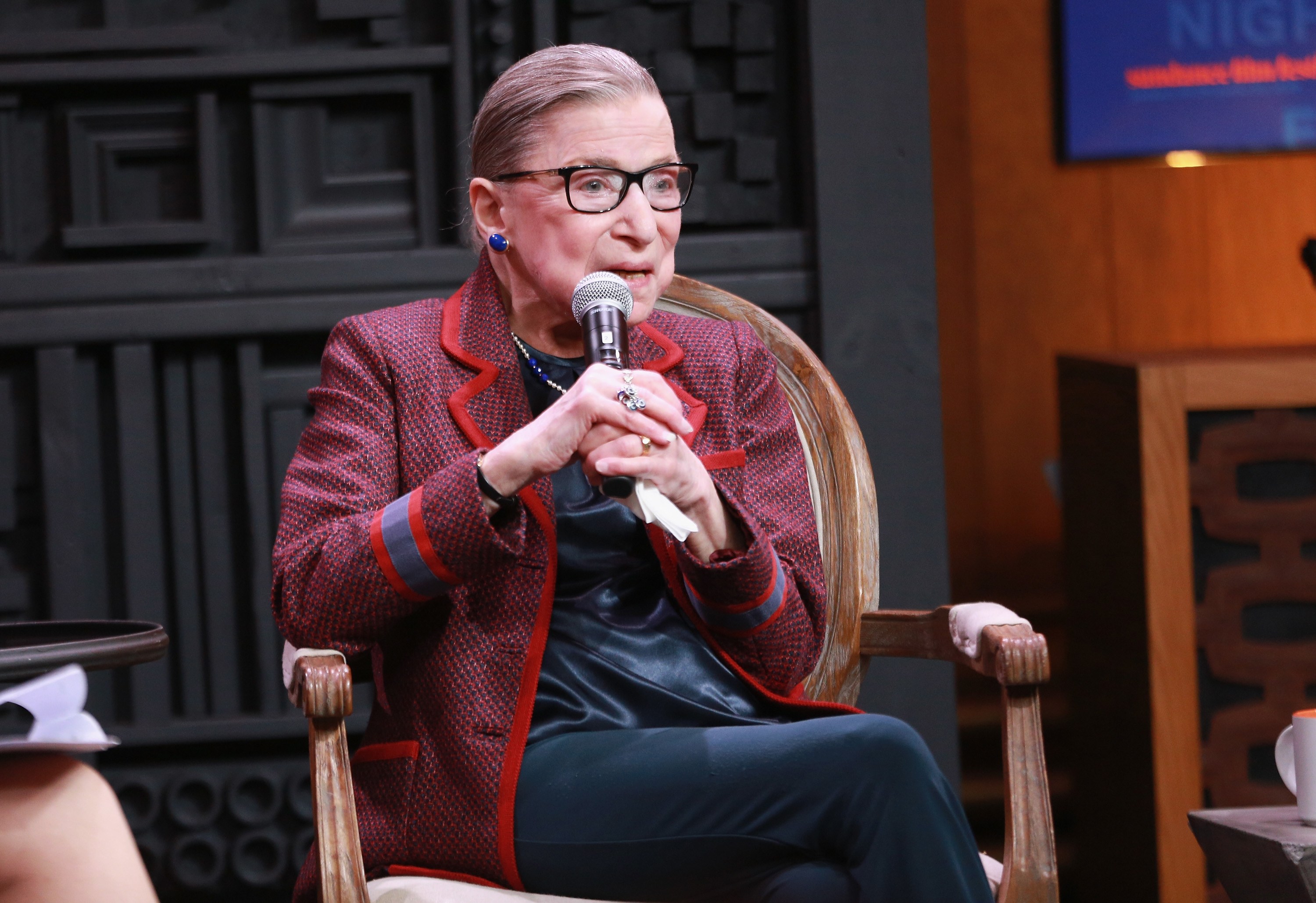
In the year since the #MeToo movement took center stage, one thing is clear: Consent can still be a hard concept to grasp. What is consent? Is there a double standard that comes with it? And when an encounter is not consensual, what’s the best path to accountability and healing? In a recent VICE on HBO episode, correspondent and producer Isobel Yeung (pictured above) explores the conversations around sexual assault. A survivor herself, the episode is a harrowing look at the long-term effects of assault for the victim…and the assailant.

Highlighting one of the most polarizing ways to hold the accused accountable, Yeung takes viewers through an emotional “restorative justice” session between a survivor and her alleged assailant. Sitting face-to-face, the two discuss the alleged assault—a revealing and powerful inside look at how both parties have processed the incident—and what justice looks like for the victim. Of course, for many victims, restorative justice isn’t enough justice. But, as Yeung states in the episode, this avenue isn’t a solution for all. “But at least it’s providing the beginning of a way forward.”

Here, Yeung describes what watching that session was like, the complexities of consent and the path to redemption and healing for survivors.


If one thing is clear after the tumultuous Kavanaugh-Ford hearings last month, it’s that trauma from sexual assault is real, lasting and deep. As millions of Americans listened to Dr. Christine Blasey Ford’s brutal, heartfelt testimony, many survivors were triggered to think back to their own, harrowing experiences. Hundreds felt compelled to recount their stories to colleagues, friends, family members, the Sexual Assault Hotline, and even C-SPAN.

Many of these stories emerged from women who for so long had resolved not to speak about their sexual encounters in public or even with those closest to them. Anxiety, self-blame, shame and fear are among the reasons that individuals stay silent.

That was the case for me. When I was 18, a man who I considered my close friend forced himself upon me. I didn’t understand what was happening until I looked around to see him with his clothes off, pushing my head towards his genitals. The details of that night are hazy and have long been a deep source of embarrassment to me, resulting in a resolution not to discuss it with anyone or to allow it to define my life.

At the time, I dismissed the criminal justice system as a means to any solution, knowing that I would have to explain, justify and relive that night in a public arena. I also had very little faith in justice effectively being served, which reflects thousands of other survivors, too. According to the non-profit RAINN, only 6 out of 1,000 rape cases result in successful convictions, meaning survivors are left fearing not only the humiliation of court proceedings, but also the high likelihood of their offender walking free.

Yet in this extraordinary moment of cultural reckoning, our lack of real options for addressing such experiences should not be ignored. How can we move on with accountability, healing and closure? And what should these look like? As part of our VICE on HBO documentary ‘Consent,’ we wanted to break through the heated political debates raging on both sides of this issue and search for solutions.

[embedded content]

What we found was that the most compelling alternative to the legal system is a relatively new technique known as restorative justice. The concept is simple: to facilitate a dialogue between perpetrator and survivor, allowing both sides to talk openly.

In California, we met a woman named Alexis and a man named James (not his real name). Back when they were college roommates, they had been drinking heavily one night and wound up having sex. In the decade since then, James has maintained that this was merely a drunken incident while Alexis believes it to be rape. Alexis reached out to James several months ago to let him know that legal action was off the table, but that she wanted to talk. We watched as the two of them arrived in a dimly lit warehouse for one of a series of highly orchestrated sessions that professor and restorative justice facilitator Alissa Ackerman had arranged. For two excruciatingly uncomfortable hours in which they sat directly facing one another, they recounted their memories of that night almost 10 years ago.

Alexis broke down as she recalled flashes of James letting himself into her room and climbing on top of her. But she spoke more of how that one incident had impacted every facet of her physical and mental life. She felt disbelieved and outcast from their friendship group, eventually dropping out of college. She’s suffered from years of severe depression and at one point attempted to take her own life. Even now, she continues to suffer from profound PTSD, which has only been made worse by the inescapable news in recent months, weeks and days.

James also sobbed as he grappled to come to terms with his own behavior and how he had inflicted so much hurt. With the encouragement of Professor Ackerman he eventually stuttered, “It was rape… That’s not easy to say, both because I know what it’s done to you and I know, you know… there’s a flash of fear every time I associate with it.”

It was tense and uneasy to be a witness to this and I was mesmerized by the level of honesty, humanity and vulnerability in the room. It ended with the two of them standing up and hugging. It all seemed like a visible relief for Alexis, who was eager to continue the sessions on a regular basis. “This is a justice process that puts the survivor in the driver’s seat,” she told me. “We’re not really moving the needle at all until men start doing it, and your words have the potential to reach any other men and show that there’s a path to taking responsibility.”

There’s limited data on the long term benefits of restorative justice, but initial studies suggest participant satisfaction and a lower recidivism rate. Of course, that won’t be the case for everyone. In some cases, it is too soft an approach and is seen as excusing criminals or even giving them a platform, while risking re-traumatization for survivors.

Despite that, interest is steadily growing. In this nauseating time of very public anger, denial and partisan noise, it’s refreshing to think of an alternative reality where accountability is palpable. What James and Alexis proved was that in some of the darkest corners of ourselves, there could still be a chance for redemption, healing and repair.


Isobel Yeung is a VICE correspondent and producer. You can watch the full “Consent” VICE on HBO special report, here.

MORE: Your Best Consent Ever: How You Both Can Get the Sex You Want


Source link

Categories
Health

Ruth Bader Ginsburg, the Second Woman Supreme Court Justice, Is Celebrating 25 Years on the Bench


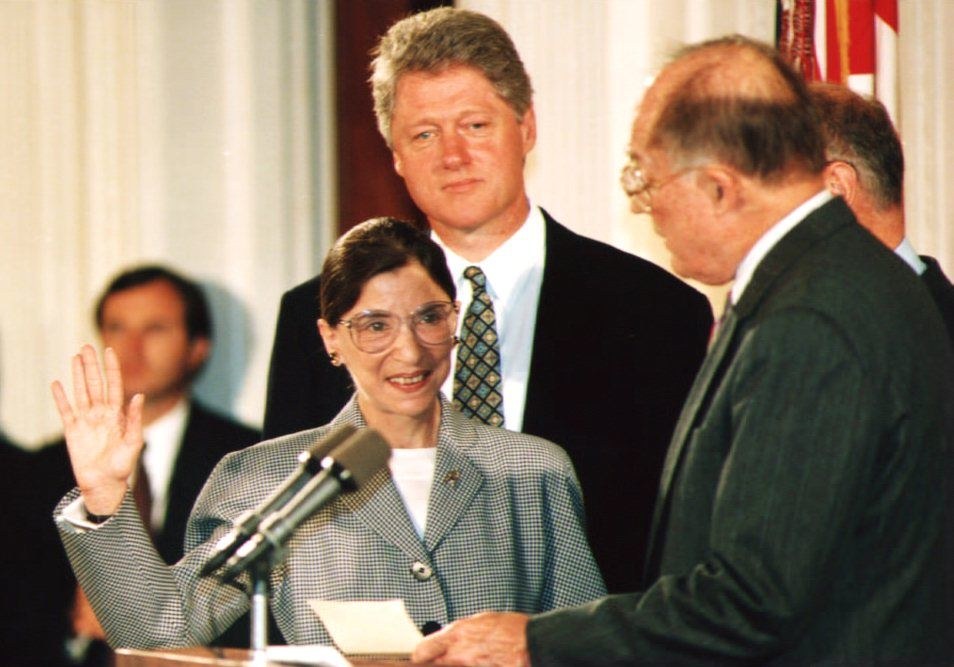
On August 10, 1993, Ruth Bader Ginsburg took her judicial oath at the White House, becoming the first Jewish woman and only the second woman justice ever appointed to the Supreme Court. Today she celebrates 25 years on the bench—a major milestone in a career that has turned her into a proud defender of women’s rights and one of the country’s most notorious cultural icons.

There are many reasons the nation loves Ginsburg (her intense workout included), but her work as a feminist trailblazer started way before she took a seat on the highest court in the land. Ginsburg was nominated to the court by President Bill Clinton following the retirement of former Supreme Court Justice Byron White, and she was already a force in the legal world. She had graduated at the top of her class at Cornell University and later attended Harvard Law School, where she was the first female member of the Harvard Law Review. She eventually graduated from Columbia Law, where she was also the first female professor hired on tenure track, which means her job at the institution was secure. Ginsburg also cofounded the Women’s Rights Project at the ACLU and worked there until President Jimmy Carter appointed her to the U.S. Court of Appeals in 1980.

After her Supreme Court nomination, Ginsburg gave an acceptance address on June 14, 1993, that highlighted many of the challenges she’d faced as a woman. She cited that there were less than 10 women in her 500-person law school class, and shared that not one law firm in New York City would hire her after she earned her degree. As women still fight for workplace and wage equality, it’s not hard to see how Ginsburg’s speech is just as relevant today as it was 25 years ago.

She was confirmed by the Senate in a 96–3 vote. As CNN Politics points out, her remarks following the constitutional oath ceremony shed light on the importance of diversity in the American justice system. “A system of justice will be the richer for diversity of background and experience. It will be the poorer, in terms of appreciating what is at stake and the impact of its judgments, if all of its members are cast from the same mold,” she said.

RBG has written some of the Supreme Court’s most notable decisions, including 1996’s United States v. Virginia, a case that struck down a male-only admittance policy at the Virginia Military Institute. In recent years she has fought against arbitration policies that affect workers and women in particular, as well as Trump’s travel ban on majority Muslim countries.

Despite such a historic run, many people have feared that RBG’s tenure might come to an end soon. After her colleague, Supreme Court Justice Anthony Kennedy, announced his retirement, social media users went into a frenzy, pledging to protect RBG at all costs. “I’m buying Ruth Bader Ginsburg an Anytime Fitness membership, 10 years of Vitamins, and a lifetime of Smoothies…” one Twitter user wrote.

Luckily, RBG assuaged everyone’s fears last month when she said she’s not going anywhere in the near future. “I’m now 85,” she said. “My senior colleague, Justice John Paul Stevens, he stepped down when he was 90, so I think I have about at least five more years.”

That’s all we need to assure ourselves there are many more RBG milestones to come.

Related Stories:

Twitter Users Promise to Protect Justice Ruth Bader Ginsburg at All Costs After SCOTUS Shakeup

A Reminder That We Won’t Need a Full Repeal of Roe v. Wade for Abortion to Be Restricted


Source link

Categories
Health

Twitter Users Promise to Protect Justice Ruth Bader Ginsburg at All Costs After SCOTUS Shakeup


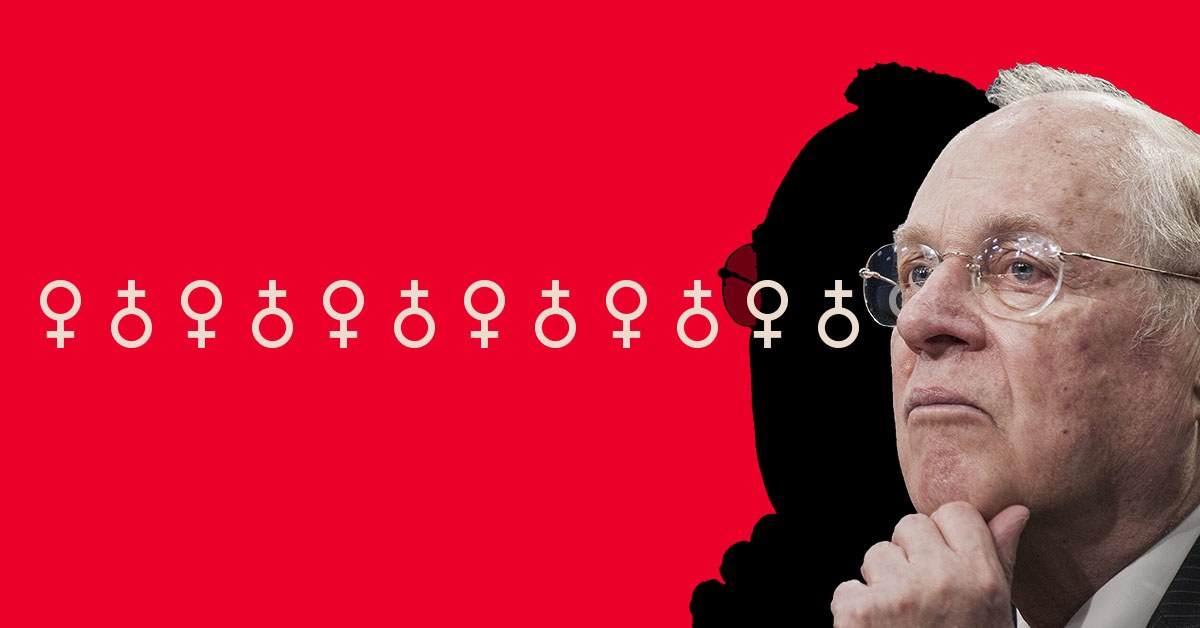
After Supreme Court Justice Anthony Kennedy announced his retirement from the bench this week, questions quickly surfaced about what his exit means for the future of women, people of color and the LGBTQ community, whose rights are often on the line in high-profile cases that come before the justices.

But there was one other person the internet immediately focused their attention on: Ruth Bader Ginsburg.

Kennedy’s retirement sent Twitter into a full panic spiral, as people worried that perhaps RBG, who is 85, might also be planning her exit. Ginsburg is the oldest Supreme Court Justice, and she’s already five years past the average age at which most Justices have retired.

“Protect RBG at all cost!” tweets flying across social media read, with many users promising to send her vitamins, prayers, and even 24/7 security detail. “I’m buying Ruth Bader Ginsburg an Anytime Fitness membership, 10 years of Vitamins, and a lifetime of Smoothies…” one Twitter user wrote. “I’m becoming an organ donor but only if my organs are going to Ruth Bader Ginsburg,” someone else said.

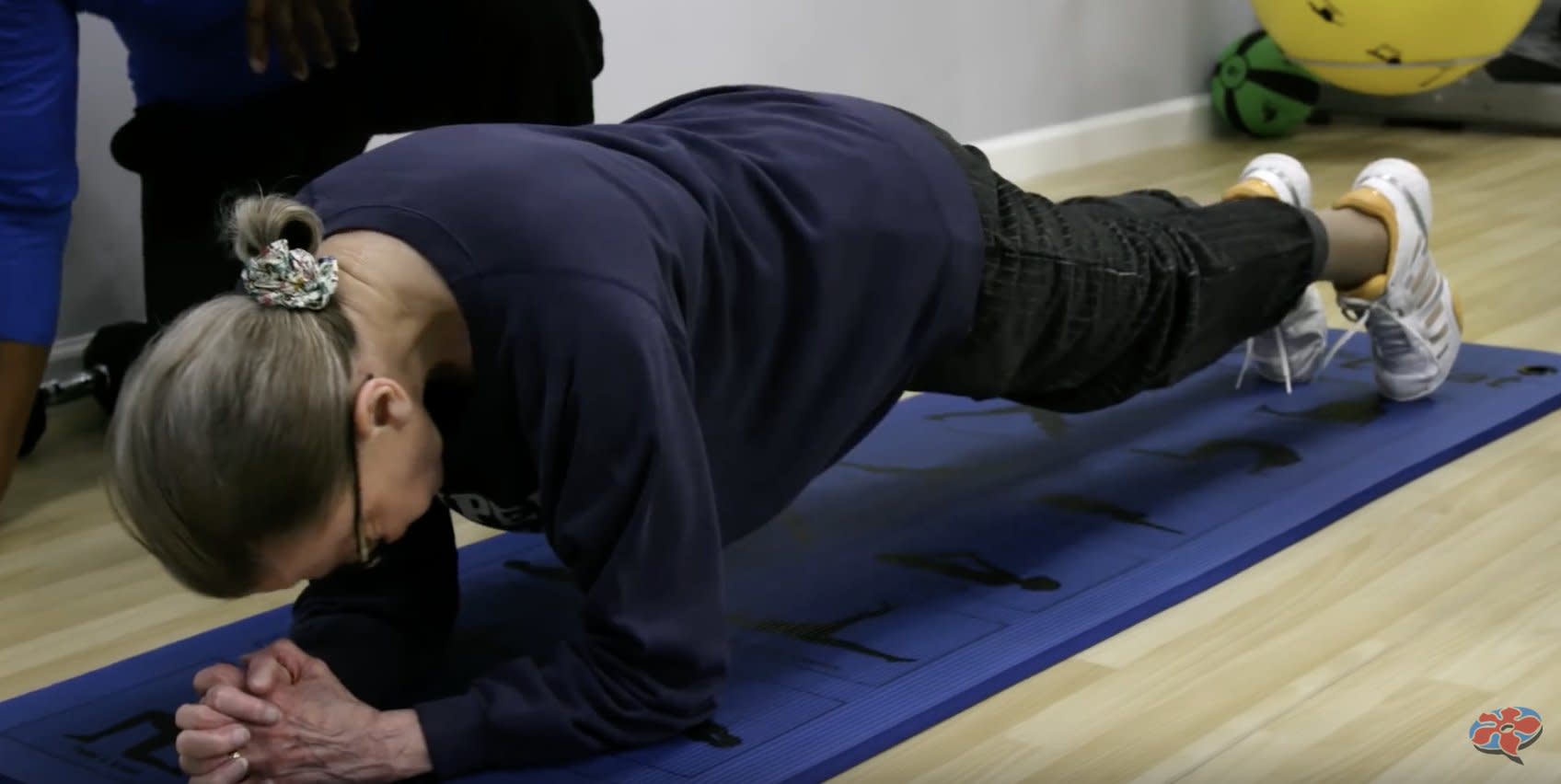
The good news for nervous RBG fans is that she’s still going strong. While many predicted she might call it quits during the Obama administration, the planking heroine of an octogenarian has kept on. She even hinted earlier this year that she hoped to follow the path of former Supreme Court Justice John Paul Stevens, who retired at the age of 90. According to the Los Angeles Times, she also said that she’s in “very good” health and that “as long as I can do the job full steam, I will be here.”

Plus, there’s recorded proof of her fitness level here, which means Twitter users can rest easy.

While the world went full-blown Liam Neeson in Taken over the Notorious RBG, she was busy reacting to Kennedy’s news like the boss she is. Kennedy, who was considered the Supreme Court’s key swing vote, could throw off the conservative-liberal balance of the bench with his retirement, but there was no trace of anxiety in Ginsburg’s sweet tribute to him.

“I will miss the pleasure of his company at our Conference, his helpful suggestions on circulating opinions, his recommendations of art exhibitions to visit with my chambers staff, and much more,” she said in a statement. “For the good he has done during the 43 years he has served as a member of the federal judiciary, he has earned a rousing Bravo.” She also called Kennedy a “true gentleman, a caring jurist and a grand colleague in all respects.”

What a class act. (But also, please never retire.)

Related Stories:

A Reminder That We Won’t Need a Full Repeal of Roe v. Wade for Abortion to Be Restricted

How Justice Anthony Kennedy’s Retirement From the Supreme Court Could Erode Women’s Rights


Source link

Categories
Health

How Justice Anthony Kennedy's Retirement From the Supreme Court Could Erode Women's Rights


Presidents come and go, but Supreme Court justices last a lifetime—and their rulings can affect women for generations to come.

The privilege of nominating a high court judge now falls to President Donald Trump for the second time with the coming retirement of Justice Anthony Kennedy.

Trump has vowed to put conservative judges on the bench, and he kept that promise when he chose Neil Gorsuch to replace the late Antonin Scalia last year. In choosing Kennedy’s replacement, Trump could shift the court further to the right, changing the landscape on issues affecting American women—including abortion rights—and could fire up both sides of the aisle in an already tumultuous election year.

Here’s a look at what’s ahead for the court—and the the country.

What’s at stake?

Trump’s next nominee may matter even more than his last. Replacing Scalia with Gorsuch didn’t change the court’s partisan balance; it was a case of one conservative justice succeeding another.

That’s about to change, according to Melissa Murray, the Alexander F. and May T. Morrison Professor of Law at the University of California, Berkeley.

“Over the last 20 years, Justice Kennedy emerged as the sort of prototypical swing justice on the court, the person whose vote was pivotal in securing and upholding such policies as affirmative action,” Murray, who clerked for Justice Sonia Sotomayor before her SCOTUS appointment, told Glamour. “He often was on the progressive side [of issues], though not all. And he of course was famously the architect [of] basically the whole process of getting to same-sex marriage… His retirement is actually a huge void, and it sort of disrupts the equilibrium of the court.”

Murray said a rightward SCOTUS lurch could deeply influence women’s lives on issues ranging from abortion rights to voting protections to unionized labor.

What will happen with abortion law if a hard-right conservative gets the seat?

A huge amount of the attention surrounding Trump’s Supreme Court pick centers on how it might affect abortion—and more specifically the landmark 1973 case of Roe v. Wade, which effectively made abortion legal in the U.S. The departing Kennedy was the swing vote, siding with the liberals, in later cases seen as a direct threat to Roe.

A number of states already have their own legal restrictions on the termination of pregnancies. Abortion-rights proponents fear that cases now making their way through the lower courts could ultimately lead to the overturning of Roe and the end of legal abortions in America—something deeply conservative Vice President Mike Pence has openly said will happen this lifetime.

Pro-choice and anti-abortion advocates are mobilizing their bases ahead of Trump’s pick.

“The idea of Trump having his choice to fill another vacancy is terrifying for not only abortion rights, but for our ability to live free from discrimination in this country,” said Dawn Laguens, executive vice president of Planned Parenthood Federation of America in a press release issued in response to Kennedy’s retirement announcement. The group said its “11 million supporters call on the Senate to reject any nominee who would strip people’s individual rights and freedoms.”

“The most important commitment that President Trump has made to the pro-life movement has been his promise to nominate only pro-life judges to the Supreme Court, a commitment he honored by swiftly nominating Judge Neil Gorsuch,” said Marjorie Dannenfelser, president of the pro-life Susan B. Anthony List, in a press release issued by the group. “President Trump now has another crucial opportunity to restore respect for life and the Constitution. We trust him to follow through on his promise.”

So what does it mean if Roe v. Wade is overturned?

If the case is actually overturned, the landscape of where and what women can choose to do with their own bodies could change drastically.

In four states (Illinois, Kentucky, Louisiana, South Dakota), there are so-called “trigger laws” so abortion would be automatically banned if Roe is overturned.

According to the Guttmacher Institute, only eight states currently have legislation protecting the right to an abortion. Though it would be safe to assume that blue states without such laws would work to enact them quickly.

Red states and rural areas would likely see access to legal abortions disappear locally, meaning there would be an added financial burden in trying to travel to a state where they are still legal. This would disproportionately affect lower income women. CNN’s Jeffrey Toobin predicted that abortion would be illegal in 20 states within 18 months.

What does this mean for Trump’s base?

As Amy L. Howe noted in a piece for SCOTUS blog, “Anti-abortion voters had played a key role in [Ronald] Reagan’s election, and Kennedy initially provided both the president who appointed him and those voters with reason to be optimistic.”

Trump’s unfavorable ratings remain higher than his approvals in the runup to a midterm election that could make or break his party’s control of Congress.

“Without a doubt, the court appointment is a huge boost for Trump and Republicans, who were facing serious headwinds going into midterms. They still are—SCOTUS will drive significant [Democratic] and female turnout,” CNN commentator S.E. Cupp told Glamour.

At the same time, warned the conservative Cupp, “Don’t underestimate how much it will also motivate conservatives and evangelicals. If they were contemplating staying home, they now have reason to get out and vote. SCOTUS is the only—and I mean only—thing around which the fractured right can rally.”

Related Stories:

The NRA’s Most Wanted Customer: Women

Democratic Voters Wanted Something Different. They Got Alexandria Ocasio-Cortez.


Source link

Categories
Health

Senator Jeanne Shaheen: #MeToo Is Not Enough. Survivors Deserve Justice in the Legal System


“Silence Breakers” are celebrated as Time magazine’s 2017 Person of the Year, #MeToo has gone viral, and countless women are courageously sharing their stories. Sexual harassment has come out of the shadows, and Americans have opened a larger conversation about sexual assault. But survivors who seek justice continue to encounter an often hostile legal system that compounds their suffering. Last year, I led the effort in Congress to pass the Sexual Assault Survivors’ Rights Act to empower survivors to be informed and fairly treated throughout the criminal justice process. The rights set forth in this new law apply only in federal cases, but I intended this to be a catalyst to jumpstart efforts by states to improve their own laws. It’s working. A growing number of states are following suit with their own codes of survivors’ rights, and I’m encouraging activists in every state to demand reform.

Two years ago, Amanda Nguyen came to my Senate office to recount her nightmarish experience pursuing justice after being sexually assaulted on her Ivy League campus. Her state gave survivors a 15-year window to pursue criminal charges but routinely discarded rape kits (the DNA evidence gathered from a forensic exam) after six months, with no requirement to inform the survivor. Amanda had to fight repeated battles to prevent her rape kit from being destroyed and persevered through a grueling criminal justice process. She went on to found the advocacy group Rise, which is working worldwide to secure justice for survivors of sexual violence.

Outraged by countless stories like Amanda’s, I introduced the Sexual Assault Survivors’ Rights Act, which President Obama signed into law on October 7, 2016. Since then, there has been a groundswell of nationwide support for the rights set forth in the new law. Using the federal-level code as a template, activists across the United States are working to enact similar survivors’ rights codes or to enhance existing protections.

For survivors of assault in the workplace, they often fear retaliation that could end their careers. But many also fear being traumatized anew by a criminal justice system that often seems to blame the victim.

In recent months, women and men have come forward to report past incidents of sexual harassment and assault, including transgressions by prominent political leaders and powerful Hollywood executives and actors. Dozens of women have accused Miramax co-founder Harvey Weinstein of offenses dating back as far as the 1980s. We now have a better understanding of why so many survivors choose to remain silent for so long. For survivors of assault in the workplace, they often fear retaliation that could hurt or end their careers. But many also fear being traumatized anew by a criminal justice system that often seems to blame the victim or puts unnecessary and arbitrary obstacles in their path.

These are big reasons why sexual assault is among the most under-reported and unpunished crimes nationwide. Using data from the Department of Justice’s National Crime Victimization Survey, RAINN (the Rape, Abuse & Incest National Network, the country’s largest anti-sexual assault organization) found that about two out of three sexual assaults are not reported to police. Nearly four out of five sexual assaults against college-age female students are not reported. Many survivors who initially file charges become frustrated by the legal obstacle course and give up before their cases are resolved. Too often, their cases simply slip through the cracks.

Nationally, survivors’ rights have evolved rapidly in recent years. The federal Crime Victims’ Rights Act of 2004 greatly improved the treatment of all crime victims. It spelled out a list of victims’ rights in the federal criminal code, and states used this as a model for reforming their own codes of victims’ rights. Likewise, the Sexual Assault Survivors’ Rights Act spelled out survivors’ rights in federal cases and jurisdictions and is now serving as a model for reform at the state level.
In December, New Hampshire State Senator Donna Soucy introduced legislation, modeled on the new national law, to codify a list of rights to address unique issues faced by survivors in the Granite State. Legislators in other states are advancing their own bills. But until this process is complete, survivors will continue to face a daunting patchwork of laws from state to state. Without a clear, consistent set of rights articulated in the law, it’s difficult for even the most dedicated law enforcement professionals to ensure that survivors receive justice.

Too often, cases simply slip through the cracks…We need a standardized, transparent process that reassures survivors that they will be supported and protected as they pursue justice.

What’s needed is a standardized, transparent process that reassures survivors that they will be supported and protected as they pursue justice. The Sexual Assault Survivors’ Rights Act establishes fair procedures with regard to rape kits, including the right not to be charged any fees related to the forensic medical examination, the right to have sexual assault evidence preserved for the entire statute of limitations period, the right to be informed of the results of these medical exams, and the right to written notice prior to destruction of a rape kit. These and other rights set forth in the new law are basic and essential protections that all survivors ought to have, regardless of where they live.

I respect the great courage of Amanda and other survivors who choose to come forward. But something is wrong if it takes great courage for a survivor of sexual assault to win simple justice. Bear in mind, too, that violent crimes are committed not only against the victims but also against society. These crimes can instill fear and distrust within an entire community. We all have a profound interest in bringing perpetrators of sexual assault to justice.

I hope that women and men in states across America will join the movement to advance these reforms. Currently, inadequate state laws are frustrating not only to survivors but also to law enforcement officers and prosecutors. These laws and procedures serve only the perpetrators who too often remain at large.
The #MeToo movement has sparked a social revolution. It’s time, now, for a reformed legal process that ends the silence surrounding sexual assault, brings it out of the shadows, and gives survivors a fair shot at justice.


Source link

Categories
Health

'The Big Bang Theory' Season 11 Episode 6 Recap: Finally, Justice for Penny


Tonight’s episode of The Big Bang Theory got off to a rather odd and uncomfortable start: Howard went in for a vasectomy, Sheldon unintentionally referred to wanting to “touch as many children as possible” as the host of a kid’s science show, and Amy was shot down (by Sheldon, ugh) for suggesting the new search for Professor Proton be a female candidate. Yeah, things weren’t off to the greatest of starts in “The Proton Regeneration.” But, as with most classic episodes of The Big Bang Theory, the best moments happen when the characters are faced with real-life issues that challenge the very essence of who they are. It’s not always the most emotional or ground-breaking scenes, but the most truthful.

In tonight’s episode, Howard spent the bulk of it recovering from his surgery. Meanwhile, Bernadette—who was told she was pushing herself too much at her 16-week checkup—was put on bed rest. Ever since Bernadette’s first pregnancy was announced, I’ve been holding out hope for a Sheldon/Halley babysitting scene, but the show actually gave us one better: Penny as the caretaker.

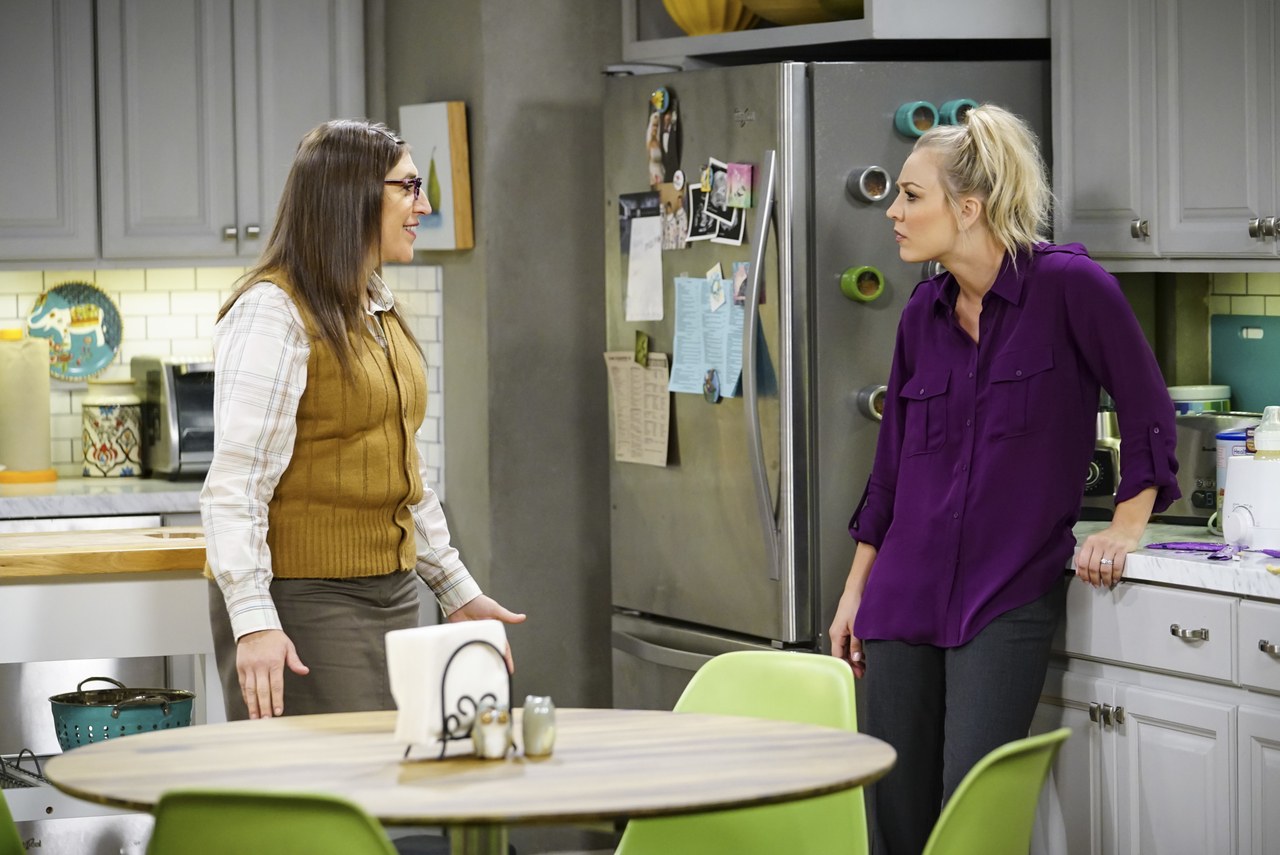
This new development happened by chance: Penny stops by the Wolowitz household to check in on Bernadette and Howard, thinking Raj is already there taking care of baby Halley. But he had to go to work, so Bernadette and Howard are left to do what they can—which isn’t much. When Halley starts crying, Penny offers to go in and check on her, but in what’s possibly the biggest insult since, well, Sheldon’s comments minutes earlier, Bernadette and Howard suggest Stuart might be a better option than Penny.

Now, I get that this is a sitcom, but the fact that this show still plays into the dumb-blonde stereotype with Penny is 10 seasons too late. As we saw last week, if she can handle and manipulate Sheldon, she’s probably the wisest one of the whole group. She’s also not the same character we first met in 2007. She’s a successful pharmaceutical rep, happily married, and an amazing friend to everyone else in their time of need.

When Penny questions why Bernadette and Howard don’t trust her, they hem and haw until Bernadette says, “It’s not that we don’t trust you…you’re just not much of a baby person.” Um, Bernadette wasn’t much of a baby person until she had one of her own either. Sure, Penny might joke that she gave Halley some of her bourbon or that she’ll light some incense if Halley poops, but having the entire gang send Amy over to check in on Penny’s care-taking skills was complete overkill. (I’ll admit, though, that the scene was pretty funny, as with anytime the ladies are together.)

PHOTO: Sonja Flemming/CBS

That’s why what happened at the end of the episode was pure gold: Bernadette and Howard ring the bell to summon Penny, and she chastises them for sending over a spy (Amy) to check in on her. They don’t do a very good job convincing Penny they didn’t mean it negatively, so when Penny leaves the room to check in on a crying Halley, Bernadette feels bad for how she’s treated her friend. Seconds later, Bernadette and Howard feel even more guilty when they overhear Penny on the monitor telling Halley that she’ll never let anything happen to her because she loves her so much. With that, Halley utters her very first word, and it’s directed at Penny: “Mama.”

“You hear that suckers? She called me mama!'” Penny gloats. While it may not undo years of outdated stereotypes and assumptions thrown at Penny, it was definitely a start. Justice for Penny! Keep it coming.

Related Stories:

The Story Behind That Shocking Pregnancy Reveal on ‘The Big Bang Theory’

Melissa Rauch on the Heartache of Miscarriage

We’re Going to Be Talking About This ‘Big Bang Theory’ Scene for a Long Time


Source link