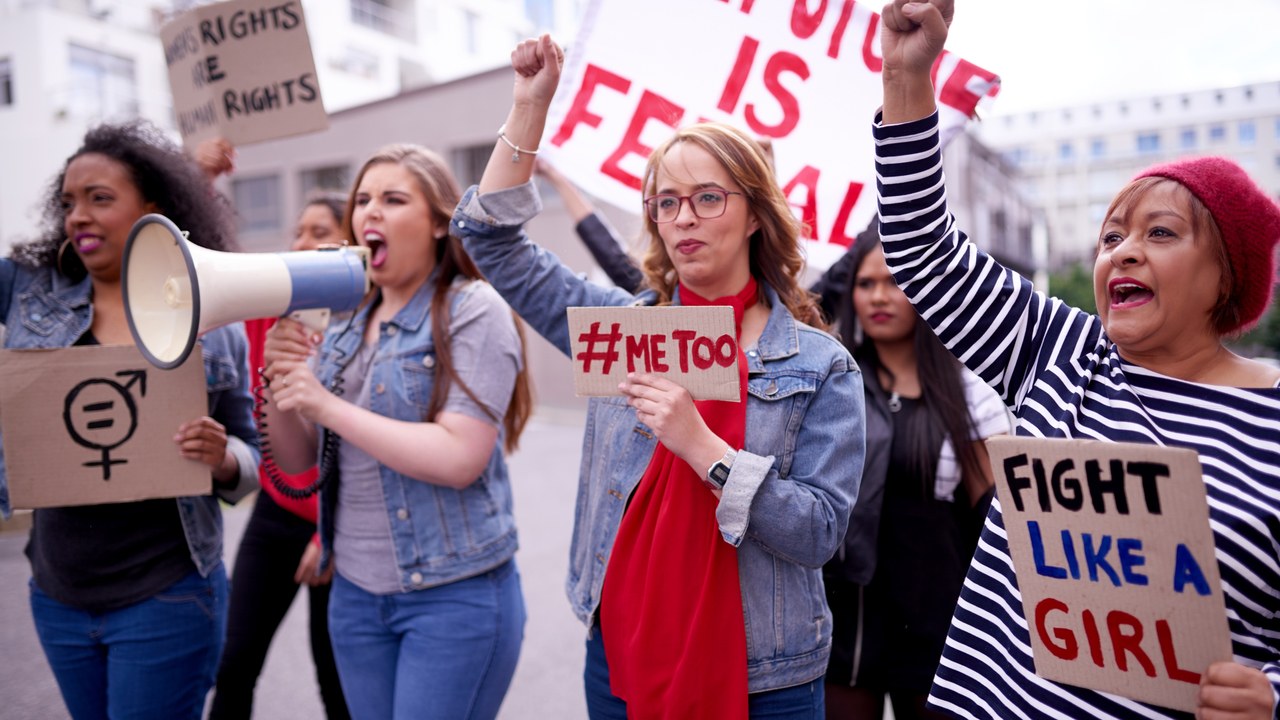
The #MeToo movement shook Hollywood, the media, and high-powered corporations across America, but questions remain about its ramifications in other industries and professional work spaces. Now, new research published in the scientific journal Plos One indicates there might be some measurable changes in the workplace as a result of #MeToo: In the group interviewed, reports of sexual coercion and unwanted sexual attention in professional settings decreased since the movement took off. But not without some other (perhaps related) side-effects.
Researchers first talked to 250 working women in the U.S. in 2016 and asked questions about the gender harassment, unwanted sexual attention, and sexual coercion faced at their jobs. The researchers conducted a second survey in September 2018, reconnecting with women from the first group to see how their experiences had changed as conversations around #MeToo evolved. The researchers found that 25 percent of women reported being sexually coerced at work in 2016, but that number declined to 16 percent in 2018. Unwanted sexual attention also dropped, with 66 percent of women reporting instances in 2016 and 25 percent in 2018.
While these data points do seem like progress, one troubling stat stands out. In this study, there was an increase in reports of gender harassment, with numbers rising from 76 percent of women in 2016 to 92 percent in 2018. The researchers attribute this to what they call a “backlash effect,” or an an increase in hostility toward women following the #MeToo moment.
“Organizations should also pay attention to gender harassment, including bullying and sexist comments about women,” the researchers wrote in the Harvard Business Review. “One woman told us she believes that women who have been empowered by #MeToo to call out inappropriate behavior have faced more hostility among coworkers. It is important that organizations are aware of this, as constant exposure to gender harassment can be just as damaging to women as the most egregious forms of sexual harassment.”
An uptick in gender harassment is even more worrisome, given research that LeanIn.Org and SurveyMonkey released a few months ago that found 60 percent of male managers admitted to feeling uncomfortable participating in common workplace activities with a woman. Those fears could affect mentorship and support for women at work, barring their opportunities to prove themselves and move up if their managers are male. Between that and the gender-based harassment that this report illuminates, it’s clear that there are still post-#MeToo hurdles to navigate, and plenty of work to be done on the part of employers and work organizations.
One of my first jobs out of college had me assisting a publisher who frequently shared sensitive company information with me as I drafted memos and reports, which meant we often had to close the door to his office. He’d dictate what he needed to, and we’d move on with our day. Occasionally we’d do it over lunch. I never once felt uncomfortable and I’m pretty sure he didn’t either. Because I was good at my job, the publisher eventually promoted me.
This was almost two decades ago and much has changed for women—and men—at work. The most pervasive shift, of course, has been spurred by the #MeToo movement, which not only has managed to hold power-abusing men accountable for their actions but has also changed the norms so many women have silently faced in workplaces that range from farming to fashion.
But with any movement—especially one that exists to empower women—there has been a backlash and one particular facet is the idea that #MeToo has scared some men away from interacting with junior-level female colleagues.
According to new research released today by LeanIn.Org and SurveyMonkey, 60 percent of male managers say they’re uncomfortable participating in common workplace activities with a woman—a 32 percent increase from research done last year on the topic. The data found that senior-level men are 12 times more likely to hesitate before having one-on-one meetings, nine times more likely to hesitate to travel with a junior woman for business, and six times more likely to hesitate to go to a work dinner with a junior woman. Thirty-six percent of men also say they’ve avoided mentoring or socializing with a female co-worker because they were nervous about how it might look.
The problem: Most managers are male and their fear is prohibiting women from proving themselves and moving up at work.
“I don’t know of anyone who’s been promoted who hasn’t had one-on-one conversations [with a superior]” LeanIn.org founder and Facebook chief operating officer Sheryl Sandberg told me by phone. “Women need that one-on-one time to get the mentorship and sponsorship they need to succeed.”
Sandberg knows this well. “[Facebook CEO] Mark Zuckerberg and I spend an enormous amount of time together and we spend an enormous amount of time one-on-one,” she said. “That one-on-one time has been where he’s given me the feedback that helps me do my job, [has] told me what I need to do better, [and] I’ve been able to give him feedback. That is not happening in a group setting.”
Sandberg also said her first meeting of the week Monday morning and the last meeting of the week [on] Friday afternoon is with Zuckerberg and nobody else. “That is our partnership and without that, I don’t know where we’d be.”
As far as a solution goes, LeanIn.Org is encouraging men to do more to actively support women at work, from increasing amounts of informal one-on-one time to participating in more official initiatives like sponsorships and mentoring—something Sandberg thinks will benefit men just as much as women.
“[It isn’t] just the right thing to do to mentor and sponsor women It’s actually a good thing to do for your career [as a man] because if you’re the most senior CEO or most junior person, if you can work better with half the population, you are going to outperform.”
Being more or less invisible to a male superior is better than being uncomfortable, right? In theory, sure, but considering the vast majority of managers and leaders are men across most fields, the fact that women aren’t getting the attention they need to succeed because men are afraid isn’t doing anyone any favors, “Ultimately, this is about closing the gender gap at work, from the entry-level all the way to the top,” said Rachel Thomas, president of LeanIn.Org, in a statement. “When companies employ more women, sexual harassment is less prevalent. And when women hold more leadership roles, company profits are higher and workplace policies are more generous. Supporting women makes companies stronger and safer. To get there, we need men to be part of the solution.”
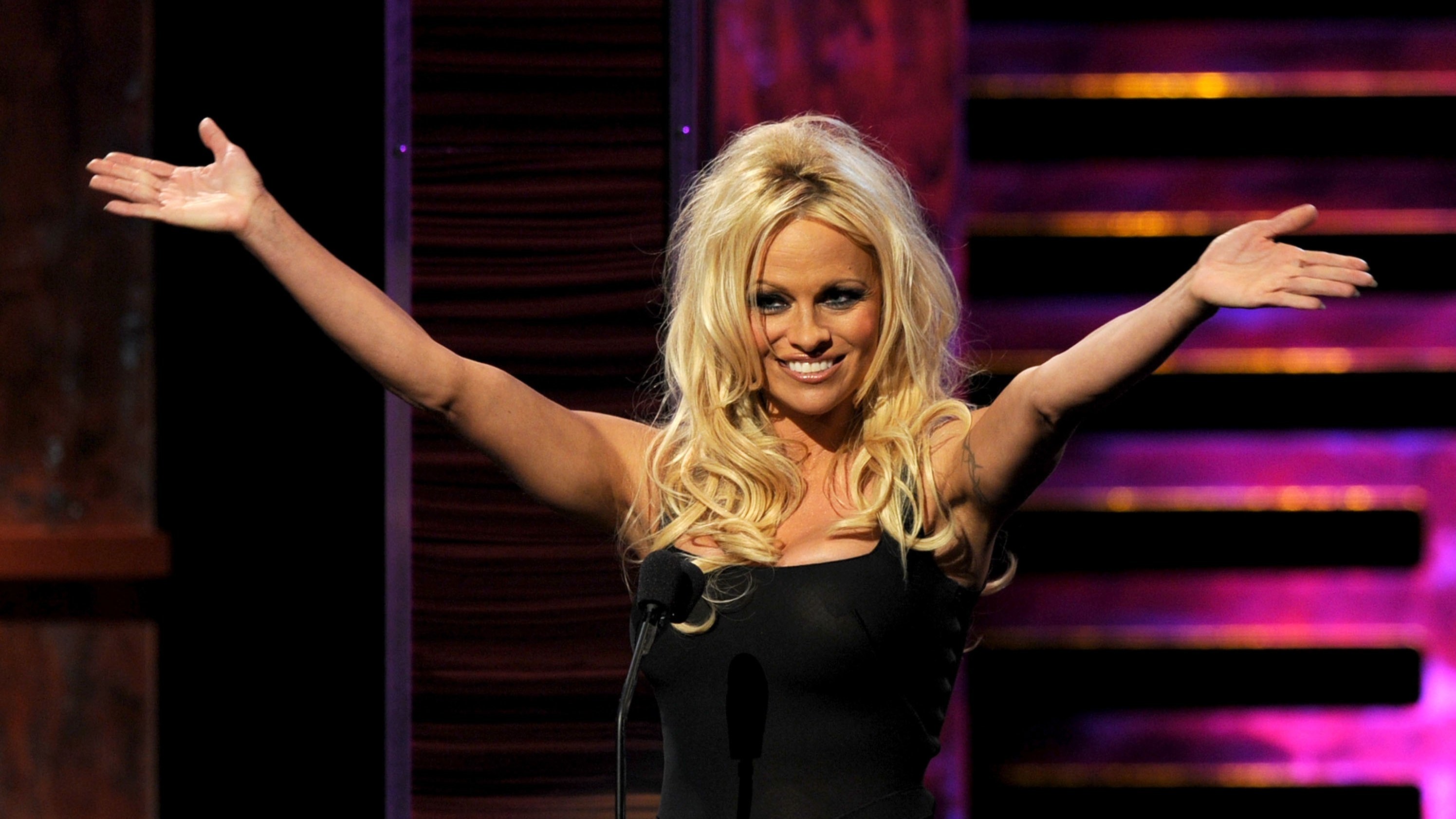
In an interview with 60 Minutes Australia on Sunday, Anderson spoke openly about everything from her history-making work with Playboy, to her relationship with WikiLeaks editor Julian Assange—but it was her candid, controversial thoughts on modern feminism and the #MeToo movement that sparked national interest and made headlines.
While explaining to her interviewer that she felt Playboy was an “empowering” enterprise for women, and herself in particular, she began speaking about 21st-Century feminism, calling the movement “a bore,” denouncing #MeToo survivors’ legitimacy and claiming that the overall movement has gotten to be “too much.”
“I think this feminism can go too far,” she said. “I’m a feminist, but I think that this third wave feminism is a bore.”
Without much probing, Anderson went on to voice more specific grievances with the #MeToo movement, stating that, in her eyes, men are the real victims. “I think it paralyzes men,” she said. “This #MeToo movement is a bit too much for me. I’m sorry, I’ll probably get killed for saying that,” to which her interviewer quickly replied: “You will.”
But Anderson didn’t stop there: After voicing her concerns with #MeToo, the former Playboy model explained how she would act if she ever found herself in the company of Harvey Weinstein, or another like him, stating that some things “are just common sense,” and again, seemingly suggesting that the victims of the #MeToo movement were at fault.
“My mother taught me: Don’t go to into a hotel with a stranger. And if someone answers the door in a bathrobe and it’s supposed to be a business meeting, maybe I should go with somebody else,” she said. “I think that some things are just common sense. Or if you go in, get the job,” she said, laughing. “I’m Canadian I’m going to speak my mind okay? I’m sorry, I’m sorry, I’m not politically correct, maybe.”
Anderson is one of a handful of female celebrities to have openly denounced the #MeToo or Time’s Up movements. Before Anderson, 74-year-old French actress Catherine Deneuve, known for her decades-long career, signed an open letter challenging the #MeToo movement and its French counterpart #Balancetonporc, claiming that the campaigns contribute to “puritanical” and “totalitarian” thinking. Similarly, French film icon Brigitte Bardot previously referred to the movement as “hypocritical and ridiculous.”
In an election year that’s seen a historic number of women run (and win their primaries), we’ve also seen public displays of sexism and harassment play out on the political stage.
Ahead of the highly-anticipated midterm elections, Glamour spoke with some of the women candidates who have experienced insulting (and sometimes scary and threatening) comments from men. The ugly truth, however, is that it didn’t take running for office for these women to be subjected to this type of vitriol. In fact, many candidates have remarked that it was the harassment they experienced before they ever registered to run that pushed them into the political arena.
That fight adopted a name last year when The New York Times published its bombshell report accusing Harvey Weinstein of sexual assault. (The Hollywood executive continues to deny the allegations and has plead not guilty to multiple charges.) The story could have ended there, but it didn’t. Instead, it sparked the viral hashtag #MeToo, prompting women and men to come forward, not only with their own accusations against Weinstein, but against dozens of powerful men in Hollywood, politics and positions of power. What the hashtag also highlighted were the women who had long done the work to protect women in the shadows: They took to social media to share their stories, they lobbied the courts to see justice done to their attackers, and now, they are running for elected office so they can hopefully fix the broken system from the inside out.
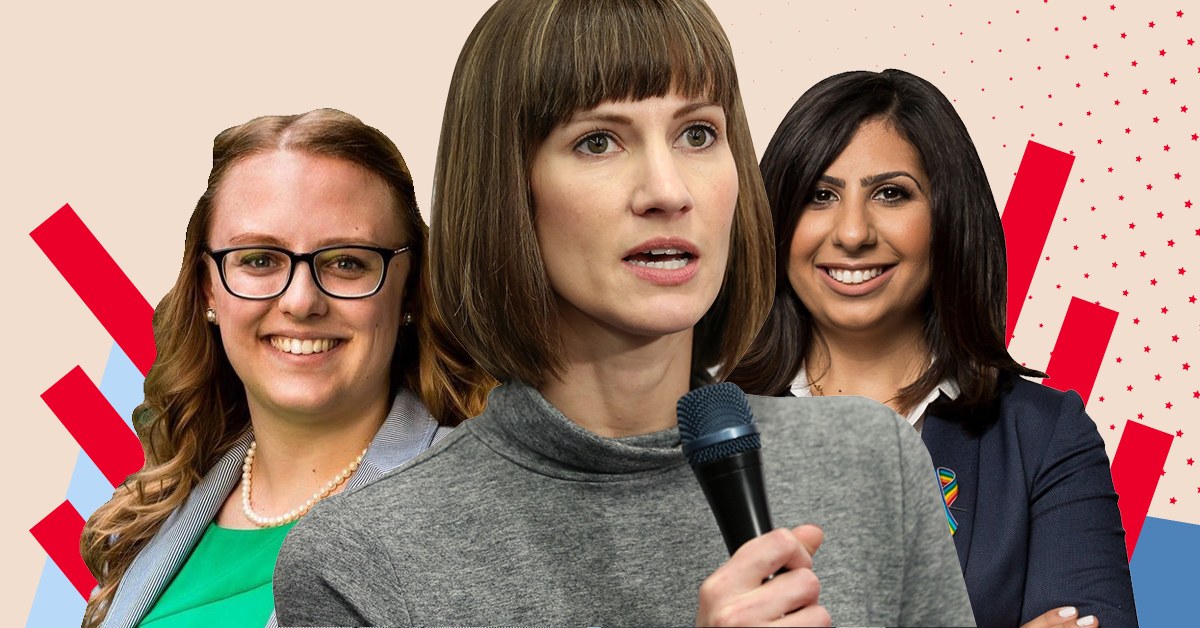
That makes the upcoming midterm elections something to watch. Not only are a record number of women running for elected office around the nation, but there are also a number of them who are running with the #MeToo movement playing a central role in how they approach sexual misconduct and women’s rights. Take for example Rachel Crooks, the woman (not yet a candidate) who accused President Donald Trump of grabbing and kissing her in front of Trump Tower in 2005. Weeks before Trump won the presidential election in 2016, Crooks detailed her experience with The New York Times and joined a number of women who accused the then-presidential candidate of sexual misconduct.
In May, Crooks won the Democratic primary for a seat in the Ohio State Legislature. Trump still maintains that the sexual misconduct allegations lobbed against him are false.
Joining her in the #MeToo fight is Anna Eskamani, who is running for the House of Representatives in Florida. On her listed platforms, you’ll find efforts to curb climate change and educational equality. But, you’ll also find a rigorous plan to help fund access to reproductive health for all women and a plan to “advocate for the ERA, earned sick time, equal work for equal pay, and stronger systems to report sexual assault and harassment.”
Another candidate, Jennifer O’Mara, is running for state representative in Pennsylvania. Like both Crooks and Eskamani, O’Mara is running on a platform of supporting women’s rights. “Between the #MeToo movement and efforts to restrict a woman’s constitutionally-protected right to choose, women’s equality needs to be a top priority for our legislators in Harrisburg. I want to be an advocate for women’s rights and women’s equality,” she wrote as part of her platform plan.
“We have so many amazing candidates and we have a lot of women,” Lizet Ocampo, political director of People For the American Way, shared with Glamour about the first-time candidates running with the goal of eradicating sexual abuse on their list. “We have a lot of women of color and we have a lot of diverse folks from different backgrounds.” PFAW, a non-profit organization founded to fight right-wing extremism, helps young progressive candidates for state and local office with campaigning and funding. Crooks, Eskamani and O’Mara are all three supported by the PAC. But they have something else in common too: They aren’t shying away from their #MeToo stories.
Glamour spoke with the three first-time candidates about how movement is affecting their run, what it’s like to be a woman running in a closely-watched midterm election cycle and just how they plan to keep #MeToo going if they win their races come November.
Outside of your own experience with sexual misconduct, how did the #MeToo movement and the fight to protect women before that inspire your run?
Rachel Crooks, candidate for State House, District 8, OH: After the #MeToo movement began and all these other powerful men were being held accountable, that’s when I decided to go public about the hypocrisy as to my experience with Trump and him not being held accountable. (Crooks’ initial allegations came to light in 2016). After I began speaking out publicly, a lot of women in my area really started to turn to me and suggest running for office. Like, a lot of women. I kind of blew that off at first. And then the more I heard that and the more people who brought it up, the more it felt like I had a duty to be a voice for them and I, of course, decided to take that on.
Anna Eskamani, candidate for State House, District 47, FL: I made the decision to run for office on July 3, 2017. So we were on the campaign trail before the #MeToo movement really reached a national level. My background is in advocacy and I worked at Planned Parenthood for six years. So the issues around equality, whether it is abortion access, equal work for equal pay, domestic violence prevention, sexual assault prevention, have always been in the first for me. Watching the #MeToo movement and the incredible reckonings in this country around sexual assault and harassment, for me, has been such an incredible opportunity for us to inspire leadership around it and pull it out and create a society that is free of abuse and control.
Jennifer O’Mara, candidate for State House, District 165, PA: I started running in March of 2017. When I decided to run, there were a lot of factors that went into it, but one of the biggest factors was when I looked up the history of my district. I saw that we had not been represented by a woman for longer than I’ve been alive and we had never been represented by a Democratic woman. A lack of representation really motivated me to take the plunge. For the last seven years I’ve been on a team of all women—really high performing—and we never even think about the fact that we’re women. It’s just we all worked together. When I started to run for office, it was the first time that being a woman was constantly talked about and was almost like it was a hindrance in a lot of people’s eyes. And so once the #MeToo movement started, it was so exciting to be running in that movement because I already wanted to fight to represent more women. I already wanted to make sure our voice was brought to the table.
What challenges have you faced in being a candidate who openly discusses sexual misconduct?
Crooks: For me, a lot of the issues that I face are just from being a first-time candidate, not necessarily being a #MeToo candidate. People definitely like to give unsolicited advice and I think I can say that as a female candidate, I’m sure I’m dealing with things that male candidates aren’t. There are people who very much like to tell me what to wear or comment on what I’m wearing or how I’m speaking or just everything we do.
Eskamani: Absolutely. Especially because it’s so polarizing right now… people will attack me for my beliefs. They’ll accuse me of a practicing hypocrisy because they’ll say, ‘I don’t see you calling out these Democrats. I have and will continue to call out Democrats who are accused of sexual misconduct. Our campaign donated $1,000 dollars last year to the Victim Service Center of Central Florida because that was, to my knowledge, the total of gifts given to us from men who were accused of sexual assault and harassment. I wanted [to be] very clear and transparent to our supporters and our voters that we have a zero-tolerance approach to sexual assault and harassment.
O’Mara: I wouldn’t say I faced any challenges. What I would say is that there are some voters who will immediately not want to engage with you if that’s the issue you’re talking about. And so that’s a challenge, right? And the fact that we need to talk to everyone and we need to break down these barriers. I would say one of the bigger challenges isn’t even talking about it, it’s just dealing with the fact that as a female, we get opinions and we get suggestions or criticisms that a man never even thinks about. I’ve been emailed by strangers who saw a photo of me that [say] my hair is too long or my hair is too short, or I shouldn’t wear stripes or I should wear pants that are bell bottoms. You would not believe the amount of things that people tell you or talk about with you because of the fact that we’re women.
How will you help keep the #MeToo moment going in office?
Crooks: One thing soon after being elected, I think that especially in Ohio, is creating a better process for the state legislature to report sexual harassment. We’ve seen over the past year or so a few incidents of sexual harassment at the State House and the way they’ve been handled has been awful.
Eskamani: Our website has sexual assault harassment prevention under our platform. We do prioritize it just as an issue to address. I’ve already mentioned that in the legislature there’s work to be done. No policy was passed in the last session. Parkland became the priority after the shooting. And so, at this point, no bill has been passed to prevent sexual harassment in the legislature. That’s step one… let’s make sure that in the capitol building we are modeling behavior for the rest of the state and that we pass a meaningful policy that has an objective reporting system that isn’t owned by leadership.
I would also love to see more emphasis on what can we do to support small businesses in the realm of sexual assault and prevention. There is no policy requirement for small businesses to have a process for this. It’s understandable because they don’t typically have the budget for an HR director or manager. In many cases, the owner is the HR person. So, looking toward nonprofit organizations that can serve as a conduit for smaller businesses to have an outlet and a process to report assault and harassment—and to even look at what can we include in HR manuals around this issue—ensuring that people have access to hotlines they can call.
O’Mara: The first place that I want to start is really changing the composition of our legislature. So whether or not I get elected, there are so many other women running this cycle. In Pennsylvania, like I said, just 19 percent of our elected officials are women. So just being a woman in Harrisburg is going to change things. But, there’s also legislation that I want to work on with the women’s caucus in Harrisburg. There’s currently #MeToo legislation on the table that hasn’t moved. So getting there and supporting that legislation right away to try to get off committees is priority, but some of the stuff is extending the statute of limitations for civil suits around rape and sexual assault cases. Passing legislation to make sure rape kits were tested in a timely manner. Right now, Pennsylvania has over a thousand untested rape kits, which is not really acceptable. Passing legislation to ensure that NDAs can’t be used to prevent people from coming forward, which we saw happen in some of the big profile #MeToo stories. Also, I want to look at protecting people in the workplace and making it safer for them to come forward and not be afraid over retaliation.
How can women and men who are not running for office continue the conversation?
Crooks: In my area, shortly after the Women’s March, a progressive group did start and that has continued. So I think groups like that are still going strong across the country. For people to be active in those organizations is really important because we can continue the conversation in those groups and we can be active in politics even if we’re not running or elected to office.
Eskamani: We’re seeing it, right? I think that the power of social media is really important. Sharing your personal stories has helped those who never experienced assault to try to put themselves in your shoes. And so for those who bravely share their stories, I think that alone is such a transformational experience for others who are watching and reading.
O’Mara: I think that we need to really have conversations with members of the opposite sex. I think it’s also really important that women talk to their sons, brothers, uncles, husbands, friends, men who may be more inclined to listen to you because there’s a relationship there.
If we can put faces on real stories, real humans on these stories, I think it will help both sides come together.
Interviews have been condensed for clarity and length. For more information on local or state candidates who were inspired by #MeToo to run for office, click here.
In a pivotal election year, Glamour is keeping track of the historic number of women running (and voting) in the midterm elections. For more on our latest midterm coverage, visit www.glamour.com/midterms.
Stacey Leasca is a journalist from Rhode Island. You can follow her on Instagram and Twitter @sleasca.
When friends and former colleagues started sharing #MeToo stories, or, in those first furtive days of virality simply dropped the hashtag and left the details opaque, it was palpable: Something was shifting right before our eyes and the power of women speaking, typing, screaming what had for generations mostly been whispered or not said at all, was weighty in the air.
The way we grappled with, identified and discussed sexual assault would never be the same, it seemed.
MeToo—the hashtag that took off after Alyssa Milano, using activist Tarana Burke’s decade-old campaign, put a pound sign in front of the rallying cry—prompted a tsunami of stories and a national intervention on sexual harassment and assault.
It was an eye-opener. Many women I know, myself included, began digging through moments that we’d waved off—the unwanted hands, the inappropriate boss, the ass-slap at work, the boys who’d been boys—and wondered how we’d become conditioned to accept it. Many men voiced surprise and shock at such pervasive harassment and assault. Women described groping , a constant flow of harassment, molestation and even rape. Powerful names started to emerge with accusations attached: Larry Nassar, Kevin Spacey, Roy Moore, Louis C.K., Charlie Rose, Matt Lauer, Russell Simmons, Al Franken, Woody Allen (again), Mario Batali. “The Silence Breakers” were Time Magazine’s People of the Year. The language had changed. Posting #MeToo stories was a part of a national movement to decondition our society. Doing so was both brave and necessary.
But this necessity, unsurprisingly, came with a cost. Survivors gave a piece of themselves, their stories, in exchange for a movement that was supposed to create a wave of change. The burden, it seemed, was on women to free our culture of abuse and assault. Unfortunately, the burden was also on them to endure the very specific and unique abuse that survivors face when they come forward—the insidious shaming that puts the onus on victims instead of their attackers and aggressors.
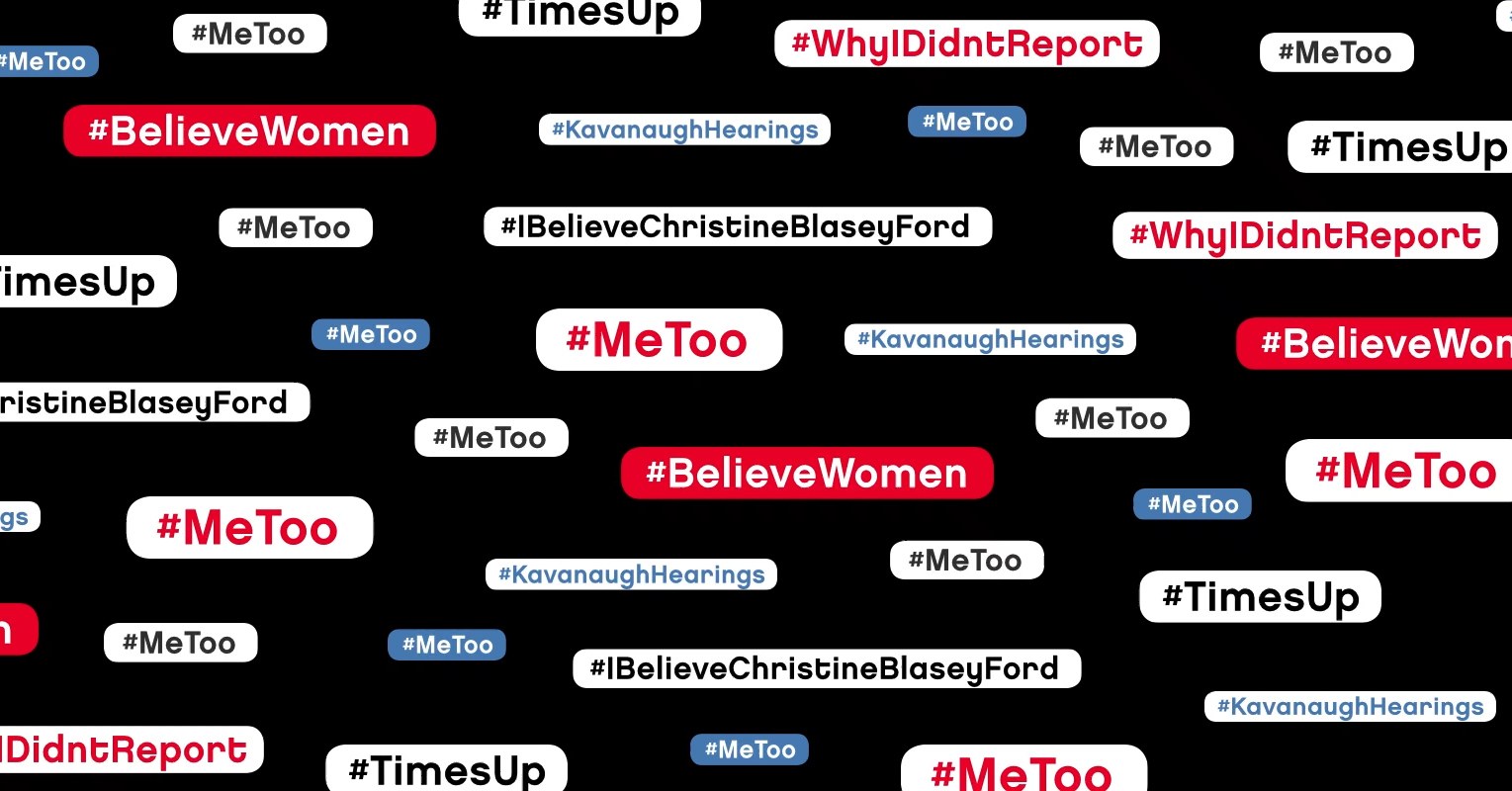
A year later, in the same month as #MeToo’s internet anniversary, we find ourselves in more of the same. Now-Supreme Court Justice Brett Kavanaugh was confirmed and sworn-in to serve on the highest court in the land despite the sexual assault allegations brought forth by three women, including Christine Blasey Ford, and a belligerent show of defense during his Senate Judiciary Committee hearings. Ford, who says the judge attacked her more than 30 years ago when they were in high school, has been mocked by the president for coming forward. She is unable to return home due to death threats. Women—and some men—reported mentally reliving their own attacks after Ford’s testimony, and took deeply personal umbrage at the suggestion that Ford’s delay in reporting somehow indicated she’d fabricated her story. And the vitriol against Ford is not unlike the kind those who shared their stories using the hashtag #WhyIDidntReport, experienced. It might be easy to wonder, is hashtag reporting to eradicate and illuminate our society’s ills all worth it?
Given the historical response to survivors of sexual assault, especially in the age of Twitter, I asked Karestan Chase Koenen, PhD, licensed psychologist and professor at Harvard’s T.H. Chan School of Public Health, what can prompt survivors to voice an incident they held inside, for years or decades. Often, there are spikes in reports “anytime there’s a really high-profile sexual assault case,” says Koenen. This was true during the Clarence Thomas hearings. It was true with Kavanaugh.
“Assault takes a person’s control and power away, and it should be in someone’s own power and control to tell their story.”
Moral obligation also has an incredible power to draw out the truth: Survivors tend to report after their attacker faces other allegations. Koenen herself went public with her own experience: “It was this public thing where I had a purpose for speaking out,” explains Koenen. “For some people, speaking out now has a purpose.”
Then there’s control: “Assault takes a person’s control and power away, and it should be in someone’s own power and control to tell their story, and I don’t think they’re under any obligation,” says Koenen. Your story, once on the internet, is always there, she warns. She’s known women whose new dates Googled them and knew about their assaults before their first dinner. Sharing the story, no matter how important, cedes some control over it and how it will later be revealed to others.
I certainly do not fault anyone for sharing their #MeToo or #WhyIDidntReport stories; it shows staggering courage. For some, it is empowering to finally say it. That shouldn’t get lost. But I worry about so many people who carried a gnawing hurt and fear around for years, who never wanted to speak the words. Early on, I didn’t pause to see how making a disclosure in such a public way also leaves one open to trolling and further harassment, or in Ford’s case, ongoing death treats. Such is the cost of the truth. I’m at once awed by the survivors’ courage, and mourn that this moment again required it of them—and repaid them with so much cruelty. There’s a burden in being a bearer of truth; there’s punishment meted out for telling it.
I wonder how Ford feels now. How ought outspoken survivors all feel, having aired indignities and pain publicly and across generations, to receive lip service from politicians, but ultimately see justice evaporate again?
There’s an unbearable lightness in telling a difficult truth, a freefall sense, a burden cast-off—perhaps traded eventually for new burdens—but in the moment of truth-telling, there’s power in choosing the words. We saw that astonishing power in Ford. She may not have been taken as seriously as she should have been by those seeking other forms of power for themselves, but she changed lives.
There are millions of stories still held in silence.
When truths are told for a higher good, one hopes the teller will be rewarded with seeing some justice. In a good, fair world, that’s how things would work. We don’t yet live in that good, fair world. But we do live in a country where now, the fight is more deeply shared. Losing a battle but ending up with more soldiers isn’t exactly a loss.
For a year, we’ve heard the tallies of the millions of dollars powerful men lose when their “scandals” surface. But I continue dwelling on what’s been sacrificed by so many women who exposed their hardest memories at the cost of waking up the rest of society, the cost of reliving and opening up stories—because the cost could be exponential a moment that never ends.
Unless, because of their courage, eventually, it does end.
Sarah Stankorb is a writer whose work has appeared in The New York Times, Washington Post, Vogue, Marie Claire, Longreads, Catapult, and Slate, among others. @sarahstankorb
Sandra Diaz wasn’t expecting to find the courage to come forward with her story of sexual assault. But, over the years, as she watched security officers, janitors and airport workers coming together to protest against the sexual misconduct they often face on the job, everything seemed to change. These women were members of the labor union which she co-leads, and in them, she found an unexpected strength stand firm in her own power.
“I saw the sacred wounds that, like me, they had held inside of them with shame” she says. “But I also saw the relief in their eyes to finally let it out.” In union meetings, as they fought back against gender violence at work, their stories rang out: Yes, I was raped while I was working. I didn’t say anything to the union. I kept silent for one year … 10 years.
“As a survivor, I understood the burden of silence and the relief and uncertainty when silence is broken,” Diaz, the Vice President and Political Director for SEIU United Service Workers West, says.
Feeling safe within a sisterhood of women reclaiming their power, she was finally able to feel what many have taken to social media to say in the past year: Me too.
Like so many others, Diaz and the women she serves have kept their stories of abuse and misogyny to private conversations, group chats, and whisper networks. In late 2017 however, it seemed as though a critical turning point was reached; a turning point that cued up all women to stop whispering in order to let their stories be heard. And yet, it hasn’t exactly played out that way.
It’s been a year since the #MeToo Movement became part of the national discourse online, having been kicked off by reports from the New York Times and the *New Yorker*which featured multiple women alleging that Harvey Weinstein—the burly, bullish Hollywood executive—had sexually harassed or assaulted them. (This summer, Weinstein pleaded not guilty to six felony sex crimes, including two counts of rape and two counts of predatory sexual assault.) Following the accusations, actress Alyssa Milano retweeted something she found online that encouraged women to share their own stories of abuse. The hashtag was #MeToo, and it went viral shortly after, but the criticism about who started it—and who it served—would dot headlines for the next 12 months.
What Milano didn’t know at the time was that #MeToo had been created in 2006 by activist Tarana Burke to advocate for women and girls of color who had been sexually abused. The 2017 iteration, by default, was intended to belong to the everywoman, thousands of whom responded to Milano in a deluge of tweets and status updates. And yet, it still felt as though the movement was most talked-about when familiar Hollywood stars joined in. And why not? Their stories were salacious, empowering, and captivating—a lurid peek into the darker side of the industry.
But that was only part of the story—of course, there were other women who had been trying to get their voices heard for years. And as the star power behind #MeToo grew, so did the opinion that it was owned by liberal women. Republican and conservative women who have #MeToo stories have reportedly felt left behind, like their experiences were being ignored by their party, and the movement.
One woman’s narrative crushes the criticism that #MeToo is strictly left-leaning. When Gretchen Carlson, formerly a face at Fox News, sued the conservative network’s chief in 2016, she was one of few women associated with that world to publicly come forward. Carlson’s lawsuit alleges that the late Roger Ailessabotaged her career when she rejected his sexual advances. Like Weinstein, Ailes was a larger-than-life executive whose misogynistic tycoon persona seemed to emanate from an old Hollywood playbook. According to reports, Ailes told her they should have had a “sexual relationship a long time ago and then you’d be good and better and I’d be good and better.”
Eventually, she decided enough was enough.
“It was the most excruciating decision of my life,” Carlson tells Glamour of coming forward. “Before there was a [Hollywood] #MeToo movement, before there was Time’s Up, before there was anything, it was me taking on one of the most powerful men in the world by myself.” Stepping forward a year before the hashtag’s meteoric rise gave her a new purpose and birthed her best-selling book, Be Fierce: Stop Harassment and Take Your Power Back, which was released just days after the Weinstein allegations were made public.
A year later, other women who identify as conservatives have come forward, but the movement on the right is slow to pick up, Vox points out. But it’s not about party lines for Carlson. More importantly, it’s about “every socioeconomic line” having access.
“It’s important to me that the every woman story is also heard,” the author, who recently defended herself against accusations of bullying, says. “Because this … pervasive epidemic, as I call it, it’s not just famous, rich people.”
The struggle to gain access to the movement goes beyond class lines, cash or politics. There’s also the elephant in the room when it comes to #MeToo: The racial disparity and how underreported the narratives of black, brown and gender nonconforming women are.
“White women have always had dominion over the narrative concerning sexual violence and gender-based empowerment.”
This was on the minds of Kenyette Barnes and Oronike Odeleye, who together created the #MuteRKelly movement, which seeks to put the alleged victims of the accused predator, musician R. Kelly, at the forefront. According to several accounts, Kelly has spent decades hunting for teenage “pets,” who, according to a recent documentary, he groomed to be sex slaves. (Kelly has denied the accusations.) Barnes and Odeleye, who began the organization to stand up for these young black women, both credit Burke and #MeToo as being extremely integral in their quest to bring Kelly to justice. And yet, their push is often overshadowed by high-profile alleged predators like Weinstein, Ailes or Bill Cosby, men whose alleged victims are often white.
“White women have always had dominion over the narrative concerning sexual violence and gender-based empowerment,” Barnes tells Glamour. “There’s a tendency to marginalize the unique experiences of black and brown women. This is no different in the attempted appropriation of #MeToo.”
It’s not like everyone in Hollywood completely ignored Burke’s original standard for #MeToo. Celebrity women who have engaged with the hashtag seem well-intentioned enough. But lip service is different from inclusion, and over the last year, actresses like Rose McGowan—whose outspoken participation seems to exclude black, brown and gender nonconforming victims, at least to some accounts—has been called out for her lack of it. She’s been criticized for dismissing the experiences of women of color and trans women, and yet, is hailed as one of the movement’s strongest heroines. She’s even earned an E! reality show—which aired in May—while most of the activists at the center of the movement, who organize marches and protests or offer support for victims, continue to move in the margins.
To be clear, McGowan is hardly an outlier. Often praised for her feminist ideals, actress and writer Lena Dunham drew criticism for dismissing a woman of color, actress Aurora Perrineau, who came forward with accusations against Dunham’s friend, writer Murray Miller, last year. And in the midst of Weinstein’s wave of accusers coming forward last year, the mogul was radio silent until actress Lupita Nyong’o shared her own account of his alleged misconduct towards her. Only then, after a black woman accused him, did he feel the need to publicly defend himself.
“There is no one coming to rescue black women,” Odeleye says of the struggle. “We have to save ourselves.”
One of the biggest culprits in pushing the false idea that the fight to end sexual abuse is the same for all women and men has been the media, Odeleye and Barnes note, which often fails to center varied identities in their coverage. Even Burke herself, who was unavailable for comment on the story as she organized and prepared protests against Supreme Court Justice nominee Brett Kavanaugh, addressed this in a recent op-ed for Variety.
“I launched the #MeToo movement because I wanted to find ways to bring healing into the lives of black women and girls,” she wrote. “But those same women and girls, along with other people of color, queer people and disabled people, have not felt seen this year.”
This is especially evident in the coverage of the sexual degradation of female victims over the last few years like Chikesia Clemons, whose breasts were exposed in her violent arrest at a Waffle House in Alabama earlier this year or Daniel Holtzclaw, the police officer convicted in 2015 of assaulting 13 women and raping eight in Oklahoma City. His victims, all of whom are black and many of whom had criminal records, remain ghosts lost in the coverage. We do not know many of their names. We do not speak of their immeasurable trauma.
It’s a similar story for the staggering number of trans women who have been murdered in the past two years alone. The National Center for Transgender Equality estimates that 2018 could be ‘the deadliest year on record’ for violence against trans women. (As of September 2018, 27 trans women have been reportedly murdered). And yet, a year later, as dozens of cisgendered women are given magazine covers and major platforms to discuss their trauma, there has been little to no coverage of the clear and present dangers our trans sisters face.
These challenges for women of color or varied identities can be, in part, attributed to the unique set of consequences that they face, both from society and their own cultural norms.
“We have to challenge our biases and ask ourselves, ‘Why don’t we see the power in women of color and in immigrant women?'”
“Often black women and girls are shamed into pushing aside their need for gender justice,” Barnes explained. Instead, it is often seen as “of little importance [when] viewed within the larger system of White Supremacy.”
This is also prominent in the Latinx community, according to Lilia Garcia-Brower, executive director of the watchdog group, Maintenance Cooperation Trust Fund, who advocates for janitorial workers in California. For these women, many of whom are undocumented, work is synonymous with sexual violence, intimidation and wage theft.
“If [these women] don’t believe that they are more valuable than the violence that they’re confronting every day, they’re not going to denounce what’s happening to them,” Garcia-Brower says. “ We’ve spent a lot of time unpeeling the gender socialization that tells [women] that we are less than a man … that we cannot defend ourselves.”
For both the unions and the watchdog groups, it was clear that the women would have to be the ones in charge of empowering themselves since they could not trust the industry to do it. As Diaz adds: “How do you hold an industry accountable for training their workers on sexual violence when we can’t even hold them accountable for paying them?”
These workers, whose struggles were chronicled in the Frontline documentary aired on PBS, “Rape on the Night Shift,” teamed up with the SEIU-USWW labor union and Garcia-Brower’s group to form the YA BASTA! COALITION. Through hunger fasts, protests and community training of “promotoras, (who educate their peers on self defense), the women of Ya Basta, which means ‘Enough Is Enough,’ are taking back their lives.
At the end of a recent march, a group of the janitors took off their shirts to call attention to the power dynamics at play in sexual violence—an action that was meant to reject the shame that survivors feel and to denounce that idea that sexual misconduct is about sex.
There, standing in their bras with their resolve at an all time high, they shouted: “Quien es dueña de tu cuerpo. Yo soy dueña de mi cuerpo.” Translated, it means, “tell me who owns your body. I own my body!” It was a simple declaration, but an immensely profound one in a society that, as Odeleye notes, “does not value a women’s ownership of her body.”
Still, the question remains: what does protection look like? And who has access to the new #MeToo as it reaches its first birthday?
“As a society, we have to challenge our biases and ask ourselves, why don’t we see the power in women of color and in immigrant women,” Diaz says. Shifting that power back to them, she says, “is at the center of eradicating sexual violence.
“But first we have to recognize the humanity in them.”
Allison McGevna is an editor and writer based in New York City. You can follow her @AllieMcGev on Twitter.