Categories
Health

Some Guys Seriously Think Arya Doesn’t ‘Deserve’ Her Big *Game of Thrones* Moment


Warning: Game of Thrones spoilers ahead.

Last night’s Game of Thrones was intense, to put it lightly. After seasons of buildup, we finally got to see the Battle of Winterfell, which ended in a surprising-but-satisfying way: Arya killed the Night King by stabbing him with a dagger made of Valyrian steel. This turn of events set Twitter ablaze, with everyone cheering—both physically and metaphorically—for Maisie Williams’ beloved character.

Well, not everyone. For whatever reason, some guys out there think Arya didn’t “deserve” this victorious moment. In fact, they’re calling her a “Mary Sue,” which is a literary term used to describe an idealized female character who’s seen a “perfect” and has success handed to them. The derision for Arya has gotten so out of control that “Mary Sue” is now trending on Twitter.

But of course droves of people are jumping to her defense. “People calling Arya a Mary Sue may have missed the part where she trained for six seasons to be an assassin,” one person tweeted. “She’s been training as an assassin for 8 FREAKING SEASONS, and this was the payoff,” posted someone else.

“Wait wait wait. Some folks are calling Arya a ‘Mary Sue’ when she spent the entire series—seven whole seasons—training to be a master assassin? It takes 3-4 years to become a deployable Navy SEAL, but Arya is a Mary Sue?” wrote another person.

A popular female-centric comic site that’s literally called The Mary Sue even hopped in Arya’s corner. “Glad to see that we are trending on Twitter,” the site tweeted in a statement. “We here at The Mary Sue are so happy you’re reading us and that this has nothing to do with men diminishing the importance of a female character who trained for something through over 7 seasons of a television show.”

Check out some more responses, below:

We couldn’t have said it any better ourselves. Arya Stark didn’t defeat the Night King because she got lucky—she did it because she’s the best assassin on Game of Thrones. And there are eight seasons of receipts to prove it.


Source link

Categories
Health

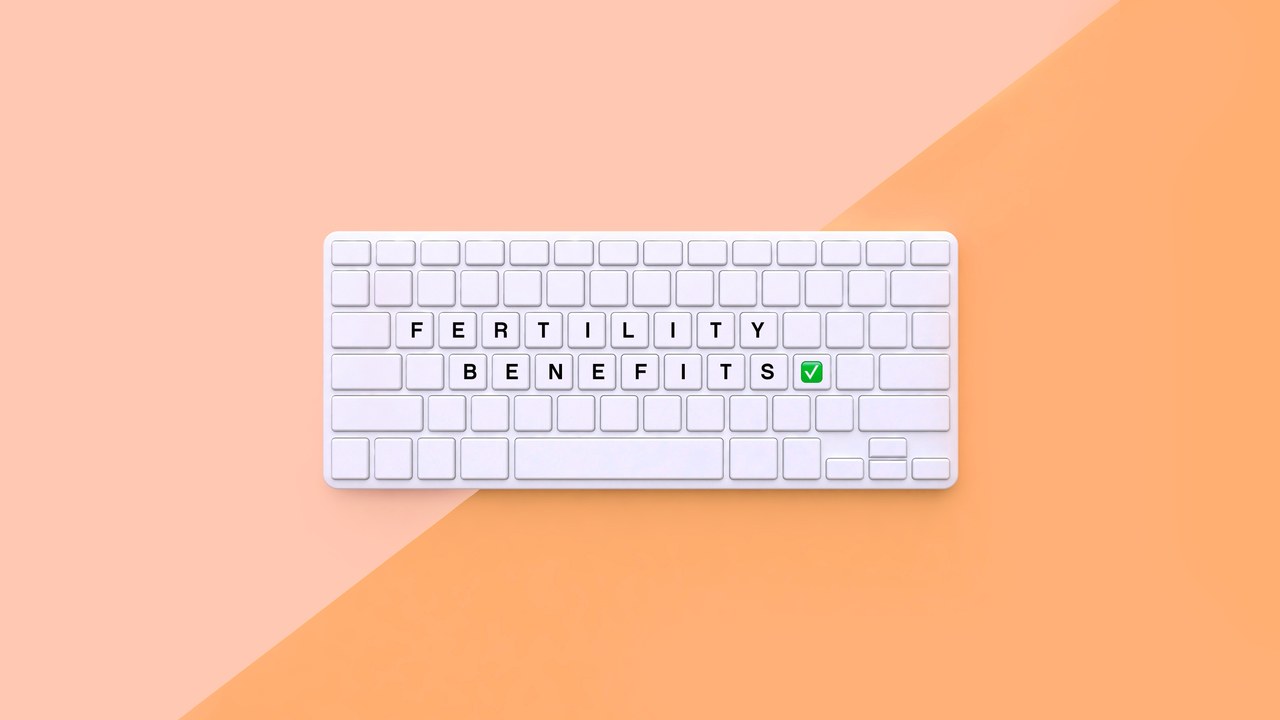
Fertility Insurance Is the Workplace Benefit Women Deserve


Not all fertility treatments result in pregnancy. According to the European Society for Human Reproduction and Embryology, 77 percent of assisted reproductive cycles performed globally every year fail. Without coverage, women are left to cope with the bitter combination of not having a baby and the tremendous costs of trying for one. “IVF has helped a lot of people, but there is a silent majority of people who haven’t been helped by it and don’t talk about it,” says Miriam Zoll, author of Cracked Open: Liberty, Fertility, and the Pursuit of High-Tech Babies, and a health and human rights advocate.

Kati, 32, from Columbia, Maryland, strategically maneuvered her career based on insurance coverage. “I was willing to downgrade what I was doing,” she says. “I was willing to do office work or work as an administrative assistant or do whatever I needed to do just to have that insurance.” She got lucky though, eventually landing a dream job with dream fertility benefits: 100 percent coverage for IVF up to three attempts per live birth.

But after three IVF retrievals and six embryo transfers, she hasn’t had a successful pregnancy. “I’ve had seven miscarriages. We’re exploring surrogacy or thinking about living child-free—it’s heartbreaking at this point,” she says. “I didn’t think we’d be here, but at the same time, I feel grateful for our insurance coverage. If I didn’t have it, we couldn’t even consider surrogacy—all of my money would have gone to one IVF cycle and that would be it.”

Fertility insurance does have its restrictions: Insurers require a medical diagnosis of infertility, which is defined as an inability for a heterosexual couple to conceive within 12 months. That excludes same-sex couples and single women who want to pursue IVF with donor sperm.

But some Silicon Valley companies are setting a new standard for fertility coverage. Female-founded benefits company Carrot works with companies like Foursquare and Coinbase to provide fertility benefits regardless of an employee’s diagnosis or treatment needed. Companies choose how much coverage they want to provide each employee (which could range from $10,000 to $50,000 or more per person) giving them full access to fertility testing, IUI (intrauterine insemination), IVF, egg freezing, sperm freezing, donor eggs, donor sperm, gestational carriers (surrogates), and adoption—regardless of age, gender, or sexual orientation.

A woman’s family planning goals should be respected just as much as her career goals, says Tammy Sun, CEO and co-founder of Carrot. She suggests that if you’re already in a role you love but your company doesn’t offer fertility benefits, advocate for them: “Go to leadership at your company or to your HR or benefits team and say, ‘Hey, here is the problem that we see with the lack of fertility coverage at work—we see fertility as a fundamental part of healthcare.’” If you’re job hunting, Fertility IQ, Glassdoor, and Monster compile lists of companies that offer remarkable fertility benefits. And when you’re in the negotiation phase for a new job, ask if fertility coverage is on the table. “We have many companies come to us and say that they have a candidate and she’s asking for fertility benefits but they have nothing, so they want to set something up right away,” Sun says. “Just by asking, you could get what you want.”

Fertility benefits should be considered as standard as any health insurance—treating infertility shouldn’t leave women broke or forced to derail their careers to find coverage, advocates say. “We are not choosing to be infertile, we’re not choosing to need this treatment,” Kati says. “The body is not working in the way it should be—that should be covered just like heart disease, diabetes, or any other illness.”

Minhae Shim Roth is an essayist, journalist, and academic. Follow her on Instagram @by_minhaeshimroth and on twitter @minhaeshimroth.


Source link

Categories
Health

Postpartum Depression Treatment Made Me Feel Helpless—Women Deserve Better Options


When my son was born nine months ago, I was—like most new moms—a puddle of emotions. I was so eager to see my baby after giving birth, I tried to walk to the recovery room before my epidural had fully worn off. Spoiler alert: I collapsed on the tiled floor. But even on the ground, I was ecstatic. After hours of labor, I had emerged victorious. It felt like my greatest accomplishment.

But the new-mom high was short lived. My first attempts at breastfeeding were not so glorious, and when the unfriendly nurse on duty tried to “help” by grabbing my breast and shoving it into my son’s mouth, I started crying.

I didn’t really stop for the next two months.

I’ve struggled with depression my entire adult life, so I braced myself for the possibility of postpartum depression from the beginning. Most women experience the “baby blues” after delivery—mood swings, irritability, anxiety, sadness, and feeling overwhelmed—a therapist specializing in maternal mental health told me while I was pregnant, but if the blues lasted more than two weeks, it might be postpartum depression. I took note.

I made a mental health protection plan, monitoring my moods carefully, meditating frequently, and exercising regularly during pregnancy. Going into labor, I felt great.

After a smooth delivery and a standard 48-hour stay, we were discharged from the hospital. But I already knew in my gut that I wasn’t ready. As we were wheeling out to the parking lot, the scorching Miami sun suddenly felt unforgiving; tiny beads of sweat appeared on my nose, the humidity fogging my glasses. I held my baby, wrapped up in his layette set, to my chest. I was scared to put him in the car seat, so afraid that I’d break him. On the way home, I clutched his carseat on the verge of a panic attack, terrified we’d get into an accident.

The panic didn’t subside for months. Like all new parents, we documented all of the exciting firsts with our son—his first feeding, his first bath, his first diaper change. Often in these photos, I’m posing and smiling like I should be, but if you look closely, my eyes are pink and puffy and a stream of tears stains my cheeks. I really wanted to be present, but I felt myself starting to get lost.

Days of depression turned into weeks and then months. I felt as if someone had stuck a syringe into my enthusiasm to be a parent and sucked out every milliliter of joy and excitement until there was nothing left. I was empty.

My husband, being the supportive partner that he is, took on a large portion of the infant care and house work while I tried to tolerate just existing—a gargantuan task. Sometimes I lay in bed with an eye mask and headphones. Other times I would close the door, shut the lights off, and sit on the floor staring at a blank wall. I read articles about postpartum depression that left me feeling even more hopeless. I shut off communications with the outside world.

I became lost in the delusion that I was so incompetent as a mother that I was just getting in the way. I thought my family would be better off without me. I fantasized about packing a bag and flying to a far city and never coming back; I could send my family letters and maybe visit during the holidays. I needed to escape. I couldn’t tolerate what I was doing to my family. I couldn’t be the mom I had imagined myself being during the pregnancy. I felt like a failure. The negative thoughts became more insidious and blared on repeat in my mind, muting out any hope or happiness I had ever felt in the past.


Source link

Categories
Health

Crying After Sex Isn't Uncommon—And Women Deserve to Know Why


The first sign that my three-and-a-half year relationship was over was that we stopped making love. We didn’t stop having sex (though our passion had definitely cooled) but we stopped having any real connection in bed. When we did do it, it felt obligatory—a compromise to satiate my libido so I’d stop nagging him. It was obvious—at least to me—my partner wasn’t into it and it felt like he had no interest in whether or not I got off.

As a result, sex started to feel dirty and overly complicated. What had once been my favorite thing on planet Earth, now felt like a chore. After a few months of feeling like a sexually needy burden, plagued by guilt over my high sex drive and disinterested parter, I began experiencing what I would later find out sexologists call post coital dysphoria: a sudden and unexplained sadness, even crying, after sex.

If you haven’t experienced it, let me tell you: PCD is the worst. Post-sex, your body is drowning in a sea of feel-good chemicals like oxytocin and dopamine—which is why every single article on the internet says orgasms make you feel good. But I felt like crap after sex, especially when I either got off during or finished myself off after. Orgasms left me bereft and inconsolable, overwhelmed with anxiety over why I felt so terrible after something that should have been so great.

This post-orgasmic phenomenon is way more common than you might think—research on PCD is still pretty scarce but one study published in the Journal of Sexual Medicine found nearly 50 percent of women surveyed have felt the post-sex blues at some point. (Men can experience it too.) It’s believed that about 2 percent of women experience it regularly.

Researchers aren’t 100 percent sure why some people experience this hardcore crash of emotions after sex, but it likely has something to do with our body’s reaction to all the hormones and emotions that come with sex, according to sexologists. “I believe that when an orgasm takes place, it triggers a release. For most, it’s a stress release but for others, they find their body also releasing tears, emotions, and aggressiveness,” says Sunny Rodgers, a certified clinical sexologist and sex coach in Los Angeles. In this way, it’s often linked to past sexual trauma, she says.

This is exactly what it felt like for me. Every time I orgasmed, it was like I was releasing the deep emotional anguish of my failing relationship. It was sorrowful, painful, and depressing. Instead of riding a wave of pleasure, I would roll over and quietly weep until I fell asleep, lost in my own head and heartache.

When the relationship finally ended, so did the PCD—or so I thought. For awhile, I would have casual sex with decent men and women and feel completely fine afterwards. I still cried myself to sleep over my breakup, but I wasn’t sad after sex—sex finally felt pleasurable again.

Before long, I found myself spending time with someone new who made me feel things I didn’t think I’d ever feel again. The sex was amazing and he was lovely and kind. But one night, after some of the truly head-over-heels sex—the kind that only happens in the glow of an budding relationship—my post-coital dysphoria came back with a vengeance. In the aftermath of my orgasm, I felt totally despondent, like I had fallen to the bottom of a well. After my boyfriend fell asleep, I crept into the living room where I stayed awake for hours crying.


Source link

Categories
Health

Sarah Huckabee Sanders Doesn't Deserve to Eat Dinner


Last Friday White House press secretary Sarah Huckabee Sanders tried to eat dinner at the Red Hen, a small restaurant in Virginia. But after a consultation with her staff, Stephanie Wilkinson, the establishment’s co-owner, requested that Sanders leave. She did, and then appeared, to some, to violate ethics standards when she used her official social media channels to publicize the incident. But forget protocol, which this administration has flouted on countless occasions. Let’s discuss manners.

A debate exploded over the weekend, with Republicans and even some Democrats determined to make the case that Sanders is a civilian who doesn’t deserve to be booted from a restaurant. “Let the Trump Team Eat in Peace,” ran a headline in The Washington Post. “Politics on both sides so tribal it reaches dining, entertainment & sports,” Sen. Marco Rubio tweeted. Even David Axelrod, a Democratic commentator, chimed in, “amazed and appalled” at the number of people who’d “applauded” what he deemed an “expulsion.” He went on to declare it a “triumph” for Donald Trump’s America—that we had been divided into red and blue dinner plates.

The pundit class is up in arms because it believes Sanders is entitled to eat at a farm-to-table restaurant, off the clock. But that’s not true. It’s 2018, and we don’t live in the realm of the rational. We live in the realities of our current hell, for which Sanders serves as the administration’s public face. The lies that she’s helped perpetuate don’t have a 9-to-5 schedule. Even so, I know some will insist that if we chase Sanders out of public spaces, we cede critical ground. How can we claim that what we want is bipartisan action, if we can’t stand to sit at the same table?

But to share a meal with someone is, in a sense, to settle on a set of facts: This is a plate, this is a fork, this is a human. To be kind or even civil to Sanders wouldn’t be the rare show of bipartisanship. Bipartisanship lies in consensus laws, which Republicans have not attempted to pass for most of a decade. Bipartisanship would be a clean DREAM Act, but no such luck.

Some would have us believe that the preservation of our national ideals depends on whether or not the people who are determined to undermine them can pick at a cheese plate in a nice restaurant. I don’t think so. It doesn’t make progressives “better than them” to swallow our values so that people like Sanders and Stephen Miller can eat.

Don’t pretend Sarah Huckabee Sanders is a normal customer or this was a normal meal.

Wilkinson said in an interview with The Washington Post that she serves private customers with whom she disagrees all the time. What she didn’t want to do was wait on a public person whose boss counts on us to be nice while he dismantles our democratic institutions. The crusaders for “civil” discourse support our resistance, but not outside a certain line. Well, we’ve drawn it—not between parties or policies but between the humane and the depraved.

All of us have made a terrible barter. While Trump honors no norms, we’re expected to uphold them. He mocks civil liberties and shows contempt for a free press, and we’ve been convinced that the true test of this historical moment isn’t a measure of what we will do to support the most disenfranchised. It’s how well we’ll maintain our decorum. That Trump notches this win even as he refines his politics of dominance and narcissism is an added insult.

People like Axelrod and perhaps even Rubio will tell us that the Trump era will come to an end, and when it does, the depths to which we’ve all sunk will be hard to crawl out of. It will be harder still for the children who’ve been separated from their parents and for the women who’ve survived domestic violence only to be rebuffed, told that the harm done to them no longer meets our standards for asylum.

There will be those who invoke the homophobic bakeries that refuse to make cakes for LGBTQ couples and people who warn that the slope on which the Red Hen sits is the most slippery of all. Former secretary of education Arne Duncan, who served under Obama, seemed to recall Jim Crow when he tweeted that our nation has denied “people access to restaurants, to water fountains, and even bathrooms,” a record which he said is “too raw, too real” to perpetuate. I feel the same, that it is “too real.” But unlike Duncan, I know better than to use an example of such stark oppression to claim that oppressors deserve to break bread with us. Some eateries require a shirt and shoes. Perhaps most don’t realize that in the Trump era, a kitchen needs policies to keep out those who make the President’s lies more palatable.

The editorial board of The Washington Post maintains that the Red Hen’s decision is just the latest evidence that politics has “spilled into what used to be considered the private sphere” and that the bleed into such uncivil behavior serves no one. If we approve of what happened to Sanders, we could find ourselves kicked out of establishments whose owners don’t like what we stand for too. But not all positions are a matter of opinion. Some are about the nature of who we are, what is fine and what is intolerable.

Politics is not a game. No one scores “points” when Sarah Huckabee Sanders leaves a restaurant. No one believes we’ve won some prize because she had to find her meal elsewhere. But instances like this remind us is that politeness for its own sake has never led to justice. In its conclusion, the Post cautions that people “who believe that abortion is murder” could use the same tactics the Red Hen co-owner did this weekend. What if those activists decided that reproductive health care providers “should not be able to live…with their families”?

What if. I think I know.

Between 1993 and 2015, when three people were shot and killed at a Planned Parenthood health center in Colorado, at least 11 people have been murdered at abortion clinics. In the civil rights era, black Americans lost their lives to inch closer to freedom. Discrimination is fatal—not when the people who perpetuate it sit down to dinner but when “nice” people don’t interrupt.

Since the election, some of us have have wanted to know whether we’re in the middle of one of those times we read about in textbooks. And if we are, who will tell us? Week after week, we watch The Bachelorette and make appointments and shop for groceries. With all the terrible news, we wonder whether our routines should feel different.

But here’s what the fortunate never remember—moments likes this one do not announce themselves to us. No one comes to whisper in our ears: Now! Go! (And the people who are under the deepest and most immediate threat don’t get to choose whether or not to act.) Good people, nice people, civilized people have to start to make the hard choices. There is no simple calculus. There is just a government-backed machine that believes it can commit atrocities because Americans are too polite or numb to stop it, and some people who will seize whatever opportunities available to them muck up the works.

Don’t pretend Sarah Huckabee Sanders is a normal customer or this was a normal meal.

When people in the future want to know what we did, I don’t want to tell them that we cleared Sarah Huckabee Sanders’ dessert plate and thanked her for the tip. I want to tell say we threw sand in the wheels whenever we could. Confrontation isn’t violence, and we can’t draw little boxes around our politics as if to claim that it’s civil disobedience when it’s in the streets, but just plain rude when it happens at dinnertime.

Mattie Kahn is a senior editor at Glamour.


Source link

Categories
Health

Senator Jeanne Shaheen: #MeToo Is Not Enough. Survivors Deserve Justice in the Legal System


“Silence Breakers” are celebrated as Time magazine’s 2017 Person of the Year, #MeToo has gone viral, and countless women are courageously sharing their stories. Sexual harassment has come out of the shadows, and Americans have opened a larger conversation about sexual assault. But survivors who seek justice continue to encounter an often hostile legal system that compounds their suffering. Last year, I led the effort in Congress to pass the Sexual Assault Survivors’ Rights Act to empower survivors to be informed and fairly treated throughout the criminal justice process. The rights set forth in this new law apply only in federal cases, but I intended this to be a catalyst to jumpstart efforts by states to improve their own laws. It’s working. A growing number of states are following suit with their own codes of survivors’ rights, and I’m encouraging activists in every state to demand reform.

Two years ago, Amanda Nguyen came to my Senate office to recount her nightmarish experience pursuing justice after being sexually assaulted on her Ivy League campus. Her state gave survivors a 15-year window to pursue criminal charges but routinely discarded rape kits (the DNA evidence gathered from a forensic exam) after six months, with no requirement to inform the survivor. Amanda had to fight repeated battles to prevent her rape kit from being destroyed and persevered through a grueling criminal justice process. She went on to found the advocacy group Rise, which is working worldwide to secure justice for survivors of sexual violence.

Outraged by countless stories like Amanda’s, I introduced the Sexual Assault Survivors’ Rights Act, which President Obama signed into law on October 7, 2016. Since then, there has been a groundswell of nationwide support for the rights set forth in the new law. Using the federal-level code as a template, activists across the United States are working to enact similar survivors’ rights codes or to enhance existing protections.

For survivors of assault in the workplace, they often fear retaliation that could end their careers. But many also fear being traumatized anew by a criminal justice system that often seems to blame the victim.

In recent months, women and men have come forward to report past incidents of sexual harassment and assault, including transgressions by prominent political leaders and powerful Hollywood executives and actors. Dozens of women have accused Miramax co-founder Harvey Weinstein of offenses dating back as far as the 1980s. We now have a better understanding of why so many survivors choose to remain silent for so long. For survivors of assault in the workplace, they often fear retaliation that could hurt or end their careers. But many also fear being traumatized anew by a criminal justice system that often seems to blame the victim or puts unnecessary and arbitrary obstacles in their path.

These are big reasons why sexual assault is among the most under-reported and unpunished crimes nationwide. Using data from the Department of Justice’s National Crime Victimization Survey, RAINN (the Rape, Abuse & Incest National Network, the country’s largest anti-sexual assault organization) found that about two out of three sexual assaults are not reported to police. Nearly four out of five sexual assaults against college-age female students are not reported. Many survivors who initially file charges become frustrated by the legal obstacle course and give up before their cases are resolved. Too often, their cases simply slip through the cracks.

Nationally, survivors’ rights have evolved rapidly in recent years. The federal Crime Victims’ Rights Act of 2004 greatly improved the treatment of all crime victims. It spelled out a list of victims’ rights in the federal criminal code, and states used this as a model for reforming their own codes of victims’ rights. Likewise, the Sexual Assault Survivors’ Rights Act spelled out survivors’ rights in federal cases and jurisdictions and is now serving as a model for reform at the state level.
In December, New Hampshire State Senator Donna Soucy introduced legislation, modeled on the new national law, to codify a list of rights to address unique issues faced by survivors in the Granite State. Legislators in other states are advancing their own bills. But until this process is complete, survivors will continue to face a daunting patchwork of laws from state to state. Without a clear, consistent set of rights articulated in the law, it’s difficult for even the most dedicated law enforcement professionals to ensure that survivors receive justice.

Too often, cases simply slip through the cracks…We need a standardized, transparent process that reassures survivors that they will be supported and protected as they pursue justice.

What’s needed is a standardized, transparent process that reassures survivors that they will be supported and protected as they pursue justice. The Sexual Assault Survivors’ Rights Act establishes fair procedures with regard to rape kits, including the right not to be charged any fees related to the forensic medical examination, the right to have sexual assault evidence preserved for the entire statute of limitations period, the right to be informed of the results of these medical exams, and the right to written notice prior to destruction of a rape kit. These and other rights set forth in the new law are basic and essential protections that all survivors ought to have, regardless of where they live.

I respect the great courage of Amanda and other survivors who choose to come forward. But something is wrong if it takes great courage for a survivor of sexual assault to win simple justice. Bear in mind, too, that violent crimes are committed not only against the victims but also against society. These crimes can instill fear and distrust within an entire community. We all have a profound interest in bringing perpetrators of sexual assault to justice.

I hope that women and men in states across America will join the movement to advance these reforms. Currently, inadequate state laws are frustrating not only to survivors but also to law enforcement officers and prosecutors. These laws and procedures serve only the perpetrators who too often remain at large.
The #MeToo movement has sparked a social revolution. It’s time, now, for a reformed legal process that ends the silence surrounding sexual assault, brings it out of the shadows, and gives survivors a fair shot at justice.


Source link