Categories
Health

1,600 Men Show Their Support for Christine Blasey Ford in Full-Page 'New York Times' Ad


On Thursday Christine Blasey Ford will testify in front of the Senate Judiciary Committee about the allegations that Supreme Court nominee Brett Kavanaugh sexually assaulted her in 1982. Women around the country have taken to social media over the past week to voice their support of Ford, even staging the National #BelieveSurvivors Walkout on Monday.

Now it’s time for the men to step up.

Today’s New York Times features a full-page ad with the headline, “We believe Anita Hill. We also believe Christine Blasey Ford,” plastered along the top. The ad echoes one placed in the paper back in 1991 when 1,600 African American women in support of Anita Hill—the law professor who testified during the Clarence Thomas nomination hearings—banded together to buy the ad, “African American Women in Defense of Ourselves.”

The ad was crowdfunded in an initiative started last Friday by Meena Harris, founder of the Phenomenal Women Action Campaign, and Alicia Garza, cofounder of the Black Lives Matter Global Network. Their goal was to raise $100,000. Currently, their fund-raising page notes that over $134,000 has been donated. (The page notes that excess funds will go to Futures Without Violence, a group dedicated to ending violence against women, children, and families around the world.)

“I had been very inspired by the story of the 1,600 black women who came together in 1991 to take out a full-page ad in The New York Times,” Harris (who also happens to be the niece of California Senator Kamala Harris) told Mic.

“We’ve asked men to step up [and sign], so it’s not only the burden of women to do this,” she continued.

The full text of the ad references its inspiration, as well:

Twenty-seven years ago, on November 17, 1991, 1,600 black women joined together and placed a full-page ad in The New York Times to support Professor Anita Hill when she faced backlash for accusing Justice Clarence Thomas of sexual harassment. They called it, ‘African American Women in Defense of Ourselves.’ Today we follow in the footsteps of those courageous women.

We are 1,600 men who now stand behind both Professor Anita Hill, as well as Dr. Christine Blasey Ford, because we believe them. As men who are allies in the fight to end violence and harassment against women and girls, we write to express our strong support of Dr. Christine Blasey Ford for her willingness to speak out publicly and testify before the Senate about the sexual assault that she says was perpetrated against her by Judge Brett M. Kavanaugh.

We believe survivors, and we call on all men of good will to stand with us to ensure that Dr. Blasey Ford’s story is carefully and fully examined without bias or prejudice. It is imperative that the politics of this moment not discolor the facts. Justice demands that both Dr. Blasey Ford and her story be treated fairly, impartially, and with respect.

Too frequently, survivors of sexual assault are forced to suffer in silence. Those that choose to speak out often face backlash, skepticism, and ridicule. As we’ve seen once again the last few weeks, that kind of virulent backlash is most acutely on display whenever those accused of misdeeds are powerful men. If appointed to the Supreme Court, few men would be more powerful than Judge Kavanaugh.

We are a group of men with varying political and legal views. But we each believe women should no longer have to carry these burdens alone.

For decades, a culture of misogyny has allowed men to act with impunity and without consequence. We demand an end to that culture, and we pledge to do our part in dismantling it. That’s why we are speaking out today in favor of a just process, and for the rights of women like Dr. Blasey Ford to be heard fully, fairly, and with respect.

In the words of Anita Hill, ‘There is no way to redo 1991, but there are ways to do better.'”

Male allies are also sharing the ad and its message across their social media platforms.

Ford and Kavanaugh are both slated to testify on Thursday. For the latest on the Kavanaugh nomination, click here.

MORE: A Third Woman Comes Forward with Allegations About Supreme Court Nominee Brett Kavanaugh


Source link

Categories
Health

Cecile Richards: Words of Advice to Christine Blasey Ford, Ahead of Her Testimony


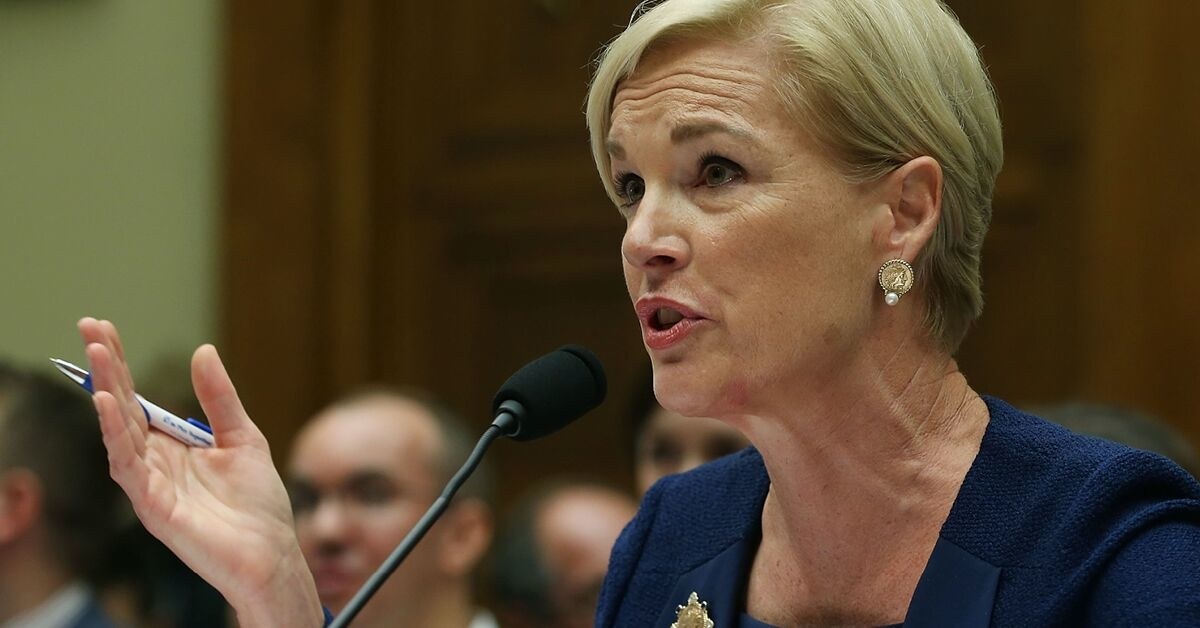
*In 2015, Cecile Richards, then the president of Planned Parenthood, appeared before the House Oversight and Government Reform committee and testified for close to five hours. (The showdown came after an anti-choice group recorded abortion providers in secret as the professionals discussed the sale of fetal tissue. Republicans used the videos to defend their wish to strip Planned Parenthood of the close to $450 million it receives in federal funds, none of which is used to paid for abortion services.)

In front of the congressmen, Richards explained how Planned Parenthood puts federal dollars to work, defended the organization’s research practices, and endured the endless GOP-led offensive with her usual grace and patience.*

This week, as Dr. Christine Blasey Ford prepares to appear before the Senate Judiciary Committee to level her accusations of sexual assault against Supreme Court nominee Brett Kavanaugh, Richards draws on her experience on the Hill to assure Dr. Blasey Ford of at least this one truth: You are not alone.


Dear Dr. Blasey Ford,

I can’t imagine what you’ve been through over the past two weeks. The behavior of some United States Senators who sit on the judiciary committee has underscored how brave survivors must be to weather the hostility and public shaming they too often face. Senator Lindsay Graham (R-SC) has likened your decision to come forward to a drive-by shooting and 84-year-old Senator Orrin Hatch (R-Utah) has said you must be “mixed up.”

Nevertheless, it seems, you persist. I hope you have also felt the flood of sympathy and solidarity from women and men across the country—including many of us for whom your experiences sound all too familiar. If and when you walk into that Senate hearing, you will not be alone; we’ll be with you.

In anticipation of your possible testimony, I have been reliving my own five hours before a hostile Republican-led committee that wanted to end access to Planned Parenthood.

It probably won’t surprise you to hear that the name of the game that day wasn’t fact-finding. There was no search for the truth. Instead, it was an opportunity for hostile men in Congress to grill me on everything from my salary to my competency to my memory—and overall, to humiliate and shame me. And all of this on national television.

But as unpleasant as those hours were, I had on my side two things the hostile congressmen did not.

First, the one in five women in America who have been to Planned Parenthood, who depend upon the organization for life-saving health care, gave me courage that day. I knew they were standing with me, just as millions of women and men across the country are standing with you—including the many women in America who have themselves been sexually assaulted. When you speak, you speak for all of us.

Second, and most importantly, what you have on your side is the same thing I was armed with: the truth. No amount of bullying and finger-pointing can take that away. Even if the Republican leadership in the U.S. Senate doesn’t want to hear that truth, you will tell it, and the American people will be listening and cheering you on.

And know this: After my hearing, not only did I feel better for speaking our truth to power—I couldn’t walk down the street without someone stopping me and thanking me. The same will be true for you. And though your detractors may be loud, in the end, their anger will be overwhelmed by the love and support from women everywhere.

We believe you. We are with you.

In Solidarity,

Cecile Richards

Author and former president, Planned Parenthood Federation of America


Source link

Categories
Health

Dear Ivanka: Female Celebrities Are Calling On the First Daughter to Support Christine Blasey Ford


Word out of Washington, D.C. on Saturday, according to the New York Times, is that the Senate Judiciary Committee and lawyers representing Dr. Christine Blasey Ford, the woman who is accusing Supreme Court nominee Brett Kavanaugh of sexual assault during a party while they were in high school have reached a tentative agreement for her to testify publicly on Thursday.

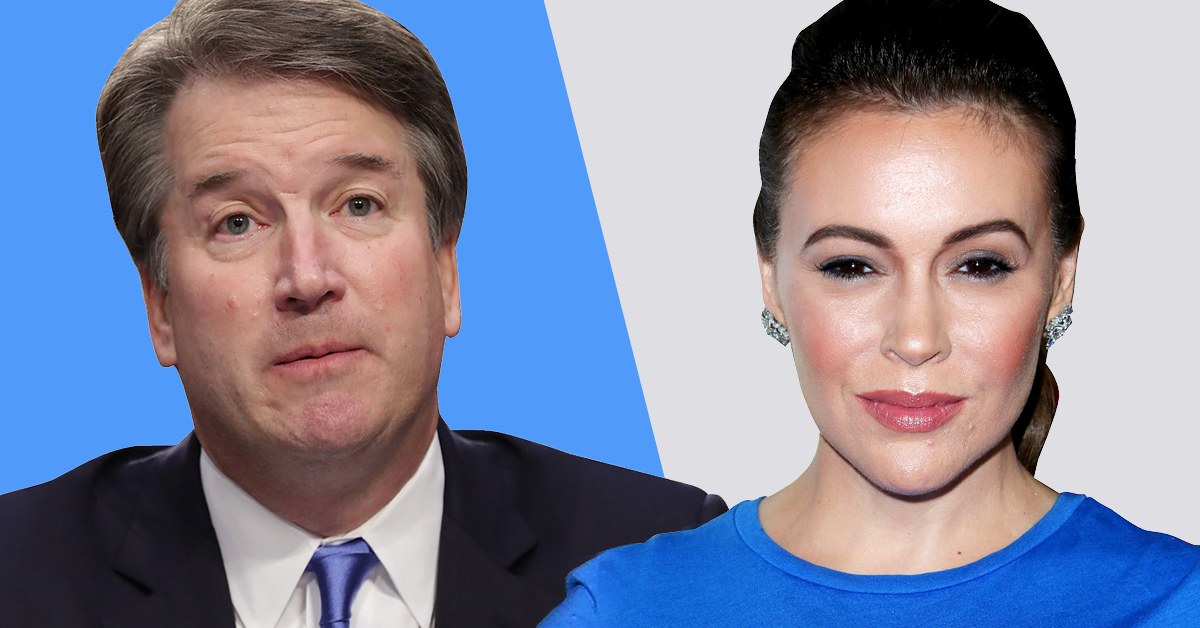
In the coming days, we are sure to see both sides attempt to galvanize support on social media and beyond. Actress Alyssa Milano spoke to Glamour about her efforts to raise money for Ford. “I hope she feels the love and support and the heartache that women feel in standing in solidarity with her,” Milano said. “I want her to know that if she needs anything at all, that I’m here and I want to thank her for her bravery in doing the right thing for the country, even though it’s the harder thing for her personally.”

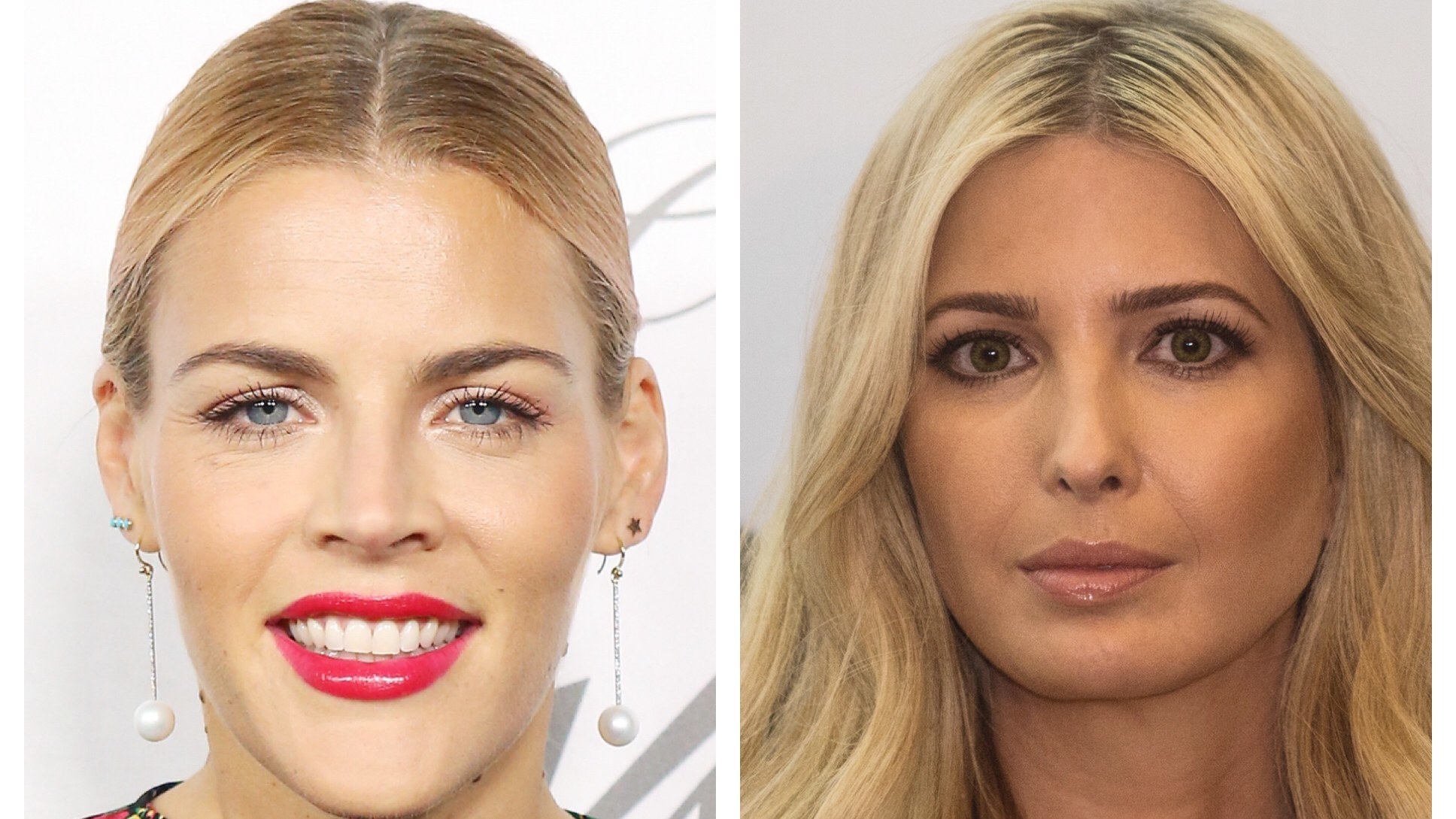
In yet another #DearIvanka campaign, other celebrities—like Busy Philipps, Amy Schumer, and Sophia Bush—are using their large social media platforms to call on First Daughter and White House senior advisor Ivanka Trump to get the administration to conduct an FBI investigation into the charges.

Philipps writes, “Dear @IvankaTrump, you don’t follow me on social media. But as a public servant, you work for me. You’ve proclaimed yourself a feminist and a champion of women’s rights. Right now, you have an opportunity to fight for women and survivors. Use your access to demand that Professor Ford’s request for a full, fair, trauma-informed investigation by the FBI be held. Use your access to make sure another abuser is not seated on the Supreme Court. #DearIvanka”

Schumer, in typical fashion, didn’t mince words. “Hey @ivankatrump Were you so excited to wear that pill box hat this week? #fun You will be remembered like Eva Braun unless you do something,” she wrote. “It’s not too late.”

Bush, who says Trump does indeed follow her on Instagram, took a different approach in her post. “I figured after the last one of these calls for you to take action, you’d unfollow me. But you’re still following me!! So, let me use this opportunity to call you in,” she said in a caption. “Rather than feeling called out, try to see this as an invitation to merge your words and your actions. Girl. You can do it.

Milano, “Law & Order: SVU” star Mariska Hargitay, Wild author Cheryl Strayed, celebrity stylist Karla Welch and more are also flooding Trump’s feed.

While her father has doubled down on his support of Kavanaugh and called into question why Blasey Ford didn’t report the incident when it happened over 30 years ago, Ivanka Trump has yet to make a public statement on the matter.


Source link

Categories
Health

MeToo Advocate Alyssa Milano: Christine Blasey Ford Has 'Zero Reason to Lie' About Brett Kavanaugh


On the surface, they might seem to have little in common. One is an actress and activist who’s been in the public eye since she was eight. The other, a professor and research scientist who has spent most of her life out of the limelight.

But Alyssa Milano and Christine Blasey Ford share a bond: Both stand with the ranks of women who identify as sexual assault survivors.

Ford’s decision to come forward with claims that Supreme Court nominee Brett Kavanaugh attacked her at a high school party in the 1980’s has thrown America—and her own life—into an uproar. As a result of her reluctant choice to voice the allegations, which Kavanaugh categorically and emphatically denies, she’s been besieged by doubters and death threats.

But Ford has also generated a groundswell of emotional support, and in this case, of the financial variety as well: “We have to support Dr. Ford in any way we possibly can, and to me, part of that means assisting in her legal bills,” Milano told Glamour by phone Friday, marking the official rollout of a new GoFundMe campaign,“We Believe Dr. Christine Blasey Ford.”

The campaign includes groups like #VoteProChoice—whose founder, Heidi Sieck, was among those recently arrested for protesting Kavanaugh’s Senate Judiciary Committee confirmation hearings. The current GoFundMe goal: To raise $100,000 to underwrite Ford’s “legal and communications strategy.”

Milano is known not only for her acting or anti-poverty missions as a UNICEF ambassador: She has used her celebrity to champion the #MeToo movement and has detailed her own experiences with harassment and misconduct. The activist said she has not yet spoken directly with Ford, who first publicly identified herself as Kavanaugh’s accuser to the Washington Post, but has been in contact with her attorney’s office.

To the professor, whose Senate testimony plans have not yet been set, “I hope she feels the love and support and the heartache that women feel in standing in solidarity with her,” Milano says. “I want her to know that if she needs anything at all, that I’m here and I want to thank her for her bravery in doing the right thing for the country, even though it’s the harder thing for her personally.”

And, she adds, “For every woman that has been triggered by this, you’re not alone. We stand with you. I’m right next to you. I understand. I see you. I hear you. I feel you.”

President Donald Trump’s Friday Twitter weigh-in to defend Kavanaugh and question why Ford hadn’t gone public earlier sat poorly with Milano, who calls herself “appalled” and “angry” with the process and the cultural and political climate that could foster it.

“Does he just have no idea how this works? Or is he trying to fool the American people? The majority of sexual assaults go unreported. That is a fact,” Milano says.

“Her credibility is being questioned. This woman has zero reason to lie,” she says of Ford. “She is not on trial. Christine Blasey Ford is not on trial.”

Milano took some of her outrage to Twitter, using the platform to confront the president directly: “Hey, @realDonaldTrump, Listen the fuck up. I was sexually assaulted twice. Once when I was a teenager. I never filed a police report and it took me 30 years to tell me parents,” she wrote, using the #MeToo hashtag and inviting others to respond.

The coalition Milano is working with to raise money for Ford includes Lady Parts Justice League and Lizz Winstead; SisterSong: National Women of Color Reproductive Justice Collective; Trans United Fund; Ultraviolet and Shaunna Thomas; Democrats.com; Humanity for Progress; and others.

Not lost on these activists: The imperfect parallels between Ford’s case and that of Anita Hill, the law professor who was vilified after she accused then-Supreme Court nominee Clarence Thomas of past sexual harassment amid his 1991 confirmation hearings.

“Black women know all too well the pain and degradation that Dr. Christine Blasey Ford is facing now that she has come forward and that Anita Hill endured nearly 30 years ago,” SisterSong said in a statement provided to Glamour. “We are speaking out with Dr. Ford. We believe her. We support her. We stand with Anita and with every woman and girl of color told to stay silent or bullied into silence by a culture and a system does not value our voices, our bodies, or our lives.”

Karla Gonzales Garcia of the Colorado Organization for Latina Opportunity and Reproductive Rights, also saluted Ford: “We know all too well the risk she is taking [because] she understands how important it is to halt the nomination of Brett Kavanaugh. The women of this country cannot afford to have another sexual predator on the highest court in the land and the women in our community will not stand by silently and allow this to happen.”

Neither the White House nor Ford’s attorney immediately responded Friday to Glamour requests for comment about the fundraising initiative.

Milano, for her part, is up front about having bone-deep political disagreements with both Trump and Kavanaugh that go way beyond the current turmoil surrounding Ford’s allegations. But no matter what ultimately happens with the SCOTUS confirmation, she says what America is watching play out right now is cause for another grave concern.

“We are certainly not making it easier for young women to come forward and report their sexual assault or abuses. What that prevents is the capacity for healing and growth and change of the systemic social issues that we face within the country,” she says.

“We’re witnessing exactly all of Dr. Ford’s worst fears realized.”


Celeste Katz is senior politics reporter for Glamour. Send news tips, questions, and comments to celeste_katz@condenast.com.

MORE: Death Threats and Discrediting: The Treatment of Christine Blasey Ford Is a Reminder of What’s at Stake for Sexual Assault Survivors


Source link

Categories
Health

Christine Blasey Ford Forced From Home and Receiving Death Threats After Publicly Accusing Brett Kavanaugh of Sexual Assault


Christine Blasey Ford. Over the past few days, you’ve likely heard her name on the news and across social media platforms. You might know that she’s a 51-year-old research psychologist and professor in California, and you’ve almost certainly heard her allegation that Supreme Court nominee Brett Kavanaugh sexually assaulted her at a party when they were both in high school. He has categorically denied her allegations, which you also may have heard.

If you’re paying attention, you’ll realize a familiar narrative emerged this week, one that tends to create an invisible line between those who believe Blasey Ford’s claims and those who attribute her coming forward as a partisan way to derail the confirmation of Donald Trump’s second SCOTUS nominee. Immediately following Ford’s decision to go public, however reluctant, doubts were raised about the veracity of the story and the motives behind it. Excuses were made about Kavanaugh’s behavior—even if he did it, he was just 17. Boys will be boys, they said. I know how honest he is, one Sen. Orrin Hatch said in defense.

In the week that the public has come to know her name, and the disturbing claims of sexual assault she unearthed, never once was Blasey Ford afforded the same benefit of the doubt. Not even now, in the age of #MeToo. In fact, a good amount of commentary about the woman who says Kavanaugh drunkenly groped her in 1982 (and placed his hand over her mouth when she tried to scream) is negative. Violent and threatening, even. This rhetoric isn’t exclusive to those on the right who hope to seat another conservative justice. A quick look at Twitter reveals that many civilians are having a difficult time recognizing the credibility of her claim—yet somehow buy into Kavanaugh’s version of the story with ease. Essentially, the situation is a boiled-down version of what it means to be a woman: the burden lies on you to prove your worth and your truth.

In this way, Ford is being re-victimized in reliving her trauma. But something else is happening as well, something insidious and dangerous. According to reports, Ford says she’s been forced from her home and is receiving death threats. In a letter to Senator Chuck Grassley (R-Iowa), the chair of the Senate Judiciary Committee, her lawyers wrote: “In the 36 hours since her name became public, Dr. Ford has received a stunning amount of support from her community and from fellow citizens across our country. At the same time, however, her worst fears have materialized. She has been the target of vicious harassment and even death threats. As a result of these kind of threats, her family was forced to relocate out of their home. Her email has been hacked, and she has been impersonated online.”

On Friday morning, the President of the United States doubled down on his support of Kavanaugh by attempting to discredit Ford even further, questioning why she didn’t report the incident when it occurred. “I have no doubt that, if the attack on Dr. Ford was as bad as she says, charges would have been immediately filed with local Law Enforcement Authorities by either her or her loving parents,” Donald Trump tweeted. “I ask that she bring those filings forward so that we can learn date, time, and place!”

The irony? While Ford is the one actually under the attack of credible death threats and violent vitriol, Kavanaugh is the person with all the protections of the government. If that’s not infuriating enough, you’re not paying attention.

But if there’s one thing that we can take from the threats against Ford, it’s a reminder that women don’t come forward for fame. No one asks for death threats. And every woman knows what’s at stake when they make the decision to speak out. Sometimes, it’s a sacrifice and a total upending of life as they knew it. According to the National Sexual Violence Resource Center, 63 percent of sexual assaults are not reported to police, and the way Ford’s situation is playing out, it’s not hard to deduce why.

To further the point, survivors are now courageously sharing their #WhyIDidntReport stories on social media.

Here are some other ways in which the treatment of Ford reinforces why women choose to remain silent with their pain.

Kavanaugh supporters claim Ford must be in it for the attention.

Frankly, this sort of nonsense is what should make you want to scream the loudest. The woman has been forced out of her own home and is living in fear for herself and her family. By her own lawyers words, she had no desire to become a public figure. “Dr. Ford sought to tell her story, in confidence, so that lawmakers would have a fuller understanding of Brett Kavanaugh’s character and history,” their letter to Grassley reads. “Only after the details of her experience were leaked did Dr. Ford make the reluctant decision to come forward publicly.”

I can think of exactly zero people in my life who would ask for that kind of attention, and yet it’s usually the first response by detractors when a woman comes forward about a powerful or famous man’s alleged bad behavior.

Ford is being treated dismissively by many of the leaders of our government.

Here’s one example: By refusing to call her by name, Senator Lindsey Graham (R-S.C.) is dismissing the courage it took for Ford to come forward, and essentially erasing her experience.

“They’ve had tons of time to do this. This has been a drive-by shooting when it comes to Kavanaugh,” Graham said. “I’ll listen to the lady, but we’re going to bring this to a close.”

The lady. As Anita Hill said in her New York Times op-ed, “Finally, refer to Christine Blasey Ford by her name. She was once anonymous, but no longer is. Dr. Blasey is not simply ‘Judge Kavanaugh’s accuser.’ Dr. Blasey is a human being with a life of her own. She deserves the respect of being addressed and treated as a whole person.”

Isn’t that the least these men could do?

Ford is being re-victimized.

Ford’s request that the FBI conduct a thorough investigation of her allegations is being twisted as some sort of stalling tactic or evidence that she isn’t telling the truth by her detractors. That, to me, is completely irrational. She is literally asking that professionals dig deeper into her story, not running from it. And she is hoping that the relevant information would be provided to the committee before she sits down to answer their inquiries under oath.

“While Dr. Ford’s life was being turned upside down, you and your staff scheduled a public hearing for her to testify at the same table as Judge Kavanaugh in front of two dozen U.S. Senators on national television to relive this traumatic and harrowing incident,” her lawyers’ letter to Grassley notes. “The hearing was scheduled for six short days from today and would include interrogation by Senators who appear to have made up their minds that she is ‘mistaken’ and ‘mixed up.’ While no sexual assault survivor should be subjected to such an ordeal, Dr. Ford wants to cooperate with the Committee and with law enforcement officials.”

Every time Ford’s character and motives are called into question, she is victimized again. It’s no wonder that Psychology Today cites “fear of consequences” as a reason that women don’t report sexual harassment and assault.

I know I’m not alone in expressing how thankful I am that Ford was brave enough to come forward, but also so desperately sorry that this predictable outcome is the reality she now faces. I am fearful about the repercussions of this situation and the way it has been handled for women all across the country. Ford’s situation is a classic case of the kind of victim-shaming that is so common in these moments. Hers is playing out on the national news, but it could just as easily be happening in your own community, no matter how big or small.

I am incredibly terrified about what it means to have (another) alleged sexual abuser or harasser on the highest court in the land, deciding on cases that affect our bodies. But I am also scared of the message this sends to young women about what happens when you bravely tell your story, whether it’s about a powerful public figure or a guy in your high school.

We’ve seen a transformational year since last October, when Tarana Burke’s #MeToo campaign went viral in the wake of Harvey Weinstein allegations. Women were supported. Women were believed. But to see a case of this magnitude be ignored and discredited by those deciding who gets to sit on the Supreme Court, well, that’s just a reminder that there is no progress without some backlash. We must continue to fight.

Related Stories:

Read This Before Asking Why Christine Blasey Ford Waited to Tell Her Brett Kavanaugh Story

In the Age of #MeToo, Will Christine Blasey Ford’s Experience Be the Same as Anita Hill’s?


Source link
Categories
Health

Read This Before Asking Why Christine Blasey Ford Waited to Tell Her Brett Kavanaugh Story


On Monday, the #MeToo movement will get its highest wattage moment yet when psychology professor Christine Blasey Ford and Supreme Court nominee Brett Kavanaugh testify in front of Congress about one night in Maryland over 36 years ago.

Ford’s lawyer calls what happened an “attempted rape,” involving Kavanaugh shutting her in a bedroom, pinning her down while pawing at her bathing suit, and clapping a hand over her mouth when she screamed; Kavanaugh says he “categorically and unequivocally” never did anything of this sort to Ford or anyone else.

Monday’s hearing is being touted by lawmakers as a chance to find out the truth. But it’s also going to be, in many ways, a public trial for the woman who accused Kavanaugh. With rape culture and victim shaming working overtime, as it so often does in our society, a familiar question will be on the table: Why did she wait so long to come forward?

Conservatives are already teeing up the argument that jumping on a girl and pawing at her is the type of every day occurrence that shouldn’t make headlines. “Sorry, but having a drunk 17 year old BOY grope you at a teenage party is not newsworthy!” one Twitter user posted this week. And by the standards of 1982, when the alleged incident occurred, they’re right. That adds context when considering Ford’s decision to keep the experience to herself. Back then, the phrase “date rape” was newly minted in the lexicon and not widely used. Boys did whatever they wanted to girls. And girls mostly accepted this as the natural order of the species. “Boys will be boys,” explained a lawyer for three high school football players in Glen Ridge, N.J. who sexually assaulted a mentally disabled 17-year-old girl with a baseball bat and a broom handle in 1993.

Back then, as I chronicled in my book Blurred Lines: Rethinking Sex, Power, and Consent on Campus, Americans didn’t consider anything that wasn’t a violent assault by a stranger to be rape. Even intellectuals in the 1980s and 1990s didn’t take sexual assault all that seriously—they treated it more as a philosophical koan of sex relations than an important social issue. In David Mamet’s Oleanna, a play about a feminist college student who accuses her professor of rape, he calls her “frightened, repressed, confused . . . abandoned young thing of some doubtful sexuality who wants power and revenge.” Controversial academic Camille Paglia, extremely popular in those decades, argued that masculine sexual aggression was normal, and a woman’s only choice was to protect herself; to say otherwise, she declared later, was to join a brigade of “fanatical sex phobes.”

In our era of #MeToo reckoning, these voices have become quieter and things have finally started to change. But things haven’t changed enough for one woman’s word to be believed simply on its own without corroborating evidence. Or without the argument that her experience has timed-out—that statue of limitations exist when it comes to trauma.

If history is any indication (or Justice Clarence Thomas’ defense when accused of sexual harassment during his Supreme Court confirmation hearings in 1991) Kavanaugh is going to use the usual playbook to defend himself: calling himself a standup fellow—or, as Kellyanne Conway said, “a man of character and integrity”—and explaining he’s shocked, simply shocked, by this character assassination. He’ll talk about being raised right by his parents and point out that he’s a “carpool dad” for his two daughters, hoping that their mere existence will act as a shield against accusations against a member of their sex. But most importantly, he’ll talk about whether Ford told anyone at the time what happened that night.

No one who understands the nature of trauma and sexual assault thinks that it’s a big deal when women don’t tell an authority for months or years about an assault. Not every woman wants to upend her life in the pursuit of justice, or even deal with criticism about “playing the victim” from their peers or institutions. Couple that with an era where women, if something bad happened with a guy, would likely keep it to themselves due to the blasé attitude surrounding sexual violence and the permission boys and men had to engage in it. A cool Gen-X girl brushed off anything untoward, knowing there was no percentage in calling a boy out because even if a few of her friends believed her, the rest of the school would not. And how could they? In the 1980s, there were no tools and very little language to identify or corroborate assault.

As a friend who went to high school in the 1980s posted on Facebook this week, what might have happened to Ford “happened all the time when I was growing up and no doubt still does.”

“This is such a common story,” she wrote. “This happened ALL THE TIME. What also happened all the time was that women who this happened to didn’t really talk about it much because, see above.” Whether Kavanaugh is confirmed to the Supreme Court or sent off to play endless rounds of golf, one thing we know is that women aren’t being quiet about this any longer. But in addressing sexual misconduct, we must also grapple with our past and understand that the experiences of women of a certain age group cannot be examined without historical context. We cannot dismiss claims with the lazy excuse that “that’s how it was then.”

In fact, in cases like Ford’s, there’s no excuse to resort to old victim-shaming tropes. We have the tools, now. We must use them.


Vanessa Grigoriadis is the author of Blurred Lines: Rethinking Sex, Power, and Consent on Campus, out October 2018, and a contributing writer at The New York Times magazine and Vanity Fair.


Source link