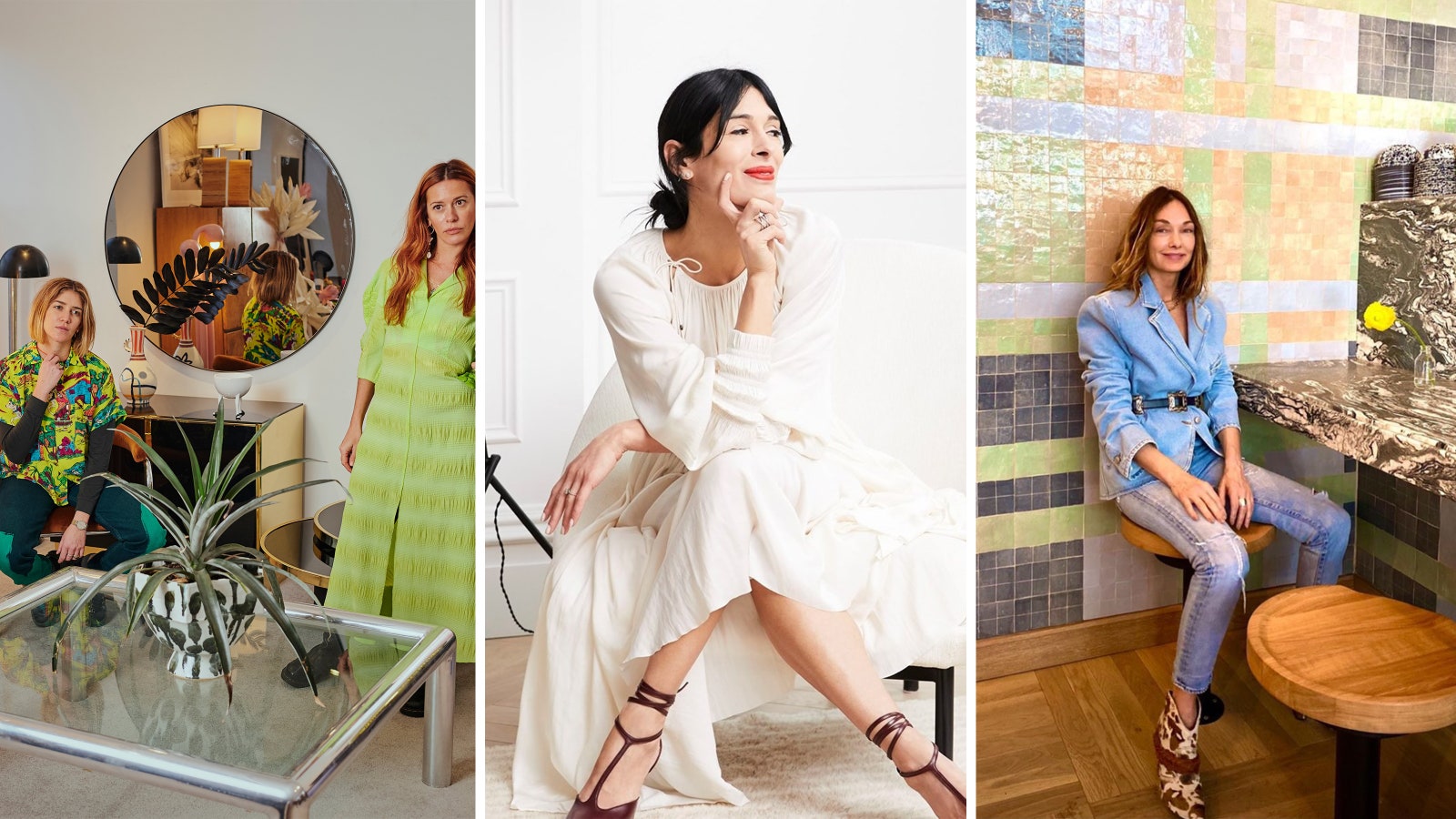
Through our Game Changers series, we spotlight women who have found success in their respective industries—from sports and politics to beauty and fashion. And with all of us spending more time indoors now more than ever, there’s no better time to highlight the inspiring women leading interior design today.
There are countless examples of passionate female designers leaving their mark on what a home (or any space, really) can be. From Athena Calderone and Lily Kwong to Nicole Gibbons and Leanne Ford, these multihyphenate women have extended their creativity into brands, businesses, and our own Instagram feeds. Ahead, 11 female interior designers changing the game (and reminding us that there is no place like home).
She calls Portman “part of the problem” with her “fake support of other women.”
“There is no law that says you need to hire women, work with women, or support women. By all means, you do you. But I am saying stop pretending you’re some kind of champion for anything other than yourself,” McGowan continued. “As for me, I’ll be over here raising my voice and fighting for change without any compensation. That is activism. Until you and your fellow actresses get real, do us all a favor and hang up your embroidered activist cloak, it doesn’t hang right.”
McGowan continued in her post, “I was at a Women in Film event that you spoke at once, Natalie. You reeled off depressing statistics and then we all went back to our salads. I quickly realized you and the other women speakers (and that joke of an organization) are just… frauds. You say nothing, you do nothing.”
Portman responded with a statement of her own, per The Hollywood Reporter. “I agree with Ms. McGowan that it is inaccurate to call me ‘brave’ for wearing a garment with women’s names on it. ‘Brave’ is a term I more strongly associate with actions like those of the women who have been testifying against Harvey Weinstein the last few weeks, under incredible pressure,” she said.
She also acknowledged the fact that she has not worked with a huge number of female directors over the course of her career. “It is true I’ve only made a few films with women. In my long career, I’ve only gotten the chance to work with female directors a few times—I’ve made shorts, commercials, music videos and features with Marya Cohen, Mira Nair, Rebecca Zlotowski, Anna Rose Holmer, Sofia Coppola, Shirin Neshat and myself,” Portman said. “Unfortunately, the unmade films I have tried to make are a ghost history.”
But, she says, that doesn’t account for all the projects that never went forward. “I have had the experience a few times of helping get female directors hired on projects which they were then forced out of because of the conditions they faced at work,” she said. “So I want to say, I have tried, and I will keep trying. While I have not yet been successful, I am hopeful that we are stepping into a new day.”
Director Marielle Heller said hers was one of those projects Portman is referencing.
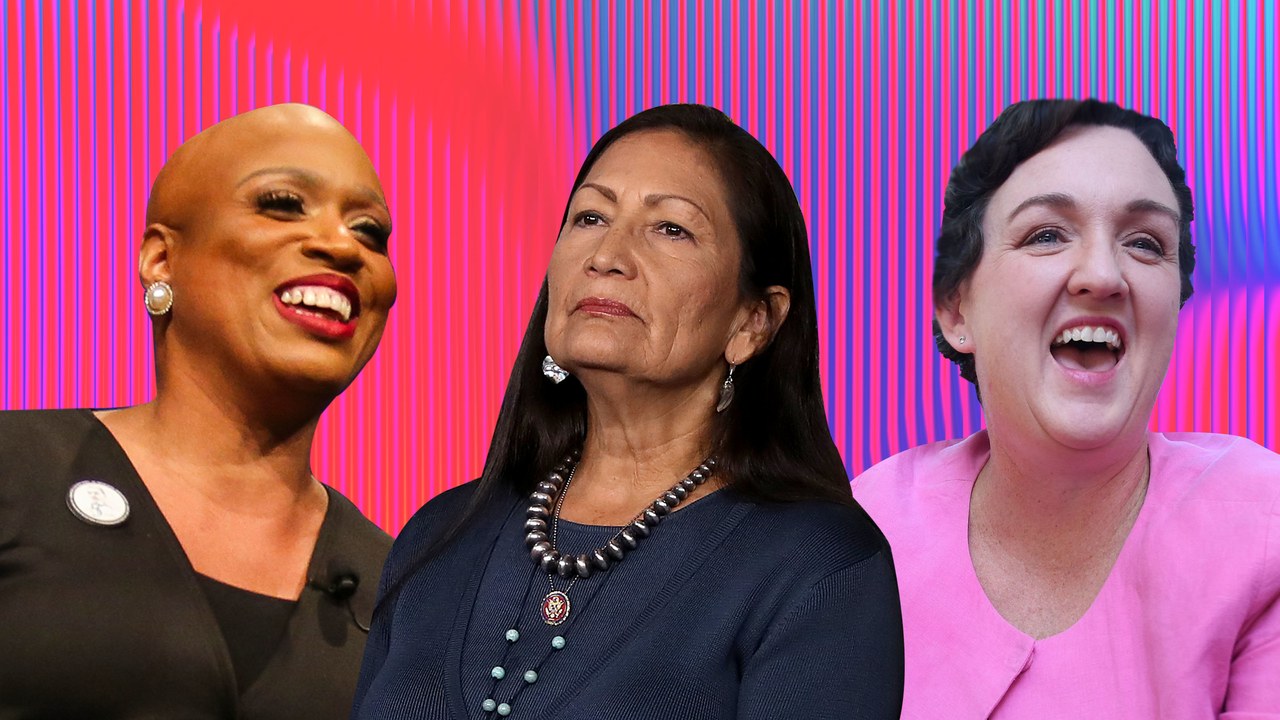
In an email, Warren emphasized the unique skills that her cochairs bring to her presidential race: “I’m so honored to have these women as leaders in our campaign. They were part of the wave of women in 2018 who volunteered, organized, and won, up and down the ticket. They didn’t wait their turn to make change. They got in the fight, advocating for a government that works for everyone, not just the wealthy and the powerful. They inspire me, they inspire my team, and they inspire millions of little girls all across the country.”
It’s true that the three cochairs—personable and popular in their own right—are a boon to Warren, showing up to motivate crowds for the candidate even when she can’t be in a given state or at a certain event in person.
But in conversation with them, something else becomes clear. On the trail and in interviews for stories like this one, the women also make the case for a more purposeful investment in female leadership—at the top of the ticket and in public life. “We reflect the variety of ways in which women come into public service,” Porter says. “The fact that Ayanna was a city councilperson, the fact that Deb was an organizer and the head of her state party, the fact that I was someone who flipped a district—each of us in our own way has that direct life experience. And now we’re building and growing a sustainable movement for change.”
The aim, in other words, is bigger than Warren, although for Porter in particular much of it can be traced back to her. She has known Warren since her own time at Harvard Law School, when she enrolled in Warren’s class on bankruptcy law. (This is a detail that tends to crop up in profiles of Porter; the student and the professor, now the representative and the senator.) “I sat in the front row; I thought if I did that she might not call on me,” Porter recalls. The class was held at 8 a.m. Warren had an excellent reputation, according to Porter, but the course was intense: “It was not a class that attracted people who just wanted to skate.”
Almost two decades later, Porter can still recite portions of Warren’s first lecture. “One of the things that means so much to me as a cochair is to hear her talking now about those fundamental same issues,” Porter says, ticking through them. “How do we create an economy that gives every hard-working American an opportunity to be successful? How do we think about balancing the incentives that capitalism creates for people and businesses to take risks, to invest in themselves and grow…with some of the hardships?”
But Warren’s influence wasn’t theoretical; Porter didn’t just feel it in the solidification of her values or in her approach to the law, but she felt it in her real life to. After several months in law school, she had begun to think that she too might want to be a professor, despite the odds for women in the field then. She and Warren went for lunch near campus at local institution Border Cafe, and on their short walk back—“Elizabeth is a notoriously fast walker”—Porter broached the subject. “I was working to keep up with her, and I remember getting my nerve up to tell her that I thought I wanted to be a law professor. And I framed it like, ‘I want to try. I want to try to become a law professor.’”
She had told some of her other mentors as much, who’d encouraged her, albeit without much real direction. Warren, as Porter remembers it, had a different reaction. “Elizabeth immediately said, ‘Wonderful, let’s get a plan.’” When Porter hears her talk about her mentor’s plans now, with almost the same words—Warren has a plan for that—it makes her smile. That’s a leader, she thinks, a person who can show people what’s possible.
And how. In 2016, less than three weeks after Donald Trump was elected president, Porter decided to follow Warren’s example once more and run for office. When she told her former professor, Warren responded with two assurances that Porter can still quote. First, she said: “I will be with you every step of the way.” And second: “You will love being a candidate, because every day you’ll have the opportunity to learn something, to hear a story you haven’t heard before, to see a pocket of your community that you didn’t know existed.”
LW: I thought that was so moving and brilliant, and I loved Taylor’s response to her, too. I thought what Nikki Glaser was saying made so much sense. She said, “This is Psych 101; I was projecting because I was struggling with an eating disorder at the time.” I thought that was a really brave and incredible thing to say. That made me think about if there’s ever been a time where I’ve made fun of someone, I was probably projecting my own insecurities on them as well, you know? We did notice when we were looking at that archival material that a lot of that stuff was coming from other women.
God, I almost tear up like thinking about some of the notes I’ve gotten from teenagers about how they look in the mirror and they hate their body and they hate the way they look. But now that they’ve seen that Taylor has struggled with some of these same things too, and she’s gotten through it and she’s stronger and happier as a result, and that inspires them to keep going. It’s just so moving.
What was the most unexpected thing about filming Taylor?
LW: The contrast between the extraordinary elements of her life and the ordinary elements. [There are] the very big and massive, spectacular, glittery times, but then these very mundane, normal moments. I really love the scene where she’s eating a burrito. I know people have really responded to this scene, and I think it’s because it’s just her putting a chip in a burrito for crunch. There’s something so great about when you get to a point when you’re filming someone and they can relax enough to eat lunch and shoot the shit with their friends in front of you.
When you can film the boring stuff and you have that comfort level with someone, then you know you have access. You know, at that point. It’s weird, but that was like a breakthrough moment for me because it feels like the camera isn’t there.
When did that moment come? How long had you been filming her before you felt like you broke through to that point?
LW: At least a few months. But I will say that the first interview we did was the first interview she’d done in three years, and we did that audio-only. I think that was the moment when we really got to know each other and when I really started to see what the story of the film was, that first audio-only interview. It was just me and her, in a room for hours with a recorder.
Did any of that audio make it into the film?
LW: Oh yeah. When she talks about the sexual assault trial, that’s from the audio interview.
Did Swift see the film at different points in the editing process, or did she not see it until it was finished?
LW: I wanted her to see it before it was finished because there’s stuff in here—like her talking about an eating disorder—that I think is really important for her to be comfortable with that kind of stuff going out into the world. It was great because when we showed her the first cut, she loved it immediately. She was never like, ‘No, I don’t want to go there.’ There was no off-limits area other than anything that would compromise her security.
Taylor’s feedback was great. It wasn’t like, ‘Oh no, we can’t do this.’ It was feedback from another storyteller. She’s such an extraordinary storyteller. So it made sense to me.
Netflix
Before I let you go, I have to ask: When InStyle asked you about a potential engagement ring you said, “I’ll have to watch the scene again.” Did you watch the scene again?
LW: I was confused by what that person was talking about. They said it’s the scene in the car where she was talking about her eating disorder, that there were flash frames of a ring. And I was like, I don’t remember that. There was definitely nothing like that there. I know that people on the internet are freaking out about this later scene where she’s wearing a ring. I don’t know anything about…I think she just wears a lot of rings. I think people are overreacting to it a little bit. As far as I could see she’s constantly just wearing lots of rings! [Laughs]
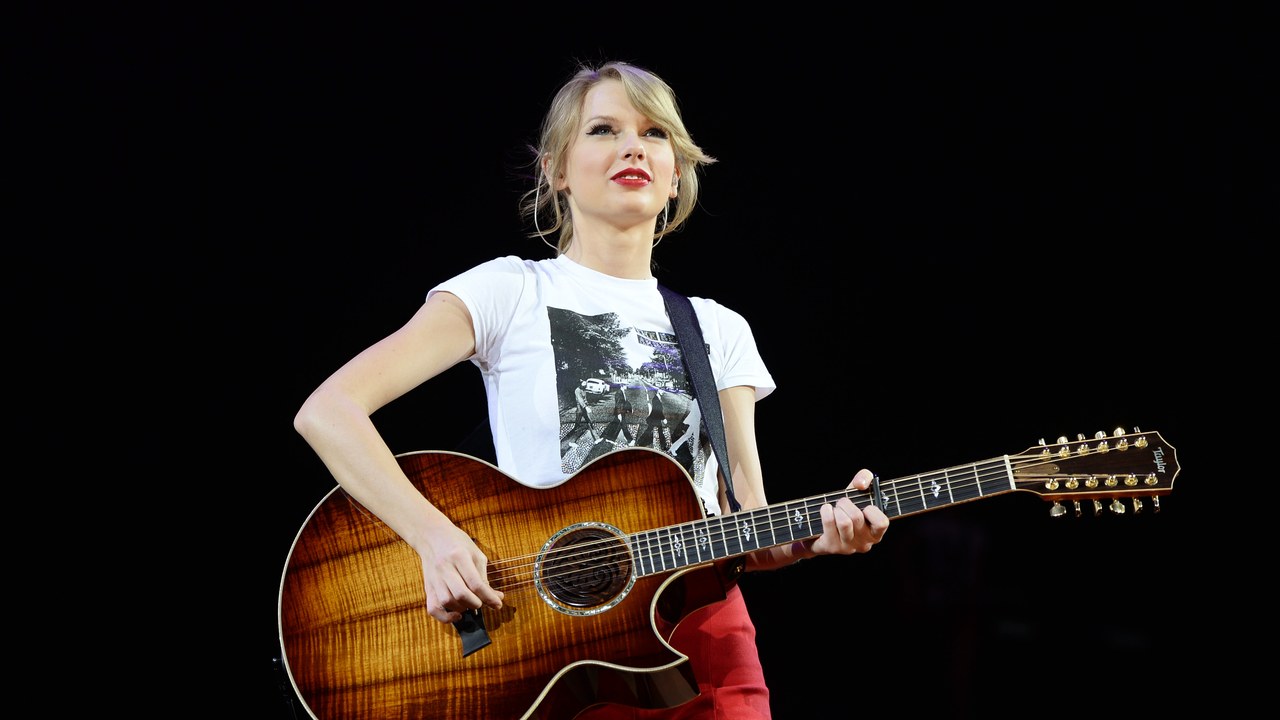
Taylor Swift had a better decade than (almost) everyone. According to Forbes, the 30-year-old was the highest-earning female entertainer of the decade, bringing in an estimated $825 million over the last 10 years.
Overall, Swift was the second highest-earning entertainer, coming in just behind Dr. Dre, who raked in an estimated $950 million due to his stake in the headphone company, Beats, which Apple purchased in 2014 for $3 billion. (It only takes into account living celebrities; As Forbes noted, had it added in Michael Jackson, he’d easily rank as first considering his estate pulled in an estimated $2.37 billion over the last decade.)
According to the outlet, Swift earned the second-place spot because just about everyone loves her music. Her millions reportedly came from her multiplatinum albums, her brand partnerships, and several sold-out tours. But the singer’s accomplishments went far beyond making money. In December, Swift was also honored with Billboard‘s first-ever Woman of the Decade Award. She was chosen due to her massive influence on music and pop culture, which we here at Glamour recognized as well.
“Taylor isn’t the first country artist to dabble in pop—both Shania Twain and Faith Hill have done it, to varying degrees—but she is the first to do it in its totality. And, along the way, she broke new ground,” Glamour writer Christopher Rosa penned. “When she dropped ‘We Are Never Ever Getting Back Together’ and ‘I Knew You Were Trouble’ in 2012, for example, top 40 radio short-circuited. Both songs were stunning, seamless marriages of genres: country, pop, rock, even elements of dubstep. It was a precursor, if not the jumpstart, to the genre-bending hits that would define the latter half of the decade.”
Beyond music, in the last decade, Swift also became a crusader for the rights of artists. In December of 2019, Swift publicly called out mega-manager, Scooter Braun, who acquired her back catalog of music as part of his purchase of Scott Borchetta’s Big Machine Label Group. Swift, who was once under the Big Machine label, said she “pleaded” to purchase her music back from Borchetta, however, Borchetta only said she could “earn” back one album for each new one she produced.
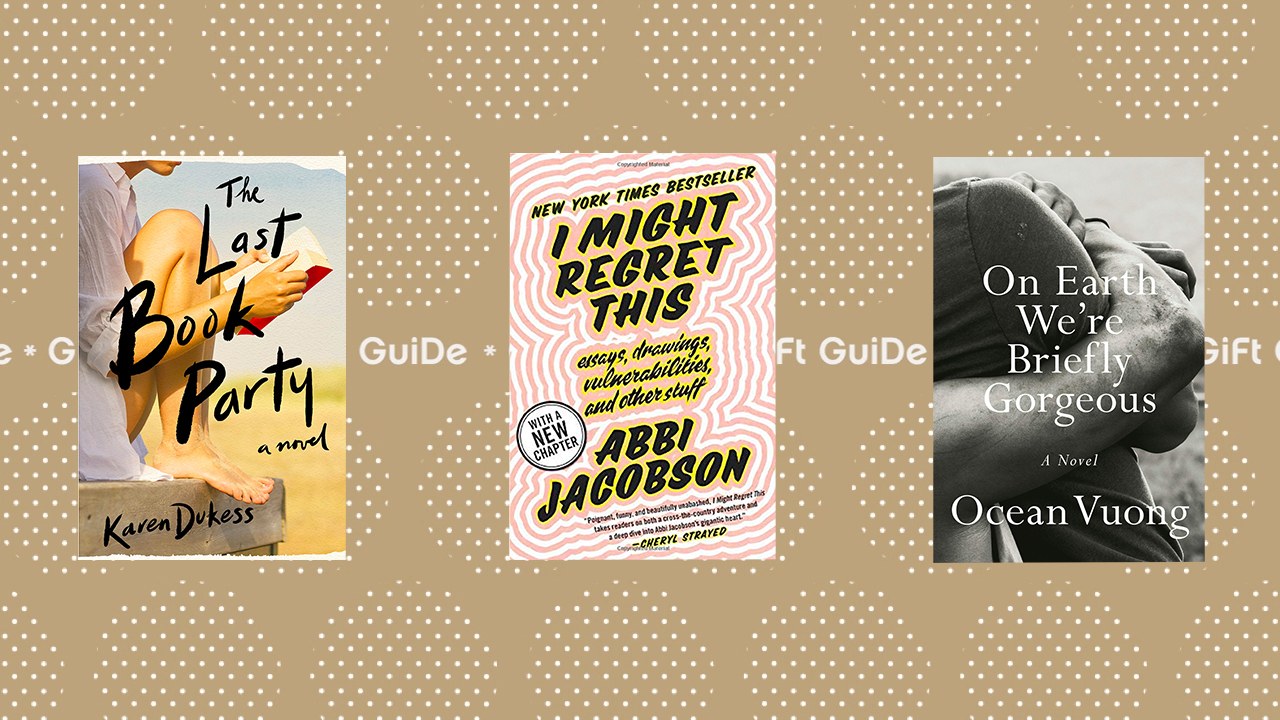
Gifting a book is easier said than done. The wrong pick can come across as though you were short on time—and probably ideas. You want your loved one to not only enjoy your recommendation but also feel like the book you chose was carefully selected just for them. That’s why we turned to some of our favorite of-the-moment female authors—like Ottessa Moshfegh, Casey McQuiston, and Lisa Taddeo—for their take on the best books to gift this year.
So whether you grew up acing all your Lit classes, or were too busy reading extra-curricular novels to even care, you’ll find these recommendations highly giftable. Ahead, find 18 of the best books to gift (or get for yourself).
All products featured on Glamour are independently selected by our editors. However, when you buy something through our retail links, we may earn an affiliate commission.