Categories
Health

The Kardashian-Jenners Just Addressed So Many of Their Controversies in a Huge 'New York Times' Profile


Sunday night marks the premiere of the 16th season of Keeping Up with the Kardashians—which, frankly, is wild. Since the show first debuted in the fall of 2007, the Kardashians and Jenners have become basically ubiquitous in pop culture, and along with the fame and the money, there also comes controversy. A lot of it.

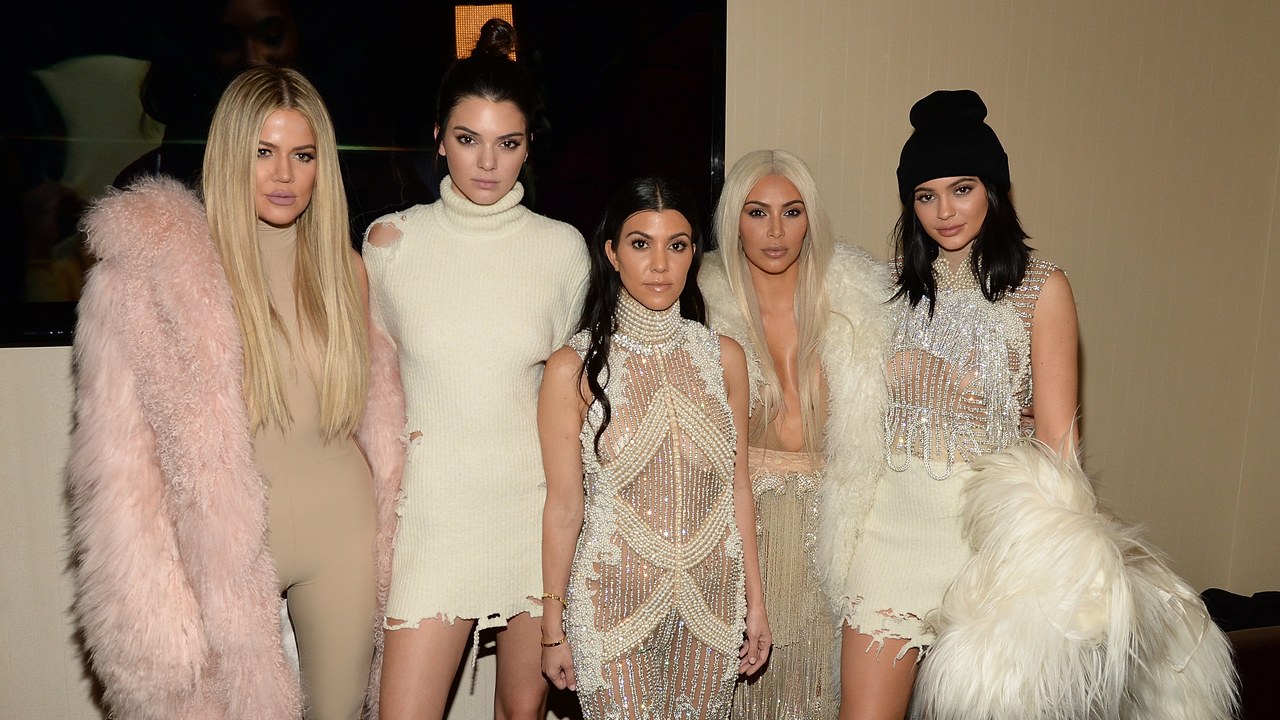
Ahead of the upcoming season, Kim Kardashian, Khloé Kardashian, Kylie Jenner, Kendall Jenner, and their momager Kris Jenner talked with the New York Times about the business side of the family—and in the process ended up speaking out (on the record!) about the numerous headline-making dramas that have affected the family over the past year.

Let’s break it all down by controversy.

The Khloé-Tristan-Jordyn Drama

ICYMI, Woods is Kylie Jenner’s (maybe-former?) best friend whom NBA player Tristan Thompson, a.k.a. the father of Khloé’s daughter True, reportedly kissed. Yeah, it’s a lot. (You can catch up on the saga here.)

In the wake of the news, fans noticed that one Lip Kit Kylie created with Woods had its price slashed online, which was interpreted as a shady move by Kylie. Not true, says the cosmetics mogul: The product was actually on sale as part of a packaging change, and it had happened weeks before the gossip story broke. “That is just not my character. I would never do something like that and when I saw it, I was like, thrown back,” Kylie told the Times. “Jordyn knows I didn’t actually put it on sale.”

Being a “Self-Made” Billionaire

The Internet got very worked up when Forbes declared Kylie the youngest self-made billionaire, given the privilege into which she was born even before she launched her wildly successful cosmetics company.

Despite the controversy, Kylie hasn’t commented much about the honor until now. “I can’t say I’ve done it by myself,” she says. “If they’re just talking finances, technically, yes, I don’t have any inherited money. But I have had a lot of help and a huge platform.”

Fyre Fest

Supermodel Kendall Jenner was one of influencers hired to promote the disastrous Fyre Fest music festival in the Bahamas that spawned not one, but two, documentaries. She says she wasn’t involved in the event itself, but she did learn from the experience.

“You get reached out to by people to, whether it be to promote or help or whatever, and you never know how these things are going to turn out, sometimes it’s a risk,” she said. “I definitely do as much research as I can, but sometimes there isn’t much research you can do because it’s a starting brand, and you kind of have to have faith in it and hope it will work out the way people say it will.”

Critiques of Their Sponsorship Choices

The Good Place actress Jameela Jamil has become one of the family’s most vocal critics—frequently calling out the images they put forth on social media and the brands, like Flat Tummy Tea, that they choose to partner with. Jamil recently commented on Khloé’s Instagram: “If you’re too irresponsible to: a) own up to the fact that you have a personal trainer, nutritionist, probable chef, and a surgeon to achieve your aesthetic, rather than this laxative product…And b) tell them the side effects of this NON-FDA approved product, that most doctors are saying [isn’t] healthy. Side effects such as: Possible Flat Tummy Tea side effects are cramping, stomach pains, diarrhea and dehydration… Then I guess I have to. It’s incredibly awful that this industry bullied you until you became this fixated on your appearance. That’s the media’s fault. But now please don’t put that back into the world, and hurt other girls, the way you have been hurt.


Source link

Categories
Health

Broken Harts, Episode 8: 'There Were Good Times'


In April 2019, a little more than a year after the crash that killed the Hart family, there will be a formal coroner’s inquest, after which the jury’s decision on whether the tragedy of last year was a murder by one person, a conspiracy to murder by more than one person, or an accident will be revealed to the public.

But what about those who knew Jen and Sarah Hart best? What do they think?

Jen and Sarah frequently implied they had no support system, but it seems their isolation was created purposely. In an email to field reporter Lauren Smiley on September 25, 2018, Jen’s younger brother, Jonathan, explained that it was Jen’s choice to distance herself from the family. “One thing I would like to clarify for myself AND my family is that Jen was NOT ousted from the family for being gay. I have been openly gay, even in high school, and it never affected me living in my mom or dad’s home.” He continued, “If anything, all this time, my family did nothing but try to help and understand Jen—not work against her.”

Jonathan went on to assert that his family had always been supportive of Jen. “Nobody has done anything to [Jen] to warrant this,” Jonathan says. “All I have seen my whole life is her getting—my parents, grandparents, anybody—people jumping through hoops to give her what she wanted, and that’s all I can say. People loved her. They really stuck up for her…. It really hurts me when this stuff gets reflected on my parents. That really hurts my feelings. My mother is wonderful, and she did put up with a lot from my sister. We all did.”

Similarly, sources close to Sarah’s family told Glamour that the family had not been in touch with Sarah for a long time, but that it was Sarah’s choice to cut off contact, not the other way around.

Sarah and Jen distanced themselves from their families, kept friends at arm’s length, and closed their blinds on concerned neighbors. When schools, social services, the medical community, and the festival community asked questions, the women were able to foster doubt and convince the world that they were normal parents. When anyone got too close, Jen and Sarah withdrew, they canceled plans or relocated, or they moved the conversation to Facebook, where Jen could control the narrative. This was their choice, and in the end they were alone.

Back in August 2018, Lauren Smiley connected with Hannah Scott, a professor of criminology at the University of Ontario Institute of Technology, who has spent a lot of time studying the psyches of women who commit heinous crimes. In their discussion, Scott noted that very little is known about same-sex couples and domestic abuse, and women who kill their families, or what may drive them to do so. Here, Scott explains why that is:

Portland’s KOIN 6 News recently pointed out in a report that since the crash, two very different images of the Hart family have emerged: “One is of a family in crisis, and the other is of a family trying to make the world a better place.” Singer Jenni Price of the band Acoustic Minds is someone who saw the Harts as trying to make the world a better place. Price wrote her song “Quicksand” after seeing that viral photo of Devonte hugging a policeman at the Portland rally in 2014. Price told KOIN 6 News that, after writing the song, she approached Jen Hart to ask if the family would appear in the music video, but said Jen was initially reluctant. She went on to explain she “had never met a family like this…. They did not have TV, they did not use cell phones, they did not have technology in ways like children are glued. Instead their home was filled with books, musical instruments, artistic equipment like paint and crayons and markers and huge construction paper for art projects, their yard was open and a large part of it was a garden.”

[embedded content]

“Quicksand” by Acoustic Minds

In Price’s eyes, the family “exemplified the hope, acceptance, genuine will of unconditional love.” On Zillow, the Harts’ home in West Linn, Oregon, is listed as a spacious four-bedroom. Was this a happy home? Going by Price’s description, there’s reason to believe it could have been. And yet, those who knew the Harts in Woodland, Washington, paint a very different picture: a household where children were being abused, and went hungry; a home the police reported was unusually spare and lacking signs of the children’s presence.

Broken Harts Episode 8 'There Were Good Times'
Photo c/o Zillow

While interviewing Dana DeKalb one afternoon, field reporter Lauren Smiley took a walk through the Harts’ backyard. While there, she spotted an ornament hanging from a tree: a ceramic VW hippie van with “flower power” details. Turning it over in her hand, Lauren saw the price tag was still stuck on the bottom: “Ross Dress for Less, $7.99.”

pA glimpse of the ornament behind the Hart's homep

A glimpse of the ornament behind the Hart’s home

Holly Andres

The ornament reflects the image that Jen Hart so desperately wanted to project to the world: a merry band of travelers, alone, but alone together. Happy together. And those who knew the Harts would like to believe this is true: that there were happy times together; that, as Dana DeKalb puts it, “There were good times, that it wasn’t constant ugly.”

In April of this year, a jury of 12 will attempt to determine the cause of death for the bodies found at the crash site. What will they see in the evidence, and in the case? Will they see Jen and Sarah as tragic antiheroes, or as monsters? Neither is the whole story, because what Jen and Sarah Hart actually were is even harder to accept. They were both.


Source link

Categories
Health

1,600 Men Show Their Support for Christine Blasey Ford in Full-Page 'New York Times' Ad


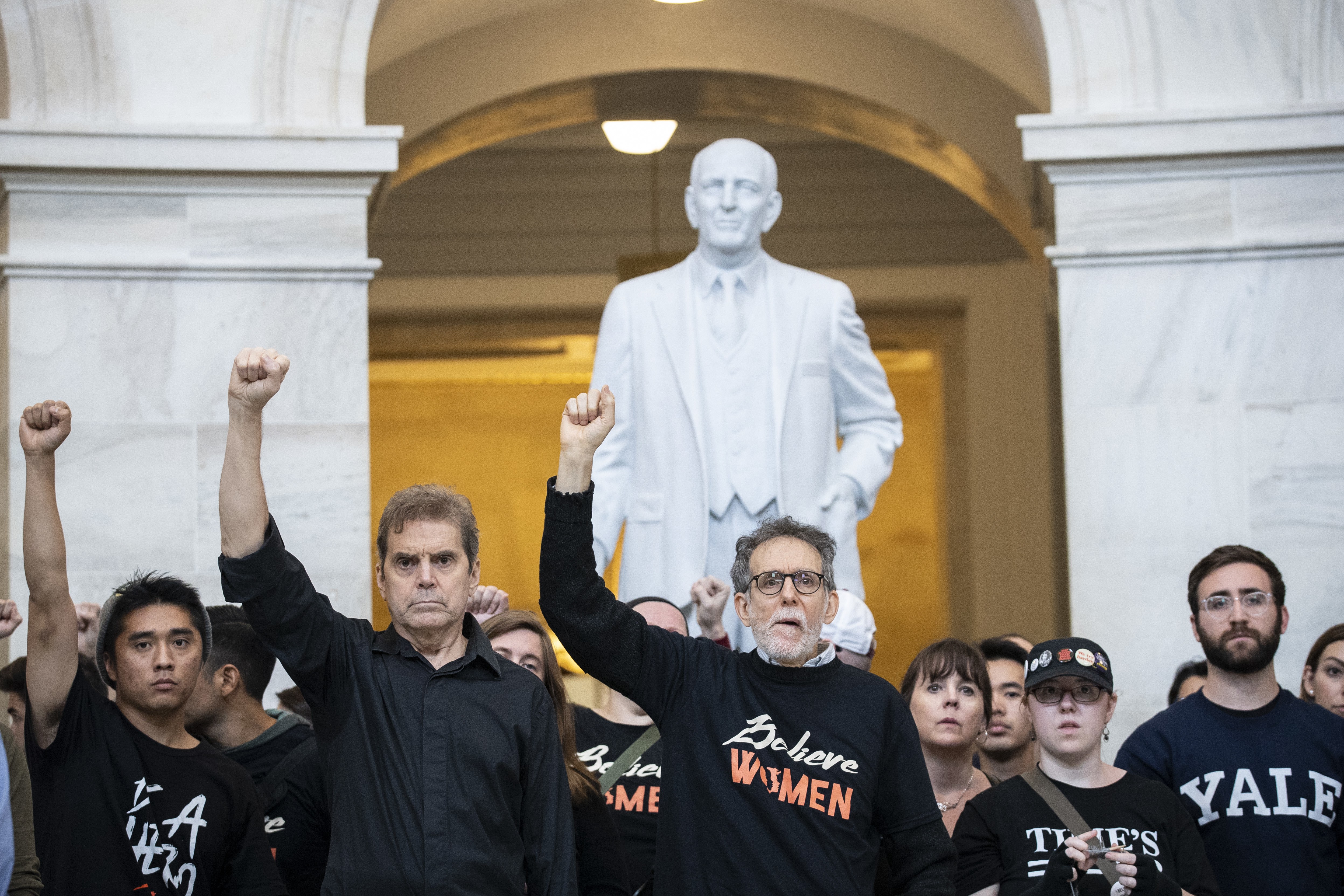
On Thursday Christine Blasey Ford will testify in front of the Senate Judiciary Committee about the allegations that Supreme Court nominee Brett Kavanaugh sexually assaulted her in 1982. Women around the country have taken to social media over the past week to voice their support of Ford, even staging the National #BelieveSurvivors Walkout on Monday.

Now it’s time for the men to step up.

Today’s New York Times features a full-page ad with the headline, “We believe Anita Hill. We also believe Christine Blasey Ford,” plastered along the top. The ad echoes one placed in the paper back in 1991 when 1,600 African American women in support of Anita Hill—the law professor who testified during the Clarence Thomas nomination hearings—banded together to buy the ad, “African American Women in Defense of Ourselves.”

The ad was crowdfunded in an initiative started last Friday by Meena Harris, founder of the Phenomenal Women Action Campaign, and Alicia Garza, cofounder of the Black Lives Matter Global Network. Their goal was to raise $100,000. Currently, their fund-raising page notes that over $134,000 has been donated. (The page notes that excess funds will go to Futures Without Violence, a group dedicated to ending violence against women, children, and families around the world.)

“I had been very inspired by the story of the 1,600 black women who came together in 1991 to take out a full-page ad in The New York Times,” Harris (who also happens to be the niece of California Senator Kamala Harris) told Mic.

“We’ve asked men to step up [and sign], so it’s not only the burden of women to do this,” she continued.

The full text of the ad references its inspiration, as well:

Twenty-seven years ago, on November 17, 1991, 1,600 black women joined together and placed a full-page ad in The New York Times to support Professor Anita Hill when she faced backlash for accusing Justice Clarence Thomas of sexual harassment. They called it, ‘African American Women in Defense of Ourselves.’ Today we follow in the footsteps of those courageous women.

We are 1,600 men who now stand behind both Professor Anita Hill, as well as Dr. Christine Blasey Ford, because we believe them. As men who are allies in the fight to end violence and harassment against women and girls, we write to express our strong support of Dr. Christine Blasey Ford for her willingness to speak out publicly and testify before the Senate about the sexual assault that she says was perpetrated against her by Judge Brett M. Kavanaugh.

We believe survivors, and we call on all men of good will to stand with us to ensure that Dr. Blasey Ford’s story is carefully and fully examined without bias or prejudice. It is imperative that the politics of this moment not discolor the facts. Justice demands that both Dr. Blasey Ford and her story be treated fairly, impartially, and with respect.

Too frequently, survivors of sexual assault are forced to suffer in silence. Those that choose to speak out often face backlash, skepticism, and ridicule. As we’ve seen once again the last few weeks, that kind of virulent backlash is most acutely on display whenever those accused of misdeeds are powerful men. If appointed to the Supreme Court, few men would be more powerful than Judge Kavanaugh.

We are a group of men with varying political and legal views. But we each believe women should no longer have to carry these burdens alone.

For decades, a culture of misogyny has allowed men to act with impunity and without consequence. We demand an end to that culture, and we pledge to do our part in dismantling it. That’s why we are speaking out today in favor of a just process, and for the rights of women like Dr. Blasey Ford to be heard fully, fairly, and with respect.

In the words of Anita Hill, ‘There is no way to redo 1991, but there are ways to do better.'”

Male allies are also sharing the ad and its message across their social media platforms.

Ford and Kavanaugh are both slated to testify on Thursday. For the latest on the Kavanaugh nomination, click here.

MORE: A Third Woman Comes Forward with Allegations About Supreme Court Nominee Brett Kavanaugh


Source link

Categories
Health

New York Times' Ad About Sexual Harassment to Air During the Golden Globes


In what’s sure to be a pivotal moment in the post-Weinstein, #MeToo era of Hollywood award shows, Sunday evening’s Golden Globes will include, among a number of other definitive proclamations of protest, a powerful new commercial from The New York Times.

The news outlet—which was the very first to break the story on the sexual harassment allegations against film industry titan Harvey Weinstein last October—has partnered with ad agency Droga5 to create a commanding—and chilling—promo spotlighting the issue of sexual assault.

Though a mere 30 seconds, the TV spot is incredibly affecting—due largely to its chilling austerity and deliberate word choice. It begins by repeating the phrase “He said. She said.” numerous times in a hugely symbolic representation of the countless women who have come forth over the last few months to bravely recount their experiences with sexual misconduct. The ad then powerfully concludes with: “The truth has power. The truth will not be threatened. The truth has a voice.”

In an interview with Ad Age, Julie Matheny, associate creative director of Droga5, explained the significance of the language used in this carefully-crafted ad: “We thought that using language that has been used to silence women in the past and turning it on its head was a simple way to show the clear distinction between the way the world was merely a year ago and the way it is now.”

According to a press release from the newspaper, released today, the promo is “the first in a series of new ads the Times is planning for this year that will focus on its unwavering commitment to original, independent journalism that holds power to account.”

Watch the ad, below:

Related Stories:

Post-Weinstein, These Are the Powerful Men Facing Sexual Harassment Allegations

In 2018 Are We Allowed To Enjoy the Red Carpet?


Source link

Categories
Health

Vice Media Under Fire for Rampant Sexual Misconduct Allegations, the 'New York Times' Reports


Several months after allegations against Hollywood producer Harvey Weinstein began a wave of change regarding how sexual harassment allegations are handled at work, Vice Media has become the subject of a new New York Times investigation. The report, published December 23, shone light on four sexual harassment or defamation settlements and published more than two dozen further allegations by current and former employees who say they’ve witnessed or experienced sexual misconduct at the hands of Vice employees and executives.

According to the Times, the publication’s president, Andrew Creighton, allegedly fired an employee for rejecting his advances, for which he reportedly paid a $135,000 settlement in 2016. The Times also reports that Vice reached a settlement after former head of Vice News Jason Mojica allegedly punished a female employee after they got involved sexually. He was fired in November. In January 2016, the company settled with a woman who alleged that Vice producer Rhys James asked her if she had sex with black men and what color her nipples were; James was put on leave last month. Lastly, Vice reportedly settled in 2003 with a writer who said the publication falsely wrote that she agreed to sleep with a rapper she interviewed. In addition, a woman interviewed by the Times described a coworker putting her hand on his crotch outside of work. Still another alleged she was the target of unwanted kissing.

“We have failed as a company to create a safe and inclusive workplace where everyone, especially women, can feel respected and thrive,” Vice co-founders Shane Smith and Suroosh Alvi said in a statement to Vice staff. “Cultural elements from our past, dysfunction, and mismanagement were allowed to flourish unchecked. That includes a detrimental ‘boy’s club’ culture that fostered inappropriate behavior that permeated throughout the company.”

In response to the allegations, Vice fired three employees, brought on a new human resources leader, created a Diversity and Inclusion Advisory Board that includes Gloria Steinem, and issued a prohibition on supervisors dating people working under them.

“The misogyny might look different than you would have expected it to in the 1950s, but it was still there, it was still ingrained,” Kayla Ruble, a journalist who worked for Vice from 2014 to 2016, told The New York Times. “This is a wakeup call.”

Related: Powerful People in Entertainment Who Have Been Accused of Sexual Harassment or Assault


Source link

Categories
Health

Jessica Chastain Responds to Backlash From That All-White 'L.A. Times' Magazine Cover


Over the past couple of days, the Los Angeles Times’ Envelope magazine, which is dedicated to awards season, has managed to piss off a lot of people on Twitter, thanks to its December 21 cover, which featured a group of all white (and overwhelmingly blond) actresses. The women pictured in the group portrait—Margot Robbie, Diane Kruger, Saoirse Ronan, Annette Bening, Kate Winslet and Jessica Chastain—were placed above the coverline, “A Shift in Focus: Actresses Call for a Change in the Way Many Stories Are Told.”

The article was a roundtable-style story discussing working in Hollywood and how women are treated onscreen. The topic was definitely timely, but again, there were no women of color featured—at all. And a conversation about diversity and equality in storytelling can’t happen if you’re not representing all the stakeholders.

The backlash on social media pointing out the lack of women of color on the cover and in the feature was quick—and heavy. “It’s time white actresses speak up when their WOC colleagues are ignored,” one user wrote.

“I don’t understand how after all the conversations on #OscarSoWhite, White Feminism, etc a cover like this could be approved with this headline,” another tweeted. “And did any of these A-List actresses demand that actresses of color and other diverse demos be included?”

Jessica Chastain, who stars in Molly’s Game, responded to her participation in a series of tweets on Saturday evening and clarified in some responses that the cover focused on celebrating female-lead films. She admitted that it wasn’t a good look for the Los Angeles Times to omit women of color on its cover and called for more inclusive storytelling. She then prompted her followers to tell her their favorite WOC female-lead 2017 films. In her next tweet, she incredulously told her followers that she can’t even name five 2017 films that featured WOC leads. And it’s not for a loss of memory: That’s how much women of color and their experiences continue to be underrepresented, ignored, and erased in the film industry.

After she responded, many on Twitter continued to call her out for knowingly being part of a cover shoot that featured only white women and blatantly contradicts the values she promotes—and suggested that she could have used her platform to change the conversation instead. (The other actresses on the cover still haven’t commented at the time of publish.)

It’s incredibly important in the male-dominated industry of Hollywood to advocate for telling women’s stories. But they need to be inclusive of all women—not just white women—and this cover illustrates the absolutely urgent need for that.

Related Stories:
Twitter Is Not Pleased About This Magazine Cover—With Good Reason
Jessica Chastain Calls Out the ‘Disturbing’ Portrayal of Women in Cannes Movies
Jessica Chastain Reveals Exactly How She Negotiates for Equal Pay


Source link